

Home Blog Page 30

Convert Resource Wealth Into Sustainable National Prosperity Before Energy Transition, Scholars Tell Nigeria

0

International scholars and policy experts have urged Nigeria to convert its vast oil and gas wealth into sustainable national prosperity before aggressively pursuing the global transition to renewable energy, warning that the country risks deepening poverty and inequality if the shift is poorly managed.

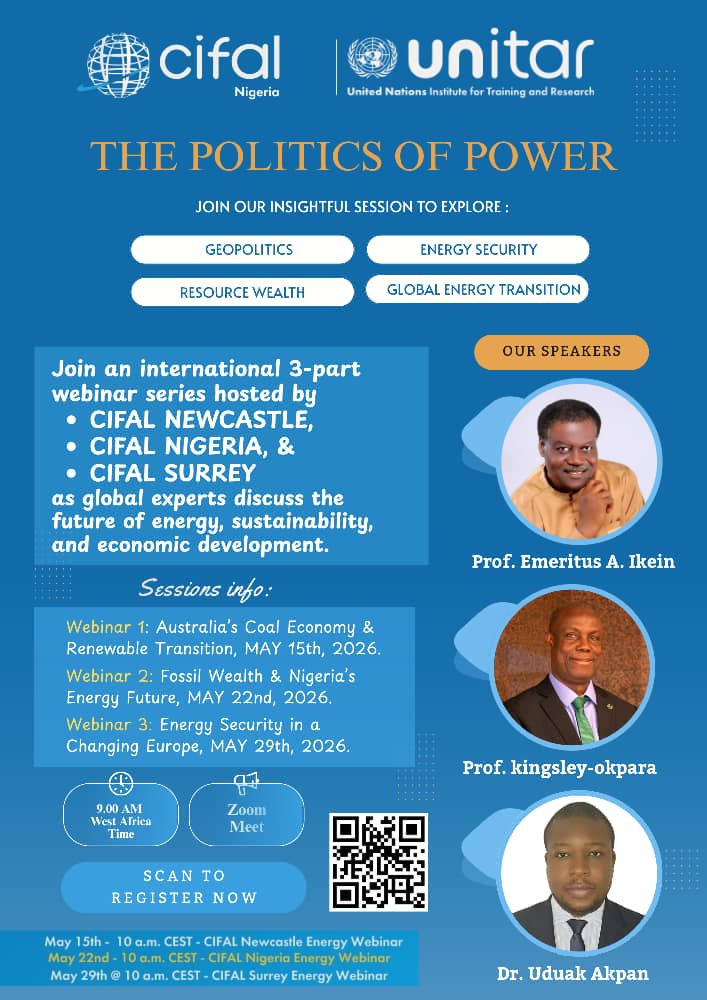
The call formed the central thrust of discussions at the second edition of a three-part global webinar series titled “The Politics of Power: Energy Security, Resource Wealth and the Global Energy Transition,” organised under the CIFAL Global Network and the United Nations Institute for Training and Research (UNITAR).

Hosted by CIFAL Nigeria at Rivers State University, Nkpolu-Port Harcourt, the session examined the challenges facing Nigeria as the world gradually diversifies away from fossil fuels under growing climate policies and environmental pressures.

The scholars argued that while the global transition to cleaner energy is inevitable, Nigeria must first address its developmental crisis, weak infrastructure, poor governance and decades of neglect in oil-producing communities before fully embracing the new energy order.

Leading the discussion, Professor Augustine A. Ikein, Professor Emeritus at the Federal University, Otuoke, Bayelsa State, said the debate should not be limited to oil and gas alone, but should focus on economic development across Africa and the wider developing world.
According to him, the history of the Niger Delta reflects a long cycle of exploitation, beginning from the slave trade era to crude oil production.

“Historically, black gold was linked to the slave trade. The Niger Delta was a major route for the transportation of slaves to America and today the region remains the base of Nigeria’s liquid black gold,” he said.

Professor Ikein noted that the discovery of crude oil in Oloibiri in 1956 transformed Nigeria into a major global energy player, but lamented that the communities producing the wealth had remained impoverished and environmentally devastated.

“The world is entering a new phase driven by climate policies and diversification away from fossil fuels. This transition is unstoppable and Nigeria must rise to the challenge,” he stated.

He, however, maintained that fossil fuel resources could still serve as a pathway to development if revenues were properly managed and invested in infrastructure, industrialisation and social welfare.

“The challenge for Nigeria is how to use fossil fuel resources for economic growth. Fossil fuel can still be a pathway to national development if revenues are properly managed through strong institutions and strategic social investment,” he said.
Professor Ikein stressed the need for strategic intelligence and careful planning in navigating the transition to renewable energy.

“We export energy abroad but still lack reliable electricity at home. Small businesses continue to suffer. Energy success should not only be measured by export revenues but by how well energy serves citizens,” he added.

He further lamented that despite sustaining the Nigerian economy for decades and contributing immensely to national development, including the construction of Abuja, the Niger Delta remained trapped in underdevelopment, pollution and social unrest.
“The region bears the burden of crude oil production, yet remains underdeveloped.

Environmental degradation, youth restiveness and poverty continue to define the region despite its contribution to national prosperity,” he said.

Professor Ikein accused multinational oil companies of abandoning polluted onshore communities while shifting operations offshore.

“If proper attention had been given to the oil-producing communities, we would not have witnessed this level of degradation and pollution,” he said.

Drawing comparisons with countries such as Malaysia, he argued that Nigeria had failed to convert its resource wealth into sustainable prosperity and long-term savings.

“Malaysia used its resources to create wealth and establish post-oil savings. Nigerian government must stand out for the suffering population,” he added.

Also speaking, Professor Kingsley Okpara of the Institute of Geosciences and Environmental Management (IGEM), Rivers State University, described the Niger Delta as one of the most polluted wetlands in the world despite being Africa’s largest oil and gas-producing region.

“The Niger Delta is the economic engine and powerhouse of Nigeria, yet many communities remain in darkness. More than 50 per cent are not connected to the national grid despite decades of oil wealth,” he said.

According to him, more than 50 years of oil extraction, gas flaring and repeated oil spills had devastated ecosystems and livelihoods across the region.

“Over 13 million oil spills have occurred in Nigeria, making fishing almost unbearable in many communities,” he stated.
Professor Okpara disclosed that scientific studies had revealed alarming levels of toxic substances in seafood consumed by coastal residents.

“Researchers discovered that the level of pollution from polycyclic aromatic hydrocarbons is among the highest globally. Chromium levels were recorded at 374 against the acceptable level of 1.5, while lead was 67 against the acceptable level of one,” he said.

He warned that the pollution crisis had triggered serious health implications, including increased cancer risks and declining life expectancy.

“There is need for serious monitoring of human blood samples because the cancer risk is high. Life expectancy in the Niger Delta is about 49 years,” he added.

Okpara criticised the politics surrounding oil governance in Nigeria, saying host communities had remained largely excluded despite existing legal provisions.

“The International Oil Companies are major players in the politics of oil. Communities are left behind despite provisions such as the three per cent host community fund under the Petroleum Industry Act,” he said.

He maintained that the current 13 per cent derivation formula was insufficient considering the environmental burden carried by the communities.

“The oil-producing communities must be carried along, otherwise more crises will erupt,” he warned.

On renewable energy, he said Nigeria possesses the capacity to transition to solar energy but warned that economic bottlenecks and social tensions would accompany the process.

Contributing, Dr. Udauak Akpan questioned whether Nigeria had truly utilised its oil and gas wealth to drive meaningful economic transformation.

“Nigeria has become an important oil and gas market globally, but the major question is whether these resources have promoted real economic development,” he said.

He decried widespread gas flaring, environmental destruction and the abandonment of rural oil-producing communities despite crude oil contributing over 70 per cent of Nigeria’s economic activities.

“The resources should be a blessing and not a curse. The life of the common person, in spite of all the crude oil wealth, has not changed,” he stated.

According to him, weak institutions, poor enforcement of laws and elite-driven politics had worsened inequality and the resource curse in Nigeria.

“We now have the super-rich and the very poor. Government is often more interested in rents than development,” he said.

Dr. Akpan also warned that Nigeria lacked the industrial and technological foundation necessary for a smooth energy transition.

“All our solar panels and renewable energy equipment are imported. Nigeria still lacks the infrastructure and systems needed to support a full transition,” he said.

He insisted that economic transformation and industrial development must come first before any large-scale renewable energy transition.
“Economic transformation should come first. That is what we are fighting for,” he concluded.

In his remarks, Bodie Beales of the CIFAL Global Network stressed the need for African voices to remain central in global discussions on energy transition and climate justice.

“Nigerian voices must be heard as the global conversation continues,” he said.
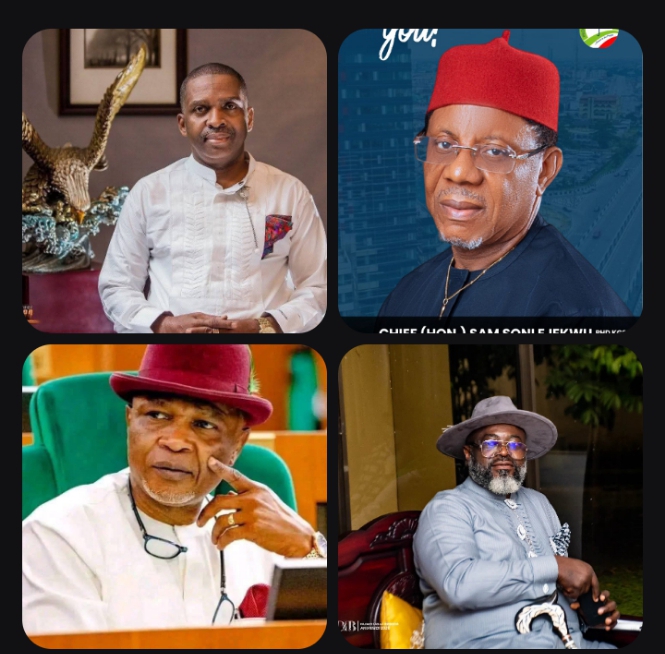
Rivers 2027: Between Godfatherism, Ethnic Balancing And Search For Independent Leadership

As the race toward the 2027 governorship election in Rivers State gradually gathers momentum, the political atmosphere is already reflecting what may become one of the most defining contests in the history of the state. More than a battle between political parties, the election is shaping into a referendum on political control, ethnic balancing, leadership independence and the future direction of Rivers politics after years of turbulence.

Four major figures have emerged prominently in early political calculations: Dumo Lulu-Briggs who is struggling for the ticket of the NDC, Kingsley Chinda of the APC, Sam Ejekwu of the PDP and Gabriel Pidomson of the ADC. Each represents a different political tendency, ideological perception and power structure within the state.

Perhaps the biggest issue that may determine the election is the growing public resistance to godfatherism. Since the political crisis involving Siminalayi Fubara and Nyesom Wike erupted, many Rivers people have become increasingly sensitive to the question of whether the next governor will govern independently or merely function as a political extension of another power centre.

This perception heavily affects Kingsley Chinda despite his obvious credentials and political experience. Chinda is not an unknown figure in Rivers politics. His long legislative experience, leadership within the House of Representatives and innovations as Chairman of the Public Accounts Committee have earned him recognition beyond the state. He possesses deep political networks, intellectual depth and administrative exposure.

However, the major challenge confronting his candidacy may not be competence, but perception. A significant section of the electorate views him as too closely aligned with Wike and fears that his emergence could represent a continuation of indirect political control over the state.

That sentiment may become stronger because many supporters of Governor Fubara, particularly among riverine communities, feel deeply aggrieved over what they perceive as the deliberate denial of the governor’s second-term opportunity.

In their view, replacing Fubara with another upland candidate — particularly one linked to the same political structure — could be interpreted as political exclusion and disrespect to riverine interests.
Ethnic balancing may therefore become a critical factor in the election.

There is already growing quiet resentment in some parts of the state over the perceived dominance of the Ikwerre ethnic bloc in the political leadership structure of Rivers State.

Though many acknowledge the political sophistication and organizational strength of the Ikwerres, there are concerns that power rotation and inclusiveness are gradually being undermined. Such sentiments could influence voting patterns across Kalabari, Ogoni, Ekpeye, Etche, Ogba, Ikwerre-speaking minorities and other blocs seeking broader participation in power.

This environment may create opportunities for candidates perceived as more independent and consensus-driven.

Chief Dumo Lulu-Briggs may enter the race ,if he secures the NDC ticket, with strong credentials in business, philanthropy and private sector leadership. His extensive investments, grassroots appeal and detribalised posture may resonate with voters seeking economic revival and broader inclusion. His challenge, however, may lie in translating elite goodwill and personal popularity into a formidable statewide political structure capable of competing against the established machinery of larger parties.

Gabriel Pidomson, on the other hand, appears to represent the intellectual and reform-oriented alternative. Though not widely tested in high elective office, his public messaging emphasizes inclusion, competence, accountability and unity.

His calm disposition and perceived independence may appeal to younger voters, professionals and citizens tired of confrontational politics.

However, his greatest hurdle may be organizational reach and whether the ADC possesses enough grassroots strength to compete effectively against the entrenched PDP and APC networks.

Sam Ejekwu’s emergence as PDP candidate has generated mixed reactions. While he possesses grassroots political experience and longstanding loyalty within the Wike political family, many observers see his candidacy as tactical rather than definitive.

Speculation persists that his role may ultimately be to protect political interests pending future alignments within the broader Rainbow Coalition. Whether that perception weakens his credibility remains to be seen.

Ultimately, the 2027 election in Rivers State may revolve around one central question: do the people want continuity of political control by powerful godfathers, or do they desire a governor with independent authority and a fresh developmental vision?

After years of political instability, economic slowdown and governance distractions, many Rivers people appear exhausted by endless supremacy battles. The electorate may therefore prioritize competence, inclusiveness, peace and economic revival over political loyalty or ethnic dominance.

The outcome will depend on who successfully convinces the people that he can restore stability, attract investment, create jobs and govern for the collective interest of Rivers State rather than for any political empire.

“Liberation Of Rivers Has Begun,” Says ADC Chairman As Party Targets End To Godfatherism

The Chairman of the African Democratic Congress (ADC) in Rivers State, Chief Chukwudi Dimkpa, has declared that the “liberation of Rivers State has begun,” as the party intensifies grassroots mobilisation ahead of the 2027 governorship election.

Dimkpa said the ADC was positioning itself as a people-oriented alternative to what he described as years of “state capture” and godfatherism in the state’s political system.

Speaking during an exclusive interview with The Atlantic Bell, the ADC chairman said the party was already strengthening its structures across the 23 local government areas of the state to ensure effective grassroots participation.

According to him, the ADC would run a people-centred administration that would return power to ordinary Rivers people instead of allowing governance to revolve around a single political authority.

“What has been going on in Rivers State is complete state capture, which is an anathema to the philosophy of the ADC,” he said. “This time around, we want to give that voice back to the people.”

Dimkpa stated that unlike other political parties where candidates were allegedly imposed, the ADC governorship candidate, Hon. Gabriel Pidomson emerged through a transparent process driven by party members and the electorate.

“The people will determine who will be their governor come 2027. It is not going to be somebody sitting somewhere to write results or snatching ballot boxes,” he declared.

The ADC chairman said the party deliberately avoided zoning its governorship ticket because it remains an opposition platform seeking the strongest possible candidate to wrest power.

He, however, noted that it was significant that the eventual candidate emerged from Rivers South-East Senatorial District, which he described as an area that had suffered years of political marginalisation.

“As far as we are concerned, this is the time for the people of the South-East Senatorial District to rise and claim what has come to them, through the candidature of Hon. Pidomson,” he said.

On the issue of godfatherism, Dimkpa said the ADC would revive the old tradition of party supremacy where elected party officials and members, rather than political benefactors, determine the direction of governance.

“The ADC is going to showcase that the party has a vision and something that will eventually kill the issue of godfatherism,” he added.

Dimkpa also accused the ruling political establishment in the state of confusion arising from internal power struggles, insisting that the ADC was taking advantage of the situation by organising itself for victory.

“When other people are confused, the best way is to organise yourself to excel. The advantage is that they are confused.
They don’t know whether they are in A or B. We are who we are,” he said.

Outlining the party’s economic vision, the ADC chairman promised to tackle insecurity, reverse capital flight and stimulate commerce through tourism and the creative industry.

He said the party was committed to putting “money back in the hands of Rivers people” while unveiling more programmes at the appropriate time.

Dimkpa further urged Rivers residents to resist electoral malpractice by actively defending their votes during the 2027 election.

“Rigging is the beginning of bad governance. Anybody who rigs himself to power can never offer good governance,” he said.

While acknowledging grievances arising from the party’s governorship primaries, the ADC chairman said reconciliation efforts were ongoing to unite all aggrieved members ahead of the election.

He expressed confidence that the party would emerge stronger, insisting that “the liberation of Rivers State has begun, and the process to greatness is in the offing for the state.”

MRA Honours Journalists With Maiden Goodluck Jonathan FOI Awards

0

Media Rights Agenda (MRA) has announced Ms. Blessing Oladunjoye, publisher of BONews Service, and Mr. Remmy Nweke, Group Executive Editor of ITREALMS Media Group, as winners of the maiden edition of the Dr. Goodluck Jonathan Freedom of Information Awards.

The organisation said the awards were instituted to recognise and celebrate journalistic excellence in advancing the right of access to information under Nigeria’s Freedom of Information (FOI) Act, 2011.

In a statement issued yesterday in Lagos, MRA Executive Director, , said Oladunjoye emerged winner in the first category after recording the highest number of information requests made under the FOI Act between May 28, 2011 and December 31, 2025.

According to him, Nweke won the second category for his outstanding contributions toward promoting awareness and implementation of the Act among citizens, public officials and media practitioners.

Ojo commended both journalists for their commitment to public-interest journalism and transparency, noting that the awards coincided with the 15th anniversary of the signing of the FOI Act into law.

He observed that despite persistent challenges of secrecy, non-compliance and weak transparency systems within many public institutions, journalists and media organisations across the country continue to deploy the Act for investigative and accountability journalism.

According to him, journalists are increasingly using the law to obtain official records, monitor public spending, expose corruption, verify government claims and produce evidence-based reports.

While acknowledging that many journalists using the FOI Act did not submit entries for the awards, Ojo urged them to remain committed to using the legislation as a tool for accountability and good governance.

He particularly praised Oladunjoye for combining journalism with strategic litigation aimed at compelling public institutions to comply with the provisions of the Act.

“In addition to at least 50 requests for information submitted to public institutions across the country for her journalistic activities, Ms. Oladunjoye has also made significant contributions to the effective implementation of the Act through relentless litigation,” he said.

Ojo congratulated her on the cases already won in court and wished her success in pending suits.

He also applauded Nweke for his extensive reporting and advocacy around the FOI Act, noting that he had produced at least 42 media outputs related to transparency, accountability and governance.

The outputs, according to Ojo, include 24 accountability and news reports, 11 feature articles focused on technology governance investigations and seven reform-driven commentaries advocating improved implementation of the law.

He noted that Nweke had deployed the Act in probing issues such as spectrum licensing transparency and cybersecurity funding.

“The FOI Act is a most potent weapon in a journalist’s arsenal, but it will only be effective if we constantly wield it,” Ojo stated.

“The Act provides media practitioners with an indispensable tool to perform their constitutional duty of holding government accountable to the people.”

He stressed that access to information remains central to democratic governance and sustainable development, insisting that journalists play a crucial role in keeping citizens informed about government policies, public expenditure and issues affecting national welfare and security.

Ojo explained that the awards were established in honour of former President in recognition of his assent to the FOI Act on May 28, 2011, which created a legal framework guaranteeing citizens’ right to access information held by public institutions.

He reaffirmed MRA’s commitment to supporting investigative journalism, media freedom, transparency and democratic accountability in Nigeria.

According to him, the winners will be formally honoured at a later ceremony where they will receive plaques, certificates and prizes.

RSU Adopts AI Policy As VC Pushes Tech-Driven Academic Culture

0

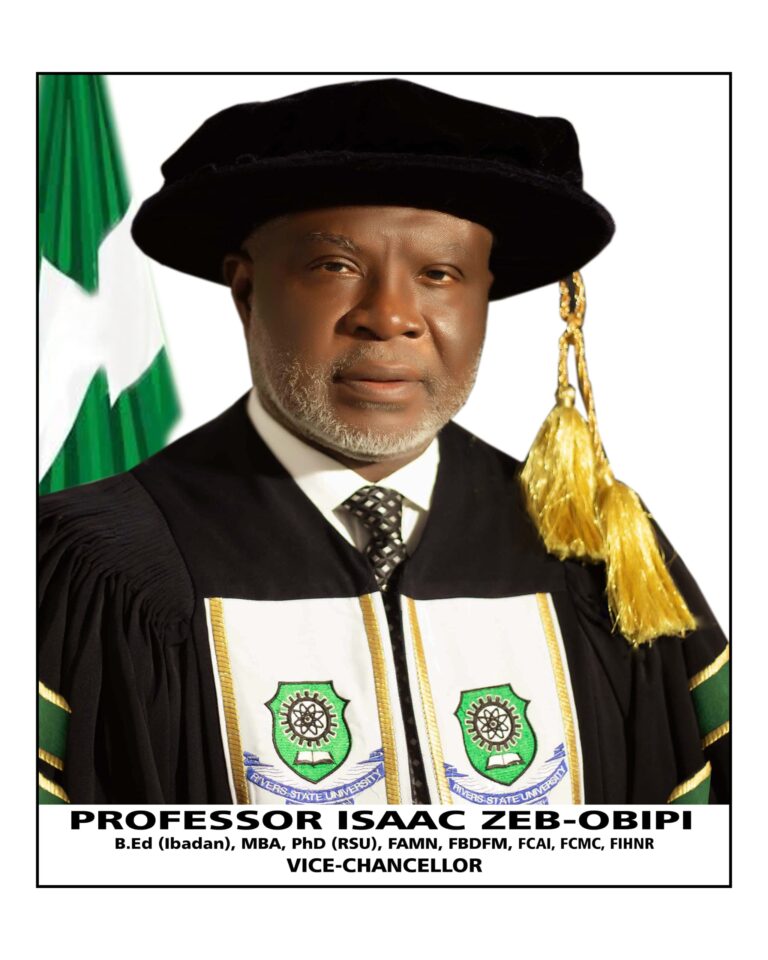
The Vice-Chancellor of Rivers State University, Prof. Isaac Zeb-Obipi, has declared that the future of higher education depends on how academics deploy emerging technologies to advance learning, research and societal impact, stressing that lecturers must embrace innovation without compromising academic integrity.

Speaking on Monday at a capacity building workshop for lecturers held at the university in Port Harcourt, Zeb-Obipi said the institution had already taken a major step by approving an Artificial Intelligence policy to guide the responsible use of technology in teaching and scholarship.

The workshop, themed “Emerging Technologies for University Academics,” was organised by the Quality Assurance Directorate in collaboration with the Directorate of Staff Development.

Describing the programme as timely, the Vice-Chancellor said universities could no longer ignore the sweeping influence of digital technologies and artificial intelligence on teaching and research.

“The lecture hall is changing. Our students arrive as digital natives, AI tools can draft an essay in 30 seconds, and research that once took months of library visits now begins with a prompt,” he said.

According to him, the challenge before universities is not whether technology will reshape higher education, but how academics will shape technology to serve learning, inquiry and truth.

He explained that the workshop was designed to strengthen the capacity of lecturers to use generative AI, learning analytics, open-source platforms, virtual laboratories and digital pedagogy to improve teaching effectiveness, research collaboration and community impact.

“For decades, the Nigerian university lecturer was defined by the chalk, the textbook and the office hour. Today, we add to that toolkit data dashboards, collaborative cloud workspaces, simulation software and even the responsible use of ChatGPT and its peers,” he stated.

The Vice-Chancellor, however, cautioned that technology without sound pedagogy would amount to “noise,” insisting that innovation must reinforce intellectual rigour and human mentorship rather than weaken them.

He urged participants to embrace curiosity, discernment and collegiality in adapting to emerging technologies, stressing that lecturers must be willing to experiment, uphold the university’s core values and share knowledge with colleagues.

Zeb-Obipi further noted that competence and continuous training were critical to staff development and promotion within the institution.

“This workshop is key because we cannot promote workers without competence. We want to be intentional about training. We need to use AI for critical thinking. We need to use every new tool to help us refine the university,” he added.

In his remarks, the Chairman of the programme and Provost of the College of Postgraduate Studies, Prof. Tamunoene Abam, said technology had become central to the survival and global competitiveness of universities.

Drawing comparisons with Imperial College London, he observed that institutions that embraced technological innovation were increasingly dominating global rankings.

“We need to embrace these AI tools. Technology is only as effective as the mind that uses it,” he said.

Earlier in a welcome address, the Director of Staff Development, Dr. Sydney Enyindah, said the workshop was aimed at strengthening the capacity of lecturers to fulfil the university’s teaching and research mandate while embracing innovation and best practices.

In his view, the Director, Quality Assurance Directorate, Engr. Prof. Asinyetogha Igoni said that the workshop is apt because the university is digitalizing and every staff must be on board to fit in.

The workshop featured presentations by the Managing Director of CINFORES Limited, Mr. Ibifuro Asawo, on “Revolutionizing University Academic Activities with Emerging Technologies,” and Director of the Information and Communication Technology Centre, Engr. Prof. Sunny Orike, who spoke on “Adoption of Contemporary Technological Tools for Lecturing, Examinations and Results Computation.”

Another paper, “Understanding and Exemplifying the Code of Conduct for University Academics,” was delivered by the University Librarian, Dr. (Mrs.) Juliet Alex-Nmecha.

Rivers @ 59: Fubara Reaffirms Commitment To Peace, Unity, Inclusive Development

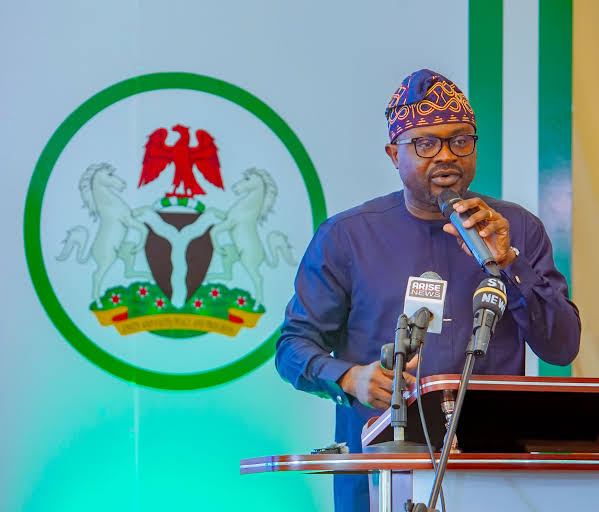
Governor of Rivers State, Siminalayi Fubara, has reaffirmed his administration’s commitment to peace, unity, security and inclusive development as the state marks its 59th anniversary.

In a goodwill message issued on Wednesday to commemorate the anniversary, Fubara said the people of the state had continued to demonstrate resilience, strength and unity despite challenges encountered over the years.

He described the enduring bond among the various ethnic nationalities in the state, including the Ijaw, Ikwerre, Ogoni, Etche, Ekpeye, Andoni and Kalabari, as one of Rivers’ greatest assets and a strong foundation for peace, stability and progress.

The governor noted that Rivers State had remained a major driver of Nigeria’s economy for decades, owing not only to its vast oil and gas resources but also to the outstanding contributions of its people in academia, law, business, entertainment, public service and sports.

Fubara assured residents that his administration would continue to pursue policies and programmes aimed at promoting peace, safeguarding lives and property, and expanding development across all parts of the state.

According to him, governance must remain people-centred and impactful, with every local government area benefiting from the dividends of democracy.

He paid tribute to the founding fathers and elder statesmen of the state for sustaining the spirit of unity and coexistence since its creation, while urging young people to remain hopeful, responsible and committed to building a greater Rivers State through innovation, hard work and patriotism.

The governor also acknowledged the role of women in strengthening families, communities and society, describing them as critical partners in the continued growth and stability of the state.

He called on Rivers people to use the anniversary as an opportunity for reflection and renewed dedication to peaceful coexistence, mutual respect, dialogue and collective progress.

“The unity and future of Rivers State must always rise above personal interests and political differences,” he said.

Rivers State was created on May 27, 1967, by the administration of Yakubu Gowon, following the creation of 12 states from Nigeria’s former regional structure, with Rivers carved out of the defunct Eastern Region.

NDDC Moves To Clear EIA Backlog On 180 Niger Delta Projects

0

The Niger Delta Development Commission has intensified efforts to conclude pending Environmental Impact Assessment (EIA) certification processes for 180 development projects across the Niger Delta region.

Speaking during a meeting with EIA consultants at the Commission’s headquarters, the Director of Environmental Protection and Control, Mrs Anthonia Akpan, said the agency had made significant progress in resolving long-standing certification challenges affecting projects awarded in the 2014, 2016 and 2022 fiscal cycles.

Akpan explained that delays in securing environmental approvals and certificates from the Federal Ministry of Environment had slowed project execution and deprived several communities of expected development benefits.

According to her, the Commission formally appealed to the Federal Ministry of Environment for intervention, leading to the approval of waivers and concessions to facilitate the clearance of all pending EIA applications.

She disclosed that the Commission sought approval for in-house review processes, waivers or reductions in statutory charges and fees, as well as the issuance of EIA certificates for the affected projects.

Akpan further revealed that the Managing Director of the Commission, Samuel Ogbuku, had introduced a policy linking payment for EIA consultancy services to the successful procurement of EIA permits from the Federal Ministry of Environment.

“Going forward, payment for EIA services shall only be made to consultants upon the successful securing of EIA permits from the Federal Ministry of Environment,” she said.
She explained that the directive was designed to strengthen accountability, ensure value for money and accelerate the completion of environmental assessment processes for the Commission’s projects.

The director also assured consultants that the management of the Commission had resolved to settle all outstanding statutory obligations and fees required by the Federal Ministry of Environment to enable seamless procurement of EIA certificates and permits.

Earlier, the Deputy Director of Environmental Protection and Control in charge of Ecological Monitoring, Mr Oscar Abayisemore, said the meeting was convened to communicate management’s reforms on the EIA process to consultants handling projects for the Commission.
He expressed optimism that the reforms would improve efficiency and ensure smoother EIA processes within the NDDC.

In his remarks, the Coordinating Consultant, Mr Daniel George, described the engagement as an opportunity to clear several backlog EIA projects within the Commission’s portfolio.
According to him, the initiative would ultimately benefit communities across the Niger Delta region by accelerating the delivery of critical development projects.

Court Move Threatens Chinda’s Emergence As APC Governorship Candidate in Rivers

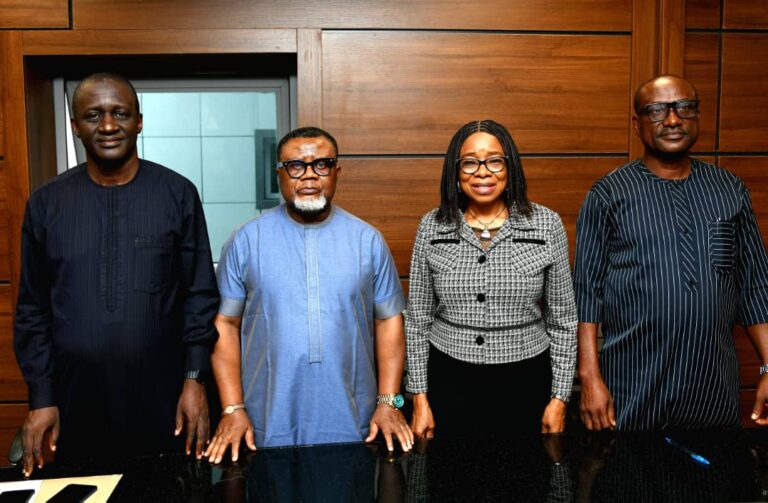
Fresh legal hurdles have emerged against the governorship ambition of Kingsley Chinda after a suit was filed before a Federal High Court in Abuja seeking to stop the Independent National Electoral Commission (INEC) from recognising him as the governorship candidate of the All Progressives Congress (APC) in Rivers State ahead of the 2027 election.

Chinda, an ally of Nyesom Wike, emerged as the APC governorship candidate during the party’s primary held on May 21, 2026, following the withdrawal of other aspirants, including Siminalayi Fubara, Tonye Cole and Alabo Dakorinama George-Kelly.

The lawmaker currently represents Obio/Akpor Federal Constituency in the House of Representatives and serves as Minority Leader on the platform of the Peoples Democratic Party (PDP), despite his emergence as the APC governorship flagbearer.

The suit, filed by the Incorporated Trustees of the Association of Legislative Drafting and Advocacy Practitioners, challenges Chinda’s alleged defection from the PDP to the APC, arguing that it contravenes provisions of the Electoral Act 2026 and Section 68(1)(g) of the 1999 Constitution regarding defection by legislators.

Court documents showed that the suit, instituted on May 12, 2026, also seeks an order declaring Chinda’s seat vacant and compelling the Speaker of the House of Representatives to remove him as Minority Leader over alleged dual party membership.

The plaintiffs further urged the court to direct INEC to conduct a bye-election for the Obio/Akpor Federal Constituency seat, insisting that Chinda forfeited his mandate upon defecting from the PDP.

Also joined in the suit are INEC, the APC, the Department of State Services (DSS), the Attorney-General of the Federation, the Speaker of the House of Representatives and George-Kelly.

The plaintiffs equally asked the court to prevent George-Kelly from participating in the APC governorship process on the grounds that he allegedly failed to resign his appointment as Director-General of the Border Communities Development Agency within the stipulated timeline for political appointees seeking elective office.

Although George-Kelly later withdrew from the race, the suit maintains that Chinda’s candidature remains invalid and should not be recognised by INEC pending the determination of the case.

In an affidavit supporting the suit, the association’s Administrative Secretary, Jesse Amuga, argued that Chinda’s continued occupation of legislative office while participating in APC governorship activities was “unlawful and contrary to democratic ethics and constitutional order.”

The plaintiffs further claimed that Chinda ignored warnings from constituents and legal representatives who had, in October 2025, threatened to initiate a recall process should he defect from the PDP to the APC.

Court Affirms Jonathan’s Eligibility For 2027 Presidential Race

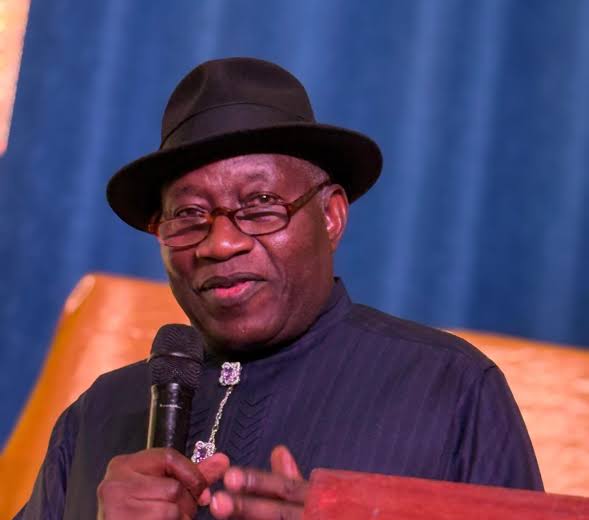
A Federal High Court in Abuja on Tuesday affirmed the eligibility of former President Goodluck Jonathan to contest the 2027 presidential election.
In a judgment delivered by Justice Peter Lifu, the court dismissed a suit filed by lawyer Johnmary Jideobi seeking to stop Jonathan from participating in the race, describing the action as an abuse of court process.

The judge held that both the Federal High Court in Yenagoa and the Court of Appeal had earlier ruled on Jonathan’s eligibility, adding that the appellate court’s decision remained binding.

Justice Lifu further ruled that the plaintiff lacked the legal standing to institute the suit, noting that he failed to demonstrate any personal loss or injury arising from Jonathan’s alleged ambition to contest the election.

The court upheld a N20 million fine earlier imposed on the lawyer and also awarded an additional N1 million cost in favour of the Attorney-General of the Federation.

The legal controversy surrounding former President Goodluck Jonathan stems from the interpretation of Section 137(3) of the 1999 Constitution (as amended), introduced after the Fourth Alteration Act.

The provision states that a person who has been sworn in twice as President shall not be eligible to contest the office again. The debate has centred on whether Jonathan’s assumption of office following the death of former President Umaru Musa Yar’Adua in 2010 should count as a full presidential term.

Jonathan first assumed office as President in May 2010 after serving as Vice President under Yar’Adua.

He subsequently won the 2011 presidential election and completed a full four-year tenure before losing his re-election bid in 2015 to former President Muhammadu Buhari.

Opponents of a possible Jonathan comeback have argued that his completion of Yar’Adua’s tenure and subsequent elected term amount to two terms in office, thereby disqualifying him from future presidential contests.

However, supporters maintain that Jonathan was only elected once as President and that the constitutional amendment was primarily designed to prevent vice presidents or deputy governors who complete substantial parts of a predecessor’s tenure from exceeding constitutional term limits after being elected twice.

The issue has repeatedly surfaced ahead of election cycles, particularly amid recurring calls from political groups urging Jonathan to return to the presidential race. Previous rulings by courts in Yenagoa and the Court of Appeal had already affirmed his constitutional eligibility to contest again — decisions the Abuja Federal High Court relied upon in dismissing the latest suit.

FG Declares Two-Day Public Holiday For Eid-el-Kabir, Tightens Security In North-East

0

The Federal Government has declared Wednesday, May 27, and Thursday, May 28, 2026, as public holidays to mark this year’s Eid al-Adha celebration.

The Minister of Interior, Olubunmi Tunji-Ojo, announced the holidays in a statement issued on Monday in Abuja and signed by the ministry’s Permanent Secretary, Magdalene Ajani.
The government said the declaration underscored its respect for the faith and spiritual heritage of millions of Muslims in Nigeria joining the global Islamic community to observe the sacred festival.

Tunji-Ojo congratulated Muslim faithful at home and in the diaspora, describing Eid-el-Kabir as a celebration rooted in sacrifice, obedience to God and compassion for humanity.

He urged Nigerians to use the period for prayers and reflection, while seeking divine guidance for the country as it strives for peace, security and economic prosperity.

“It is in the spirit of brotherhood, shared humanity and national unity that the Federal Government wishes all Muslims a peaceful, blessed and joyous celebration,” the statement said.

Meanwhile, the Headquarters of Operation Hadin Kai said extensive security measures had been put in place ahead of the festivities to ensure the safety of residents across the North-East region.

In a statement issued by the Media Information Officer of the Joint Task Force, Sani Uba, the command disclosed that intelligence reports indicated that remnants of Boko Haram and Islamic State West Africa Province could attempt isolated attacks during the celebration period.

The task force, however, assured residents that adequate deployments and surveillance operations had been activated to forestall any security breach during the Eid festivities.