

Home Blog Page 28

2027: ‘Let My Challengers Show Their Records,’ Says Egbona, Defends Seven-Year Stewardship In NASS

0

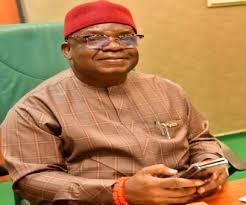
Seven years after his election into the House of Representatives, Dr. Alex Egbona, who represents Abi/Yakurr Federal Constituency of Cross River State, says his focus remains on delivering impactful projects and quality representation to his constituents.

Dr. Egbona, who currently serves as Chairman of the House Committee on Specialty Healthcare, has also secured the Peoples Democratic Party (PDP) ticket to seek another term in the National Assembly.

In this interview with journalists, the lawmaker reflects on his journey in the House of Representatives, outlines key constituency projects and interventions he has facilitated over the years, and expresses concern over the performance of the local government system, urging councils to become more responsive to the needs and aspirations of the people. Justifying his quest to return to the Green Chamber, he tasked his challengers to show their records.

Excerpts:


You have been in the House of Reps for seven years now and this week marks your third year in the National Assembly as a second term member. How has the journey been?

I must appreciate you guys for finding time to sit with me at this time. Yes, this is my seventh year as member of the House. Yes, this week marks my third year after I was re-elected in 2023. If you have been following my activities in the last seven years, you would have observed the mixed grill that has characterised my journey into and in the House of Reps.

Note that I have not truly spent seven uninterrupted years on the seat. In 2019, I was distracted by court and rerun election matters respectively and these lasted for close to two years. let me also refresh your memory, that as at 2019, I was the only member of the APC who won an election in Cross River State. The legal battles came from all fronts: I was dragged to court by a fellow APC member who felt he was the proper candidate of the party. He lost and I won.

At that time, John Gaul, who, incidentally, is the current candidate of the APC, was my major challenger. I was in the APC while he was in the PDP, the ruling party in the state at the time. He had the support of the state government. At the tribunal, I lost and had to challenge the judgement in the court of appeal, where a rerun was ordered to be conducted in the two wards of Ekureku, where I come from.

I defeated him during the rerun. Mind you, while the case lasted at the tribunal and at the court of appeal, I was practically out of office. It was only after the rerun that I returned to my seat. During this period, I was not at my best as a legislator and my constituency suffered in some way, because I had lost focus as a result of the legal battle and the rerun election.

In 2023, a similar thing happened. I was also dragged before the election tribunal by my Labour Party opponent, John Ifere. Can I shock you? Today, John Ifere and I are under the same umbrella-the PDP- as we prepare for the 2027 election. He is contesting the senate seat for Cross River central, while I am seeking a fresh term to continue representing the people of Abi/Yakurr Federal Constituency. And, on the flip side, John Gaul is now in the APC, the party I helped to build, as their candidate. That is how wonderful the game of politics can be, sometimes.

So, as I was saying, John Ifere took me to the tribunal after I defeated him and that was where that phase of legal battle ended. The time and resources lost in 2023 and the distraction that followed was not as serious as it was in 2019.

But in all, you will agree with me that I lost some grounds. But let me shock you again: despite the distractions during and after the first and second term elections, Abi/Yakurr people saw what they had not seen in terms of projects and empowerment programmes since the advent of this democracy in 1999.

Really? But there are people who have said that you have not done anything for them since you got into office. There are people who have accused you of poor representation.

Facts are sacred. I believe that is not a strange axiom for those of you in the media. The things I have done are everywhere. At the risk of sounding immodest, I can say that if you put together, everything my predecessors achieved in 20 years, you will discover that my seven years have been much more impactful. I can also beat my chest and tell you that my footprints are in all the council wards of Abi/Yakurr.

Don’t forget that within my first few weeks in the House of Reps, I had undertaken a tour of the entire federal constituency, where I interacted with the people directly and took note of what their immediate needs were. Those who needed access to portable water have got it. Those who wanted better learning environments for their children were given new classroom blocks, while classroom blocks that were in very bad shape were rehabilitated. Desks, chairs, exercise books etc were provided for the various schools. Those who had challenges with electricity received attention, as transformers were provided and the people linked to the public grid.

During this period under review, I have facilitated the employment of scores of constituents into various federal government agencies and parastatals, including the Federal Polytechnic, Ugep, which establishment I played a very pivotal role.
The leather institute in Ekureku, a monotechnic, was attracted by me and many of our people are either employed or currently being trained in leather works under my scholarship. Many of our people are now in the police, the military, DSS and the Nigeria Civil Defence Corps, courtesy of me. I do not want to even talk of the solar powered street lights which I attracted to all parts of the constituency.

I have empowered scores across the constituency. many were trained in various vocations and were also assisted with funds to start their businesses. A lot of them were empowered with bikes and keke. Others were assisted to acquire skills in the areas of hair dressing, fashion design, photography and videography etc. Today, we have many of my constituents who are doing well in their fishing businesses, after they were trained through me and the necessary working tools and start up capital given to them.
In my constituency, there is no Primary Health Centre that is still in darkness.

There is none that has also not been equipped with functional facilities. I took advantage of my position as chairman of the House committee on specialty healthcare to attract health related projects to my constituency. Thousands of the people have been enrolled in the health insurance scheme, making it possible for the them to have access to medical facilities and drugs in selected hospitals in Abuja, Calabar, Abi and Yakurr.

Should I still go ahead? Health officials in all the health centres have been trained to enable them do their work perfectly. I undertook a comprehensive free medical outreach for my people in the two local governments. Surgical operations were undertaken for those who needed such services.

There was no segregation. You did not need to know anybody to be given attention. We spent days in the selected health centres across the constituency for this programme.
Please go and find out whether, in the history of this constituency, any legislator has commissioned projects; I mean people-oriented projects that the people are still enjoying till today. I am also the first legislator to have organized town hall meetings, where I interacted with the people to render the account of my stewardship. I am the first to have operated a functional liaison office. Please go and verify.
I do not even want to talk about the assistance I give to hundreds of people on a daily and weekly basis-for burials, school fees, food, house rent etc. Those who have not been enrolled in the health insurance still reach out to me for assistance to pay their medical bills.

Now, let me say this, that I have not neglected my core responsibilities as a lawmaker-lawmaking, oversight and representation. I have sponsored bills and moved motions on the floor of the House. A bill that I sponsored for the establishment of a federal medical centre at Itigidi has since been passed and awaiting the assent of Mr President. Time will fail me to read out all the bills and motions. But they are all captured in my report card. Copies will be given to you.

So, anybody who says they cannot see what I have done is either living in the moon for the past seven years, or is blind, or is just being petty. My works speak for me everywhere.

But let me use this opportunity to say this: the duty of the legislator is not to embark on projects. Legislators do not control votes. We don’t have executive powers over funds. We don’t have security votes. Governors control funds for their states. Local government chairmen control funds for their LGAs. But people expect legislators to do all the projects. This is a wrong mindset.

I come from Abi LGA. Look at what is happening in the local government system. In Abi for example, a whooping N5.57billion was received from the federation account in 2025. This year, between January and March, Abi LGA has received in excess of N1.5 billion. This is outside the IGR. What has been done with the money? Yet, everybody is looking at my direction, to provide water, electricity, build schools, do roads etc. What is the LG doing? Regardless though, I am doing and will continue to do my best for my people.

You said you were the one that built the APC in your state and you were even the only one that won an election under the APC. So, why did you leave for the PDP? And which faction of the PDP do you belong?

Let me answer from the second leg of your question. There are no two factions of the PDP. INEC is the electoral umpire. What you should ask is, where does INEC stand?

Or, was INEC present during the primary election where we emerged as the party’s candidates? The answer is yes. I think you should exercise a bit of patience to see those whose names will be published by the commission.

Now, why did I leave the APC? Many people have asked this question and the answer I have always given is that the events that led to my exit from the APC must have been allowed by God, otherwise I would have remained in the APC. It was a painful decision but I had to take that decision, especially when my people gave me the go ahead to quit. I belonged to a party that used to be one indivisible family but just about when we were preparing for the 2027 elections, I began to notice strange occurrence in the party. I noticed fragmentation in the party and I could not bear it. So, I had to quit.

So, you are more comfortable in the PDP than you were in the APC?

I have not seen toxicity in the current PDP. But I have seen a family that is welcoming. I have seen a political family that has the interest of my people at heart. Politics is all about the people. And a political party is that vehicle that takes you and your people to El Dorado. So, right now, my people are comfortable with the PDP because, like I said, there is no toxicity and there is peace.

If you win in 2027, what new things would you be do for Abi/Yakurr?

I will like to rephrase that question, partly. Let’s say it like this: when you win… I say so because I am certain that Abi/Yakurr people know that I have served them well, with all my heart, for the past seven years and so they will willingly give me their mandate for a fresh term. Like I have said in various fora, this will be my last term in the House of Reps. After 2031, I will vacate the seat for my Yakurr brothers or sisters to take over. By the time I return in 2027 therefore, I will, as usual, consult widely with the royal fathers, the women, the youths, political leaders and everybody in the constituency.
I do not walk or work alone. I am one person who deliberately carries my constituents along in all that I do. So, they will make inputs at every point in time and what they need is what I would send to the national budget. But you can be sure that more people will gain employment through me, more people will have access to more good things of life. They will enjoy a higher level of representation and access to the government and offerings by the government.

And what if you do not win?

That question is just like saying ‘what if there is no sunlight when day breaks.’ I am so certain that I will win. It will not be by my might or by my power. I will win because I have served the people well for the past seven years. I will win because God is involved in this project. I will win because my people cannot cope with stinginess and an impactful representation. They would not want to be sent to Egypt after they have tasted life in paradise for the past seven years.
Please do your job as reporters-go and ask what my main challenger did when he was speaker in the state house of assembly. He was in the House for eight years. For four years, he was speaker. Please go to his village and ask. Start from there. Tell them to show you what he did as a legislator that was in the government and had access to the governor for a whole four years in his capacity as speaker. I mean the fourth most influential person in the state, after the governor, the deputy governor and the chief judge; and in fact, the head of the third arm of government at the time. I have told you a few of the things I have done in seven years. Please tell him to show you what he did when he was in power. That is where the referendum will start from. The 2027 election in Abi/Yakurr will be a referendum on performance. Two of us have been in the legislature. I have used my seven years to touch lives and attract federal government projects to all parts of the federal constituency, including Adadama. Please meet my opponent and tell him to show you his score card. That is how you will know who is genuinely interested in service to the people.
‘If Obi Needs Campaign Funds, He Should Ask Me’ — Okonkwo Dares Ex-Allies Over N5bn Defamation Threat

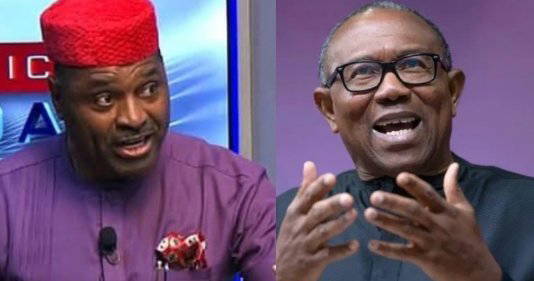
Actor-turned-politician and former spokesman for Peter Obi’s 2023 presidential campaign, Kenneth Okonkwo, has dismissed a N5 billion defamation demand from the former Labour Party presidential candidate, claiming the move is nothing more than an attempt to raise campaign funds.

Okonkwo, reacting to reports that Obi had threatened legal action against him over alleged defamatory comments, challenged his former political ally to proceed to court, insisting he had no intention of backing down.

“It has been brought to my notice that there is a letter circulating online from the hypocrite, Peter Obi, and his lawyers that I should pay him N5 billion.

Hahaha!” Okonkwo wrote on his X account.
“If Peter Obi is looking for money to campaign, he should privately ask me for assistance, not come from extortion, and I will help him.”

The former campaign spokesman was responding to a letter dated June 9, 2026, in which Obi, through his lawyer, Alex Ejesieme (SAN), demanded N5 billion in damages, a public apology and retraction over statements allegedly made by Okonkwo during an appearance on Channels Television’s Sunrise Daily programme.

Obi’s legal team accused Okonkwo of making false and malicious claims linking him to bribery, extortion, fraud and other criminal conduct, describing the allegations as defamatory and injurious to his reputation.

The lawyers demanded that Okonkwo withdraw the statements within seven days, issue an unreserved public apology and undertake not to publish further defamatory remarks.

However, Okonkwo appeared unfazed by the threat of legal action, saying he would only respond formally after reviewing the letter.

“It will be a shame to Peter Obi and his lawyers if they do not take this case to court. I don’t have time or patience for scammers,” he said.

The Nollywood veteran further claimed that he personally financed parts of his involvement in Obi’s presidential campaign, including transportation and accommodation costs during campaign activities.

“I did so when I was his spokesperson, paying for my flight tickets and booking for my hotel accommodation to some of our campaigns,” he stated.

In what appeared to be a warning shot ahead of a possible court battle, Okonkwo suggested that legal proceedings could expose information he obtained while serving as Obi’s spokesman.

“Let me sound this note of warning, the lawyers must take responsibility for any information I may have to divulge, which I acquired as a spokesperson, but which by my conscience I have not shared with anyone.

“Anyone who decides to sue his former spokesperson for defamation is indeed very unwise,” he added.

The latest exchange underscores the deepening rift between Obi and Okonkwo, once prominent allies during the 2023 presidential election campaign, whose relationship has since deteriorated amid a series of public disagreements over political developments and opposition politics.

New Rivers NSCDC Boss Vows Crackdown On Oil Vandals, Economic Saboteurs

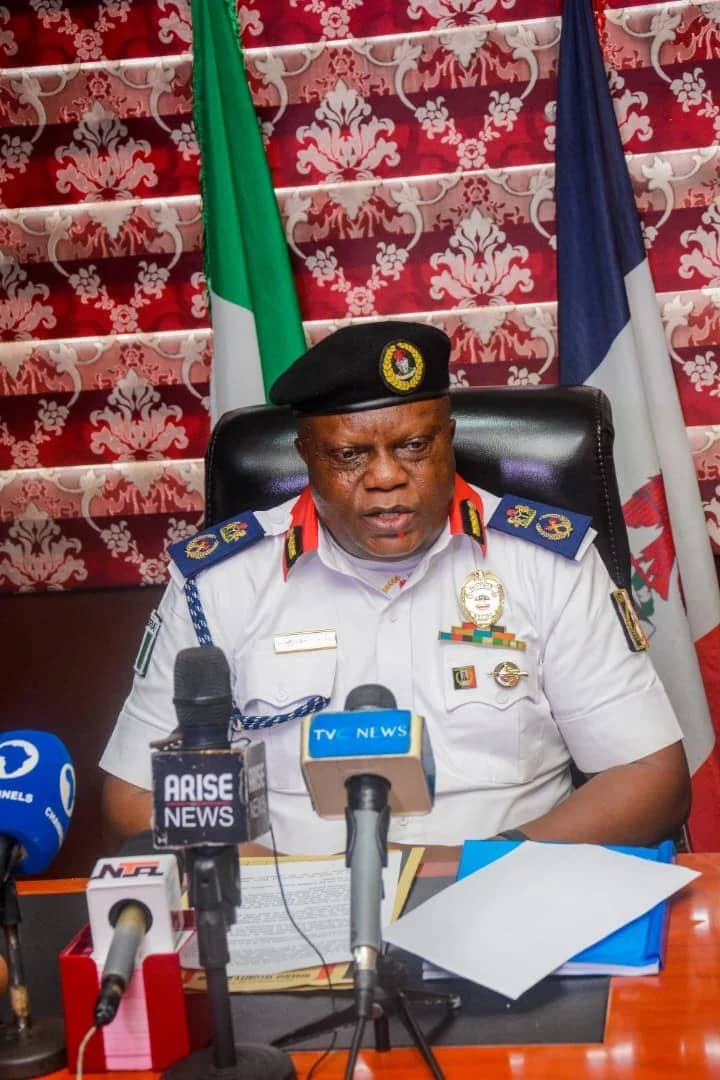
The newly appointed Commandant of the Nigeria Security and Civil Defence Corps (NSCDC), Rivers State Command, Reuben Dennis, has declared a total war against oil vandals, economic saboteurs and other criminal elements threatening the security and economic wellbeing of the state.

Dennis made the pledge during a brief handover ceremony at the Command’s headquarters on Olu Obasanjo Road, Port Harcourt, where he officially took over from the outgoing State Commandant, Joachin Okafor.

A statement issued by the Command’s Public Relations Officer, Ihemnacho Umeado, said the outgoing commandant formally transferred authority to Dennis, who previously served as the Command’s second-in-command and most recently as Head of Operations, Zone 9, Port Harcourt.

In his inaugural remarks, Dennis promised to build on the achievements of his predecessor while intensifying efforts to protect critical national assets and infrastructure across Rivers State.
He warned criminal elements engaged in oil theft, pipeline vandalism and other forms of economic sabotage to steer clear of the state, stressing that the command under his leadership would deal decisively with anyone found undermining national assets.

The new NSCDC helmsman also pledged to strengthen collaboration with sister security agencies and other stakeholders to improve security across the oil-rich state.

According to him, intelligence gathering, personnel development and enhanced operational efficiency will form key pillars of his administration.

Dennis further assured officers and men of the command of improved welfare and regular training programmes aimed at boosting professionalism and operational readiness.
He, however, issued a stern warning against indiscipline, misconduct and unprofessional conduct among personnel, maintaining that erring officers would face appropriate disciplinary measures.

Emphasising that security remains a collective responsibility, Dennis called on residents to support law enforcement agencies with credible information capable of helping to combat crime and insecurity.

Earlier, the outgoing Commandant, Okafor, expressed gratitude to the NSCDC Commandant-General, Prof. Ahmed Abubakar Audi, for the opportunity to serve the nation and the Corps.

He also commended Rivers State Governor, Sir Siminalayi Fubara, for supporting the command, particularly through the donation of 10 Hilux patrol vehicles which, he said, significantly enhanced operational effectiveness.
Okafor urged his successor to prioritise the acquisition of a permanent site for the command as part of efforts to strengthen its institutional presence in the state.

The ceremony featured the signing of handover documents, symbolic transfer of authority through the presentation of the NSCDC flag and a photo session attended by senior officers of the command.

NDDC Clears Compensation Hurdle, Accelerates 3.7Km Okrika-Borikiri Bridge Project

0

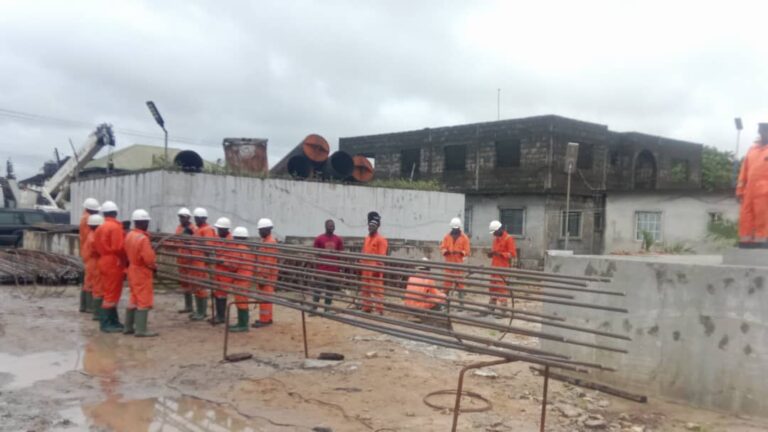
The Niger Delta Development Commission (NDDC) has said construction work on the 3.75-kilometre Okrika-Borikiri Road and bridge project in Rivers State will gather momentum following the payment of compensation to affected property owners at the Borikiri axis of the project.

Speaking during an inspection of the project site in Okrika, the NDDC Assistant Director, Utilities, Infrastructure Development and Waterways (UIDW), Martins Isichei, disclosed that compensation issues that had stalled progress on the Borikiri alignment had been resolved.

According to him, the Commission has settled compensation claims for property owners affected by the project corridor and is awaiting the evacuation of residents before commencing demolition of structures within the right of way.

NDDC officials inspecting ongoing work at the Okrika-Borikiri Bridge in the Okrika Local Government Area of Rivers State.

“The NDDC has paid compensation to property owners along the Borikiri alignment, and we are expecting the evacuation of residents there before we commence demolition of structures in the right of way,” he said.

Isichei noted that work on the Okrika section of the project had recorded significant progress despite challenges encountered on the waterways.

He explained that shortly after work resumed, a vessel collided with an existing pile, forcing engineers to redesign part of the bridge structure.
“When we resumed work on the site, a vessel collided with an existing pile. We had to re-profile the bridge and develop a new design to circumvent the damaged pile,” he said.

The NDDC official expressed optimism that the project would ease traffic congestion along the refinery road corridor and significantly reduce travel time between Okrika and Port Harcourt upon completion.

He explained that the project comprises three major bridge structures: the 180-metre Kolabi Bridge at Etche Waterfront, the 1,120-metre Abotoru Bridge, and the 490-metre Okpoka Bridge.

While acknowledging that progress on the Borikiri alignment had lagged because of compensation-related issues, Isichei said construction activities would commence there shortly.

Also speaking, the Project Consultant, Azu Chukwuma, said the scope of the project was reviewed following its revival to align with present realities and engineering requirements.

He noted that efforts were underway to accelerate construction, particularly the launching of bridge beams, despite the high cost of marine logistics associated with the project.

“Our intention is to determine how quickly we can proceed with launching the first sets of beams. The work is mainly on the river, and much of the marine logistics involved is costly. I am in touch with the appropriate officials of the NDDC to determine the best way forward,” Chukwuma stated.

He commended host communities for their cooperation, noting that the absence of major disputes had contributed to the project’s steady progress.

A representative of the construction company, Maroun Kassouf, said fabrication of bridge beams had advanced considerably and that installation would begin soon.

“The project is progressing well. Once people evacuate at the Borikiri end, we will demolish the structures there and move to that site immediately. That end would be much easier, as the river is shallower than the Okrika end,” he said.

The Vice Chairman of the Okrika Community Development Committee, Minengibi Ferdinand, lauded the NDDC for undertaking the project, describing it as a critical infrastructure that would improve connectivity and stimulate economic growth.

He said the road and bridge network would provide an alternative route to Okrika, ease pressure on the East-West Road and open up communities for greater socio-economic development.

“This is a laudable project that will ease traffic on the East-West Road and provide an alternate route to Okrika. We are hopeful that once it is completed, it will attract socio-economic development to our community,” Ferdinand said.

‘Look Beyond Oil’: Niger Delta Voices Demand Climate Justice, Environmental Accountability At WED Conference

0

Stakeholders from across the Niger Delta have renewed calls for environmental justice, climate accountability and a transition from decades of oil dependence, as the LincGreen Climate Change Initiative convened its third annual “Look Beyond Oil” conference to mark World Environment Day 2026 in Port Harcourt.

The conference, held at Autograph Event Place along Abacha Road, GRA, Port Harcourt, drew a diverse audience of traditional rulers, environmental activists, students, researchers, community leaders and young advocates who gathered to examine the ecological realities confronting the Niger Delta and chart pathways towards a sustainable future.

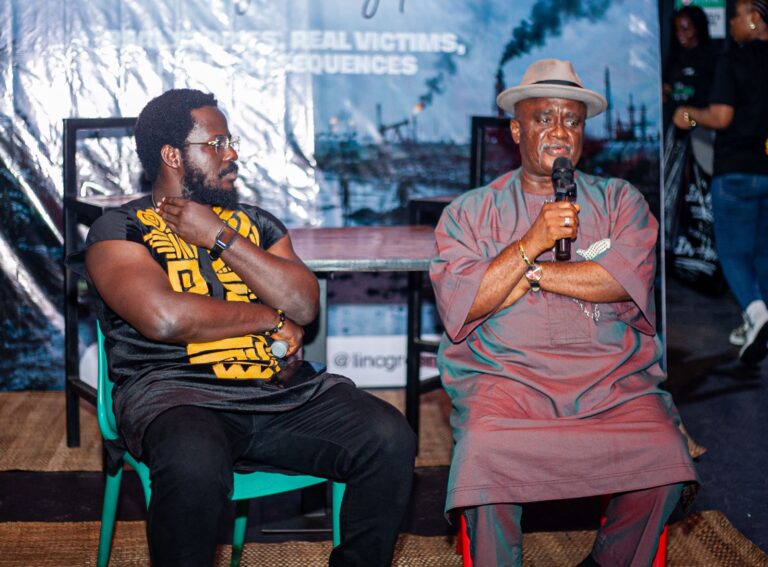
Interview Session with Dappa Prinye Peter at the conference.

Uniquely designed in the format of the traditional Niger Delta “Tales by Moonlight,” the event recreated the age-old practice of gathering after dark to share stories that preserve histories, convey warnings and reveal truths. Organisers said the approach was intended to create a space for honest conversations about the environmental challenges facing the region.

In his opening address, Executive Director of LincGreen Climate Change Initiative, Tobechukwu Diolu, said the organisation was born out of the devastating floods that ravaged communities across Rivers State in 2022, exposing the fragile environmental condition of the Niger Delta after decades of oil-related degradation.

According to him, LincGreen’s engagements across the region have revealed the scale of the environmental crisis confronting local communities.

Roselyn Nwuchegbuo, National Coordinator, LincGreen Climate Change Initiative.

“LincGreen has visited 75 communities across the Niger Delta between 2024 and 2025. We have witnessed the multidimensional impacts of climate change, including the loss of homes, massive displacement of people and widespread environmental damage,” he said.

Speaking on behalf of affected oil-producing communities, the Paramount Ruler of Ogale Kingdom in Eleme Local Government Area of Rivers State, HRH King Godwin Bebe Okpabi, lamented the environmental consequences of decades of oil extraction.

He disclosed that Ogale community alone hosts about 20 oil wells but has received little environmental remediation despite years of exploitation.

“The oil was taken, but the land was not restored,” he said, while also criticising what he described as a deliberate divide-and-rule strategy that has weakened the collective bargaining power of Niger Delta communities.

Veteran environmental and community rights activist, Elder Celestine Akpobari, challenged young people to become more strategic in their advocacy efforts.

“If you want to destroy a man, destroy the environment,” he said, urging participants to transform information gathered through activism into practical campaigns capable of driving genuine change rather than merely documenting the region’s suffering.

Also speaking, Dr Isaac Osuoka, Director of Social Action International, described oil exploitation in the Niger Delta as a system of extraction that has impoverished communities while enriching others.

“For us, oil represents colonisation, plunder and robbery of our people and land. It is the responsibility of the youth to recognise the need for change and to work for change,” he said.

Representing Rooted Rising Initiative, Chidera Onwuzurike stressed that climate change is no longer an abstract concept but a lived reality affecting communities daily.

She noted that her organisation focuses on the media dimensions of climate advocacy and is committed to ensuring that stories from the Niger Delta are told authentically and by those directly affected by environmental challenges.

On the role of technology, Executive Coordinator of MAJI, Onyekachi Emmanuel, highlighted the importance of data in environmental protection and climate advocacy.

He urged young people to embrace technological tools that can enhance public awareness, strengthen evidence-based campaigns and improve environmental accountability.

Similarly, investigative journalist Dappa Prinye Peter encouraged emerging advocates to develop precision in their communication efforts by focusing on clearly defined issues and building consistent platforms capable of sustaining public engagement.

Contributing to discussions on youth participation and nation-building, Associate Dean of the Faculty of Humanities at the University of Port Harcourt, Prof. Obari Gomba, advised young Nigerians against abandoning the country in search of opportunities abroad.
He urged them instead to remain and contribute meaningfully to national development.

A Research Fellow at the Institute of Geosciences and Environmental Management, Rivers State University, Dr Ibinabo Ogolo, called on academics from the region to take a more active role in documenting the environmental crisis and holding institutions accountable.

“For more than 60 years, Niger Delta land, water and air have suffered oil pollution, gas flaring and climate impacts. As scholars from this region, we carry a unique responsibility. We possess the data, lived experience and intellectual tools to rigorously expose this crisis. We have not done enough,” she said.

Ogolo further challenged researchers to critically evaluate interventions by agencies such as the Hydrocarbon Pollution Remediation Project (HYPREP) and the National Oil Spill Detection and Response Agency (NOSDRA), while generating evidence capable of influencing policy and strengthening accountability.

“The Niger Delta is ground zero for climate justice. If we do not document and analyse our story, others will write it for us or ignore it entirely,” she added.

Also speaking, Prof. Malisi Onyeka Festus of the University of Port Harcourt encouraged young people to sustain their involvement in environmental advocacy through continuous learning, motivation, skill acquisition and community engagement.

Participants at the conference agreed that while climate change remains a global challenge, the Niger Delta occupies a unique position where environmental degradation, oil pollution and climate vulnerability intersect. They called for stronger grassroots mobilisation, increased investment in climate education and greater accountability from governments, regulatory agencies and oil companies operating in the region.

The Atlantic Bell reports that as the event concluded, a common message resonated across generations: the future of the Niger Delta depends not only on looking beyond oil, but on empowering communities to shape a more just and sustainable environmental future.

Minimum Wage Debate Reopens As Labour Pushes For Review, Employers Warn Of Pressure On Businesses

The debate over workers’ welfare and business sustainability is set to dominate industrial relations discussions in the coming months as organised labour has announced plans to begin negotiations for a new national minimum wage in July, barely two years after the implementation of the current N70,000 benchmark.

Leaders of the Nigeria Labour Congress (NLC) and the Trade Union Congress (TUC) disclosed the plan during a joint press briefing on the sidelines of the 114th International Labour Conference in Geneva, Switzerland, arguing that prevailing economic realities have significantly eroded the value of workers’ earnings.

The labour movement noted that several state governments have already acknowledged that the current N70,000 minimum wage is inadequate to meet the basic needs of workers amid persistent inflation, rising transportation costs and increasing prices of essential goods and services.

While welcoming efforts by some governors to improve workers’ remuneration, labour leaders cautioned against unilateral wage pronouncements, insisting that any nationally binding minimum wage must emerge through established tripartite negotiations involving government, employers and workers.

The unions also urged government at all levels to clear outstanding gratuity arrears and other entitlements owed to retired workers, stressing that improved welfare remains critical to boosting productivity and economic stability.

The planned review comes amid growing speculation that a new national wage benchmark could exceed N100,000, following decisions by some state governments to adopt higher wage structures for their employees.

However, the proposal has triggered concerns among employers and business groups, who argue that while workers deserve better pay, many private sector operators, particularly small and medium-sized enterprises (SMEs), are already struggling under the weight of inflation, energy costs, multiple taxes and weak consumer demand.

President of the Lagos Chamber of Commerce and Industry (LCCI), Leye Kupoluyi, said private businesses should not be compelled to automatically match wage levels approved by governments if economic realities make such payments unsustainable.

“National minimum wage does not necessarily mean private sector operators must pay their workers the same level if they cannot afford such a level at the time of introduction,” he said.

According to Kupoluyi, government must first address critical challenges affecting businesses, including infrastructure deficits, energy supply constraints and support for productive sectors of the economy.

He also expressed concerns about the country’s fiscal position, warning that rising debt servicing obligations could further constrain investments needed to improve the business environment.

Similarly, Director-General of the Nigeria Employers’ Consultative Association (NECA), Adewale Oyerinde, acknowledged that calls for wage increases reflect the harsh economic realities confronting workers but insisted that any adjustment must follow internationally recognised procedures.

“We commend the state governments for proposing the increase of the minimum wage to N100,000. This seems plausible in view of the biting economic situation,” Oyerinde said.

He stressed, however, that wage determination must be based on empirical data and negotiated through the tripartite process recognised by the International Labour Organisation (ILO), rather than political declarations.

“While the government can, at a bipartite engagement with the unions, agree on what the wages would be, that cannot be binding on the organised private sector,” he said.

Oyerinde argued that reducing the cost of living through economic reforms could have a more lasting impact on workers’ welfare than what he described as an irrational increase in wages unsupported by productivity growth.

For many business owners, the challenge goes beyond willingness to pay. They argue that survival has become increasingly difficult in an operating environment characterised by high production costs and declining profitability.

National Vice President of the National Association of Small-Scale Industrialists, Segun Kuti-George, said while higher wages may be desirable, they are not immediately feasible for many businesses.

“MSMEs are already groaning under the burden of increased production costs and the consequential decline in profit margins,” he said.

President of the Association of Small Business Owners of Nigeria (ASBON), Dr Femi Egbesola, echoed similar concerns, noting that the capacity to implement a N100,000 minimum wage varies significantly across sectors and company sizes.

“The move by some state governments to raise the minimum wage to N100,000 is commendable and reflects the reality of the rising cost of living,” Egbesola said. “However, whether the private sector can match this level depends largely on the size, capacity and financial health of individual businesses.”

He noted that while larger corporations may be able to absorb higher wage costs, many SMEs are grappling with inflationary pressures, rising energy bills and weak consumer demand.

Egbesola called on government to focus on reducing the cost of doing business, arguing that a more supportive economic environment would enable employers to pay higher wages sustainably without sacrificing jobs.

Chief Executive Officer of the Centre for the Promotion of Private Enterprise (CPPE), Dr Muda Yusuf, observed that wage structures already differ widely across sectors of the economy.

According to him, industries such as banking, oil and gas, and information technology already pay significantly above N100,000, with some firms offering entry-level salaries of between N150,000 and N200,000.

However, he said sectors such as manufacturing, agriculture, retail, hospitality and education continue to struggle with rising operational expenses.

“For many small businesses, it is a struggle to even keep the business afloat. That is the reality,” Yusuf said.

He added that many enterprises are yet to fully comply with the existing N70,000 minimum wage because of soaring energy costs and weak consumer spending.

Industry stakeholders maintain that improving infrastructure, stabilising energy costs, addressing insecurity and creating a more business-friendly environment would ultimately provide a stronger foundation for sustainable wage growth.

For labour unions, however, the issue remains straightforward: Nigerian workers deserve a living wage that reflects current economic realities and protects them from worsening hardship.

As negotiations commence next month, policymakers, employers and workers will once again face the difficult task of balancing the need for improved incomes with the imperative of sustaining businesses and preserving jobs in Africa’s largest economy.

From Face Of Port Harcourt to Miss World Nigeria: How Tamunosoye Karibi-George Claimed the 2026 Crown

For Queen Tamunosoye “Soye” Karibi-George, the journey to becoming Miss World Nigeria 2026 was neither accidental nor easy. It was a path marked by resilience, determination, community service, cultural pride, and a steady rise through the ranks of pageantry.

Tamunosoye Karibi George was crowned Miss World Nigeria 2026 at the Balmoral Hall, Federal Palace Hotel in Lagos, in a grand finale that brought together 20 finalists from across the country under the theme “Pride, Power, and Purpose.”

Organised by the Silverbird Group, the Miss World Nigeria 2026 coronation night was more than a beauty pageant — it was a showcase of intelligence, advocacy, and leadership.


Now crowned Nigeria’s foremost beauty queen, the 25-year-old communications professional is preparing to carry the nation’s flag to the Miss World pageant in Vietnam later this year, hoping to follow in the footsteps of fellow Kalabari-born beauty queen, Agbani Darego, who made history by becoming the first Black African to win the Miss World crown in 2001.

Born on June 29, 2000, to Barrister Karibi George of Buguma in Asari-Toru Local Government Area of Rivers State and Mrs. Ebitari Karibi-George of Odi in Bayelsa State, Soye’s story reflects a unique blend of Rivers and Bayelsa heritage.

A graduate of Mass Communication from Madonna University, Okija, and an Associate Member of the Nigerian Institute of Public Relations (NIPR), Karibi-George built a reputation as a model, voice-over artist, event host, scriptwriter, singer, actress and entrepreneur long before stepping onto the national pageant stage.

The Atlantic Bell reports that her rise in pageantry began in earnest on December 10, 2023, when she emerged first runner-up in the Miss Port Harcourt City Beauty Pageant. By virtue of that achievement, she was crowned Face of Port Harcourt City 2023/2024.

The title provided a platform for advocacy, and she immediately launched her environmental campaign, “Beautifying the Garden City: A Sustainable Approach to Waste Disposal,” aimed at promoting responsible waste management, reducing littering and engaging transport unions and other stakeholders in environmental sustainability efforts.
The exposure from the Port Harcourt pageant proved pivotal.

Recognising her potential, the organisers of the Miss Port Harcourt City Organisation entered her for the Miss Africa International contest. In December 2024, she travelled to Accra, Ghana, where she emerged winner of the prestigious continental title, bringing international recognition to herself and her community.

After completing her reign in 2025, Karibi-George set her sights on a bigger stage — Miss World Nigeria 2026.

Her entry into the competition came with an interesting twist. Despite being a Rivers State indigene through her father, the organisers designated her as Miss Bayelsa, allowing her to represent the state of her maternal heritage.

While her quest for the crown reportedly received limited institutional backing from Rivers State, apart from some support from the Chairman of Asari-Toru Local Government Area, Dr. Onengiye George, the tide changed when she became Miss Bayelsa.

Her uncle, Prince Aganaba, and his wife, Dr. Omiete Aganaba, spearheaded a vigorous campaign to rally support for her candidature across Bayelsa State. Their efforts secured endorsements from influential stakeholders, including the Chairman of the Bayelsa State Council of Traditional Rulers, the President of the Ijaw Youth Council (IYC) Worldwide, and notably the Managing Director of the Niger Delta Development Commission (NDDC), Dr. Samuel Ogbuku.

Ogbuku’s endorsement gained widespread attention on social media and helped amplify support for the beauty queen’s campaign.

Throughout the competition, Karibi-George proudly flew the Bayelsa flag, showcasing the state’s culture, traditions and identity. Her performances and cultural presentations reflected her commitment to representing Bayelsa with authenticity and pride.

That commitment paid off when she emerged winner of the Miss World Nigeria 2026 title, earning the right to represent the country on the global stage.

Beyond pageantry, Karibi-George’s profile is distinguished by humanitarian service and youth advocacy.

She has participated in several outreach programmes, including cancer awareness campaigns organised by the Engraced Life Foundation, educational initiatives for young girls, talent development projects for children in Nigeria and Ghana, and public health awareness campaigns in Rivers State.

Her latest advocacy platform, the “Beyond Labels Initiative,” focuses on challenging societal stereotypes, promoting inclusivity and supporting children with special needs.

According to her, the project seeks to address the stigma and lack of awareness that often leave vulnerable children misunderstood and underserved.

“Miss World is about beauty with purpose,” she has repeatedly stated, describing her ambition not merely as winning a pageant but as creating meaningful social impact.

Her commitment to service is matched by her talent. A devoted Christian and worship minister, she has consistently won talent segments in pageants through her singing performances.

The President of the Ijaw Youth Council Worldwide, Sir Jonathan Lokpobiri Snr., who endorsed her campaign, described her as an outstanding ambassador of Ijaw heritage and a role model for young women. He pledged to mobilise support for her journey, noting that her success represents a platform for youth empowerment, education and positive social change.

As Nigeria looks ahead to the Miss World competition in Vietnam, many are drawing comparisons with Agbani Darego, another daughter of Kalabari land whose historic victory on the world stage remains one of the nation’s greatest achievements in pageantry.

For Tamunosoye Karibi-George, the challenge now is even greater. Having conquered the national stage after a journey that took her from Face of Port Harcourt City to Miss Africa International and ultimately Miss World Nigeria, she now stands on the threshold of history.

The Atlantic Bell further reports that like Agbani Darego before her, the young queen carries not only the hopes of Rivers State and Bayelsa State, but also the aspirations of millions of Nigerians who believe that another Nigerian can once again wear the coveted Miss World crown.

NDDC Boosts Healthcare Delivery In Rivers, Donates Medical Equipment To PHC

The Niger Delta Development Commission (NDDC) has donated a range of medical equipment to the Model Primary Health Care Centre in Orogbum Community, Port Harcourt Local Government Area of Rivers State, as part of efforts to strengthen healthcare infrastructure and improve access to quality medical services in the Niger Delta.

Speaking during the handover ceremony, the Managing Director of NDDC, Dr Samuel Ogbuku, said the intervention underscored the Commission’s commitment to enhancing healthcare delivery and improving the well-being of residents across the region.

Represented by the Director of Education, Health and Social Services, Dr Patience Ezugu, Ogbuku noted that access to functional healthcare facilities remains a critical component of sustainable development.

He said the donation was aimed at equipping the health centre with essential tools required to improve service delivery and meet the healthcare needs of the community.

“The NDDC remains committed to promoting quality healthcare infrastructure and ensuring that communities in the Niger Delta have access to essential medical services. This intervention reflects our dedication to improving the lives and well-being of our people,” Ogbuku stated.

The donated items included glucometers, examination couches, surgical instruments and other diagnostic equipment designed to enhance patient care and support healthcare workers in the facility.

Receiving the equipment on behalf of the Rivers State Primary Healthcare Management Board, the Executive Secretary, Dr Chituru Adele, commended the Commission for what he described as a timely intervention.

According to him, the donation would significantly strengthen the capacity of the health centre to provide quality healthcare services to residents.

“I thank the NDDC for providing this medical equipment and supporting the Primary Health Centre for the benefit of the people of the Niger Delta,” Adele said.

Also speaking, the Director of Medical Services at the Rivers State Primary Healthcare Management Board, Dr Tonye Lawson-Jack, described the donated items as critical diagnostic tools that would improve healthcare delivery and patient outcomes.

He urged the management of the facility to ensure proper maintenance and effective utilisation of the equipment, while encouraging the Commission to continue monitoring the impact of its interventions across the region.

“If you invest in a project, you should be interested in seeing that the investment grows. When we are doing well, tell others; when we are not doing well, let us know so we can improve,” he said.

The Head of the Primary Health Care Centre, Dr Nwabueze Blessing, expressed gratitude to the NDDC, noting that the intervention would enhance service delivery and improve the working conditions of healthcare personnel at the facility.
Similarly, Chairman of the Community Development Committee (CDC), Bright Ogbonda, praised the NDDC leadership for what he described as sustained efforts to improve the lives of people in the Niger Delta through impactful development initiatives.

The donation forms part of the Commission’s broader strategy to strengthen healthcare institutions and improve access to quality medical care in communities across the Niger Delta region.

Court Declares National Assembly’s N110bn SUV, Allowance Scheme Spending Unlawful …Orders Strict Compliance with Procurement Laws

The Federal High Court in Lagos has declared unlawful the National Assembly’s controversial N110 billion expenditure on luxury vehicles and support allowances for lawmakers, describing the spending as arbitrary, self-serving and inconsistent with constitutional and procurement requirements.

In a landmark judgment delivered by Justice Yellim Bogoro, the court held that the proposed expenditure of N40 billion for the purchase of 465 vehicles for members of the Senate and House of Representatives, alongside N70 billion earmarked as support allowances for newly elected lawmakers, violated provisions of the Public Procurement Act, the Code of Conduct for Public Officers and the oath of office sworn by legislators.

Justice Bogoro further directed Senate President Godswill Akpabio and Speaker of the House of Representatives Tajudeen Abbas to ensure that all future procurements and expenditures by the National Assembly strictly comply with due process and are guided by transparency, accountability and value-for-money principles.

The judgment was delivered in Suit No. FHC/L/CS/1606/2023 filed by the Socio-Economic Rights and Accountability Project (SERAP), which challenged the legality of the spending plans approved by the National Assembly in 2023 amid widespread economic hardship across the country.

The court held that the scale of the expenditure, coupled with the failure of the National Assembly to demonstrate compliance with procurement procedures, rendered the spending unlawful.

“Looking at the magnitude of the expenditure, coupled with the absence of demonstrable due process, leads me to conclude that the procurement is arbitrary, disproportionate and inconsistent with statutory procurement standards,” Justice Bogoro ruled.

The judge also described the expenditure as a clear case of conflict of interest and self-dealing, noting that the beneficiaries of the spending were the same lawmakers who approved it.

“The beneficiaries of the expenditure are the very officials approving it, and the expenditure confers direct pecuniary and material benefits. This constitutes a case of self-dealing and conflict of interest,” she stated.

Justice Bogoro observed that the allocation of N110 billion for lawmakers’ benefits came at a time when millions of Nigerians were grappling with severe economic hardship.

“I have taken judicial notice of the economic realities in Nigeria and the widespread financial hardship affecting Nigerian citizens. In this context, the allocation of N110 billion for the benefit of lawmakers demonstrates a failure to prioritise national interest,” the court held.

Rejecting arguments by the National Assembly that the matter was protected by legislative autonomy, the court maintained that the doctrine of separation of powers could not be used as a shield for illegality.

“The court is concerned with the legality and constitutionality of legislative spending. Where the exercise of legislative powers violates the Constitution or statutory provisions, the court not only has jurisdiction but a constitutional duty to intervene,” Justice Bogoro ruled.

The court also affirmed the right of civil society organisations to institute public interest litigation, holding that SERAP had the requisite legal standing to bring the action.

According to the judgment, the National Assembly failed to provide credible evidence that due procurement processes, competitive bidding and value-for-money assessments were conducted before the approval of the expenditure.

“The Defendants have failed to provide any credible evidence of compliance with procurement procedure, competitive bidding and value-for-money assessment. The allegations are therefore deemed admitted,” the judge said.

Consequently, the court declared that the planned N40 billion expenditure on 465 bulletproof vehicles breached Section 57(4) of the Public Procurement Act, 2007, as well as constitutional provisions relating to the Code of Conduct for Public Officers.

It also ruled that the N70 billion support allowance approved for new lawmakers violated constitutional and statutory obligations requiring public officers to act in good faith and in the public interest.

Reacting to the judgment, SERAP Deputy Director, Kolawole Oluwadare, described the decision as a major victory for transparency, accountability and responsible management of public resources.

“This landmark judgment demonstrates that public office is a public trust and that public funds must be used strictly in the public interest and in accordance with constitutional and statutory requirements,” he said.

Human rights lawyer Femi Falana (SAN) also hailed the ruling, saying it reaffirmed that public officials could not justify extravagant spending while millions of Nigerians lived in poverty.

“The National Assembly must obey the judgment of the court without any further delay,” Falana said.

Following the judgment, SERAP has written to Akpabio and Abbas urging the leadership of the National Assembly to immediately comply with the court’s orders and demonstrate commitment to the rule of law, transparency and accountability in the management of public resources.

Among the reliefs granted, the court declared both the vehicle procurement scheme and the N70 billion support allowance unconstitutional and ordered the National Assembly to ensure that all future spending conforms with due process, accountability and value-for-money standards.

ICA Holds First-Ever Annual Conference In Africa, Focuses On Communication, Inequality

0

For the first time in its history, the International Communication Association (ICA), one of the world’s leading academic organisations in communication studies, has brought its flagship annual conference to Africa, with scholars interrogating the growing challenges of inequality, artificial intelligence (AI), misinformation and digital power in a rapidly changing global communication landscape.

The 76th ICA Annual Conference, themed “Communication and Inequalities in Context,” is taking place in Cape Town, South Africa, from June 4 to 8, 2026, at the Cape Town International Convention Centre, with about 3,000 communication scholars, journalism researchers, academics and practitioners from around the world.

Organisers describe the event as a landmark moment for global communication scholarship and a significant recognition of Africa’s growing role in shaping conversations around media, technology and society.

Chairperson of the Local Organising Committee, Prof. Herman Wasserman, said the decision to host the conference in South Africa was both symbolic and timely.

“This is the first time that this event will be held on African soil,” Wasserman said in an interview with the African Journalism Education Network (AJENda), noting that while Cape Town had previously hosted a smaller ICA regional conference, the 2026 gathering marks the organisation’s largest global meeting ever held on the continent.

Wasserman, who is also a fellow and board member of the ICA, said the conference theme resonates strongly with South Africa’s realities as one of the world’s most unequal societies.

According to him, discussions at the conference will focus on how communication systems mirror and reinforce inequalities linked to race, class, gender, geography and political power, while also examining pathways toward greater inclusion and equity.

“The theme reflects urgent concerns about unequal access to information, unequal participation in digital systems and the uneven distribution of communicative power across societies,” he said.

The conference comes at a time when emerging technologies, particularly AI, are transforming journalism, governance and public discourse across the world. Participants are expected to explore the implications of AI-generated content, digital surveillance, platform monopolies and misinformation on democratic participation and social cohesion.

Wasserman noted that scholars attending the conference would examine how vulnerable communities are affected by technological disruptions and information inequalities, especially in developing regions.

Beyond inequality, the programme will feature extensive discussions on journalism transformation, media sustainability, digital communication, climate communication, health communication and social justice.

Research presentations will also focus on the growing use of AI in newsrooms, how African media organisations are adapting to technological innovation, and the representation of AI within African media ecosystems.

Another major area of interest will be the rise of disinformation networks and transnational online influence operations, issues that have become increasingly central to contemporary communication research.

Meanwhile, the Chapters initiative(Nigeria being one of the six pilot across the world) with ICA Nigeria being the 1st Chapter in Africa, founded in 2022 in Port Harcourt, Rivers State, is expected to have a strong showing at the conference. Dr. Ekaette George, the pioneer Chair of the ICA in Nigeria is leading the delegation to Cape Town, South Africa.

The ICA Nigeria Chapter Chair, Prof. Desmond Okocha, alongside a dedicated team, will lead conference attendees to experience the conference virtually and live from the Port Harcourt Hub, Faculty of Humanities, Ignatius Ajuru University of Education (IAUE), Rumuolumeni, Port Harcourt, Rivers State, Nigeria.

With members in more than 80 countries and a global network of over 5,000 scholars, the ICA is regarded as one of the most influential organisations in the field of communication studies.

The annual conference serves as a platform for presenting new research findings, fostering international collaboration and shaping future directions in communication scholarship.

Organisers said the 2026 conference will adopt a hybrid format, allowing remote participation in selected sessions to broaden access and engagement.

More than 400 in-person sessions are scheduled, alongside plenaries, interdivisional panels, mentorship programmes, poster presentations, awards and networking events.

The conference is expected to extend into a wider two-week academic engagement through a series of pre-conference and post-conference events, reinforcing its status as one of the largest gatherings of communication scholars globally.

The Atlantic Bell reports that as debates over inequality, information disorder and technological disruption continue to intensify worldwide, the historic hosting of the ICA conference in Africa is viewed as an opportunity to bring perspectives from the Global South into the centre of global communication discourse.