

Home Blog Page 27

‘Look Beyond Oil’: Niger Delta Voices Demand Climate Justice, Environmental Accountability At WED Conference

0

Stakeholders from across the Niger Delta have renewed calls for environmental justice, climate accountability and a transition from decades of oil dependence, as the LincGreen Climate Change Initiative convened its third annual “Look Beyond Oil” conference to mark World Environment Day 2026 in Port Harcourt.

The conference, held at Autograph Event Place along Abacha Road, GRA, Port Harcourt, drew a diverse audience of traditional rulers, environmental activists, students, researchers, community leaders and young advocates who gathered to examine the ecological realities confronting the Niger Delta and chart pathways towards a sustainable future.

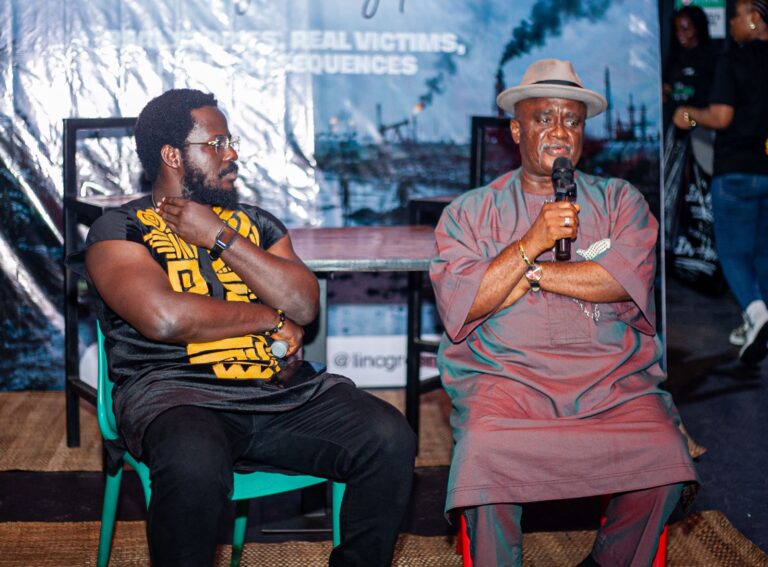
Interview Session with Dappa Prinye Peter at the conference.

Uniquely designed in the format of the traditional Niger Delta “Tales by Moonlight,” the event recreated the age-old practice of gathering after dark to share stories that preserve histories, convey warnings and reveal truths. Organisers said the approach was intended to create a space for honest conversations about the environmental challenges facing the region.

In his opening address, Executive Director of LincGreen Climate Change Initiative, Tobechukwu Diolu, said the organisation was born out of the devastating floods that ravaged communities across Rivers State in 2022, exposing the fragile environmental condition of the Niger Delta after decades of oil-related degradation.

According to him, LincGreen’s engagements across the region have revealed the scale of the environmental crisis confronting local communities.

Roselyn Nwuchegbuo, National Coordinator, LincGreen Climate Change Initiative.

“LincGreen has visited 75 communities across the Niger Delta between 2024 and 2025. We have witnessed the multidimensional impacts of climate change, including the loss of homes, massive displacement of people and widespread environmental damage,” he said.

Speaking on behalf of affected oil-producing communities, the Paramount Ruler of Ogale Kingdom in Eleme Local Government Area of Rivers State, HRH King Godwin Bebe Okpabi, lamented the environmental consequences of decades of oil extraction.

He disclosed that Ogale community alone hosts about 20 oil wells but has received little environmental remediation despite years of exploitation.

“The oil was taken, but the land was not restored,” he said, while also criticising what he described as a deliberate divide-and-rule strategy that has weakened the collective bargaining power of Niger Delta communities.

Veteran environmental and community rights activist, Elder Celestine Akpobari, challenged young people to become more strategic in their advocacy efforts.

“If you want to destroy a man, destroy the environment,” he said, urging participants to transform information gathered through activism into practical campaigns capable of driving genuine change rather than merely documenting the region’s suffering.

Also speaking, Dr Isaac Osuoka, Director of Social Action International, described oil exploitation in the Niger Delta as a system of extraction that has impoverished communities while enriching others.

“For us, oil represents colonisation, plunder and robbery of our people and land. It is the responsibility of the youth to recognise the need for change and to work for change,” he said.

Representing Rooted Rising Initiative, Chidera Onwuzurike stressed that climate change is no longer an abstract concept but a lived reality affecting communities daily.

She noted that her organisation focuses on the media dimensions of climate advocacy and is committed to ensuring that stories from the Niger Delta are told authentically and by those directly affected by environmental challenges.

On the role of technology, Executive Coordinator of MAJI, Onyekachi Emmanuel, highlighted the importance of data in environmental protection and climate advocacy.

He urged young people to embrace technological tools that can enhance public awareness, strengthen evidence-based campaigns and improve environmental accountability.

Similarly, investigative journalist Dappa Prinye Peter encouraged emerging advocates to develop precision in their communication efforts by focusing on clearly defined issues and building consistent platforms capable of sustaining public engagement.

Contributing to discussions on youth participation and nation-building, Associate Dean of the Faculty of Humanities at the University of Port Harcourt, Prof. Obari Gomba, advised young Nigerians against abandoning the country in search of opportunities abroad.
He urged them instead to remain and contribute meaningfully to national development.

A Research Fellow at the Institute of Geosciences and Environmental Management, Rivers State University, Dr Ibinabo Ogolo, called on academics from the region to take a more active role in documenting the environmental crisis and holding institutions accountable.

“For more than 60 years, Niger Delta land, water and air have suffered oil pollution, gas flaring and climate impacts. As scholars from this region, we carry a unique responsibility. We possess the data, lived experience and intellectual tools to rigorously expose this crisis. We have not done enough,” she said.

Ogolo further challenged researchers to critically evaluate interventions by agencies such as the Hydrocarbon Pollution Remediation Project (HYPREP) and the National Oil Spill Detection and Response Agency (NOSDRA), while generating evidence capable of influencing policy and strengthening accountability.

“The Niger Delta is ground zero for climate justice. If we do not document and analyse our story, others will write it for us or ignore it entirely,” she added.

Also speaking, Prof. Malisi Onyeka Festus of the University of Port Harcourt encouraged young people to sustain their involvement in environmental advocacy through continuous learning, motivation, skill acquisition and community engagement.

Participants at the conference agreed that while climate change remains a global challenge, the Niger Delta occupies a unique position where environmental degradation, oil pollution and climate vulnerability intersect. They called for stronger grassroots mobilisation, increased investment in climate education and greater accountability from governments, regulatory agencies and oil companies operating in the region.

The Atlantic Bell reports that as the event concluded, a common message resonated across generations: the future of the Niger Delta depends not only on looking beyond oil, but on empowering communities to shape a more just and sustainable environmental future.

Minimum Wage Debate Reopens As Labour Pushes For Review, Employers Warn Of Pressure On Businesses

The debate over workers’ welfare and business sustainability is set to dominate industrial relations discussions in the coming months as organised labour has announced plans to begin negotiations for a new national minimum wage in July, barely two years after the implementation of the current N70,000 benchmark.

Leaders of the Nigeria Labour Congress (NLC) and the Trade Union Congress (TUC) disclosed the plan during a joint press briefing on the sidelines of the 114th International Labour Conference in Geneva, Switzerland, arguing that prevailing economic realities have significantly eroded the value of workers’ earnings.

The labour movement noted that several state governments have already acknowledged that the current N70,000 minimum wage is inadequate to meet the basic needs of workers amid persistent inflation, rising transportation costs and increasing prices of essential goods and services.

While welcoming efforts by some governors to improve workers’ remuneration, labour leaders cautioned against unilateral wage pronouncements, insisting that any nationally binding minimum wage must emerge through established tripartite negotiations involving government, employers and workers.

The unions also urged government at all levels to clear outstanding gratuity arrears and other entitlements owed to retired workers, stressing that improved welfare remains critical to boosting productivity and economic stability.

The planned review comes amid growing speculation that a new national wage benchmark could exceed N100,000, following decisions by some state governments to adopt higher wage structures for their employees.

However, the proposal has triggered concerns among employers and business groups, who argue that while workers deserve better pay, many private sector operators, particularly small and medium-sized enterprises (SMEs), are already struggling under the weight of inflation, energy costs, multiple taxes and weak consumer demand.

President of the Lagos Chamber of Commerce and Industry (LCCI), Leye Kupoluyi, said private businesses should not be compelled to automatically match wage levels approved by governments if economic realities make such payments unsustainable.

“National minimum wage does not necessarily mean private sector operators must pay their workers the same level if they cannot afford such a level at the time of introduction,” he said.

According to Kupoluyi, government must first address critical challenges affecting businesses, including infrastructure deficits, energy supply constraints and support for productive sectors of the economy.

He also expressed concerns about the country’s fiscal position, warning that rising debt servicing obligations could further constrain investments needed to improve the business environment.

Similarly, Director-General of the Nigeria Employers’ Consultative Association (NECA), Adewale Oyerinde, acknowledged that calls for wage increases reflect the harsh economic realities confronting workers but insisted that any adjustment must follow internationally recognised procedures.

“We commend the state governments for proposing the increase of the minimum wage to N100,000. This seems plausible in view of the biting economic situation,” Oyerinde said.

He stressed, however, that wage determination must be based on empirical data and negotiated through the tripartite process recognised by the International Labour Organisation (ILO), rather than political declarations.

“While the government can, at a bipartite engagement with the unions, agree on what the wages would be, that cannot be binding on the organised private sector,” he said.

Oyerinde argued that reducing the cost of living through economic reforms could have a more lasting impact on workers’ welfare than what he described as an irrational increase in wages unsupported by productivity growth.

For many business owners, the challenge goes beyond willingness to pay. They argue that survival has become increasingly difficult in an operating environment characterised by high production costs and declining profitability.

National Vice President of the National Association of Small-Scale Industrialists, Segun Kuti-George, said while higher wages may be desirable, they are not immediately feasible for many businesses.

“MSMEs are already groaning under the burden of increased production costs and the consequential decline in profit margins,” he said.

President of the Association of Small Business Owners of Nigeria (ASBON), Dr Femi Egbesola, echoed similar concerns, noting that the capacity to implement a N100,000 minimum wage varies significantly across sectors and company sizes.

“The move by some state governments to raise the minimum wage to N100,000 is commendable and reflects the reality of the rising cost of living,” Egbesola said. “However, whether the private sector can match this level depends largely on the size, capacity and financial health of individual businesses.”

He noted that while larger corporations may be able to absorb higher wage costs, many SMEs are grappling with inflationary pressures, rising energy bills and weak consumer demand.

Egbesola called on government to focus on reducing the cost of doing business, arguing that a more supportive economic environment would enable employers to pay higher wages sustainably without sacrificing jobs.

Chief Executive Officer of the Centre for the Promotion of Private Enterprise (CPPE), Dr Muda Yusuf, observed that wage structures already differ widely across sectors of the economy.

According to him, industries such as banking, oil and gas, and information technology already pay significantly above N100,000, with some firms offering entry-level salaries of between N150,000 and N200,000.

However, he said sectors such as manufacturing, agriculture, retail, hospitality and education continue to struggle with rising operational expenses.

“For many small businesses, it is a struggle to even keep the business afloat. That is the reality,” Yusuf said.

He added that many enterprises are yet to fully comply with the existing N70,000 minimum wage because of soaring energy costs and weak consumer spending.

Industry stakeholders maintain that improving infrastructure, stabilising energy costs, addressing insecurity and creating a more business-friendly environment would ultimately provide a stronger foundation for sustainable wage growth.

For labour unions, however, the issue remains straightforward: Nigerian workers deserve a living wage that reflects current economic realities and protects them from worsening hardship.

As negotiations commence next month, policymakers, employers and workers will once again face the difficult task of balancing the need for improved incomes with the imperative of sustaining businesses and preserving jobs in Africa’s largest economy.

From Face Of Port Harcourt to Miss World Nigeria: How Tamunosoye Karibi-George Claimed the 2026 Crown

For Queen Tamunosoye “Soye” Karibi-George, the journey to becoming Miss World Nigeria 2026 was neither accidental nor easy. It was a path marked by resilience, determination, community service, cultural pride, and a steady rise through the ranks of pageantry.

Tamunosoye Karibi George was crowned Miss World Nigeria 2026 at the Balmoral Hall, Federal Palace Hotel in Lagos, in a grand finale that brought together 20 finalists from across the country under the theme “Pride, Power, and Purpose.”

Organised by the Silverbird Group, the Miss World Nigeria 2026 coronation night was more than a beauty pageant — it was a showcase of intelligence, advocacy, and leadership.


Now crowned Nigeria’s foremost beauty queen, the 25-year-old communications professional is preparing to carry the nation’s flag to the Miss World pageant in Vietnam later this year, hoping to follow in the footsteps of fellow Kalabari-born beauty queen, Agbani Darego, who made history by becoming the first Black African to win the Miss World crown in 2001.

Born on June 29, 2000, to Barrister Karibi George of Buguma in Asari-Toru Local Government Area of Rivers State and Mrs. Ebitari Karibi-George of Odi in Bayelsa State, Soye’s story reflects a unique blend of Rivers and Bayelsa heritage.

A graduate of Mass Communication from Madonna University, Okija, and an Associate Member of the Nigerian Institute of Public Relations (NIPR), Karibi-George built a reputation as a model, voice-over artist, event host, scriptwriter, singer, actress and entrepreneur long before stepping onto the national pageant stage.

The Atlantic Bell reports that her rise in pageantry began in earnest on December 10, 2023, when she emerged first runner-up in the Miss Port Harcourt City Beauty Pageant. By virtue of that achievement, she was crowned Face of Port Harcourt City 2023/2024.

The title provided a platform for advocacy, and she immediately launched her environmental campaign, “Beautifying the Garden City: A Sustainable Approach to Waste Disposal,” aimed at promoting responsible waste management, reducing littering and engaging transport unions and other stakeholders in environmental sustainability efforts.
The exposure from the Port Harcourt pageant proved pivotal.

Recognising her potential, the organisers of the Miss Port Harcourt City Organisation entered her for the Miss Africa International contest. In December 2024, she travelled to Accra, Ghana, where she emerged winner of the prestigious continental title, bringing international recognition to herself and her community.

After completing her reign in 2025, Karibi-George set her sights on a bigger stage — Miss World Nigeria 2026.

Her entry into the competition came with an interesting twist. Despite being a Rivers State indigene through her father, the organisers designated her as Miss Bayelsa, allowing her to represent the state of her maternal heritage.

While her quest for the crown reportedly received limited institutional backing from Rivers State, apart from some support from the Chairman of Asari-Toru Local Government Area, Dr. Onengiye George, the tide changed when she became Miss Bayelsa.

Her uncle, Prince Aganaba, and his wife, Dr. Omiete Aganaba, spearheaded a vigorous campaign to rally support for her candidature across Bayelsa State. Their efforts secured endorsements from influential stakeholders, including the Chairman of the Bayelsa State Council of Traditional Rulers, the President of the Ijaw Youth Council (IYC) Worldwide, and notably the Managing Director of the Niger Delta Development Commission (NDDC), Dr. Samuel Ogbuku.

Ogbuku’s endorsement gained widespread attention on social media and helped amplify support for the beauty queen’s campaign.

Throughout the competition, Karibi-George proudly flew the Bayelsa flag, showcasing the state’s culture, traditions and identity. Her performances and cultural presentations reflected her commitment to representing Bayelsa with authenticity and pride.

That commitment paid off when she emerged winner of the Miss World Nigeria 2026 title, earning the right to represent the country on the global stage.

Beyond pageantry, Karibi-George’s profile is distinguished by humanitarian service and youth advocacy.

She has participated in several outreach programmes, including cancer awareness campaigns organised by the Engraced Life Foundation, educational initiatives for young girls, talent development projects for children in Nigeria and Ghana, and public health awareness campaigns in Rivers State.

Her latest advocacy platform, the “Beyond Labels Initiative,” focuses on challenging societal stereotypes, promoting inclusivity and supporting children with special needs.

According to her, the project seeks to address the stigma and lack of awareness that often leave vulnerable children misunderstood and underserved.

“Miss World is about beauty with purpose,” she has repeatedly stated, describing her ambition not merely as winning a pageant but as creating meaningful social impact.

Her commitment to service is matched by her talent. A devoted Christian and worship minister, she has consistently won talent segments in pageants through her singing performances.

The President of the Ijaw Youth Council Worldwide, Sir Jonathan Lokpobiri Snr., who endorsed her campaign, described her as an outstanding ambassador of Ijaw heritage and a role model for young women. He pledged to mobilise support for her journey, noting that her success represents a platform for youth empowerment, education and positive social change.

As Nigeria looks ahead to the Miss World competition in Vietnam, many are drawing comparisons with Agbani Darego, another daughter of Kalabari land whose historic victory on the world stage remains one of the nation’s greatest achievements in pageantry.

For Tamunosoye Karibi-George, the challenge now is even greater. Having conquered the national stage after a journey that took her from Face of Port Harcourt City to Miss Africa International and ultimately Miss World Nigeria, she now stands on the threshold of history.

The Atlantic Bell further reports that like Agbani Darego before her, the young queen carries not only the hopes of Rivers State and Bayelsa State, but also the aspirations of millions of Nigerians who believe that another Nigerian can once again wear the coveted Miss World crown.

NDDC Boosts Healthcare Delivery In Rivers, Donates Medical Equipment To PHC

The Niger Delta Development Commission (NDDC) has donated a range of medical equipment to the Model Primary Health Care Centre in Orogbum Community, Port Harcourt Local Government Area of Rivers State, as part of efforts to strengthen healthcare infrastructure and improve access to quality medical services in the Niger Delta.

Speaking during the handover ceremony, the Managing Director of NDDC, Dr Samuel Ogbuku, said the intervention underscored the Commission’s commitment to enhancing healthcare delivery and improving the well-being of residents across the region.

Represented by the Director of Education, Health and Social Services, Dr Patience Ezugu, Ogbuku noted that access to functional healthcare facilities remains a critical component of sustainable development.

He said the donation was aimed at equipping the health centre with essential tools required to improve service delivery and meet the healthcare needs of the community.

“The NDDC remains committed to promoting quality healthcare infrastructure and ensuring that communities in the Niger Delta have access to essential medical services. This intervention reflects our dedication to improving the lives and well-being of our people,” Ogbuku stated.

The donated items included glucometers, examination couches, surgical instruments and other diagnostic equipment designed to enhance patient care and support healthcare workers in the facility.

Receiving the equipment on behalf of the Rivers State Primary Healthcare Management Board, the Executive Secretary, Dr Chituru Adele, commended the Commission for what he described as a timely intervention.

According to him, the donation would significantly strengthen the capacity of the health centre to provide quality healthcare services to residents.

“I thank the NDDC for providing this medical equipment and supporting the Primary Health Centre for the benefit of the people of the Niger Delta,” Adele said.

Also speaking, the Director of Medical Services at the Rivers State Primary Healthcare Management Board, Dr Tonye Lawson-Jack, described the donated items as critical diagnostic tools that would improve healthcare delivery and patient outcomes.

He urged the management of the facility to ensure proper maintenance and effective utilisation of the equipment, while encouraging the Commission to continue monitoring the impact of its interventions across the region.

“If you invest in a project, you should be interested in seeing that the investment grows. When we are doing well, tell others; when we are not doing well, let us know so we can improve,” he said.

The Head of the Primary Health Care Centre, Dr Nwabueze Blessing, expressed gratitude to the NDDC, noting that the intervention would enhance service delivery and improve the working conditions of healthcare personnel at the facility.
Similarly, Chairman of the Community Development Committee (CDC), Bright Ogbonda, praised the NDDC leadership for what he described as sustained efforts to improve the lives of people in the Niger Delta through impactful development initiatives.

The donation forms part of the Commission’s broader strategy to strengthen healthcare institutions and improve access to quality medical care in communities across the Niger Delta region.

Court Declares National Assembly’s N110bn SUV, Allowance Scheme Spending Unlawful …Orders Strict Compliance with Procurement Laws

The Federal High Court in Lagos has declared unlawful the National Assembly’s controversial N110 billion expenditure on luxury vehicles and support allowances for lawmakers, describing the spending as arbitrary, self-serving and inconsistent with constitutional and procurement requirements.

In a landmark judgment delivered by Justice Yellim Bogoro, the court held that the proposed expenditure of N40 billion for the purchase of 465 vehicles for members of the Senate and House of Representatives, alongside N70 billion earmarked as support allowances for newly elected lawmakers, violated provisions of the Public Procurement Act, the Code of Conduct for Public Officers and the oath of office sworn by legislators.

Justice Bogoro further directed Senate President Godswill Akpabio and Speaker of the House of Representatives Tajudeen Abbas to ensure that all future procurements and expenditures by the National Assembly strictly comply with due process and are guided by transparency, accountability and value-for-money principles.

The judgment was delivered in Suit No. FHC/L/CS/1606/2023 filed by the Socio-Economic Rights and Accountability Project (SERAP), which challenged the legality of the spending plans approved by the National Assembly in 2023 amid widespread economic hardship across the country.

The court held that the scale of the expenditure, coupled with the failure of the National Assembly to demonstrate compliance with procurement procedures, rendered the spending unlawful.

“Looking at the magnitude of the expenditure, coupled with the absence of demonstrable due process, leads me to conclude that the procurement is arbitrary, disproportionate and inconsistent with statutory procurement standards,” Justice Bogoro ruled.

The judge also described the expenditure as a clear case of conflict of interest and self-dealing, noting that the beneficiaries of the spending were the same lawmakers who approved it.

“The beneficiaries of the expenditure are the very officials approving it, and the expenditure confers direct pecuniary and material benefits. This constitutes a case of self-dealing and conflict of interest,” she stated.

Justice Bogoro observed that the allocation of N110 billion for lawmakers’ benefits came at a time when millions of Nigerians were grappling with severe economic hardship.

“I have taken judicial notice of the economic realities in Nigeria and the widespread financial hardship affecting Nigerian citizens. In this context, the allocation of N110 billion for the benefit of lawmakers demonstrates a failure to prioritise national interest,” the court held.

Rejecting arguments by the National Assembly that the matter was protected by legislative autonomy, the court maintained that the doctrine of separation of powers could not be used as a shield for illegality.

“The court is concerned with the legality and constitutionality of legislative spending. Where the exercise of legislative powers violates the Constitution or statutory provisions, the court not only has jurisdiction but a constitutional duty to intervene,” Justice Bogoro ruled.

The court also affirmed the right of civil society organisations to institute public interest litigation, holding that SERAP had the requisite legal standing to bring the action.

According to the judgment, the National Assembly failed to provide credible evidence that due procurement processes, competitive bidding and value-for-money assessments were conducted before the approval of the expenditure.

“The Defendants have failed to provide any credible evidence of compliance with procurement procedure, competitive bidding and value-for-money assessment. The allegations are therefore deemed admitted,” the judge said.

Consequently, the court declared that the planned N40 billion expenditure on 465 bulletproof vehicles breached Section 57(4) of the Public Procurement Act, 2007, as well as constitutional provisions relating to the Code of Conduct for Public Officers.

It also ruled that the N70 billion support allowance approved for new lawmakers violated constitutional and statutory obligations requiring public officers to act in good faith and in the public interest.

Reacting to the judgment, SERAP Deputy Director, Kolawole Oluwadare, described the decision as a major victory for transparency, accountability and responsible management of public resources.

“This landmark judgment demonstrates that public office is a public trust and that public funds must be used strictly in the public interest and in accordance with constitutional and statutory requirements,” he said.

Human rights lawyer Femi Falana (SAN) also hailed the ruling, saying it reaffirmed that public officials could not justify extravagant spending while millions of Nigerians lived in poverty.

“The National Assembly must obey the judgment of the court without any further delay,” Falana said.

Following the judgment, SERAP has written to Akpabio and Abbas urging the leadership of the National Assembly to immediately comply with the court’s orders and demonstrate commitment to the rule of law, transparency and accountability in the management of public resources.

Among the reliefs granted, the court declared both the vehicle procurement scheme and the N70 billion support allowance unconstitutional and ordered the National Assembly to ensure that all future spending conforms with due process, accountability and value-for-money standards.

ICA Holds First-Ever Annual Conference In Africa, Focuses On Communication, Inequality

0

For the first time in its history, the International Communication Association (ICA), one of the world’s leading academic organisations in communication studies, has brought its flagship annual conference to Africa, with scholars interrogating the growing challenges of inequality, artificial intelligence (AI), misinformation and digital power in a rapidly changing global communication landscape.

The 76th ICA Annual Conference, themed “Communication and Inequalities in Context,” is taking place in Cape Town, South Africa, from June 4 to 8, 2026, at the Cape Town International Convention Centre, with about 3,000 communication scholars, journalism researchers, academics and practitioners from around the world.

Organisers describe the event as a landmark moment for global communication scholarship and a significant recognition of Africa’s growing role in shaping conversations around media, technology and society.

Chairperson of the Local Organising Committee, Prof. Herman Wasserman, said the decision to host the conference in South Africa was both symbolic and timely.

“This is the first time that this event will be held on African soil,” Wasserman said in an interview with the African Journalism Education Network (AJENda), noting that while Cape Town had previously hosted a smaller ICA regional conference, the 2026 gathering marks the organisation’s largest global meeting ever held on the continent.

Wasserman, who is also a fellow and board member of the ICA, said the conference theme resonates strongly with South Africa’s realities as one of the world’s most unequal societies.

According to him, discussions at the conference will focus on how communication systems mirror and reinforce inequalities linked to race, class, gender, geography and political power, while also examining pathways toward greater inclusion and equity.

“The theme reflects urgent concerns about unequal access to information, unequal participation in digital systems and the uneven distribution of communicative power across societies,” he said.

The conference comes at a time when emerging technologies, particularly AI, are transforming journalism, governance and public discourse across the world. Participants are expected to explore the implications of AI-generated content, digital surveillance, platform monopolies and misinformation on democratic participation and social cohesion.

Wasserman noted that scholars attending the conference would examine how vulnerable communities are affected by technological disruptions and information inequalities, especially in developing regions.

Beyond inequality, the programme will feature extensive discussions on journalism transformation, media sustainability, digital communication, climate communication, health communication and social justice.

Research presentations will also focus on the growing use of AI in newsrooms, how African media organisations are adapting to technological innovation, and the representation of AI within African media ecosystems.

Another major area of interest will be the rise of disinformation networks and transnational online influence operations, issues that have become increasingly central to contemporary communication research.

Meanwhile, the Chapters initiative(Nigeria being one of the six pilot across the world) with ICA Nigeria being the 1st Chapter in Africa, founded in 2022 in Port Harcourt, Rivers State, is expected to have a strong showing at the conference. Dr. Ekaette George, the pioneer Chair of the ICA in Nigeria is leading the delegation to Cape Town, South Africa.

The ICA Nigeria Chapter Chair, Prof. Desmond Okocha, alongside a dedicated team, will lead conference attendees to experience the conference virtually and live from the Port Harcourt Hub, Faculty of Humanities, Ignatius Ajuru University of Education (IAUE), Rumuolumeni, Port Harcourt, Rivers State, Nigeria.

With members in more than 80 countries and a global network of over 5,000 scholars, the ICA is regarded as one of the most influential organisations in the field of communication studies.

The annual conference serves as a platform for presenting new research findings, fostering international collaboration and shaping future directions in communication scholarship.

Organisers said the 2026 conference will adopt a hybrid format, allowing remote participation in selected sessions to broaden access and engagement.

More than 400 in-person sessions are scheduled, alongside plenaries, interdivisional panels, mentorship programmes, poster presentations, awards and networking events.

The conference is expected to extend into a wider two-week academic engagement through a series of pre-conference and post-conference events, reinforcing its status as one of the largest gatherings of communication scholars globally.

The Atlantic Bell reports that as debates over inequality, information disorder and technological disruption continue to intensify worldwide, the historic hosting of the ICA conference in Africa is viewed as an opportunity to bring perspectives from the Global South into the centre of global communication discourse.

Will The World Miss Nigeria At The 2026 FIFA World Cup?

When the 2026 FIFA World Cup kicks off across the United States, Canada and Mexico, one of the tournament’s most familiar African faces will be conspicuously absent.

Nigeria, a nation that has become synonymous with African football excellence, will not be among the African representatives competing on the world’s biggest sporting stage.

For many football lovers, especially those who grew up watching the Super Eagles light up World Cups, the absence feels strange.

This is not just another team missing out. It is Nigeria.

A country that once produced the dazzling generation of 1994, featuring stars such as Jay-Jay Okocha, Nwankwo Kanu, and Daniel Amokachi. A country that rose to fifth in the FIFA rankings after its memorable debut World Cup campaign in the United States in 1994. A country whose green-and-white jerseys are recognized in virtually every football-loving corner of the globe.

The question therefore arises: Will the world miss Nigeria?

The answer is yes.
Few African nations possess the football pedigree, fan base and emotional appeal that Nigeria brings to major tournaments. Since their World Cup debut in 1994, the Super Eagles have become one of Africa’s most recognizable football brands.

Nigeria has appeared at six World Cups, produced countless memorable moments and supplied world football with elite talents. From Okocha’s wizardry to Finidi George’s classy dazzling runs, to Sampson Siasia’s unmatched control, to Kanu’s brilliance, from the power of Rashidi Yekini to the exploits of John Obi Mikel and Victor Osimhen, Nigeria has consistently contributed stars who capture global attention.

Unlike many nations that simply participate, Nigeria usually arrives with expectations, excitement and millions of supporters spread across Africa, Europe, North America and Asia.

The World Cup is often richer when Nigeria is involved because Nigerian teams rarely play cautiously. They attack, entertain and create unforgettable stories.

The absence of the Super Eagles means the tournament loses one of its traditional African attractions.

However, a lot of punfits think that in spite Nigeria’s absence, Africa will still have a strong contingent at the tournament.

Countries including Morocco, Senegal, Ghana, Egypt, Algeria, Tunisia, South Africa, Ivory Coast, Cape Verde and DR Congo will carry the continent’s hopes at the expanded 48-team competition.

The expanded format gives Africa more representation than ever before, but numbers alone do not replace influence.

Nigeria’s absence removes one of the continent’s biggest football economies, one of its most passionate fan bases and arguably its deepest pool of football talent.

Many neutral observers would have preferred an African contingent that included both Morocco and Nigeria, combining North Africa’s recent success with West Africa’s traditional powerhouse.

Indeed, several football analysts argue that Africa is weaker competitively without Nigeria, just as South America would be diminished without Uruguay or Europe without the Netherlands.

Unfortunately, the painful reality is that Nigeria’s absence is self-inflicted.

The Super Eagles finished behind South Africa in their qualifying group before suffering heartbreak in the playoffs against DR Congo.

For a nation blessed with players competing in top European leagues, qualification should have been routine.

Instead, administrative instability, coaching changes, inconsistent performances and dropped points against supposedly weaker opponents combined to produce another World Cup failure.

This marks the second consecutive World Cup Nigeria will miss after also failing to qualify for Qatar 2022.

The consequence is not merely sporting disappointment; it is a loss of prestige for a nation that once considered World Cup qualification almost automatic.

As it is, Africa’s greatest hope remains Morocco.

The Atlas Lions stunned the world in Qatar by becoming the first African nation ever to reach a World Cup semi-final. Their achievement shattered the psychological barrier that had long prevented African teams from believing they could challenge the traditional powers.

However, repeating such a feat will not be easy.

Morocco now carries the burden of expectation rather than the freedom of surprise. Opponents will prepare for them differently, and the pressure from African supporters will be immense.

Senegal possess experience and physical strength. And their on-field victory at the last African Cup of Nations held in Morocco places the country as one to watch. Ivory Coast arrive as former African champions. Egypt have one of the continent’s most accomplished generations, while Ghana and Algeria possess enough talent to trouble elite nations on their day.

Yet none of these teams enters the tournament among the favourites.

Realistically, an African quarter-finalist would be considered a successful campaign. Another semi-final appearance would be historic.

Ironically, Nigeria may still be present at the World Cup, even in absence.

Several players of Nigerian heritage will represent other countries at the tournament, reflecting the enormous influence Nigerian football talent has across the globe.

That reality makes Nigeria’s failure even more painful. The talent exists.
The potential exists. The passion certainly exists.
What has been missing is the structure and consistency required to translate talent into qualification.

Will the world miss Nigeria? Absolutely.
The World Cup will go on, just as it did in 2022. New stories will emerge, new stars will be born and Africa will still be represented by a strong collection of nations.

But something will be missing. The colour, noise, drama and unpredictability that Nigeria brings to global football are difficult to replace. For many African supporters, the Super Eagles have long served as one of the continent’s most visible ambassadors on football’s grandest stage.

The greater tragedy, however, is not that the world will miss Nigeria.
It is that Nigeria will miss another opportunity to remind the world why it was once regarded as the giant of African football.
That makes it more unfortunate.

Lumumba Urges African Unity, Mental Decolonisation to Secure Continent’s Future

0

Renowned Kenyan lawyer, scholar and Pan-Africanist, Patrick Lumumba, has called on African nations to unite and free themselves from colonial-era mindsets if the continent must secure its future and protect its vast natural and economic assets.

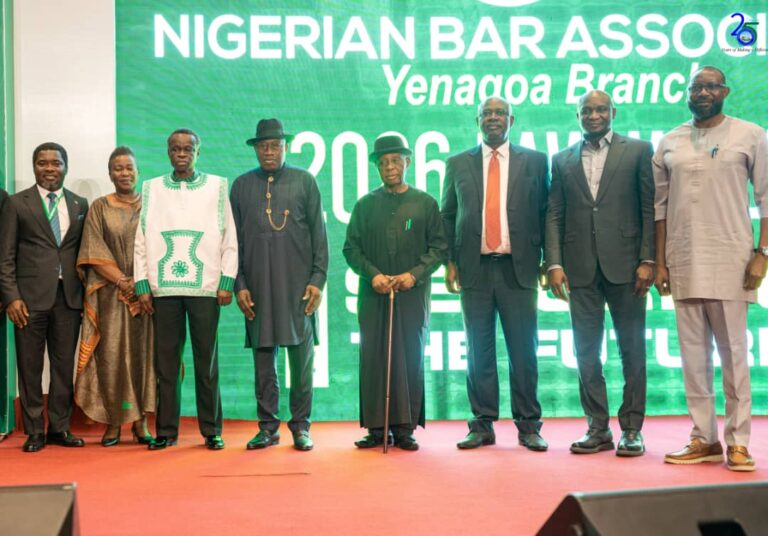
Lumumba made the call while delivering the keynote address at the 2026 Law Week of the Nigerian Bar Association (NBA), Yenagoa Branch, held at the Nigerian Content Development and Monitoring Board (NCDMB) Conference Hall in Yenagoa, Bayelsa State.

Speaking on the theme, “Sustainable National Assets Protection in Africa: Opportunities, Risks and Regulatory Pathways,” Lumumba argued that Africa’s quest for sustainable development and asset protection would remain elusive without genuine unity among its peoples and nations.

“We have a duty to secure our future, but we must start by being united. It is only in unity that we can protect our assets,” he said.

According to him, conversations about Africa’s future must begin with a critical reassessment of the continent’s identity and historical experiences, particularly the enduring effects of colonialism on governance, development and self-perception.

“To talk about our future, we must find out who we are and decolonise our minds because Africans were wired to fail by the colonial masters,” Lumumba stated.

The event, which had as its theme, “Securing the Future,” attracted prominent personalities, including former President, Dr Goodluck Jonathan; Minister of State for Petroleum Resources (Oil), Senator Heineken Lokpobiri; Managing Director of the Niger Delta Development Commission (NDDC), Dr Samuel Ogbuku, as well as legal practitioners, security experts and policymakers.

Also speaking during a plenary session on “National Assets Protection: Nigeria’s Shared Responsibility,” Ogbuku stressed the importance of investing in education as a strategic tool for safeguarding the future.

He noted that efforts to secure the future must be rooted in an honest appraisal of past mistakes and societal challenges.

“In securing the future, we must also think of the past because we have missed our way and there is a need to rediscover our purpose,” he said.

The NDDC chief expressed concern over the growing erosion of societal values, attributing part of the problem to negative influences from digital and online platforms.

“We must invest in the right education for our children. Western culture has polluted our society, and only the right education can save our country,” Ogbuku added.
Chairman of the session and former President, Goodluck Jonathan, echoed the call for reforms in the education sector, stressing the need to equip younger generations with the skills and values required to navigate future challenges.

“We have to prepare our children for the bright lights of the future,” Jonathan said.

In his remarks, Bayelsa State Governor, Senator Douye Diri, represented by the Secretary to the State Government, Prof. Nimibofa Ayawie, urged the Nigerian Bar Association to strengthen professional discipline and uphold ethical standards within the legal profession.
Describing Lumumba as a leading voice for accountability, good governance and Pan-African development, Diri said the theme of the Law Week underscored the collective responsibility of governments, institutions and citizens to build a just, equitable and sustainable society.

“The theme of the Law Week, ‘Securing the Future,’ is both timely and profound. It speaks to the collective responsibility of leaders, institutions and citizens to build a society founded on justice, equity, accountability and sustainable development,” the governor stated.

Earlier, Chairman of the NBA Yenagoa Branch, Clement Kekemeke, challenged legal practitioners to move beyond routine legal practice and contribute meaningfully to national development and social transformation.

AGIP Pensioners Protest At Port Harcourt Facility, Accuse Oando Of Reneging On Welfare Commitments

More than 50 retired workers of the former Nigerian Agip Oil Company (NAOC) on Thursday staged a peaceful protest at the Port Harcourt operational base of the company, now under the management of Oando Plc, over alleged failure to implement welfare agreements reached during the transition of ownership.

The pensioners, under the aegis of the Association of AGIP Oil Company Pensioners, Port Harcourt Chapter, gathered at the facility’s main gate at about 9:00 a.m., carrying placards and chanting solidarity songs as they demanded the fulfilment of commitments they said were made to them during the transition process.

The retirees alleged that despite assurances that their welfare and entitlements would remain protected following the acquisition and management transition, the new management had failed to honour agreed obligations.

Addressing journalists during the demonstration, Chairman of the association, Engr. Paul Sito, said the protest became inevitable after several efforts to engage the management failed to yield positive results.

According to him, pensioners were repeatedly assured that they would not be adversely affected by the transition, but developments since then have fallen short of those assurances.

“We were assured that we would not be left behind during the transition process, but what we are witnessing today is different from those assurances,” Sito said.

The protesters urged Oando’s management and other relevant stakeholders to respect existing Memoranda of Understanding and adhere to internationally recognised standards governing pensioners’ welfare and post-service obligations.

They further called for urgent intervention to address what they described as growing concerns over their welfare and the implementation of agreements reached before the change in ownership.

The demonstration, which drew elderly retirees, highlighted mounting anxiety among former employees over pension and welfare arrangements following the restructuring of corporate operations in the oil and gas sector.

As of the time of filing this report, Oando management had not issued an official response to the allegations or the demands raised by the pensioners.

By Charles Bryson

Fubara Seeks Action On Niger Delta Summit Resolutions, Says Laws Must Drive Regional Development

The Rivers State Government has urged stakeholders to put in place effective mechanisms for monitoring and implementing resolutions reached at the 2026 Niger Delta Law and Development Summit, stressing that sustainable development can only be achieved when laws and policies are translated into concrete actions.

Governor Siminalayi Fubara made the call on Wednesday at the opening of the Niger Delta Development Commission (NDDC) Law and Development Summit 2026 held at the EUI Event Centre in Port Harcourt.

Represented by his deputy, Prof. Ngozi Nma Odu, the governor said the successful implementation of legal frameworks, sound policies and good governance principles remained critical to addressing the developmental challenges facing the Niger Delta.

Fubara commended the NDDC for reviving the summit after an 18-year hiatus, describing its theme, “The Role of Law in Driving Sustainable Development in the Niger Delta,” as both timely and relevant.

He reaffirmed the commitment of the Rivers State Government to initiatives that promote justice, economic growth, social development and the welfare of people across the Niger Delta region.

The governor also lauded the commission’s management and staff for achievements recorded in infrastructure, healthcare delivery, youth and women empowerment, as well as other intervention programmes across the region.

According to him, the law should not merely exist as a regulatory instrument but should serve as a vehicle for justice, equity, prosperity and inclusive development.
Fubara further urged stakeholders to embrace peace, security, social inclusion and dialogue as indispensable pillars for sustainable development in the Niger Delta.

In his remarks, Chairman of the NDDC Governing Board, Barrister Chiedu Ebie, said the commission had adopted innovative strategies to overcome longstanding operational challenges.

He noted that the board had repositioned the commission, strengthened internal governance structures and accelerated development programmes through renewed commitment and creative leadership.

Managing Director of the NDDC, Dr Samuel Ogbuku, described law as the foundation of every civilised society, adding that the commission had moved from a transactional to a transformational management model.

He stressed that sustainable development depends on strong institutions rather than strong individuals, insisting that institutional capacity remains central to the region’s progress.

Delivering the keynote address, former Attorney-General of Bayelsa State, Mr Henry Odein Ajumogobia, underscored the critical role of law in advancing sustainable development, environmental protection and social justice.

Ajumogobia observed that despite the Niger Delta’s enormous contribution to Nigeria’s economy, the region continues to grapple with environmental degradation and underdevelopment. He therefore called for stronger institutions and stricter enforcement of existing laws to drive meaningful and lasting development.