

Home Blog Page 25

ADC Picks Amaechi As Atiku’s Running Mate For 2027, Unveils ‘Unity and Rescue’ Ticket

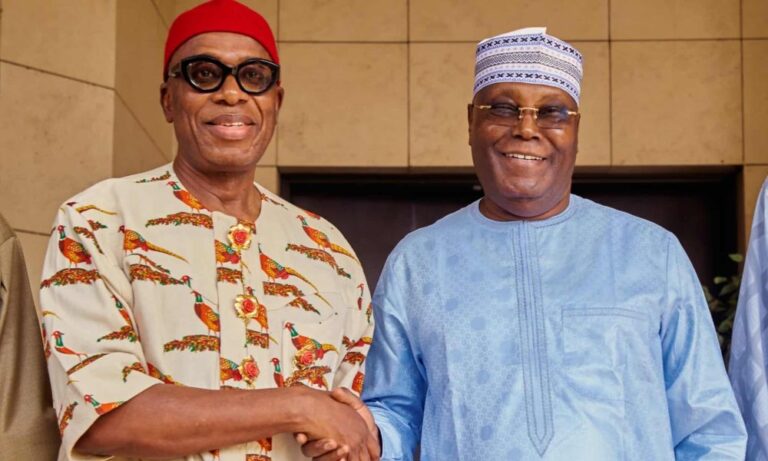
The African Democratic Congress (ADC) has selected former Rivers State Governor and ex-Minister of Transportation, Rotimi Amaechi, as the running mate to former Vice President Atiku Abubakar for the 2027 presidential election.

The party described the Atiku-Amaechi pairing as a “unity and rescue ticket” designed to provide Nigerians with an experienced and credible alternative ahead of the next general election.

Announcing the decision in a statement on Monday, the ADC National Publicity Secretary, Bolaji Abdullahi, said Amaechi’s emergence followed extensive consultations within the party and among coalition partners, stakeholders, and representatives of the country’s geopolitical zones.

According to Abdullahi, the decision was influenced by Amaechi’s strong showing in the party’s presidential primaries, where he emerged runner-up, as well as his extensive record of public service at both state and national levels.

He noted that Amaechi’s experience as former Speaker of the Rivers State House of Assembly, two-term governor of Rivers State, and Minister of Transportation positions him as a strong complement to Atiku’s candidacy.

“The proposed partnership between Atiku Abubakar and Rotimi Amaechi represents more than a political alliance; it is the coming together of two tested statesmen with the experience, national reach and leadership capacity required to rescue Nigeria from its current challenges and reposition the country for a new era of prosperity, security and inclusive development,” the statement said.

The ADC argued that Amaechi’s influence across the South-South and Southern Nigeria, coupled with his reputation as a reform-minded administrator, would strengthen the party’s national appeal and electoral prospects.

The party further stated that the Atiku-Amaechi ticket reflects a balance of regional interests, governance experience and political reach, describing it as a platform capable of addressing issues of economic recovery, job creation, security and national unity.

The ADC expressed confidence that the partnership would energise its growing coalition and inspire hope among Nigerians seeking a change in leadership ahead of the 2027 polls.

It also called on party members, civil society groups, youth and women organisations, coalition partners and other Nigerians to support its campaign to build what it described as a stronger, safer and more prosperous nation.
Tunisia Sack Lamouchi After One Match As World Cup Claims First Coaching Casualty

0

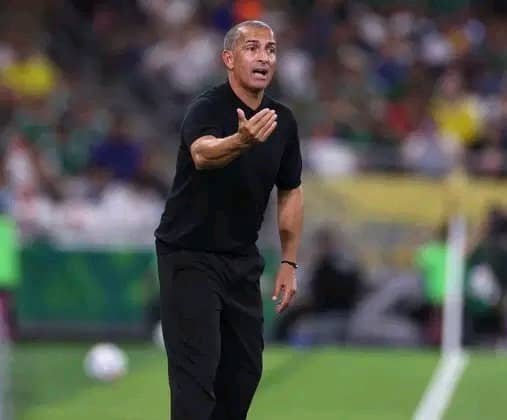
Tunisia have become the first team to sack their coach at the ongoing FIFA World Cup, dismissing Sabri Lamouchi after just one match following a humiliating 5-1 defeat to Sweden.

The decision came amid a series of shocking results that have already rattled the tournament, with Tunisia’s heavy opening loss proving costly for the 54-year-old manager.

Lamouchi’s position came under immediate scrutiny after his side were comprehensively outplayed by Sweden in Monterrey, where the Scandinavian nation cruised to victory to launch their campaign in emphatic fashion.

The former Ivory Coast and Nottingham Forest manager watched helplessly as Tunisia’s defence crumbled, leaving supporters frustrated and raising concerns about the team’s prospects in the competition.

Reports indicate that Tunisian football authorities moved swiftly in the aftermath of the defeat, opting to part ways with Lamouchi in a bid to revive the country’s fading hopes before the group stage concludes.

The dismissal makes Lamouchi the first managerial casualty of the World Cup, underlining the intense pressure national team coaches face on football’s biggest stage.
Tunisia must now urgently appoint a replacement as they seek to salvage their campaign and restore confidence within the squad.

The development adds another dramatic twist to a World Cup already producing unexpected outcomes, with several traditional powerhouses and fancied teams struggling to meet expectations in the opening round of matches.

Fubara Pledges Sustained Welfare, Security for Corps Members In Rivers As 3,512 Take Oath

0

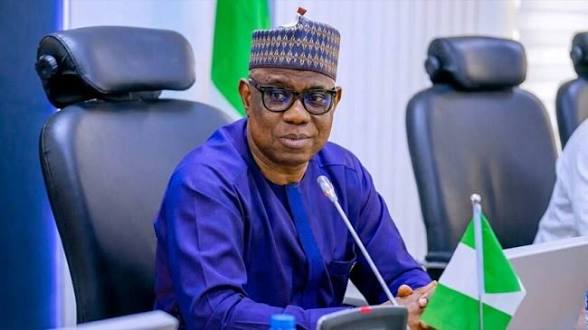
Governor Siminalayi Fubara of Rivers State has assured members of the National Youth Service Corps (NYSC) deployed to the state that his administration will continue to prioritise their welfare and security under its Rivers First Agenda.

Speaking at the opening of the 2026 Batch B Stream I orientation course at the NYSC Permanent Orientation Camp in Nonwa-Gbam, Tai Local Government Area, Fubara said his government remained committed to creating an atmosphere of peace and prosperity for residents, including corps members serving in the state.

Represented by the Permanent Secretary, Special Services Bureau in the Office of the Secretary to the State Government, Samson Dede, the governor reaffirmed his administration’s support for the NYSC scheme and its operations in Rivers State.

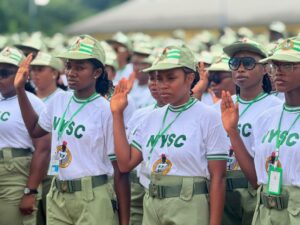
NYSC members taking the oath of service in Rivers State on Monday.

“Our Rivers First Agenda will continue to prioritise peace, prosperity and the welfare of all citizens, including corps members serving in the state. We remain unwavering in our commitment to supporting the operations of the NYSC scheme,” he said.

Fubara urged the corps members to take advantage of the Skill Acquisition and Entrepreneurship Development (SAED) programme and participate actively in all camp activities throughout the orientation exercise.

Earlier, the NYSC State Coordinator, Moses Oleghe, advised the corps members to regard their deployment to Rivers State as a unique opportunity for personal growth, self-discovery and national service.

He commended the governor for donating 2,500 brand-new mattresses to improve accommodation and comfort for corps members at the orientation camp.

According to Oleghe, the gesture has further strengthened Rivers State’s reputation as one of the most preferred destinations for corps members across the country.

The coordinator also expressed appreciation to security agencies, host community leaders, transport unions, commercial motorcycle operators and other stakeholders for their continued support toward the success of the NYSC scheme in the state.

A total of 3,512 corps members, comprising 1,572 males and 1,940 females, were sworn in during the ceremony by the Chief Judge of Rivers State, represented by Justice Prince Mini.

INEC: Why Public Trust is Waning Rapidly

0

Umpires or referees depend to a large extent on their credibility to be able to discharge their duties effectively .

Compared with the activities they oversee, they tend to be understaffed, overworked and underpaid – and yet vitally needed. Right now this is especially true of Nigeria’s Independent National Electoral Commission (INEC).

However, the tales of political malaise that have bedeviled the Commission since preparations began for next year’s general elections together with the newly amended Electoral Act that was passed by the National Assembly have placed a heavy burden on INEC to restore public confidence in the polity.

This is not because Prof Joash Ojo Amupitan(SAN), the INEC Chairman, is ill-qualified. He is a distinguished law lecturer and a Senior Advocate of Nigeria(SAN). Nor is it because he has been compromised by having taken legal briefs from high-profile politicians in the past – poachers do in fact often make the best game-keepers. Nor yet is it because he is overly partisan. He may indeed have sympathy for the ruling APC (according to disclosures from his alleged X(formerly twitter) account, but so do millions of Nigerians have partisan inclinations towards one party or the other.

No, the reason INEC is losing the trust of Nigerians is that it has repeatedly shown such ineptitude which cannot be explained or rationalised by the average well-meaning citizen.

From all indications, the electoral body has not been able to provide a level playing field for all recognized parties.

For some obscure reason, it unilaterally adjusted the timelines provided in the Electoral Act in a way that seemed to put undue pressure on opposition parties.

The constitutionally approved timelines were moved forward by more than four months knowing full well that some parties may be unable to meet the new deadlines.

Thus while the APC was already conducting its congresses, others were still in courts where they were unable to receive timely judgments, let alone compile their membership registers.

Similarly INEC has dabbled into areas that are clearly outside its jurisdiction in an attempt supposedly to destabilise the opposition.

An example was when the Appeal Court ruled that factions of the ADC maintain “status quo” while the substantive issues before it were being resolved.

INEC’s interpretation of this was that the two factions had to be de-registered at once – a decision that the judiciary couldn’t have contemplated.

The Electoral umpire is also quick to deregister factions of political parties that seem to enjoy more popular support especially when court judgements do not favour them, while turning a blind eye when the less popular factions suffer similar fates. A case in point is the PDP and the Supreme Court’s double- edged decision which affected Samuel Anyanwu’s position as well as the David Mark led faction.

Recently, an aide to the FCT Minister was said to have been interrogated by the police over the unlawful leak of voters information obtained from INEC database ostensibly through inside sources.

The controversy began after the said aide shared screenshots on social media showing details linked to a Nollywood actor turned- politician Emeka Ike, raising questions about the security of data of opposition politicians.

All of these point to an attempt to fracture the opposition and the electoral umpire is quickly losing its credibility and trust.

To ward off the risk of a compromised general election in 2027, a strong and honourable electoral umpire is needed more than ever. INEC must therefore turn a new leaf immediately to avoid negative public perceptions that can derail this democracy.

By Kalada S. Koko.

Koko contributed this piece from Port Harcourt, Rivers State.

Microbiologists Converge In PH To Explore AI-Driven Solutions to Health, Environmental Challenges

As artificial intelligence (AI), big data and machine learning continue to reshape scientific research globally, microbiologists from across the South-South region will gather in Port Harcourt from June15-16, 2026 for the maiden South-South Zonal Scientific Symposium of the Nigerian Society for Microbiology (NSM).

The two-day symposium, themed “Microbial Innovations for Sustainable National Development in an Era of Artificial Intelligence,” will hold at the Centre for Open and Distance Learning, Rivers State University (RSU), Nkpolu-Port Harcourt.

Organisers said the symposium comes at a critical time when emerging technologies are transforming microbiological research and offering new opportunities to tackle some of the region’s most pressing environmental and public health challenges.

According to the organisers, South-South Nigeria continues to grapple with recurring oil spills requiring microbial bioremediation, rising antimicrobial resistance in healthcare facilities, flooding-induced waterborne diseases and significant post-harvest losses affecting agrarian communities.

They noted that advances in AI and machine learning could provide innovative solutions, including faster detection of antimicrobial resistance, improved modelling of oil spill remediation and more accurate prediction of disease outbreaks.

In a statement made available to The Atlantic Bell, the NSM South-South Zonal Coordinator, Professor Nedie Akani said that the symposium is also expected to align with the Nigerian Society for Microbiology’s three-point agenda of “Unite, Innovate and Advance,” while fostering stronger collaboration among researchers, industry stakeholders, government agencies and students within the zone.

Speaking ahead of the event, Professor Akani said the gathering would serve as a platform to chart a strategic roadmap for microbiological research and innovation in the South-South region over the next five years.

“This is not just a two-day scientific meeting. It is an opportunity to define research priorities, build collaborations and develop a South-South Microbiology Agenda that will guide projects, funding opportunities and policy engagement from 2026 to 2030,” she said.

Participants are expected from more than 20 tertiary institutions offering microbiology programmes across the six South-South states of Akwa Ibom, Bayelsa, Cross River, Delta, Edo and Rivers, alongside representatives from industry and development partners.

The National Executive Council of the Nigerian Society for Microbiology, led by its President, Prof. S. A. Ado, is expected to attend the symposium.

The Deputy Governor of Rivers State, Prof. Ngozi Nma Odu, will serve as Special Guest of Honour, while the Vice-Chancellor of Rivers State University, Prof. Isaac Zeb-Obipi, is the Chief Host.

Other key officials expected at the event include the Head of the Department of Microbiology, RSU, Prof. Salome I. Douglas, and the Dean of the Faculty of Science, Prof. N. Boisa.

The symposium will feature keynote addresses by Prof. Nnenna Frank-Peterside of the University of Port Harcourt and Prof. Ebimieowei Etebu of Niger Delta University, Bayelsa State.

Plenary sessions will also be delivered by Prof. Ifeoma V. Anyiam of the Federal University Otuoke, Prof. Wesley Braide of the Federal University of Technology, Owerri, and Dr. Amadi Amadi, a pro bono staff of the Rivers State University currently based in the United States.

She explained that the maiden edition would prioritise physical participation to strengthen engagement within the newly established zonal structure and provide members easier access to scientific interactions without the financial burden often associated with attending national conferences.

Professor Akani expressed optimism that the symposium would deepen collaboration among microbiologists and position the South-South region to harness emerging technologies for sustainable development and scientific advancement.

Rights Group Sues NNPCL, Seeks Details of ₦5.9bn Incorporation, Transition Expenses

SERAP Drags NNPCL to Court Over Alleged ₦5.9bn Rebranding Expenditure
The Socio-Economic Rights and Accountability Project (SERAP) has instituted a suit against the Nigerian National Petroleum Company Limited (NNPCL), seeking judicial intervention to compel the oil firm to account for about ₦5.9 billion allegedly spent on the incorporation, transition and rebranding of the defunct Nigerian National Petroleum Corporation (NNPC) into NNPCL.

In the suit marked FHC/ABJ/CS/1248/2026 and filed at the Federal High Court, Abuja, SERAP is asking the court to order NNPCL to provide a detailed account of the expenditure, including the identities of contractors engaged, the services rendered and how the funds were utilised.

The rights group alleged that NNPC expended ₦2.9 billion from petroleum product proceeds on incorporation expenses, while the National Petroleum Investment Management Services (NAPIMS) reportedly charged another ₦2.9 billion to crude oil revenue for the same purpose, bringing the total expenditure to approximately ₦5.9 billion.

SERAP is further seeking an order compelling NNPCL to disclose the names and official positions of government officials who authorised and approved the expenditure, as well as clarify whether the spending complied with procurement laws and due process requirements.

According to the organisation, there is an overriding public interest in ensuring transparency and accountability in the management of public resources, particularly within the petroleum sector.

It argued that Nigerians have a right to know whether the expenditure represented value for money and whether the funds were lawfully spent in accordance with established procedures.
In court documents filed by its legal team comprising Oluwakemi Agunbiade, Kehinde Oyewumi and Andrew Nwankwo, SERAP contended that full disclosure would enable the public to assess the propriety of the expenditure and determine whether procurement and due process rules were observed.

The group also cited concerns reportedly raised by the Senate Committee on Public Accounts over the expenditure, which it said was described as excessive and deserving of further explanation and scrutiny.

SERAP maintained that the alleged failure to account for the funds undermines public trust and reflects broader concerns about transparency and accountability within NNPCL.

“The refusal or failure of the NNPCL to provide a detailed account of the expenditure undermines the right of access to information concerning the management of public resources,” the organisation stated.

The group further argued that the expenditure, if not properly justified, could amount to a violation of constitutional provisions, anti-corruption laws and Nigeria’s international obligations on transparency and accountability.

It noted that the transition from NNPC to NNPCL followed the enactment of the Petroleum Industry Act (PIA) 2021, which transformed the national oil corporation into a commercially oriented limited liability company wholly owned by the Federal Government.

SERAP also cited provisions of the 1999 Constitution, the United Nations Convention against Corruption and the African Charter on Human and Peoples’ Rights in support of its case.
No date has been fixed for the hearing of the suit.

NDDC MD Ogbuku Emerges Ayakoro Monarch, Charts Course For Development

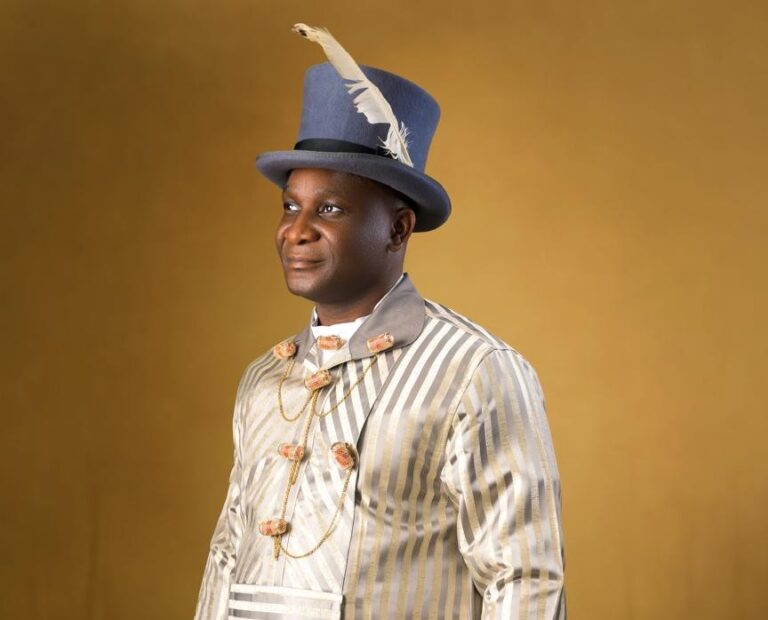
Managing Director of the Niger Delta Development Commission (NDDC), Dr Samuel Ogbuku, has emerged as the new Paramount Ruler of Ayakoro Community in Ogbia Local Government Area of Bayelsa State, pledging to foster peace, unity and sustainable development in the riverine community.

Ogbuku, who assumes the traditional title of Daufa VI, emerged in line with the provisions of the Ayakoro Community Constitution, six months after the death of the immediate past Paramount Ruler.

Before his elevation, he served as Deputy Paramount Ruler of the community.

The succession process was supervised by the Bayelsa State Ministry of Local Government and Chieftaincy Affairs, with Chief Micha Itekesi also installed as the new Deputy Paramount Ruler of Ayakoro Community.

Speaking shortly after his installation, Ogbuku described his emergence as a call to greater service rather than a ceremonial honour, noting that the development reflected the community’s appreciation of years of commitment to its growth and well-being.

He said the trust reposed in him by the people underscored the enduring value of selfless service, sacrifice and dedication to communal progress.

The NDDC chief executive pledged to lead with humility, integrity and a strong sense of responsibility, while seeking divine guidance in the discharge of his duties as the community’s traditional ruler.

According to him, his reign would focus on strengthening peace, promoting unity and advancing the development aspirations of Ayakoro people.

“May God grant us wisdom, patience, courage and clarity. We pray that our reign will bring peace, unity, dignity and greater progress to Ayakoro Community,” he said.

Ogbuku expressed gratitude to the people of Ayakoro for the confidence reposed in him and assured them of his readiness to work with all stakeholders to build a stronger, more prosperous and united community for future generations.

DHQ Mourns Ex-Military Spokesman Rabe Abubakar, Vows Relentless Offensive Against Bandits, Terrorists

0

The Defence Headquarters (DHQ) has expressed deep sorrow over the death of former Director of Defence Information, Major General Rabe Abubakar (retd.), who died while in the captivity of bandits, even as it vowed to intensify military operations against terrorists and other criminal elements across the country.

In a statement issued by the Director of Defence Information, Major General Samaila Uba, the Armed Forces of Nigeria (AFN) described the late senior officer as a distinguished soldier whose contributions to national security and military development left an enduring legacy.

“The Defence Headquarters regrets to announce the passing of Major General Rabe Abubakar (Retired), who tragically lost his life in captivity following his abduction,” the statement said.

According to the military, Abubakar served Nigeria with distinction in several capacities, including as spokesperson for various military formations before rising to become Director of Defence Information.

The DHQ noted that the retired general played key roles in counter-insurgency operations and the professional development of the Armed Forces, describing his commitment to duty and national unity as exemplary.

“His commitment to duty and to the unity of Nigeria remains a shining example for all personnel of the Armed Forces of Nigeria,” it stated.

The military explained that it had deliberately refrained from commenting publicly on the officer’s abduction so as not to jeopardise ongoing rescue efforts involving security agencies.

“The Defence Headquarters withheld public comment on his abduction in deference to ongoing rescue efforts by the AFN and sister security agencies. Every operational resource was deployed in the hope of securing his safe return,” the statement added.

Describing the incident as a painful loss, the DHQ said it would strengthen the resolve of the Armed Forces to confront insecurity and protect citizens.

“This sad loss further strengthens the resolve of the AFN. We will remain resolute in the discharge of our constitutional mandate to defend the sovereignty and territorial integrity of Nigeria and to protect all citizens.”

The military disclosed that operations across the country had since been intensified following a series of abductions, including that of the late general, with a renewed focus on dismantling terrorist and criminal networks.

“In response to a series of unfortunate abductions across Nigeria, including that of Maj. Gen. Abubakar, ongoing operations have been further intensified to bring perpetrators to justice and dismantle all terrorist networks threatening our nation,” the DHQ stated.
It assured Nigerians that sustained pressure would be maintained on criminal groups until peace and security are fully restored.

Meanwhile, the Katsina State Government has confirmed the death of the retired military officer in captivity, describing the development as a tragic loss to his family, the state and the nation.

In a statement issued by the Commissioner for Internal Security and Home Affairs, Dr Nasiru Mu’azu, the government disclosed that Abubakar died from complications arising from diabetes and hypertension while still being held by his abductors.

“The deceased retired general died a natural death from complications of diabetes and hypertension,” the statement said.

The government noted that concerted efforts had been made by the state government and security agencies to secure his release before the unfortunate outcome.

Governor Dikko Umaru Radda expressed profound condolences to the family of the deceased, describing the incident as a dark moment for Katsina State and a stark reminder of the need to intensify the fight against banditry and other violent crimes.

He reaffirmed his administration’s commitment to working closely with the Federal Government and security agencies to bring those responsible for the abduction to justice and strengthen security across the state.

The Atlantic Bell reports that Abubakar and his wife, Hajiya Amina Abubakar, were abducted on May 30, 2026, when suspected bandits ambushed their vehicle near Zakin Baure village in Matazu Local Government Area of Katsina State. The couple was travelling in a Peugeot 406 when the attack occurred. Their driver survived after sustaining gunshot injuries during the incident.

Health Insurance CEOs Seek Mandatory Coverage, Stronger Political Commitment To Universal Health Care

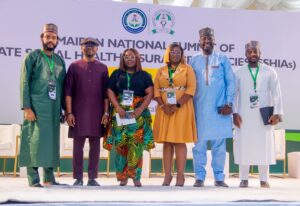
The Forum of Chief Executive Officers of State Social Health Insurance Agencies (SSHIAs) in Nigeria has called on state governments to deepen their commitment to Universal Health Coverage (UHC) by making health insurance mandatory for all residents across the country.

The call formed part of a communiqué issued at the end of the forum’s maiden two-day national summit held in Akure, Ondo State, from June 8 to 9.

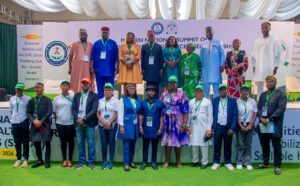
Some participants at the summit at the end of one of the plenary sessions Akure.

Reading the communiqué, the Director-General of the Cross River State Health Insurance Agency stressed the need for stronger political will and legislative backing to drive universal access to healthcare services across the country.

The forum urged the establishment of a health insurance agency for the Federal Capital Territory (FCT) through an enabling law, to align the territory’s healthcare financing framework with those of the 36 states.

It also called for a clear and enforceable legal framework to ensure effective implementation of health insurance laws, including mandatory coverage for workers in the formal sector at both state and local government levels.

The forum, whose Secretary-General is the Executive Secretary of the Rivers State Contributory Health Protection Programme (RIVCHPP), Dr Vetty Agala, further advocated the harmonisation of federal and sub-national health insurance schemes. It emphasised the need for robust legislative oversight and sustained political commitment to extend mandatory health insurance to workers in the informal sector.

Dr. Vetty Agala, ES/CEO of RIVCHPP and Secretary, Forum of CEOs of SSHIAs moderating one of the sessions at the summit.

Participants at the summit endorsed a mixed financing model comprising government budgetary allocations, mandatory health insurance contributions and targeted subsidies for vulnerable groups. They also urged state governments to ensure the timely release of counterpart and equity funds while encouraging agencies to explore innovative funding mechanisms.

To expand coverage, the forum recommended prioritising the enrolment of informal sector workers, rural dwellers, women, children and persons with disabilities. It also advocated simplified enrolment processes through digital platforms and community-based structures to improve access and reduce exclusion.

The summit reaffirmed the critical role of primary healthcare centres as the foundation of service delivery, urging governments to invest in infrastructure, essential medicines, workforce development and efficient referral systems to guarantee quality healthcare.

Stakeholders also canvassed reforms in provider payment systems to improve efficiency, accountability and fraud prevention. They recommended strengthening capitation and performance-based payment models, alongside timely reimbursement mechanisms, to sustain provider participation and minimise service disruptions.

Dr. Vetty Agala, ES/CEO of RIVCHPP and Secretary, Forum of CEOs of SSHIAs moderating one of the sessions at the summit.

The forum further highlighted the importance of robust data systems and monitoring frameworks, calling for wider adoption of digital health information systems to support enrolment tracking, claims management, performance monitoring and independent oversight.

The Atlantic Bell reports that Rivers State was represented at the summit by Dr Vetty Agala, members of the RIVCHPP Board, management staff and technical officers.

NDDC Strengthens Regional Security, Hands Over Army Residential Facilities in Bayelsa

The Niger Delta Development Commission (NDDC) has reinforced its commitment to enhancing security in the Niger Delta with the handover of newly constructed residential accommodation and supporting facilities to the Nigerian Army’s 16 Brigade at Ayama-Ogbia in Ogbia Local Government Area of Bayelsa State.

Speaking during the handover ceremony, the Managing Director of the NDDC, Dr Samuel Ogbuku, said the Commission remained committed to supporting security agencies across the region, stressing that sustainable development could only thrive in an atmosphere of peace and security.

Represented by the Director of the NDDC Bayelsa State Office, Engr. Godknows Alamieyeseigha, Ogbuku noted that the project was conceived to strengthen the operational capacity of the Nigerian Army and enhance security in the area.

He said the Commission would continue to partner with security agencies to promote stability and create an enabling environment for socio-economic development in the Niger Delta.

According to him, the facility comprises a two-bedroom semi-detached bungalow, four one-bedroom bungalows and a ten-unit self-contained accommodation block. Other supporting infrastructure include a generator house, a 100KVA power generating set and a borehole to ensure uninterrupted water supply.

Ogbuku expressed confidence that the Nigerian Army would effectively utilise and maintain the facilities, describing the project as part of the NDDC’s broader intervention efforts aimed at supporting institutions critical to peace and development in the region.

Responding, the Acting Garrison Commander of the 16 Brigade, Major H.M. Mohammed, commended the NDDC for its sustained support to the Nigerian Army and other security agencies operating in the Niger Delta.

He described the project as a significant boost to the Army’s operational effectiveness and welfare, noting that adequate accommodation and supporting infrastructure would enhance personnel performance.

Mohammed particularly lauded the current Board and Management of the NDDC for investing in critical infrastructure that strengthens security operations across the region.

The Atlantic Bell reports that the handover ceremony featured the inspection of the facilities by officials of the NDDC and officers of the Nigerian Army, followed by the signing of project handover documents.