Home Blog Page 173

Benue Assembly Dissolves Leadership, Appoints New Officers

0

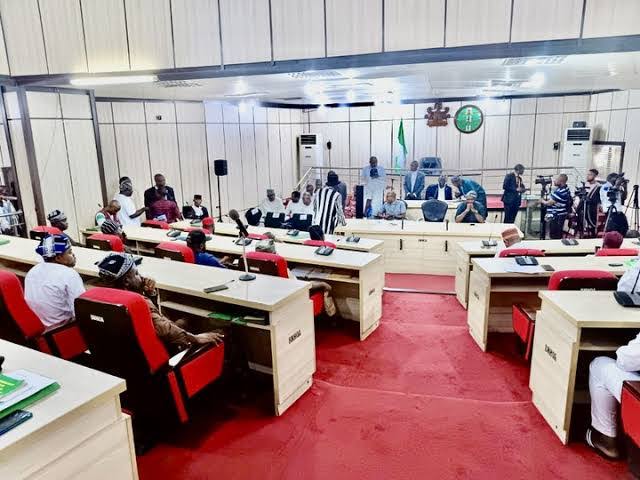
The Benue State House of Assembly has dissolved its leadership and only retained the Speaker, Mr Alfred Emberga, and the Deputy Speaker, Lamin Danladi.

The dissolution of the leadership followed a motion moved by the former Deputy Majority Leader, Mr Douglas Akya (APC/Makurdi South), during plenary on Thursday in Makurdi.

Akya said that since he was from the same local government area as the speaker, it would be morally wrong for him to continue to function as the deputy majority leader.

The former deputy majority leader said that it was morally right for him to step aside and allow the house to appoint another colleague as the deputy majority leader.

He further said that apart from the speaker and the deputy speaker that were elected, every other officer that was appointed should be dissolved.

The motion was seconded by Mr Cyril Ikong (APC/Oju), stating that the motion was apt and timely.

Ruling, the speaker put the matter to vote, and members unanimously agreed that the officers that were appointed into various offices ranging from the majority leader to deputy minority whip be dissolved and new persons appointed.

The speaker then announced Mr Thomas Dugeri (APC/Kwande West) as the Majority Leader, Dr Abraham Jabi (APC/Buruku) as the Deputy Majority Leader, Mr Cyril Ikong (APC/Oju) as the Majority Chief Whip and Mr Simon Gabo (APC/Mata) as the Deputy Chief Whip.

Others were Mr Abu Umoru (PDP/Apa) as the Minority Leader and Mr Cephas Dyako (LP/Konshisha) as the Deputy Minority Leader.

Also appointed were Mr Samuel Jiji (PDP/Logo) as the Minority Chief Whip and Mr Moses Egbodo (PDP/Obi) as Deputy Minority Whip.

FG Inaugurate Councils, Officers Of Four Universities

0

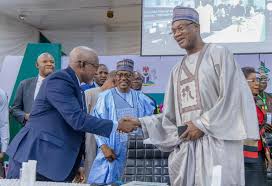
The Federal Government on Thursday formally inaugurated the Governing Councils and Principal Officers of four newly established federal universities,FG Inaugurate Councils, Officers Of Four Universities reaffirming its commitment to expanding access to quality higher education in Nigeria.

The universities include: Federal University of Agriculture and Technology, Okeho, Oyo State, and Federal University of Health Sciences and Technology, Tsafe, Zamfara State.

Others are Yusuf Maitama Sule Federal University of Education, Kano, and Federal University of Education, Zaria, Kaduna State.

Speaking at the inauguration ceremony in Abuja, Minister of Education, Dr. Tunji Alausa, described the establishment of the universities as a strategic intervention by the Tinubu administration, aimed at addressing pressing national challenges such as food security, public health, climate change, renewable energy, and technological innovation.

“This is not just an expansion of Nigeria’s tertiary education landscape. It is a deliberate, strategic response to the urgent and interconnected challenges confronting our nation and the world,” Alausa said.

He noted the deliberate siting of the universities: Okeho, located in Nigeria’s agriculturally rich South-West, was chosen for its vast agricultural potential.

“Tsafe, in the North-West, lies in a region with abundant natural and human resources but in need of strengthened health and educational infrastructure to unlock its full potential.”

The minister urged the newly inaugurated councils and principal officers to provide visionary leadership, uphold merit and accountability, and protect university autonomy.

He charged Vice-Chancellors to lay strong institutional foundations that would define their universities’ identities and excellence for generations to come.

Alausa also reaffirmed the Federal Government’s commitment, in partnership with TETFund and development agencies, to provide infrastructure, support research, and strengthen institutional capacity through reforms in quality assurance, autonomy, and performance-based funding.

“We want universities that are not just established but empowered to lead,” he said.

He called on staff, students, regulators, and host communities to embrace a shared vision of excellence and work together to build institutions that reflected national pride.

In his remarks, Sen. Yakubu Oseni, Pro-Chancellor and Chairman of the Governing Council of the Federal University of Agriculture and Technology, Okeho, pledged to work with all stakeholders to transform the institution.

He said the goal was to make it a hub for agricultural innovation, research, and technological advancement.

He thanked President Tinubu for the appointment and assured that the Council’s work would align with the administration’s vision to strengthen Nigeria’s education system.

North-East Stakeholders Urge FG To Increase TETFund Allocation

0

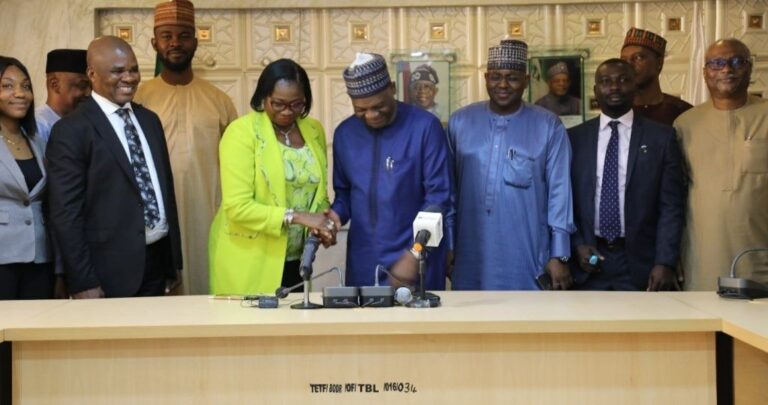
Stakeholders in the education sector across North-East Nigeria have called on President Bola Tinubu to increase the allocation of the Tertiary Education Trust Fund (TETFund) to enable it to do more for tertiary institutions.

The stakeholders spoke at a three-day town hall meeting in Jalingo, Today.

They commended the Tinubu administration’s Renewed Hope Agenda and its reforms in the education sector.

Alhaji Sani Abubakar, former Taraba acting governor and member of the TETFund Board, highlighted recent interventions of the fund, ranging from academic staff training to infrastructural development.

Abubakar noted that thousands of lecturers have benefitted from PhD and master’s scholarships locally and abroad, while TETFund has continued to provide support for teaching practice, conferences, and professional development.

According to him, the fund’s interventions have also transformed campuses with modern lecture theatres, laboratories, Information and Communication Technology (ICT) centres, and student hostels.

The former acting governor further listed projects such as zonal research laboratories, centres of excellence, medical simulation facilities, agricultural demonstration farms, and innovation hubs established across universities and polytechnics.

He disclosed that under the 2025 intervention cycle, N70 billion has been earmarked for mini-grid power projects to provide stable and renewable electricity in 18 institutions.

The North-East Zone, he added, has benefited significantly from these interventions, with projects spread across the University of Maiduguri, Abubakar Tafawa Balewa University Bauchi, Gombe State University, Taraba State University, and several polytechnics and colleges of education.

He urged participants to develop a blueprint that would consolidate the gains and further strengthen the country’s education system.

He stressed that progress in the sector required collaboration between government, institutions, industries and host communities.

In his paper presentation on the challenges of tertiary institutions in Nigeria, Dr Isa Muhammed of Taraba State University said TETFund needed more funding to make Nigeria’s tertiary institutions meet global standards.

Muhammed noted that the major challenge of Nigerian institutions has been inadequate funding by the owners.

The paper presenter stated that the contributions of the TETFund to the infrastructural development in the tertiary institutions could not be overemphasised.

“If you remove TETFund from Nigeria’s tertiary institutions today, what you will have left will be shocking,” he said.

Prof. Umar Pate, the Vice Chancellor of the Federal University, Kashere, Gombe State, said TETFund has funded numerous projects in the institution and others to improve the standard of education in the country.

Pate noted that though the Tinubu administration has increased funding to TETFund, an upward review would take tertiary institutions to the promised land.

Lagos Intensifies Drive To Cut Malaria To Pre-elimination Level Says Sanwo-Olu

0

Gov. Babajide Sanwo-Olu of Lagos State, today reaffirmed his administration’s commitment to reducing malaria prevalence to below one per cent.

Sanwo-Olu gave the assurance at the mid-term review meeting of the IMPACT Project and the Pathway to Malaria Pre-Elimination and Digitisation Programme held at Eko Hotels and Suites, Victoria Island.

According to him, the state is on course to shift from a high-burden to a pre-elimination stage.

He said the initiative, launched on March 4, was designed to turn hope into tangible results by deploying evidence, technology and collaboration to combat malaria.

According to the governor, funding from the World Bank, Islamic Development Bank and other partners has enabled Lagos to expand targeted activities at key points of care and strengthen its monitoring capacity.

A major plank of the strategy, he noted, “is digitisation including real-time reporting systems and digital platforms in public and private facilities to close information gaps that slow diagnosis, reporting and response.

“Through partnerships with innovative companies and the roll out of digital pharmacy and facility software.

“We are enhancing diagnostic accuracy, standardising case management and integrating private providers into the state surveillance system,” he said.

Sanwo-Olu said malaria continued to impose huge social and economic costs on Lagos residents through lost school days, diminished wages and pressure on the health system.

Hence the drive to cut prevalence to pre-elimination levels by improving diagnostics, ensuring consistent treatment and engaging communities.

He identified accountability, scale and quality, and community ownership as the three key focused areas of the review.

On accountability, the governor called for strict adherence to rapid diagnostic testing and timely reporting by private pharmacies and patent medicine vendors.

On scale and quality, he stressed the need to extend interventions to hard-to-reach areas without compromising standards, through training, supervision and integration with the Ilera Eko health-financing platform to guarantee affordable access to care.

” I urge households and communities to play their part by eliminating mosquito breeding sites, testing promptly and trusting the health system.

” Supported by effective communication, community health workers and collaboration with traditional leaders, market groups and schools,” he said.

Sanwo-Olu commended development partners including the World Bank, Islamic Development Bank, WHO, and the Bill & Melinda Gates Foundation.

Others are, National Malaria Elimination Programme, Maisha Meds, Society for Family Health, private hospitals, pharmacies and community providers for their support.

He also applauded the Ministry of Health, Lagos State Health Management Agency (LASHMA) and the Institute of Human Virology Nigeria (IHV) for progress made so far.

The  governor, however, urged them to sustain the momentum by drawing up a solid operational plan for the next quarter.

The governor appealed to residents to contribute to the fight by using treated nets, getting rid of stagnant water and testing before taking anti-malarials.

According to him, such individual actions will help achieve a malaria-free Lagos.

“Let us commit to being transparent with our data, ensuring quality care in both public and private sectors and empowering our communities.

“Together with government, partners, health workers, private sector and community leaders, we can make Lagos a shining example of effective malaria control,”he said.


Nigeria Targets 25% Industrial Growth By 2035 – Minister

0
The Federal Government says Nigeria has projected a significant rise in industrial contribution to GDP, targeting 25 per cent growth between 2025 and 2035 under a newly validated strategic framework.
Sen. John Owan, Minister of State for Industry, made the remark during a panel session at the ongoing Gastech Exhibition and Conference in Milan, Italy.
The session was themed “Powering Growth and Prosperity in High Potential Economies Through Widened Access to Affordable, Reliable and Flexible Energy.”
Owan said the framework marked a turning point in Nigeria’s industrial policy, describing it as one of the most profound achievements of the President Bola Tinubu administration.
“For the first time in decades, Nigeria has a strategic industrial framework. We are determined to grow our economy,” he said.
He explained that the country’s current industrial contribution to GDP stood at about 10 per cent, with plans to raise it to 25 per cent by 2035.
The policy, he added, signaled Nigeria’s shift from a resource-based economy to a productive, competitive and innovative one.
Owan noted that President Bola Tinubu had been a strong advocate of Compressed Natural Gas (CNG) as a tool for powering industries and driving economic growth.
He said that Nigeria’s large population and vibrant youth base positioned it as a key player in Africa’s industrial future.
“Nigeria is ready. Africa is the new frontier, and we are reforming to meet global expectations,” he said.
The minister praised President Tinubu’s reform-minded leadership, citing decisive actions taken on his first day in office, including the removal of petrol subsidy and harmonisation of exchange rates.
He said those bold steps had helped stabilise the economy, with businesses able to access foreign exchange through official channels.
According to him, Tinubu has also been promoting Nigeria as an investment destination during his global engagements.
“There is no better time in our history than now. Nigeria is open and ready for business.
“The global community should engage with Nigeria and Africa due to the continent’s readiness for transformation,” Owan said.
He further described Nigeria as ‘more of a gas-based country than an oil country,’ stressing that energy policy is grounded in available resources and long-term development goals.
He noted, however, that infrastructure gaps had led to significant gas flaring, urging international partnerships to help the country achieve energy sufficiency.
On his part, Mr Olalekan Ogunleye, Executive Vice President, Gas, Power and New Energy at NNPC Limited, emphasised that gas was central to Nigeria’s economic strategy.
He said that the Tinubu administration had been leveraging gas to deliver improved outcomes for Nigerians.
“Nigeria has over 210.5 trillion cubic feet of gas. We must optimise its development,” he said.
Ogunleye said NNPC was revising the gas master plan to position Nigeria as a sustainable global supplier, noting that projects such as the Train 7 LNG expansion would boost output by 30 per cent.
He added that clarity was being provided on gas sources for potential Train 8 and Train 9 expansions.
The NNPCL executive further highlighted the African Atlantic Gas Pipeline project which, he said, was being developed in partnership with Morocco to connect 16 African economies and strengthen Nigeria’s role as a dependable gas supplier.
Domestically, Ogunleye said NNPC had begun supporting gas-based industries to generate jobs and meet investor needs, citing renewed interest from global firms in deep-water gas developments.
“Companies like Petrol Brass, returning as fiscal incentives, have created a competitive landscape.
“This is the best time to invest in Nigeria because the opportunities are vast and the environment is ready,” he said.
The Gastech conference is one of the world’s largest gatherings, drawing global leaders and investors to discuss sustainable solutions and strategic partnerships.

Tinubu To Address World Leaders At UN General Assembly Sept. 24

0
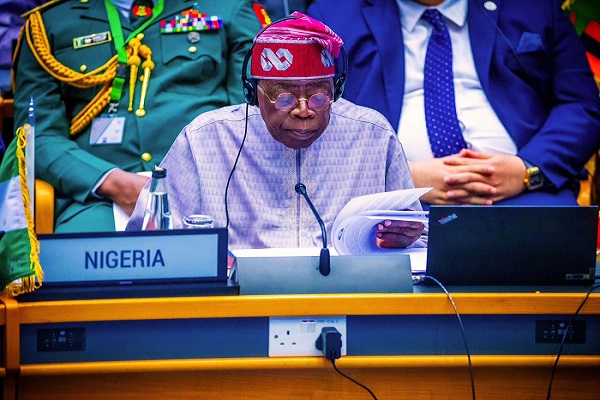
Nigeria’s President Bola Tinubu will address the 80th Session of the high-level General Debate of the United Nations General Assembly (UNGA) at the UN headquarters in New York on Wednesday, September 24.
A revised provisional list of speakers obtained by the Correspondent of the News Agency of Nigeria (NAN) from the UN headquarters in New York showed that Tinubu would be speaking on the second day of the event.
The Nigerian leader is scheduled to deliver his address to other world leaders during the afternoon session around 8:30 pm local time (around 2:30 pm Nigerian time).
Tinubu would be the 17th world leader to speak on day two of the general debate, according to the provisional list.
He will be joining the gathering of 195 world leaders made up of 98 heads of state, five vice-presidents, 44 heads of government, and four deputy prime ministers.
The others are 37 ministers, one crown prince, and four chairs of delegation to speak at the general debate.
The President of Brazil, Luiz da Sliva, would be the first world leader to present his address to the 78th session as it is tradition.
He will be followed by the U.S. President Donald Trump, the traditional second speaker, being the host country.
Sources at the UN said that the list was being updated and the Nigerian leader’s speaking slot might change if he would not be attending the general debate in person.
According to the UN traditions, Heads of State are speakers on the first and second day while vice-presidents speak from the third day.
Vice-president Kashim Shettima represented Tinubu in 2024 and spoke on the first day of the debate, maintaining Tinubu’s slot, which diplomats said was very unusual as per tradition.
The rare feat was credited to the goodwill that Nigeria enjoys from anong the international community and the diplomatic manoeuvring of the Nigerian diplomats at the UN.
Movses Abelian, Under-Secretary-General for General Assembly and Conference Management said the current “revised list reflects changes in the level of representation (upgrades and downgrades) and reflects exchanges among Member States “.
“Please note that this list will continue to be updated until the start of the General Debate as changes are communicated by Member States,” Abelian added.
The theme of the general debate of the 80th session of the General Assembly is “Better together: 80 years and more for peace, development and human rights”.
The 80th session of the UN General Assembly (UNGA 80) opened on Tuesday, September 9, with the inauguration of a new President, Annalena Baerbock of Germany.
Baerbock called on Member States to unite in addressing global crises, from war and poverty to climate change, taking her oath on the original 1945 Charter and pledging to lead with courage and inclusiveness.
A former Foreign Minister of Germany, Baerbock, becomes only the fifth woman in history to preside over the General Assembly. She accepted the Assembly’s ornate gavel from her predecessor, Philémon Yang of Cameroon.
The high-level General Debate will be held from September 23 and to September 29.
The theme for the 80th Session of the United Nations General Assembly is “Better Together: 80 years and more for peace, development and human rights”.
The high-level week will kick off on September 22 and run through September 30, during which world leaders will gather to attend the general debate and a series of conferences.
These include the high-level meeting to commemorate the 80th anniversary of the UN, the SDG moment, and the high-level meeting on the 30th anniversary of the Fourth World Conference on Women.
The others are the Conference on Palestine and Two-State Solution, the Climate Summit, and the High-level Meeting to Launch the Global Dialogue on AI Governance, among others.

Tinubu Orders FEC Committee To Crash Food Prices

0

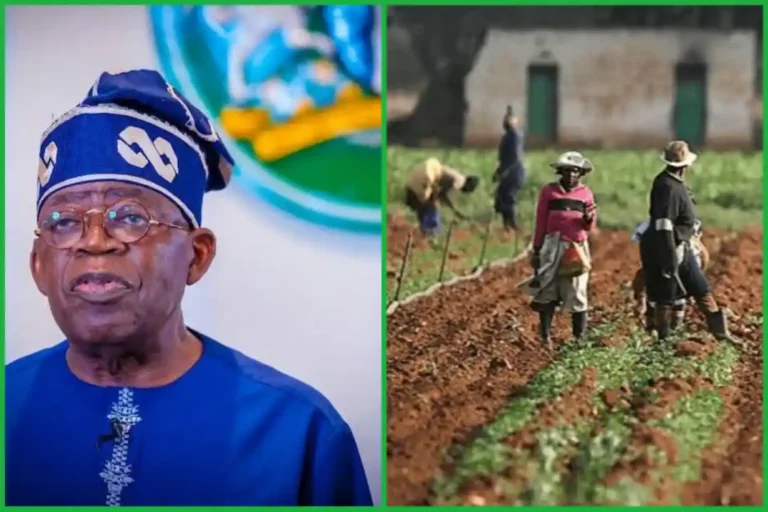
President Bola Tinubu has ordered a Federal Executive Council committee to further crash prices of food items across the country.

The Minister of State for Agriculture and Food Security, Sen. Sabi Abdullahi stated this in Abuja, while presenting a paper at a one- day capacity building workshop for journalists covering the Senate.

Abdullahi said the president’s order would be enforced to further crash prices of food items by ensuring the safe passage of products through various routes across the country.

He emphasised that the committee’s action was aimed at realising Tinubu’s vision on food sovereignty.

According to Abdullahi, the Federal Government was fully committed to addressing the high prices of transportation of farm produce in the country.

He said, “I can say it on good authority to you that the president has given a matching order with a federal executive council committee already handling it.

” On how we are going to promote safe passage of agricultural foods and commodities across our various routes in the country.

“We are aware, and I’m sure as media, you are also aware, there are routes through which commodities are taken before they are delivered.

“If you know the amount of money that is being spent, you can now understand why those commodities have to be expensive at the point of delivery.

” So, we are working very hard,we are doing quite a lot. But I’ve just given you a snippet because I’m here, and I felt we should look at that.”

Abdullahi explained that the vision for food sovereignty was within the ambit of food security and food sufficiency which encompassed availability of food, accessibility as well as affordability, and in right nutritional content on a sustainable basis.

According to him, other programmes such as the ‘Farmer Soil Health Scheme and Cooperative Reform’ were also awaiting implementation .

” We are having what you call the Farmer Soil Health Scheme. And that is ready for launch,we are just waiting for the date.

“Mr President has shown tremendous interest in the cooperative sector as a veritable tool for resource mobilisation, for economic activity generation and to improve the livelihood of members.

“And you know the principle of cooperative is clear, is democratic, yet it is also very productive. And so we are reforming this.

” There is a number of things we are doing there and I will urge you, as a press corps, to consider forming a cooperative,” he said .

The workshop, with the theme: “Parliamentary Reporting : Issues , Challenges and Responsibilities also had as resource person the Chairman, Senate Committee on Media and Public Affairs Sen. Yemi Adaramodu.

Other resource persons included Sen. Ita Enang and Director-General of the National Institute for Legislative and Democratic Studies (NILDS), Prof. Abubakar Sulaiman

NABTEB Releases 2025 Exam Results, Records Improved Performance In Mathematics

0

The National Business and Technical Examinations Board (NABTEB) has released the results of the 2025 June/July National Business Certificate (NBC) and National Technical Certificate (NTC) examinations.

The released results is with significant improvements in candidates’ performance, particularly in Mathematics.

The Registrar/Chief Executive Officer, Dr Mohammed Mohammed, while announcing the results in Abuja on Thursday, disclosed that a total of 92,875 candidates registered for the examinations across 1,892 centres nationwide.

Mohammed said of this 92,875 registered candidates, 89,621 results were graded.

According to him, there is an increase of 37.08 per cent in enrollment and 10.77 per cent in examination centres compared to 2024.

“Out of the 92, 875 registered candidates, 89,621 candidates were graded, representing 96.50 per cent  of total enrollments.

“Furthermore, 57,651 (62.07 per cent) males and 35,224 (37.93 per cent) females enrolled for the examinations.

” In English language, 85,476 were graded with an overall pass of 79,575 (93.10 per cent) and 5,901 (6.90 per cent) fail.

“However, in comparison with the 2024 results, 63,866 (95.87 per cent) pass and 2,753 (4.13 per cent) fail.

“In mathematics, 85,805 were graded, the overall pass is 81,172 (94.60 per cent), and the fail is 4,633 (5.40 per cent),” he said.

Comparing performance in Mathematics  Mohammed said in 2024, 60,849 (91.39 per cent) pass and 5,738 (8.61 per cent) fail.

This, he said inferred that more candidates passed Mathematics while fewer candidates passed English Language this year when compared to last year’s examination results.

On examination malpractice, the registrar  revealed that 435 candidates (0.47 per cent) were involved in 516 cases of malpractices, a reduction compared to 349 candidates (0.52 per cent) involved in 524 cases in 2024.

The NABTEB boss commended the Federal Ministry of Education for support, particularly in driving the federal government’s Technical and Vocational Education and Training (TVET) initiatives.

This initiative, he said aligned with President Bola Tinubu’s Renewed Hope Agenda of equipping Nigerian youths with 21st-century skills to close industry skills gaps.

Mohammed urged Nigerians to stop laying emphasis on paper qualifications but put more efforts on skills, noting that skills-based knowledge was enough for overall development of the country.

He further announced that registration for the 2025 November/December NBC/NTC and Advanced NBC/NTC examinations had commenced.

Mohammed urged prospective candidates to visit the NABTEB portal @novdec.nabteb.gov.ng or its offices nationwide for registration guidelines.

Film Corporation Lauds FG For Improving Nigeria’s Creative Economy

0

Nigerian Film Corporation (NFC) has commended the Federal Government’s efforts for improving the nation’s creative economy assets to attract domestic and foreign investors.

NFC said this in a statement issued by its Director, Public Affairs, Mr Brian Etuk in Abuja on Wednesday.

Etuk said Managing Director/Chief Executive Officer of NFC, Dr Ali Nuhu,
made the commendation at a Nigeria’s delegation meeting.

The meeting was attended by Mr Sun Yeli, the Minister of Culture and Tourism of the People’s Republic of China, and Nigeria’s Minister of Art, Culture, Tourism and the Creative Economy, Barr Hannatu Musawa.
Nuhu commended Federal Government’s effort in leveraging cross border opportunities to unlock, promote and grow the country’s creative economy.

The NFC boss said Musawa’s foresight, determination and drive in improving the nations creative economy assets to attract both domestic and foreign investors were commendable.

He said the meeting aimed at strengthening the existing relations, enhancement of a robust and sustainable people- to- people exchanges, utilising the rich and distinctive cultures, creative and tourism assets of both countries.

He said the Federal Ministry of Art, Culture, Tourism and the Creative Economy’s efforts focused on improving the offerings of Nigeria’s creative sectors.

According to him, the improvement includes innovative approaches, support structures and reforms that have enabled the inflow of domestic and offshore partnerships and increased investments.
Nuhu added that the minister informed her host of the need for both countries to expeditiously engage, initiate and activate all provisions of the existing memorandum of understanding (MoU) on cultural exchanges between both countries.
According to him, this includes the outcomes of the recent visit by Nigeria’s President Bola Tinubu to China.

The film corporation boss highlighted the global impact of Nigeria’s creative industries and the inherent great opportunities for a stronger and sustainable cross border partnerships and collaborations.

He further commended and requested for the recommencement of the human capital support and scholarship scheme for lecturers of the National Film Institute (NFI) under the Students/Lecturer Educational Exchange Programme at the Beijing Film Academy.

“The programme, which was initiated in 2006, but unfortunately discontinued six years after.

“I am equally highlighting for the grant funding of the Safe Nigeria Audio-Visual Heritage preservation, digitisation and archiving project being undertaken by the NFC at the National Film, Video and Sound Archive (NFVSA).

” There is need to promote the exhibition, marketing, financing, film co-production and value chain exchanges through the participation of the People’s Republic of China at the annual Nigeria’s ZUMA international film festival held in Abuja nation’s capital,” he said.

Responding, Mr Yeli averred that Nigeria and China would continue to exert significant and great impact on the world creative economy by promoting strong export growth in creative goods and services.

According to him, China was excitedly ready to engage and uphold her cultural relations with Nigeria.

” For Nigeria, the nudge to further grow the creative sectors is being achieved through domestic and offshore collaborative partnerships, innovative government policy frameworks that support technological advancements, as well as a friendly and safe investment environment”.

Ellison With $393 Billion Topples Musk To Become World’s Richest Person

0

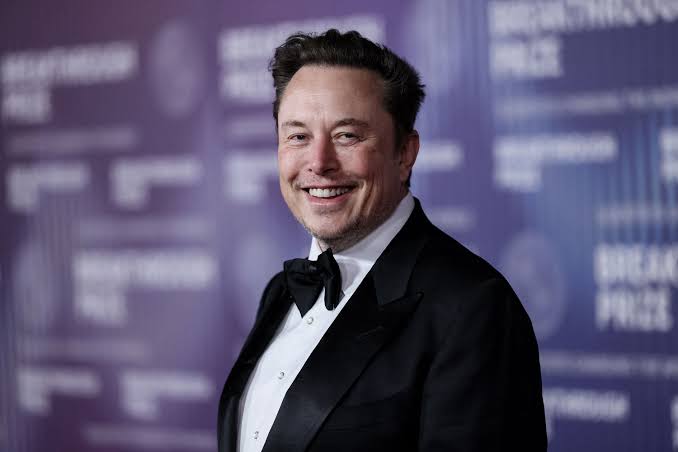
The nearly one year reign of Tesla boss, Elon Musk, at the top of Bloomberg’s Billionaires Index, as the world’s richest person has come to an end, at least for now.

This is because Oracle co-founder, Larry Ellison, whose fortune reached a record $393 billion on Wednesday, as against Musk’s $385 billion, is now sitting on top of the ladder.

Bloomberg reports that Ellison’s fortune went up by a record $101bn on Wednesday after Oracle reported quarterly results that beat expectations and signalled further growth in its cloud business.

The 81-year-old tech billionaire’s gains mark the biggest one-day jump ever recorded on Bloomberg’s index.

Oracle’s shares, which had already risen 45 per cent this year, soared 41 per cent after the company announced strong bookings and an upbeat outlook for its cloud infrastructure unit.

He previously lost the crown to Amazon’s Jeff Bezos and LVMH boss Bernard Arnault.

Tesla shares have fallen 13 per cent this year.

The company’s board has proposed a massive pay package for Musk that could make him the world’s first trillionaire if he hits a series of ambitious target.

Billionaire philanthropist Bill Gates no longer ranks among America’s 10 Richest People.

The Microsoft cofounder, who reigned for nearly a quarter century as America’s richest person, no longer makes the very top of this year’s ranking of the country’s wealthiest people, according to Forbes report on Wednesday.

Gates was long known as the richest person in America. Starting in 1991, he ranked either first or second on the Forbes 400 list of the country’s wealthiest people every year for nearly three decades.

He fell below the No. 2 spot in 2021. Now, for the first time in 34 years, Gates is not even in the top ten.

He ranks No. 14 on this year’s Forbes 400–just behind Bloomberg LP cofounder Mike Bloomberg and one spot ahead of the country’s (and the world’s) richest woman, Walmart heiress Alice Walton.

Of course, Gates still commands a massive fortune–Forbes estimates he’s worth $107 billion, the same as a year ago.