Home Blog Page 172

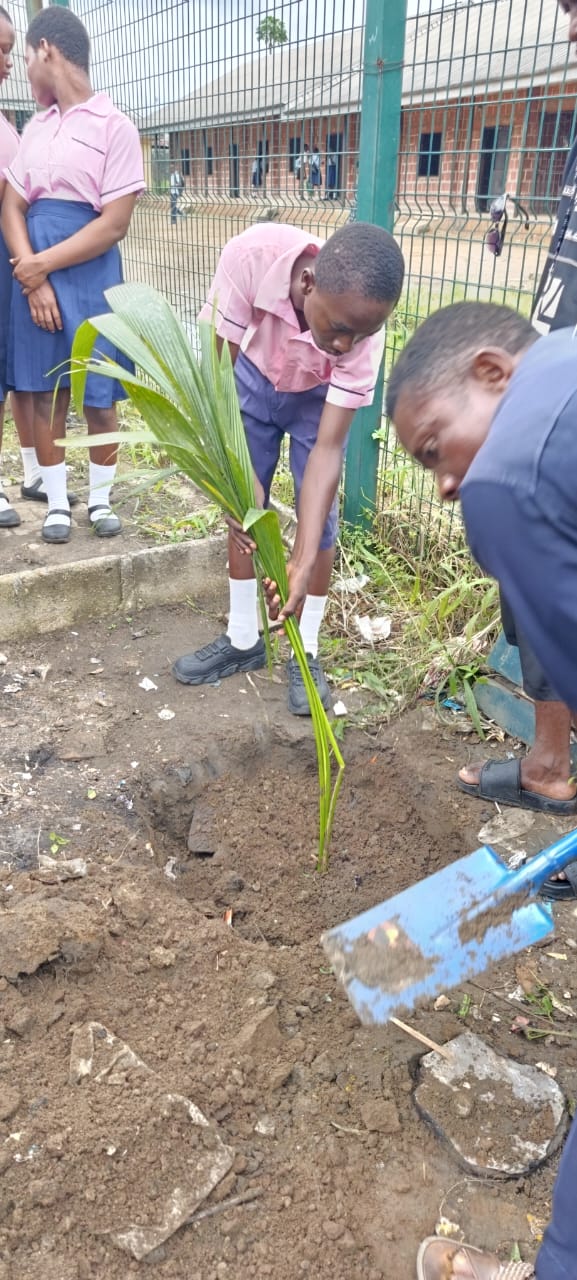
Rivers NACOPPMAN Champions Coconut Awareness At Rumukwurusi School

0

The Rivers State Chapter of the National Coconut Producers, Processors and Marketers Association of Nigeria (NACOPPMAN) has continued its advocacy for coconut awareness and cultivation with an outreach at Community Comprehensive Secondary School, Rumukwurusi, Port Harcourt.

The sensitization programme, led by the State Chairperson, Pastor(Mrs) Ngozi Ajayi and her team, the Vice Chairman – Alhaji Ahmed Zacca, General Secretary – Engr Ongwatabo Nehemiah Epoh and the Public Relations Officer – Mrs Delight Uche-Aniche focused on educating students about the nutritional, medicinal, and economic benefits of cultivating coconuts.

Pastor Ajayi emphasized that coconuts are not only vital for improving health but also hold significant potential in wealth creation through agribusiness opportunities.

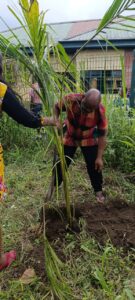
As part of the event, the team planted six coconut seedlings within the school premises.

The exercise symbolized NACOPPMAN’s flagship campaign, COSIN (Coconuts Sufficiency In Nigeria), which recommends that every family must plant at least three coconut trees to secure both future health benefits and economic stability.

Speaking during the event, teachers and staff of Rumukwurusi School commended the Association’s initiative, describing it as a timely and practical way to introduce students to agriculture as a pathway to food security, entrepreneurship, and sustainable livelihoods.

The outreach concluded with NACOPPMAN’s call on families, schools, and communities across Rivers State to embrace coconut farming as a means of fostering health, wealth, and environmental sustainability.

Feisty with Fire: Hilda Baci Ignites History With The World’s Largest Jollof

0

Guinness World Record–winning chef, Hilda Baci, is set to make history once again as she prepares the world’s largest pot of Nigerian jollof rice.

In collaboration with Gino, Hilda will mark World Jollof Day with a bold attempt to cook 250 bags of basmati rice in a giant pot measuring 6 by 6 meters wide, 1.1 meters high, and 1.3 meters deep. The historic cook-off is scheduled for Friday, September 13, 2025, at Eko Hotel and Suites, Lagos.

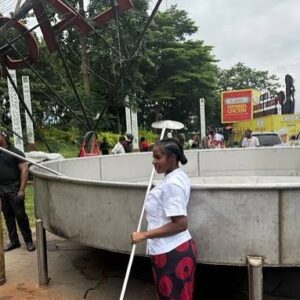
Hilda Baci biggest pot of jollof rice

Hilda revealed via her Instagram page that more than 20,000 people have registered to witness the event, expressing gratitude for the overwhelming support. Initially planned for Muri Okuola, which could only accommodate 3,500 people, the venue was shifted to Eko Hotel to ensure the safety and comfort of the large crowd.

In true community spirit, Hilda announced that the meal will be free for all attendees. She said:

“All you have to do is come, watch, and enjoy a taste of my amazing meal.”

Ahead of the event, Hilda and her team conducted a dry run at the venue where the massive pot was assembled, testing it for leaks and ingredient balance to guarantee success. She also promised a smooth registration process for everyone attending.

NIMET Warns of Imminent Flood Risk Amid Nationwide Thunderstorms, Rain

0

The Nigerian Meteorological Agency (NIMET) has predicted thunderstorms and rainfall across several parts of the country from Friday to Sunday, warning that the weather conditions could lead to flooding in vulnerable areas.

In a weather outlook released on Thursday, September 11, 2025, in Abuja, the agency highlighted Sokoto, Zamfara, Kaduna, Kano, Katsina, parts of Kebbi, Taraba, Bauchi, Gombe and Adamawa states as likely to experience thunderstorms and moderate rainfall.

In the central region, states such as Niger, Kogi and Benue are expected to witness cloudy skies with sunshine intervals in the morning, followed by thunderstorms and moderate rainfall later in the day. Plateau, Kwara and the Federal Capital Territory (FCT) are also included in this forecast.

For the southern region, intermittent moderate rainfall is expected throughout the forecast period, with possible flooding in parts of Lagos, Akwa Ibom and Cross River states. Light to moderate rain is anticipated in the afternoons and evenings. Similarly, Oyo, Ogun, Lagos, Edo, Delta, Rivers, Bayelsa, Cross River and Akwa Ibom states are expected to experience cloudy skies with moderate rainfall in the morning, and further rainfall later in the day.

The agency advised against driving in heavy rain and urged farmers to avoid applying fertilizers and pesticides just before rainfall to prevent nutrient loss. It also cautioned residents to secure loose objects, disconnect electrical appliances during storms, and avoid staying under tall trees to prevent injuries from falling branches.

NIMET further directed airline operators to obtain up to date weather reports for safe and efficient operations. The agency encouraged the public to remain alert and stay updated with its weather advisories.

Algorithms, Africa’s Pathway To Sustainable Growth – RSU Don

0

Algorithms, the backbone of emerging technologies such as Artificial Intelligence, Blockchain, Internet of things, Quantum Computing and Biotechnology, and their effects, is a reflection of transformative power of technology when applied intentionally and ethically for rapid development of the society.

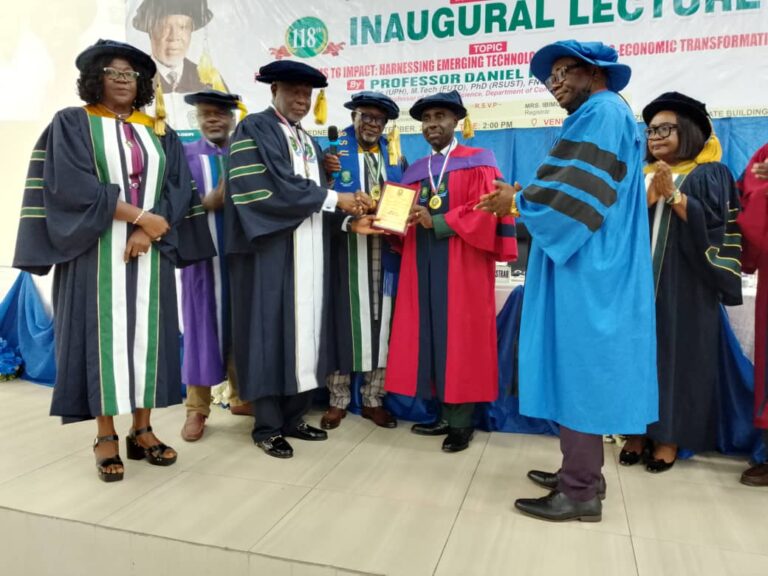
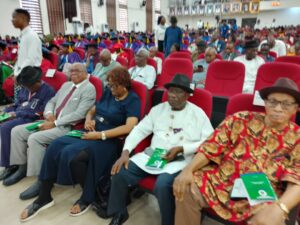
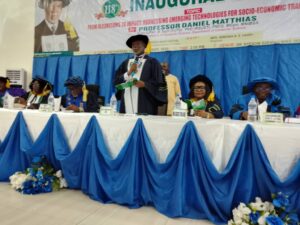
A lecturer in the Department of Computer Science, Rivers State University, Port Harcourt, Professor Daniel Matthias, stated this on Wednesday when he delivered the 118th Inaugural Lecture of the University titled, “From Algorithms to Impact: Harnessing Emerging Technologies For Socio Economic Transformation.”

Vice Chancellor, Rivers State University, Prof Isaac Zeb- Obibi ( left) presenting a commemorative plaque to Prof. Daniel Matthias, after the lecture

Prof Matthias who described Algorithm as a, “Finite, step by step set of institutions designed to solve a specific problem or perform a task”, said they are fundamental to both Computer Science and everyday life, where they serve as recipes, driving directions, or the instructions a computer used to sort data, make recommendations on social media or rank search engine results. They take input, process it through a sequence of logical steps, and produce and output.”

The university don emphasized that Africa has the most youthful population globally with entrepreneurial spirit and therefore stands at a pivotal moment to harness the potential of the technologies enabled by the algorithm to drive sustainable development.
He noted that in an era where technology is no longer a spectator in the game of societal development, with AI diagnosing diseases, to data analysis predicting natural disasters, there is no doubt that technology shapes the world.

“Africa, with its youthful population and entrepreneurial spirit, stands at a pivotal moment to harness the potential of these technologies. By addressing infrastructure deficits, fostering digital literacy, and creating supportive policies, the continent can leapfrog traditional development pathways and establish itself as a global innovator,” Prof Mathias stated.

According to him, though Africa has its challenges in infrastructure deficits such as access to technology, logistics and transportation, educational barriers in the areas of quality education and digital literacy, limited investment and informal economies, the continent has promise of potential growth with the development and use of Algorithms.

Prof Matthias attributed the potential promises to demographic advantage, ecosystems, noting that Africa has the potential to leapfrog traditional stages of technological development by adopting mobile and digital solutions directly. Furthermore, he said that focusing on renewable energy and sustainable practices can help Africa address energy shortages while promoting environmental stewardship.

He postulated that emerging new technologies in AI, Blockchain, Internet of Things, Quantum Computing, and Biotechnology are no longer just theoretical constructs, but are reshaping industries, improving lives, and addressing critical challenges in Africa and beyond, citing studies in healthcare, land registry systems, flood monitoring, and renewable energy as how technology can be harnessed for socio-economic transformation, fostering resilience, equity and economic growth.

“By bridging the gap between technical knowledge and societal needs, we can create technologies that not only solve problems, but also empower communities, foster inclusion, and drive sustainable development. Collaboration, advocacy, and mentorship are essential to ensuring that technology serves as a tool for equity, empowerment, and a better future for all,” the university Don stated.

For Africa to benefit immensely from emerging technologies, Prof. Matthias recommended the strengthening of research in emerging technologies through the establishment of dedicated research centres in AI, IoT, Blockchain, and Renewable Energy. He also advocated linking computer science with health, agriculture, and engineering as interdisciplinary projects.

He further recommended the promotion of digital literacy, Science, Technology, and Mathematics (STEM) capacity building through integrating digital skills and coding from first year across all faculties in universities and similar institutions. He called for the expansion of postgraduate and professional training programmes in data science, cyber security, and machine learning.

Prof Matthias further suggested encouragement for innovation and incubation through developing innovation hubs where students and staff can build prototypes and grant support to start-ups and tech-driven enterprises through seed funding and mentorship.

While urging for a university-industry- government partnership in order to strengthen collaborations for internships, applied research, and product development, Prof. Matthias recommended that research outcomes should align with societal needs, especially in healthcare, environment, education, and governance.

Prof. Matthias, who described himself as not merely a computer scientist who is focused on the abstract world of algorithms but a scholar striving to connect computational innovations with tangible societal progress, enumerated some of his contributions to real-world contexts, which include, developing machine learning models for public health, promoting open-source tools for education, and mentoring students to become tools for education.

Prof. Matthias also highlighted his computational intelligence on healthcare delivery in Nigeria during the COVID-19 pandemic, maternal and neonatal health statistics as significant strides. He also made significant contributions in the areas of security, privacy, and digital trust, smart cities, transportation, infrastructure, big data, cloud, and the digital economy, where his contributions “illustrate that algorithms are not merely mathematical constructs, but also facilitators of trust, privacy, and governance in the digital era,”.

In his closing remarks, the Vice Chancellor of the Rivers State University, Prof. Isaac Zeb-Obibi congratulated the lecturer, describing the lecture as “fantastic” and the lecturer, as “our rare gift to Africa and the world in the field of Computer Science.”

He acknowledged that most of the recommendations of the lecturer were in consonance with what the university was doing in terms of developing a policy on the use of AI and making the university community to be digital compliant.

Blockade Of Roads: Akwa Ibom CP Threatens Arrest Of Youths

0

Mr Baba Azare, Commissioner of Police (CP), in Akwa Ibom State has warned youths against blocking of public roads and entrances of organisations to protest perceived grievances in the state, warning that those involved risk arrests.

Azare gave the warning at a news conference in Uyo on Thursday.

“I want to draw the attention of good people of Akwa Ibom to please admonish the youths against taking laws into their hands as a result of slightest provocation.

“The act of blocking public roads and gates of organisations is very serious offence,” he said.

Azare noted that some youths have cultivated the habit of blocking roads and gates on a slightest provocation between them and their employees regardless of obvious nuisance being caused.

The CP said that the command would stop at nothing to arrest and prosecute anyone caught in such act.

He advised the youths to exhaust alternative means of dialogue and not to resort to violence.

“If you have any issues, the law is very clear, you can go ahead and explore legal avenues to resolve the problems within your own organisation or communities,” he said.

Azare also said that the command would not fold its arms and watch people blocking Federal roads or public roads in the state.

He said that the command under his leadership would continue to fight crime and criminality in the state.

“I want to sincerely appreciate the good people of Akwa Ibom for their continuous support and cooperation with the Police,” he said.

Azare urged Akwa Ibom people to report any suspicious movement or persons to the nearest police station.

Diabetes: FG, Chinese Firm Mull First Insulin Plant In Nigeria

0

The National Biotechnology Research and Development Agency (NBRDA) entered into partnership with a Chinese firm to establish Nigeria’s first insulin production plant.

Insulin is a key requirement in the treatment and management of diabetes.

The move marks a major step toward Nigeria’s medical self-sufficiency which is expected to save billions of naira in foreign exchange.

Mrs Toyin Omozuwa, Press Secretary to the Director-General of the NBRDA, Prof. Abdullahi Mustapha, said this in a statement on Thursday in Abuja.

She said the NBRDA signed a Memorandum of Agreement (MoA) with Shanghai Haiqi Industrial Company Ltd, on Wednesday in Abuja to establish Nigeria’s first sustainable insulin manufacturing facility.

She said the Mustapha signed on behalf of the Federal Government, while Mr Bokai Zhai, General Manager of Shanghai Haiqi Industrial Company Ltd signed on behalf of the firm.

According to her, Mr Uche Nnaji, Minister of Innovation, Science and Technology, witnessed the event saying that for decades, diabetic patients have depended on imported insulin, often at high cost and with limited availability.

Nnaji said that with the agreement Nigeria would step into an era of improvement in its health security, job creation, and industrial innovation.

He added that beyond saving the nation up to one billion dollars in imports every year, the initiative offered a ray of hope to Nigerian families affected by diabetes.

Mustapha also underscored the agreement as a turning point for the health sector and for biotechnology advancement in Nigeria.

“This is a transformative opportunity, and for the first time, Nigeria will have standardised, locally produced insulin, ensuring affordability and quality not only for our citizens but eventually for Africa.

“This marks the beginning of a new chapter in our biotechnology journey, where research is converted into real solutions for Nigerians,” Mustapha stated in the statement.

Meanwhile, Zhai, said the company was committed to the project because of its potential human and economic impact.

“This cooperation will reduce reliance on imported insulin, ensure accessibility and affordability for Nigerian families, and promote the growth of the local pharmaceutical industry through technology transfer, job creation, and capacity building,” he said.

As the first insulin plant in Nigeria and among the few in Africa, the facility will enhance healthcare delivery, support industrial growth, and reduce pressure on foreign exchange.

It also positions Nigeria to lead in biotechnology and pharmaceutical innovation across the continent.

FG Begins Civil Service Audit, Skills Gap Retreat

0

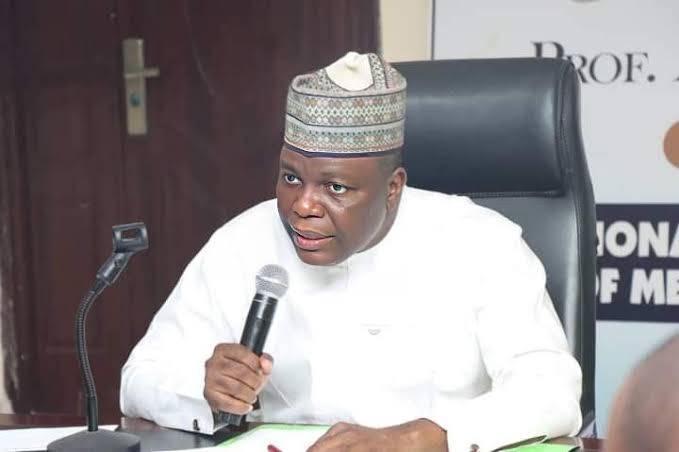
The Federal Government on Thursday began a three-day strategic retreat to harmonise the methodology for the Personnel Audit and Skills Gap Analysis (PASGA) in the Federal Civil Service.

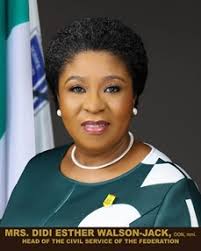
Declaring the retreat open in Abuja, the Head of the Civil Service of the Federation (HCSF), Mrs Didi Walson-Jack, described the exercise as a critical step in the ongoing reforms of the Federal Civil Service.

She said the initiative aimed to reposition the service for greater efficiency, professionalism, and improved service delivery.

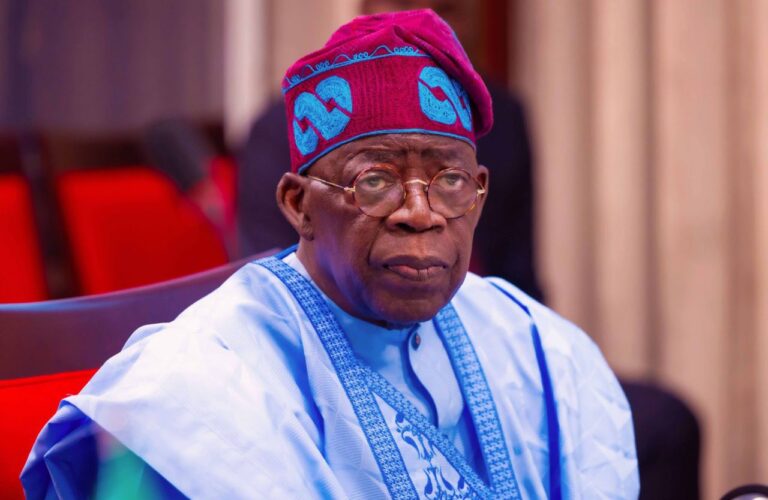
President Bola Tinubu had earlier directed a comprehensive PASGA across the federal service to enhance professionalism and effective service delivery.

The audit is also expected to support the development of a more agile, competent, and responsive civil workforce.

Walson-Jack described the project as a foundational reform initiative under the Federal Civil Service Strategy and Implementation Plan (FCSSIP) 2021–2025.

“This project will give us what we have long needed, a credible and verifiable personnel database that captures not just numbers, but also skills, competencies, and workforce distribution across ministries, departments, and agencies (MDAs),” she said.

She emphasised that the data gathered would support evidence-based planning, targeted training, strategic deployment, and transparent succession planning.

“With it, we can direct capacity building where it is most needed and plan for the next generation of civil servants,” she added.

The HCSF urged participants to work toward a unified and workable methodology that would strengthen civil service reforms.

She noted that the outcome of the retreat would shape future decisions on recruitment, promotions, postings, training, and succession.

Also speaking, Mr Folusho Philips, Chairman of Philips Consulting, the lead firm for the project, described the civil service as a “huge organisation” that required proper personnel verification.

He said the PASGA would help identify skill gaps, competencies, and strengths to ensure workers were “fit for purpose” in today’s dynamic environment.

“We want to identify the kinds of jobs we need to fill, the kind of people we need, and then address the skills and capacity gaps,” Philips said.

He added that if successful, the initiative could be replicated at the state level to improve public service delivery across the country.

Earlier, Dr Danjuma Kalba, Permanent Secretary, Common Services Office in the HCSF, stressed the need to harmonise the approaches of the 15 cluster consultants involved in the project.

“Each HR firm might adopt a different methodology if left unchecked. This retreat is essential to ensure a standardised and credible outcome,” he said.

The retreat, themed “Building a Future-Ready Workforce: Reshaping Skills Today for Tomorrow’s Nigeria,” is being attended by members of the steering committee and the implementation team.

Also in attendance are representatives from Philips Consulting and the 15 cluster consultants engaged for the national project.

Dangote Cement Shareholders Receive N3 Trillion Dividend In 15 years …As Company Pays N520 Billion In Taxes To FG

0

Dangote Cement Plc says it paid N3.3 trillion in dividends to its shareholders over the last 15 years. At the same time, the company paid the sum of N520 billion to the Federal Government as taxes.

The company made this known on Wednesday during its “Facts Behind the Figures” presentation at the Nigerian Exchange Limited (NGX) in Lagos.

Mr Emmanuel Ikazoboh, the new Chairman of Dangote Cement, who succeeded Alhaji Aliko Dangote, assured shareholders of sustained returns on their investment.

He said the company would continue to pursue its vision of making Africa self-sufficient in cement and clinker production.

“In the last 15 years, we have paid a total dividend of N3.3 trillion to our shareholders and we assure you all of sustained returns on your investments.

“To our investors, you have my unwavering commitment to safeguarding and growing your investment.

“To our regulators and market operators, you have my pledge of continued partnership and adherence to governance standards that lead rather than follow.

“To our employees and partners, you have my gratitude and my assurance that our collective strength will propel us to achievements we haven’t yet imagined,” he said.

Speaking further on the future of the company, Arvind Pathak, Chief Executive Officer of the Group said, “We aim to expand installed capacity to 66.4Mta by 2030, supporting our long-term vision of making Africa self-sufficient in cement and clinker production.

“This growth will be driven by a mix of greenfield and brownfield projects.”

Pathak revealed that the company had commissioned the first phase of 1.5Mta of its 3Mta Côte d’Ivoire plant, while construction of the 6Mta integrated Itori plant continued to advance steadily.

He said the company had announced a 400-million dollar investment to double its production capacity in Ethiopia.

He said, “Over the past 15 years, DCP has committed more than $8.5 billion in capital investments across Africa, underscoring our long-term confidence in the region’s growth prospects.”

Earlier, Dr Umaru Kwairanga, Group Chairman of the NGX, commemded Alhaji Aliko Dangote, President of the Group, for his substantial contributions to the Nigerian capital market and private sector development.

Kwairanga said Dangote who was also his mentor, had clearly demonstrated that wealth could be created but also transferred to the public through the capital market.

Kwairanga described Dangote Cement as one of the prides of the Nigerian capital market.

He noted that it was listed on the Premium Board of the Exchange, reserved for companies with the highest standards of corporate governance and regulatory compliance.

He said the company remained one of the most capitalised on the NGX with a strong record of rewarding shareholders through consistent dividends and capital appreciation.

Also speaking, Mr Jude Chiemeka, Chief Executive Officer of NGX Ltd., described Dangote Cement as one of the most outstanding commercial entities listed on the Exchange.

Chiemeka said that this was based on the fact that the company had recorded huge dividend payments to its shareholders since its listing in the year 2010.

According to him, the company had also paid over 520 billion tax to the Federal Government.

He note that the company currently form nine per cent of the Exchange’s over N88 tillion market capitalisation.

Mr Faruk Umar, President of the Association for the Advancement of Rights of Nigerian Shareholders (AARNS), expressed excitement with the company’s financial performance.

“We are happy with this result. 2024 was very challenging due to the fluctuations in the foreign exchange market and the company’s expansion programme.

“However, all these challenges, the company was still able to pay us a very good dividend and even gave us hope of better returns on our investments in the years to come.

“This is very commendable,” he said.

Nigeria’s Journey Towards Inclusive Health Care

0

For most Nigerians, paying for treatment is a daily struggle.

Available data indicates that out-of-pocket expenses account for more than 70 per cent of health costs, pushing families into poverty and leaving the most vulnerable without care.

National spending on health remains below five per cent of GDP, far short of the 15 per cent target set in the 2001 Abuja Declaration.

Primary healthcare centres often lack basic equipment, teaching hospitals are overstretched; and medical professionals continue to leave the country in search of better opportunities abroad.

In the Federal Capital Territory(FCT), a heavily pregnant woman carrying twins tragically lost her babies after being turned away from multiple hospitals.

Told to pay ₦28,000 and provide a referral letter, she walked several kilometres to secure the documents, only to return too late.

Investigations revealed the twins had died in her womb days earlier, likely due to delays in receiving timely medical care.

Similarly, in Akwa Ibom, a mother and her newborn died following a caesarean section at the General Hospital in Ikot Ekpene.

Relatives alleged that hospital staff left the woman unattended for over three hours, and no blood was available during surgery.

The incident prompted Gov. Umo Eno to establish a commission of inquiry.

These heartbreaking stories highlight the financial, infrastructural, and systemic barriers facing millions of Nigerians, particularly women and children.

At the recent National Health Financing Dialogue in Abuja, policymakers, development partners, and stakeholders grappled with a pressing question:

How can Nigeria re-imagine healthcare funding to ensure access, affordability, and quality for all?

Over the past two years, the government has implemented reforms aimed at saving lives, reducing financial hardship, and improving healthcare access.

These reforms include revitalising primary healthcare facilities, equipping them with essential commodities, and retraining more 67,000 frontline health workers.

More than 8,000 facilities now receive regular federal disbursements to ensure continuity of services.

On the demand side, insurance coverage has been expanded to vulnerable populations.

The urgency of the conversation extends far beyond policy documents; it is a conversation about healthcare as a fundamental human right.

Through the Vulnerable Groups Fund and the National Health Insurance Authority (NHIA), pregnant women, children, people with disabilities, Al-Majiri children, and out-of-school children can access essential services without facing catastrophic costs.

Emergency care support has also been strengthened; more than 5,000 women have had caesarean sections reimbursed, and programmes have been established to provide treatment for obstetric fistula at no cost.

As the Coordinating Minister of Health and Social Welfare, Prof. Muhammad Pate, emphasised, health reforms were not just abstract policies; they are tangible and measurable with clear human impact.

“Historically, the Nigerian elite have benefited more from public resources than the poorest.

“We are changing that,” Pate said.

In his submission, Prof. John Ele-Ojo Ataguba, Executive Director of the African Health Economics and Policy Association (AfHEA), said that universal health coverage (UHC) was a journey, not a destination.

Successful countries combine contributory and non-contributory schemes, and Nigeria is now pursuing both.

“The contributory component consists of national and state health insurance schemes, while the non-contributory element is represented by the Basic Health Care Provision Fund, which subsidises care for those unable to pay, particularly in the informal sector.

“Despite these efforts, out-of-pocket spending remains a major challenge.

“Illnesses are unpredictable; families should not have to sell assets to survive a medical emergency,” Ataguba said.

Dr Gafar Alawode, the Chief Executive Officer, DGI Consult, highlighted the importance of optimising resources and coordination.

“Before now, multiple actors, government tiers, the private sector, and donors spent in uncoordinated ways.

“With a sector-wide approach, two plus two can become five or six instead of one or zero,” Alawode explained.

Yet, while politicians and technocrats debate financing models, youth and grassroots women leaders say they remain excluded from decision-making.

Mr Seniye Michael, a youth activist, lamented that leaders often attend high-level meetings briefly, make remarks, and leave, leaving young people dialoguing with themselves.

Michael proposed a Youth Health Access Fund to directly finance medical needs for young people.

Mrs Hauwa Adamu, leader of the Wives of Traditional Rulers Network, echoed this call.

“Policies are often written for us without us; women’s lived experiences must shape advocacy and project design,” Adamu said.

The dialogue highlighted a key principle: health is a unifying force. Universal health coverage strengthens human capital, builds social cohesion, and protects society from preventable diseases.

As Pate explained, ensuring that even rural populations have access to care is in everyone’s enlightened self-interest.

Participants at the dialogue agreed that, private sector partnerships, tax reforms, and public engagement are crucial to sustaining these gains.

Governments at all levels, alongside citizens, must commit to funding, transparency, and accountability.

The road to universal health coverage remains long, but the trajectory is clear.

Stakeholders say Nigeria is building an inclusive health system that prioritises the vulnerable, reduces preventable deaths, and protects citizens from financial catastrophe.

This transformation is about more than policies; it is about saving lives, empowering communities, and ensuring that no one is left behind.

The tragic stories from the FCT and Akwa Ibom remind us why this work matters; behind every statistic is a human life, and policies must protect those lives.

Ensuring healthcare access, affordability, and quality is not a political gesture; it is a moral imperative.

As Nigeria continues its journey towards inclusive healthcare, these reforms and initiatives must be sustained, monitored, and adapted to local realities.

Experts say when healthcare systems function effectively, the impact is profound: maternal and child deaths decline, families are protected from financial ruin, and social trust in institutions strengthens.

Ultimately, the story of Nigeria’s healthcare reform is one of hope and resilience; it reflects the determination of policymakers, healthcare workers, activists, and ordinary citizens to transform a fragmented system into one that is inclusive, equitable, and people-centred.

While challenges remain, including limited funding, workforce shortages, and systemic inefficiencies, the commitment is evident.

With sustained focus and participation from all sectors, Nigeria can achieve a healthcare system where policy meets people, and where access to quality care is not a privilege but a right for every citizen.

Observers say for every Nigerian mother walking miles for a referral letter, for every child denied life-saving care due to financial constraints, the ongoing reforms represent a future where health policies translate into real, tangible benefits for all.

(NAN Features)

Tinubu’s Reforms, Bold, Fruitful – D-G SEC

0

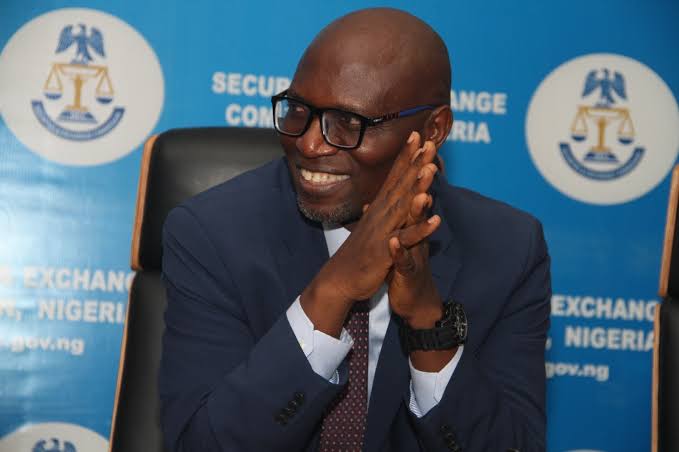
The Director-General General (D-G) of the Securities and Exchange Commission (SEC), Dr Emomotimi Agama, says the economic reforms introduced by President Bola Tinubu will significantly stabilise and develop the Nigerian economy.
He stated this on Wednesday in Kaduna at the Nigerian Defence Academy’s (NDA) 23rd Convocation Lecture titled ‘Pathway to Economic Prosperity for a Public Server in a Deregulated Economy’.

The lecture was part of the activities lined up for the graduating Cadets of 72 Regular Course and Post-Graduate students of the military academy.
Agama said Tinubu had initiated bold and transformative reforms across key sectors in order to lay a solid foundation for inclusive growth and long-term sustainable development of the country.

Agama said, ” The government had undertaken several significant macro-fiscal reforms, including the removal of fuel subsidies, the unification of exchange rates, and the tightening of monetary policy.”

According to him, through these measures, the country has made notable progress in deregulating key sectors of the economy.
“The bold decision to eliminate Nigeria’s long-standing fuel subsidy programme on May 29, 2023, was more than a fiscal adjustment.

“It marked a pivotal shift toward a deregulated economy, aimed at reducing fiscal burdens and redirecting public funds to more productive sectors.
“The move signalled the Tinubu administration’s commitment to market liberalization, allowing fuel prices to be determined by supply and demand rather than government control,” he postulated.
Agama also said the government has begun scaling back electricity subsidies by adjusting tariffs, a strategy designed to enhance efficiency and attract private investment into Nigeria’s power sector.
The director-general said that to address rising inflation and support the Naira, the Central Bank of Nigeria (CBN) had adopted a tighter monetary policy stance, notably through interest rate hikes.

“These measures are part of a broader strategy to stabilise prices, restore investor confidence, and lay the foundation for a more market-oriented and resilient Nigerian economy.
“Another significant step taken by the CBN was the unification of the country’s multiple exchange rate systems, aimed at simplifying foreign exchange transactions and enhancing transparency in the currency market,” he added.

The SEC boss also spoke on the investments opportunities in the capital market and the need for the cadets to invest in order to secure their future.
Agama appreciated the Commandant of NDA, Maj.-Gen. Abdul Ibrahim, for inviting him to deliver the convocation lecture, saying it was a great opportunity to make the cadets financially literate.
The director-general advised that while officers and men of the military battle to make the nation secure, “it is important they have a scheme behind them to sustain their families.

“I’m grateful to the commandant that we have this ability and this opportunity to make sure that retiring officers do not retire in penury.
“The reason why some retire in penury is because there is some lack of financial education and lack of financial support that could be generated from adequate knowledge of financial products in the capital market.”
Agama explained that the capital market was providing support and condition for the people to live well after retirement.

Earlier, the Commandant, NDA Maj.-Gen. Abdul Ibrahim, appreciated the SEC official for the incisive lecture.

Ibrahim said the NDA has been providing trainings for the Nigerian Armed Forces since 1964, with a focus on producing well-rounded commissioned officers.
According to him, the academy has adopted the National Universities Commission (NUC) Core Curriculum and Minimum Academic Standard (CCMAS) requirements to ensure quality and competitiveness in its programmes.
He added that NDA provides intensive professional training, including physical fitness, weapons handling, and tactical manoeuvres, to prepare cadets for the national defence and security challenges.
Ibrahim said the Post-Graduate students undergo programmes in military science, defence and strategic studies, psychology, technology, and national development, aiming to develop students’ critical thinking and research skills.

He said the NDA had bilateral partnerships with foreign military academies, providing opportunities for cadets to complete the final year of their training abroad and enhancing regional defence cooperation.