


Home Blog Page 173

NiMet Predicts 3-Day Thunderstorms, Rainfall Nationwide

0

The Nigerian Meteorological Agency (NiMet) has predicted three days thunderstorms and rainfall across the country from Monday to Wednesday.
In Rivers State, the rainfall, which started on Sunday, continued into Monday.

NiMet’s weather outlook, released on Sunday in Abuja, predicted isolated thunderstorms with moderate rains on Monday morning over Kaduna, Gombe, Bauchi, Kebbi, Adamawa, and Taraba states.

In the afternoon and evening, isolated thunderstorms with moderate rains are expected across the northern region. Flash floods are likely in Adamawa, Taraba, and Gombe states.

For the central region, a cloudy atmosphere with sunshine intervals is expected on Monday morning, with moderate rains over Niger, Kogi, Kwara, the FCT, and Benue.

Thunderstorms with moderate rains are forecast over most parts of the central region later in the day.

NiMet predicted cloudy skies over the southern region on Monday morning with moderate rains expected in Ekiti, Ondo, Rivers, Akwa Ibom, and Cross River states.

Moderate rains are anticipated over most parts of the southern region later in the day.

On Tuesday, the northern region will experience cloudy skies with sunshine intervals. Isolated thunderstorms with moderate rains are expected over Borno, Kaduna, Gombe, Bauchi, Taraba, and Adamawa.

Later in the day, thunderstorms with moderate rains are forecast over Kano, Jigawa, Yobe, Katsina, Zamfara, Kebbi, and Taraba states.

For the central region, cloudy skies with sunshine intervals are expected Tuesday morning, with moderate rains over Kogi, Niger, the FCT, Kwara, and Nasarawa states.

Thunderstorms with moderate rains are expected later in the day over Niger, Kogi, Kwara, Benue, and the FCT.

Cloudy skies with chances of moderate rains are expected over the southern region Tuesday morning in Oyo, Ekiti, Ondo, Enugu, Anambra, Ebonyi, and Delta states.

Later in the day, light to moderate rains are forecast across most parts of the region.

On Wednesday, cloudy skies with sunshine intervals are expected over the northern region, with slim chances of thunderstorms and light rain in Sokoto and Zamfara.

In the afternoon and evening, isolated thunderstorms with moderate rains are expected over Borno, Adamawa, Taraba, Kaduna, Zamfara, Kebbi, and Sokoto states.

For the central region, cloudy skies with sunshine intervals are expected Wednesday morning, with light rains likely in the FCT, Kogi, Kwara, and Niger states.

Later in the day, thunderstorms with moderate rains are expected in Benue, Kwara, Kogi, and Niger states.

Cloudy skies are expected across the southern region on Wednesday morning, with moderate rains likely later in the day.

NiMet advised motorists to avoid driving during heavy rainfall. Farmers were urged to avoid applying fertiliser or pesticides immediately before rainfall to prevent nutrient leaching.

The agency also advised residents to fasten loose objects, disconnect electrical appliances, and avoid tall trees to reduce risks during storms.

Airline operators were urged to obtain airport-specific weather reports for effective operational planning.

Residents were encouraged to follow weather updates via NiMet’s website: www.nimet.gov.ng


FG Begins Process Of Appointment Of Five Permanent Secretaries

Office of the Head of the Civil Service of the Federation (HCSF) has begun the process of appointing five Permanent Secretaries, following the approval of President Bola Tinubu.
The positions include two vacancies created by the recent retirement of Permanent Secretaries from Imo State and the Federal Capital Territory (FCT), and three zonal vacancies for North-Central, North-East and South-East, arising from the creation of new ministries.
Mrs Didi Walson-Jack, HCSF, in a statement issued by Mrs Eno Olotu, the Director, Information and Public Relations, said that the process was designed to ensure transparency, credibility and merit in line with government’s commitment to good governance.
According to her, only qualified officers on Grade Level 17 who have spent at least two years on the grade and cleared by their Permanent Secretaries as not facing disciplinary action are eligible.
She said the exercise began with compilation and screening of eligible officers by a Committee of Permanent Secretaries, monitored by the Independent Corrupt Practices and Other Related Offences Commission (ICPC) and the Department of State Services (DSS).
Candidates also completed asset declaration forms with the Code of Conduct Bureau, while clearances from EFCC, ICPC, and DSS are ongoing.
Walson-Jack said the written examination, the next stage of the process, will hold on Sept. 15 at a federal government facility, while successful candidates will proceed to an ICT proficiency test on Sept. 17.
She added that the final stage, an oral interview, will hold on September 19 and will be conducted by a panel of serving and retired Permanent Secretaries, former Heads of Service, the Chairman of the Federal Civil Service Commission and representatives of the private sector.
She said:”anti-corruption agencies will also observe the process.
”The final recommendations will be submitted to the President for approval”.
According to the HOS, the exercise underscores government’s commitment to professionalism, institutional capacity, and improved service delivery in the civil service.
FG’s N250b Credit Support For Farmers, NASFAT Reacts To Loan Disbursements

0

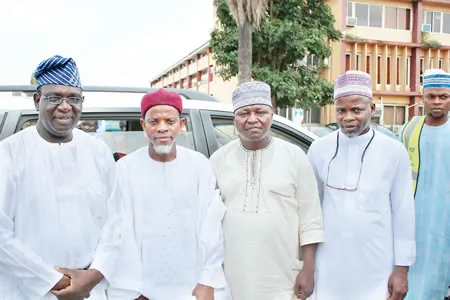
The Nasrul-Lahi-l-Fatih Society (NASFAT) has appealed to the Federal Government to put into consideration the feelings and religious dictates of people of faith in its continued efforts to financially empower Nigerians.

Imam Abdul-Azeez Onike, Chief Missioner, NASFAT, made the appeal in a statement on Monday.

Onike’s appeal was against the backdrop of a statement by Vice President Kashim Shettima, directing the Presidential Food Systems Coordinating Unit (PFSCU) on the disbursement of a-₦250 billion credit support for smallholder farmers at a single-digit interest rate.

The Vice President had directed the PFSCU to come up with an implementation roadmap for the disbursement of the funds during the sixth meeting of the PFSCU Steering Committee, held at the Presidential Villa, Abuja.

According to him, it was necessary to avoid further delays and ensure that the target beneficiaries of the initiative were reached.

However, reacting to the development, Onike said that both Islam and Christianity strongly disapprove of interest-based loans.

The Chief Missioner listed the negative consequences of interest to include exploitation, inequality, unjust wealth distribution, an unsustainable economy, deterrence to production, and the undermining of social harmony.

He therefore enjoined the relevant government agencies to promptly convene a stakeholder forum where religious leaders could offer ethically sound advice.

The cleric also commended the Tinubu-led administration for its efforts to alleviate the suffering of the citizenry.

As Catholic Bishops Gather In Akwa Ibom, Tinubu Urges Religious Leaders To Champion Peace

0

President Bola Tinubu has urged religious leaders to keep promoting interfaith harmony and reconciliation in communities divided by conflict.

Tinubu made the appeal at the opening of the Second Plenary Meeting of the Catholic Bishops Conference of Nigeria (CBCN) on Sunday in Ikot Ekpene.

Represented by the Secretary to the Government of the Federation, Sen. George Akume, Tinubu said religious leaders play a vital role in shaping values and building trust among citizens.

The President stressed that religious organisations remain an important bridge for peace, unity, and moral renewal in the country.

He acknowledged the Catholic Church as a credible partner in Nigeria’s journey towards national renewal.

“Your investments in education, health, and social welfare, especially in remote and underserved communities, speak louder than words.

“You have stood with the people in hardship, provided comfort in grief, and raised your voice against injustice and corruption,” Tinubu stated.

He encouraged religious leaders to continue speaking truth to power, not only to government but to all sectors of society.

He also urged them to offer constructive solutions that could help build a nation where integrity, hard work, and compassion define both public and private life.

Tinubu emphasised that reconciliation and cohesion would only thrive if spiritual leaders preach peace while discouraging extremism, hatred, and divisive tendencies.

The President assured the gathering of his administration’s commitment to tackling insecurity and social unrest by addressing poverty, unemployment, and inequality.

He called on religious leaders to complement government efforts by guiding their followers and nurturing communities with values of honesty, hard work, and compassion.

Tinubu commended Catholic Bishops and clerics of other denominations for consistently promoting dialogue and tolerance despite Nigeria’s diversity.

The CBCN plenary is a major gathering where bishops deliberate on issues of faith, society, and national development.

A communiqué is expected at the end of the conference.

Rivers State University To Roll Out Landmark AI Policy in Academics, Says VC …Non Digital Savvy Staff May Be Left Behind

0

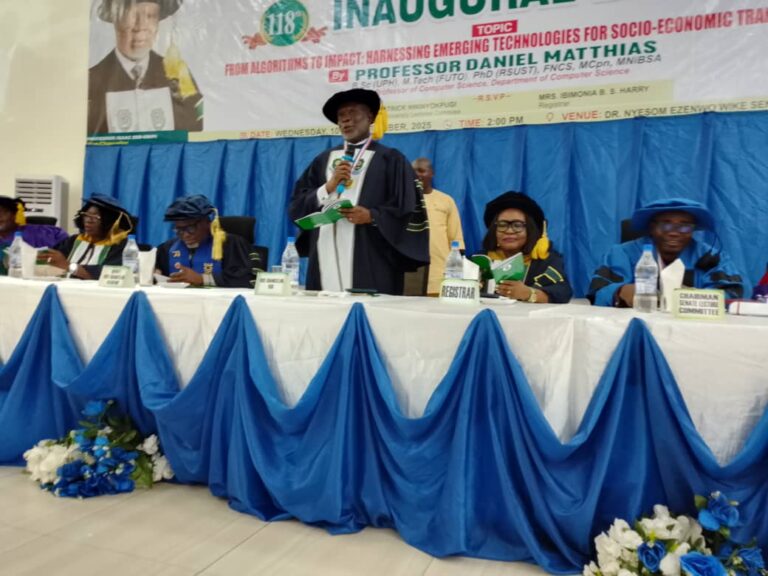
Rivers State University (RSU) is set to blaze a trail in higher education as it prepares to unveil a comprehensive Artificial Intelligence (AI) policy that will reshape teaching, learning, and research. The initiative, expected to position RSU among the first Nigerian universities to formally adopt an AI framework, underscores the institution’s resolve to modernize academic practices and equip students for a rapidly evolving digital world.

The Vice Chancellor of the university, Professor Isaac Zeb-Obipi, stated this while speaking at the 118th Inaugural Lecture of the university titled, “From Algorithms To Impact: Harnessing Emerging Technologies For Socio-Economic Transformation,” delivered by Professor Daniel Matthias of the Department of Computer Science, last week.

The Vice Chancellor who disclosed this while making his closing remarks during the lecture said the Senate of the university was already considering a policy aimed at mainstreaming AI into the academics and administration of the university.

“Right now, Senate is considering our AI policy tending to mainstream the technology into our academics and administration,” he said.

Prof. Zeb-Obipi, who was reacting to one of the recommendations of the Inaugural Lecturer on having “lead discussions on ethical use of AI and data within Nigeria” and “providing frameworks to guide responsible adoption of emerging technologies,” disclosed that the university will not allow unchecked and illegal use of AI in research at all levels of academic pursuit.

“Part of our AI policy will provide a certain percentage of AI content that will be permissible for students pursuing doctoral, masters or bachelor degrees. The idea is to avoid researchers just picking everything from AI and regurgitating the same to the institution. They will be subjected to rigorous scrutiny and will be rejected if they fail to pass the test. So, I am sounding the warning now, and that also includes lecturers.

The Vice Chancellor further stated that his administration is developing the digital capacity of both academic and non-academic staff of the university to ensure that the school ranks high in digital transformation in the country.

“We are developing the digital capacity of all staff by introducing the Computer Access Programme (CAP). If any staff has not applied, make haste to do so because you may be left behind as very soon the VC will only treat correspondence via email,” he said.

Prof. Zeb-Obipi further disclosed that the Information, Communication and Technology (ICT) centre of the university is equipped to ensure that all staff benefit from the training and facilities available. He said during the last holidays, over 400 students and teachers were at the centre to learn about emerging technologies.

Speaking on the University-Industry-Government Partnerships, which was also a recommendation from the Inaugural Lecturer, the Vice Chancellor stated that his administration intends utilising the University-Industry Special Purpose Vehicle already in place to ensure collaboration that would yield results. “The Departmental-Industry Day is aimed at bringing professional bodies to collaborate and mentor our students for greater achievements.

The 118th Inaugural Lecture was well attended by members of the University community, guests from far and wide.
The Vice Chancellor noted that the university was contributing its quota to national development by the quality of research it was developing in various fields of academics.

London 2026 ITTF World Championships: Nigeria, Egypt, Others Battle For Slots

0

Nigeria and Egypt, will lead the charge for qualification to the 2026 ITTF World Team Championships in London, United Kingdom, as Africa’s top teams converge on Tunis, Tunisia, for the 2025 International Table Tennis Federation (ITTF) African Championships.

The event is scheduled to take place between October 12 and October 19 2025.

London 2026 marks a historic centenary celebration, returning the World Championships to the city where it all began in 1926.

The Tunis tournament serves as the official African qualification event, with the top-performing men’s and women’s teams securing their place on the sport’s grandest stage.

In the men’s division, Nigeria, West Africa’s dominant force and Egypt, the North African powerhouse will be joined by Tunisia, Algeria, Côte d’Ivoire, Madagascar, Uganda, Ethiopia, South Africa, Angola, Cameroon, Congo Brazzaville, Benin Republic, DR Congo, and Morocco.

The women’s category features Egypt, Nigeria, Benin Republic, Ghana, Ethiopia, Botswana, Côte d’Ivoire, Uganda, Madagascar, DR Congo, Cameroon, South Africa, Angola, Algeria, and host nation Tunisia.

With London in sight, the battle for qualification will intensify during the final three days of the continental tournament, where all eyes will be on Nigeria and Egypt, as they renew their rivalry.

According to the ITTF, London 2026 will feature 64 teams in both the men’s and women’s events, an expansion from the previous 40-team format.

This growth reflects the global rise of table tennis and opens the door for more nations to compete at the highest level.

The tournament will unfold across two iconic London venues, as The Copper Box Arena will host the opening rounds from April 28 to May 1, while the main draw will hold at Wembley Arena from May 2 to May 10, where the world’s elite will compete for the ultimate prize.

Each gender will see 64 teams divided into 16 groups of four, with round-robin matches determining progression with the introduction of Stage 1a and Stage 1b as key innovations in the format.

Stage 1a features the top eight teams (seven highest-ranked plus host nation) split into two groups. All eight automatically advance, with group results determining seedings.

Stage 1b includes the remaining 56 teams across 14 groups – the 14 group winners and six best second-placed teams qualify directly.

The remaining eight second-placed teams will enter a preliminary knockout round, with four winners completing the 32-team main draw.

The first serve at the Copper Box to the final point at Wembley, promises to celebrate not only the present strength of global table tennis but also the remarkable journey that began in the same city a century ago.

Post-UTME Trauma: Rising Fees, Logistic Burden Spark Public Outcry

0

The increase in charges for Post-Unified Tertiary Matriculation Examination (Post-UTME), acceptance, and clearance fees across Nigerian universities have become traumatic for parents, guardians, students, and education stakeholders, leading to various concerns.

Stakeholders also criticised the logistical challenges faced by candidates—often accompanied by their parents—who are compelled to travel long distances to the universities for screening, with many describing these developments as added financial strain on families already grappling with economic hardship.

They called for a downward review of post UTME charges, scrap of acceptance and clearance fees, and an online screening of qualified shortlisted candidates to end the burden and risks involved in embarking on long journeys
Originally pegged at N2,000, Post-UTME charges in many institutions have now risen to N5,000, N10,000 or more, depending on the institution.
It would be recalled that the former Minister of Education, Adamu Adamu, in one of the policy meetings on admission into tertiary institutions, directed schools not to charge above N2,000 for Post-UTME.
Since this pronouncement, universities, polytechnics, colleges of education, and others have continued to charge above the directed fee.
Besides, candidates that are offered admission are also compelled to pay a non-refundable acceptance fee, ranging from N50,000 to N100,000, depending on the institution.
The acceptance fee, according to the schools, is a commitment fee from the candidates, signifying their genuine interest in taking up the admission offer.
Stakeholders, however, see the fee as unnecessary and exploitative, compounding the challenges and burdens of securing admission into Nigerian tertiary institutions.
In separate interviews with the some parents said the fees are compounding the struggle for families, seeking affordable higher education for their children.
A parent, Mrs Ammy Elijah, lamented that the charges are forcing parents to make tough financial sacrifices.
“After paying for JAMB, transport, and now Post-UTME, parents are still stressed to bring tens of thousands of Naira for acceptance and clearance fees.
“It’s frustrating for families like mine who live on modest incomes,” she said.
Another parent, Akuchi Ahamba, called on the Federal Ministry of Education and regulatory bodies to urgently intervene and set standard guidelines to make Post-UTME and acceptance and clearance fees affordable for all candidates.
Putting the challenges into perspective, a parent, Mr Fred Ugochukwu, narrated his ordeal with his two children during the recently concluded University of Ilorin 2025 Post-UTME screening.
Ugochukwu from Imo State, who lived in Kaduna, said he had to abandon his work to accompany his two children to Ilorin for the screening.
“We left a day before the screening commenced. The journey was tedious and risky because of the bad state of the road and reports of kidnapping along the Birnin-Gwari axis
“Another harrowing experience was, securing accommodation around the campus, because no provision was made for the candidates,
“I have to pay through the nose to secure the hotel accommodation, where we stayed for the two days, as well as our feeding,” he said
Ugochukwu also lamented that, during the accreditation and examination proper, the parents who accompanied the candidates were not provided with shelter or seats.
“The parents who came in their thousands have to take shelters under trees and sat on bare floor while the screening lasted.
“At the end of the exercise and the harrowing experiences, neither of my two children met the cut-off point set by the school.
“The hurdles are just too much. My money, the risks and the sacrifices, all gone in vain,” he lamented.
No fewer than 21,950 candidates across the country participated in the University of Ilorin 2025 Post-UTME screening between September 1 and September 4, in the institution’s campus, Ilorin.
The university authority had said that, among the 20,220 UTME and 1,751 Direct Entry (DE) candidates who sat for the screening, only 13,000 slots would be filled based on the school’s admission quota .
Ugochukwu appealed to the government and relevant agencies to direct all tertiary institutions to conduct online post-UTME screening for candidates to save them and their parents from the associated risks and the harrowing experiences.
He gave examples of Federal University, Lafia, and Federal University, Oye-Ekiti, where candidates do not need to travel to the schools for screening.
According to him, the duplication of entrance examinations to higher institutions – the JAMB-conducted UTME and the institution-specific Post-UTME impose unnecessary costs and burdens.
Another parent, Mr Beyioku Ogundipe, narrated a similar ordeal during the 2024 admission process, when the post-UTME screening for his two children in different institutions fell on the same date
Ogundipe, who lived in Abuja with his family, recalled that, while he took his son to University of Lagos, the wife also sacrificed to take their daughter to Federal University of Technology, Akure, same day for screenings.
“The financial burden and the risk to the family are just too much. The government must take the bold step to stop the unnecessary duplication of the admission process and make it seamless,” he said.
Mrs Antonia Idachaba, while recounting her experiences in one of the country’s higher institutions, said what she and her daughter went through was horrific.
“In 2024, I took my daughter from Abuja to one of the schools in the South-East for post- UTME, and I must tell you the experience of travelling that day was horrific.
” It began when the vehicle that transported us developed mechanical issues midway in the bush.
“We were in that lonely area till evening before the driver got a mechanic to fix the vehicle.
“We got to our destination around 3 a.m. the following morning. The stress of getting hotel accommodation to stay was another challenging episode.
” You can imagine going through those stress and risk at that hour of the night, coupled with hike in the exam fees.
“This is not too good for any candidate and the parent amidst security and economic challenges,” Idachaba said.
She called on the government to step in by regulating the screening procedure and the payments to ensure no child is denied education due to financial constraints and logistic hurdles..
Students were also not left out, as they expressed displeasure over what they called “admission extortion” from institutions.
Eniola Abe, an applicant seeking admission into a federal university, said the rising charges were discouraging many brilliant but less-privileged candidates.
“ I almost gave up on my admission because I have only my mother to cater for my needs, as I had lost my father.
“These charges are absolutely too much to bear. Education should not be for only the rich. It should be the right of every Nigerian child,” she said.
Mr Salihu Yahaya, a retired Director of Quality Assurance, FCT, Education Management, said that the rising cost of Post-UTME registration, acceptance, and clearance fees had left many families struggling, especially amid the current economic downturn.
The retired education administrator said the increasing costs could further shut out children from poor and middle-income families from accessing higher education.
He called on regulators and stakeholders to interrogate the reasons behind the steady rise in examination and admission-related charges.
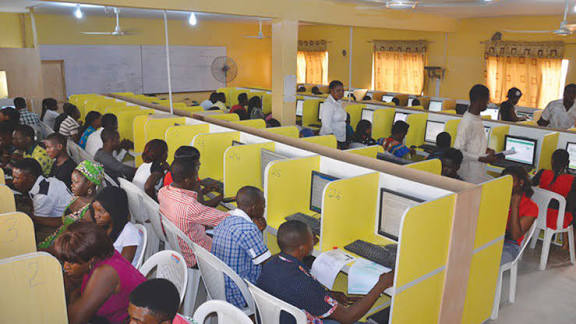
Yahaya also highlighted the inconvenience students faced in accessing Computer-Based Test (CBT) centres.
According to him, most existing centres are privately owned, leaving candidates to travel long distances to sit for exams.
He advised government and relevant bodies to invest in establishing more CBT centres across local governments, thereby easing pressure on students and reducing opportunities for exploitation.
“With more centres, you reduce the chances of overcrowding.
“Stronger institutions should use their resources to set up centres where they are lacking,” Yahaya said.
On his part, the President, National Parent Teacher Association of Nigeria (NAPTAN), Prof. Boniface Odeh highlighted the financial and logistical challenges that have accompanied the increase in Post-UTME and related fees in higher institutions.
Odeh noted that, while Post-UTME examinations remained an important tool for institutions to assess candidates beyond their UTME results, the current economic climate has worsened the financial strain on families.
According to him, many parents are struggling, not only with the higher examination fees but also with additional costs of travelling long distances, accommodation, and subsequent clearance charges.
“While I understand the challenges posed by these exams, particularly the financial burden and logistical inconveniences, I believe that Post-UTME exams serve as a crucial assessment tool for institutions to ensure that students are well-suited for their chosen programmes.
“However, I agree that the current economic climate has exacerbated the hardship faced by many families,” he said.
To strike a balance, he proposed several measures, including streamlining the examination process to minimise costs and travel requirements.
Other measures he proposed are reviewing acceptance and clearance fees to ensure they are reasonable and transparent and exploring alternative assessment methods that could reduce the financial burden on students.
He also called on institutions to adopt a “more nuanced approach” rather than making Post-UTME mandatory for all candidates.
Odeh suggested a collaborative effort between universities, regulatory agencies, and stakeholders to ensure a fairer, more inclusive admission process.
“Ultimately, we need solutions that balance quality assurance with the urgent need to ease the financial burden on parents and students,” he added.
With the 2025 admission processes ongoing in institutions across the country, stakeholders warned that unless the logistical burden and increased fees are regulated, the trends may deepen the crisis of access to tertiary education.

BPP, NHIA Strengthen Partnership To Enhance Transparency, Service Delivery

0

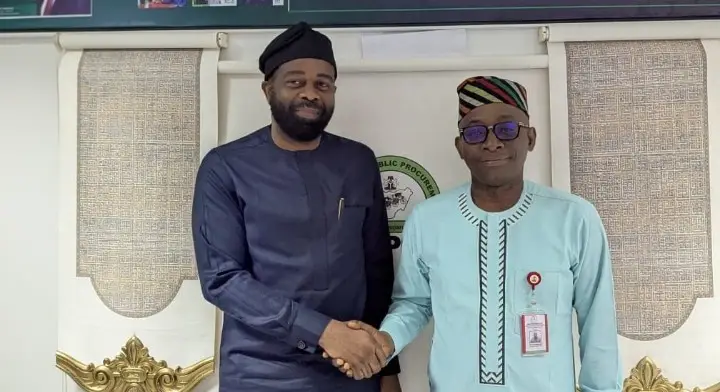
The Bureau of Public Procurement (BPP) and the National Health Insurance Authority (NHIA) have agreed to strengthen collaboration to promote transparency, accountability, and improved healthcare service delivery.

The Director-General of BPP, Dr Adebowale Adedokun, said this in a statement on Saturday in Abuja.

According to the statement, Adedokun spoke when the Director-General of NHIA, Dr Kelechi Ohiri, visited him.

He commended the reforms and initiatives recently introduced by the NHIA leadership, describing Ohiri’s pragmatic approach to healthcare delivery as timely and impactful.

The director-general said that while BPP and NHIA operated in different sectors, both agencies played similar roles in driving national growth through transparency and good governance.

He urged NHIA to comply with procurement directives issued by BPP while emphasising the importance of collective effort in building a strong healthcare system that would provide Nigerians with better access to medical services.

According to him, weaknesses in healthcare infrastructure and service delivery can endanger citizens’ lives, cause youth mortality, and aggravate economic challenges.

Adedokun pledged BPP’s support to NHIA, particularly in capacity building, public sensitisation, and enforcement of reforms to revive public confidence in the national health insurance scheme.

Earlier, Ohiri said that the purpose of the visit was to strengthen partnership with BPP in line with President Bola Tinubu’s administration’s agenda for healthcare renewal.

He outlined some of the reforms undertaken by NHIA, including the Health Sector Renewal Investment Initiative and a 95 per cent upward review of provider tariffs and hospital capitation.

He said that NHIA issued circulars to health management organisations for improved response to enrolees, introduced a PR Code to guide enrolees on their benefit packages, and enforced mandatory enrolment of MDAs in the scheme.

Ohiri solicited BPP’s support in training procurement staff and building institutional knowledge to ensure compliance and effective implementation of reforms in the health sector.

Both agencies pledged to sustain collaboration in the interest of transparency, accountability, and improved access to healthcare services across the country.

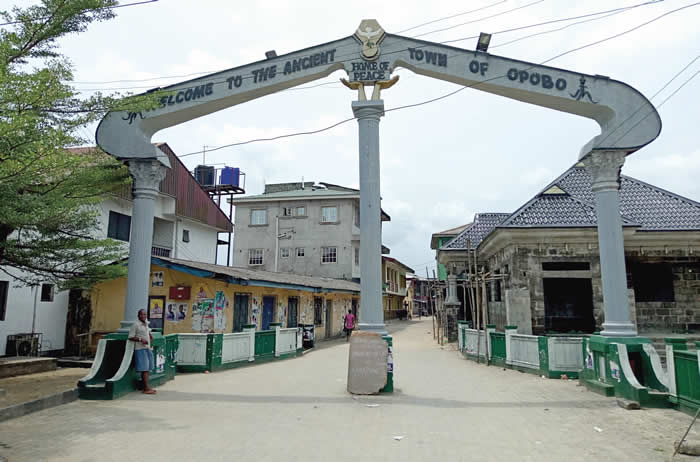
OPOBO IS NOT AN IGBO OUTLET: CORRECTING THE DISTORTION OF HISTORY

0

EDITOR’S NOTE

*This article presents a meticulously researched response to a recent piece crafted by Vanguard newspaper columnist Emeka Obasi. Focused on the intricate history surrounding Opobo, this Right of Reply penned by writer and public affairs analyst Emeka Amaefula seeks to correct the misinterpretations about Opobo being labeled as an “Igbo outlet.” It stands to correct these inaccuracies by substantively presenting corroborative evidence from historical treaties, compelling archives, and established scholarly works, ensuring that the distinct identity and autonomy of the Opobo Kingdom are appropriately acknowledged.*

*History Distorted*

In his recent article in the Vanguard, my colleague Emeka Obasi attempted to explore the multi-faceted history of the Opobo Kingdom. However, his exploration strayed into inaccuracies, particularly with his assertion that Opobo was essentially an “Igbo outlet.” This claim, undoubtedly meant to provoke thoughtful debate, is historically flawed and cannot be left unchallenged. There is an undeniable need to draw a distinction between the name Opobo, which brings forth images of its notable founder, King Jaja—originally born Jubo Jubogha of Igbo heritage—and the multifaceted kingdom itself.

The history and evolution of the Opobo Kingdom diverge significantly from that of King Jaja, although the interdependencies between the two are evident. Jaja’s leadership indeed served as an impetus for change; yet, the kingdom that materialized and evolved from his endeavors was far beyond the scope of a singular personal narrative. It consisted of the dynamic houses and followers, alliances forged, and socio-political structures that steadfastly endured despite challenges like Jaja’s exile.

*Jaja in Bonny*

Jaja, despite being of Igbo descent, rose to considerable prominence in Bonny, propelled by the House system, a paramount political organization of the Niger Delta. His exemplary leadership skills, remarkable business acumen, and navigational prowess within the intricate trading ecosystems of the Delta brought him substantial recognition. Upon founding Opobo in 1870, Jaja did not transplant his Igbo roots to merely create an extended village. Instead, he emerged as an instrumental Delta leader of notable esteem.

His foundational work in Opobo represented the broader multi-ethnic trading landscape of the Delta, illustrating a dynamic intricacy rather than a simple transplantation from hinterland traditions. Renowned Niger Delta scholar Kay Williamson has eloquently noted that Opobo’s identity was intricately intertwined with the Delta House system, showcasing the cosmopolitan blend of peoples that constituted its leadership.

*Kingdom of Alliances*

Opobo, far from being an isolated ethnic enclave, was a thriving magnet for individuals from diverse backgrounds across the Niger Delta. Its foundational political and social institutions were deeply entrenched in commerce, diplomacy, and alliances rather than being restricted by ethnic homogeneity. By the transformative 1870s, Opobo had evolved into a sovereign trading state, relocating strategic palm oil trade from Bonny to the Imo River while seamlessly controlling substantial commercial avenues leading directly to Liverpool.

*Treaties with Britain*

The remarkable sovereignty of Opobo received acknowledgment from British officials. In 1887, Consul Sir Claude MacDonald notably characterized Opobo as “an independent trading state exercising authoritative control over the Imo River region.” Additionally, in 1884, Britain formalized a treaty with Jaja, respectfully addressing him as “King and Governor of Opobo.” Such records reveal that European merchants, alongside colonial officials, perceived Opobo as an undeniably sovereign kingdom, distinctly separate from Bonny, certainly not an extension of the Igbo hinterland.

These significant agreements went beyond symbolic gestures; they represented genuine acknowledgments by global powers of Opobo’s remarkable nationhood and sovereignty.

*Jaja’s Economic Genius*

Jaja’s remarkable strength lay in his extraordinary economic foresight rather than ethnic mobilization. His strategic elimination of European middlemen allowed Opobo to directly sell palm oil to Liverpool buyers, significantly enhancing the kingdom’s prosperity. Historian E. J. Alagoa documented that by the mid-1870s, Opobo had attained substantial recognition and stature as a Delta kingdom, exporting thousands of tons of palm oil annually. This economic independence provoked British hostility, leading to Jaja’s forced removal and subsequent exile to the West Indies.

*After Jaja’s Exile*

Notwithstanding Jaja’s removal, Opobo demonstrated resilience and adaptability, preventing collapse while its institutions and people upheld their sovereignty with vigor. The enduring legacy of Opobo exemplifies that its existence was far from being singularly tied to Jaja’s person. Instead, it thrived on structures and alliances established by his visionary leadership.

The overarching narrative of Opobo is rooted in resilience and autonomy, rejecting simplistic portrayals as an outlet of another culture. Chronicles emphasize the collective history of the leadership houses, alliances formed, and the sovereignty sustained beyond Jaja’s individual story.

*History Cannot Be Distorted*

If Emeka Obasi’s article aimed to redefine Opobo narrowly as an “Igbo outlet,” the archival evidence soundly contradicts such inaccuracies. The historical reality is crystal clear: Opobo originated from inherent Delta resilience, strategic diplomacy, and robust international recognition.

The rich history of Opobo Kingdom deserves dignified and accurate narration, highlighting its sovereignty as a prominent Niger Delta kingdom. Established by a visionary leader, recognized by global powers of its era, it continues to proudly stand today.

Misleading attempts to distort this history into ethnic simplifications misrepresent readers and disserve the people whose history is defined by admirable independence, resilience, and significant recognition.

History is not subject to fanciful rewrites but stands firm on precise evidence and factual documentation.

✍🏽 By Emeka Amaefula
*Emeka Amaefula is a Port Harcourt City Rivers State Nigeria based Veteran Journalist,writer, author and Public Affairs Analyst*
*+234(0)8111813069*
email: *amaemeka2001@gmail.com*

Climate Financing: Africa Faces $250 Billion Shortfall Annually …Vows To Speak With One Voice At COP 30 In Brazil

0

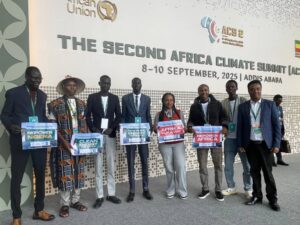
Africa requires over $3 trillion to meet its 2030 climate goals but has received only $30 billion between 2021-2022, marking a shortfall of between $200-250 billion annually.

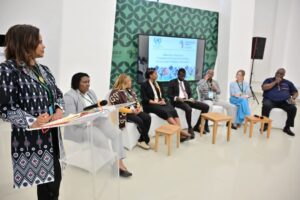
This is part of the report from the Second Africa Climate Summit (ACS 2), held in Addis Ababa, Ethiopia, from 8th – 10th September 2025.

The Summit, which ended with significant commitments and strategic declarations that position Africa as a leader in climate global action, could still not raise funds sufficient to close the gap in funding entirely.

The summit brought together heads of state, financial institutions, and climate leaders to forge unprecedented partnerships. It also served as a crucial platform for Africa to unify its voice ahead of COP 30 in Brazil.

Some of the initiatives aimed at financing climate change adopted at the summit include the African Climate Innovative Compact (ACIC) and the Africa Green Industrialization Initiative (AGII).

African leaders agreed to invest $50 billion in catalytic finance in ACIC to promote climate solutions across the continent.

This ambitious initiative targets five critical sectors of energy, agriculture, water, transport, and resilience.

It targets renewable energy projects and grid modernisation initiatives, sustainable water systems and conservation projects, climate-smart farming and food security technologies, and clean mobility and sustainable logistics networks.

For the AGII, a $100b billion landmark cooperation agreement was made, bringing together the continents leading financial institutions in an unprecedented partnership.

Key development banks suh as African Development Bank, Afrexim Bank,Africa 50, and African Finance Corporation (AFC), as well as four commercial banks- KCB Group,Equity Bank, Standard Bank Kenya, and Ecobank are expected to mobilize funds for the funds that will be facilitated under the Africa Free Trade Area (AfCTA) Secretariat.

The key focus area of the fund is renewable energy- powered industrial clusters, new value chains in critical minerals, green fuel production capacity, and battery manufacturing across the continent.

The summit adopted the Addis Ababa Declaration on Climate Change and Call To Action, which represents a significant evolution from the 2023 Nairobi Declaration and marks Africa’s transformation from climate victim to solution leader.

The summit positioned Africa as a global climate solution provider rather than just a vulnerable continent. It urged for a strong focus on adaptation, resilience, and nature-based solutions for climate challenges while emphasising predictable, fair climate finance and equitable global climate action and called for climate finance in grants and not loans to avoid worsening debt burdens.

Provide NIN Or Lose Enrollment, RIVCHPP Warns Beneficiaries

0

The Rivers State Contributory Health Protection Programme (RIVCHPP) has reiterated its stance to flush out beneficiaries of the scheme who did not enrol with their National Identification Numbers (NIN).

Executive Secretary/Chief Executive Officer of the RIVCHPP, Dr. Vetty Agala, who disclosed this while addressing the management team in her office in Port Harcourt, said from the onset that the office was aware of the provision of NIN as a prerequisite for registration.

She noted that the office only relaxed the condition to give opportunity for more residents to be part of the programme.

Dr. Agala clarified, “RIVCHPP is being supervised by National Health Insurance Authority (NHIA), which has emphasised the need for the provision of NIN by all Basic Health Care Provision Fund (BHCPF) enrollees”, warning that beneficiaries who cannot provide their NIN would be removed from the BHCPF package of its programme by the end of September, 2025.

The Executive Secretary also stated that payments of monthly stipends to enrolment officers will be based on the number of beneficiaries who enrolled with their NIN, saying, “tell the enrolment officers that vulnerable persons who are registered without NIN are considered as ghosts by NHIA who provides the BHCPF. We can’t pay them for supplying us ghosts as our enrollees, ” she warned.

She urged enrolment officers to desist from enrolling persons that do not fall into the criteria of vulnerable persons, as outlined by RIVCHPP, stressing that any officer found culpable will be shown the exit door.
” There are criteria that qualify persons as vulnerable. They are the ones to enjoy the free healthcare services of the Basic Health Care Provision Fund (BHCPF). But we have noticed that some enrolment officers now register people who are not within the set criteria being registered as vulnerable persons. Interested persons who are not vulnerable should pay and be registered in the other packages of the programme. Enrolment officers who persist in doing the wrong thing will be asked to leave the work, ” RIVCHPP’s Executive Secretary admonished.

Agala, however, pleaded with individuals, groups, and organisations to help people around them, especially the aged, children believe 5 years, and ithers, without NIN to get theirs in order to continue to benefit from the robust and quality programmes of RIVCHPP.