


Home Blog Page 171

Stock Market Sheds N71bn

0

The Nigerian stock market slipped back into the red on Tuesday, ending its one-day rebound with a loss of N71 billion.

Sell-offs in Austin Laz, Deap Capital Management, FTN Cocoa Processors, Regency Alliance Insurance, Champion Breweries, and 22 other equities dragged overall performance lower.

The market capitalisation, which opened at N89.626 trillion, declined by 0.08 per cent or N71 billion to close at N89.555 trillion.

Similarly, the All-Share Index (ASI) shed 112.20 points or 0.08 per cent, closing at 141,546.80 compared with 141,659.00 posted on Monday.

Market breadth closed negative, with 27 losers against 23 gainers.

Austin Laz led the losers’ chart, dipping 6.27 per cent to N2.69. Deap Capital Management followed with a 5.56 per cent loss to N1.70 per share. FTN Cocoa Processors declined by 4.84 per cent to N5.90, while Regency Alliance Insurance and Champion Breweries lost 4.40 per cent and 4.26 per cent to close at N1.74 and N15.30 respectively.

On the gainers’ side, Custodian Investment topped with a 9.94 per cent rise to N44.80.

Multiverse Mining advanced 9.68 per cent to N13.60, while Eunisell Interlinked and Etranzact International appreciated by 9.45 per cent each to close at N27.80 and N17.95.

Union Dicon Salt also gained 8.42 per cent to settle at N10.30 per share.

Overall, market activity declined compared with the previous session.

Investors exchanged 414.9 million shares worth N12.95 billion in 25,386 deals, against 555.1 million shares valued at N24.1 billion in 31,578 deals on Monday.

GTCO Plc led the activity chart in volume with 32.9 million shares valued at N3.1 billion.

Secure Electronic Technology followed with 32.5 million shares worth N26.4 million while United Bank for Africa traded 26.2 million shares valued at N1.24 billion.
CHAMS sold 21.9 million shares worth N74.8 million and Regency Alliance Insurance transacted 18.9 million shares valued at N33.5 million.

Delta Assembly Approves Transfer Of General Hospital, Otu-Urdu To FG

0

The Delta House of Assembly on Tuesday approved Gov. Sheriff Oborevwori’s request to transfer General Hospital Otor-Udu to Federal Ministry of Health.

The governor’s request was unanimously approved during plenary of the Assembly presided over by the Speaker, Mr Dennis Guwor in Asaba.

The aim is to enable the Federal Ministry of Health to convert and upgrade the General Hospital to the Federal Medical Centre in Udu Local Government.

According to Oborevwori, the initiative aims to enhance access to quality healthcare services for citizens of Delta and create job opportunities.

”To actualise this, the State Executive Council, at its third meeting held in July 22, 2025, considered and approved the collaboration with the Federal Government, through the Federal Ministry of Health and subsequent establishment of the Federal Medical Centre.

”As part of the pre-requisites to this, it is the resolution of the State House of Assembly to consider the transfer, ” he said.

Consequently, the Majority Leader of the assembly, Mr Emeka Nwaobi, moved a motion for the assembly to approve the governor’s request.

The motion, which was unanimously adopted by the assembly when put to a voice vote by the Speaker, was seconded by Mr Ferguson Onwoh (Isoko South II).

Guwor directed the Clerk of the Assembly, Mr Otto Aghoghophia, to transmit the resolution of the House to the governor for assent.

2027 Elections: 5 Million Uncollected PVCs, Worrisome – CDD

0

The Centre for Democracy and Development (CDD-West Africa) has expressed concern over five million uncollected Permanent Voter Cards (PVCs) in Nigeria.

Director, CDD-West Africa, Dr Dauda Garuba, said this while unveiling the new Chair of the CDD Election Analysis Centre (EAC) in Abuja on Tuesday.

According to Garuba, as Nigeria edges closer to the 2027 general elections, CDD-West Africa continues to reflect on the state of Nigeria’s democracy through the lens of recent developments.

“Nationwide, the issue of over five million uncollected PVCs is a silent ‘crisis.’

“If unresolved, millions of citizens risk exclusion from the 2027 elections, a development that could erode both participation and legitimacy,” he said.

Garuba suggested that to safeguard the credibility of the Anambra off-cycle governorship election, future by-elections, and the 2027 general polls, urgent actions were required.

He said that CDD called on the Independent National Electoral Commission (INEC) to improve its technological infrastructure, logistics, and voter outreach strategies.

“PVC Collection must be given a coordinated national campaign, decentralised collection points, deliberate grassroots outreach, and targeted voter education.”

He added that security agencies should deploy personnel with neutrality and professionalism, resisting pressure from incumbents.

The director also urged political actors to commit to issue-based campaigns and reject vote buying and weaponised violence.

He said Civil society Organisations (CSOs) should also sustain monitoring efforts, amplify citizen voices, and demand accountability.

Garuba urged citizens should resist inducement and reclaim the power of their votes.

“The stakes ahead of 2027 are not just about whether democracy will survive; they are about the kind of democracy Nigerians will inherit,” he said

Speaking on the unveiling of the new Chair of CDD-West Africa’s Election Analysis Centre(CDD-West Africa EAC), Garuba said Prof. Victor Adetula succeeded an 82-year Professor, Adele Jinadu who diligently chaired the EAC for about 14 years.

He said that Adetula would bring on-board a wealth of experience in democracy, governance, peace and conflict and international relations and assured him of CDD’s support.

Responding, Adetula, the new Chair of CDD-West Africa’s EAC, extended gratitude to the leadership of CDD West Africa for entrusting him with the responsibility.

“I humbly accept the role, fully aware of the weight the responsibility entails.

“Over the years, CDD’s EAC has distinguished itself as an impartial and insightful institution, supporting stakeholders, policy makers and citizens as they navigate the intricacies of our electoral system.

“As we look towards 2027, our priorities must expand beyond the conventional aspect of electoral monitoring.

“We are committed to deepening our focus on transparent evidence-based electoral analysis, while also addressing the economic and political factors that threaten the integrity of our electoral processes.”

Adetula said that the commitment included nurturing the next generation of electoral analysts, equipping them with the necessary tools and framework to proactively address challenges and propose effective solutions.

He added that above all, the EAC would remain vigilant, monitoring electoral trends to better understand the present and help shape a credible future for all Nigerians.

Ongoing Reforms ‘ll Refocus Financial Stability, Stimulate Productivity – CBN

0

The Central Bank of Nigeria (CBN) says it is pursuing economic reforms aimed at refocusing financial system stability and stimulating productivity.

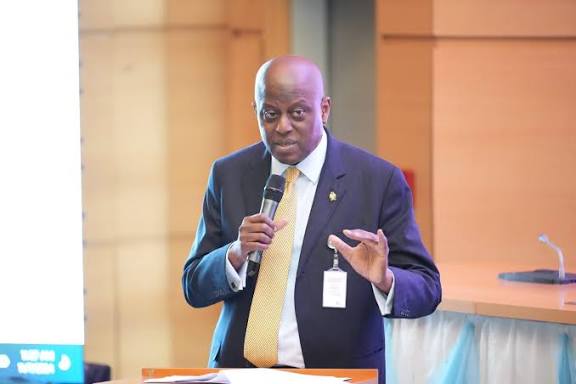
The CBN Governor, Olayemi Cardoso, who disclosed this on Tuesday at its fair, holding in Kano, said it’s working hard to deepening financial inclusion and sustaining monetary and price stability.

The theme of the fair is: “Driving Alternative Payment Channels as Tools for Financial Inclusion, Growth and Accelerated Economic Development.”

Speaking through Mrs Hakama Sidi, Acting Director, CBN Corporate Communications Department, Cardoso said the role of Small and Medium Enterprises (SMEs) and other key sectors in economic growth cannot be ignored.

The bank, according to the CBN governor, is to further pursue macroeconomics resilience, including a banking recapitalisation programme to strengthen institutions, and foreign exchange market reforms to unify exchange rates, improve transparency, and attract foreign investment.

He listed other initiatives to involve catalysing specialised financial institutions, developing new regulatory frameworks, enhancing payment systems, and de-risking credit for key sectors like housing, food, and healthcare to unlock growth and promote financial inclusion.

Cardoso said the bank had launched Nigeria Payments System Vision 2028 (PSV 2028) to accelerate digital transformation, deepen financial inclusion and introduced Unified Complaints Tracking System (UCTS).

These, he said, would protect customers and boost confidence in the financial sector, alongside a USSD code (*959#) for verifying licensed institutions.

He urged participants to use only official CBN communication channels, including the bank’s website (www.cbn.gov.ng), Facebook (@cenbankng), X (@cenbank), YouTube (@cenbank) and Instagram (@centralbankng).

The CBN governor urged Nigerians to respect the Naira by avoiding spraying, hawking, mutilation or counterfeiting, describing it as a vital national symbol.

He encouraged participants to actively engage in the sessions and ask questions, which would be addressed by the CBN team.

On his part, Aliyu Abubakar, the Acting Divisional Head of Other Financial Institutions, Mission Department CBN in Kano, said that globally, economic trends continued to underscore the importance of such institutions.

“Those who cannot obtain services from commercial banks have only one alternative, the microfinance banks,”he said.

Also speaking, President of Association of Mobile Money Operators of Nigeria, Salihu Umar, commended CBN for organising the fair, saying it would provide an important platform to showcase alternative payment solutions and promote financial inclusion.

He said it would expand access to financial services for underserved communities, and contribute to Nigeria’s overall economic growth.

Shift From Fossil Fuels To Renewables Inevitable, Must Be Properly Managed – NEITI

0

The Nigeria Extractive Industries Transparency Initiative (NEITI), says the global shift from fossil fuels to renewable energy is inevitable and must be properly managed to avoid worsening energy poverty in the country.

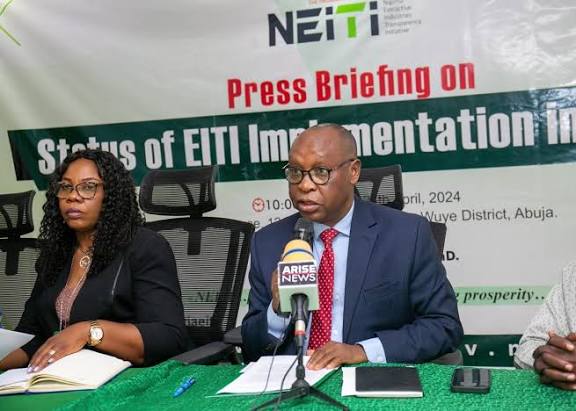
Dr Orji Ogbonnaya Orji, Executive Secretary, NEITI, said this on Tuesday at a Chief Executive Officers/Media Roundtable on “Building a Framework for Engagement on Energy Transition Costs and Impacts for Non-State Actors” in Abuja.

Orji, while presenting the interim report of a study on the impact of energy transition on Nigeria’s economy, said that the shift posed challenges to jobs, infrastructure, host communities and government revenues.

“You all know that the global shift from fossil fuels to renewable energy is reshaping economies already and societies everywhere.

“For Nigeria, this transition is no longer an option; it’s inevitable. But if not properly managed, it could double the existing energy poverty in the country,” he said.

According to him, about 86 million Nigerians still lack access to reliable power supply and the transition, if poorly handled, could worsen their situation.

He said that while the process presented risks, it could also offer opportunities for innovation, diversification and repositioning the economic sector of the country.

“NEITI is approaching this with credible data and evidence, not as a formality, but as an urgent necessity,” he said.

He explained that the study, supported by the Ford Foundation, was anchored in NEITI’s climate change, energy transition and environmental accountability policy.

According to him, the policy commits to tracking emissions, stranded assets and government compliance with environmental justice and transition commitments.

Orji called on stakeholders, media, civil society, government, industry players and development partners among others to play their roles in ensuring a just and inclusive transition.

“The media must investigate and amplify findings, civil society should mobilise citizens to demand transparency, while industry players should balance profitability with sustainability.

“Development partners must align financing and technical support towards a just transition,” he said.

He stressed that Nigeria and other resource-dependent nations must demand equal access to global climate finance and technology transfer to enable them to fund transition investments.

“The study provides data and evidence to strengthen Nigeria’s voice in these debates.”

The NEITI boss, nevertheless, explained that the final report would guide policies, influence reforms and empower citizens.

Also speaking, Mr Mathew Adole, Alternate Chair of the National Stakeholders Working Group (NSWG), said that the planned transition posed significant risks to oil-dependent economies like Nigeria.

He said that the study was approved to deepen understanding of the transition and ensure effective engagement with the country’s policy design and implementation.

“The planned transition from fossil oil, particularly oil, gas and coal, to renewable energy poses significant risks to the economies of oil and gas-dependent economies such as Nigeria.

“Nigeria depends largely on oil and gas, not only for export and revenue, but for its consumption.

“Reorganising the need to deepen our knowledge about the pollution, the NSWG wasted no time in approving the study, which we are convinced would facilitate engagement on the country’s transition policy and implementation,” he said.

According to him, the work, when completed, will serve as a vital resource for advocacy on energy transition.

Cyberbullying: FG Sues Sowore, Facebook, X, Over Posts On President Tinubu

0

The Federal Government, on Tuesday, sued a politician, Omoyele Sowore, for allegedly cyberbullying President Bola Tinubu.

The FG, in the suit marked: FHC/ABJ/CR/484/2025, also joined Mata (Facebook) Incorp. and X Incorp. as defendants at the Federal High Court in Abuja.

The criminal charge dated September 16, was filed by Mohammed Abubakar, Director of Public Prosecutions, Federal Ministry of Justice.

The five-count charge, Sowore, the Publisher of Sahara Reporters, was alleged to have made a false claim against the person of the President by referring to him as “a criminal.”

The charge was filed few days after an earlier request by the Department of State Services (DSS) for the pulling down of the post on Facebook and X, the former Twitter, allegedly used by Sowore for the defamatory message.

Sowore, the presidential candidate of the African Action Congress (AAC) in 2019 and 2023, in the charge is accused of contravening the provisions of the Cybercrimes (Prohibition, Prevention, etc) Amendment Act, 2024.

Count one of the charge alleged that Sowore, on or about Aug. 25, did use his official X handle page, @Yele Sowore, to send out a message/tweet.

The message is said to be, “THIS CRIMINAL @ OFFICIAL PBAT ACTUALLY WENT TO BRAZIL TO STATE THAT THERE IS NO MORE CORRUPTION UNDER HIS REGIME IN NIGERIA. WHAT AUDACITY TO LIE SHAMELESSLY!,”

The message, which he knew to be false, was posted “for the purpose of causing a breakdown of law and order in the country, especially among individuals, who hold divergent views on the personality of the President and Commander in Chief of the Armed Forces of the Federal Republic of Nigeria, Bola Ahmed Tinubu (GCFR).”

The offence is said to be contrary to Section 24 (1) (b) of the Cybercrimes (Prohibition, Prevention, etc) Amendment Act, 2024, among other counts.

DBN Disburses ₦1trn Empowerment Funds, 62% Benefits Women – MD

0

The Development Bank of Nigeria (DBN) has disbursed over ₦1 trillion in empowerment interventions since 2015, with 62 per cent directly benefiting women.

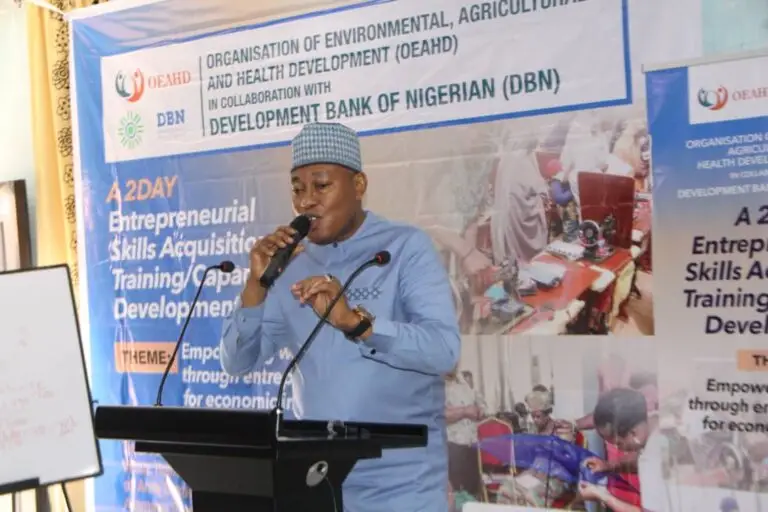
DBN’s Managing Director, Mr Tobi Okparachi disclosed this on Tuesday in Yola during an empowerment programme for women.

Okparachi was represented by the bank’s Head of Corporate Services, Mr Idris Salihu.

DBN, in partnership with the Organisation for Environmental, Agricultural and Health Development (OEAHD), trained 200 women across the 21 local government areas of Adamawa.

The programme, with the theme, “Empowering Women Through Entrepreneurship for Economic Inclusion,” seeks to promote gender empowerment, economic inclusion and financial independence among women.

Okparachi said the initiative was aimed at improving women’s access to finance for Micro, Small and Medium Enterprises (MSMEs).

He added that the training was also designed to equip participants with the knowledge and tools to transition from financial exclusion to financial inclusion.

“Empowering women has become increasingly critical. Women contribute significantly to economic growth and community wellbeing.

“This initiative seeks to strengthen their capacity to become financially independent and economically productive,” he said.

The DBN Chief explained that a robust monitoring and evaluation framework had been established to assess the impact and sustainability of businesses created through the programme.

Also speaking, Mrs Tabitha Sallah, President of OEAHD, said the training covered practical skills in agriculture, environmental sustainability, health services and entrepreneurship.

She described the initiative as an investment in the future, noting that it was designed to bridge the gender gap in economic opportunities.

“We are committed to ensuring that women are not left behind in the economic transformation of our nation.

“Our participation and leadership are not optional; they are essential,” she said.

Sallah commended DBN for the partnership, saying the collaboration reflected national recognition, targeted to enable women drive economic progress.

On her part, the Commissioner for Women Affairs, Mrs Neido Kofulto, lauded the initiative, describing it as timely and essential.

She urged participants to take the training seriously and apply the skills acquired to improve their livelihoods and contribute to community growth.

One of the beneficiaries, Mrs Christiana Filibus, a physically challenged participant, expressed appreciation for the opportunity.

She pledged to apply the knowledge gained, especially on business registration, marketing and regulatory compliance.

“The professional advice we received from CAC, NAFDAC and BOI was invaluable.

“We are committed to registering and formalising our businesses to ensure long-term growth,” she said.

We’ve Deployed 10,000 Experts To 40+ Countries – NTAC D-G

0

Dr Yusuf Yakub, Director-General of the Nigerian Technical Aid Corps (NTAC), says the agency has deployed no fewer than 10,000 professionals to over 40 countries since its inception.

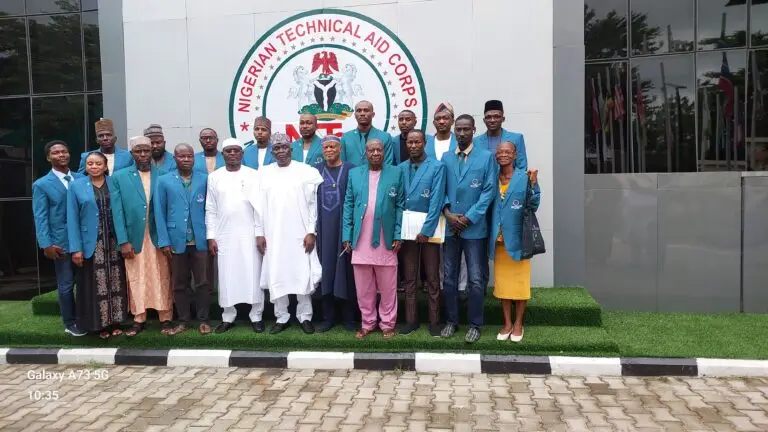
Yakub said this in Abuja on Tuesday during the deployment of 18 TAC volunteers to Liberia and Rwanda.

He said he was pleased to deploy doctors, teachers, and instructors to support Nigeria’s soft power diplomacy under the leadership of President Bola Tinubu.

Yakub thanked the volunteers for accepting the national call, stressing that the mission aligned with the president’s 4-D foreign policy thrust, Democracy, Development, Demography, and Diaspora.

“I thank you for volunteering to serve Nigeria abroad.

“I am delighted to deploy you this morning to Rwanda and Liberia to serve as ambassadors of our country.

“All of this is made possible through the 4-D foreign policy of President Tinubu, which has revived and repositioned the Technical Aid Corps for greater global impact,” he added.

He noted that Tinubu’s foreign policy direction had enabled NTAC to carry out deployments as often as three times a month, boosting Nigeria’s global presence and diplomatic ties.

 “President Tinubu’s passion for soft power diplomacy has made Nigeria a bride to many nations globally.

“He believes in using knowledge and skills to strengthen regional cooperation,” he said.

Yakub expressed gratitude to the President for backing NTAC, which now served as a tool for projecting Nigeria’s values in Africa, the Caribbean, and the Pacific (ACP) countries.

“NTAC is the key instrument of soft power diplomacy, enabling us to share our human capital through technical aid with fellow black nations in the ACP regions,” Yakub stated.

He emphasised that Nigeria, blessed with rich human resources, should export expertise to sister countries, rather than seeking foreign assistance for what we already possessed.

According to him, the deployments are designed to help bridge both educational and professional gaps in these nations, promoting south-south cooperation and development.

Earlier, Amb. Zakari Usman, Director of Programmes at NTAC, hailed the D-G’s commitment to putting Nigeria on the global stage through consistent deployment of volunteers.

He also commended President Tinubu and the D-G for intensifying the deployment initiative and urged the volunteers to represent Nigeria honorably in their host countries.

Prof. Solomon Ogbu, Team Lead of the volunteers and a professor of International Relations, applauded the President’s sustained support for the soft power initiative.

He thanked the D-G for the rare opportunity to serve Nigeria abroad, pledging that the team would raise the national flag high and make the country proud.

Kano Govt., CSOs  Partner On Good Governance

0
The Kano State Government has reaffirmed its commitment to building a stronger relationship with Civil Society Organisations (CSOs) to promote good governance and active citizens participation.
Alhaji Aminu Gwarzo, the Deputy Governor of Kano State stated this at the opening of a two-day Kano State Civil Society Conference on Monday in Kano.
The theme of the conference is  “Empowering CSOs in Kano for Sustainable, Active Democratic Participation and Grassroots Development.
He urged CSOs to remain dedicated, avoid corruption, and shun sentiments in their daily activities.
Gwarzo  emphasised the critical role CSOs play in tracking governance,  and appealed to them to enlighten the public on the dangers of social vices and promote peace and harmony.
Also speaking, Commissioner for Information and Internal Affairs, Mr  Abdullahi Waiya, said that the conference aimed to enhance effective service delivery and strengthen collaboration between government and non-state actors.
He stated that the administration is  committed  to transparency and welcomes genuine criticism to improve service delivery.
The conference  brought together participants from  organisations within and outside the state  to discuss issues that could deepen good governance, and foster  mutual working relationship between CSOs and the government.

INEC Laments Poor Turnout As Only 1,801 Fresh Voters Register In Ongoing CVR In Enugu

0

The Independent National Electoral Commission (INEC), has decried what it described as `abysmal 1,801’ fresh registrations in the ongoing Continuous Voters Registration (CVR) in Enugu State.

INEC started the CVR online registration on Aug. 18, while the in-person registration started nationwide on Aug. 28.

Chief Rex Achumie, Head of Department (HOD), Voter Education and Publicity, INEC Enugu said that only 1,801 had registered in the past 15 days of in-person CVR exercise in the area.

According to Achumie, the 15 days of CVR registration period covered from Aug. 25 to Sept. 12 in INEC’s CVR centres in the state.

The HOD, who noted that the 1,801 comprised 896 males and 905 females, said that the fresh registration remained abysmally low as an average state record about 25,000 fresh registrations in the same period.

“The CVR has been ongoing smoothly. We do not have any record of connectivity challenges; or lack of manpower or lack of machines to do the job.

“The challenge we have is the low turnout of residents for the exercise and it is appalling to see people trickling to the CVR centres at wide intervals each day.

“The rate of turnout is low and discouraging notwithstanding INEC engagements with electoral stakeholders before the exercise commenced.

“The electoral and political stakeholders need to help in the sensitisation of people who turned 18 years and people not registered before now,” he said.

Achumie noted that the CVR and its fresh registration remained important in the electoral process, adding, “It should be given the seriousness and attention it deserves because obtaining the card is imperative to voting during elections”.

“CVR registration is not just a political party affair, but every Nigerian within the voting age should be concerned even if one does not belong to any political party.”

The CVR, which runs from Monday to Friday, between 9a.m. and 4p.m., is being held in the INEC’s State Headquarters in Enugu and INEC’s offices in the 17 council area secretariats across the state.