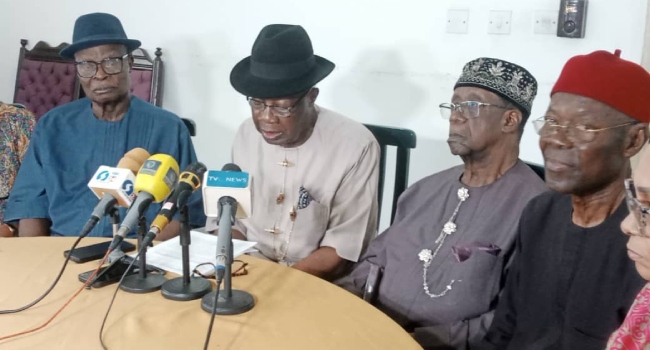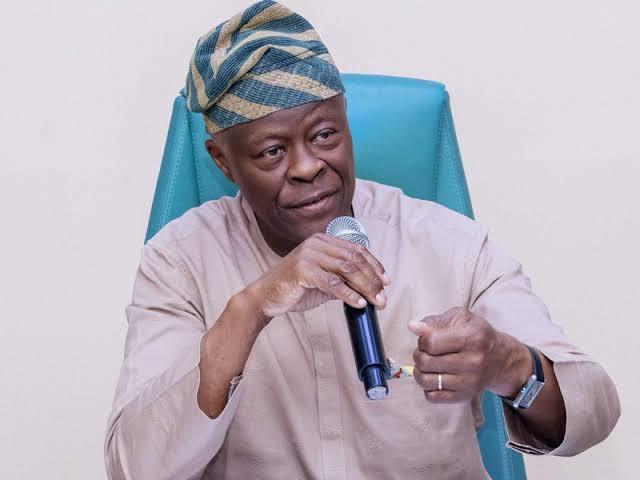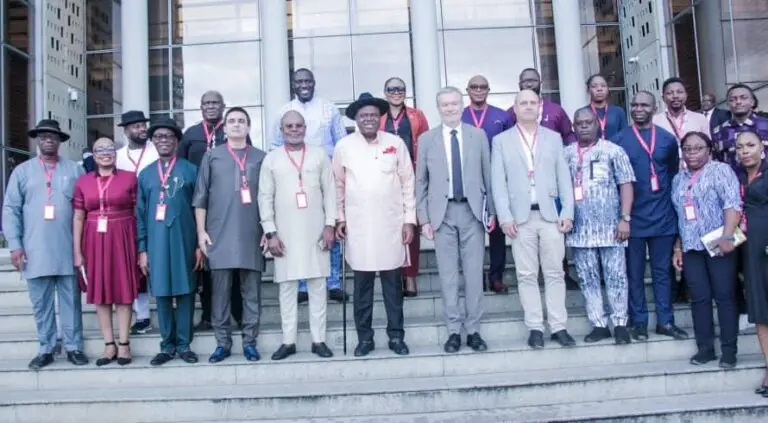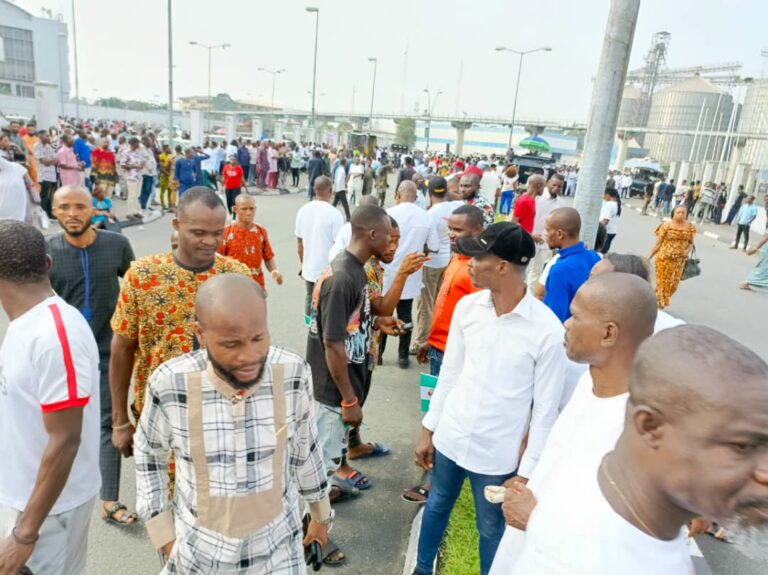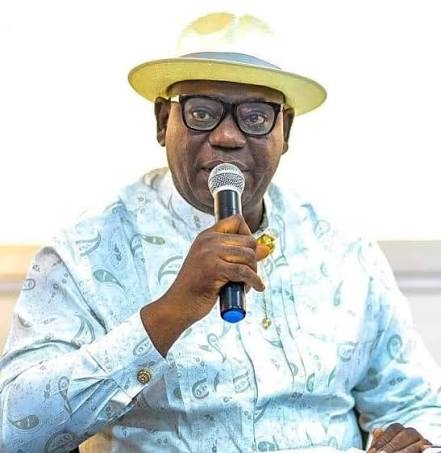



Lifting Of Emergency Rule: Rivers Equity Group hails Fubara, Wike Amaewhule For Courage, Statesmanship
Lifting of Emergency Rule: Rivers Elders, Leaders Hail Tinubu, Say It’s Time To ‘Reset And Rebuild’
FAAC: FG, States, LGs Share N2.2 Trillion Revenue In Record-breaking Allocation
The Federation Account Allocation Committee (FAAC) has disbursed N2.225 trillion as federation revenue to federal government, states, and local government councils for the month of August.
The sum, the highest-ever allocation, marks the second consecutive month that FAAC disbursements have crossed the N2 trillion mark.
Since January, the three tiers of government have shared allocations as follows: January N1.703 tr; February N1.678 tr; March N1.578 tr; April N1.681 tr; May N1.659 tr; June N1.818 tr; and July N2.001 trillion.
According to a statement issued after the meeting of the committee, the N2.01 trillion revenue for July, shared during the August FAAC meeting in Abuja, was buoyed by increases in Oil and Gas Royalty, Value Added Tax (VAT) and Common External Tariff (CET) levies.
Of the N2.225 trillion distributable revenue for August, the committee said that N1, 478.593 trillion came from statutory revenue, N672.903 billion from VAT, N32.338 billion from the Electronic Money Transfer Levy (EMTL), and N41.284 billion from Exchange Difference.
The communiqué further showed that gross federation revenue for the month stood at N3.635 trillion. From this amount, N124.839 billion was deducted as cost of collection, while N1,285.845 trillion was set aside for transfers, interventions, refunds, and savings.
From the statutory revenue of N1.478 trillion, the federal government received N684.462 billion, state governments received N347.168 billion, and Local Government Councils received N267.652 billion. A further N179.311 billion (13 per cent of mineral revenue) went to oil-producing states as derivation revenue.
From the distributable VAT revenue of N672.903 billion, the federal government received N100.935 billion, the states received N336.452 billion, while the local governments got N235.516 billion.
Of the N32.338 billion shared from EMTL, the federal government got N4.851 billion, the 36 states received N16.169 billion, and N11.318 billion went to the local government areas.
From the N41.284 billion Exchange Difference, the Federal Government received N19.799 billion, the States received N10.042 billion, the councils received N7.742 billion, while N3.701 billion (13 percent of mineral revenue) was shared to the oil-producing states as derivation.
While total allocation in August set a new record, FAAC explained that gross statutory revenue fell to N2.838 trillion, compared to N3.070 trillion in July — a drop of N231.913 billion.
The communiqué explained that Petroleum Profit Tax (PPT), Companies Income Tax (CIT), Import Duty, Excise Duty, and EMTL recorded decreases during the month, while VAT, Oil and Gas Royalty, and CET levies boosted overall revenue.
Transition In Rivers: Fubara Returns, Ibas Departs As Emergency Rule Ends
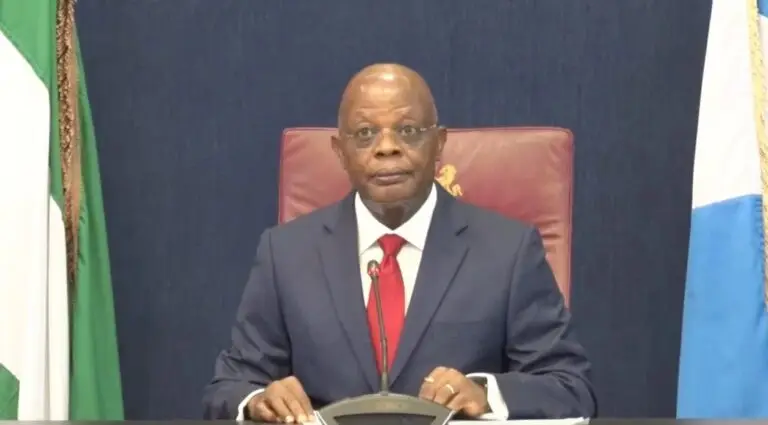
Retired Vice Adm. Ibok-Ete Ibas on Wednesday bowed out as Administrator of Rivers, following President Bola Tinubu’s decision to lift the emergency rule and reinstatement of Gov. Siminalayi Fubara.
President Tinubu had on March 18, declared six months state of emergency in Rivers due to unhealthy political atmosphere in the state at the time.
Tinubu had promised to restore democratic rule if situation improves after the six months which he did following a statement issued to that effect on September 17.
In compliance to the order ending the emergency rule, Ibas, in a statewide broadcast in Port Harcourt on Thursday, expressed gratitude to Rivers people and Tinubu for entrusting him with the responsibility to serve.
“Six months ago, President Tinubu, entrusted me with the responsibility of steering Rivers’ affairs through an extraordinary moment in its history.
“Today, that mandate has been accomplished,” he said.
The former administrator said that law and order had been restored, local government council elections conducted and statutory boards and commissions reconstituted.
He also noted that the state budget had been passed by the National Assembly, providing a legitimate fiscal framework for governance and development.
“These milestones reflect the resilience of a people determined never to let their state slip into paralysis,” he added.
Reflecting on lessons from the period, Ibas cautioned political actors against exercising power without restraint, warning that rivalry without dialogue endangered democracy and risked crippling institution.
The retired naval chief urged citizens to support Fubara and advised political leaders to prioritise unity and stability above personal ambition.
“The emergency rule was never about one man, but about restoring dignity to governance and giving the people what is rightfully theirs.
“Leadership is a shared responsibility. No matter how clear a vision may be, it requires citizens’ active support,” he said.
Ibas commended the civil servants, security agencies, community leaders and residents for maintaining stability during the emergency period.
The lifting of emergency rule and the reinstatement of Fubara has ended six months of uncertainty in Rivers, but the political landscape remains fragile.
Observers note that while President Tinubu’s intervention averted a deeper crisis, questions remain over whether the underlying tensions that led to the suspension of democratic institutions have been fully resolved.
FG Disburses N330bn To Vulnerable Nigerians – Edun
The Federal Government has disbursed N330 billion cash transfers to poor and vulnerable Nigerians through the National Social Safety-Net Coordinating Office (NASSCO).
He said that the intervention was part of President Bola Tinubu’s programmes to help the poorest and the vulnerable through the difficulties caused by the increase in the price level as a result of the necessary reforms put in place.
“About 19.7 million poor and vulnerable households representing more than 70 million individuals are captured in the National Social Register.
“The cash transfers, funded from the 800 million dollars World Bank facility, were disbursed to 15 million households.
“So far, 8.5 million households have received at least one tranche of N25,000, while some have received two or three payments.
“The remaining seven million households will be paid before the end of the year,” he said.
The minister said that the programme is anchored on a robust and sustainable system with beneficiaries verified through their National Identity Numbers (NIN) and payments made digitally via bank accounts or mobile wallets.
Edun said that, going forward, the programme would be provisioned in the annual federal budget to ensure sustainability.
“We now have the basis for a modern social protection system that can provide targeted assistance to the poorest and most vulnerable on a long-term basis,” he said.
The National Coordinator of NASSCO, Funmi Olotu, said the staggered payments were due to President insistence on linking disbursements through NIN to ensure transparency.
“No more traditional cash payments. All transfers are direct debit to bank accounts.
“That is why some households have received one, two, or three tranches already,” she said.
Olotu said that the previous administration planned to pay N5,000 monthly for six months, but the new administration redesigned the scheme to give N25,000 monthly for three months.
The national coordinator said that the national social register, was developed in collaboration with the World Bank, built on over 40 socioeconomic variables and it has no political interference.
Gov. Diri Tasks EU On Impact In Niger Delta
Gov. Douye Diri, of Bayelsa has called on the European Union (EU) to re-evaluate its approach to ensure its projects have a more noticeable impact in the Niger Delta region
Diri made the call on Thursday during a courtesy visit by the Head of the European Union Delegation to Nigeria and ECOWAS, Amb. Gautier Mignot, to Yenagoa, the Bayelsa capital.
Diri said the EU, had spent huge financial resources on development initiatives in the region over the years but noted that the communities barely felt the effect of such projects.
“It is amazing to note the amount of money the EU has committed to development of the Niger Delta region, particularly in Bayelsa .
“Compared to the impact of such projects on communities, I believe the EU needs to look inwards.
“We do not know your processes but I think the impact of such projects would be more seen on communities in Bayelsa and its neighbouring Rivers and Delta states if properly channelled.
“Likewise, if other development partners toe the path of the EU, the ties would have been stronger,” he said.
On its new Global Gateway strategy, the Bayelsa governor said his administration would work closely with the EU to sustain the peace in the region and address developmental challenges.
Describing the EU as grassroots-oriented development partners, Diri expressed the optimism that the leadership of Amb. Mignot would add more value to development of the region.
He commended the cordial relationship with Bayelsa, which resulted in robust discussions with the EU in Abuja about a year ago on peace-building efforts.
“Security in the Gulf of Guinea, youth engagement, technical and vocational education and marine and blue economy.
“There was a period of insecurity due to militancy in the Niger Delta, which was actually in response to the level of under-development against the backdrop of the oil resources that had been taken from our state and region.
“This is the time not to engage in violence but in diplomacy. That is why we are ready to keep the peace in our state and region to sustain the development we are witnessing,” he said.
In his remarks, Amb. Gautier Mignot said the EU had supported many projects in Nigeria in the last decades.
He said in 2021, the EU launched a new cooperation strategy called the Global Gateway and the union was expected to leverage more on investments in Nigeria working in partnership with its 27 member states.
He stated that in 2023, the EU launched in Bayelsa, Rivers and Delta tailor-made projects with 6.5M euros and implemented through its partners, Search For Common Grounds.
Mignot said about 5000 had benefited from the project, which was about peace-building, resilience, reduction in violence, criminality and livelihood, and that the visit was to assess the progress in 16 communities across the state’s eight Local Government of Bayelsa.
In another development, at a state dinner held in honour of the delegation governor Diri conferred the state’s citizenship on the EU envoy.
He said: “Bayelsa is the cradle of the ijaw nation and the epicenter of the Niger Delta. A visit to the Niger Delta without a visit to Bayelsa is incomplete.
Tinubu Lauded For Relaxing Emergency Rule As Youth Leader Urges Fubara To Deliver On Governance
Mr Savior Oscar, President, South-South Youths Initiative has commended President Bola Tinubu for ending emergency rule in Rivers, urging reinstated Gov. Siminalaye Fubara to focus on good governance.
Oscar made the statement to newsmen on Thursday in Port Harcourt.
He said that as much as Rivers people were not happy with the emergency rule declared on March 18 in the state, they are grateful Mr President finally relaxed the emergency rule.
“Today, Sept. 18, 2025 our joy has been restored seeing that President Bola Tinubu had called off emergency rule in the state.
“We are happy that democracy has returned to the state once more, it will indeed remain indelible in our history.
“We will always remember that at some point we were subjected to emergency rule despite our opinions and criticisms.
“We urge Fubara to focus on completing the projects he started and should also fast-track good governance in all sectors until the end of his tenure.
“He should also understand that the massive support from the people was as a result of his quality and people-oriented services to state,’’ he said.
The youth leader also urged Fubara to be careful in dealing with politicians always those eager to remain in power, saying that such level of desperate people could breed disharmony.
Responding to pockets of protests in the last days of Ibas’s regime, the youth leader said that there is the need to look into their complaints of being owed their entitlements.
“We actually saw some viral videos showing security officials attached to Ibas complaining about unpaid entitlements.
“Two weeks ago, I was privileged to meet with some of the security aides at entrance of Government House, Port Harcourt.
“These aides were seriously lamenting that their entitlements had not been paid.
“I think the viral videos showing protests by these aides and possibly other issues should be looked into by Mr President,” he said.
NECO Releases 2025 SSCE Results …38 Schools Caught In Exam Malpractice In 13 States
The National Examinations Council (NECO) has released the 2025 Senior Secondary Certificate Examinations, commending President Bola Tinubu for his unwavering support of the initiative.
Announcing this in Minna at a news briefing on Wednesday, the Registrar/Chief Executive, Prof. Dantani Wushishi said the event was the culmination of a rigorous assessment process.
Wushishi said that it was a reaffirmation of their collective commitment to quality education, merit, integrity, and national development.
The chairman stated that the council released the 2025 SSCE internal results 54 days after the last written paper was administered.
Wushishi said that out of the 1,358,339 candidates who took the June/July examination, 818,492, representing 60.26 per cent, scored 5 credits or above, including Mathematics and English.
Wushishi said that out of the 1,358,339 candidates who took the June/July examination, 818,492, representing 60.26 per cent, scored 5 credits or above, including Mathematics and Englis
He stated that the number of candidates with five credits or above, irrespective of Mathematics and English, was 1,144,496, representing 84.26 per cent.
“Number of candidates that registered for the examination is 1,367,210, representing 685,514 Males and 681,696 Females.
“Number of candidates that sat is 1,358,339, representing 680,292 Males and 678,047 females.
“Number of candidates with five credits and above, including mathematics and English, is 818,492, representing 60.26%.
“Number of candidates with five credits and above, irrespective of mathematics and English is 1,144,496 representing 84.26%,” he said.
Wushishi stated that the number of candidates with special needs was 1,622, out of which 586 were males with hearing impairment and 355 were females with hearing impairment.
He further stated that the candidates with visual impairment comprised 111 males and 80 females.
Regarding the number of examination malpractice cases, the registrar said that in 2025 SSCE internal, the number of candidates involved in various forms of malpractice was 3,878, compared to 10,094 in 2024, representing a 61.58 percent reduction.
He further disclosed that during the conduct of the 2025 SSCE, 38 schools were found to have been involved in whole school (Mass) cheating in 13 states.
He said, “Similarly, nine Supervisors: 03 in Rivers, 01 in Niger, 03 in FCT, 01 in Kano and 01 in Osun, were recommended for blacklisting due to poor supervision, aiding and abetting, lateness, unruly behavior, assault, and insubordination.
“I wish to also draw your attention to a case in Lamorde Local Government, Adamawa, involving eight schools which were affected by a communal clash.
Wushishi announced that, in view of the reviewed curriculum currently being implemented, NECO would conduct the SSCE examination on only 38 subjects to reduce the waiting time for results.
While providing a breakdown of performance by state, he stated that Kano came top with 68,159, representing 5.020 per cent of candidates scoring five credits and above, including English and Mathematics.
Also, Lagos came second in performance, with 67,007 candidates, or 4.930 per cent, scoring five credits and above, including English and mathematics.
Similarly, Oyo came in third with 48,742 candidates scoring five credits or above, including English and mathematics.
Wushishi said that the least performing centre was Gabon, with no candidate scoring five credits and above, including English and mathematics.
Emergency Rule: Over 10,000 Jobs Lost In Rivers, Says President Of Ijaw National Congress
President of the Ijaw National Congress, (INC), Prof. Benjamin Okaba, has disclosed that at least 10,000 jobs were lost in Rivers State due to to the imposition of emergency rule in the oil-rich state.
Okaba made the claim on Wednesday, while responding to questions on Arise Television.
“Six months of emergency rule in Rivers State, spanning from March 18th to the present, has resulted in significant losses across multiple sectors.
With the suspension of the governor, deputy governor, and legislature, a form of dictatorship was effectively put in place, represented by the sole administrator appointed,” he said.
It would be recalled that President Bola Tinubu declared a state of emergency in Rivers State in March, suspending Governor Siminalayi Fubara, his deputy and the state’s legislators.
However, on Wednesday September 17, President Tinubu through a statement by the Presidency announced the end of the six-month emergency rule in Rivers State.
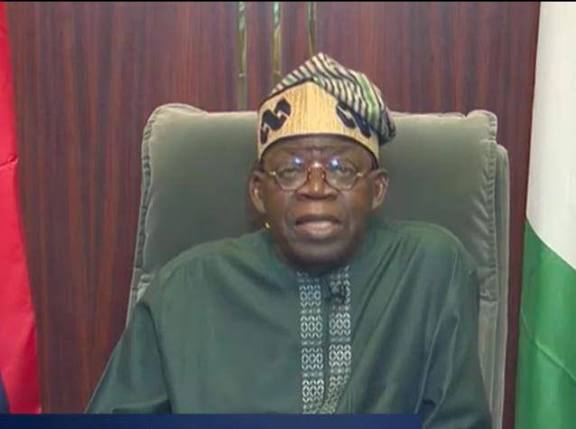
Tinubu Lifts Emergency Rule In Rivers … Governor Fubara, Dep, Legislators To Resume Duties, Thursday
The six months state of emergency imposed on Rivers State by President Bola Tinubu has ended.
Tinubu in a statement released on Wednesday by the Presidency announced the end of the six-month emergency rule, declaring that Governor Siminalayi Fubara, his deputy, Ngozi Nma Odu, and members of the State House of Assembly will return to office from Thursday, September 18, 2025.
“It therefore gives me great pleasure to declare that the emergency in Rivers State of Nigeria shall end with effect from midnight today. The Governor, His Excellency Siminalayi Fubara, the deputy governor, Her Excellency Ngozi Nma Odu, and members of the Rivers State House of Assembly and the speaker, Martins Amaewhule, will resume work in their offices from 18 September 2025,” the statement read.
The state of emergency, first proclaimed on March 18, 2025, was necessary to arrest the “total paralysis of governance” that had gripped Rivers at the time.
The president recalled the bitter conflict between the governor and 27 lawmakers loyal to the House Speaker which had left the state without a functioning government, with the Supreme Court even affirming in one of its rulings that “there was no government in Rivers State.”
Here is the full statement
STATEMENT BY HIS EXCELLENCY, BOLA AHMED TINUBU, PRESIDENT OF THE FEDERAL REPUBLIC OF NIGERIA, ON THE CESSATION OF THE STATE OF EMERGENCY IN RIVERS STATE
My Fellow countrymen and, in particular, the good people of Rivers State.
I am happy to address you today on the state of emergency declaration in Rivers State. You will recall that on 18th March, 2025, I proclaimed a state of emergency in the state. In my proclamation address, I highlighted the reasons for the declaration. The summary of it for context is that there was a total paralysis of governance in Rivers State, which had led to the Governor of Rivers State and the House of Assembly being unable to work together. Critical economic assets of the State, including oil pipelines, were being vandalised. The State House of Assembly was crisis-ridden, such that members of the House were divided into two groups. Four members worked with the Governor, while 27 members opposed the Governor. The latter group supported the Speaker. As a result, the Governor could not present any Appropriation Bill to the House, to enable him to access funds to run Rivers State’s affairs. That serious constitutional impasse brought governance in the State to a standstill. Even the Supreme Court, in one of its judgments in a series of cases filed by the Executive and the Legislative arms of Rivers State against each other, held that there was no government in Rivers State. My intervention and that of other well-meaning Nigerians to resolve the conflict proved abortive as both sides stuck rigidly to their positions to the detriment of peace and development of the State.
It therefore became painfully inevitable that to arrest the drift towards anarchy in Rivers State, I was obligated to invoke the powers conferred on me by Section 305 of the 1999 Constitution, as amended, to proclaim the state of emergency. The Offices of the Governor, Deputy Governor, and elected members of the State House of Assembly were suspended for six months in the first instance. The six months expire today, September 17th, 2025.
I thank the National Assembly, which, after critically evaluating the justification for the proclamation, took steps immediately, as required by the Constitution, to approve the declaration in the interest of peace and order in Rivers State. I also thank our traditional rulers and the good people of Rivers State for their support from the date of the declaration of the state of emergency until now.
I am not unaware that there were a few voices of dissent against the proclamation, which led to their instituting over 40 cases in the courts in Abuja, Port Harcourt, and Yenagoa, to invalidate the declaration. That is the way it should be in a democratic setting. Some cases are still pending in the courts as of today. But what needs to be said is that the power to declare a state of emergency is an inbuilt constitutional tool to address situations of actual or threatened breakdown of public order and public safety, which require extraordinary measures to return the State to peace, order and security. Considered objectively, we had reached that situation of total breakdown of public order and public safety in Rivers State, as shown in the judgment of the Supreme Court on the disputes between the Executive and the Legislative arm of Rivers State. It would have been a colossal failure on my part as President not to have made that proclamation.
As a stakeholder in democratic governance, I believe that the need for a harmonious existence and relationship between the executive and the legislature is key to a successful government, whether at the state or national level. The people who voted us into power expect to reap the fruits of democracy. However, that expectation will remain unrealizable in an atmosphere of violence, anarchy, and insecurity borne by misguided political activism and Machiavellian manipulations among the stakeholders.
I am happy today that, from the intelligence available to me, there is a groundswell of a new spirit of understanding, a robust readiness, and potent enthusiasm on the part of all the stakeholders in Rivers State for an immediate return to democratic governance. This is undoubtedly a welcome development for me and a remarkable achievement for us. I therefore do not see why the state of emergency should exist a day longer than the six months I had pronounced at the beginning of it.
I take this opportunity to remind the Governors and the Houses of Assembly of all the States of our country to continue to appreciate that it is only in an atmosphere of peace, order, and good government that we can deliver the dividends of democracy to our people. I implore all of you to let this realisation drive your actions at all times.
I thank you all.
Long live the Federal Republic of Nigeria.