

Home Blog Page 164

Nigeria Commits To Polio Eradication At UN General Assembly

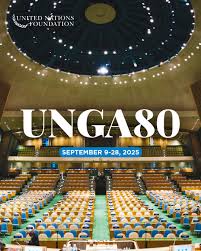
Nigeria has renewed its commitment to ending Polio and strengthening routine immunisation as global leaders gather for the 80th United Nations General Assembly (UNGA).

Dr Muyi Aina, Executive Director and Chief Executive Officer of the National Primary Health Care Development Agency (NPHCDA), gave the assurance on Tuesday morning during a panel session on ‘Eradication & Beyond – Polio Infrastructure and Resilience’, at UNGA.

Nigeria was certified free of wild poliovirus in August 2020 by the World Health Organisation (WHO), marking a historic milestone after decades of effort.

The country had once been regarded as the toughest place on earth to eradicate the virus, with insecurity, weak health systems, and community resistance posing major obstacles.

However, years of collaboration between government, international partners, traditional leaders, and frontline health workers paid off.

Millions of children were reached through mass immunisation campaigns, while surveillance and community engagement strategies were strengthened.

In spite of this achievement, Nigeria continues to battle outbreaks of cVPV2, a rare strain that emerges in under-immunised populations.

According to health experts, low routine immunisation coverage remains the greatest threat to sustaining Nigeria’s polio-free status.

Aina reaffirmed the Federal Government’s resolve to intensify efforts to interrupt the transmission of circulating Vaccine-Derived Poliovirus type 2 (cVPV2) and rapidly scale up routine immunisation coverage.

“The Federal Government remains committed to ensuring that every Nigerian child is protected from vaccine-preventable diseases.

“Our polio infrastructure, built through years of collective effort, will continue to be leveraged not only for polio eradication but also to strengthen our health system and build resilience against future public health threats,” he said.

Aina said that the country’s participation in the UNGA high-level sessions was an opportunity to strengthen partnerships, mobilise resources, and showcase the country’s commitment to global health security.

Meanwhile, Global health leaders at the UNGA meeting said that the fight against polio was not only about eradication but also about resilience.

They said the systems built to track, respond, and vaccinate during polio campaigns were now being repurposed to combat other public health challenges, including measles, cholera, and even pandemic preparedness.

It would be recalled that public health experts said Nigeria’s renewed pledge was critical to closing existing gaps.

Dr Faisal Shuaib, former NPHCDA boss, who led the final push against wild polio, once remarked that “the greatest threat to polio eradication is complacency.”

Similarly, a frontline vaccinator, Mrs Mariam Kabiru, from Kano State, who had spent over a decade administering vaccines in hard-to-reach communities, said the renewed global spotlight was encouraging.

“We have seen the damage polio can do to children. With government support and community trust, we can finish this fight,” Kabiru said.

As the UNGA continues, more updates are expected on Nigeria’s participation in health-related side events, including discussions on immunisation, pandemic preparedness, and health financing.

For now, Nigeria’s message to the world is clear: the country is determined not only to eradicate cVPV2 but also to ensure that no child is left behind in the journey toward stronger, more resilient health systems.


2025 Ballon d’ Or: Dembele, Bonmati Named World Best Footballers

0

Paris Saint-Germain’s Ousmane Dembele and Barcelona’s Aitana Bonmati have won the top prizes at the 2025 Ballon d’Or awards ceremony in Paris, France.

Dembele, who helped PSG become the first French side to win a continental treble last season, beat Barcelona’s Lamine Yamal to the men’s award.

Spain international Bonmati won the Ballon d’Or Féminin for the third year in a row, edging out Mariona Caldentey.

Ousmane Dembele is the first player to win the Ballon d’Or while representing a club from his own country at the time of the ceremony since Englishman Michael Owen in 2001 (Liverpool).

Barcelona Femení superstar Aitana Bonmatí became the first player to ever win the Ballon d’Or Féminin three times with her latest triumph.

The Spanish midfielder had lifted the previous two individual titles following collective dominance with Barcelona and Spain before completing her hat-trick at Monday’s ceremony. Lionel Messi was the last player to ever win three Ballon d’Or crowns on the spin, picking up four from 2009–12. Former French midfielder Michel Platini is the only other individual to win the prestigious honor in three successive seasons (1983–85).

As the defending champion, Bonmatí’s triumph is hardly a shock, but the fleet-footed schemer did not enjoy quite the same universal acclaim as in years gone by. Barcelona’s domestic dominance was underscored by a trio of trophies on home soil. However, the Catalans did lose two league games—as many as they recorded across the previous five seasons combined.

After two years as the undisputed centerpiece of Barcelona and the Spain national team while Alexia Putellas—a two-time Ballon d’Or winner herself—recovered from an ACL tear, Bonmatí had to readjust to a new role back in tandem with his compatriot.

This champagne problem still saw both players hit double digits for goals and assists as Barcelona returned to the Champions League final for the fifth season running. However, after two successive titles, Bonmatí and her teammates were stunned by a disciplined Arsenal side, which battled out a 1–0 win in Lisbon.

Bonmatí would suffer heartbreak at the hands of English opposition two months later, watching on in disbelief as her spot kick was saved in Spain’s penalty shootout defeat to England in the Euro 2025 final.

Yet, the fact that Bonmatí was on the pitch at all is a testament to her tenacious character. The 27-year-old prepared for the tournament in the hospital while being treated for viral meningitis. In typically defiant fashion, Bonmatí was fit enough to come off the bench in the first match of group stage and had already won her place back by the knockouts.

It was Bonmatí’s devilish thump from an impossible which skipped past Germany’s Ann-Katrin Berger for the only goal of the semifinal. UEFA’s technical committee were not alone in hailing her as the Player of the Tournament

In the immediate aftermath of the Euro 2025 final, Bonmatí fronted up to the media. “I’m in shock,” she said. “We gave everything. I must apologize forb my missing my penalty and congratulate England.” Yet, as everyone in Spain was all too quick to point out, Bonmatí need not apologize for anything.

Fubara Visits Tinubu At Aso Villa … Urges Lawmakers To Harness Artificial Intelligence For Parliamentary Efficiency

0

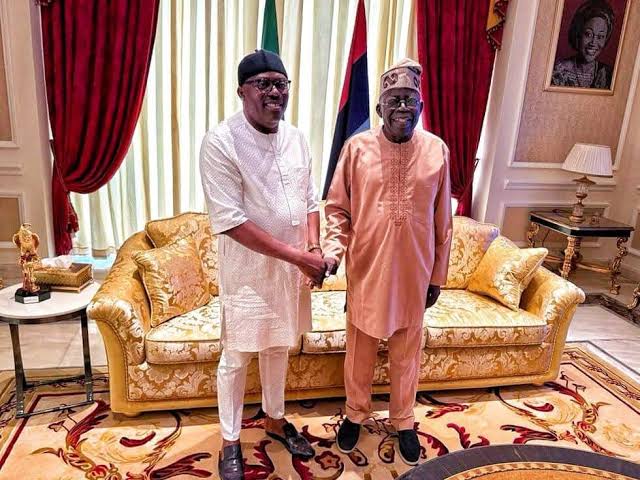
Rivers State Governor, Siminalayi Fubara, has arrived at the Presidential Villa in Abuja for a visit to President Bola Tinubu on Monday.

The visit is coming five days after his reinstatement and his first official visit to the State House since the end of the six-month emergency rule in the state.

He arrived the villa alone at about 6:20 p.m. on Monday and made his way towards the office of the President.

Fubara, his deputy and members of the State House of Assembly were suspended from office on March 18, 2025, by the President, following the political unrest in the state.

Meanwhile, the Rivers State Government says harnessing Artificial Intelligence for Parliamentary Efficiency should be domesticated to accommodate our traditional governance structures with emerging digital ecosystems.

The State Chief Executive Sir Siminalayi Fubara made this pledge during the Opening Ceremony of 2025 Second Parliamentary Seminar and Second Extra-Ordinary Session of ECOWAS Parliament at the Signature Hotel in Port Harcourt, on Monday, 22nd September, 2025.

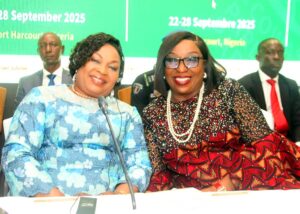
Rivers State Deputy Governor, Prof. (Mrs.) Ngozi Nma Odu (Right), exchanging pleasantries with the Speaker of ECOWAS Parliament, Rt. Hon. Hadja Memounatou Ibrahima, during the 2nd 2025 Parliamentary Seminar on harnessing Artificial Intelligence (AI) for Parliamentary Efficiency, Ethical Governance and Development in the ECOWAS Region held in Port Harcourt

Represented by his Deputy, Prof. Ngozi Nma Odu, Governor Fubara said the event signals a collective recognition that we stand at the verge of the most transformative technological revolution in human history, stressing that the theme of this seminar “Harnessing Artificial Intelligence for Parliamentary Efficiency” is commendable.

He said their deliberations over the coming days, would influence how African Parliamentarians navigate the delicate balance, between embracing artificial intelligence transformative potential and preserving the human-centred values that anchor democratic governance.

In his remarks, the First Deputy Speaker of the ECOWAS Parliament and Leader of the Nigerian Delegation, Sen. Barau Jibrin, urged members to approach the seminar with intellectual rigour and to utilize the opportunity to deepen their understanding, interrogate the risks, and propose concrete pathways for harnessing AI responsibly and ethically for the benefit of the people.

Also speaking the speaker of the Rivers State House of Assembly, Hon. Martins Amaewhule, said the choice of Rivers State to host this year’s event is apt stressing that the resolutions reached at the conference will be beneficial to both Nigeria and the West African region.p

Courage, Not Enough To Combat Current Crime Complexities, IGP Tells Officers

0

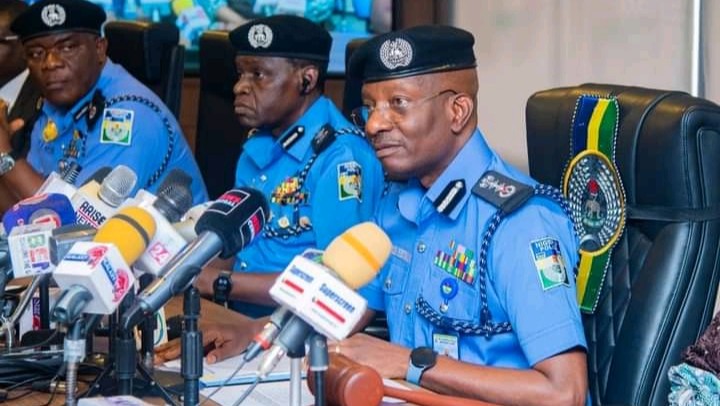
The Inspector-General of Police (I-G), Mr Olukayode Egbetokun, has called on leadership of the Nigeria Police Force to embrace foresight and creativity in the face of current crime complexities.

Egbetokun made the call on Monday in Abuja, at the opening capacity building workshop organised for top leadership of the police in collaboration with the Society for Peace Studies and Practice.

He said the theme for the workshop is, “Managing Fast-Paced Security Challenges in a Protracted Conflict Environment” was apt and had spoken directly to the paradox of current realities, where conflicts stretch across years, changing form and intensity daily.

According to him, we face adversaries who are not only persistent but adaptive.

“Criminal syndicates exploit technology to expand their reach. Terrorist networks rebrand and reorganise to avoid defeat, while local conflicts, once contained, now spill across borders, amplified by social media and transnational alliances.

“This complexity demands more from us than courage alone. It demands foresight, creativity, and the agility to lead in an environment of constant flux.”

He said the police leadership under him must combine patience with speed, endurance with imagination, and strategy with unshakable resolve.

He said that the theme of the workshop was carefully chosen to prepare police leaders to anticipate, adapt, and act decisively.

“To this end, this one-day workshop has been thoughtfully designed to enrich your leadership journey and cover critical topics.

He listed the topics to include Conflict Analysis and Effective Response Strategies in Policing Environment and Conflict-Sensitive Decision-Making.

“Other topics to be covered are strengthening capacity for Early Warning (EW) and Early Response (ER) and Linking Conflict-Early Warning to Policy Development,” he said.

The I-G said the topics were not abstract concepts, but practical leadership tools to equip participants to command with clarity, manage crises with precision, and inspire confidence in the men and women under your charge.

He said the workshop was designed, not only for individual learning, but collective transformation, adding that the Nigeria Police Force must grow into an institution, agile in planning, bold in execution, and united in vision.

“Our success will not be measured by the brilliance of one commander or the courage of a few units.

“It will be measured by the strength of our collective capacity to anticipate threats, respond as one body, and deliver security that Nigerians can see and feel every day,” he said.

In his remark, Mr Nathaniel Awuaila, the President of the Society for Peace Studies and Practice, said the workshop was organised to enhance strategic leadership in the Nigeria Police Force.

He said the idea was to reposition the force as a proactive, intelligence-driven institution capable of fostering peace, justice, and national cohesion.

UN Day of Peace: Congress Urges Nigerians To Embrace Unity, Dialogues

0

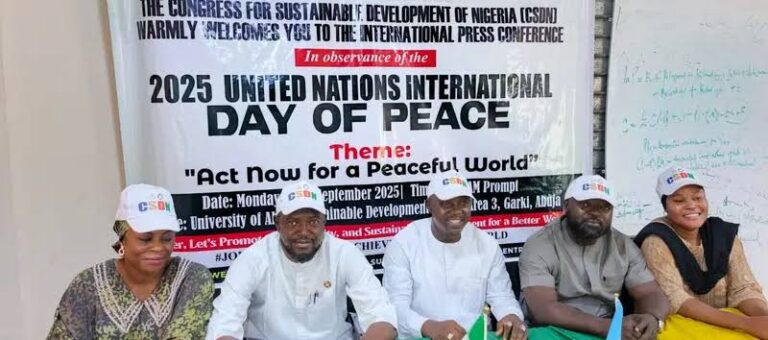
The Congress for Sustainable Development of Nigeria (CSDN) has urged Nigerians to embrace unity and dialogue towards peaceful coexistence.

CSDN President, Mr Muhammed Mustapha, made the call at a news conference organised to observe the 2025 United Nations International Day of Peace with the theme: “Act now for a Peaceful World.”

According to him, coexisting in harmony and love, despite different ideologies or interest will prevent hatred and disagreement that can lead to fight and war in the nation.

Mustapha urged the Federal Government to strengthen justice, equity, and security to avert division and violence that could lead to loss of lives and properties.

“The world must act now to silence guns and choose dialogue, and Nigeria should lead by example in fostering harmony among its diverse people.

“By doing these, we will contribute not only to national stability, but to a more peaceful world for all.

“We must recognise that our world is deeply interconnected. Let peace reign in Nigeria and across the globe.

“The wars in Ukraine and Russia, as well as the ongoing conflict between Israel and Palestine, remind us that instability in one region shakes the peace of all nations,’’ he said.

He added that the wars in those countries had strained global economies, deepened humanitarian crises, and increased insecurity worldwide, including Nigeria.

According to the president, regarding Nigeria, the lesson is clear: peace anywhere begins with peace at home.

On his own part, the CSDN Secretary, Mr Adbul Ahmed, said the congress mission was to promote inclusive and environmentally responsible policies and practices in the nation.

He added that the congress aimed at raising awareness, building local capacity, and helping to make sustainability a key part of Nigeria’s future.

He called on Nigerian public to intensify efforts by contributing their quota towards achieving the global Sustainable Development Goals (SDGs)

According to him, CSDN is a professional, non-partisan, non-profit organisation formed by concerned Nigerians, who believe in the urgent need for sustainable development across all areas of national life.

Peace: Senegalese Defence Minister Hails ECOWAS Mission In Guinea-Bissau

0

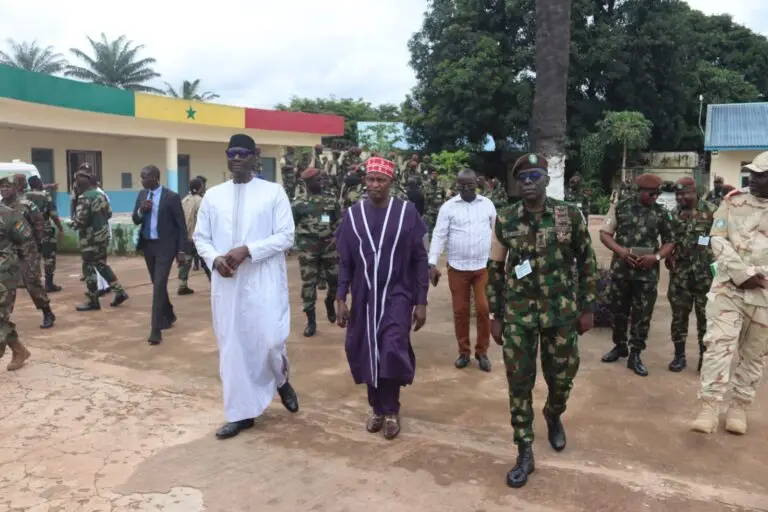
Senegal’s Defence Minister, Gen. Birame Diop (rtd) has praised the ECOWAS Stabilisation Support Mission in Guinea-Bissau (ESSMGB) for its role in maintaining peace.

A statement by Maj. Yahaya Kabara, ESSMGB Public Information Officer, on Monday, said Diop gave the commendation during a visit to the mission’s headquarters in Bissau.

He was joined by Guinea-Bissau’s Defence Minister, Mr Dionysio Cabi, and Senegal’s Ambassador, Moussa Ndoye.

Diop lauded Force Commander Brig.-Gen. Edward Odinya Ojabo for his briefing on the mission’s work and urged troops to sustain discipline, unity, and mutual respect.

He stressed the need for tolerance, cooperation, and solidarity while advising them to respect local authorities and avoid worsening hardships.

“The image of ECOWAS and contributing countries must be preserved at all times,” Diop said.

Ojabo, in response, thanked the delegation and highlighted the mission’s progress and challenges.

Constitution Review Committee Compiles 87 Amendment Bills From Public Hearings … Electoral Reforms, State Police, LG Autonomy Top Priorities

0

The Deputy Speaker of the House of Representatives, has revealed that the Constitution Review Committee received and compiled 87 amendment bills from nationwide public hearings, memoranda, and regional engagements.

Benjamin Kalu who is the Chairman of the Constitution Review Committee spoke at the National Public Hearing on the Review of the 1999 Constitution (as amended) in Abuja on Monday, highlighted the depth of consultations that informed the process.

Kalu said that among the most consequential proposals are Electoral reforms, including Independent Candidacy, an Electoral Offences Commission, and strict timelines for pre-election dispute resolution.

He said that evolution of powers, with a landmark bill to move policing from the Exclusive to the Concurrent List, paving the way for state and community police and Local government autonomy, to ensure financial and administrative independence for grassroots governance were also canvassed.

“The ultimate authority for this process resides with you, the sovereign people of Nigeria; constitutional reform is a marathon, not a sprint. Your continued engagement is crucial to see this through,” he said.

Earlier, President Bola Tinubu had restated his administration’s commitment to constitutional reforms aimed at strengthening Nigeria’s institutions, deepening federalism, and safeguarding citizens’ rights.

Tinubu, who was represented by the Secretary to the Government of the Federation (SGF), Sen. George Akume, described the review process as a “golden opportunity” for Nigerians to entrench good governance, inclusivity, and sustainable development, and urged citizens to actively participate in shaping the supreme law of the land.

“The Constitution is the supreme law of the land. It is not static but a living document that must continually respond to the realities, aspirations, and challenges of our people.

“I urge all participants to approach this exercise with a spirit of patriotism, responsibility, and constructive dialogue.

“The quality of ideas generated here will go a long way in shaping the laws and institutions that will serve generations yet unborn

“I wish the committee and all stakeholders fruitful deliberations, and I assure you that the outcome of this process will receive the deserved attention as part of our collective quest to build a stronger, more united, and prosperous Nigeria,” he said.

He commended the committee for creating an inclusive platform that engages citizens, civil society, political parties, professional groups, and traditional institutions in the amendment process.

In his remarks, the Speaker of the House of Representatives, Rep. Abbas Tajudeen described the exercise as a significant moment in Nigeria’s democratic journey.

The speaker said that Nigerians, not just politicians, must participate and shape the supreme law of the land.

He assured citizens that the process would not be bogged down by delays, pledging to expedite passage of the amendments through the National Assembly and prompt transmission to State Houses of Assembly.

“Reform delayed is reform denied, and Nigerians deserve clarity and closure. We intend to vote on the proposals expeditiously and give the states enough time to deliberate and endorse the people’s will,” he said.

The speaker highlighted reserved seats for women in the National and State Assemblies, Guaranteed representation for persons with disabilities, alongside gender quotas in ministerial appointments and formal advisory roles for traditional rulers in peacebuilding and community security among other proposed amendments.

He explained that such reforms would make Nigeria’s democracy more representative, responsive, and just.

House Of Reps Fully Support President Tinubu’s Borrowing Plans- Speaker

0

The House of Representatives has declared that it is firmly in support of President Bola Ahmed Tinubu’s borrowing strategy, as it is an indispensable tool for Nigeria’s economic growth and poverty reduction.

The Speaker of the House of Representatives, Abbas Tajudeen, stated this on Monday in Abuja while speaking at the 8th Annual African Network of Parliamentary Budget Offices (AN-PBO) Conference. Abbas dismissed reports suggesting that the House opposed Tinubu’s borrowing plans, calling them “mischievous and misleading.”

The Conference, hosted by the Nigerian National Assembly and the National Assembly Budget and Research Office (NABRO), focused on “The Role of PBOs in African Parliaments’ Fiscal Oversights: Contribution to the African 2063 Development Agenda.”

The Speaker was referring to statements credited to him at the 11th Annual Conference and General Assembly of the West Africa Association of Public Accounts Committees (WAAPAC), organised by the House of Representatives Public Accounts Committee

In his speech at the event read by the House Leader, Prof Julius Ihonvbhere, the speaker had warned that the nation’s debt-to-GDP ratio had climbed to 52 per cent, surpassing the 40 per cent statutory limit, while urging parliaments across West Africa to strengthen oversight of public borrowing to safeguard the future of their citizens.

But speaking on Monday, Abbas clarified that the legislature has consistently supported responsible and targeted borrowing to meet Nigeria’s pressing developmental needs.

The Speaker noted that strategic and responsible borrowing is an essential fiscal tool, saying that Nigeria must sometimes leverage credit to finance critical infrastructure, stimulate growth, and protect vulnerable populations

He assured that all borrowings under President Tinubu’s administration are designed to be transparent, sustainable, and in line with Nigeria’s medium-term debt strategy and global best practices.

In his words: “Recently, a speech delivered by the House leader at the West Africa Parliamentary Conference was horrendously and mischievously reported out of context, creating the false impression that the House of Representatives does not support the borrowing strategy of President Tinubu’s administration. We should state clearly that this interpretation is both inaccurate and misleading.

“The 10th House and indeed the National Assembly have consistently affirmed that, in the face of pressing developmental needs, strategic and responsible borrowing is an essential fiscal tool. Like every modern economy, Nigeria must sometimes leverage credit to finance critical infrastructure, stimulate growth, and protect vulnerable populations.

“What is important and what the President has assured is that all borrowings remain targeted, transparent and sustainable, consistent with Nigeria’s medium-term debt strategy and guided by global best practices.

“Under our President’s leadership, borrowed forms are being channeled towards transformative projects that will expand revenue-generating capacity, such as power, transport, and agriculture, rather than for consumption.

“The House stands firmly behind the President’s vision of using judicial borrowing as a catalyst for growth and poverty reduction, while simultaneously strengthening oversight mechanisms.

The Speaker disclosed that Nigeria loses an estimated $18 billion every year to financial crimes, representing roughly 3.8 per cent of the country’s GDP, stating that there was urgent need to strengthen parliamentary fiscal oversight to safeguard public resources.

Abbas warned that Africa collectively loses over $587 billion annually due to corruption, illicit financial flows, and inefficiencies.

He said: “Africa is at the crucial crossroads in its history, with a population of approximately 1.4 billion people, roughly one-sixth of humanity. Our continent is young, growing and breathing with potentials. Nigeria, as Africa’s most populous nation, with over 200 million people and a GDP of around $477 billion in 2022, carries a special responsibility in this African story.

“We are a continent of abundant resources and talented youth, and we have bold ambitions captured in the African Union Agenda 2063, which serves as the blueprint for the Africa we want.
“However, the path to realizing this vision remains difficult. Economic growth in sub-Saharan Africa is recovering, although modestly, with the World Bank projecting an increase from 3.3 per cent in 2024 to 3.5 per cent in 2025.

“This is indeed encouraging, but it is not yet sufficient to meet our development needs. Poverty remains widespread. An estimated 464 million Africans live in extreme poverty as of 2024. Unemployment and underemployment, especially among young people, are urgent issues.

“Each year, 12 million young Africans enter the labor market, yet only around 3 million formal jobs are created. This gap in opportunities highlights a potential demographic dividend that could turn into a demographic risk if we do not take action.”

He noted that these funds, if properly managed, could significantly enhance social infrastructure, providing better schools across the continent.

Chairperson of the African Network of Parliamentary Budget Offices (AN-PBO), Professor Dumisani Jantjies in his remarks stated that Africa’s economies remain highly vulnerable to external shocks of volatile capital flows, global trade disruptions, and climate change impacts.

He said the African Parliamentary Budget Offices (PBOs) are emerging as critical instruments in ensuring fiscal transparency, policy accountability, and alignment with the continent’s long-term development goals.

Stakeholders Demand NASS Action On Environmental Bill

0

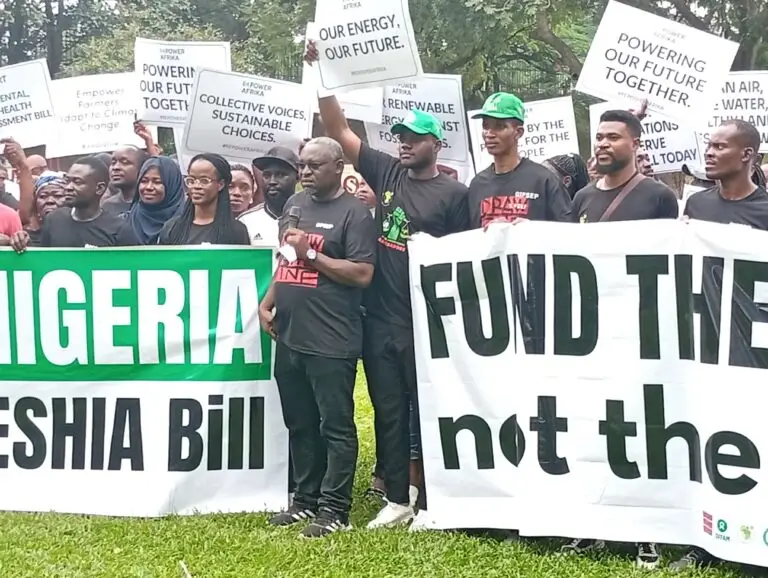
Stakeholders have reiterated their call for the National Assembly to expedite action on the passage of the Environmental, Social and Health Impact Assessment (ESHIA) Bill.

They made the call at the #DrawTheLine Day of Global Climate Action, a day for climate justice in Abuja on Sunday.
Dr Michael David, the Executive Director of the Global Initiative for Food Security and Ecosystem Preservation (GIFSEP), said the bill is a key step to protecting the people and the planet.

The bill, he said, broadens the focus beyond just environmental impacts to include social and health considerations.
”It mandates the comprehensive assessment of all projects with significant risks to the environment and human well-being.

”The climate clock indicates that we are less than three years into the irreversible damage of climate change to the planet if urgent action is not taken.
“We are drawing the line against the use of public funds to support destructive industries that fuel floods, fires, heat waves, hunger, and poverty.
“Instead, we demand that public money be invested in building a safer, fairer, and more sustainable future for all Nigerians.

“As climate impacts escalate, we urgently call for climate finance, especially increased support for adaptation financing to protect vulnerable communities.
“So today we join voices with millions around the world for the Draw the Line, a day of global climate action. A united stand against climate injustice, against poverty, against environmental destruction,” David said.
He urged the government to uphold territories of indigenous peoples and traditional communities across Nigeria and elsewhere in the world and to also support climate-led solutions.

He stressed that Africa requires an estimated 53 billion dollars annually to build resilient infrastructure, support smallholder farmers, and achieve food sovereignty.
“We cannot continue borrowing money for adaptation projects that are destroyed by climate disasters, while our people remain saddled with the debt. There should be zero loans for climate adaptation,” he added.
In the same vein, Mr John Makina, the Country Director of Oxfam, said that the organisation is backing the campaign to ”see how lines can be drawn globally”.
Makina, who was represented by Dr Kenneth Akpan, Climate Justice Manager at Oxfam, said that the organisation was raising silent issues concerning the climate, most especially in vulnerable African countries.
”Today we are backing this campaign to also lend our voices to end poverty, to end injustice when it comes to climate and also even highlight gender justice, which is one aspect that is always very silent when it comes to dealing with climate issues,” he said.
Makina said Oxfam was also supporting the campaign with capacity training, campaign, and every resource needed to draw the attention.
“I also use this opportunity to call on state governments because we are also pushing for state governments to adopt and also create their own state policies,” he said.
Also, Ms Francisca Edeh, Project Coordinator for Oxfam Youth Ambassadors, said that young people play vital roles in climate justice and urged that policy makers include youths at all decision making fora on climate justice.
The ESHIA Bill, 2025, is designed to replace theEbvironmental Impact Assessment Act of 2004.
The new bill aims to create a more comprehensive framework for evaluating the environmental, social, and health impacts of projects in Nigeria, incorporating stronger community participation and enforcement measures.
The bill, which incorporates international best practices to align Nigeria’s environmental governance with global sustainability goals, only passed first reading in March.

The primary objective is to prevent harm to host communities, ecosystems, and public health by integrating assessment into project planning and approval processes.

It aims to ensure that development in Nigeria aligns with sustainability principles, climate resilience, and human rights.

Unity Vital Instrument For Collective Development, National Cohesion, Says Ooni … Enters Seclusion for ‘Olojo’ Festival

0

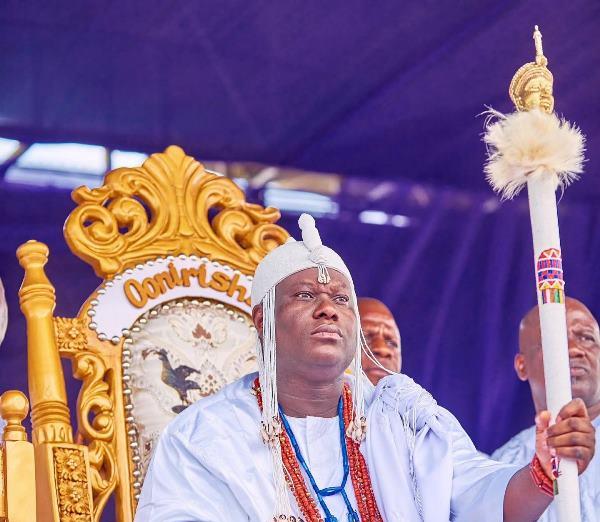
The Ooni of Ife, Oba Adeyeye Ogunwusi, has urged traditional rulers across the Yoruba nation and beyond to embrace unity as a vital instrument for collective development and national cohesion.
The Ooni made the call while beginning a seven-day seclusion as part of traditional rites marking the annual ”Olojo Festival”, one of the oldest and most sacred cultural events in Yoruba land.
“I am praying for Nigeria and for Nigerians. I seek God’s mercy upon this land. May we all experience peace, unity, progress, and the blessings of the Almighty,” the Ooni said.

The Ooni also appealed to citizens to rise above ethnic and religious divides, saying Nigeria’s strength lies in its diversity.

He further called on political leaders to act with fairness, justice, and compassion, reminding them that true leadership involves prioritising the welfare of the people.

The Olojo Festival( Day of the First Dawn) commemorates the creation of the earth.

The week-long seclusion is a spiritual purification process during which the Ooni refrains from public appearances, engaging instead in meditation, prayer, and ancestral communion.

The ritual prepares the Ooni for the festival’s climax, where he emerges wearing the sacred Aare Crown, believed to be the original crown worn by Oduduwa, the progenitor of the Yoruba people.