

Home Blog Page 163

House Of Reps Sets Up Committee To Oversight FG’s Naira-for-Crude Oil Policy

0

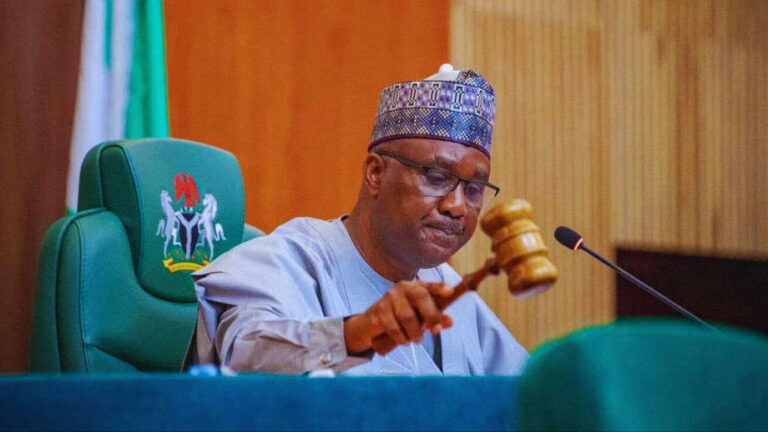
The Speaker of the House of Representatives, Hon. Tajudeen Abbas, on Wednesday inaugurated an Ad hoc committee to oversight the implementation of the Naira-for-Crude Oil policy of the Federal Government.

Speaking at the ceremony, Tajudeen said that the inauguration marked a critical step towards ensuring transparency, accountability, and efficiency in one of the most critical policy initiatives in the energy sector.

He said that the committee had been entrusted with the important task of investigating the implementation, effectiveness, and inter-agency coordination of the Naira-for-Crude Oil policy.

The speaker said that the house expected nothing less than a thorough, impartial, and well-documented process that will contribute to the overall stability of the economy from the committee.

“The task before this ad-hoc committee requires diligence, courage, and a clear sense of purpose.

“I urge members of the committee to carry out their work with integrity, objectivity, and dedication, bearing in mind that their deliberations and recommendations will shape the course of this policy and influence the well-being of millions of Nigerians.

“In doing so, they will strengthen our legislative processes and contribute to the progress of the nation.

“The house has confidence in their competence and in the success of this initiative. Your partnership is crucial in ensuring that the objectives of this exercise are fully realized,” he said.

Tajudeen explained that the Naira-for-Crude Oil policy carried significant implications for Nigeria’s foreign exchange stability, revenue generation, and long-term energy security.

The speaker said that the 10th House of Representatives remained dedicated to advancing the Renewed Hope Agenda of President Bola Tinubu’s administration.

He said that the house is particular on tackling the economic challenges that continue to weigh heavily on Nigerians.

Tajudeen advised the committee that stakeholder engagement would be central to the new assignment, as meaningful results cannot be achieved in isolation.

He said that the involvement of government agencies, industry operators, civil society, and other key actors will give the committee a broad and balanced perspective.

According to him, such ollaboration will help shape recommendations that are realistic, sustainable, and aligned with the national interest, while also strengthening public confidence in the work of the legislature.

In his remarks, the Chairman of the committee, Rep. Boniface Emerengwa (PDP-Rivers) lauded the leadership of the house for entrusting the committee with the critical assignment.

He said that Nigeria is blessed with abundant crude oil reserves, yet the benefits had not always translated into maximum value for our people.

Emerengwa said that the volatility of foreign exchange markets, over-dependence on the dollar, and the persistent challenges facing the economy made it imperative to explore innovative ways to strengthen the currency, reduce external vulnerabilities, and secure long-term benefits for Nigerians.

“The task before this committee is therefore both urgent and significant; our mandate include but not limited to critically examine the feasibility, sustainability, and potential impact of the Naira-for-Crude Oil Policy.

“Engage with stakeholders across government, the Oil and Gas industry, financial institutions, and international partners and Identify possible risks, challenges, and opportunities inherent in this policy shift.

“Make clear evidence-based recommendations that will guide the house in ensuring that this policy, if adopted, will serve the best interest of our economy and people as envisaged by the Renewed Hope Agenda of Mr. President.

“We are committed to discharging this mandate with utmost diligence, transparency, and inclusiveness. We shall consult widely, deliberate deeply, and place national interest above every other consideration.

“We are aware that bold reforms often come with skepticism but history teaches us that nations that thrive are those that dare to innovate, adapt, and take ownership of their economic destiny.

“On behalf of my colleagues, I assure this House and the Nigerian people that we shall justify the confidence reposed in us,” he said.

The chairman solicited for the support of the house, the cooperation of stakeholders, and the guidance of divine providence for the mission.
County Grammar School, Ikwerre-Etche Old Boys Association Holds Quarterly Congress In Port Harcourt, Sunday

0

In its bid to ensure higher standard of education in Rivers State and promote the welfare of her members, the Old Boys Association of County Grammar School, Ikwerre-Etche, Rivers State, is set to hold its second quarterly Congress in Port Harcourt, Rivers State.

According to a press statement signed by the National President of the association, Venerable Bekwele Wabara(Rtd), this second quarterly Congress, which holds on Sunday, September 28, 2025, at Fomida Event Centre in Port Harcourt, would have a roundtable discussion on educational development in Rivers State and Nigeria. The central discussion would, however, revolve around the role of the Old Boys Association in uplifting the infrastructural and academic profile of the revered institution.

Furthermore, the quarterly Congress would afford the Old Boys the opportunity to appraise the various measures highlighted during the very successful national convention of the association held last year, and deliberate on the report of the election planning Committee, amongst other important issues.

The press statement, which was also jointly signed by the Chairman of the National Conngress Organising Committee, Dr. Edwin Ojirika and Professor Opuda Ekine, Chairman of the 1978 Set, hosts of the Congress, urged all Old Boys of the institution to turn out enmasse for the Congress, which commences by 1pm on Sunday.

It would be recalled that County Grammar School, Ikwerre-Etche, established in 1957, has produced high-quality manpower in every sector of endeavour who has contributed to the development of the State and nation.

The Old Boys Association, which hosted its very first national convention last year, has continued to contribute immensely to the infrastructural development of the school.

U.S. CDC Trains 2,400 Volunteers To Boost Infectious Diseases Response In Nigeria

0

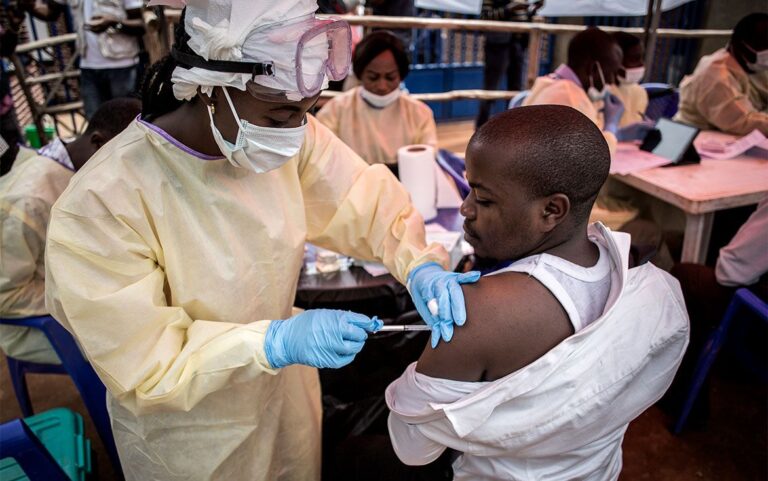
The United States of America Centre for Disease Control and Prevention (U.S. CDC), in partnership with the Nigerian government, have trained 2,400 community volunteers across the Federal Capital Territory (FCT), Sokoto, Ebonyi, and Ondo State.

Dr Muhammad Saleh, U.S. CDC Senior Emergency Management Specialist, made this known in an interview with journalists on Wednesday in Abuja

Saleh said the training was part of a broader health security initiative aimed at improving Nigeria’s ability to detect, investigate, and respond to infectious disease outbreaks.

He said that the volunteers were also required to raise awareness on safe hygiene practices, and link patients with health facilities for rapid treatment.

He said that the initiative leverages community trust to improve outbreak surveillance and prevention.

According to him, because they were trusted members of their communities, people are more willing to listen to them.

“They can spot unusual cases quickly and raise the alarm. That early detection saves lives,” he said.

Saleh said that the volunteers go door-to-door teaching people proper hand-washing; discouraging open defecation; and warning against unsafe self-medication from roadside chemists.

He said they also plaid a crucial role in dispelling myths and misinformation about cholera and other infectious diseases.

He said: “trust is everything; when a volunteer tells a neighbour that vomiting and passing stool could be cholera, people listen.

“They know this person, they see them daily; so, the message is credible,”.

He said that the volunteers were part of a broader strategy to strengthen health system resilience.

Saleh said that Nigeria adopted new tools such as disease hotspot mapping and fully operational Emergency Operations Centres (EOCs) in all the 36 states and the federal capital territory.

He acknowledged challenges such as limited resources, attrition of trained personnel, and the persistence of misinformation but said the collaborative approach between government, partners, and communities was already yielding results.

“Everybody has a role to play, communities, families, partners, and government.

“The more we sustain these collaborative efforts at the grassroots level, the more resilient Nigeria becomes against cholera and other infectious diseases,” he said.

Cholera is a severe diarrheal disease caused by contaminated food or water containg the ‘Vibrio cholerae bacterium” , leading to rapid dehydration and potentially death within hours if untreated.

Experts say symptoms, which can take 12 hours to five days to appear, include profuse watery diarrhea, nausea, vomiting, and muscle cramps.

Treatment focuses on rehydration with oral or intravenous fluids and may involve antibiotics, while prevention relies on access to clean water, sanitation, and good hygiene.

How Air Peace Broke Seven Years Deadlock With Heathrow, Gatwick Breakthrough – Onyema

0

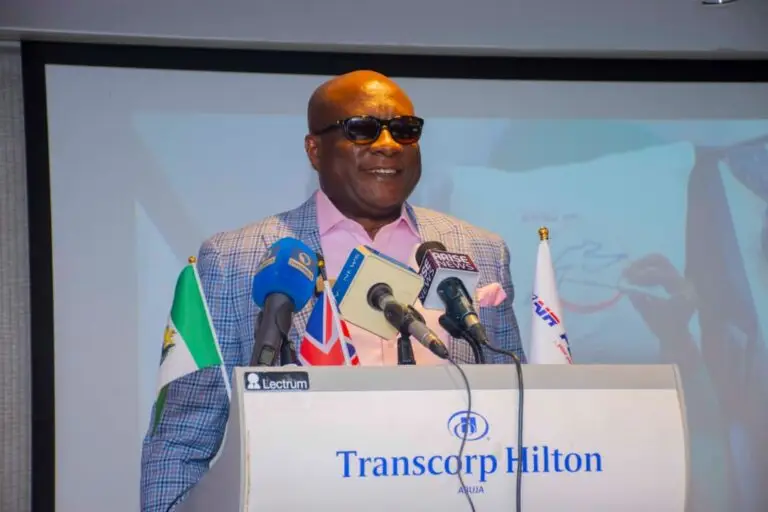
Air Peace has attributed its approval to operate scheduled flights from Nigeria into both London Gatwick and Heathrow Airports to backing of the UK Government.

The Chairman of Air Peace, Dr Allen Onyema, said this in a statement on Wednesday in Lagos.

Onyema said the achievement was remarkable because it had taken seven years for any Nigerian airline to secure such access.

He underscored the airline’s resilience and the support it has enjoyed from the United Kingdom.

He applauded the British Deputy High Commissioner for Lagos, Jonny Baxter, describing him as “a diplomat par excellence”.

Onyema said Baxter’s unwavering commitment and fairness ensured that Air Peace received everything necessary to begin its operations into the United Kingdom.

“Jonny Baxter embodies the principle of live and let live. He gave us every support needed to commence our UK operations.

“It was due to his efforts and open-mindedness of the UK authorities that we can proudly say today that Air Peace’s problem is no longer the UK. The UK loves Air Peace, and Air Peace loves the UK in return,” Onyema stated.

Onyema noted that the invitation from the UK government for Air Peace to commence London Heathrow flights and Heathrow Airport’s plan to host a welcome party for the airline, came as a pleasant surprise.

According to him, the UK government even requested that we forward names of those attending so they could make the necessary arrangements.

“This shows the extent to which they have welcomed us, and we are profoundly grateful to the UK government, the Civil Aviation Authorities, and the people of the UK for the remarkable hospitality they have extended to Air Peace.”

On the reason for the commencement of Abuja to Gatwick and Heathrow, Onyema, said it was to ease traveling from Northern Nigeria to London and urged Abuja travellers to patronise Air Peace to London Heathrow.

He also called on government officials to demonstrate patriotism by flying Air Peace and other Nigerian carriers operating internationally

“Our airlines offer competitive fares and seamless service. Supporting them means strengthening Nigeria’s economy and projecting our national pride,” he concluded.

UNGA 80: Trump Hits UN Hard, Questions Purpose Of The World Body

0

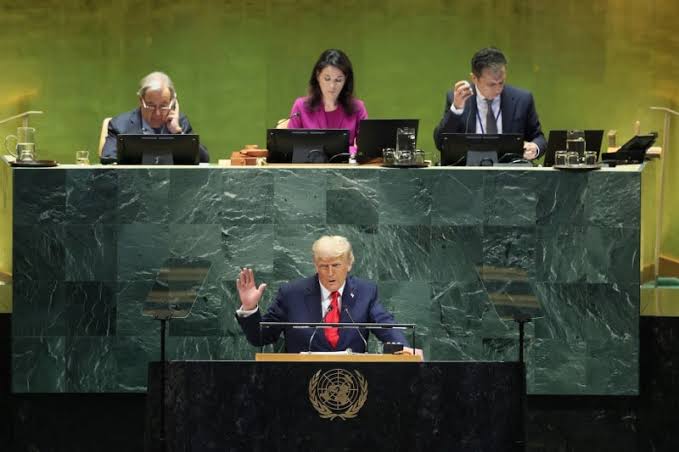
The U.S. President, Donald Trump says he ended ” seven unendable wars” in seven months.

Trump touted his success in ending intractable conflicts, trade wars while delivering his statement to the 80th session of the UN General Assembly on Tuesday at UN headquarters in New York.

Yet the UN offered little help, he said, asking: “What is the purpose of the United Nations?” It seems to write very strongly worded letters but “empty words don’t solve war”.

While some, he noted, suggested he should be awarded the Nobel Peace Prize, Trump said, “The real prize will be to save millions of lives.”

On Iran, the “world’s number one sponsor of terror”, he said with that country’s enrichment capabilities “completely demolished”, his administration had also brokered an end to the 12-day war.

On Ukraine, he “always thought that would be the easiest” war to end because of his relationship with Russian Federation President Vladimir Putin. Instead, he said, the conflict has dragged on for three years, “killing five to seven thousand young people a week”.

He accused North Atlantic Treaty Organisation (NATO) countries of hypocrisy: “They are buying oil and gas from Russia when they are fighting Russia,” he said.

His proposed solution was tariffs: “If Russia does not end the war, the United States would impose very strict tariffs which would end the war very quickly, but the Europeans have to adopt them as well”.

He urged immediate action on Gaza, release of all the hostage, and warned that unilateral recognition of a Palestinian State would amount to “a reward to Hamas for its horrible atrocities”.

He, however, criticized the UN on multiple fronts.

“Many years ago, I bid to rebuild the United Nations for $500 million, but they decided to go into another direction which produced a much more inferior complex.”

Instead, he said, “They spent between two and four billion dollars and did not even get the marble floors I promised them”.

On migration, he said that in 2024, the UN spent “$372 million in cash to support 624,000 migrants to journey into the United States to infiltrate our Southern border”.

He also added: “The UN is supposed to stop invasion not promote them”.

Trump also attacked climate policy and renewable energy. “Windmills are pathetic,” he said, calling the carbon footprint “a hoax”.

He argued, “If you don’t get away from the green energy scam your country is going to fail”.

Citing Germany’s struggles, he warned that “energy and open immigration is destroying Europe”.

Pointing to China’s emissions, he said: “China now produces more CO2 than all the other developed nations in the world.”

Revocation Of Mining Licence To Unlock Nigeria’s Lithium, Says Women Miners

0

The Women In Mining In Nigeria (WIMIN) said the recent revocation of mineral licences by the Federal Government will sanitise the sector and unlock the potential of Nigeria’s lithium.

The National President, Mrs Janet Adeyemi on Wednesday in Abuja said the move was critical in checking the `all comers syndrome rush` in the mining sector especially with the global demand for lithium.

The Minister of Solid Minerals Development, Dr Dele Alake, recently approved the revocation of 1,263 mineral licences over default in payment of annual fees.

The minister said that the licences would be deleted from the portal of the Electronic Mining Cadastral system of the Mining Cadastre Office which would create more opportunities for serious investors.

Adeyemi said that if Nigeria must leverage on the global demand for Lithium as one of the critical minerals needed for energy transition to develop its economy, it must sanitise mining operations in the country.

According to her, mining is technologically timed and Nigeria must take advantage of this season by ensuring that only serious and responsible operators control our concessions.

She described every dormant or defaulting licence as a missed opportunity for the nation.

“Minerals such as lithium, once seen as waste, are now in high global demand.

“Globally, critical minerals are reshaping supply chains and even foreign diplomacy. Nations are competing fiercely to secure relevance in this new era and Nigeria must not be left behind.

“By enforcing compliance, we attract credible indigenous and foreign investors, strengthen our reputation as a mining jurisdiction and ensure that Nigeria has a seat at the table in global critical mineral supply chains,” she said.

She said the revocation of the licences was not a punitive measure but corrective as well as strategic, to ensure only serious and responsible operators control Nigeria`s concessions for its sustainable development.

The WIMIN leader emphasised that Nigeria’s mineral resources were national assets that must be managed with discipline, accountability and foresight.

According to her, mining licences are not privileges to be hoarded but legal instruments tied to clear obligations, royalties, community development and environmental responsibility.

“Defaulters who ignore these obligations undermine our economy, our communities and our global reputation. They cannot be allowed to hold Nigeria back,” she said.

She commended the minister for taking bold steps toward repositioning the solid minerals sector through impactful reforms, citing the 15 years conviction of Ansaru`s commander for illegal mining as a deterrent to others.

She, however said, for the mining sector to contribute significantly to Nigeria`s sustainable development, its governance must be free of corruption and regulators need to uphold transparency and accountability in their operations.

PenCom Releases Guidelines On Foreign Currency Pension Contributions

0

The National Pension Commission (PenCom) has released guidelines on Foreign Currency (FCY) pension contributions as part of the pension revolution 2.0 for stronger pension and stronger Nigeria.

The announcement was made by the Director General (D-G) of PenCom, Omolola Oloworaran, on her X (Twitter) handle in Abuja on Wednesday.

She said that PenCom was embarking on a wave of rolling out new initiatives daily to enable setting higher standards across critical pillars of the pension endeavour.

Oloworaran said that the FYC guidelines provide a pension arrangement under the Contributory Pension Scheme (CPS) for Nigerian living and working abroad.

Also, Nigerian/ foreign workers working in Nigeria, but earning all or part of their remuneration in foreign currencies and other eligible persons are to make their payment in dollars.

Oloworaran said that the contributors would also access their benefits in dollars, except they elect to do otherwise.

She said that the FCY pension contribution guidelines, which are being issued for the first time, mark a watershed moment for the CPS coverage expansion and financial inclusion drive.

The D-G said that the initiative is a bold reform that shows that PenCom cares about the retirement security of all working Nigerians irrespective of geographical borders.

Lawmaker Seeks FG’s Urgent Activation Of Emergency Medical Treatment Funds Nationwide

0

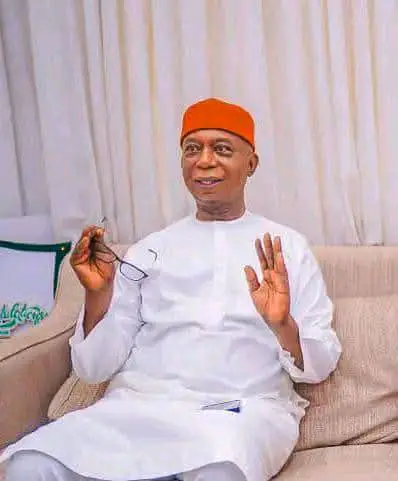
A lawmaker representing Delta North Senatorial District, Senator Ned Nwoko (APC-Delta), has called for the urgent activation and implementation of the Emergency Medical Treatment (EMT) funds as provided for under Section A150 of the National Health Act 2014.

The funds, which are derived from a five per cent allocation of the Basic Health Care Provision Fund (BHCPF), he said, are intended to finance the National Emergency Medical Service and Ambulance System (NEMSAS).

Nwoko who made the call in Abuja while speaking with newsmen noted that emergencies occur daily across Nigeria not only in the form of blood, broken bones, and fading pulses, but also in heartbreaking situations where help should come but does not, due to hospitals demanding upfront payment before treatment.

He said this leaves many Nigerians to die from preventable conditions.

He also noted that more than 75 per cent of Nigerians finance their healthcare expenses out-of-pocket — one of the highest proportions globally, describing the development as an unstable situation that pushes millions into poverty, and exposes citizens to poor health outcomes.

According to him, the National Health Act signed into law on Oct. 31, 2014, was designed to provide a comprehensive legal framework for the regulation, development, and management of the country’s health system.

“This is with the aim of raising national healthcare standards, improving accessibility, and ensuring equitable service delivery for all Nigerians;

“Section A150 of the Act establishes the Basic Health Care Provision Fund (BHCPF), financed through one per cent of the Federal Government’s consolidated revenue alongside grants from international donors and other approved sources.

“The Act specifies clear allocations for the fund, including 50 per cent for the provision of a basic minimum package of health services through the National Health Insurance Scheme.

”Others are 20 per cent for procurement of essential drugs, vaccines, and consumables and 15 per cent for maintenance of healthcare facilities, equipment, and transport across eligible centres.

“Also 10 per cent is allocated for the development of human resources for primary healthcare delivery and five per cent specifically earmarked for emergency medical treatment, to be managed by a committee appointed by the National Council on Health.”

The lawmaker said that in spite of the clarity of this statutory framework, there was no public evidence that the five per cent emergency medical treatment allocation had been implemented or made accessible to Nigerians in urgent need, thereby defeating the essence of its creation.

He recalled the death of Sen. Ibrahim Kontagora, after a hospital declined to conduct a critical surgery due to non-payment of a 15,000 dollars deposit.

“Also was the case of Mrs Akinbobola Folajimi, a pregnant woman who was denied emergency treatment because of the husband’s inability to immediately pay N500,000 deposit.

“The cases have brought renewed national attention to the failures in Nigeria’s emergency healthcare delivery system,” he said.

Nwoko noted that these were not isolated cases as every day, countless Nigerians lose their lives due to the inability to access emergency care in critical moments, as hospitals insist on deposits before treatment.

“This is in total disregard of Section A150 (2)(c) of the National Health Act, which mandates the provision of emergency medical treatment without demand for initial payment,” he stressed.

He added that the non-implementation of this provision undermined public confidence in the health sector, violates the spirit of the law, and negates Nigeria’s obligation to protect the right to life as guaranteed under the 1999 Constitution (as amended).

He therefore called for the immediate activation and operationalisation of the Emergency Medical Treatment Fund by the Federal Ministry of Health and Social Welfare, in collaboration with the National Council on Health, as stipulated under Section A150 of the National Health Act 2014.

The senator also called on the Federal Government to mandate the National Primary Health Care Development Agency (NPHCDA), the National Health Insurance Authority (NHIA), and other relevant stakeholders to publish and implement a transparent framework on how Nigerians can access the emergency fund.

“The Senate should also direct the committees on Health (Secondary and Tertiary), and Legislative Compliance to invite the Minister of Health and Social Welfare, the Executive Secretary of the NHIA, and the Director-General of the NPHCDA to brief it on the current status of the BHCPF.

“This is with specific focus on the utilisation of the five per cent allocation for emergency medical treatment.

“I also call on the Federal Government to establish a dedicated Emergency Medical Response System linked to the Fund, with a toll-free national emergency number, ambulance services, and designated hospitals with mandate to provide first-response treatment without delay.

“The committee on Health in the Senate should also ensure strict oversight on the full implementation of BHCPF,” Nwoko said.

Biosafety Agency Warns Against Ebola, Other Biological Risks

0

The National Biosafety Management Agency (NBMA) has warned Nigerians about Ebola and other Biosecurity Threats.
Dr Agnes Asagbra, Director-General (D-G), NBMA, gave the warning in a statement made available in Abuja on Tuesday.
Asagbra explained that Ebola Virus Disease (EVD) was one of the most dangerous infectious diseases, with a fatality rate of between 25 to 90 per cent.
She noted that recent reports of suspected viral haemorrhagic fevers in Nigeria and neighbouring countries were a reminder that biosecurity was a shared responsibility.
She said that other biosecurity threats in the country include Lassa fever, avian influenza, anthrax, and antimicrobial resistance all of which required vigilance and preparedness.
“For more information on Ebola virus and recent control activities in Nigeria, the public is advised to read the recent Nigeria Centre for Disease Control (NCDC) Public Health Advisory on Suspected Viral Haemorrhagic Fever Events in Abuja.
“Nigerians are strongly advised to
report immediately to a hospital if feeling unwell, especially after travel outside the country, and clearly explain travel history to healthcare workers,” Asagbra advised.
The d-g also urged Nigerians to practice proper hand hygiene, wash hands frequently with soap and running water or use alcohol-based sanitisers.
“Avoid contact with anyone showing symptoms such as fever, bleeding, vomiting, or diarrhea.
“Avoid contact with wild animals such as bats, monkeys, or apes; ensure all animal products are well-cooked before eating.
“Report suspected cases immediately to health authorities via NCDC Connect Centre (6232) or NBMA hotline. Rely only on verified information from NCDC, NBMA, and authorised sources and avoid spreading rumours or misinformation.
“Biosecurity is everyone’s responsibility. NBMA, in collaboration with all relevant stakeholders, will continue to strengthen Nigeria’s defences against biological risks,” she added.
Asagbra further urged Nigerians to remain safe, healthy, and resilient against Ebola and all other biosecurity threats.
She added that religious and traditional rulers, as well as community leaders were powerful allies in safeguarding public health.
She therefore urged them to use their influence to promote trust in health authorities and discourage harmful rumours or misinformation.
“Encourage safe burial practices and discourage contact with corpses of suspected infectious disease victims.
“Mobilise communities to adopt hygiene practices, report unusual illnesses, and support surveillance efforts,” the NBMA boss further advised.

Nigerian Experts Call For Swift Implementation Of Amended Global Health Regulations

0

Nigerian experts have urged the government to swiftly implement the newly amended International Health Regulations (IHR) to strengthen pandemic preparedness, equity and cross-border health security.

The revised IHR was adopted by consensus at the 77th World Health Assembly in Geneva in 2024.

It introduced a new alert system, the “pandemic emergency”, to mobilise stronger international collaboration when health risks escalate beyond a Public Health Emergency of International Concern (PHEIC).

The reforms also require the creation of National IHR Authorities in every country, including Nigeria, to coordinate implementation and ensure faster, more equitable access to vaccines, medicines, and financing during outbreaks.

For Nigeria, Dr Gabriel Adakole, a Public Health expert, said that the amendments were especially significant, given the country’s recent experiences with COVID-19, cholera, Lassa fever and mpox outbreaks.

Adakole said that the changes were expected to boost Nigeria’s ability to rapidly detect, report, and respond to health threats while ensuring better coordination with the global community.

WHO Director-General, Dr Tedros Adhanom Ghebreyesus, described the reforms as a historic commitment to protect future generations from the devastating impact of epidemics and pandemics.

Dr Ishaku Akyala, an Associate Professor of Infectious Diseases at Nasarawa State University, said the amendments provided Nigeria with a clearer framework for coordination and accountability, both within government and with global partners.

Akyala said that the country had already begun aligning its outbreak response systems with the new global standards.

He said that the revised IHR would strengthen Nigeria’s emergency preparedness architecture, especially in building a resilient workforce, surveillance system and financing mechanism to respond to future pandemics.

Dr Solomon Chollom, a Virlogist, said that the pandemic emergency alert was a game-changer.

“For a country like Nigeria, where outbreaks are recurrent, an early and globally coordinated alert system means more timely support and fewer delays in mobilising critical resources,” he said.

Chollom said that COVID-19 exposed the injustice in access to vaccines and treatments.

“The new IHR provisions on equity and solidarity, if implemented well, will give African countries like Nigeria a stronger voice and better leverage in global health negotiations,” he said.

The IHR, which dates back to the mid-20th century, has been revised several times to reflect evolving global health risks.

The last major overhaul was in 2005, following the SARS outbreak. The 2024 amendments marked the most substantial changes in nearly two decades.

While 11 out of the 196 IHR States Parties rejected the new reforms, Nigeria is among the vast majority supporting the changes.

The Ministry of Health and Social Welfare, in collaboration with the NCDC and other agencies, is expected to align national frameworks with the new obligations.

The adoption of the amendments comes alongside the endorsement of the WHO Pandemic Agreement, which Nigeria also backed.

Negotiations are ongoing on its annexe concerning Pathogen Access and Benefit Sharing (PABS), a system to ensure fairness in the use of disease samples and related benefits.