


Home Blog Page 153

10 Job Search Apps to Boost Young Graduates Career in Today’s Labour Market

0

In a fast-changing employment landscape, having the right tools can make all the difference. Whether you’re seeking full-time roles, freelancing gigs, or remote opportunities, job search apps give you the leverage to find, apply, and manage your career path from your phone or tablet. Here are 10 top apps (some international, some Nigeria / Africa-oriented) that can help you surf toward a breakthrough in the labour market.
1. LinkedIn
What it does well: LinkedIn is more than just a job board; it’s a professional social network. You can build a profile that reflects your experience, skills, and ambitions. Recruiters often search LinkedIn directly.
Key features: Job alerts, networking with peers and leaders, being visible to recruiters, sharing content to show your expertise.
How to use it effectively: Keep your profile up to date, request recommendations, engage (posts/comments) to broaden visibility. Be proactive in connecting with hiring managers or people at companies you want to work for.
2. Indeed
What it does well: Very large database of job listings globally (including many in Nigeria), with filters for location, salary, job type, remote vs. on-site.
Key features (mobile app): saving jobs, job alerts, personalized job feed that matches your searches or profile.
Tips: Use job alerts so you’re notified the moment a relevant position is posted. Tailor your search keywords well to avoid irrelevant postings. Also, research companies via reviews to avoid low-quality opportunities.
3. Jobberman (for Nigeria)
What it does well: Localized job listings, good fit for Nigerians and people in neighbouring markets. It helps match jobseekers to roles based on their experience, preferred location, and skills.
Key features: The Jobberman Jobs app lets you apply through mobile, upload your CV easily, set up job alerts, save jobs for later, and get notifications.
Why it helps: Because it’s local, employers and roles are more context-relevant. Transport, cost of living, and industry terms are more aligned with what you know. It’s good for networking with local companies, too (via event listings or posts).
4. Upwork
What it does well: Mainly for freelancers. Great for remote projects in writing, design, programming, consulting, etc. If you want to build a side income or shift into freelancing full time, Upwork is a strong platform.
Key features: You can post profiles, submit proposals, manage contracts, send/receive messages and feedback, and track project progress on mobile.
Tips: Build a strong portfolio. Be selective in applications (quality > quantity). Check payment verification & client feedback carefully to avoid scams. Use the app’s notification features to respond fast.
5. Freelancer.com
What it does well: Similar to Upwork: many short-term, project-based opportunities across many fields. Great for building experience, earning remotely.
Key features: Mobile app for applying to jobs, chatting with clients, tracking project progress; desktop tools, too, like time tracker for hourly jobs.
Tips: Review clients’ past work carefully. Use contests or small jobs to build credibility. Don’t undersell yourself; over time, you can build up to higher paying gigs.
6. Glassdoor
Why it matters: Knowing what you might accept before applying is just as important as finding the job. Glassdoor gives you inside information: company reviews, salary ranges, and interview reports.
How to use it: Compare offers, see what employees say about culture & management, prepare for interview questions that past candidates report, and set realistic salary expectations.
7. ZipRecruiter
What it does well: Intelligent matching & alerts. Its algorithm suggests jobs, lets you apply quickly, and tracks application status. Good user interface.
Why it helps: Saves time and reduces the barriers of applying to multiple jobs manually. Helps you discover roles you might have missed.
8. Local/National Government or NGO Job Boards
What to look for: In many countries, there are specific apps or services for public sector jobs (civil service, safety corps, education, etc.). These may be less flashy but often very stable roles.

Why they help: Less competition in some cases, benefits, and sometimes local preference. Also, being familiar with the app/board increases your credibility.
9. Gig / Micro-task Apps
Examples: Apps that list short-term or micro tasks — e.g., delivery, errands, freelance micro-services.
Why they matter: Even if they’re not your dream job, they help with income, skill building, and client reviews, and they keep you active professionally. Sometimes, these tasks lead to bigger projects.
10. Career Learning & Assessment Apps
What they do: Not strictly job search, but help you increase your chances by improving your skills: courses, assessments, CV builders, interview prep, etc.
Why they boost your career: Employers often shortlist people who show continuous improvement & relevant skills. A stronger CV + profile = more callbacks.
How to pick: Choose ones that are recognized in your industry, offer certificates, are affordable/local or free, and match the gaps in your profile.

How to Get the Most Out of Job Search Apps

1. Be consistent — check daily or several times per week. New roles are posted all the time.

2. Tailor your applications — generic CVs or cover letters are more likely to be ignored. Align with each job’s requirements.

3. Set alerts — let apps notify you when jobs match your criteria appear.

4. Keep your profile polished — good photo, clear work history, list of skills, maybe some recommendations.

5. Network & follow up — even via apps, try to build connections. Reach out, message people, and comment on posts. Many jobs are won from who you know as much as what you know.

6. Watch out for scams — never pay to apply for jobs or for interviews. Verify company legitimacy (look for company website, physical address, reviews).

Conclusion
In the modern labour market, job search apps are powerful tools—but they’re just that: tools. The breakthrough often comes when you combine them with continuous learning, networking, and persistence. Whether you use LinkedIn, Indeed, Jobberman, Upwork, or something else, using them smartly will increase your chances of landing the job that moves your career forward.


-Gold Dienye-Jaja

‎NiMet Forecasts 3-Day Thunderstorms, Rain Across Nigeria

The Nigerian Meteorological Agency (NiMet) has predicted rainy and thundery weather conditions across Nigeria from Monday to Wednesday.

NiMet’s weather outlook released on Sunday in Abuja envisaged thunderstorms with moderate rainfall over parts of Jigawa, Zamfara, Kano, Kaduna, Bauchi, Yobe, and Katsina in the northern States on Monday morning.

The agency predicted rains in Kebbi, Adamawa, and Taraba later in the day.

‎“Flash floods are possible in Bauchi, Jigawa, Katsina, Kaduna, and Kano States during this period.

‎“Central States like Niger, Benue, the Federal Capital Territory (FCT), Plateau, and Nasarawa will see morning cloudiness and light to moderate rainfall, with a high risk of flooding in parts of Plateau.

‎“In the South, light to moderate rains will affect Ondo, Imo, Abia, Enugu, Ebonyi, Anambra, Edo, Delta, Bayelsa, Rivers, Cross River, and Akwa Ibom,”it said.

NiMet envisaged sunny skies with patchy clouds on Tuesday in the Northern with thunderstorms and rains persist in parts of Adamawa, Taraba, and neighboring States.

“Central and southern regions will continue experiencing moderate rainfall.

“On Wednesday, sunshine with thunderstorms are expected over northern States in the morning while cloudy skies and moderate rains is expected over central region.

“Southern States, including Ebonyi, Akwa Ibom, Rivers, and Cross River, will experience morning showers and moderate to heavy rains later in the day,” it said.

The agency cautioned residents in flood-prone areas to activate emergency responses, avoid driving during heavy rains, secure loose objects, and take precautions against strong winds and low nighttime temperatures.

NiMet urged the public to disconnect electrical appliances during storms and avoid shelter under tall trees.

‎“Airline operators are advised to obtain airport-specific weather reports for safe planning. Residents can visit www.nimet.gov.ng for weather updates.

Nigerian Press Council Received only Seven Complaints On Unethical Conducts In Three Years …Restates Commitment To Deliver On Mandate

0

Dr. Dili Ezughah, the Executive Secretary of the Nigerian Press Council (NPC), says the organisation is committed to deliver on its mandate of sanitising the print media and training of journalists.

Ezughah stated this in an interview in Abuja where he stated that between 2023 and 2025, the Council received only seven complaints from members of the public on unethical publications against them.

He explained that the NPC was established by the NPC Act, CAP N128, Laws of the Federation 2004, adding that the mandate of the Council is to promote high professional standards for Nigerian Press.

He further stated that the Council was also expected to inquire and entertain complaints from members of the public about unethical conduct of journalists and unethical publications.

“Also, we inquire into acts by members of the public that hinders the dissemination of information or performance of duties of journalists in the country.

“These are enshrined in section 16 of the NPC Act
about complaints; and these complaints have procedures. You can only complain when something unethical is published about you, especially in the print media which we regulate.

“First, the complainant has to draw the attention of the media house to the alleged offensive publication, and if he or she is not satisfied, then the complaints can be directed to the NPC.

“When we receive a complaint, we forward it to the Legal and adjudication Unit of the Council, but if there is a board, it is forwarded to the board.
“We can then try to broker peace by writing the media house involved, but if the media house retracted the article, tender apology to the complainant or the matter is in court, we don’t act.

“However, we are committed to continue to carry out our lawful duty to deliver on our mandate and sanitise the print media to ensure that complaints on unethical publications by print media is reduce to the minimum, ” Ezughah said.

He further stated that the NPC had held workshops for journalists in Bauchi for North East, Karu for North Central and Lagos for South West Regions of the country, adding that other regions would benefit before the end of the year.

According to the NPC boss, the essence of workshops is to inculcate the sense of ethical compliance among media professionals, journalists, and practitioners.

“This is because if they abide by the ethics of the profession, they would uphold a high professional standard, devoid of unethical practices that will bring about complaints.
“This is because complaints arise when reporter breaches any of the ethics; either accuracy, objectivity, balance, and the rest of them.

“So, since the establishment of the Council, we have been training and retraining journalists till date. We have never relented in going round and organising workshops and trainings for journalists.
“Most of our trainings are based on ethics and the need for journalists to comply with the ethics of the profession,” Ezughah said.

Imisi Wins Big Brother Naija Season 10, Smiles Home With N150m

Imisioluwa Ayanwale, popularly known as Imisi, has emerged as the winner of the Big Brother Naija (BBNaija) Season 10 reality TV show, which ended on Sunday night.

The show host, Ebuka Obi Uchendu, announced Imisi, the reality-TV sensation, who has been the talk of the town since the show’s premiere, as the winner. She clinched the grand prize of N150 million after weeks of intense competition.

The top five finalists were Koyin, Dede, Imisi, Sultana, and Kola.

The grand finale was an electrifying show as fans across the country and beyond waited anxiously to see who would take home the title.

Imisi, backed by her passionate fan base known as the Imistars, beat out her closest rivals to claim the top spot in what many are calling one of the most competitive seasons yet.

Throughout the season, Imisi was a consistent headline maker. From her bold personality and strategic gameplay to her emotional vulnerability and ability to stay true to herself, she captivated millions of viewers. Her name trended across social media almost daily, making her one of the most talked-about housemates of the season.

The tenth season, themed “10/10,” lived up to its name, packed with drama, romance, friendship, heartbreak, and unforgettable moments. Fans have described it as one of the most entertaining and unpredictable seasons of the reality show to date.

Imisi’s triumph marks another milestone in the Big Brother Naija legacy, as the show continues to shape pop culture and produce some of Nigeria’s biggest entertainment stars.

PIA: Nigeria’s Rig Count Soars By 762%, As Upstream Sector Gains $40bn Investments— NUPRC

0

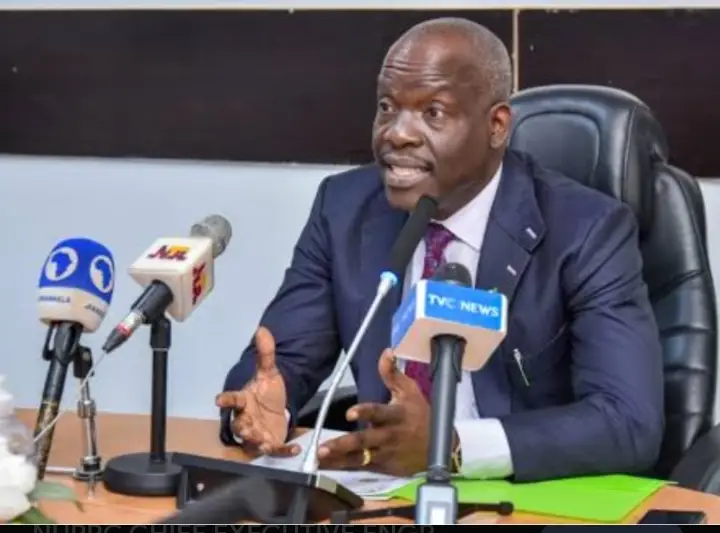
The Nigerian Upstream Petroleum Regulatory Commission (NUPRC) has announced a significant rise in the country’s rig count, increasing from just eight in 2021 to 69.

The commission said this in a statement by its Head, Media, and Strategic Communication, Eniola Akinkuotu.

Akinkuotu highlighted some of NUPRC’s high impact achievements, four years since its establishment, adding that the growth is a clear testament to the renewed vigour and investor confidence in Nigeria’s upstream petroleum sector.

He said that in spite of the challenges it inherited from the pre-Petroleum Industry Act (PIA) era, it exceeded revenue targets, recorded 39.98 billion dollars investment, and increased rig count and crude oil production.

“The latest rig count of 69 comprises 40 active rigs, eight on standby, five on warm stack, four on cold stack, and 12 on the move.

“This represents a 762.5 per cent increase in barely four years.

“The success aligns with the charge of President Bola Tinubu that Nigeria is ready for business and that the right investment climate prevails now in the Nigeria upstream as daily actioned by the NUPRC.”

He said that NUPRC approved billions of dollars divestments in 2024 from the Nigeria Agip Oil Company to Oando Energy Resources; and Equinor to Chappal Energies.

He said that there was also divestment from Mobil Producing Nigeria Unlimited to Seplat Energies; and Shell Development Company Nigeria Limited to Renaissance Africa Energy.

According to him, the divestment is about investor portfolio re-ordering to focus on deep-offshore development.

He said that to give meaning to the intent of the PIA, 2021, the commission, in consultation with stakeholders, developed 24 forward-thinking regulations, adding that 19 had been gazetted while five await gazetting.

Akinkuotu said that in 2022, 2023 and 2024, NUPRC surpassed its revenue target by 18.3 per cent, 14.65 per cent and 84.2 per cent respectively, in spite of oil production and prices fluctuation, thus contributing to economic growth.

“Between 2024 and 2025, the commission approved 79 Field Development Plans (FDP) (41 in 2024 and 38 Year-to-Date (YTD) 2025 with potential investment of 39.98 billion dollars.

“Crude oil production has increased with current average daily production of 1.65 million barrels per day.

“It is expected to increase further with the Project one million barrels per day initiative, aimed at achieving 2.5 million barrels per day in 2027 compared to NUPRC commencement,” he said.

According to him, prior to NUPRC‘s establishment, the licensing rounds were opaque and beclouded by political influence which made the process lack credibility.

“However, the NUPRC with the support of President Bola Tinubu, transformed the process to be fully digital, enhancing transparency and credibility.

“The commission, in line with the PIA, 2021 and with the support of the President, is implementing the ‘Drill or Drop’ policy which prescribes that unexplored acreages are to be relinquished.

“This policy is designed to ensure optimal use of oil assets and prevent dormant fields from tying up potential reserves.

“It has successfully identified 400 dormant oil fields and has also propelled complacent oil companies to take quick action,” he said.

On Gas Flare Commercialisation, he said that it had completed awards of flare sites to successful bidders under the Nigerian Gas Flare Commercialisation Programme (NGFCP).

He said that the programme was aimed at eliminating gas flaring and attracting 2.5 billion dollars investments.

The NUPRC spokesman said that the Host Community Development Trusts have remitted N122.34 billion, while dollar contributions stand at over 168.91 million dollars.

This, he said, translated to a combined remittance of over N358.67 billion based on the prevalent exchange rate.

“The NUPRC is overseeing at least 536 projects at various stages of completion, including schools, health centers, roads and vocational centres.

“These are being funded by the trust fund while the achievement has curbed crude oil theft,” he said.

As part of its mandate to develop the country’s hydrocarbon, Akinkuotu further said that the commission had recorded 306 development wells drilled and completed between 2022 to date.

He said that the NUPRC also issued Nigeria’s first Petroleum Exploration Licence (PEL) for a large offshore geophysical survey covering 56,000 km² of 3D seismic and gravity data.

He said that in 2021, the average daily crude oil losses stood at 102,900 barrels per day (bpd) or 37.6 million barrels per year.

According to him, due to combined efforts of the General Security Forces and Private Security Contractors (TANTITA), as well as collaborative effort of the commission, this has reduced by 90 per cent to 9,600bpd .

“The Gbenga Komolafe-led NUPRC has continued to show leadership as it championed the establishment of the African Petroleum Regulators Forum (AFRIPERF), facilitating cross-border development and strong voice for Africa in hydrocarbon advocacy globally.”

All-Electric Powerboat Championship: Team Brazil Wins In Lagos Grand Prix

0

Team Brazil, backed by the Claure Group, emerged champions of the E1 Lagos Grand Prix on Sunday, claiming their maiden victory in the all-electric powerboat series.

Pilot Timmy Hansen led from start to finish, dominating the group stages, race-offs, and the grand finale at the Lagos Lagoon.

Team Blue Rising secured second place, while Team Drogba finished third on the podium.

Governor Babajide Sanwo-Olu of Lagos State

Top contenders Team Rafa and Team Brady, previously battling for the championship lead, missed out on the top three positions.

With their Lagos triumph, Team Brazil earned 38 points, bringing their total to 89 and keeping alive their title hopes ahead of the Miami finale.

The Lagos Grand Prix marked Africa’s debut as host of the world’s first all-electric powerboat championship, the E1 Series.

As the penultimate race of the season, the Lagos event has set up a thrilling final showdown in Miami for the inaugural E1 world title.

1.47m Smallholder Farmers Under Agricultural Insurance Cover, Says NAICOM

0

The National Insurance Commission (NAICOM) says more than 1.47 million smallholder farmers across Nigeria have been covered under agricultural insurance schemes.

The Commissioner for Insurance and Chief Executive Officer of NAICOM, Mr Olusegun Omosehin, disclosed this in Maiduguri at the 2025 Stakeholders’ Retreat of the House Committee on Insurance and Actuarial Matters.

The retreat had as its theme, ‘Navigating the New Era of Insurance Regulation – Understanding the Nigerian Insurance Industry Reform Act (NIIRA) 2025.’

Omosehin, in a statement on Sunday, said the insurance coverage was facilitated by the Nigeria Incentive-Based Risk Sharing System for Agricultural Lending (NIRSAL).

He said the initiative aimed to strengthen resilience and productivity in agriculture, targeting a total of 3.6 million farmers by 2026.

According to him, about 250,000 farmers were insured across eight states in the second quarter of 2025 under various federal agricultural insurance schemes.

He said agricultural insurance had begun to show clear impacts on productivity across farming communities nationwide.

“Recent statistics show that over 1.47 million smallholder farmers have been covered under NIRSAL’s agricultural insurance schemes, with a target of 3.6 million by 2026.

“In the second quarter of 2025, 250,000 farmers were insured across eight states under federal initiatives.

“In North Central Nigeria, insured rice farmers recorded 11 per cent higher productivity than uninsured peers, averaging 20 bags per hectare compared to 18 bags,” he said.

Omosehin also highlighted successful programmes such as Kaduna ginger farmers who received payouts under the NAGS-AP scheme after losing over 90 per cent of their crops.

He added that livestock and encroachment insurance in Sokoto, Bauchi, Adamawa, and Plateau States had helped reduce farmer-herder conflicts.

Omosehin described agriculture as the backbone of Nigeria’s rural economy and a pillar of food security, yet one of the sectors most exposed to climate shocks and market volatility.

He said insurance provided a vital tool to de-risk agriculture and empower farmers to invest confidently.

Omosehin called for stronger collaboration among lawmakers, regulators, and stakeholders to ensure the effective implementation of the NIIRA 2025.

He said the new law consolidated fragmented legislations into a modern framework that empowers regulators, protects consumers, and promotes innovation in the insurance industry.

“The law has been passed, but the real work has just begun. We urge the committee to ensure MDAs comply with compulsory insurance provisions.

“We also seek your support to harmonise state policies with federal frameworks and promote awareness in your constituencies,” he said.

Omosehin urged stakeholders to align legislative, regulatory, and operational efforts to ensure NIIRA 2025 delivers on its transformative potential for national prosperity.

Ekiti Gov Extends Teachers’ Retirement Age To 65 years … Splashes N46m On Gifts To Teachers

0

Gov. Biodun Oyebanji of Ekiti has approved the immediate extension of the retirement age of teachers in the state, from 60 years to 65 years and service year raised from 35 to 40 years.

The governor also rewarded outstanding teachers in the state with cash gifts totalling N46 million.

Oyebanji approved an upward review of Science Teachers and Head of Department allowances, as well as immediate payment of 2019 leave bonus arrears to further motivate the teachers.

The governor made these declarations on Sunday at the 2025 World Teachers’ Day celebration held at the Ekiti Parapo Pavalion, Ado Ekiti.

Oyebanji, who thanked the teachers for their invaluable contributions to the growth and development of the state, described them as the foundation upon which the future of the state is built.

He affirmed that the gesture os part of his administration’s efforts to motivate teachers, recognise their immense contributions to the development of education, and enhance their welfare in line with the shared prosperity agenda of his administration.

He explained that the extension of the retirement age is in fulfilment of his promise to reposition the education sector and retain competent and experienced hands in the teaching profession.

“A committee will be set up to oversee the elongation of the service year and ensure that only the agile individuals enjoy the privilege.”

Oyebanji further assured the teachers that his administration would continue to prioritise their welfare and continue to create an enabling environment for effective teaching and learning.

The governor also informed the gathering that he would be seeking re-election and solicited for their continued support.

Earlier in her opening remarks, the Commissioner for Education, Dr Olabimpe Aderiye, expressed gratitude to the governor for his efforts at repositioning the education sector and ensuring that teachers’ welfare are taken care of.

The commissioner highlighted various efforts of the governor at improving the general well-being of teachers in the state to include, release of over N1.6 billion as running grant to schools in the last three years, and payment of over N6.2 billion as UBEC counterpart fund to ensure renovation of schools in the state.

“The governor also paid over N1.5 billion for WAEC in the last years of his administration as well as prompt payment exam fees for students, placement, BECE, and SS2 exams, among others.”

In their separate goodwill messages, the National President of ASUSS, Mr Sola Adigun, Nigeria Union of Teachers (NUT), represented by Mr Lateef Adesiyan, and Ekiti State NUT Chairman, Mr Adedeji Egbeyemi, commended the governor for his continued demonstration of love and passion for teachers and the profession.

They also commended the governor for his significant achievements in the education sector, including sustenance of free and compulsory education in the state, appointment of retired teachers as political office holders, and massive renovation of schools across the state.

They said the governor also approved the career progression of graduate teachers, upward review of gratuities paid to retired teachers, employment of 1500 primary school teachers, and 2500 secondary school teachers, among others.

Explore Mineral Opportunities, Not Illegal Migration, Minister Advises Nigerian Youths

0

The Minister of Solid Minerals Development, Dr Dele Alake, has urged youths to explore Nigeria’s mineral opportunities instead of jobs abroad.

Alake made the call in a statement by his Special Assistant on Media, Segun Tomori, on Sunday in Abuja.

He spoke at a conference to mark the African Mining Week in Cape Town, South Africa, with vast theme, “Vision and Strategy – Setting the stage for Minerals Industrialisation’’.

The minister, represented by the Permanent Secretary of the ministry, Farouk Yabo, underscored the continent’s strategic role in powering the 21st century economy through its vast mineral wealth.

“Our youths should no longer seek jobs abroad while opportunities lie buried beneath their feet. The time to industrialise is now.

“Let us set the stage for an Africa that is not just a participant in the global minerals economy, but a driver of its future,” he said.

According to the minister, Africa’s minerals have powered industrilisation elsewhere while our own economies remain under-industrialised.

He called for an end to such paradox, stating that Africa’s vision must be clear in moving from extractive dependence to transformative industrialisation

He said that Africa must move from a raw minerals supplier to a global hub for mineral processing, innovation and green industrialisation

“Nigeria is incentivising local beneficiation from gold refining to lithium processing and revoking dormant licences to promote serious investment.

“Nigeria is also strengthening governance and transparency to attract credible global partners, while building a national critical minerals strategy,” he said.

Alake, who doubles as the Chairman of the African Minerals Strategy Group (AMSG) on the sidelines of the week, also intimated the ministerial roundtable of Nigeria’s efforts to create a one trillion-dollar economy by 2030.

He urged African countries to prioritise mapping their mineral resources and provide effective supervision to ensure that only licenced operators engaged in mining.

“Nigeria is investing in digitising mining processes from data accessibility to mineral traceability.

“We are also focusing on bequeathing strong institutions and the right policies to drive reforms,” he said.

Ghana To Host 2025 African Women Conference On Gender Equity, Leadership, Nov

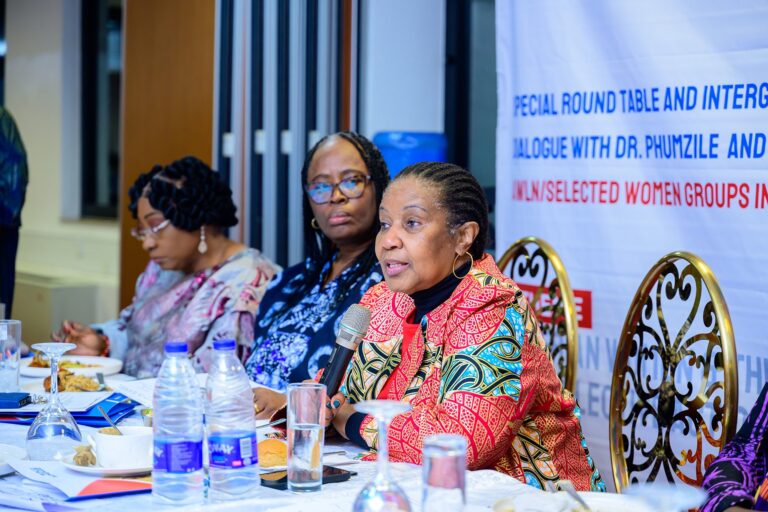
The Republic of Ghana will host the 2025 African Women Conference (AWC) to discuss pathways for advancing gender equity, leadership, and sustainable development across the continent.


A statement by the Chairperson Planning Committee, Aisha Adamu in Abuja and made available to reporters said the conference will hold from November 26 to 28.

The high-level conference, themed “Legacy Meets Innovation: Women Forging New Pathways for Africa’s Sustainable Development,” will provide a dynamic platform for knowledge exchange.

According to Adamu, the conference will seek policy dialogue and partnership building aimed at strengthening women’s participation in governance, innovation, and economic empowerment.

She said the 9th edition of the conference was expected to feature keynote addresses, plenary sessions, and strategic roundtables.

The AWC would attract distinguished personalities including First Ladies, Ministers, Members of Parliament, Heads of International Organisations, Civil Society Leaders, and Women in Business from various African countries.

Adamu said that the choice of Ghana reflects the country’s enduring commitment to democracy, inclusivity, and the empowerment of women.

“This decision to shift the conference from South Africa to Ghana follows broad consultations with partners, delegates, and regional coordinators across Africa.

“The shift is not a deviation but a strategic step to enhance accessibility, inclusiveness, and participation—core values on which AWC was founded,” Adamu said.

Adamu added that countries like Namibia, Morocco Rwanda, the Gambia Ethiopia, Zambia, and now Ghana in West Africa had hosted previous editions, while Nigeria was expected to host the 10th edition in 2026.

She said that this year’s edition would focus on digital inclusion, climate resilience, leadership mentoring, and financing for women-led enterprises — critical areas shaping the continent’s development agenda.

The 2025 gathering is expected to produce a Joint Communiqué and Action Framework that would guide national and regional policies toward deepening gender inclusion and institutional reforms that uplift women and girls across Africa.

The African Women Conference, since its inception, has served as a rallying point for African women to share experiences.

It strengthens solidarity, and chart actionable steps toward achieving the African Union’s Agenda 2063 and the United Nations Sustainabled Development Goals (SDGs).