Home Blog Page 152

Nigeria Begins Large-scale Vaccination Campaign To Protect 106m Children

0

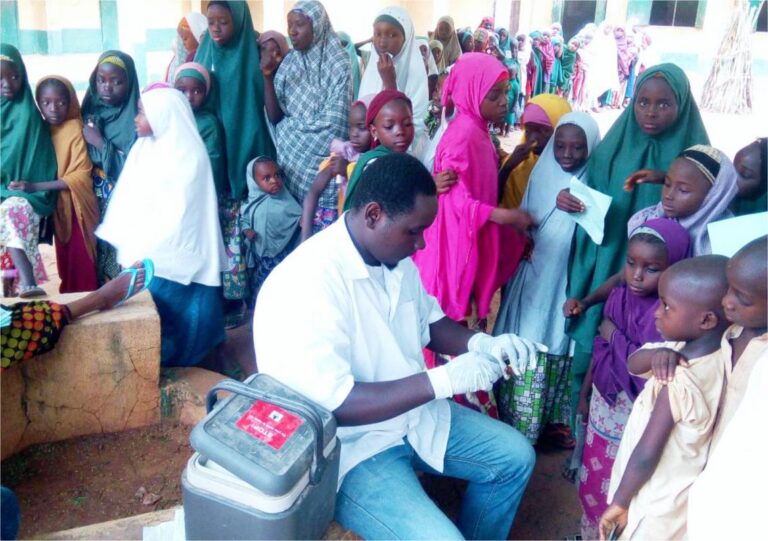
Nigeria is rolling out one of the largest integrated vaccination campaigns in its history, aiming to protect around 106 million children against measles, rubella, and poliomyelitis, the World Health Organisation (WHO) says.

According to WHO, in a statement on Monday, the nationwide initiative will combine multiple vaccines and child health services in a single drive, ensuring efficient delivery to children across the country.

The campaign targets children 0–14 years for measles and rubella and 0–59 months for polio.

It will be implemented in two phases: phase one, launching today, covers 20 high-risk northern states and Oyo state in the southwest; phase 2 begins in January 2026, and will be expanded to the remaining southern states.

To reach every community, health workers will deliver services through fixed posts, temporary outreach points, and house-to-house “sweep teams,” ensuring that even children in the most remote and underserved areas are reached.

In addition to measles-rubella and polio vaccines, the campaign integrates routine immunization and other essential child health services, including treatment for neglected tropical diseases and seasonal malaria chemoprevention in high-risk areas.

This holistic approach supports Nigeria’s “Primary Health Care Under One Roof” strategy and advances the Health Campaign Effectiveness agenda towards universal health coverage.

The initiative responds to persistent outbreaks of circulating variant poliovirus type 2 (cVDPV2) as well as measles and rubella outbreaks in Nigeria and across the Lake Chad Basin.

Nigeria is coordinating with Cameroon, Central African Republic, Chad and Niger through a cross-border action plan to stop active outbreaks by the end of 2025 and eliminate remaining risks by the end of 2026.

“On behalf of the Government, I want to express our deep respect and gratitude to Nigeria’s frontline health workers for their unwavering dedication.

“I urge you to approach this campaign with the same resilience and commitment you have shown over the years.

“As a parent myself, I know that no parent would ever refuse something that protects their child. Vaccines are safe, and they save lives,” Minister of Health and Social Welfare of Nigeria, Dr Ali Pate said.

“This campaign builds on the success of two recent “In-between Round Activities” in 11 northern states (August–September 2025), which reached over 3.1 million children with vaccines, provided nutrition supplements to 500 000 malnourished children, and delivered anti-malaria interventions to 150 000 children.

“Nigeria’s integrated approach sets a strong example for the Region.

“By uniting efforts against measles, rubella and polio, and by working hand-in-hand with communities and partners, we are moving closer to the day when no African child suffers or dies from these preventable diseases,” Dr Mohammed Janabi, WHO Regional Director for Africa.

In preparation for this nationwide rollout, Nigeria has also strengthened systems to ensure smooth implementation.

Trainers have been mobilised across states, payment processes for frontline workers have been redesigned for greater efficiency, and campaign systems have been upgraded to integrate data more effectively and safeguard integrity.

These investments will ensure that every health worker is supported and every child vaccinated is recorded accurately, bolstering accountability and trust in the programme.

Nigeria is also introducing a new combined measles-rubella vaccine to replace the measles-only vaccine.

Measles is a highly contagious and potentially fatal disease, particularly for malnourished children, while rubella can cause severe birth defects (Congenital Rubella Syndrome) if contracted during pregnancy.

The campaign is led by the government with support from the WHO,UNICEF; Gavi, the Vaccine Alliance; Rotary International, the Gates Foundation, Africa Centres for Disease Control and Prevention, civil society organisations, and traditional and religious leaders.

Robust coordination mechanisms are in place for financing, social mobilisation, training, vaccines and logistics to ensure success.

35 Years After, NUGA Returns To Calabar … Gov Otu Says Calabar Safe, Ready To Host

0

Gov. Bassey Otu of Cross River has assured that the state is fully prepared and safe to host the 2026 edition of the Nigerian Universities Games Association (NUGA).

He gave the assurance on Tuesday when he led a NUGA delegation and the management team of the University of Calabar on an inspection tour of facilities at the UJ Esuene Stadium in Calabar.

The governor described Calabar as a youth-friendly, peaceful, conducive, and welcoming city with a serene and green environment that makes it ideal for hosting national and international sporting events.

“The field we are standing on today has produced some of Nigeria’s greatest football icons, including Uwenm Ekarika, Etim Essien, and John Okon, among others.

“The first captain of the national football team was a Calabar man, who led the team to England for competitive matches,” Otu said.

Expressing gratitude for the return of NUGA to Calabar after 35 years, Otu said he was confident the event would be a huge success.

He expressed optimism in the capacity of Dorncklaimz Enamhe, Executive Secretary of NUGA 2026 Local Organising Committee (LOC), to deliver memorable games.

The governor highlighted Calabar’s deep historical connection to sports, noting that it was the first city in Nigeria where football was played.

“ Enamhe is known for his dedication and commitment to any responsibility entrusted to him. I have no doubt he will deliver on this national assignment,” he said.

Otu reaffirmed his administration’s commitment to sports development, saying that in the past two years, the state government has significantly promoted sporting activities and restored their pride of place in Cross River.

Enamhe said that Calabar has the greenest stadium in Nigeria, the best basketball court, and a world-class Olympic-size swimming pool, among others.

He said that Calabar is home to table tennis, with world-class champions.

“Calabar is home to the biggest carnival in Africa, where youths will properly interact. Unical hosting NUGA after the 35th is huge for the state,” he said.

Update On Rivers Secretariat Building Fire: No Casualties Recorded, Says HoS … Assures Maintenance

0

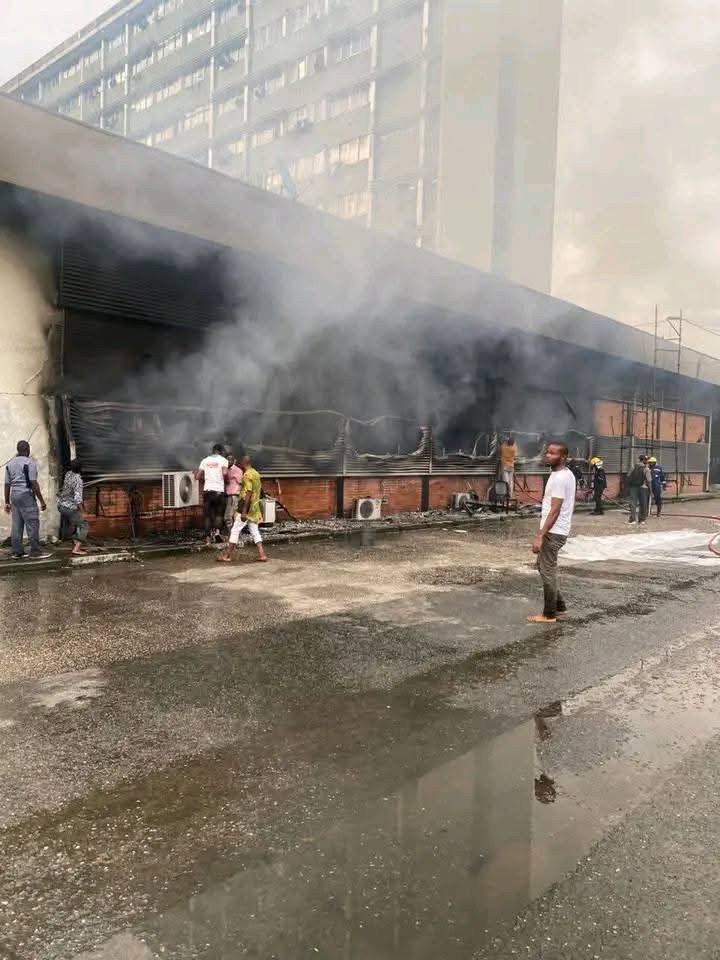
The Head of Rivers State Civil Service, Dr. Inyingi Brown says there were no casualties during a fire incident that occurred at the State Secretariat Complex on Monday.

Speaking to newsmen on the ground floor of Podium Block, location of the incident, the Head of Service disclosed that on noticing the fire outbreak, the State Fire Service and other agencies were promptly called to contain the inferno.

“We were informed that there was a fire incident at the right wing, ground floor of Podium Block
and we immediately made calls to the Rivers State Fire Service, and they responded promptly.

“We also called other partners of the state, such as Renaissance, Federal Fire Service, and the military, who all promptly sent their fire trucks. It was a combined effort, and as we speak, you can see that the fire has been contained,” she stated.

“We thank God, and we thank His Excellency, Sir Siminalayi Fubara, for being proactive in rehabilitating the fire service before this time. If not for his investment in the fire service, this situation would have been worse,” she stressed.

She disclosed that no life was lost, even though the state medical service was on the ground to curtail any emergency.

She explained that preliminary reports suggest the fire may have been as a result of electrical faults and thereby called on all civil servants to be responsible in putting off all electrical services at the close of work.

“We urge all civil servants to take responsibility in safety.
Put off our sockets and our lights. Not just putting off the sockets, but unplug to ensure
there is no residual charge because these buildings are heritage buildings and
we don’t want anything to happen to them,” she admonished.

Dr Brown further assured that Governor Fubara was working on measures to refurbish the secretariat buildings, which will be made known soon.

Fire Guts Rivers State Secretariat Building …Audit Unit Affected, As Union Alleges Sabotage

0

The Rivers State Civil Service Union has alleged that sabotage might not be ruled out from a fire outbreak that gutted the ground floor of the Podium block of the State Secretariat Complex Monday evening.

The ground floor of the block houses Audit and Pension units while the top side houses the Ministry of Establishment.


Eye witness account said the fire started around 4.30 pm, a few minutes to close of work, as workers and other people ran to douse the fire overly late arrival of fire services.

Meanehile, State Chairman of State Civil Service Union. Comrade Chukukah Osumah has expressed fears that the incident may not be disconnected from act of sabotage.

He said”, in my years of service and as a civil servant, I have not seen anything like this. This has not happened before.”

The civil service union leader claimed that an act of sabotage may be linked to the fire.

His claim may be a result of the State Governor declaration of investigating some activities of civil servants and complicity during the six months emergency rule.

On her part, Head of Service,Dr. Inyingi Brown attributed the incidence to electrical fault, as no life was lost, and thanked the governor for reviving the state fire service that helped to douse the fire.

About five fire services from Shell, Federal , Agip, and the state battled to put out the fire.

Alleged NNPCL Fraud: Court Freezes Aviation Company’s Account

0

The Federal High Court in Abuja has ordered a temporary freezing of Mars Aviation Ltd’s account domiciled in Fidelity Bank Plc over alleged link with Nigerian National Petroleum Company Limited (NNPCL)’s fraud.

Justice Musa Liman gave the order following an ex-parte motion moved by the Economic and Financial Crimes Commission (EFCC)’s lawyer, Geraldine Ofulue, to the effect.

Ofulue had told the court that the account was currently being investigated in a case of criminal misappropriation and money laundering.

She prayed the court to make the order freezing the account pending the conclusion of investigation.

After moving the motion, Justice Liman said that the application was meritorious and was accordingly granted.

The order was made on September 22, its certified true copy was sighted on Monday.

The anti-graft agency had filed the ex-parte motion, marked: FHC/ABJ/CS/1299/2025.

It was dated and filed on July 1.

The agency had sought an order empowering its Executive Chairman, Ola Olukoyede, or any other authorised officer of the commission to instruct the managing director of the bank stated in the schedule to the application, to freeze the account contained in schedule.

According to the motion, the account number is 5250350283 (C03651082) with account name: Mars Aviation Limited.

In the affidavit in support of the motion ex-parte, Abdulganiyu Olayide, an EFCC investigator in the Special Duties Committee, averred that his team was assigned to handle the case.

Olayide said the anti-graft agency received an open source intelligence alleging that some monies had been paid by NNPCL to Mars Aviation Ltd for purported contracts that were phony and granted in default of the provisions of the Procurement Act.

He said that based on this, the commission launched an investigation and found that huge sums of money had indeed been paid to the account of Mars Aviation Ltd by NNPCL, in various instalments.

He said an order of the court instructing the MD of Fidelity Bank to freeze the account as contained in the schedule would be imperative to enable further investigation on the case and prevent any transaction on the account.

According to the investigator, this interim application is basically to preserve the funds and prevent any transaction on the accounts, pending conclusion of investigation.

He said it was in the interest of justice to grant the application.

“That I make this affidavit in good faith believing its contents to be true and correct and in accordance with the Oaths Act,” he concluded.

Jewish Community Disowns Group Linking Jewish Faith To IPOB Activities

0

The Judaism Fellowship Initiative (JFI), the umbrella body of Nigeria’s Jewish community, has disowned the Eastern Judaism and Jewish Communities group operating in the South-East.

Chief Arthur-Regis Odidika, President, JFI, made the clarification on Monday in Awka while reacting to a publication titled “Judaism Adherents in South-East Plead with Tinubu to Release Kanu, Pray for His Health”.

The report stated that the group held a prayer session in Abia, and called on President Bola Tinubu to use his prerogative powers to release detained leader of the Indigenous People of Biafra (IPOB), Mazi Nnamdi Kanu.

Odidika, who is also the Vice-President of the Commonwealth Jewish Council, Africa (Nigeria), said JFI was not connected to the group or its activities.

He said that while the fellowship had nothing against expressions of concern for anyone, including Kanu, Judaism as a faith should not be mixed with political, social or economic causes.

“Even though Mazi Nnamdi Kanu professes the Jewish faith, the Judaism Fellowship Initiative of Nigeria is not associated with any separatist movement,” he said .

Odidika further debunked claims of the existence of a so-called Biafra National Rabbi.

He said that JFI was a duly registered Incorporated Trustee with the Corporate Affairs Commission and that none of the individuals named as leaders of the Eastern Judaism group was known to the organisation.

“Judaism in Nigeria has nothing to do with IPOB or any political agitation. Separatist pressure is not the agenda or pursuit of the Judaic faith in Nigeria.

“We want to state clearly that JFI has no relationship or affiliation with these individuals, though we have no authority to stop their activities,” he said.

Odidika reaffirmed JFI’s commitment to peace, mutual understanding and harmonious coexistence among Nigeria’s diverse regions and religions.

He also announced that Mr Clive Lawton, Head of the Jewish communities of the Commonwealth Nations, is expected to visit Nigeria in November.

According to him, the visit would mark a new chapter in the growth of Judaism in the country.


“I believe the visit will usher in unprecedented light and open various opportunities for Jewish economic, social and cultural advancement in Nigeria,’he said.

Alleged Certificate Forgery: Minister’s Suit Against UNN, Others Stalled

0

Hearing in a suit filed by the Minister of Innovation, Science and Technology, Uche Nnaji, against the University of Nigeria, Nsukka (UNN), and others, was, on Monday, stalled at the Federal High Court in Abuja.

The proceeding in the case, instituted by Nnaji over controversy about his university certificate, could not go on before Justice Hauwa Yilwa due to the inability of the lawyer to the UNN and its officers to file their responses.

Justice Yilwa consequently adjourned the matter until November 10 for hearing.

Nnaji had filed the suit, marked: FHC/ABJ/CS/1909/2025, following allegations of certificate forgery levelled against him.

The applicant sued the Minister of Education, the National Universities Commission (NUC), UNN, and its Vice-Chancellor, Prof. Simon Ortuanya, as 1st to 4th respondents.

He also joined the Registrar, UNN; a former acting Vice-Chancellor, Prof. Oguenjiofor Ujam; and the Senate of the university as 5th to 7th respondents respectively.

Nnaji, in an ex-parte motion, had sought an order granting him leave to issue prerogative writs prohibiting the university and its officials from “tampering with” or continuing to “tamper with” his academic records.

He also sought leave to issue a prerogative writ of mandamus compelling the university and its officials to release his academic transcript to him, and asked the Minister of Education and the NUC to exercise their supervisory powers to compel UNN to do so.

He equally sought an interim injunction, restraining UNN and its officials from “tampering” with his academic records pending the determination of the substantive suit, among others.

The judge had, on Sept. 22, granted three of the reliefs sought by Nnaji but declined to issue any injunctive order against the respondents before adjourning the matter until October 6th for further hearing.

Meanwhile, when the matter was called on Monday, Nnaji was represented by Sebastine Hon, SAN, while E.M. Asogwa appeared for the 3rd to 7th respondents (UNN and its officers).

However, no lawyer appeared for either the Minister of Education or NUC (1st and 2nd respondents).

Hon, therefore, told the court that all the parties in the suit had been served.

The senior lawyer told the court that although the 3rd to 7th respondents were served on September 29, he alleged that the 4th respondent (Prof. Ortuanya) wrote an official letter to PREMIUM TIMES, an online newspaper, on October 2, a few days after being served, claiming that Nnaji was not a graduate of the university.

Hon said the “newspaper subsequently published a damaging statement against the applicant (Nnaji) on 4th of October, titled: ‘Investigation: The serial certificate forger in President Tinubu’s cabinet.’”

He argued that even though the court had refused some prayers of the applicant, the respondents failed to maintain the status quo after being served.

He said they went ahead to publish a damaging statement against the applicant, contrary to the court’s rule that once leave is granted, all parties must not take further action.

Hon, therefore, informed the court that the applicant would file further processes regarding the development.

However, Asogwa told the court that while he would not give credibility to Hon’s claims, they would properly “advise their clients to maintain status quo pending the substantive hearing.”

He also told the court that the 3rd to 7th respondents were still within time to file their responses.

Justice Yilwa then adjourned the matter until Nov. 10 for hearing.

751 LGAs Lagging Behind In Fiscal Transparency, Accountability – Report … Recommends LGAs To Be Placed Under EFCC/ICPC Monitoring

0

A report tagged “the Nigerian Local Government Integrity Index (NLGII)” which assessed governance and corruption risk across Nigeria’s 774 Local Government Areas has revealed that 751 LGAs are lagging behind in fiscal transparency, accountability and pose high risk of corruption.

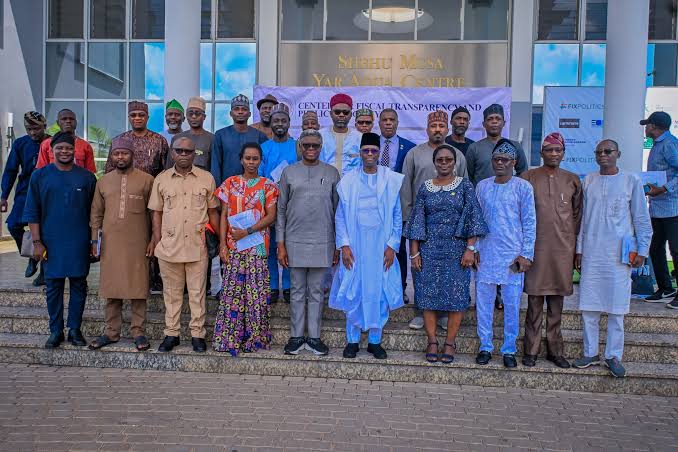
The inaugural report released by the Center for Fiscal Transparency and Public Integrity provides an evidence-based assessment of governance and corruption risks across all 774 Local Government Areas, and sheds light on the state of accountability at the grassroots.

It also documents the lack of integrity at the local level, provides a framework for reform, citizen engagement, and institutional renewal.

The findings show that 85% of LGAs fall within the “Very High” or “Critical” risk categories, characterized by opacity, weak enforcement, and poor service delivery outcomes.

The report further called on federal and state governments to respect constitutional provisions for LGAs to proactively embrace transparency, for civil society and the media to demand accountability, and for citizens to insist that their leaders serve with integrity.

It also highlights the need for robust oversight, capacity building, and the embedding of digital tools to close avenues for corruption and inefficiency.

Methodology/ranking

The Report assessed the local governments based on eight core data pillars. The first pillar focuses on Fiscal Transparency & Accountability, FOI Responsiveness, Document Availability, Binary check for PDFs of Budget, Expenditure, Audit Reports, and Procurement Plans on any known platform.

The second pillar focuses on Fiscal Resources & Opportunity especially on FAAC Allocation (0-50) while the third pillar focuses on Anti-Corruption Enforcement just as the fifth pillar centers on Post-Election Governance & Sustainability like Financial Autonomy, Evidence of direct receipt of FAAC allocation into an LGA-controlled account and Operational Independence.

Pillar five focuses on Civic Oversight & Media Freedom while pillar six focuses on Public Service Delivery Outcomes and Pillar seven centers on Digital Infrastructure & E-Governance.

Pillar Eight focuses on security & Stability of Environment

Based on the final aggregated score, LGAs were classified into Critical risk, very high risk, high risk, moderate risk and ow relative risk

On the risk distribution, 155 local governments were categorized as critical risk representing 20%. Subsequently, 503 local governments were categorized as very high risk representing 65%, 93 local governments were categorized as high risk representing 12 per cent.

Also 19 local governments were classified as moderate risk representing 2.5 per cent and just 4 local governments were classified as low risk representing 0.5 per cent.

Under the ranking Tier 5 falls in Critical Risk LGAs with 155 LGAs with high financial inflows, absolute opacity, no enforcement, and operating in high-insecurity environments.

Their newly elected governments are extremely vulnerable to co-option by criminal networks or intimidation by non-state actors.

Examples of such local governments are Port Harcourt (Rivers), Southern Ijaw (Bayelsa), Ohaji/Egbema (Imo), Magu (Niger).

The report recommended the deployment of a special security and governance task force to protect LGAs’ officials and ensure they receive their FAAC allocations directly, without interference and also place these LGAs under mandatory EFCC/ICPC monitoring, requiring quarterly audited financial reports.

In the same vein, Tier 4 LGAs categorised under Very High Risk LGAs were 503 and characterized by minimal transparency and a long history of corruption. The newly elected councils are at high risk of being manipulated by state governments or captured by local godfathers.

Examples are all LGAs in Oyo, Ogun, Edo, Enugu, Ebonyi, Benue among others.

The report recommended the launch of mass education programs on the Supreme Court ruling and the right to demand financial autonomy and transparency, while urging CSOs should file FOI requests and lawsuits to compel state governments to disclose FAAC disbursement records and also provide large-scale training for new council members on public financial management.

Tier 3 categorised as High Risk LGAs were 93 LGAs. According to the report, these LGAs show sporadic compliance. They have elected governments but remain vulnerable to pressure and backsliding into old habits.

Examples are Kaduna North, Jos North, Ado-Ekiti, Akure South.

Subsequently, the report recommended the use of financial autonomy to deliver visible, popular projects to build public trust and also facilitate partnerships and mentorship programs with LGAs.

Tier 2 were categorised as Moderate Risk LGAs with 19LGAs and have Positive outliers with proactive transparency e orts and functional autonomy. They can become national models.

Examples are Ikeja (Lagos), Dutse (Jigawa), Ke i (Nasarawa), AMAC (FCT).

The report recommended Pioneer Advanced Practices, implementation of open contracting, live budget dashboards, and digital citizen feedback platforms. And also formalize mentorship programs

Tier 1 is categorized under Low Relative Risk LGAs and were 4 LGAs and serve as The national benchmarks for transparency and accountable governance. Example is Nasarawa LGA (Nasarawa).

The report recommended that it works with the CFTPI and OAGF to develop a “Local Government Good Governance Blueprint” and transition into a formal advisory body, providing testimony to the National Assembly.

How LGAs rank

Under Tier 1 which are low relative risk, they include Nasarawa local government in Nasarawa state and local governments in Kaduna State, noting that they have promising reforms needing consolidation as well as local governments in Jigawa State.

For Tier 2 which are moderate risk, they include local governments in Lagos state like Ikeja, Surulere, Alimosho, Lagos Island, Apapa, AmuwoOdofin, Eti-Osa, Kosofe, Somolu, Oshodi-Isolo

For Jigawa state, it features Dutse, Hadejia, Kazaure, Ringim, Gumel, Birnin Kudu

For TIER 3 which are high risk, it includes Kaduna North, Kaduna South, Zaria in Kaduna state while in Plateau State, we have Jos North, Jos South, Jos East.

In Ekiti State there is Ado-Ekiti, Ikere, Ikole while Ondo State has Akure South, Ondo West, Owo while Cross River State jas Calabar Municipal, Calabar South.

In Niger State there is Minna, Suleja, just as Kano State has Kano Municipal, Fagge, Dala and Nassarawa.

In Ogun State, there is Abeokuta South, Ado-Odo/Ota while Lagos State has Badagry, Ikorodu, Epe

Under TIER 4: which is very high risk, this encompasses the majority of LGAs in Abia State (All 17 LGAs), Adamawa State (All 21 LGAs), Akwa Ibom State (All 31 LGAs), Anambra State (All 21 LGAs), Bauchi State (All 20 LGAs), Benue State (All 23 LGAs), Cross River State (Remaining 16 LGAs), Delta State (All 25 LGAs), Ebonyi State (All 13 LGAs), Edo State (All 18 LGAs), Enugu State (All 17 LGAs), Gombe State (All 11 LGAs), Jigawa State (Remaining 21 LGAs), Kano State (Remaining 40 LGAs), Kebbi State (All 21 LGAs), Kwara State (All 16 LGAs), Nasarawa State (Remaining 9 LGAs: Awe, Doma, Keana, Kokona, Lafia, Nasarawa Egon, Obi, Toto, Wamba), Ogun State (Remaining 18 LGAs), Ondo State (Remaining 15 LGAs), Osun State (All 30 LGAs), Oyo State (All 33 LGAs), Taraba State (All 16 LGAs), Yobe State (All 17 LGAs), Lagos State (Remaining 10 LGAs): Ajeromi-Ifelodun, Agege, Ifako-Ijaiye, Ikorodu, Lagos Mainland, Mushin, Ojo, Oshodi-Isolo, Shomolu, Surulere.

In TIER 5 which are critical risk, Borno State has Abadam, Askira-Uba, Bama, Chibok, Damboa, Gubio, Guzamala, Gwoza, Hawul, Jere, Kaga, Kala-Balge, Konduga, Kukawa, Mafa, Magumeri, Maiduguri, Marte, Mobbar, Monguno, Ngala, Nganzai, Shani

Imo State has Ohaji/Egbema, Oguta, Ideato North, Ideato South, Isu, Njaba, Nkwerre, Nwangele, Obowo, Orlu, Oru East, Oru West, Owerri West, Ehime Mbano, Ihitte-Uboma, Okigwe, Onuimo, Mbaitoli, Ikeduru, Aboh Mbaise, Ahiazu Mbaise, Ezinihitte, Ngor-Okpala, Isiala Mbano.

In Kaduna State, there are Birnin Gwari, Chikun, Giwa, Igabi, Ikara, Kubau, Kudan, Kajuru, Sanga, Zangon Kataf, Kauru and Lere

Katsina state has Batsari, Dandume, Danmusa, Faskari, Jibia, Kankara,

Sabuwa, Safana, Dutsin-Ma, Kurfi, Matazu, Rimi, Musawa, Malumfashi, Kafur, Danja, Bakori, Funtua

Kogi State has Dekina, Ankpa, Ofu, Olamaboro, Omala, Idah, IgalamelaOdolu, Bassa, Lokoja, Koton Karfe, Ajaokuta, Okene, Ogori-Magongo,

Adavi, Okehi, Ibaji, Kabba-Bunu, Ijumu, Mopa-Muro, Yagba West, Yagba East

Also, in Niger State: Magu, Mashegu, Rafi, Shiroro, Munya, Paikoro, Rijau,

Wushishi, Agwara, Borgu, Kontagora, Mariga, New-Bussa, Edati, Gbako, Lavun, Mokwa, Agaie, Lapai, Gurara, Suleja, Tafa, Bida, Katcha, Chanchaga

In Rivers State: Port Harcourt, Obio-Akpor, Ikwerre, Etche, Eleme, Gokana,

Khana, Oyigbo, Tai, Ahoada West, Ahoada East, Ogba-Egbema-Ndoni, Abua-Odual, Andoni, Akuku-Toru, Asari-Toru, Degema, Emohua, OguBolo, Okrika, Omuma, Opobo-Nkoro

In Sokoto State, there are Goronyo, Gudu, Isa, Kebbe, Rabah, Sabon Birni, Wurno, Binji, Bodinga, Dange-Shuni, Gada, Goronyo, Gudu, Illela, Kware, Wamako, Yabo

In Zamfara State, it has Anka, Bakura, Birnin Magaji/Kiyaw, Bukkuyum, Bungudu, Gummi, Gusau, Kaura Namoda, Maradun, Maru, Shinkafi, Talata Mafara, Zurmi

Lastly, Bayelsa State has Southern Ijaw, Brass, Ekeremor, Kolokuma-Opokuma, Nembe, Ogbia, Sagbama, Yenagoa

Urgent need to tighten loose ends – CEPTI

Speaking on the report, the Executive Director at CEPTI, Dr. Umar Yakubu said the report provides the “first nationwide corruption and governance risk assessment of local councils”.

According to the findings, 85 percent of Nigeria’s LGAs face “very high or critical risk due to poor governance, opacity, weak enforcement, and failing services”.

Yakubu said the index identifies priority areas where reforms and interventions are needed, covering eight governance pillars.

He added that beyond autonomy, capacity building and training remain essential if LGAs are to deliver basic services.

“What the index has just done is to practically look at those areas where interventions are needed,” Yakubu said.

“There are things that need to be taken into consideration so that the local governments can effectively deliver what they are supposed to deliver to the people,” he said.

He noted that transparency in Nigeria follows a tiered pattern, with federal institutions showing the most openness, states following, and local governments lagging significantly behind.

The framework, he said, aims to bridge that gap by setting benchmarks that councils can adopt to strengthen governance.

Yakubu recommended that enforcement agencies like the Economic and Financial Crimes Commission (EFCC), the Independent Corrupt Practices and Other Related Offences Commission (ICPC), and the Code of Conduct Bureau should pay closer attention to councils in tiers 4 and 5, where risks are most severe.

Meanwhile, the Chairman of the Independent Practices and Other Related Offences Commission (ICPC), Dr. Musa Adamu Aliyu, SAN, has reiterated the Commission’s commitment to strengthening institutional frameworks across Nigeria’s 774 LGAs.

The ICPC Chairman commended the initiative, describing it as a timely and valuable tool for deepening transparency and accountability at the grassroots.

He noted that the Commission would carefully study the findings and integrate some of the report’s innovations into its own recently launched programme—Accountability and Corruption Prevention in Local Governments (ACCP-LG).

“We shall take a cue from this Index Report, particularly the issues that touch on transparency, accountability, and local government finances. The Commission will review the findings thoroughly and determine how to fuse the novel ideas highlighted into our ACCP-LG initiative.

Our goal is to strengthen institutional frameworks in local governments, ensuring they deliver impactful and effective services to the people,” Dr. Aliyu said.

In Nigeria, workers can now earn US Dollars by acquiring domain names for low and have it resold for as much as $18,000 (nearly ₦30Million naira) profit monthly. Top beneficiaries are Civil and Public servants,

New Tax Stamp: Brewing Industry Raises Alarm Over Inflation Risk

0

The nation’s brewing industry has warned the Federal Government that the implementation of new tax stamps could further worsen inflation, drive up production costs, reduce consumer demand, and put additional pressure on an already fragile market.

The industry described the policy as “counterproductive,” emphasizing that it poses operational challenges and financial risks that could hinder economic growth.

Abiola Laseinde, Executive Director of the Beer Sectoral Group of the Manufacturers Association of Nigeria (MAN), highlighted how inefficient the tax stamp system could be, leading to unnecessary setbacks in production and distribution, inventory gaps, and increased operational overheads.

“The industry is concerned that this proposal is coming at a time when operators are already grappling with rising excise rates, foreign exchange volatility, and high inflation — making the additional burden of implementing tax stamps a serious threat to business,” she said.

Laseinde explained that the brewing industry is not prone to illicit trade, noting that tax stamps are unnecessary. She added that the brewing process is already complex, with products that are bulky and have low resale value — making counterfeiting largely unprofitable.

She further emphasized the accountability and transparency of the brewing sector, stating that it maintains auditable records, strict compliance with digital counters, and on-site customs officers.

“Most recently, the Nigeria Customs Service (NCS) successfully launched and piloted the B’odogwu Automated Excise Reporting System (ERS) — a modern platform that digitizes excise administration. ERS replaces manual registers with an automated process that tracks production volumes and excise computation in real time, enhances compliance monitoring through full transparency, and creates an auditable digital trail that reduces leakages and inefficiency,” she explained.

Laseinde, therefore, urged the federal government to reverse the tax stamp policy to prevent disruptions to production, jobs, and revenue. She advised the government to instead strengthen existing systems such as the Customs Service’s ERS and the FIRS e-invoicing system, which she described as efficient, transparent, and locally developed.

She affirmed that the industry remains committed to supporting government revenue generation under effective frameworks and is keen on protecting both the government’s interests and business sustainability without unnecessary operational hurdles.

By Miracle Chidinma Amaechi

TETFund Hosts National Townhall Meeting To Deepen Public Engagement

0

The Tertiary Education Trust Fund (TETFund) says it has concluded plans to host a national town-hall meeting aimed at strengthening transparency, accountability, and stakeholder engagement in tertiary education sector.

This is contained in a statement in Abuja on Monday, by Dr Mansur Liman, Special Assistant to the Chairman of the TETFund Board of Trustees.

Liman said that the event scheduled to hold on Wednesday in Abuja, would be chaired by the Chairman, Board of Trustees, TETFund, Alhaji Aminu Masari.

He said that the meeting would provide an avenue for open dialogue between TETFund and key education stakeholders.

According to him, the meeting will also highlight the Fund’s achievements and impact on Nigeria’s tertiary education landscape.

”This initiative underscores TETFund’s commitment to accountability and inclusiveness in the discharge of its mandate.

”This town-hall meeting will serve as an important platform to bridge the gap between TETFund and the Nigerian public, ensuring that our mandate and interventions are better understood and appreciated nationwide.”

Liman added that the meeting would feature two keynote presentations from leading education experts.

He said that expected participants include policymakers, academics, civil society representatives, students, and members of the general public.

“The interactive sessions will allow attendees to engage directly with TETFund leadership and share suggestions for improving the Fund’s operations and interventions,” he said.