


Home Blog Page 150

$400m Otakikpo Crude Oil Terminal: First of Its Kind in Nigeria … Unlocks Access To 40 Stranded Oil Fields In N/Delta

0

Rivers State has become the first state in Nigeria to host a crude oil exporting terminal following the commissioning of the $400 million Green Energy International Limited (GEIL) Crude Export Terminal on Wednesday by President Bola Ahmed Tinubu.

President Tinubu stated that the project marks a new era in Nigeria’s oil and gas sector, aligning with his administration’s core priorities of boosting crude oil production and ensuring a secure, transparent, and efficient evacuation system.

He explained that the Otakikpo terminal will not only serve GEIL’s production but will also open new evacuation outlets for marginal and stranded fields across the Niger Delta region. This, he said, would result in a significant increase in reserve barrels and create greater economic value.

The Minister of State for Petroleum Resources (Oil), Senator Heineken Lokpobiri, represented the president at the event.

Tinubu emphasized that the project exemplifies his administration’s expectations of current licensees. He further noted that with the introduction of globally competitive fiscal frameworks and incentives, he expects operators to meet their minimum work obligations and ensure steady productivity.

In reference to the peace resolution between the people of Ogoni and the Federal Government, the President stated that the government is working hand in hand with local communities and stakeholders to pave the way for the proper resumption of oil exploration activities in the area.

Tinubu also described the project as a notable advancement, demonstrating Nigeria’s collective commitment to peacebuilding, collaboration, harmony, and good governance. He stressed that the project’s flag-off marks a renewed confidence in Rivers State and the Niger Delta region.

“Today’s commissioning is more than just the opening of a terminal; it is a testament to Nigeria’s resilience and commitment — a new era of indigenous participation and progress in the oil and gas sector,” he said.

Addressing the financing challenges in the oil and gas sector, President Tinubu declared the end of such an era, assuring that the proposed $5 billion African Energy Bank (AEB) would soon begin operations to provide easier access to funding.

“Let me also assure Green Energy that the era of seeking finance elsewhere will soon be over. We have discovered that Africa’s biggest challenge is access to finance, which is why we established the African Energy Bank, ready to take off.
Nigeria, as the host country, has met all its obligations — legal and financial — and we expect the bank to commence operations any moment from now,” he said.

The president also highlighted crude oil evacuation as a major issue, noting that the new 750,000-barrel facility, which is expandable to 3 million barrels, will help tackle existing challenges in the sector.

He warned against holding oil licenses indefinitely without carrying out meaningful fieldwork, emphasizing that “the era of idle licenses is over.”

“There is always a minimum work obligation, and it must be met by all who hold marginal licenses. If you lack the capacity to deliver, it’s better to seek other ventures rather than waste time in the oil and gas sector,” he cautioned.

The Chief Executive of the Nigerian Upstream Petroleum Regulatory Commission (NUPRC), Gbenga Komolafe, described the terminal as historic on two fronts: it expands Nigeria’s crude export infrastructure at a critical time and showcases the ability of Nigerian operators to deliver world-class projects.

Komolafe noted that the Otakikpo terminal aligns with Nigeria’s 1.8 million barrels per day production target and supports the country’s drive for efficient crude evacuation. He added that creating an alternative export hub in Rivers State would reduce over-reliance on existing terminals, many of which are operating at near-full capacity and are vulnerable to security and pipeline disruptions.

Commending indigenous operators Komolafe stated that they now account for 30 per cent of national production, a milestone that reflects Nigeria’s growing control of its oil and gas industry. He further observed that the Otakikpo terminal has transformed local operators’ dependence on international oil companies, granting them greater control over evacuation, improving margins, reducing delays, and enhancing competitiveness.

Prof. Anthony Adegbulugbe, Chairman and Chief Executive of GEIL, stated that the terminal currently has a storage capacity of 750,000 barrels, expandable to 3 million barrels, with a pumping capacity of 360,000 barrels per day. He also disclosed that since June 2025, the facility has completed four export operations totaling one million barrels of crude oil.

Adegbulugbe described the terminal as a catalyst for national renewal, unlocking access to over 40 stranded fields in the region, and more than 3 million barrels of reserves previously delayed by the lack of export infrastructure. According to him, these fields alone could contribute over 200,000 barrels per day to Nigeria’s total production.

He expressed pride in the project’s indigenous origin and execution:

“This should give us all confidence — Nigerian innovation can drive Nigerian success. Indigenous operators can execute world-class projects with excellence, within budget, and ahead of schedule,” Adegbulugbe said.

By Miracle Chidinma Amaechi
FG Announces Reduction in Food Prices as Crop Production Increases

0

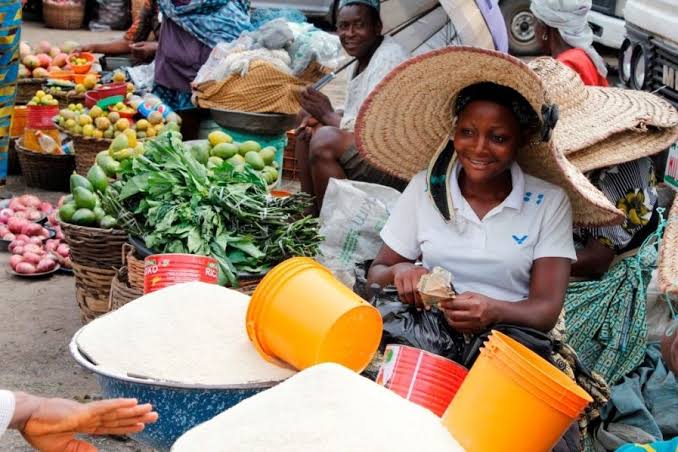
The Federal Government has announced a reduction in food prices across the country, attributing it to a steady increase in local crop production.

According to the 2025 Agricultural Performance Survey Report, the nation is currently experiencing lower food prices and a significant rise in the production of major crops.

In a press statement on Wednesday, Senator Abubakar Kyari, Minister of Agriculture and Food Security, stated that the report records steady growth in the production of staples such as rice, maize, sorghum, millet, cowpea, yam, and cassava — representing a marked increase compared to 2024.

He noted that, with the Federal Government’s interventions in input support, extension service delivery, and mechanization, there has been a notable decline in food prices nationwide as well as continuous improvement in supply conditions.

Kyari commended the National Agricultural Extension and Research Liaison Services (NAERLS), Ahmadu Bello University, and the ministry’s technical departments for their roles, describing the development as a new benchmark for excellence and transparency in national agricultural performance reporting.

He described the survey as an essential tool for evidence-based planning, monitoring, and policymaking in Nigeria’s agricultural sector, explaining that it provides a framework for analyzing production outcomes, sectoral constraints, and farmer experiences to guide future interventions.

“The rigour of data collection across all 36 states and the FCT, the integration of new datasets such as the farm family census and tractor census, and complementary studies on commodity prices demonstrate a new standard of excellence and transparency in national agricultural performance reporting,” Kyari said.

He expressed satisfaction with the resilience of farmers nationwide, exemplifying fortitude despite torrential rains, widespread flooding, and pest attacks.

Kyari identified rising input costs and weak post-harvest infrastructure as major challenges, noting that higher prices of fertilizers and fuel have limited productivity among smallholder farmers. He also pointed out that uneven mechanization coverage and post-harvest losses in the South-West and North-Central zones threaten food availability and farmers’ income.

The minister called for stronger action to improve animal health systems and aquaculture development, to curb livestock disease outbreaks and declining fishery yields, as well as enhanced measures to address climate variability.

Reaffirming the government’s commitment to data-driven agricultural planning, Kyari announced plans to formalize a Dry-Season Agricultural Performance Survey to complement the wet-season exercise.

“We shall institutionalize the Dry-Season Agricultural Performance Survey as a complement to the Wet-Season APS, ensuring that national agricultural planning becomes a year-round, data-driven exercise,” he stated.

Kyari further revealed that the ministry will intensify support for local fertilizer production, enhance climate-smart agricultural initiatives, and strengthen extension services by recruiting and equipping more agents while leveraging digital tools to reach more farmers.

On mechanization and inclusion, he emphasized the need to empower young people and women through technology and post-harvest infrastructure.

“We recognize the urgency of modernizing mechanization services, promoting the participation of youths and women through affordable, labour-saving technologies, and investing in post-harvest handling, storage, and processing facilities to minimize losses and boost value addition,” he said.

Kyari also urged the private sector, research institutions, and subnational governments to collaborate with the federal government to accelerate growth in the agricultural sector.

By Miracle Chidinma Amaechi
139 Million Nigerians Living In Poverty Despite Reform Gains- World Bank

0

The World Bank has estimated that about 139 million Nigerians are living in poverty. This is despite positive outcomes of recent macroeconomic reforms which are yet to translate into real improvements in citizens’ living

World Bank Country Director for Nigeria, Mathew Verghis, who stated this in Abuja on Wednesday during the launch of the latest Nigeria Development Update (NDU) report in Abuja, said
millions of Nigerians have yet to feel the benefits of the reforms, warning that macroeconomic gains must be swiftly converted into welfare improvements.

The new NDU report, titled “From Policy to People: Bringing the Reform Gains Home,” outlines a three-point agenda for sustaining progress — reducing inflation, improving the efficiency of public spending, and expanding social safety nets.

Verghis commended the federal government for implementing bold policy reforms — particularly the removal of petrol subsidy and exchange rate unification — noting that these actions have begun to stabilise the economy and lay a stronger foundation for long-term growth.

“Over the last two years, Nigeria has implemented major reforms around the exchange rate and petrol subsidy. These policies have laid the foundation for transforming the country’s economic trajectory for decades to come,” he said.

He said the effects of these measures are becoming evident in improved revenues, stabilising foreign exchange markets, growing reserves, and a gradual decline in inflation.

“Growth has picked up, revenues have risen, debt indicators are improving, the FX market is stabilising, reserves are rising, and inflation is finally beginning to come down. These are major achievements, and many countries would envy them,” Verghis stated.

“Despite these stabilisation gains, many Nigerians are still struggling. In 2025, we estimate that 139 million Nigerians live in poverty. The challenge is clear: how to translate reform gains into better living standards for all,” he said.

Verghis emphasized that curbing food inflation is particularly crucial to protecting the poor and maintaining public support for ongoing reforms.

“Food inflation affects everyone but hits the poor the hardest. It also threatens to undermine political support for reforms. Tight monetary policy is essential, but it must be complemented by structural measures that tackle supply and market bottlenecks,” he explained.

He called for better management of public resources and stronger safety net programmes to cushion economic hardship and promote inclusive growth.

“These are not abstract ideas — they are practical steps that can turn macro-stability into improved livelihoods,” he said.

Verghis reaffirmed the World Bank’s commitment to supporting Nigeria’s reform agenda through policy advice, technical assistance, and financial support aimed at fostering sustainable development and shared

FG Begs ASUU to Shelve Proposed Strike, As 14-Day Ultimatum Nears … Yayale Ahmed Committee to Present FG’s Fresh Offer To ASUU

0

The Federal Government has appealed to members of the Academic Staff Union of Universities (ASUU) to shelve the proposed strike action, as the government is prepared to resolve all the lingering issues comprehensively and holistically.

Minister of Education, Dr Olatunji Alausa, made the appeal in Abuja at a news conference held before the meeting of the high-level committee on FGN/ASUU 2025 proposed agreement on Wednesday.

Alausa said President Bola Ahmed Tinubu has directed that the ASUU proposed strike be averted, affirming the commitment and political will of the President to resolve all the contending issues that would be mutually acceptable and respectful to all the staff unions.

He said there was no basis for ASUU or any other staff unions in territory institutions to embark on industrial action, stressing that the directive of the President is clear, “strike must be averted for Nigerian children to be in school”.

Recall that ASUU, last week, issued a 14-day ultimatum to the Federal Government to meet its demands or face industrial action.

The decision was reached at the union’s National Executive Council (NEC) meeting held on September 28 at the University of Abuja

Some of the demands of ASUU include the re-negotiation of the 2009 ASUU-FGN agreement, sustainable funding and revitalisation of universities, an end to the victimisation of ASUU members at Lagos State University (LASU), Kogi State University (now Prince Abubakar Audu University), and the Federal University of Technology, Owerri (FUTO), among others.

The Minister noted that the meeting on the ASUU proposed strike was a technical working group to finalise components of the condition of service for university workers and a counteroffer to ASUU.

He disclosed that by tomorrow (Thursday), the Yayale Ahmed-led Federal Government Tertiary Institutions Expanded Negotiating Committee would meet with the leadership of ASUU to present the government’s offer to them.

He revealed that the committee has reached out to ASUU and other unions in tertiary institutions to start giving dates and times when they will meet.

Nigeria Needs To Mobilise Investments For Sustainable Development, Says Obasanjo

0

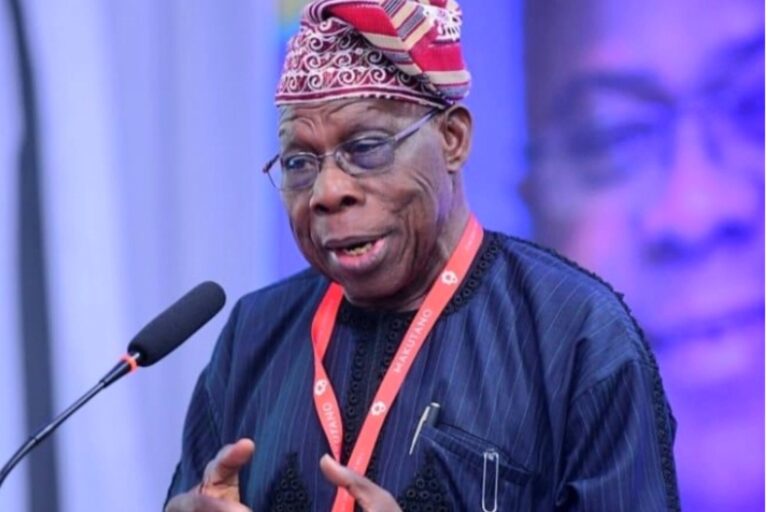
Former President Olusegun Obasanjo says Nigeria needs to mobilise private sector investments to fast track sustainable economic advancement.

He said this in Bauchi on Wednesday at the inauguration of the International Conference Centre (ICC), constructed by Bala Mohammed’s administration.

The centre was named after the first Premier of Northern Nigeria, Sir Ahmadu Bello.

Obasanjo highlighted that both local and international investments must be mobilised to accelerate national economic growth.

“With what we have; we can show the world that we are part and parcel of the world. What others have and pride themselves about, is not more than what we have.

“Some people don’t even have half of what we have. We have a world packed centre which can be develop and be made one of the tourist attractions in Nigeria.

“The people that will be coming here will be able to stay in the hotels, interact, have discussions and conferences in this ICC, and make Bauchi a centre of attraction and tourism for Nigeria.

“Not only are we commissioning this, we are starting with a conference to talk about investment, and what do we need in Nigeria today? We need to mobilise investments from Local and from the international,” he said.

Obasanjo also promised to showcase Bauchi to the world with a view to attract investments to the state.

Mohammed said the ICC was initiated to attract local and international businesses to invest in the state.

Also, Reuben Okoya, the contractor handling the project, said the centre was designed to accommodate 3,000 people, adding that 10 separate events could take place simultaneously at the centre.

The event was attended by Vice -President Kashim Shettima, Gov. Babagana Zulum of Borno, Sultan of Sokoto, Muhammad Sa’ad Abubakar III, deputy governors of Oyo and Plateau, Bayo Lawal and Josephine Piyo, among others.

Police Suspends Enforcement Of Tinted Glass Permit

0

The Nigeria Police Force said on Wednesday that the enforcement of the vehicle tinted glass permit has been suspended following a court order halting the exercise.

Spokesperson for the Federal Capital Territory (FCT) Police Command, SP Josephine Adeh, disclosed this during an interview on Africa Independent Television, AIT.

She said the decision to halt the enforcement came after the police officially received the court order.

Adeh said, “Information reaching me from the office of the PRO is that the order has been received and the enforcement of the tinted permit is now on hold pending the court’s verdict”..

Disclosing that the directive to suspend enforcement would remain in place pending the outcome of the ongoing legal process, Adeh said, “We are waiting for the verdict. We are not against the courts, and we will continue to wait until we get a verdict”.

Speaking on public concerns about the purpose of the tinted glass regulation, Adeh explained that it was introduced for security reasons, noting that some criminal activities had been carried out using vehicles with darkened windows.

“The law was not made by us. We are enforcers. The policy was purely security-driven. Some criminals were using tinted vehicles to commit offences, making it difficult for law enforcement to identify suspects,” she said.

She dismissed claims that the policy was designed for financial gain, noting that all payments related to tinted permits are made directly into the Federal Government’s Treasury Single Account (TSA), not to the police.

Gov. Fubara Assures Completion Of Emohua- Ogbakiri-Egbelu Road Project In December …Inspects Ongoing Work On 19.7km Buguma-Abalama-Tema-Degema-Abonnema Road

0

Rivers State Governor, Sir Siminalayi Fubara, has expressed delight over the1 overwhelming reception and cooperation of the people of Ogbakiri towards Julius Berger Nigeria Plc, the construction company handling a major road project in the area. The project is now expected to be completed by December this year.

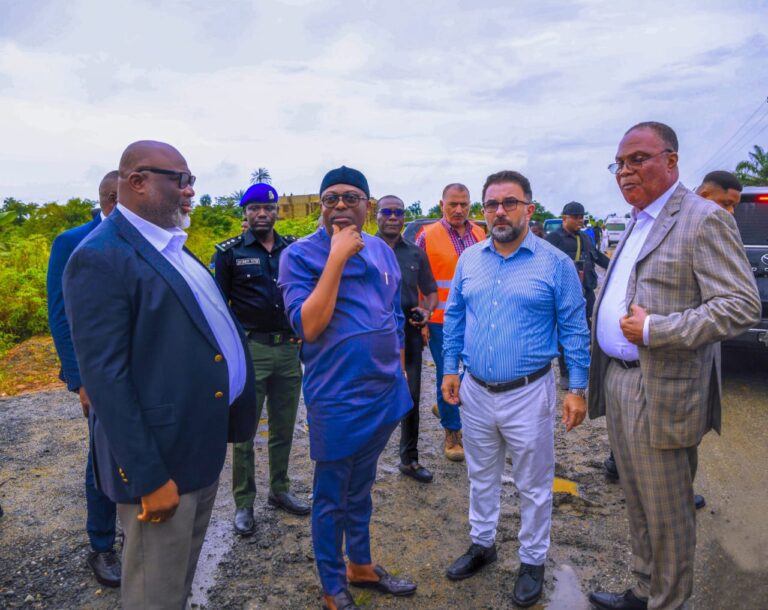
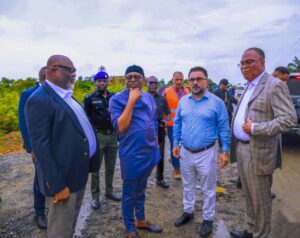
Governor Fubara made the remark during an inspection tour of two critical road projects both in Emohua Local Government Area, and in Kalabari Kingdom on Tuesday. The projects include the 19.7km Buguma–Abalama–Tema–Degema–Abonnema Road, with seven bridges; and the 9.7km Emohua–Ogbakiri–Egbelu Road, which connects about six communities.

Rivers State Governor, Sir Siminalayi Fubara (2nd left); Chairman, Emohua Local Government Area, Dr Chidi Lloyd (left); and the management team of Julius Berger Nigeria Plc during the inspection tour of ongoing construction work on the 9.7km Emohua-Ogbakiri-Egbelu Road project in Emohua LG on Tuesday.

The Governor described the roads, particularly the one traversing Emohua communities as “very important,” noting that it serves as a major access route, connecting Ogbakiri people to the East–West Road with ease.

“We came in to inspect one of the projects we were on before the state of emergency,” Governor Fubara said. “This project, for us, is very important because it connects Ogbakiri people to the East–West Road with ease.”

Governor Fubara further commended the host communities for their remarkable support to the contractor, which has ensured steady progress on the project.

He said, “In fact, let me commend the people of Ogbakiri because the contractor, while I was on my way here, informed me that they are one of the best host communities.

“They have never given them any trouble. The reason is simple — they understand the importance of this project. It is about them, and government is about the people,” he added.

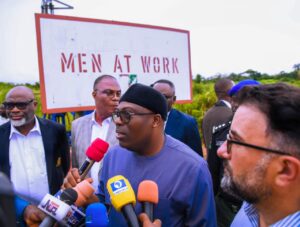
Rivers State Governor, Sir Siminalayi Fubara (middle); addressing newsmen during the inspection of the Emohua-Ogbakiri-Egbelu Road project in Emohua Local Government Area on Tuesday.

Governor Fubara assured residents of Ogbakiri in Emohua Local Government Area that the state government remains committed to completing the project on schedule, amplifying the cornerstone of the Rivers First focus of his administration.

“So, I’m here to assure the good people of Emohua and Ogbakiri in particular, the Chairman is here as a witness, and you can see that the contractor is back on site that, God willing, before the end of December, this project will be completed,” he said.

The Governor was accompanied on the inspection tour by the Chairman of Emohua Local Government Area, Dr Chidi Lloyd; and the management team of Julius Berger Nigeria.

Alleged Fraud: NNPCL Responded To 19 Queries On Unaccounted N210trn, Says Senate

0

The Senate Committee on Public Accounts says the Nigerian National Petroleum Company (NNPCL), has responded to 19 queries raised against it in the audit reports of 2017 to 2023.

Chairman of the Committee Sen. Aliyu Wadada made the clarification in an interview with newsmen in Abuja.
Wadada said that NNPCL had responded to the queries, adding that the committee is yet to critically look at the responses provided by NNPCL.

The committee had on July 29, gave the Chief Executive Officer of NNPCL, Mr Bayo Ojulari, three weeks to respond to 19 queries on the N210 trillion yet to be accounted for, in the audited account of company.

“While we were on recess, management of NNPCL wrote to the committee, requesting an extension of time to enable them compile data and respond comprehensively to the questions we raised and we granted that request.

“They had since responded and we now have answers to all 19 questions we sent to them; however, the report is yet to be presented before the committee.

“That is why, as chairman, I have refrained from making any public statement on the matter until it is properly laid before members.

“But let me assure you, as I promised earlier on behalf of the committee, we will do justice to the matter.”

He said that beyond the audited financial statements, there were other issues emerging around the NNPCL.
According to him, the first of such issues is production sharing contracts.

“Specifically, the production cost to Nigeria which must be clearly defined, and the public deserves to know what portion goes to the NNPCL, what goes to the international oil companies (IOCs) and what accrues to the government under the production sharing arrangement.

“Furthermore, the committee has been informed that NNPCL Retail has declared a loss.

“This development is also of concern to us and to the public, we find it difficult to understand why NNPCL retail should record a loss, but we will seek clarification when the corporation appears before us.

“As far as the audited financial statements are concerned which cover the period between 2017 and 2023. NNPC has submitted its responses to the 19 questions we asked. Nigerians and the media will be informed of the contents in due course.

“Out of those answers, the ones that make sense and those that do not will be evident to the public”, he stressed.

Group Backs Oba Of Benin On Market Leadership

The Edo Art and Cultural Heritage Institute (EACHI), has thrown its weight behind Oba Ewuare II, the Oba of Benin, on his stance on market leadership in the kingdom.

This is contained in a statement by Mr Okpioba Idemudia on behalf of EACHI and made available to newsmen on Wednesday, in Benin.

Idemudia said that the group aligned itself with the position of the Oba that the Iye-Eki was the only recognised traditional head of the markets in the kingdom.

According to him, EACHI believes that the Iye-Eki holds a significant and revered position in the Benin Kingdom, serving as markets’ traditional head.

He expressed the group’s commitment to preserving the rich cultural heritage of the Benin people.

He noted that attempts to impose external leadership structures would contradict cultural norms and traditions of the kingdom and warned against such.

He commended the Oba of Benin for his unwavering commitment to upholding the cultural values and traditions of the kingdom.

He also commended Edo market women for taking a bold stand against the imposition of market leadership and Iyaloja on them.

Idemudia also called on sons and daughters of the state to stand in unity and continue to support the Oba’s disapproval of the Iyaloja concept.

”We at EACHI reassure the people of Edo and the broader community that we will continue to support and promote the preservation of our rich cultural heritage,” he said.

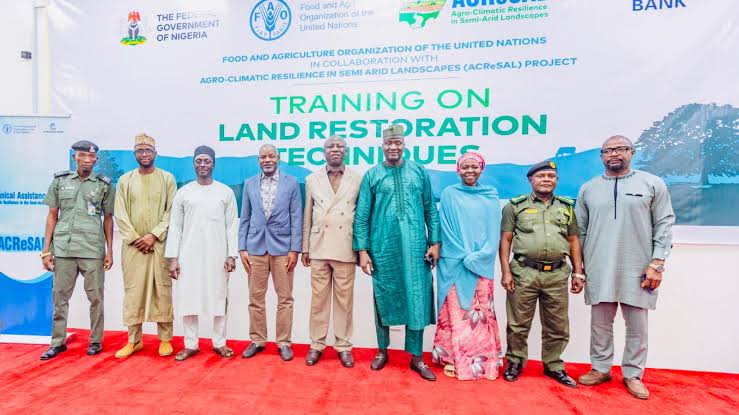
ACReSAL Restores 800,000 Hectares Of degraded lands, Impacts 8m People … FG Assures Partnership

0

The Federal Government is to partner with the Agro-Climatic Resilience in Semi-Arid Landscapes (ACReSAL) project to restore degraded lands and promote sustainable livelihoods in the semi-arid region of the country.

This resolution was taken during the Federal Technical Committee (FTC) meeting of the Agro-Climatic Resilience in Semi-Arid Landscapes (ACReSAL) Project, held with the Federal Ministry of Environment in Abuja on Wednesday.

The meeting was attended by stakeholders to review the project’s progress and examine its Annual Work Plan for the upcoming implementation year.

This is as the Project has restored 800,000 hectares of degraded landscapes and its activities impacted over eight million persons in Northern Nigeria.

ACReSAL is a World Bank-financed project designed to tackle the pressing issues of land degradation and climate change in 19 states of Northern Nigeria.

Mr Mahmud Kambari, Permanent Secretary in the Ministry of Environment described the gathering as a defining moment in Nigeria’s pursuit of environmental sustainability and community resilience.

“As we confront the realities of climate change, drought, and food insecurity, our shared vision through ACReSAL is transforming into concrete action.

“This plan embodies our collective responsibility to restore degraded lands, strengthen livelihoods, and secure a sustainable future for millions of Nigerians,” Kambari said.

Also speaking, Dr Marcus Ogunbiyi, the Permanent Secretary in the Ministry of Agriculture and Food Security, reaffirmed the ministry’s full support for the project’s objectives.

“The ACReSAL project aligns perfectly with our mission to strengthen food security through climate-smart agriculture.

“By promoting drought-tolerant crops, soil restoration, and improved farming practices, we are empowering small holder farmers and building resilience in rural communities. Together, we can ensure that our agricultural sector continues to thrive despite environmental challenges,” Ogunbiyi assured.

Also, Mr Richard Pheelangwah, the Permanent Secretary in the Ministry of Water Resources and Sanitation, highlighted the project’s critical role in protecting Nigeria’s water ecosystems and improving sanitation standards in semi-arid regions.

“ACReSAL offers a comprehensive approach to managing our fragile water systems, through watershed rehabilitation, sustainable irrigation, and rainwater harvesting.

“We are not only preserving water resources but also enhancing public health and agricultural productivity. Our ministry remains committed to providing the technical leadership necessary to advance water security across the country,” Pheelangwah assured.

Mr Abdulhamid Umar, the National Project Coordinator of ACReSAL, delivered a presentation on the project’s current status and impact across the participating states.

He said that ACReSAL’s interventions are technologically driven and encompasses afforestation, reforestation, ecosystem restoration, erosion and flood control livelihood initiatives, climate-smart agriculture, water management, capacity building and policy development.,

“Strategic catchment management planning, institutional strengthening, and environmental education initiatives, are all geared toward long-term impacts and sustainable environments,” Umar said.

He sais that so far, the project has restored over 800,000 hectares of degraded landscapes adding that civil works have reached an almost completion stage in some states.

He further stated that out of the wide range of impactful activities implemented in the state, 8,708,291 persons have benefited from the project intervention, with 4,120,649 being women.

Umar stated that ACReSAL has successfully addressed numerous environmental challenges, including those that once plagued communities in the Nguru Wetlands and Hadejia axis of the Northeast, now cited as classical examples of the project’s transformative impact.

The ACReSAL project seeks to mitigate the impacts of climate change in northern Nigeria by restoring degraded lands, improving water management, increasing agricultural yields, and promoting sustainable livelihoods.

The meeting concluded with a collective call for continued inter-ministerial synergy to ensure that ACReSAL delivers measurable benefits to communities most affected by desertification, drought, and land degradation.