

Home Blog Page 149

GMOs: Nigerians Need Transparency, Factual Outcomes, Says DG NBRDA

0

The Federal Government has urged scientists in Ministries, Departments and Agencies to improve their knowledge on Genetically Modified Organisms (GMOs) to ensure that their feedback the subject was factual and unambiguous, as Nigerians are still divided on the safety of GMOs.

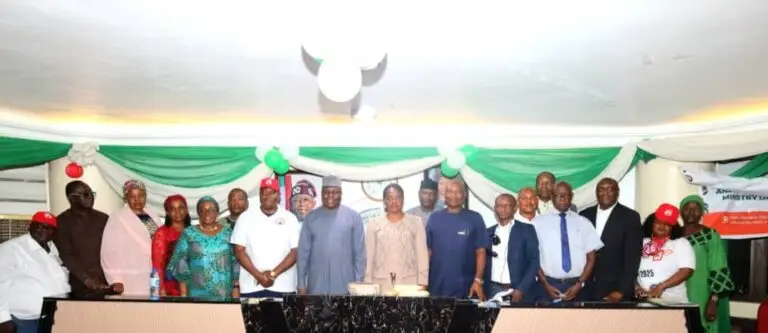
The federal government said this on Thursday in Abuja at a two-day workshop where it received fact-based briefing on science behind GMOs.

The event was organised by the Open Forum on Agricultural Biotechnology (OFAB) Nigeria under the auspices of the National Biotechnology Research and Development Agency (NBRDA).

The workshop which had the theme; “Biotechnology and Biosafety: Building Trust through Science and Facts”, presented a platform to explore the science, and regulatory framework behind GMO cultivation in Nigeria.

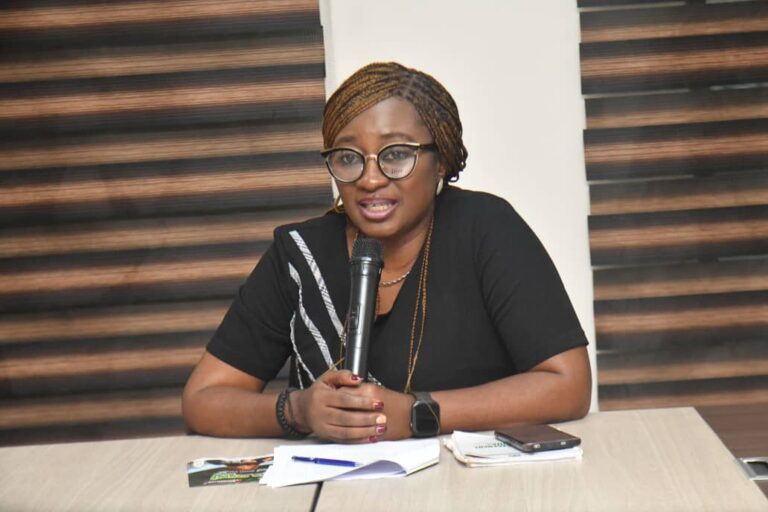
Mrs Esuabana Nko-Asanye, Permanent Secretary, Federal Ministry of Innovation, Science and Technology, said the public often relied on government institutions for guidance on GMOs.

“We must, therefore, ensure that our knowledge base is not only accurate, but also updated, enabling us to communicate facts in a clear and balanced manner,’’ she said.

She further said it was crucial to embrace innovations that could help guarantee sustainable food production.

However, according to her, the introduction and use of GMOs should be approached with caution, knowledge and adherence to regulatory standards.

Prof. Abdullahi Mustapha, Director-General, NBRDA, said that trust was not granted by statements alone, but earned through transparent processes, open communication and demonstrable outcomes.

“To build that trust, we must be candid about both the potential of biotechnology and the legitimate concerns that citizens and civil society raise.

“Questions about gene flow, non-target effects, socio-economic impacts and seed access deserve robust, evidence-based answers.

“We must publish data from trials, explain the methods used in food safety assessments, and ensure that monitoring results are available to regulators, researchers, and the public,’’ he said.

Mustapha said it was necessary to ensure that technological progress was matched by rigorous safety assessment, clear policy, transparent oversight and open dialogue with citizens.

He said scientific innovation in agricultural biotechnology was not an end but a tool designed to deliver measurable benefits which include, among others, greater resilience to pests and drought, and reduced reliance on chemical pesticides.

Mr Bello Bwari, Director-General, National Biosafety Management Agency (NBMA) said it was normal for people to express fear and concerns about new technologies and their products.

He advised that Nigerians to accept the good side of GMO which, he said could help improve the food situation in the country.

He assured that GMOs were properly regulated in the country through rigorous processes to ensure safety for humans and the environment.
Tinubu Grants Presidential Pardon to Saro-Wiwa, Vatsa, Macaulay, 172 Others

0

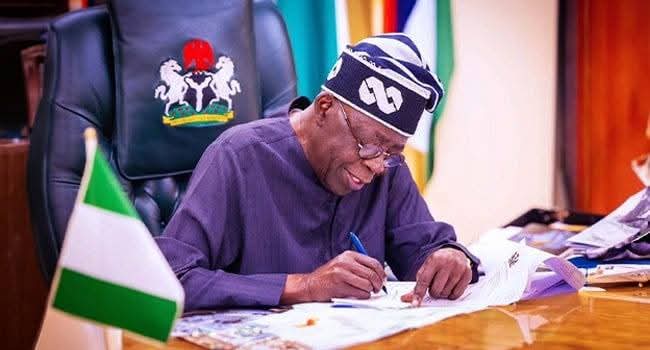
The Council of State on Thursday approved the exercise of the presidential prerogative of mercy for 175 persons across various categories.

The decision followed a presentation by the Attorney-General of the Federation and Minister of Justice, Lateef Fagbemi (SAN), who conveyed President Bola Tinubu’s recommendations based on the report of the Advisory Committee on the Prerogative of Mercy, at Thursday’s Council of State meeting held at the State House, Abuja.

Although the full names of the beneficiaries are yet to be published, it was gathered that pardons were granted to one of Nigeria’s founding fathers, Herbert Macaulay and former FCT minister in the Babangida regime, Maj-Gen. Mamman Vatsa (retd).

Members of the Ogoni Nine, including renowned environmental activist, Ken Saro-Wiwa, and Ogoni Four are also beneficiaries.

“Herbert Macaulay and Vatsa are among the two major ones on that list,” a source who attended the meeting told our correspondent.

Macaulay, often called the “father of Nigerian nationalism,” was twice convicted by the colonial authorities in Lagos.

In 1913, while in private practice as a surveyor, he was tried for misappropriating funds from an estate he administered and sentenced to prison; historians have long debated the fairness of that prosecution.

In 1928, after his Lagos Daily News published incendiary claims during the Eleko (Oba of Lagos) agitation, he was convicted of sedition in the so-called “Gunpowder Plot” case and jailed for six months with hard labour.

Vatsa, a poet, former FCT minister and member of the Supreme Military Council, was executed by firing squad on March 5, 1986, after a secret military tribunal convicted him of treason over an alleged coup against then military ruler Ibrahim Babangida, his childhood friend.

The case has remained controversial for decades, with periodic calls for a posthumous pardon.

Out of the 175 beneficiaries, 82 inmates were granted a full presidential pardon, 65 had their sentences reduced, while seven death sentences were commuted to life imprisonment.

Briefing State House correspondents after the meeting, Governor Uba Sani of Kaduna state explained, “82 of the inmates were granted full pardon, 65 had their sentences reduced, while seven death sentences were commuted to life imprisonment.

“The decision underscores the President’s commitment to justice and correctional reform.”

The meeting, chaired by President Tinubu, also ratified key appointments, including Dr. Aminu Yusuf from Niger State as Chairman of the National Population Commission and Tonge Bularafa as Federal Commissioner representing Yobe State in the Commission. Both appointments received unanimous approval.

Elderly Citizens Receiving Health Priority In Rivers -Mrs Agala … Constitute 30% Of RIVCHPP Beneficiaries

0

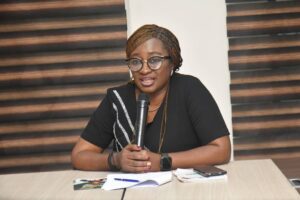
The Executive Secretary/Chief Executive Officer of Rivers State Contributory Health Protection Programme (RIVCHPP), the state health insurance agency, Dr. Vetty Rolegherighan Agala has reiterated that the Nigeria government gives priority to the health of the elderly through the various legislations to cater to the health needs of the elderly.

Mrs Agala

Dr. Agala, who made the emphasis on a live online radio programme on Tuesday, 7th October, 2025, on Grace Impact Radio in commemoration of the National Day for the elderly, which is usually celebrated on every 5th of October, argued that it is because of the importance the government places on the health of the elderly in the country that made the government to place the elderly among those to enjoy free but quality healthcare services under the Basic Health Care Provision Fund which is operational in all the states of the Federation.

The RIVCHPP Executive Secretary noted the role of the Nigeria government by extension Rivers State Government in the implementation of the Basic Health Care Provision Fund that provides financial risk protection for the elderly as vulnerable population.

Dr. Agala pointed out in response to Mazi’s call for meaningful engagement of strong and active older persons, that in Rivers State, active retirees, especially health care providers, have been engaged to continue to work, bring their experience to teams and to keep them meaningfully engaged.
RIVCHPP’s Executive Secretary admonished everyone to plan towards old age and adopt a preventive health lifestyle and to ensure they get insurance coverage to cater to dealing with the incidences of diseases during their old age.

Dr. Agala said that it is worthy of note to announce that of the already enrolled 110,000 and above persons in Rivers State, about 30% of them are over 60 years of age, urging that the National policy on aging be fully implemented with the provision of funding for homes which are currently driven by religious organisations and non-governmental organisations.

Contributing on the radio programme, a gerontologist, social worker, and behavioural scientist based in Ebonyi State, Mazi Otti Nwaka, advocated for attitudinal change among Nigerians, encouraging the establishment and utilisation of nursing homes for the elderly.

Mazi Nwaka, who gave insights into the challenges of the elderly globally, said that due to holding on to traditional beliefs and ways of living, most elderly people find it difficult to leave their ancestral to live in nursing homes, even when they are not getting the proper care needed in old age at the buildings they see as their own.

The behavioural scientist reiterated that, especially in Nigeria, most elderly persons are prone to hypertension, diabetes, depression, Alzheimer’s disease, arthritis, among others, enjoining everyone, especially the government at the different tiers, to give special attention to the health of the elderly by providing a nursing home, with the right calibre of professional care givers as is done in other climes.

As part of the commemoration of the National Day for the Older Persons, Rivers State Contributory Health Protection Programme’s Dr. Juliet Aleme was at the Care of Elderly People’s Unit of the University of Port Harcourt Teaching Hospital, Alakahia, for the event.

RHI: 1,000 Rivers Women Receive N100m Grants To Boost Small Businesses … As First Lady Flags-Off Economic Empowerment Scheme

0

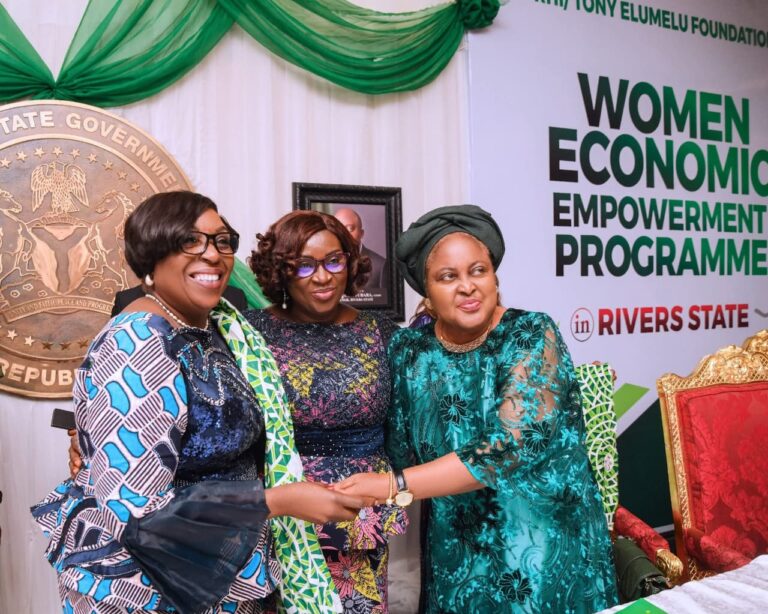
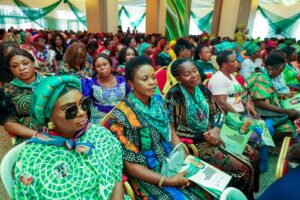
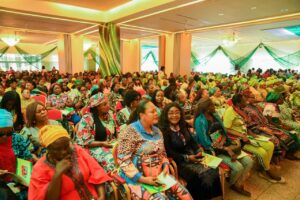
No fewer than 1,000 women across the 23 local government areas of Rivers State have benefited from the Renewed Hope Initiative (RHI) Women Economic Empowerment Programme, receiving small business recapitalisation grants aimed at expanding their ventures, supporting their families, and strengthening local communities.

The empowerment scheme, implemented in collaboration with the Tony Elumelu Foundation, and supported by the Rivers State Government, was officially launched at the Banquet Hall of Government House, Port Harcourt on Thursday.

The RHI Women Economic Empowerment Programme is part of a broader national initiative targeting 18,500 women across Nigeria’s 36 states and the Federal Capital Territory.

Speaking at the flag-off ceremony, Nigeria’s First Lady, Senator Oluremi Tinubu, represented by wife of the Rivers State Governor, Lady Valerie Siminalayi Fubara, explained that the financial support was a grant, not a loan, intended to strengthen women-owned businesses.

“Each beneficiary will receive ₦50,000 to recapitalize her business,” she said. “This grant is not to be repaid. When you empower a woman, you empower a household, a community, and indeed, a nation.”

Senator Tinubu expressed appreciation to the Tony Elumelu Foundation for its ₦1 billion donation to the programme, which has made the grants available to more women across the country.

Lady Valerie Fubara highlighted the Rivers State Government’s ongoing efforts in supporting families through agricultural, economic, and educational initiatives, describing them as complementary to the RHI’s empowerment goals.

She urged the beneficiaries to use the funds wisely to grow their businesses and improve their families’ livelihoods, commending Senator Tinubu for her vision and compassion.

“Senator Oluremi Tinubu has shown remarkable dedication to uplifting women,” Lady Valerie Fubara said. “Her leadership continues to inspire positive change across the nation.”

She said her husband and Governor of Rivers State, Sir Siminalayi Fubara, is showing more support for the programme and has increased the number of beneficiaries in the State from 500 to 1,000, as a demonstration of his administration’s commitment to economic inclusion.

“His Excellency believes that empowerment must be value-targeted,” Lady Valerie Fubara added. “I also urge you, recipients, to utilize the proceeds from this partnership to support beneficial ventures that will make for economic improvements in your families.”

Rivers State Deputy Governor, Prof. Ngozi Ordu, commended both Senator Tinubu and Lady Valerie Siminalayi Fubara for complementing the state government’s development efforts, and urged the beneficiaries to make judicious use of their grants.

Also speaking at the event, Justice Mary Odili (rtd) applauded the Renewed Hope Initiative for creating opportunities that uplift citizens across sectors, noting the overwhelming turnout as a testament to the programme’s impact.

“The joy on the faces of these women today shows how deeply this empowerment has touched lives,” she remarked.

In her welcome address, State Coordinator, RHI, Hon Tonye Briggs-Oniyide, said that the women beneficiaries have been selected through a meticulous and transparent process from across the 23 local government areas, thanking them for their resilience and support to the government.

She charged the beneficiaries to make good use of the grant so as to enhance the economic prosperity of their families and communities.

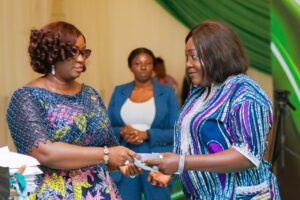
Highlights of the event were the presentation of the grants to the beneficiaries by Lady Valerie Siminalayi Fubara, and free medical outreach that provided attendees with essential health checks and treatments.

Presidency Faults World Bank’s Poverty Report, Says Figures Misrepresent Nigeria’s Reality … Tinubu’s Aide Insists Reforms Are Driving Recovery

0

The Presidency has rejected the World Bank’s latest report estimating that 139 million Nigerians are living in poverty, describing the figure as “unrealistic” and detached from the country’s current economic realities.

President Bola Tinubu’s Special Adviser on Media and Public Communication, Sunday Dare, said on Wednesday that while Nigeria values its partnership with the World Bank, the poverty figures must be “properly contextualised” within the limits of global poverty measurement models.

According to him, the World Bank’s estimate was based on the global poverty line of $2.15 per person per day, set in 2017 using Purchasing Power Parity (PPP), and should not be interpreted as a literal headcount of poor Nigerians. He explained that when converted to nominal terms, the $2.15 benchmark equals about ₦100,000 per month at current exchange rates—well above Nigeria’s new minimum wage of ₦70,000.

“The measure is an analytical construct, not a direct reflection of local income realities,” Dare said, noting that PPP-based poverty assessments rely on historical consumption data and often overlook Nigeria’s large informal and subsistence economies.

The Presidency argued that the World Bank’s methodology does not capture the full picture of Nigeria’s socio-economic realities and that what matters more is the direction of change. It said the country’s economy is on a recovery and reform trajectory, driven by policies aimed at inclusive growth and social protection.

Dare highlighted several welfare and intervention programmes under the Tinubu administration, including the Conditional Cash Transfer Scheme, which has reached up to 15 million households with verified digital enrolment through the National Social Register. He said over ₦297 billion has been disbursed since 2023 to poor and vulnerable families.

He also mentioned the Renewed Hope Ward Development Programme, targeting all 8,809 electoral wards with micro-infrastructure and livelihood projects, and the strengthening of National Social Investment Programmes such as N-Power and the GEEP micro-loan initiatives (TraderMoni, MarketMoni, and FarmerMoni).

The Presidency listed additional initiatives to address rising costs and stimulate job creation, including food security programmes, subsidised grain and fertiliser distribution, and the Renewed Hope Infrastructure Fund for energy, roads, and housing. It also cited the National Credit Guarantee Company, designed to expand affordable credit for small businesses, women, and youth entrepreneurs.

According to Dare, the Tinubu administration is tackling the structural distortions that have long constrained productivity and inclusive growth. He described reforms such as fuel subsidy removal, exchange rate unification, and fiscal reallocation toward productive sectors as “painful but necessary choices” to fix the root causes of poverty.

He added that even the World Bank had acknowledged that these reforms are helping to restore macroeconomic stability and growth momentum. However, he stressed that the ultimate goal is to ensure that economic recovery translates into real welfare improvements for ordinary Nigerians.

“Nigeria rejects exaggerated statistical interpretations detached from local realities,” the statement said. “The government remains focused on empowering households, expanding opportunity, and building a fairer, more prosperous nation.”

Earlier, the World Bank, in its October 2025 Nigeria Development Update titled “From Policy to People: Bringing the Reform Gains Home,” had reported that 139 million Nigerians are now living in poverty—up from 129 million in April 2025 and 87 million in 2023.

The Bank’s Country Director for Nigeria, Mathew Verghis, praised the Tinubu government’s reforms in the exchange rate and petrol subsidy regimes but warned that the benefits have not yet reached ordinary citizens.

“Despite these stabilisation gains, many households are still struggling with eroded purchasing power,” Verghis said.

Opposition parties and labour leaders responded to the Presidency’s statement, saying the hardship Nigerians face is undeniable. The Labour Party, New Nigeria People’s Party, and Peoples Democratic Party all argued that the government’s reforms have yet to translate into tangible relief.

The Nigeria Labour Congress said many workers struggle to survive on the ₦70,000 minimum wage, which is now worth about $46 per month, noting that “poverty is not an abstract statistic; it is lived reality.”

NDDC Presents Award Letters To 600 Successful Candidates For Local Postgraduate Scholarship

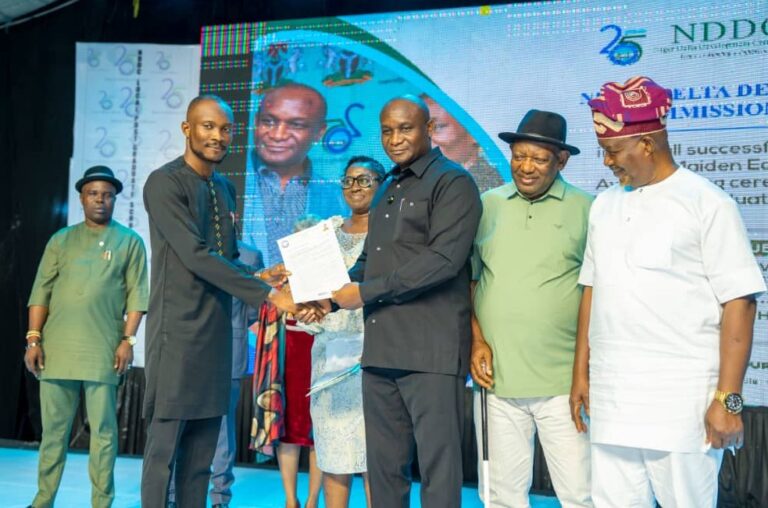
The Niger Delta Development Commission, NDDC, has presented award letters to 600 successful candidates for its 2025/2026 Local Post Graduate Scholarship Programme. This was disclosed in a statement signed by Seledi Thompson-Wakama, Director, Corporate Affairs of the commission.

Presenting the scholarship letters to the successful candidates during the award ceremony in Port Harcourt, the NDDC Managing Director, Dr Samuel Ogbuku, stated that the scholarship programme was an initiative designed to enhance human capital development in the Niger Delta region.

Ogbuku, who was supported by the Executive Director of Corporate Services, Hon. Ifedayo Abegunde; the Representative of Bayelsa State on the NDDC Board, Senator Dimaro Denyanbofa , and other Directors of the Commission, urged the awardees to be good ambassadors of the Niger Delta region.

The NDDC Chief Executive Officer described the scholarship scheme as an essential component of the NDDC’s human capital development programme, noting that education was the most powerful weapon for changing the fortunes of the Niger Delta region.

He observed that previous beneficiaries of the scholarship programme set enviable standards for subsequent groups, stating: “It is remarkable that 32 of our scholars graduated with distinction in Coventry University this year.”

Ogbuku advised the NDDC scholars to avoid distractions to excel in their studies, reminding them that they owed the Niger Delta a duty to succeed.

He declared: “You are the torchbearers of transformation. Your education is not just for you but for the millions who look up to you for hope. As you pursue your postgraduate studies, remember that every lecture you attend, every paper you write, and every solution you provide is a step towards transforming our communities.”

In his remarks, the NDDC Director of Education, Health and Social Services, Dr George Uzowanne, disclosed that out of 46,240 applicants, only 600 were selected through a transparent electronic examination process. He said, “I congratulate the successful candidates who applied and went through a seamless selection process.”

Uzonwanne, stated that the process of selecting the candidates was transparent, noting that competition for the Scholarship programme was intense and fair.

He Stated: “Through initiatives like the NDDC Local Scholarship Programme, we are investing in the minds that will shape the Niger Delta’s tomorrow. By equipping our youth with advanced knowledge in fields like engineering, environmental sciences, technology, humanities and management sciences, we empower them to tackle our region’s unique challenges.”

The NDDC Director of Education, Dr Angela Chukwudifu, observed that the new scholarship programme emphasised on local education to ensure that beneficiaries remained connected to the Niger Delta’s challenges and opportunities, fostering a sense of ownership and responsibility.

She stated: “Through initiatives like the NDDC Local Scholarship Programme, we are investing in the minds that will shape the Niger Delta’s tomorrow. By equipping our youth with advanced knowledge in fields like engineering, environmental sciences, technology, humanities and management sciences, we empower them to tackle our region’s unique challenges.”

The best performing scholarship candidate, Mr. Reginald Omubo-Pepple, thanked the NDDC for giving them the opportunity to enhance their education. He pledged that the beneficiaries would do their best to be good ambassadors for the region and subsequently contribute to the development of the Niger Delta.

Police Arrest 12 In Connection With Somtochukwu Maduagwu’s Death

The Federal Capital Territory Police Command says it has arrested 12 suspected armed robbers linked to the violent attack that led to the death of Arise News anchor, Somtochukwu Christella Maduagwu, and a security guard, Barnabas Danlami, at Unique Apartments, Gishiri Village, Katampe District, Abuja.

The incident, which occurred around 3:30 a.m. on September 29, threw the media community and residents into mourning.

In a statement on Wednesday, the command said the arrests followed a directive from the FCT Commissioner of Police to track and apprehend those responsible.

Operatives of the Scorpion Squad, led by ACP Victor Godfrey, acting on what the police described as “actionable digital and reconstructive intelligence” provided by Giga Forensics, a subsidiary of EIB STRATOC, swooped on the suspects across different hideouts in the FCT and neighbouring states.

The suspects were named as: Shamsudeen Hassan (Malumfashi LGA, Katsina State); Hassan Isah, 22 (Zaria, Kaduna State); Abubakar Alkamu a.k.a. Abba, 27 (Musawa LGA, Katsina State); Sani Sirajo a.k.a. Dan Borume, 20 (Malumfashi LGA, Katsina State); Mashkur Jamilu a.k.a. Abba, 28 (Igabi LGA, Kaduna State); Suleiman Badamasi a.k.a. Dan-Sule, 21 (Malumfashi LGA, Katsina State); Abdul Salam Saleh a.k.a. Na-Durudu (Katsina LGA, Katsina State); Zaharadeen Muhammad a.k.a. Gwaska, 23 (Chikun LGA, Kaduna State); Musa Adamu a.k.a. Musa Hassan, 30 (Malumfashi LGA, Katsina State); Sumayya Mohammed a.k.a. Baby, 27 (Sammaka LGA, Kaduna State); Isah Abdulrahman a.k.a. Abbati, 25 (Zaria LGA, Kaduna State); and Musa Umar a.k.a. Small, 31 (Maiduguri LGA, Borno State).

According to investigators, four suspects, including Hassan and Abubakar Alkamu, were first tracked after using the victims’ stolen phones.

During interrogation, Hassan confessed to shooting the security guard, Danlami, when he resisted the gang’s entry into the building.

Sirajo also admitted to struggling with Ms Maduagwu during the chaos, saying he attempted to stop her from falling off the three-storey building but claimed he was “overwhelmed by her weight.”

The police revealed that the gang sold some of the stolen items, with each member reportedly receiving ₦200,000 as their share.

Recovered from the suspects were: one fabricated AK-47 rifle, 36 rounds of 9mm live ammunition, a locally made pistol, a pump-action gun, two live cartridges, four mobile phones belonging to the victims, two sharp knives, a cutlass, and nine torchlights used in the operation.

The command further disclosed that on October 8, operatives intercepted more gang members, including Musa Umar and Hassan Isah, while they were allegedly heading for another planned robbery in Maitama, Abuja.

“All suspects have confessed to the crimes. Investigation is ongoing, and further developments will be communicated,” the police statement added.

The command, however, noted that photographs of the arrested suspects were being withheld to avoid compromising efforts to apprehend other people.

Nigeria’s First Floating LNG Project, Ready By 2029, UTM Offshore Assures

0

Dr Julius Rone, Group Managing Director of UTM Offshore Ltd., has reaffirmed the company’s commitment to delivering the first Floating Liquefied Natural Gas (FLNG) project in Nigeria by 2029.

Rone said the landmark project would be achieved through strategic partnerships with some of the world’s leading engineering and energy firms, aimed at positioning Nigeria as a key player in global LNG supply.

He made this known in a statement issued on Wednesday in Lagos, following his participation at the recently concluded African Energy Week held in Cape Town, South Africa.

According to him, the offshore FLNG project, located in Akwa Ibom State, has recorded substantial progress.

This, he added was achieved through collaborations with international partners including Japan Gas Corporation (JGC), Technip Energies NV, and Kellogg, Brown & Root (KBR).

“One of the key decisions we got right from the outset was partnering with the best engineering firms in the world,” Rone said.

He revealed that the consortium leading the engineering work, Open Sea Technologies, is currently spearheading the development of the pioneering FLNG infrastructure in Nigeria.

Rone emphasised that securing a sustainable gas supply remains critical to achieving the project’s Final Investment Decision (FID).

“To move forward, we must ensure that all segments, upstream, midstream, and downstream, are aligned.

“The gas supply forms the backbone of the entire project,” he noted.

He explained that UTM had identified a suitable upstream asset operated under a joint venture between the Nigerian National Petroleum Company Limited (NNPC Ltd.) and SEPLAT Energy, with a 60-40 equity split.

“Interestingly, the gas from this asset, which is currently being re-injected, has now been classified as stranded gas, which makes it perfect for this project,” he said.

Rone said the project drew inspiration from successful electrostatic LNG models in Mozambique, Malaysia, and Kuwait, adding that the company had already achieved strong progress in midstream engineering capacity.

“In terms of midstream engineering capability, we are covered. What remains now is to finalise the financing aspect,” he said.

He disclosed that UTM Offshore was working closely with the African Export-Import Bank (Afreximbank), based in Cairo, which has pledged support for both the debt and equity components of the project.

“Afreximbank’s mandate is to promote intra-African trade and support indigenous African enterprises.

“Their involvement brings significant confidence, as they are aggregating funds from other banks to ensure the financial structure is robust,” Rone said.

He added that part of the company’s plan was to supply condensates domestically to strengthen Nigeria’s industrial base while exporting LNG to meet growing energy demand in Europe and Asia.

“Our project roadmap follows three major steps: securing the gas supply agreement, signing the sales agreement, and proceeding to financial closure with a final investment decision.

“We’re currently about 95 per cent done with the gas supply agreement and should sign it in a matter of weeks,” he disclosed.

Rone expressed appreciation to key stakeholders, including President Bola Tinubu, for their steadfast support and policy direction that continues to encourage private sector-led gas infrastructure investments.

He reaffirmed UTM Offshore’s commitment to operating with transparency, integrity, and sustainability while respecting host communities and protecting the environment in all its operations.

“Our focus remains on delivering this project in a way that transforms Nigeria’s gas landscape, creates jobs, and showcases the capability of indigenous companies to deliver world-class infrastructure,” Rone said

AfCFTA Can Lift Africa’s GDP To $140bn In 2035 – NESG … Urges Stronger Regional Collaboration To Boost Africa’s Growth

0

The Chairman of the Nigerian Economic Summit Group (NESG), Mr Olaniyi Yusuf, stressed that Africa’s economic transformation relies on strengthening regional collaboration, removing trade barriers, and accelerating cross-border investments.

He highlighted that the African Continental Free Trade Area (AfCFTA) is a historic chance to unlock regional value chains and increase Africa’s GDP by 140 billion dollars by 2035 if properly implemented.

Yusuf made the remarks at the 31st Nigerian Economic Summit (NES31) in Abuja on Wednesday, urging the continent to move beyond rhetoric toward deepening integration and mobilising regional capital for development.

He said Nigeria’s and Africa’s economic growth depended on collaboration through shared markets, talent, and resources, adding that without this, long-term prosperity would remain elusive.

Yusuf highlighted the African Continental Free Trade Area (AfCFTA) as a historic chance to unlock regional value chains and increase Africa’s GDP by 140 billion dollars by 2035 if properly implemented.

He called for urgent removal of non-tariff barriers, harmonisation of regulations, and mobilisation of African institutional capital to support regional industries and infrastructure projects.

“We rely heavily on external financing, yet more than 2.9 trillion dollars in assets exist within Africa.

“Deploying this capital to support trade and investment could transform the continent,” Yusuf said.

He emphasised mobilising pension and sovereign wealth funds to drive cross-border investments and industrial expansion, noting Nigeria’s pension assets alone exceeded N20 trillion.

Yusuf urged governments and private sector leaders to create regional capital markets and investment instruments that fostered intra-African trade and sustainable development.

“Reforming domestically without aligning with Africa will leave progress incomplete and fragile.

“When Africa invests and grows together, Nigeria will rise with it,” he stated.

He called for public-private partnerships, policy coherence, and cross-border trust to build a prosperous future with no economic borders in Africa.

Yusuf reiterated NESG’s commitment to the Rising Together initiative, a platform supporting Nigeria’s regional footprint and Africa’s collective economic transformation.

The Minister of Foreign Affairs, Yusuf Tuggar, said Nigeria’s foreign policy must align with economic priorities by removing trade barriers, attracting investment, and driving continental industrialisation.

Tuggar noted that foreign and economic policies were inseparable, stating Nigeria’s diplomacy would focus on trade expansion, partnership security, and opportunities for Nigerian businesses.

The minister highlighted the government’s 4D foreign policy agenda, Democracy, Development, Demography, and Diaspora, as the foundation for strengthening economic diplomacy.

“With our demographic weight and strategic position, we can drive industrialisation in Nigeria and Africa, but this requires policy alignment across sectors,” he said.

Tuggar added that Africa’s transformation depended on sound industrial policies and regional coordination that attract private capital, not on donor dependence.

Customs, NSCDC Reiterate Commitment To Partner Joint Security Committee

0

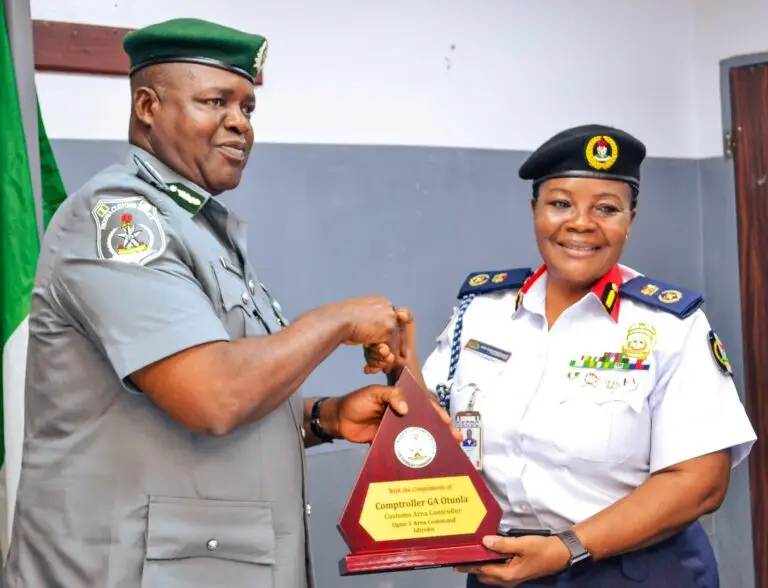
The Nigerian Security and Civil Defence Corps (NSCDC) has reaffirmed its commitment to partner with the Joint Border Security Committee in Idiroko, to boost national security across the borders.

Mr Zakari Chodo, the Public Relation Officer (PRO) of Idiroko Customs Command, disclosed this in a statement on Thursday in Ota.

Chado said that the State Commandant of NSCDC, Mrs Remi Ekundayo, reiterated this during a courtesy visit to the Joint Border Security Committee in Idiroko, Ogun, on Wednesday.

Ekundayo said that the visit was part of the corps efforts at enhancing inter-agency collaboration that would improve national security and cross border trades.

She emphasised the corps role in preventing pipeline vandalism, safeguarding telecommunications masts, streetlights, railway tracks, and other critical national assets.

She also highlighted the corps’ dedication to disaster response, protection of lives and properties, and bolstering national security.

“But the NSCDC cannot achieve these goals alone without the support of all state security agencies,” she said.

Ekundayo also said that the Agro Rangers unit, established in 2016 in collaboration with the Federal Ministry of Agriculture, had achieved its mandate of resolving conflicts between farmers and herders, providing security for VIPs and protect national silos.

In his response, the Chairman of the Joint Border Security Committee, Godwin Otunla commended the NSCDC’s vital role in maintaining peace, protecting critical national assets, and supporting joint security operations within and around border communities.

Otunla, also the Nigeria Customs Service (NCS) Area Comptroller for Ogun 1 Command, Idiroko, applauded the synergy among security agencies in the area.

He attributed the successes recorded in curbing smuggling, illegal migration, trafficking, and other trans-border crimes to the synergy.

He stressed the need for continued collaboration and intelligence sharing to address dynamic challenges along the corridor.

The NSCDC commandant was received by heads of the NDLEA, Nigeria Immigration Service, DSS, and other security agencies manning the Idiroko-Igolo border.

The visit concluded with the presentation of plaques from both agencies.