

Home Blog Page 149

NDDC Presents Award Letters To 600 Successful Candidates For Local Postgraduate Scholarship

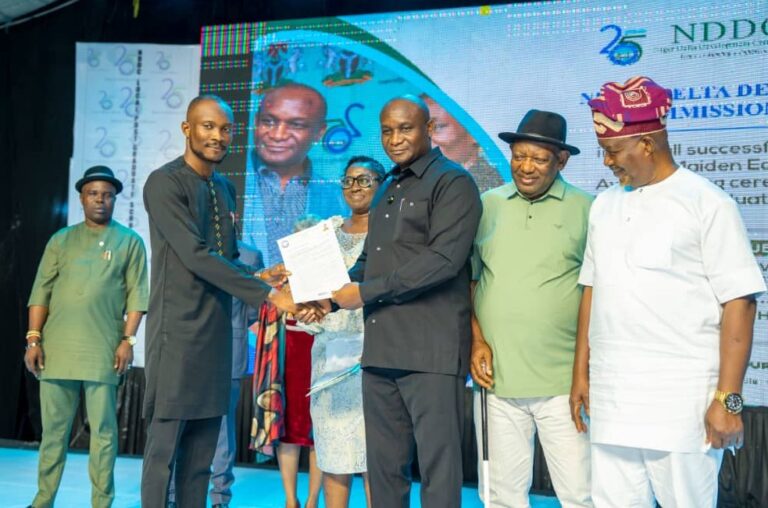
The Niger Delta Development Commission, NDDC, has presented award letters to 600 successful candidates for its 2025/2026 Local Post Graduate Scholarship Programme. This was disclosed in a statement signed by Seledi Thompson-Wakama, Director, Corporate Affairs of the commission.

Presenting the scholarship letters to the successful candidates during the award ceremony in Port Harcourt, the NDDC Managing Director, Dr Samuel Ogbuku, stated that the scholarship programme was an initiative designed to enhance human capital development in the Niger Delta region.

Ogbuku, who was supported by the Executive Director of Corporate Services, Hon. Ifedayo Abegunde; the Representative of Bayelsa State on the NDDC Board, Senator Dimaro Denyanbofa , and other Directors of the Commission, urged the awardees to be good ambassadors of the Niger Delta region.

The NDDC Chief Executive Officer described the scholarship scheme as an essential component of the NDDC’s human capital development programme, noting that education was the most powerful weapon for changing the fortunes of the Niger Delta region.

He observed that previous beneficiaries of the scholarship programme set enviable standards for subsequent groups, stating: “It is remarkable that 32 of our scholars graduated with distinction in Coventry University this year.”

Ogbuku advised the NDDC scholars to avoid distractions to excel in their studies, reminding them that they owed the Niger Delta a duty to succeed.

He declared: “You are the torchbearers of transformation. Your education is not just for you but for the millions who look up to you for hope. As you pursue your postgraduate studies, remember that every lecture you attend, every paper you write, and every solution you provide is a step towards transforming our communities.”

In his remarks, the NDDC Director of Education, Health and Social Services, Dr George Uzowanne, disclosed that out of 46,240 applicants, only 600 were selected through a transparent electronic examination process. He said, “I congratulate the successful candidates who applied and went through a seamless selection process.”

Uzonwanne, stated that the process of selecting the candidates was transparent, noting that competition for the Scholarship programme was intense and fair.

He Stated: “Through initiatives like the NDDC Local Scholarship Programme, we are investing in the minds that will shape the Niger Delta’s tomorrow. By equipping our youth with advanced knowledge in fields like engineering, environmental sciences, technology, humanities and management sciences, we empower them to tackle our region’s unique challenges.”

The NDDC Director of Education, Dr Angela Chukwudifu, observed that the new scholarship programme emphasised on local education to ensure that beneficiaries remained connected to the Niger Delta’s challenges and opportunities, fostering a sense of ownership and responsibility.

She stated: “Through initiatives like the NDDC Local Scholarship Programme, we are investing in the minds that will shape the Niger Delta’s tomorrow. By equipping our youth with advanced knowledge in fields like engineering, environmental sciences, technology, humanities and management sciences, we empower them to tackle our region’s unique challenges.”

The best performing scholarship candidate, Mr. Reginald Omubo-Pepple, thanked the NDDC for giving them the opportunity to enhance their education. He pledged that the beneficiaries would do their best to be good ambassadors for the region and subsequently contribute to the development of the Niger Delta.

Police Arrest 12 In Connection With Somtochukwu Maduagwu’s Death

The Federal Capital Territory Police Command says it has arrested 12 suspected armed robbers linked to the violent attack that led to the death of Arise News anchor, Somtochukwu Christella Maduagwu, and a security guard, Barnabas Danlami, at Unique Apartments, Gishiri Village, Katampe District, Abuja.

The incident, which occurred around 3:30 a.m. on September 29, threw the media community and residents into mourning.

In a statement on Wednesday, the command said the arrests followed a directive from the FCT Commissioner of Police to track and apprehend those responsible.

Operatives of the Scorpion Squad, led by ACP Victor Godfrey, acting on what the police described as “actionable digital and reconstructive intelligence” provided by Giga Forensics, a subsidiary of EIB STRATOC, swooped on the suspects across different hideouts in the FCT and neighbouring states.

The suspects were named as: Shamsudeen Hassan (Malumfashi LGA, Katsina State); Hassan Isah, 22 (Zaria, Kaduna State); Abubakar Alkamu a.k.a. Abba, 27 (Musawa LGA, Katsina State); Sani Sirajo a.k.a. Dan Borume, 20 (Malumfashi LGA, Katsina State); Mashkur Jamilu a.k.a. Abba, 28 (Igabi LGA, Kaduna State); Suleiman Badamasi a.k.a. Dan-Sule, 21 (Malumfashi LGA, Katsina State); Abdul Salam Saleh a.k.a. Na-Durudu (Katsina LGA, Katsina State); Zaharadeen Muhammad a.k.a. Gwaska, 23 (Chikun LGA, Kaduna State); Musa Adamu a.k.a. Musa Hassan, 30 (Malumfashi LGA, Katsina State); Sumayya Mohammed a.k.a. Baby, 27 (Sammaka LGA, Kaduna State); Isah Abdulrahman a.k.a. Abbati, 25 (Zaria LGA, Kaduna State); and Musa Umar a.k.a. Small, 31 (Maiduguri LGA, Borno State).

According to investigators, four suspects, including Hassan and Abubakar Alkamu, were first tracked after using the victims’ stolen phones.

During interrogation, Hassan confessed to shooting the security guard, Danlami, when he resisted the gang’s entry into the building.

Sirajo also admitted to struggling with Ms Maduagwu during the chaos, saying he attempted to stop her from falling off the three-storey building but claimed he was “overwhelmed by her weight.”

The police revealed that the gang sold some of the stolen items, with each member reportedly receiving ₦200,000 as their share.

Recovered from the suspects were: one fabricated AK-47 rifle, 36 rounds of 9mm live ammunition, a locally made pistol, a pump-action gun, two live cartridges, four mobile phones belonging to the victims, two sharp knives, a cutlass, and nine torchlights used in the operation.

The command further disclosed that on October 8, operatives intercepted more gang members, including Musa Umar and Hassan Isah, while they were allegedly heading for another planned robbery in Maitama, Abuja.

“All suspects have confessed to the crimes. Investigation is ongoing, and further developments will be communicated,” the police statement added.

The command, however, noted that photographs of the arrested suspects were being withheld to avoid compromising efforts to apprehend other people.

Nigeria’s First Floating LNG Project, Ready By 2029, UTM Offshore Assures

0

Dr Julius Rone, Group Managing Director of UTM Offshore Ltd., has reaffirmed the company’s commitment to delivering the first Floating Liquefied Natural Gas (FLNG) project in Nigeria by 2029.

Rone said the landmark project would be achieved through strategic partnerships with some of the world’s leading engineering and energy firms, aimed at positioning Nigeria as a key player in global LNG supply.

He made this known in a statement issued on Wednesday in Lagos, following his participation at the recently concluded African Energy Week held in Cape Town, South Africa.

According to him, the offshore FLNG project, located in Akwa Ibom State, has recorded substantial progress.

This, he added was achieved through collaborations with international partners including Japan Gas Corporation (JGC), Technip Energies NV, and Kellogg, Brown & Root (KBR).

“One of the key decisions we got right from the outset was partnering with the best engineering firms in the world,” Rone said.

He revealed that the consortium leading the engineering work, Open Sea Technologies, is currently spearheading the development of the pioneering FLNG infrastructure in Nigeria.

Rone emphasised that securing a sustainable gas supply remains critical to achieving the project’s Final Investment Decision (FID).

“To move forward, we must ensure that all segments, upstream, midstream, and downstream, are aligned.

“The gas supply forms the backbone of the entire project,” he noted.

He explained that UTM had identified a suitable upstream asset operated under a joint venture between the Nigerian National Petroleum Company Limited (NNPC Ltd.) and SEPLAT Energy, with a 60-40 equity split.

“Interestingly, the gas from this asset, which is currently being re-injected, has now been classified as stranded gas, which makes it perfect for this project,” he said.

Rone said the project drew inspiration from successful electrostatic LNG models in Mozambique, Malaysia, and Kuwait, adding that the company had already achieved strong progress in midstream engineering capacity.

“In terms of midstream engineering capability, we are covered. What remains now is to finalise the financing aspect,” he said.

He disclosed that UTM Offshore was working closely with the African Export-Import Bank (Afreximbank), based in Cairo, which has pledged support for both the debt and equity components of the project.

“Afreximbank’s mandate is to promote intra-African trade and support indigenous African enterprises.

“Their involvement brings significant confidence, as they are aggregating funds from other banks to ensure the financial structure is robust,” Rone said.

He added that part of the company’s plan was to supply condensates domestically to strengthen Nigeria’s industrial base while exporting LNG to meet growing energy demand in Europe and Asia.

“Our project roadmap follows three major steps: securing the gas supply agreement, signing the sales agreement, and proceeding to financial closure with a final investment decision.

“We’re currently about 95 per cent done with the gas supply agreement and should sign it in a matter of weeks,” he disclosed.

Rone expressed appreciation to key stakeholders, including President Bola Tinubu, for their steadfast support and policy direction that continues to encourage private sector-led gas infrastructure investments.

He reaffirmed UTM Offshore’s commitment to operating with transparency, integrity, and sustainability while respecting host communities and protecting the environment in all its operations.

“Our focus remains on delivering this project in a way that transforms Nigeria’s gas landscape, creates jobs, and showcases the capability of indigenous companies to deliver world-class infrastructure,” Rone said

AfCFTA Can Lift Africa’s GDP To $140bn In 2035 – NESG … Urges Stronger Regional Collaboration To Boost Africa’s Growth

0

The Chairman of the Nigerian Economic Summit Group (NESG), Mr Olaniyi Yusuf, stressed that Africa’s economic transformation relies on strengthening regional collaboration, removing trade barriers, and accelerating cross-border investments.

He highlighted that the African Continental Free Trade Area (AfCFTA) is a historic chance to unlock regional value chains and increase Africa’s GDP by 140 billion dollars by 2035 if properly implemented.

Yusuf made the remarks at the 31st Nigerian Economic Summit (NES31) in Abuja on Wednesday, urging the continent to move beyond rhetoric toward deepening integration and mobilising regional capital for development.

He said Nigeria’s and Africa’s economic growth depended on collaboration through shared markets, talent, and resources, adding that without this, long-term prosperity would remain elusive.

Yusuf highlighted the African Continental Free Trade Area (AfCFTA) as a historic chance to unlock regional value chains and increase Africa’s GDP by 140 billion dollars by 2035 if properly implemented.

He called for urgent removal of non-tariff barriers, harmonisation of regulations, and mobilisation of African institutional capital to support regional industries and infrastructure projects.

“We rely heavily on external financing, yet more than 2.9 trillion dollars in assets exist within Africa.

“Deploying this capital to support trade and investment could transform the continent,” Yusuf said.

He emphasised mobilising pension and sovereign wealth funds to drive cross-border investments and industrial expansion, noting Nigeria’s pension assets alone exceeded N20 trillion.

Yusuf urged governments and private sector leaders to create regional capital markets and investment instruments that fostered intra-African trade and sustainable development.

“Reforming domestically without aligning with Africa will leave progress incomplete and fragile.

“When Africa invests and grows together, Nigeria will rise with it,” he stated.

He called for public-private partnerships, policy coherence, and cross-border trust to build a prosperous future with no economic borders in Africa.

Yusuf reiterated NESG’s commitment to the Rising Together initiative, a platform supporting Nigeria’s regional footprint and Africa’s collective economic transformation.

The Minister of Foreign Affairs, Yusuf Tuggar, said Nigeria’s foreign policy must align with economic priorities by removing trade barriers, attracting investment, and driving continental industrialisation.

Tuggar noted that foreign and economic policies were inseparable, stating Nigeria’s diplomacy would focus on trade expansion, partnership security, and opportunities for Nigerian businesses.

The minister highlighted the government’s 4D foreign policy agenda, Democracy, Development, Demography, and Diaspora, as the foundation for strengthening economic diplomacy.

“With our demographic weight and strategic position, we can drive industrialisation in Nigeria and Africa, but this requires policy alignment across sectors,” he said.

Tuggar added that Africa’s transformation depended on sound industrial policies and regional coordination that attract private capital, not on donor dependence.

Customs, NSCDC Reiterate Commitment To Partner Joint Security Committee

0

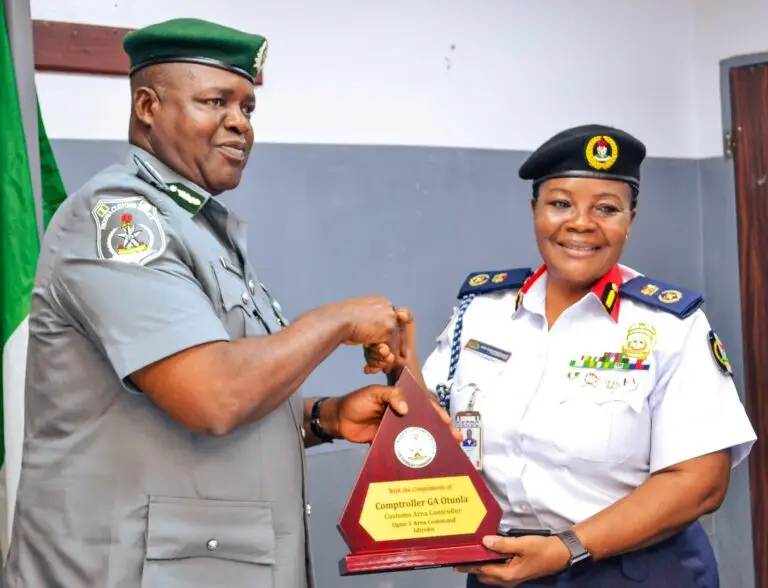
The Nigerian Security and Civil Defence Corps (NSCDC) has reaffirmed its commitment to partner with the Joint Border Security Committee in Idiroko, to boost national security across the borders.

Mr Zakari Chodo, the Public Relation Officer (PRO) of Idiroko Customs Command, disclosed this in a statement on Thursday in Ota.

Chado said that the State Commandant of NSCDC, Mrs Remi Ekundayo, reiterated this during a courtesy visit to the Joint Border Security Committee in Idiroko, Ogun, on Wednesday.

Ekundayo said that the visit was part of the corps efforts at enhancing inter-agency collaboration that would improve national security and cross border trades.

She emphasised the corps role in preventing pipeline vandalism, safeguarding telecommunications masts, streetlights, railway tracks, and other critical national assets.

She also highlighted the corps’ dedication to disaster response, protection of lives and properties, and bolstering national security.

“But the NSCDC cannot achieve these goals alone without the support of all state security agencies,” she said.

Ekundayo also said that the Agro Rangers unit, established in 2016 in collaboration with the Federal Ministry of Agriculture, had achieved its mandate of resolving conflicts between farmers and herders, providing security for VIPs and protect national silos.

In his response, the Chairman of the Joint Border Security Committee, Godwin Otunla commended the NSCDC’s vital role in maintaining peace, protecting critical national assets, and supporting joint security operations within and around border communities.

Otunla, also the Nigeria Customs Service (NCS) Area Comptroller for Ogun 1 Command, Idiroko, applauded the synergy among security agencies in the area.

He attributed the successes recorded in curbing smuggling, illegal migration, trafficking, and other trans-border crimes to the synergy.

He stressed the need for continued collaboration and intelligence sharing to address dynamic challenges along the corridor.

The NSCDC commandant was received by heads of the NDLEA, Nigeria Immigration Service, DSS, and other security agencies manning the Idiroko-Igolo border.

The visit concluded with the presentation of plaques from both agencies.

$400m Otakikpo Crude Oil Terminal: First of Its Kind in Nigeria … Unlocks Access To 40 Stranded Oil Fields In N/Delta

0

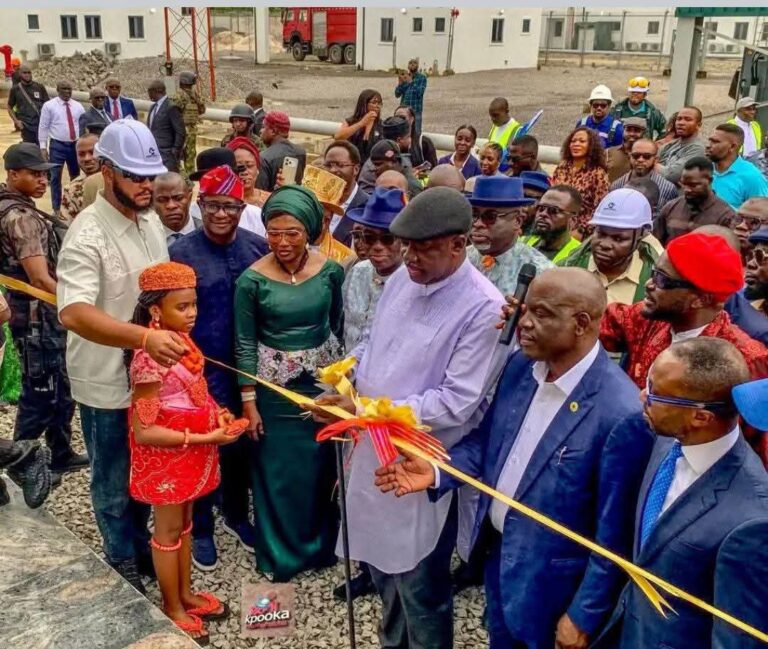
Rivers State has become the first state in Nigeria to host a crude oil exporting terminal following the commissioning of the $400 million Green Energy International Limited (GEIL) Crude Export Terminal on Wednesday by President Bola Ahmed Tinubu.

President Tinubu stated that the project marks a new era in Nigeria’s oil and gas sector, aligning with his administration’s core priorities of boosting crude oil production and ensuring a secure, transparent, and efficient evacuation system.

He explained that the Otakikpo terminal will not only serve GEIL’s production but will also open new evacuation outlets for marginal and stranded fields across the Niger Delta region. This, he said, would result in a significant increase in reserve barrels and create greater economic value.

The Minister of State for Petroleum Resources (Oil), Senator Heineken Lokpobiri, represented the president at the event.

Tinubu emphasized that the project exemplifies his administration’s expectations of current licensees. He further noted that with the introduction of globally competitive fiscal frameworks and incentives, he expects operators to meet their minimum work obligations and ensure steady productivity.

In reference to the peace resolution between the people of Ogoni and the Federal Government, the President stated that the government is working hand in hand with local communities and stakeholders to pave the way for the proper resumption of oil exploration activities in the area.

Tinubu also described the project as a notable advancement, demonstrating Nigeria’s collective commitment to peacebuilding, collaboration, harmony, and good governance. He stressed that the project’s flag-off marks a renewed confidence in Rivers State and the Niger Delta region.

“Today’s commissioning is more than just the opening of a terminal; it is a testament to Nigeria’s resilience and commitment — a new era of indigenous participation and progress in the oil and gas sector,” he said.

Addressing the financing challenges in the oil and gas sector, President Tinubu declared the end of such an era, assuring that the proposed $5 billion African Energy Bank (AEB) would soon begin operations to provide easier access to funding.

“Let me also assure Green Energy that the era of seeking finance elsewhere will soon be over. We have discovered that Africa’s biggest challenge is access to finance, which is why we established the African Energy Bank, ready to take off.
Nigeria, as the host country, has met all its obligations — legal and financial — and we expect the bank to commence operations any moment from now,” he said.

The president also highlighted crude oil evacuation as a major issue, noting that the new 750,000-barrel facility, which is expandable to 3 million barrels, will help tackle existing challenges in the sector.

He warned against holding oil licenses indefinitely without carrying out meaningful fieldwork, emphasizing that “the era of idle licenses is over.”

“There is always a minimum work obligation, and it must be met by all who hold marginal licenses. If you lack the capacity to deliver, it’s better to seek other ventures rather than waste time in the oil and gas sector,” he cautioned.

The Chief Executive of the Nigerian Upstream Petroleum Regulatory Commission (NUPRC), Gbenga Komolafe, described the terminal as historic on two fronts: it expands Nigeria’s crude export infrastructure at a critical time and showcases the ability of Nigerian operators to deliver world-class projects.

Komolafe noted that the Otakikpo terminal aligns with Nigeria’s 1.8 million barrels per day production target and supports the country’s drive for efficient crude evacuation. He added that creating an alternative export hub in Rivers State would reduce over-reliance on existing terminals, many of which are operating at near-full capacity and are vulnerable to security and pipeline disruptions.

Commending indigenous operators Komolafe stated that they now account for 30 per cent of national production, a milestone that reflects Nigeria’s growing control of its oil and gas industry. He further observed that the Otakikpo terminal has transformed local operators’ dependence on international oil companies, granting them greater control over evacuation, improving margins, reducing delays, and enhancing competitiveness.

Prof. Anthony Adegbulugbe, Chairman and Chief Executive of GEIL, stated that the terminal currently has a storage capacity of 750,000 barrels, expandable to 3 million barrels, with a pumping capacity of 360,000 barrels per day. He also disclosed that since June 2025, the facility has completed four export operations totaling one million barrels of crude oil.

Adegbulugbe described the terminal as a catalyst for national renewal, unlocking access to over 40 stranded fields in the region, and more than 3 million barrels of reserves previously delayed by the lack of export infrastructure. According to him, these fields alone could contribute over 200,000 barrels per day to Nigeria’s total production.

He expressed pride in the project’s indigenous origin and execution:

“This should give us all confidence — Nigerian innovation can drive Nigerian success. Indigenous operators can execute world-class projects with excellence, within budget, and ahead of schedule,” Adegbulugbe said.

By Miracle Chidinma Amaechi

FG Announces Reduction in Food Prices as Crop Production Increases

0

The Federal Government has announced a reduction in food prices across the country, attributing it to a steady increase in local crop production.

According to the 2025 Agricultural Performance Survey Report, the nation is currently experiencing lower food prices and a significant rise in the production of major crops.

In a press statement on Wednesday, Senator Abubakar Kyari, Minister of Agriculture and Food Security, stated that the report records steady growth in the production of staples such as rice, maize, sorghum, millet, cowpea, yam, and cassava — representing a marked increase compared to 2024.

He noted that, with the Federal Government’s interventions in input support, extension service delivery, and mechanization, there has been a notable decline in food prices nationwide as well as continuous improvement in supply conditions.

Kyari commended the National Agricultural Extension and Research Liaison Services (NAERLS), Ahmadu Bello University, and the ministry’s technical departments for their roles, describing the development as a new benchmark for excellence and transparency in national agricultural performance reporting.

He described the survey as an essential tool for evidence-based planning, monitoring, and policymaking in Nigeria’s agricultural sector, explaining that it provides a framework for analyzing production outcomes, sectoral constraints, and farmer experiences to guide future interventions.

“The rigour of data collection across all 36 states and the FCT, the integration of new datasets such as the farm family census and tractor census, and complementary studies on commodity prices demonstrate a new standard of excellence and transparency in national agricultural performance reporting,” Kyari said.

He expressed satisfaction with the resilience of farmers nationwide, exemplifying fortitude despite torrential rains, widespread flooding, and pest attacks.

Kyari identified rising input costs and weak post-harvest infrastructure as major challenges, noting that higher prices of fertilizers and fuel have limited productivity among smallholder farmers. He also pointed out that uneven mechanization coverage and post-harvest losses in the South-West and North-Central zones threaten food availability and farmers’ income.

The minister called for stronger action to improve animal health systems and aquaculture development, to curb livestock disease outbreaks and declining fishery yields, as well as enhanced measures to address climate variability.

Reaffirming the government’s commitment to data-driven agricultural planning, Kyari announced plans to formalize a Dry-Season Agricultural Performance Survey to complement the wet-season exercise.

“We shall institutionalize the Dry-Season Agricultural Performance Survey as a complement to the Wet-Season APS, ensuring that national agricultural planning becomes a year-round, data-driven exercise,” he stated.

Kyari further revealed that the ministry will intensify support for local fertilizer production, enhance climate-smart agricultural initiatives, and strengthen extension services by recruiting and equipping more agents while leveraging digital tools to reach more farmers.

On mechanization and inclusion, he emphasized the need to empower young people and women through technology and post-harvest infrastructure.

“We recognize the urgency of modernizing mechanization services, promoting the participation of youths and women through affordable, labour-saving technologies, and investing in post-harvest handling, storage, and processing facilities to minimize losses and boost value addition,” he said.

Kyari also urged the private sector, research institutions, and subnational governments to collaborate with the federal government to accelerate growth in the agricultural sector.

By Miracle Chidinma Amaechi

139 Million Nigerians Living In Poverty Despite Reform Gains- World Bank

0

The World Bank has estimated that about 139 million Nigerians are living in poverty. This is despite positive outcomes of recent macroeconomic reforms which are yet to translate into real improvements in citizens’ living

World Bank Country Director for Nigeria, Mathew Verghis, who stated this in Abuja on Wednesday during the launch of the latest Nigeria Development Update (NDU) report in Abuja, said
millions of Nigerians have yet to feel the benefits of the reforms, warning that macroeconomic gains must be swiftly converted into welfare improvements.

The new NDU report, titled “From Policy to People: Bringing the Reform Gains Home,” outlines a three-point agenda for sustaining progress — reducing inflation, improving the efficiency of public spending, and expanding social safety nets.

Verghis commended the federal government for implementing bold policy reforms — particularly the removal of petrol subsidy and exchange rate unification — noting that these actions have begun to stabilise the economy and lay a stronger foundation for long-term growth.

“Over the last two years, Nigeria has implemented major reforms around the exchange rate and petrol subsidy. These policies have laid the foundation for transforming the country’s economic trajectory for decades to come,” he said.

He said the effects of these measures are becoming evident in improved revenues, stabilising foreign exchange markets, growing reserves, and a gradual decline in inflation.

“Growth has picked up, revenues have risen, debt indicators are improving, the FX market is stabilising, reserves are rising, and inflation is finally beginning to come down. These are major achievements, and many countries would envy them,” Verghis stated.

“Despite these stabilisation gains, many Nigerians are still struggling. In 2025, we estimate that 139 million Nigerians live in poverty. The challenge is clear: how to translate reform gains into better living standards for all,” he said.

Verghis emphasized that curbing food inflation is particularly crucial to protecting the poor and maintaining public support for ongoing reforms.

“Food inflation affects everyone but hits the poor the hardest. It also threatens to undermine political support for reforms. Tight monetary policy is essential, but it must be complemented by structural measures that tackle supply and market bottlenecks,” he explained.

He called for better management of public resources and stronger safety net programmes to cushion economic hardship and promote inclusive growth.

“These are not abstract ideas — they are practical steps that can turn macro-stability into improved livelihoods,” he said.

Verghis reaffirmed the World Bank’s commitment to supporting Nigeria’s reform agenda through policy advice, technical assistance, and financial support aimed at fostering sustainable development and shared

FG Begs ASUU to Shelve Proposed Strike, As 14-Day Ultimatum Nears … Yayale Ahmed Committee to Present FG’s Fresh Offer To ASUU

0

The Federal Government has appealed to members of the Academic Staff Union of Universities (ASUU) to shelve the proposed strike action, as the government is prepared to resolve all the lingering issues comprehensively and holistically.

Minister of Education, Dr Olatunji Alausa, made the appeal in Abuja at a news conference held before the meeting of the high-level committee on FGN/ASUU 2025 proposed agreement on Wednesday.

Alausa said President Bola Ahmed Tinubu has directed that the ASUU proposed strike be averted, affirming the commitment and political will of the President to resolve all the contending issues that would be mutually acceptable and respectful to all the staff unions.

He said there was no basis for ASUU or any other staff unions in territory institutions to embark on industrial action, stressing that the directive of the President is clear, “strike must be averted for Nigerian children to be in school”.

Recall that ASUU, last week, issued a 14-day ultimatum to the Federal Government to meet its demands or face industrial action.

The decision was reached at the union’s National Executive Council (NEC) meeting held on September 28 at the University of Abuja

Some of the demands of ASUU include the re-negotiation of the 2009 ASUU-FGN agreement, sustainable funding and revitalisation of universities, an end to the victimisation of ASUU members at Lagos State University (LASU), Kogi State University (now Prince Abubakar Audu University), and the Federal University of Technology, Owerri (FUTO), among others.

The Minister noted that the meeting on the ASUU proposed strike was a technical working group to finalise components of the condition of service for university workers and a counteroffer to ASUU.

He disclosed that by tomorrow (Thursday), the Yayale Ahmed-led Federal Government Tertiary Institutions Expanded Negotiating Committee would meet with the leadership of ASUU to present the government’s offer to them.

He revealed that the committee has reached out to ASUU and other unions in tertiary institutions to start giving dates and times when they will meet.

Nigeria Needs To Mobilise Investments For Sustainable Development, Says Obasanjo

0

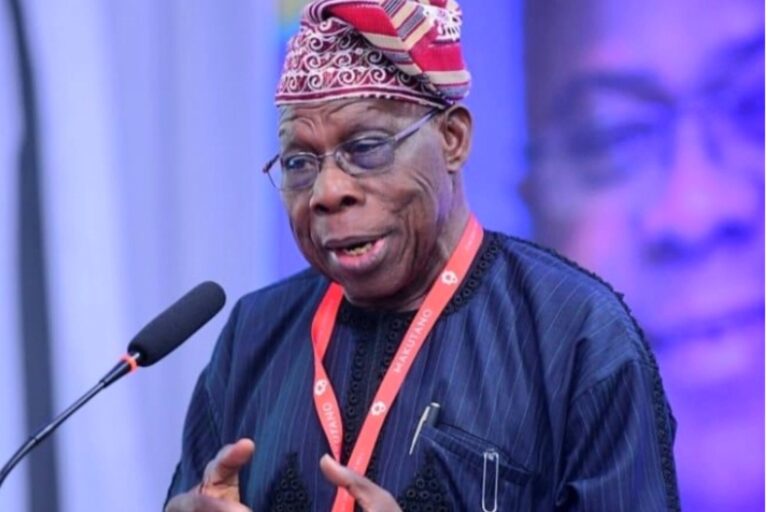
Former President Olusegun Obasanjo says Nigeria needs to mobilise private sector investments to fast track sustainable economic advancement.

He said this in Bauchi on Wednesday at the inauguration of the International Conference Centre (ICC), constructed by Bala Mohammed’s administration.

The centre was named after the first Premier of Northern Nigeria, Sir Ahmadu Bello.

Obasanjo highlighted that both local and international investments must be mobilised to accelerate national economic growth.

“With what we have; we can show the world that we are part and parcel of the world. What others have and pride themselves about, is not more than what we have.

“Some people don’t even have half of what we have. We have a world packed centre which can be develop and be made one of the tourist attractions in Nigeria.

“The people that will be coming here will be able to stay in the hotels, interact, have discussions and conferences in this ICC, and make Bauchi a centre of attraction and tourism for Nigeria.

“Not only are we commissioning this, we are starting with a conference to talk about investment, and what do we need in Nigeria today? We need to mobilise investments from Local and from the international,” he said.

Obasanjo also promised to showcase Bauchi to the world with a view to attract investments to the state.

Mohammed said the ICC was initiated to attract local and international businesses to invest in the state.

Also, Reuben Okoya, the contractor handling the project, said the centre was designed to accommodate 3,000 people, adding that 10 separate events could take place simultaneously at the centre.

The event was attended by Vice -President Kashim Shettima, Gov. Babagana Zulum of Borno, Sultan of Sokoto, Muhammad Sa’ad Abubakar III, deputy governors of Oyo and Plateau, Bayo Lawal and Josephine Piyo, among others.