Home Blog Page 141

Osinbajo Leads ECOWAS Election Observation Mission To Cote d’Ivoire

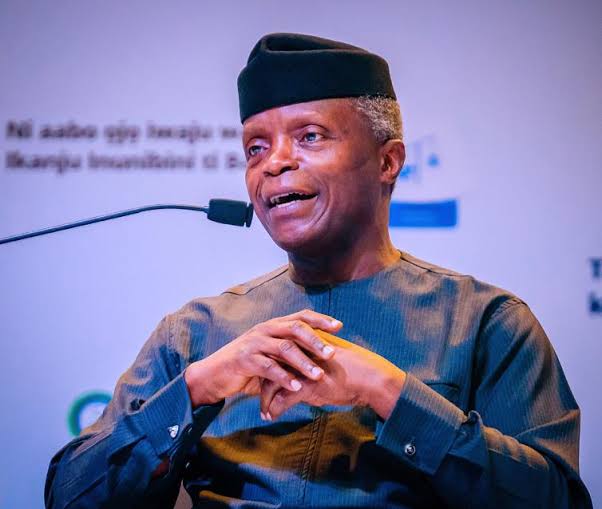
The Economic Community of West African States (ECOWAS) has appointed Nigeria’s former Vice President, Prof. Yemi Osinbajo, to lead its Election Observation Mission to the upcoming presidential election in Côte d’Ivoire.

ECOWAS Secretariat announced this in a statement made available to newsmen on Sunday in Abuja.

The election is scheduled for October 25.

The mission will be deployed from October 19 to October 29 in line with the provisions of the ECOWAS Supplementary Protocol on Democracy and Good Governance.

As Head of Mission, Osinbajo will lead a team of eminent West Africans tasked with engaging key national stakeholders to support a peaceful and credible electoral process.

The team will also engage stakeholders towards fostering cooperation with other international and domestic observer groups and assessing the conduct of the polls.

The deployment of this Observation Mission underscores ECOWAS’s unwavering commitment to promoting peace, stability, and credible elections in the sub-region.

Stockbrokers Must Embrace, Blockchain, AI Technologies, Ethics For Customers Satisfaction -SEC

0

The Securities and Exchange Commission (SEC) has urged stockbrokers to uphold the highest level of professionalism and ethical conduct to ensure a fair and transparent market.

The Director-General of SEC, Dr Emomotimi Agama, said this in a notice to stockbrokers in Abuja on Sunday.

Agama said upholding ethical conduct was necessary to enable investors to have confidence that intermediaries who managed their wealth were guided by the highest standards of honesty and competence.

He said digitisation, ethics, and sustainability formed the foundation of a modern, inclusive and resilient capital markets.

“Across the world, capital markets are being reshaped by technological innovation.

”The digital era has introduced new possibilities from online trading platforms and digital assets to data analytics, blockchain, and Artificial Intelligence.

”These innovations are changing how we raise capital, how we invest, and how we supervise,” he said.

The director-general said the commission had embraced technological as an opportunity to enhance efficiency, transparency, and investors’ protection.

”We are also actively engaging with stakeholders including the Chartered Institute of Stockbrokers, to deepen digital literacy and capacity-building across the market.

”As technology evolves, so must our skills, our ethics, and our shared commitment to fairness and professionalism.

“No amount of innovation can replace the foundational importance of ethics.

”A truly transformative capital market must be built on integrity, transparency, and accountability,” Agama said.

NDLEA intercepts US, UK, DRC-bound Illicit Drugs Concealed In Frozen Snails, Bulbs At Lagos Airport

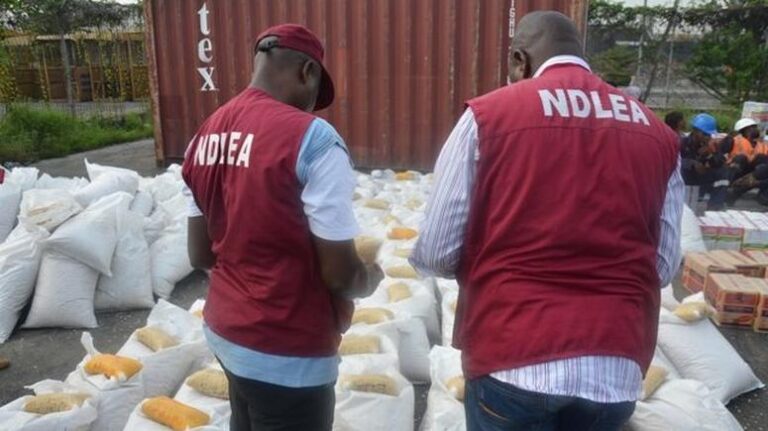
The National Drug Law Enforcement Agency (NDLEA) has intercepted consignments of illicit drugs heading to the United States of America, the United Kingdom and the Democratic Republic of Congo, at the Murtala Muhammed International Airport (MMIA) Lagos.

This is contained in a statement by the Director, Media and Advocacy, NDLEA, Mr Femi Babafemi, issued to newsmen on Sunday in Abuja.

Babafemi said that the drugs concealed in frozen snails, electrical bulbs, and female clothes were intercepted at a courier company in Lagos.

He said that at least two suspects linked to an attempt to export the illicit substances had already been taken into custody.

According to him, one of them, a cargo agent, was arrested on October 7, following the discovery of 15 parcels of skunk, a strain of cannabis.

He added that it was concealed in 10 pieces of giant rechargeable electrical bulb he presented in a carton, for airfreight to Democratic Republic of Congo (DRC) at the export shed of the Lagos airport.

“Another of the suspects in custody is a 48-year-old, who is a UK-based Public Health Assistant. He was also arrested on Sunday, October 12, at the departure hall of terminal 2 of the airport, in Ikeja.

“This followed the discovery of frozen snails used to conceal 2,300 pills of tramadol, 225mg in her luggage, while heading to Manchester, United Kingdom, on a Qatar Airways flight.

“Attempt by another syndicate to export 810 pills of bromazepam hidden in female clothes going to the U.S., was also thwarted by NDLEA officers, at a courier company in Lagos, on Thursday, Oct. 16,” he said.

Meanwhile, in Adamawa, a suspect was intercepted at an NDLEA check point in Namtari, Yola South Local Government Area (LGA) with 38,270 pills of tramadol.

Babafemi noted that the pills were concealed in the spare tyre, boot as well as the door compartments of the Honda Civic car, which he drove all the way from Benin Republic, to smuggle the consignment into Nigeria on Sunday, Oct. 12.

‎In a related development, not less than 53, 250 kilograms of skunk were destroyed on a 21.3 hectares of cannabis farm in Ilawe Ekiti, in Ekiti state, with 70 bags of the same psychoactive substance.

Babafemi added that the drugs weighing 1,140kg were recovered by operatives of the NDLEA, during an operation that lasted between Sunday, Oct. 12 and Monday, Oct. 13.

This, he said, followed the destruction of 17,400kg skunk on 6.96 hectares of plantation by the NDLEA operatives at Aponmu forest reserve, Akure, in Ondo on Sunday, Oct. 12.

Similarly, in Oyo, four suspects were nabbed with 596kg skunk at Apata-Ako, Igboora, while two others were arrested with 273kg of the same substance at Odo-Oyan, Igangan, on Thursday, October 16.

In Ogun, a suspect was arrested in possession of 88kg skunk on Wednesday, October 15, by NDLEA operatives at Ona – Imeko, in Ogun.

“Another suspect, 42, was nabbed with 13,000 pills of opioids along Onitsha- Owerri road, in Imo state.

“A total of 74.5kg skunk was also recovered from the store of a suspect, at Umuogbo – Agu village, Enugu state on Saturday, October 18,” he stated.

In another development, no fewer than 11 bags of skunk weighing 117kg were recovered from the base of a suspect in the Mushin area of Lagos on Saturday, Oct. 18.

Babafemi added that a total of 80,000 bottles of codeine-based syrup were also intercepted in a container earlier watch-listed by NDLEA, coming from India.

This, he said, was during a joint examination of the shipment with men of the Customs service and other security agencies at the Apapa port on Tuesday, October 14.

“In like manner, Commands and formations of the agency across the country continued their War Against Drug Abuse (WADA) sensitisation activities to schools, worship centres, work places and communities, among others in the past week.

“These include: WADA advocacy lecture to students and staff of the Commercial Grammar School, Igogo Ekiti; Junior Secondary Smart School, Kasarawa, Katsina and Government Technical College, Ahoada, Rivers.

“Others are Government Girls Junior Secondary School, Yau Danzabuwa, Babura, Jigawa state; Attarbiyya Community College, Hotoro, Kano and Fuga Mixed Secondary School, Fuga, Edo state.

“The agency also carried out the sensitization at St. Cyprian Special Science School, Nsukka, Enugu, and St. Peter’s College, Olomore, Abeokuta in Ogun, among others.”

According to Babafemi, the NDLEA Chairman, retired, Brig. Gen. Buba Marwa has commended the officers and men of MMIA, Apapa, Lagos, Ekiti, Adamawa, Oyo, Enugu, Ogun, Ondo, and Imo Commands, for the arrests and seizures.

Marwa urged them and their colleagues across the country, not to relent in their ongoing balanced approach to the drug control efforts of the agency.

Experts List Easier Means Of Boosting SMEs Formalisation

0

Some trade experts have called for a harmonised simplified, low cost, and time limited incentive to encourage micro businesses to formalise or register their ventures.

The experts said this in the MoniePoint Informal Economy Report, 2025, unveiled in Abuja.

Foyinsolami Akinjayeju, the Chief Executive Officer of Enhancing Financial Inclusion and Advancement (EFInA), said that time-limited incentives for formalisation such as fee waivers would help small businesses to register.

Akinjayeju said access to grants or training for newly registered micro-businesses would also encourage informal businesses to formalise their enterprises.

According to her, businesses will formalise and thrive when compliance is both easy and rewarding, and when finance is structured to support, not strain already thin margins.

”To simplify compliance and incentivise
formalisation, create a tiered registration framework where micro-businesses begin with minimal requirements and scale obligations as they grow.

”Embed compliance into mobile and agent-based platforms to cut friction; and ensure that registration immediately unlocks tangible value—such as access to finance, skills programmes, or temporary tax holidays,” she said.

The Director-General, Lagos Chamber of Commerce and Industry, Dr Chinyere Almona, said in the report that executing targeted fiscal incentives required pragmatism, precision, and phased implementation.

Almona said a tiered system where micro businesses, such as street vendors or family-run shops, enjoyed simplified registration processes requiring minimal documentation would encourage them to formalise their enterprises.

”Instead of demanding board resolutions from micro-traders, the government can accept mobile-based registrations linked to NIN/BVN, drastically reducing friction.

”Fiscal support, tax credits, subsidised digital tools, and small-scale infrastructure grants should be front loaded, ensuring operators see the tangible benefits of engaging with the government,” she suggested.

The Chief Economist, BusinessDay Media, Dr Oluyemi Adeosun, said financial incentives linked to digital and tax compliance could be between 20 and 30 per cent of micro-businesses transition to semi-formal operations by 2030.

Adeosun said the move would help increase the sector’s Gross Domestic Product contribution from 58 per cent to 65 per cent.

The Managing Director, MoniePoint Microfinance Bank, Mr Babatunde Olofin, had said the reason for bank’s existence was to create a society where everyone experienced financial happiness and their dreams powered irrespective of their sizes or status.

Olofin said the report would provide policy makers and ecosystem stakeholders with data and insight that would drive inclusive and evidence-based decisions.

He said the goal of the company was to unleash Nigeria’s full economic potential and ensure that the most vulnerable households were not left behind.

Olofin said this year’s report deepened employment, taxation, savings behaviour and business operations within the informal economy.

”The informal economy report is more than just a study. It is a mirror of Nigeria’s economic reality, especially for millions who make their living outside the formal system,” he said.

Mathematics Remains Compulsory For O’Level Arts Students, Says FG

0

The Federal Government has said Mathematics is a compulsory subject for all students sitting for O-Level examinations.

This was conveyed in a press statement issued by Boriowo Folashade, spokesperson for the Federal Ministry of Education, on Sunday.

Earlier on Tuesday, Boriowo had announced that senior secondary school students in the arts and humanities would no longer be required to present a credit in Mathematics in their Senior School Certificate Examination (SSCE) for tertiary admissions.

Boriowo had stated that the reform became necessary after years of restricted access, which denied many qualified candidates admission opportunities.
‘I fear for her life’, Ned Nwoko opens up on rift with Regina Daniels
Yahaya Bello describes Tinubu as angel sent by God to fix Nigeria
She had said while over two million candidates sit for the Unified Tertiary Matriculation Examination annually, only about 700,000 gain admission.
However, the issue had generated controversy as some educationists rejected the policy shift, saying it would further encourage laziness among students and negatively impact their academic excellence and performance.

But in the new statement, Boriowo said the new admission guidelines do not exempt any candidate from registering and sitting for Mathematics.

“All students must continue to register and sit for English Language and Mathematics in their O-Level examinations,” the statement read.

The statement added that while institutions may now admit candidates into certain programmes where credit passes in either English or Mathematics are not mandatory, students are still required to take both subjects during their O-Level exams.

“This adjustment affects only admission criteria, not the requirement to take these subjects,” she clarified.

According to the statement, the reform supports the Federal Government’s vision of equitable access, inclusivity, and human capital development.

“English and Mathematics remain vital tools for communication, reasoning, and lifelong learning,” the Ministry noted.

The Ministry also urged students, parents, and stakeholders to rely solely on official communication channels for verified policy updates

Asked if the new development meant a U-turn on the earlier stance of the ministry, Boriowo said, “No, no U-turn — it’s a clarification on the streamlined admission requirements to expand access to tertiary education, please.”

Alleged Genocide: Intersociety Lists 21 Steps For FG To End Controversy

0

Amid allegations of genocidal killing targeted against Christians in Nigeria, a rights group, International Society for Civil Liberties and Rule of Law, Intersociety, has advised the Nigerian Government to take certain steps in order to end the controversy.

Although the Nigerian government has dismissed the claims of genocide as unfounded, Intersociety has listed 21 measures it said were required to return Nigeria to secularism, freedom of worship devoid of what it called ‘religicide’.

In a statement released on Sunday, and signed by Emeka Umeagbalasi, Head, Intersociety, Obianuju Joy Igboeli, Human Rights Lawyer/Head, Dept. of Civil Liberties and Rule of Law, Chidinma Udegbunam, Human Rights Lawyer/Head, Dept. of Campaign and Publicity, and Ogochukwu Obi, Deputy Head, Dept. of Int’l Justice and Human Rights, Intersociety said its stance was vindicated by the findings of Mike Arnold of the City of Blanco, Texas, USA.

The group outlined 21 measures to be implemented by the federal government, and advised the government to stop defending the indefensible, and that time was longer on their side.

The 21 measures include: “Ensuring the supremacy of the provisions of the country’s 1999 Constitution above all domestically enacted auxiliary laws including supremacy of Sections 10 (no state religion) and 38 (freedom of religion and worship) and the entire constitutional Chapter Four above any other law passed or deemed to have been passed by National Assembly by way of an Act or House of Assembly of any State by way of a State House of Assembly Law.

“Ending all semblances of ‘State Jihadism’ in Nigeria and allowing the country to be operated and governed on secularism guarded by the provisions of the secular 1999 Constitution.

“Ending and abolishing all forms of ‘structural, physical and cultural violence’ and enthronement of ‘negative and positive peace’ and ushering the country into ‘Human Security Governance’ and massive growth and development.

“Mustering enough political will to convene an electoral constituent National Conference where the country’s 384 ethnic nationalities and its multi-religious groupings shall be converged to discuss and agree on how best to live in peace, religious harmony and ethnically-induced peaceful co-existence.

“Nigerian Government must end crude, brutish, clannish, illiterate, hate, discriminatory and ethno-religious soldiering and policing especially in Eastern Nigeria.

“Nigerian security forces’ operations and law enforcements must be intellectually and intelligence driven and maddening resort to indiscriminate killings, wanton destruction of properties, hate policing and soldiering, ethno-religious profiling, false labeling, mass arrests, indefinite detention without trials, prosecutorial vindictiveness, mass criminalization, hearsay conclusions and jungle justice must be stopped and discontinued.

“There must be an end to flooding of Eastern Nigeria with senior Northern Muslim officers from the country’s security forces as heads of key military and policing formations in the two regions; a case study of Imo State where despite being a State with more than 95% Christian population, all the four key security and policing establishments are manned by senior Northern Muslim officers till date.

“There must be an end to Igbo-phobia, hatred and ethno-religious profiling including hatefully tagging every Igbo or South-East respected and independent person or group of persons or bodies as ‘IPOB-affiliated/sponsored’; just to wickedly and violently verbally scare them from adding their credible and independent voices on issues of critical national or regional public importance.

“There must also be an end to indiscriminate killings, abductions and disappearances in the East by security forces on the grounds of ethnicity and religion or by way of mass labeling the victims ‘IPOB or ESN’.”

Intersociety also demanded that security agencies must account for estimated 5000 Easterners, especially Igbo-Southeasterners, which it claimed were secretly face-bagged and transported at late night and dumped from August 2015 till date in several secret military and other security dungeons scattered in different parts of Northern Nigeria.

Also, “there shall be de-radicalization of the Nigerian security forces and their re-orientation and re-integration into Nigerian secularism and law enforcement professionalism.

“There must be an end to ‘lawless or above the law status’ accorded members of the Fulani population in Nigeria in which their jihadist elements must be routed out and disarmed.

“The Government direct or vicarious policy of facilitating the flooding into Nigeria of African jihadists of whatever names called, must end and jihadists presently quartered in the country’s mapped 11,129 forests disarmed and sent back to where they were directly or indirectly brought from.

“Nigeria’s indigenous farming communities displaced from their ancestral lands, must be restored and protected by the Nigerian Government.

“Nigerian Government and the country’s security forces must inexcusably give account of the whereabouts of more than 850 Christian hostages still held inside the Rijana Forest in Kachia County of Kaduna State.

“Abolishing Muslim-Muslim Presidency (occupation of offices of the President and the Vice President by Muslims) in Nigeria and restore power sharing arrangements between Muslims and Christians in places like Kaduna, Adamawa, Gombe, Kogi, Nasarawa, etc., using proportionality of Muslim and Christian population in the areas.

“Conducting a credible national census which has not been conducted since 2006 and identifying illegal aliens including gun-wielding jihadists among them and having them repatriated to their countries of origin.

“Putting national leaders of MACBAN, FUNAM and allied others on red notice, with a stated timeframe, by giving them matching orders to rout out jihadist elements within their foot-soldiers or herdsmen by having them disarmed, or be proscribed.

“Discontinuing jihad-enabler national policy of Fulani Cattle Ranching and flushing out Jihadists occupying vast areas of Niger State, Nigeria’s largest landmass State, recover the State from Jihadists and transform the State into Africa’s largest modern cattle ranching State, in the like of Ethiopia that recently inaugurated Africa’s largest hydroelectric dam worth not less than $5bn.

Report Of Coup Attempt False, Misleading- Defence Headquarters

The Defence Headquarters (DHQ) has described as false and misleading reports in an online medium alleging that the country’s 65th independence anniversary activities were cancelled over an attempted coup plot.

The DHQ urged the public to disregard the misinformation being circulated by purveyors of falsehoods and enemies of the nation.

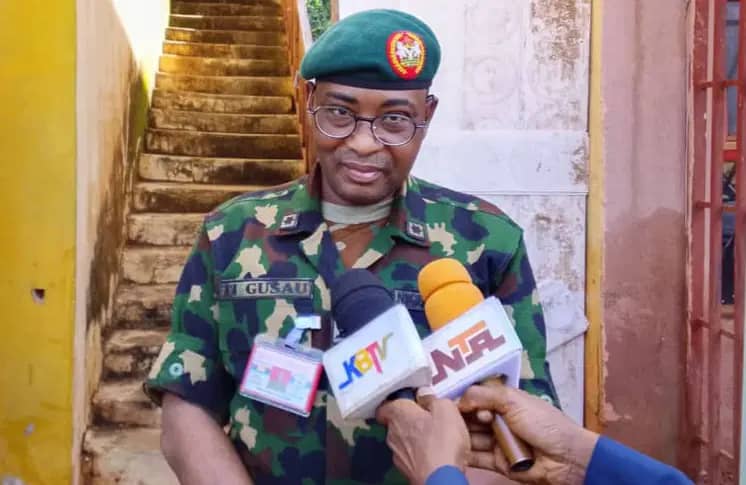
In a statement on Saturday by the Director, Defence Information, Brigadier General Tukur Gusau, the military said the publication, which also referenced the recent arrest of 16 officers, was intended to create tension and distrust among Nigerians.
The statement reads, “The attention of the Defence Headquarters (DHQ) has been drawn to a false and misleading report by an online publication insinuating that the cancellation of activities marking Nigeria’s 65th Independence Anniversary was linked to an alleged attempted military coup.

“The report also made spurious references to the recent DHQ press release announcing the arrest of sixteen officers currently under investigation for professional misconduct.

“The Armed Forces of Nigeria (AFN) wishes to categorically state that the claims by the said publication are entirely false, malicious, and intended to cause unnecessary tension and distrust among the populace.

“The decision regarding the cancellation of 65th independence anniversary parade was to allow Mr President attend a strategic bilateral meeting outside the country and for members of the AFN to sustain the momentum on the fight against terrorism, insurgency and banditry.

“Furthermore, the DHQ wishes to reassure Nigerians that the ongoing investigation involving the sixteen officers is a routine internal process aimed at ensuring discipline and professionalism is maintained within the ranks.

An investigative panel has been duly constituted, and its findings would be made public.

“The DHQ calls on all peace loving citizens to continue to provide necessary support to the security agencies.

“The FG, the legislature and the judiciary are working closely for the safety, development and well being of the nation. Democracy is forever.

“The DHQ urges members of the public to disregard the falsehood being circulated by the purveyors of misinformation and enemies of our nation.

“The Armed Forces of Nigeria remains firmly loyal to the Constitution and the Federal government under the leadership of the Commander-in-Chief of the Armed Forces, President Bola Ahmed Tinubu.”

When “Gown” Meets Industry: Lessons from RSU Students’ Visit to Oando … Postgraduate Students Learn Practical Fire Safety, Risk Management, And Emergency Response Systems During Industrial Tour

0

Postgraduate students of the Institute of Geosciences and Environmental Management, Rivers State University (RSU), Port Harcourt, have gained firsthand exposure to industrial fire safety and emergency management practices during an educational visit to Oando Plc’s Port Harcourt facility in Rivers State

The visit, which brought together PGD, MSc. and Ph.D. students, was part of the university’s effort to bridge the gap between academic learning and real-world application. The interactive session, held at Oando’s conference hall, was facilitated by the company’s Health, Safety, and Environment (HSE) Department.

Mr. Uzor Victor Ifeanyi, Team Lead for Fire and Emergency, Oando Energy Resources Nigeria Ltd., led the session, focusing on fire causes, prevention, and control measures. He reminded participants that safety regulations are often born from past tragedies.

Dr. Raphael Onoshakpor, Oando’s Deputy Division Manager, EHS, addressing the team

“Most safety rules are written in blood,” he said. “Do not make yourself the reason for a new safety rule. No amount of crude oil is as important as a drop of blood of our workers.”

He introduced the PEAR model—People, Environment, Assets, and Reputation—as a framework for prioritizing actions during emergencies, stressing the importance of hazard identification, mitigation, and timely reporting.

“An emergency, if not acted upon quickly, may escalate and cause damage to people, the environment, assets, and reputation,” he explained.

Mrs Ine Tamuno (left), Oando’s Manager of Special Projects, Port Harcourt, with Dr. Ibinabo Ogolo during the visit.

Students also received practical training in the use of fire extinguishers through the internationally recognized PASS technique—Pull, Aim, Squeeze, and Sweep—led by Mr. David Mirrilla, Oando’s Chief Fire Officer.

Oando’s Manager of Social Projects, Mrs. Ine Tamuno, encouraged participants to apply safety principles beyond the workplace.

“Having safety knowledge without passing it down to others at home is zero,” she said. “Safety drills should be part of our daily lives.”


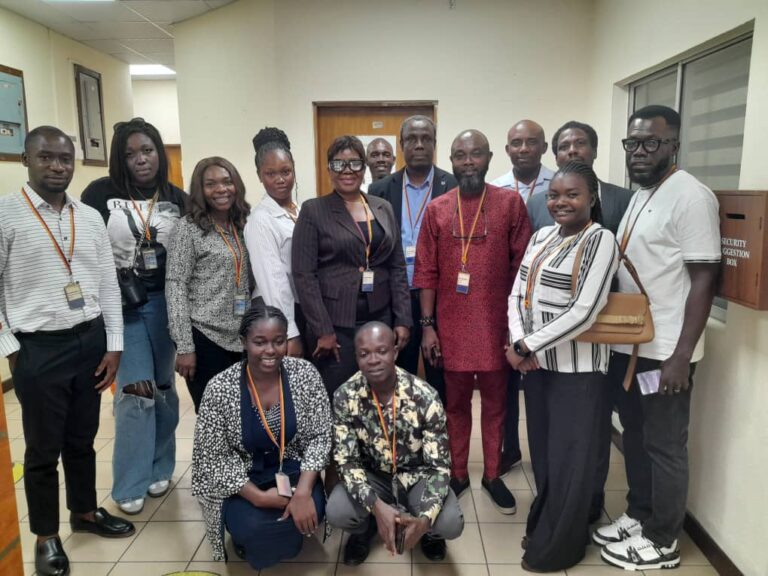
Lecturers and students, after the visit.

She added that while panic is natural during emergencies, preparedness determines effective response.

For Dr. Kingsley Okpara, Associate Professor and lecturer at RSU’s Institute of Geosciences and Environmental Management, the event was “enriching” and a demonstration of how collaboration between academia and industry can enhance research, capacity building, and curriculum development in disaster management and safety studies.

Responding, Mr. Ifeanyi supported the call for sustained collaboration, revealing that the oil and gas industry was considering establishing a university to institutionalize knowledge transfer between generations.

“The industry is planning to build a university because many experienced professionals are leaving without passing on their expertise,” he said. “Why not own the oil industry and become people of value? We are characterized by smartness.”

He added that such partnerships could help develop structured frameworks linking theory with practice.

“Having a curriculum co-created by universities, academics, and practitioners will strengthen knowledge transfer,” he said.

Oando’s Port Harcourt General Manager, Mr. Solomon Ikanade Agba, reaffirmed the company’s commitment to education.

“This is Rivers State University; they are our neighbours, and anything that has to do with education, we should be there,” he said.

Dr. Raphael Onoshakpor, Deputy Division Manager, EHS Oando, urged students to remain committed to their studies.

“We are in the industry, and we are waiting for some of you to come and join us. Support your lecturers—it’s also difficult for them,” he advised.

Dr. Ibinabo Ogolo, Institute of Geosciences and Environmental Management, RSU, a research fellow and lecturer thanked Oando for hosting the students, noting that the visit offered invaluable exposure to industrial realities.

“Today’s visit enhanced our understanding of theoretical concepts and exposed us to real-world challenges and opportunities,” she said.

Students expressed excitement about the experience.

“It was very engaging and educating,” said Sampson Eni, a Ph.D. student.

“It shows that what we are taught in class applies in the field,” added Ikenna Chukwuchindo, an MSc student.

“The experience was worth it and an added knowledge to the previous ones we’ve been taught, said Joyce Momoh, another MSc. student.

The session ended with renewed optimism for greater collaboration between academia and industry, as Oando reaffirmed its commitment to safety, education, and innovation in building Nigeria’s next generation of professionals.

By Miracle Chidinma Amaechi

#FreeNnamdiKanuNow: Court Bars Sowore, Others From Protesting Around Aso Rock Villa, Others

0

The Federal High Court in Abuja has restrained Mr Omoyele Sowore, publisher of Sahara Reporters, and others from protesting in some areas in Abuja, including the Aso Rock Villa, on Monday for the release of detained Nnamdi Kanu.

The court also barred the protesters from any where close to the villa, National Assembly, Force Headquarters, Court of Appeal, Eagle Square and Shehu Shagari Way, pending the hearing of the motion on notice.

Justice Mohammed Umar, on Friday, granted the ex-parte motion moved by the police lawyer, Wisdom Madaki, on behalf of the Federal Republic of Nigeria (FRN), contrary to the earlier media reports in circulation.

The certified true copy of the enrolled order, signed by the court Registrar, Mr Kasim Muazu, and the presiding judge, Justice Umar, was made available to The Atlantic Bell on Saturday in Abuja.

The judge also made an order of abridgement of time “within which the respondents will respond to the application on notice to cause the ex-parte order be set aside on Monday, the 20th of October, 2025 at 9.00am.”

This was also contrary to some media reports that Justice Umar adjourned the matter until Oct. 21 for the parties to appear in court.

“The respondents are hereby restrained in the interim from protesting in the following Areas; Aso Rock Villa, or anywhere close to Villa, National Assembly, Force Headquarters, Court of Appeal, Eagle Square and on Shehu Shagari way pending the hearing of the motion on notice.

“The court hereby abridged time within which the respondents will respond to the application on notice to cause this ex-parte order be set aside on Monday, the 20th of October, 2025 at 9.00am.

“The order of this court together with the motion on notice be served on the respondents today, Friday, the 17th day of October, 2025,” the judge ordered.

Justice Umar subsequently adjourned the matter until October 20 for hearing of the motion on notice.

“ISSUED AT ABUJA under the Hand of the Presiding Judge, Honourable Justice M. G. Umar, and the Seal of the Court this 17th day of October, 2025,” the enrolled order read.

The ex-parte motion, marked: FHC/ABJ/CS/2202/2025, the police, on behalf of FRN, sued five respondents.

They are Omoyele Sowore, Sahara Reporters Ltd, Sahara Reporters’ Media Foundation, Take It Back Movement (TIB), for the Transformation of Nigeria Or Any Form of Organisation or Any Other Person(s) Acting Either Express or Implied Instruction or Any Other Organisation or Group With the Like Intention; and Unknown Persons as 1st to 5th respondents respectively.

The motion dated and filed on October 16 sought one relief.

“An order of this honourable court restraining or ban protesters from protesting in the following areas, Aso Rock Villa or anywhere close to Villa, National Assembly, Force Headquarters, Court of Appeal, Eagle Square and Shehu Shagari way.

“And for such further orders as this honourable court may deem fit to make in the circumstances of this case.”

The affidavit in support of the ex-parte motion was deposed to by Bassey Ibithan, a police officer attached to Directorate of Legal Services, Force Headquarters, Abuja.

Mr Omoyele Sowore, publisher of Sahara Reporters, had planned to organised the protest for the release of Kanu, leader of the proscribed Indigenous People of Biafra (IPOB).

Sowore, the 2019 and 2023 presidential candidate of African Action Congress (ACC), had begun mobilisation for what he called a planned peaceful protest against the detention Kanu.

However, there have also been ongoing calls for political solution to Kanu’s trial who is facing alleged terrorism offence at the Federal High Court before Justice James Omotosho

Peace For Peace … Celebrating Bayelsa’s 2nd Female Editor-in-chief

0

PEACE FEKUMO Sinclair gets excited whenever she is assigned to go around town and grab a story. She goes about it with a sense of mission, with an awareness that she is in the process of making history, and glad to be a part of it. She demonstrated that passion when she was recruited into the editorial team that gathered bits and pieces of news for the maiden magazine story with which The Tide On Sunday broke new grounds in Port Harcourt in the last days of military rule.

The assignment was to fish out everything there was to know about Harcourt, the white man after whom Port Harcourt was named. Like her colleagues, Peace met with the high and low, out in the street and into exclusive offices, digging for what she could find and bring back to her editors. Her contributions came in useful, and the story emerged as a winning copy that established the reputation of the paper as the newest dazzle on the news stands in the Garden City and beyond.

Since then, Peace Sinclair has contributed to several exclusive stories, and written many of her own, all of them proudly displaying her by-line. From the beginning, Peace had no doubt about what she wanted to do in life. She wanted to be a journalist, simple and short. She did not need anyone to tell her to take the first step when she enrolled at the Times Journalism Institute, TJI, Imam Dauda Close off Bode Thomas Street, Surulere, Lagos, and dutifully took lessons on how to write a news story, how to write a features story, and how to write a magazine story.

For all of two years, from 1991 to1992, she got to know what makes media houses tick, and she resolved to be in the thick of the action. Peace thought that she stood a better chance in her chosen career if she equipped herself with a degree in History, and she was right. She pursued the course with great vigour and determination at the University of Port Harcourt, enrolling in 2002 and graduating four years later in 2006.

Now she can put all her stories in proper historical context. The events of the day go all the way to make history, and therefore it was right and proper to report the news of the day with probity and objectivity, always in the light of history. She subscribes to the dictum that journalism is history written in a hurry. Not surprisingly, Peace has already finished course work on her Masters degree in History & Diplomacy, and she is merely waiting to defend her thesis. Before you know it, Peace might jolly well become a don in history sooner than later.

Ask Peace what her primary interest is, and guess what she has to say. “I love travelling,” she says as if there was no need to debate the matter. “I have been to almost all the states in Nigeria.” Yes, travel is uppermost on the mind of Peace, and she is glad to recall that she gained the leverage to do so when she emerged as the Vice Chairman of the Nigerian Union of Journalists, NUJ, Bayelsa State chapter. She ranks as the only female journalist in Bayelsa who has gone so far as to serve two straight terms under the helmsmanship of Samson Amaran and Tarinyo Akono.

Journalism has taken Peace to Egypt, Holland, and China. She was in a position to secure a place in the various journalism exchange fellowship programmes initiated in those countries, and she came away with sufficient experience to recount the high points of her journey. “I stayed in Cairo, the capital of Egypt, for two weeks. Cairo is a beautiful city-state. I visited historic sites. It is a city of great historical significance. I visited the pyramids, and had an opportunity to see what Egyptian mummies, embalmed bodies, look like.”

In 2002, Peace Sinclair also visited Rotterdam, Holland, where she stayed for another two weeks in a journalism fellowship. But it was in China that she spent the longest stretch of time, six weeks in all, during which she stayed in three principal Chinese cities, namely Beijing. Guangzhou, and Zinou. The most remarkable memories that Peace took away on that trip came to her when she visited the CCTV cable television headquarters in the Beijing Central Business District. She also took note of how factories work in Beijing.

“I saw industrial robots in car companies, and I came to know that cars are machines and they are built by machines under the guidance of computers in the hands of human beings who use their minds to think. In China, it is the military, the Peoples Army, that undertakes public works. The engineering and technical corps of the army go to work in their military uniforms. They work at huge construction sites. They can be seen repairing bad roads or building new ones altogether. In other words, in China, to join the army is to undertake community service as a rule, and it is an army of great discipline.

“One thing I also learnt in China was this. There’s no room for careless spending.” And so saying, Peace told the story of what happened when Smart Adeyemi, in his capacity as national president of the NUJ and leader of the delegation, made a quip in his presentation to the effect that he could be entitled to twelve cars, if he wanted. In Nigeria, he declared, you can grab anything, leave your neighbour stranded, and get away with it.

Members of the Chinese audience were scandalized that this could ever happen at all. They couldn’t fathom why it should be so, why one person should have so much, and leave others without anything. They were so shocked, so petrified by the selfish proposition, that Smart Adeyemi had to remind them that he was merely putting forward a stray hypothesis. They need not take it out on him.

That was long before Smart Adeyemi became a Senator of the Federal Republic of Nigeria. But for Peace Sinclair, the lesson was clear. “Our leaders are not disciplined at all,” she says. “They could not be bothered about principles. One word for it is corruption, and the Chinese officials did not hesitate to spell that out as the main problem with Nigeria.”

Peace Sinclair began her journalism career in 1992 as a cub reporter for New Nigeria in Lagos. She soon moved over to the Nigerian Economist, a subsidiary of New Agenda, published by Haroun Adamu. She remembers her office at Ojota as if it was just yesterday.

“Uche Ezechuwu was my editor at New Agenda. I was reporting business, and then I cultivated an interest in politics. I did that for one year before moving over to Financial Post magazine by Warehouse Bus Stop along Wharf Road, Apapa, Lagos. It was owned by an Igbo muslim, Abdulazeez Udeh, and I worked as a correspondent for politics and business until 1994.”

That same year, Peace returned to Port Harcourt apparently to get a more fulfilling job. The following year, the clear choice was between a job in an oil company, and going back to school. “My mum encouraged me to go for a degree. Otherwise, I was to join Agip or Elf. The manager at Agip said categorically that he could give me a job, but he wanted me to go back to school since I was so young. He didn’t want me to work with just a diploma, and my mother was all too glad to agree with him. That’s how I turned my attention to the University of Port Harcourt, and gained admission to read History.”

But just then, The Tide newspaper in Port Harcourt began advertising vacancies for editorial staff. Peace Sinclair felt a rush of journalistic adrenalin in her system when she got to know that. She did not waste time. Her love for journalism took over at once. She passed the interview at one seating, and was promptly engaged as a reporter in 1996.

Working under the guidance of a new crop of experienced editors carefully selected by Dr Kudo Eresia-Eke, Commissioner for Information at the time, Peace fine-tuned her reporting skills with every new story that was brought to her attention until she gained the trust of her editors.

Following the creation of Bayelsa State in October of that year, Peace Sinclair relocated along with her colleagues to constitute the first crop of editorial hands at the Bayelsa State Newspaper Corporation, BSNC. She earned her quick appointment as Political Editor of the state newspaper, New Waves, and she still serves in that capacity.

Again, ask Peace what attracts her to politics. “I like hard news,” she says without hesitation. “I like to know how history evolves from everyday events. Politics is not the exclusive beat of a male reporter. It’s not a man’s beat only. It’s not just about style and fashion for women. I opted to cover the busy points in the polity, and I am happy doing so.”

And that’s how she earned her alias. Amongst her colleagues, she is known as No Shaking, following the ardent way she followed the story of former President Olusegun Obasanjo at some of the most dramatic moments in the political life of Nigeria, especially reporting his predilection to throw in street-wise quips in his analysis of everyday events.

Born on Wednesday July 3, 1974, at Aguda-Surulere, Lagos, to Simon Fekumo Sinclair, a soldier, and Victoria Fekumo, a real estate landlady, the lanky baby girl with the graceful walk of a model soon attended Army Primary School, GRA, Port Harcourt, finishing in 1983. She remembers the major landmark of her school to be the Polo Club. She often looked out for the horses and their riders.

She missed that when she proceeded to Government Girls Secondary School, Harbour Road, Port Harcourt. She remembers how proud she was to wear the famous uniform of that school, light blue top on a dark blue skirt. Her favourite subjects were English and History. Not surprisingly, she went on to read History as a course of study at the university, and is neck deep in a work schedule that requires her to write English every day. She speaks Yoruba fluently, and understands the languages of her parents, Kolokuma and Nembe.

Peace Sinclair has always preferred working in the print media for the simple reason that she could see her stories as words on a printed page that can be kept for reference many years later. But that is not to say she does not like the electronic media. She does. In fact, she began to take conscious interest in the electronic media when the ace newscaster, Ruth Benamiesia-Opia, former Commissioner for Information, Bayelsa State, told Peace Sinclair that she had a microphone voice. “I have been thinking about what Ruth told me since then. I’m still thinking about it, but my big ambition is to own a magazine, my own magazine.”

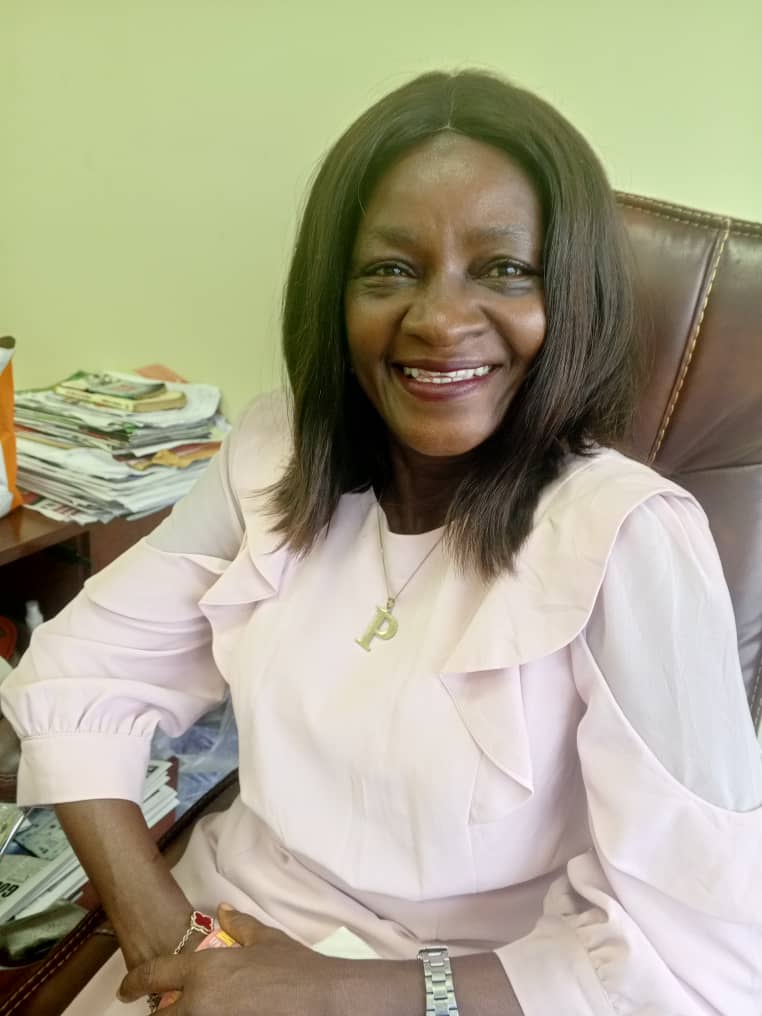
That dream may jolly well come to be. At the moment, however, Peace Fekumo Sinclair sits easy in her swivel chair as the first female Editor In Chief of the Bayelsa State Newspaper Corporation, publishers of New Waves.

By Nengi Joseph Ilagha