

Home Blog Page 141

Peace For Peace … Celebrating Bayelsa’s 2nd Female Editor-in-chief

0

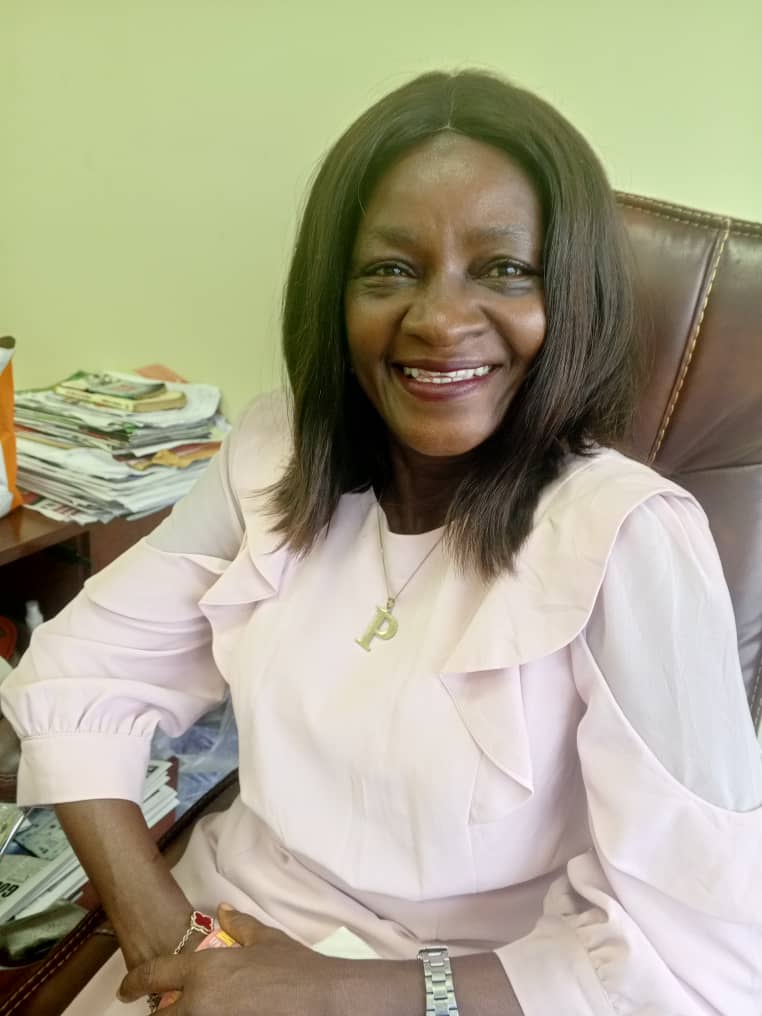
PEACE FEKUMO Sinclair gets excited whenever she is assigned to go around town and grab a story. She goes about it with a sense of mission, with an awareness that she is in the process of making history, and glad to be a part of it. She demonstrated that passion when she was recruited into the editorial team that gathered bits and pieces of news for the maiden magazine story with which The Tide On Sunday broke new grounds in Port Harcourt in the last days of military rule.

The assignment was to fish out everything there was to know about Harcourt, the white man after whom Port Harcourt was named. Like her colleagues, Peace met with the high and low, out in the street and into exclusive offices, digging for what she could find and bring back to her editors. Her contributions came in useful, and the story emerged as a winning copy that established the reputation of the paper as the newest dazzle on the news stands in the Garden City and beyond.

Since then, Peace Sinclair has contributed to several exclusive stories, and written many of her own, all of them proudly displaying her by-line. From the beginning, Peace had no doubt about what she wanted to do in life. She wanted to be a journalist, simple and short. She did not need anyone to tell her to take the first step when she enrolled at the Times Journalism Institute, TJI, Imam Dauda Close off Bode Thomas Street, Surulere, Lagos, and dutifully took lessons on how to write a news story, how to write a features story, and how to write a magazine story.

For all of two years, from 1991 to1992, she got to know what makes media houses tick, and she resolved to be in the thick of the action. Peace thought that she stood a better chance in her chosen career if she equipped herself with a degree in History, and she was right. She pursued the course with great vigour and determination at the University of Port Harcourt, enrolling in 2002 and graduating four years later in 2006.

Now she can put all her stories in proper historical context. The events of the day go all the way to make history, and therefore it was right and proper to report the news of the day with probity and objectivity, always in the light of history. She subscribes to the dictum that journalism is history written in a hurry. Not surprisingly, Peace has already finished course work on her Masters degree in History & Diplomacy, and she is merely waiting to defend her thesis. Before you know it, Peace might jolly well become a don in history sooner than later.

Ask Peace what her primary interest is, and guess what she has to say. “I love travelling,” she says as if there was no need to debate the matter. “I have been to almost all the states in Nigeria.” Yes, travel is uppermost on the mind of Peace, and she is glad to recall that she gained the leverage to do so when she emerged as the Vice Chairman of the Nigerian Union of Journalists, NUJ, Bayelsa State chapter. She ranks as the only female journalist in Bayelsa who has gone so far as to serve two straight terms under the helmsmanship of Samson Amaran and Tarinyo Akono.

Journalism has taken Peace to Egypt, Holland, and China. She was in a position to secure a place in the various journalism exchange fellowship programmes initiated in those countries, and she came away with sufficient experience to recount the high points of her journey. “I stayed in Cairo, the capital of Egypt, for two weeks. Cairo is a beautiful city-state. I visited historic sites. It is a city of great historical significance. I visited the pyramids, and had an opportunity to see what Egyptian mummies, embalmed bodies, look like.”

In 2002, Peace Sinclair also visited Rotterdam, Holland, where she stayed for another two weeks in a journalism fellowship. But it was in China that she spent the longest stretch of time, six weeks in all, during which she stayed in three principal Chinese cities, namely Beijing. Guangzhou, and Zinou. The most remarkable memories that Peace took away on that trip came to her when she visited the CCTV cable television headquarters in the Beijing Central Business District. She also took note of how factories work in Beijing.

“I saw industrial robots in car companies, and I came to know that cars are machines and they are built by machines under the guidance of computers in the hands of human beings who use their minds to think. In China, it is the military, the Peoples Army, that undertakes public works. The engineering and technical corps of the army go to work in their military uniforms. They work at huge construction sites. They can be seen repairing bad roads or building new ones altogether. In other words, in China, to join the army is to undertake community service as a rule, and it is an army of great discipline.

“One thing I also learnt in China was this. There’s no room for careless spending.” And so saying, Peace told the story of what happened when Smart Adeyemi, in his capacity as national president of the NUJ and leader of the delegation, made a quip in his presentation to the effect that he could be entitled to twelve cars, if he wanted. In Nigeria, he declared, you can grab anything, leave your neighbour stranded, and get away with it.

Members of the Chinese audience were scandalized that this could ever happen at all. They couldn’t fathom why it should be so, why one person should have so much, and leave others without anything. They were so shocked, so petrified by the selfish proposition, that Smart Adeyemi had to remind them that he was merely putting forward a stray hypothesis. They need not take it out on him.

That was long before Smart Adeyemi became a Senator of the Federal Republic of Nigeria. But for Peace Sinclair, the lesson was clear. “Our leaders are not disciplined at all,” she says. “They could not be bothered about principles. One word for it is corruption, and the Chinese officials did not hesitate to spell that out as the main problem with Nigeria.”

Peace Sinclair began her journalism career in 1992 as a cub reporter for New Nigeria in Lagos. She soon moved over to the Nigerian Economist, a subsidiary of New Agenda, published by Haroun Adamu. She remembers her office at Ojota as if it was just yesterday.

“Uche Ezechuwu was my editor at New Agenda. I was reporting business, and then I cultivated an interest in politics. I did that for one year before moving over to Financial Post magazine by Warehouse Bus Stop along Wharf Road, Apapa, Lagos. It was owned by an Igbo muslim, Abdulazeez Udeh, and I worked as a correspondent for politics and business until 1994.”

That same year, Peace returned to Port Harcourt apparently to get a more fulfilling job. The following year, the clear choice was between a job in an oil company, and going back to school. “My mum encouraged me to go for a degree. Otherwise, I was to join Agip or Elf. The manager at Agip said categorically that he could give me a job, but he wanted me to go back to school since I was so young. He didn’t want me to work with just a diploma, and my mother was all too glad to agree with him. That’s how I turned my attention to the University of Port Harcourt, and gained admission to read History.”

But just then, The Tide newspaper in Port Harcourt began advertising vacancies for editorial staff. Peace Sinclair felt a rush of journalistic adrenalin in her system when she got to know that. She did not waste time. Her love for journalism took over at once. She passed the interview at one seating, and was promptly engaged as a reporter in 1996.

Working under the guidance of a new crop of experienced editors carefully selected by Dr Kudo Eresia-Eke, Commissioner for Information at the time, Peace fine-tuned her reporting skills with every new story that was brought to her attention until she gained the trust of her editors.

Following the creation of Bayelsa State in October of that year, Peace Sinclair relocated along with her colleagues to constitute the first crop of editorial hands at the Bayelsa State Newspaper Corporation, BSNC. She earned her quick appointment as Political Editor of the state newspaper, New Waves, and she still serves in that capacity.

Again, ask Peace what attracts her to politics. “I like hard news,” she says without hesitation. “I like to know how history evolves from everyday events. Politics is not the exclusive beat of a male reporter. It’s not a man’s beat only. It’s not just about style and fashion for women. I opted to cover the busy points in the polity, and I am happy doing so.”

And that’s how she earned her alias. Amongst her colleagues, she is known as No Shaking, following the ardent way she followed the story of former President Olusegun Obasanjo at some of the most dramatic moments in the political life of Nigeria, especially reporting his predilection to throw in street-wise quips in his analysis of everyday events.

Born on Wednesday July 3, 1974, at Aguda-Surulere, Lagos, to Simon Fekumo Sinclair, a soldier, and Victoria Fekumo, a real estate landlady, the lanky baby girl with the graceful walk of a model soon attended Army Primary School, GRA, Port Harcourt, finishing in 1983. She remembers the major landmark of her school to be the Polo Club. She often looked out for the horses and their riders.

She missed that when she proceeded to Government Girls Secondary School, Harbour Road, Port Harcourt. She remembers how proud she was to wear the famous uniform of that school, light blue top on a dark blue skirt. Her favourite subjects were English and History. Not surprisingly, she went on to read History as a course of study at the university, and is neck deep in a work schedule that requires her to write English every day. She speaks Yoruba fluently, and understands the languages of her parents, Kolokuma and Nembe.

Peace Sinclair has always preferred working in the print media for the simple reason that she could see her stories as words on a printed page that can be kept for reference many years later. But that is not to say she does not like the electronic media. She does. In fact, she began to take conscious interest in the electronic media when the ace newscaster, Ruth Benamiesia-Opia, former Commissioner for Information, Bayelsa State, told Peace Sinclair that she had a microphone voice. “I have been thinking about what Ruth told me since then. I’m still thinking about it, but my big ambition is to own a magazine, my own magazine.”

That dream may jolly well come to be. At the moment, however, Peace Fekumo Sinclair sits easy in her swivel chair as the first female Editor In Chief of the Bayelsa State Newspaper Corporation, publishers of New Waves.

By Nengi Joseph Ilagha

Delta State Ready To Partner NDDC on Warri-Escravos Road Project … As Governor Oborevwori Commissions NDDC Delta State Office Complex

0

The Governor of Delta State, Rt. Hon. Sheriff Oborevwori, has commissioned a model office complex of the Niger Delta Development Commission, NDDC, in Warri, and reaffirmed the commitment of the Delta State Government to partnership and infrastructural development.

Speaking during the commissioning ceremony, Governor Oborevwori restated the state government’s willingness to collaborate for the socio-economic development of the state.

In a statement signed and released by Seledi Thompson-Wakama, Director, Corporate Affairs of the NDDC, the commissioning ceremony, attracted dignitaries, including members of the NDDC Governing Board, the NDDC Executive Director, Finance and Administration, Alabo Boma Iyaye; the Executive Director, Projects, Dr Victor Antai and the Executive Director, Corporate Services, Hon.Ifedayo Abegunde.

Governor Oborevwori said his administration remained irrevocably committed to its partnership with the President Bola Tinubu-led federal government for the transformation of the state.

Speaking at the event, Governor Oborevwori described the edifice as a symbol of progress and collaboration between the state government and the NDDC.

“I am happy to be with you today to commission the Delta State office. This building shows a new sense of development. Development is a continuous journey that requires innovation, collaboration, and vision. We must open our minds to attract more development like roads, schools, and fully equipped hospitals,” the Governor said.

He expressed the state’s willingness to partner with the NDDC on key infrastructure projects, particularly the Warri-Escravos Road.

“The Delta State Government is ready to partner with the NDDC on the Omadino-Warri-Escravos project. I commend the Managing Director of the NDDC for the completion of this project. Your unwavering support and commitment are deeply appreciated. With this office now open, the NDDC can work even closer with our people,” he added.

“This is not just a commissioning, but a sign of purposeful development. It reminds us that development is not far from us. The management and staff of the NDDC, Delta State Office, are responsible for maintaining this building. It is your prompt, your responsibility, and it has been completed for your use.”

The Minister of Regional Development, Engr. Abubakar Momoh, praised the Commission for heeding the directive of President Bola Ahmed Tinubu to complete abandoned projects across the Niger Delta region.

“The current board and management of the NDDC were given a clear mandate to complete all abandoned projects. Since then, we have witnessed the commissioning of the Nwangele Road in Imo, roads and bridges in Akwa Ibom, and the Otitikipa electricity project in Ondo, which now serves about six to seven local government areas that had long been without power,” the Minister stated.

He also cited recent visits to Rivers State to inspect critical infrastructure projects, including the Kaa-Ataba Road, Okrika Bridge, and the Cardiovascular Hospital; all revived under the Renewed Hope Agenda.

“We will partner with the Delta State Government on the Warri-Escravos Road once the President approves the proposal currently before him. I urge everyone to put politics aside and acknowledge the good works being done by the Commission. This office complex is magnificent and will offer a more conducive working environment. I encourage the staff to take ownership and ensure proper maintenance.”

Also speaking at the ceremony, the Chairman of the NDDC Board, Mr Chiedu Ebie emphasised the role of the Board in providing policy direction for the Commission’s operations.

“As a Board, we offer strategic guidance and direction to the management in the execution of their daily responsibilities. A key example is the adoption of KPMG’s working document, which now guides our implementation processes and internal reforms,” he noted.

In his speech, the Managing Director of the NDDC, Dr Samuel Ogbuku, described the commissioning of the new office complex as a significant milestone in the Commission’s efforts to institutionalise its presence throughout the Niger Delta region.

He reaffirmed the NDDC’s commitment to building strategic partnerships aimed at enhancing the quality of life for the people of the Niger Delta.

Ogbuku stated: “Today, we celebrate the institutionalization of the NDDC in Delta State, and we are pleased to see the people of Warri turn out in large numbers to witness this historic occasion.

“This marks the third state office we have commissioned, starting with Cross River State, followed by Bayelsa, and now Delta State,” he said.

He also acknowledged the unwavering support of the National Assembly, noting: “The National Assembly has consistently supported us by ensuring the timely passage of our Appropriation Bill, which has enabled us to deliver on our mandate more effectively.”

The NDDC Executive Director of Projects, Dr Victor Antai, gave the project brief and explained that the building was fitted with modern facilities.

The Chairman of the Senate Committee on NDDC, Senator Asuquo Ekpeyong, commended the NDDC Board and Management and urged them not to rest on their oars.

In her goodwill message, the Chairman of the House Committee on NDDC, Hon. Erhiatake Ibori-Suenu, congratulated the NDDC management for significantly impacting the lives of Niger Deltans.

Protect The Poor, Fubara Begs Judiciary, As 2025 Legal Year Begins … Says Three Arms Of Govt Working As A Team

0

Governor Siminalayi Fubara of Rivers State has charged Rivers State Judiciary to continue to live up to expectation to guard against innocent people suffering injustice.

Gov. Fubara was addressing stakeholders at the Corpus Christi Cathedral, Port Harcourt, Friday, October 17, 2025 where the State held the Thanksgiving Service to open the 2025/2026 Legal Year.

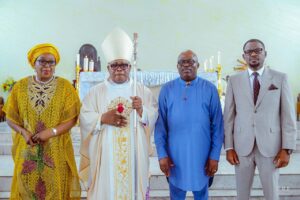
Rivers State Governor, Sir Siminalayi Fubara (2nd right), Deputy Governor, Prof. Ngozi Nma Odu (left), Speaker, Rivers State House of Assembly, Rt. Hon. Martins Chike Amaewhule (right) and Most Reverend Patrick Eluke at the Corpus Christi Cathedral, Port Harcourt during the Thanksgiving Service to mark the beginning of the 2025/2026 Legal Year in Rivers State.

The governor said, “We are marking a new beginning after the reconciliation and peace in our State. I strongly believe whatever we have lost, now that we are together, we will regain those grounds. The progress and development we have all yearned for, I strongly believe we will not deviate from it.

He assured that the executive, legislature and the judiciary as well as all stakeholders will work as a team to make sure that Rivers State that they all dream of is attained.

“I thank everyone for your support, prayers and believing in one Rivers State. This is the one State where everyone can sit and praise the Almighty together.

Gov. Fubara applauded the church for playing crucial roles in the growth of the State, adding, “Your prayers cannot be removed from the peace that we are enjoying in the State today.”

Earlier in his homily, the Apostolic Administrator, Catholic Diocese of Port Harcourt, Most Reverend Patrick Eluke harped on the need for the members of the judiciary to always uphold their prized responsibility as ministers in the temple of justice.

He noted that as a profession that is built on fairness, equity, justice and integrity they must also discharge their duties with every sense of morality whether working in the bar or the bench in the process of dispensing justice.

The clergy further admonished them to always be patient with people who consult them to seek justice stressing that they must be impeccable in their judgment.

The first Bible reading taken from the book of second chronicles 19: 5-9 was read by Gov. Siminalayi Fubara while the Chief Judge of Rivers State, Justice Simeon Chibuzor Amadi read the second lesson taken from Psalm 100:1-5.

Highlight of the thanksgiving was the presentation of special gifts to Gov.Siminalayi Fubara, his deputy, Prof. Mrs. Ngozi Odu, the Chief Judge, Justice Chibuzor Amadi and the Speaker, Rivers State House of Assembly, Rt. Hon. Martins Chike Amaewhule by the Bishop, Most Reverend Patrick Eluke on behalf of the Church.

RSG, Civil Society Groups Commence Flood Mitigation Measures

‎The Rivers State Government has launched a three-day intensive intervention programme to desilt and clean drainages across key flood prone areas of the State.

Rivers State Deputy Governor Prof Ngozi Nma Odu and Chairman of the 2025 Rivers State Flood Management Committee disclosed this in a statement from the Government House in Port Harcourt, on Friday 17th October 2025.

‎Prof. Odu said the desilting programme is being carried out by the Flood Management Committee, in collaboration with a coalition of civil society groups and community-based organizations, noting that the intervention began in the early hours of Thursday, 16th October 2025, at Eliozu by Egbolo axis and covers both Port Harcourt and Obio-Akpor Local Government Areas.

According to the Deputy Governor, the operation focuses on clearing canals and gutters to ensure a free flow of water and reduce the risk of flooding in the region.

‎“This intervention is an immediate measure to temporarily mitigate the effects of flooding in our communities”. The Deputy Governor stressed.

Prof. Odu, while expressing her appreciation to all civil society groups and community-based organizations volunteering their support to the Rivers State Flood Management Committee’s initiative, disclosed that the intervention would continue for the next two days.

It would be recalled that the 2025 Flood Committee was inaugurated by the former Sole Administrator of the State under the emergency rule; however, on resumption of office the State Chief Executive, Sir Siminalayi Fubara directed the Deputy Governor Prof. Ngozi Nma Odu to take over as the Chairman and has demonstrated strong capacity.

Last Thursday, the State Executive Council further directed the flood committee headed by the Deputy Governor to take immediate action to address flooding in the state and cautioned residents against blocking drainage channels.

‎Since taking over from the previous committee, the Flood Committee has hit the ground running by collaborating with interest groups and organizations to ensure that the state is safe from flood disaster.

Nigerian Guild Of Editors Shifts Annual Conference To Nov 12-13 In Abuja …Tinubu Assures Of Attendence As Special Guest of Honour

0

The Nigerian Guild of Editors (NGE), the elite professional body of Managing Directors, Directors of News and Editors of print, online, news agency and broadcast organisations, has announced a shift of its All Nigeria Editors Conference (ANEC) 2025 to November 12-13, 2025.

The Guild said that President Bola Ahmed Tinubu had given his commitment to declare the conference open on November 12, 2025 as Special Guest of Honour in Abuja.

In a press statement by Eze Anaba and Onuoha Ukeh, President and General Secretary respectively, on Friday, the NGE said the change of date was due to circumstances beyond its control.

The media body apologised to its members, all invited guests and the general public for the inconvenience the change of date may cause them.

The Guild said that the conference venue remains Abuja, while giving assurance that the event will be a veritable platform to dissect issues that would sustain national cohesion and development in the country.

According to the statement, “The Standing Committee of the Nigerian Guild of Editors (NGE) regrets to inform members, invited guests and the general public that due to circumstances beyond its control, the All Nigeria Editors Conference (ANEC) 2025 has been shifted to November 12-13, 2025. The venue remains the same (Abuja).

“We sincerely apologise for the inconvenience this change of date may cause you.

“We promise that despite the change of date, the ANEC 2025 would be a credible platform to discuss and proffer solutions to issues pertaining to national development and cohesion.

“President and Commander-in-Chief of the Armed Forces of Nigeria, Senator Bola Ahmed Tinubu, GCFR, will declare the conference open, while dignitaries from government, academia, media, organised private sector and diplomatic corps are expected to attend.”

The Guild said that the theme of the conference remains: “Democratic Governance and National Cohesion: The Role of Editors,” with sub-theme as: “Electoral Integrity and Trust Deficit: What Nigerians Expect in 2027.”

The NGE said that there will be a keynote address on the theme and sub-theme, with other engaging papers to be delivered at the two-day conference.

According to the Guild, other papers to be delivered at the conference include: “Election Disputes and Judicial Integrity: Navigating the Thin Line Between Law and Politics” by Prof Awa Kalu, SAN,
Managing Partner, Awa Kalu & Partners, and “State of the Nation: Imperative of Economic and Political Reforms in Challenged Nation” by Prof Sheriff Ghali Ibrahim, HOD, Political Science and International Relations, University of Abuja.

Other papers are “The Evolving Face of Journalism: Battling Misinformation, AI Disruption, and Credibility Gap” by Prof Abiodun Adeniyi, Dean, School of Post-Graduate Studies, Baze University, Prof Abiodun Adeniyi, and “Media, Terrorism, and National Security: Addressing the Complexities” by General Lucky Irabor (retd), former Chief of Defence Staff.

The NGE said that there will be an Executive Session on the second day of the conference where editors will interrogate government officials, political and business leaders.

The ANEC holds every year for editors to address and discuss national issues that have social, economic and political consequences in Nigeria.

The Guild said that this year’s ANEC will see no fewer than 500 members converging on Abuja and is designed to provide a platform for editors/media executives to explore ways to promote national development and cohesion through responsible and responsive journalism.

How We Intend To End Godfatherism, Budget Padding -ADC … Pledges To Redesign Governance In Nigeria

0

If in 2027, Nigerians vote into power the African Democratic Congress (ADC), the country will witness an end to the culture of godfatherism, budget padding, and patronage-driven politics. While a new new model of governance that is built on transparency, innovation, and citizen participation would be enthroned.

In a statement shared on Friday on the official account of the ADC coalition mobilisation wing, ADC Vanguard on X, and titled, “No Godfathers, No Budget Padding: How ADC Plans to Redesign Governance,” the party said Nigerian politics has “for too long revolved around personalities rather than principles, and power has been used for patronage rather than progress.”

“The African Democratic Congress (ADC) stands to change that narrative, not by making vague promises but by introducing a complete redesign of how governance should work in a modern democracy,” the statement read.

According to the party, its vision “begins with one simple but radical idea: government must serve citizens, not politicians.”

“That means every project, every policy, and every kobo spent must be judged by its direct impact on the people, not by how much it enriches those in power,” it said.

The statement further noted that with an ADC-led government, “a minimum of 70% of all budgeted projects will be mandated to directly benefit local communities, rather than disappearing into bureaucratic bottlenecks or inflated contracts.”

The party said it intends to make governance “measurable, transparent, and accountable,” adding that “every naira spent by the government will be traceable through an open digital ledger, accessible to citizens in real time.”

“With blockchain-backed systems, Nigerians will be able to see where public funds go from federal ministries to the smallest local projects,” the statement continued.

Calling transparency “the foundation of a new social contract between government and citizens,” the ADC said it would harness the potential of Nigerian youth by involving them directly in governance and accountability processes.

“We will harness Nigeria’s youth, our greatest natural resource, by channeling their creativity, digital skills, and entrepreneurial drive into the governance process.

“Young Nigerians will not only be employed by the government but empowered to audit it,” the statement said.

Through “public dashboards, community-driven data verification, and citizen participation platforms,” the ADC said governance would become “an open system where the people are both the beneficiaries and the watchdogs.”

Rejecting what it described as “the old order that thrives on secrecy and selective empowerment,” the party said its model would “embrace collaboration, performance, and service delivery.”

“Ministries and agencies will operate like value-driven enterprises, focused on measurable results rather than political favors,” the party added.

Ministers, it said, would be “appraised quarterly, not by their loyalty to party leaders but by their impact on lives, infrastructure, and social indicators.”

“This is governance redesigned: a model where public service becomes a performance contract, not a reward for political allegiance. A system where competence replaces connections, merit overtakes mediocrity, and transparency replaces corruption,” the ADC declared.

According to the statement, the party is not offering “another round of empty promises” but “a system that works.”

“The ADC is not coming to join the old game; we are coming to change the rules entirely.

“We believe government should function like a well-run business, but one where the citizens are the shareholders and the dividends are better roads, safer communities, quality education, affordable healthcare, and jobs,” it said.

The party concluded that its vision represents “a movement for responsible governance, where innovation meets integrity, and leadership is redefined as service.”

“The ADC is not asking Nigerians to dream of change. We are building it, one transparent policy at a time,” the statement concluded.

Mobile Court Convicts 33 Persons For Traffic Violations In CRS …Two For Attempted Bribery Of FRSC Officers

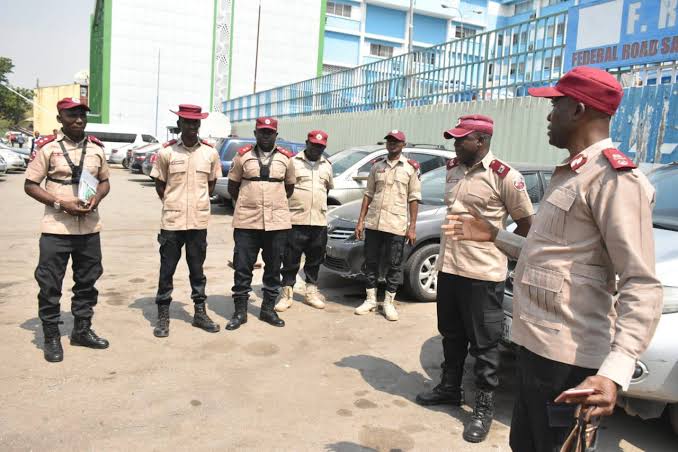
A mobile court presided over by Magistrate Okokon Essien on Friday convicted 33 of the 38 offenders who were arraigned by the Federal Road Safety Corps (FRSC) in Cross River State for various traffic infractions.

The remaining five offenders were cautioned and discharged after appropriate sensitisation.
Two, out of the 33 were convicted for attempted bribery, seven for overloading while 19 were convicted for driving license violation and penalties were handed down in accordance with the law.

Sector Commander of the FRSC, Cross River State Command, Innocent Etuk, said at the sitting that mobile court proceeding remains a vital tool in enforcing traffic regulations in the state.

Emphasising the importance of the mobile courts, Etuk stated that they remained a vital tool in ensuring compliance and deterring habitual violators inline with FRSC establishment Act 2007.

Speaking further, the sector commander said the mobile court was focused to achieve the Corps’ Corporate Strategic Goal for 2025 which was to reduce road traffic crashes and fatality by 10 per cent.

“We also want to ensure that traffic offences such as overloading, attempt to corrupt marshals on duty, use of worn-out tyres, driver’s license violations and use of mobile phones while driving are curbed.

“To achieve this, we ensure strict enforcement of traffic rules, continuous public enlightenment, and collaboration with stakeholders,” he said.
Etuk urged motorists to obey traffic regulations, ensure their vehicles were in good condition, and cultivate safe driving habits to ensure that the roads remained safe for all users.

Africa CDC Pushes For Ebola Vaccines, Mpox System Integration Into Health Systems

0

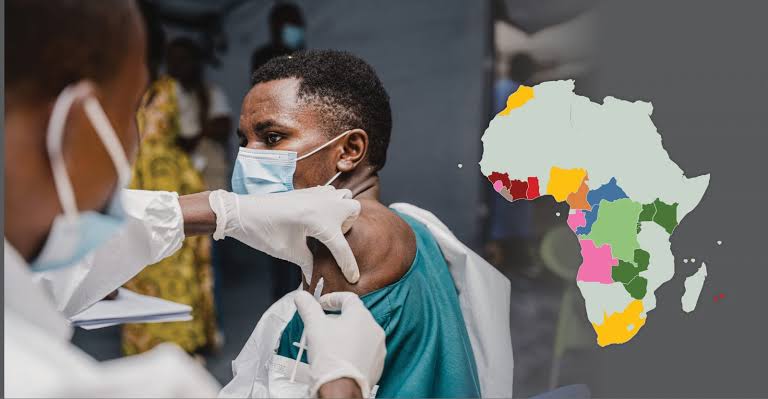
The Africa Centres for Disease Control and Prevention (Africa CDC) has renewed calls for preventive Ebola vaccination in high-risk areas and announced plans to integrate Mpox response into routine health systems.

Prof. Yap Boum, Deputy Incident Manager at Africa CDC’s Incident Management Support Team, made the disclosure during a virtual press briefing on Thursday, outlining new developments in epidemic preparedness and vaccine deployment.

He said the Ebola virus from the recent Democratic Republic of Congo (DRC) outbreak was sequenced within 24 hours by Dr Placide Mbala’s team at the Institut National de Recherche Biomédicale (INRB).

“The sequencing confirmed a new spillover event, with the strain closely related to the virus first identified in 1976, highlighting continued threats of zoonotic diseases in Ebola-endemic areas like Kasai.

“This is the seventh Ebola outbreak in Kasai. It’s time to protect frontline workers through preventive vaccination.

“This should be our next priority to avoid further public health emergencies,” Boum said.

He said that 500,000 Ebola vaccine doses were available through the International Coordinating Group (ICG), and the DRC had already developed a vaccination plan for high-risk workers and communities.

Boum urged Angola, Congo-Brazzaville, and other neighbouring countries to strengthen cross-border coordination and prepare for potential Ebola spillovers through surveillance and early vaccination strategies.

On Mpox, Boum said Africa CDC had mobilised six million vaccine doses for affected countries and was providing technical support to improve access and containment in hotspots across the continent.

Countries such as Liberia, Kenya, Ghana, and Guinea are currently receiving vaccine shipments and response support, based on outbreak intensity and readiness to implement targeted immunisation activities.

“We are now integrating Mpox vaccination into the African Primary Immunisation (API) framework to ensure continuity and build long-term demand for vaccine production within Africa,” he said.

Also speaking, Dr Kyeng Mercy, Head of the Epidemic Intelligence Unit, said Africa CDC had developed a continental roadmap to guide transition from emergency response to sustainable health system integration.

“Our aim is to preserve emergency response capacity and translate it into national health systems. Countries must adapt the roadmap and begin implementing it in line with their local needs,” she said.

Mercy added that some countries had already initiated their national transition plans and called on others to do the same to maintain epidemic preparedness momentum post-crisis.

She also said Africa CDC was working with partners like the World Health Organisation (WHO) and Gavi, the Vaccine Alliance, to secure 10 million cholera vaccine doses for rapid deployment.

Mercy emphasised the importance of coordinated multi-disease outbreak strategies and stronger resource mobilisation to improve readiness, response speed, and recovery capacity across all African Union member states.

Why We Advocate Abolition Of Death Penalty, By Amnesty International

0

Amnesty International has urged the federal and state governments to abolish the death penalty.

Mrs Barbara Magaji,the Programmes Manager of Amnesty Internationa, made the call during a stakeholders dialogue to commemorate the World Day Against Death Penalty.

The programme was organised by Amnesty International in collaboration with the French Embassy in Nigeria on Thursday in Abuja.

Magaji stressed the need to remove all provisions in national and state laws that violate international human rights law, especially provisions that allow the death penalty.

She also urged the government to ensure that the criminal justice system was sufficiently resourced and capable of investigating crimes effectively.

She added that the law should be able to support victims and guarantee fair trials without recourse to the death penalty.

According to her, the federal government should, through the National Assembly, consider the abolition of the death penalty for all crimes in the ongoing Nigerian Constitutional Amendment process.

“This is because there is no convincing evidence that the death penalty has a unique deterrent effect on crimes.

“In Nigeria presently, 26 states and the FCT have introduced or amended existing laws prescribing the death penalty for kidnapping, banditry, cattle rustling, and cultism.

“In spite of the introduction of the death penalty, the country continues to record an increase in banditry, abduction, and general criminality. ”

Magaji noted that the Amnesty International research on the violence and killings in Nigeria showed an increase in general insecurity, unlawful killings, and kidnap for ransom.

“This is in spite of the introduction of the death penalty to crimes of banditry, kidnapping, cattle rustling, and cultism.

“Our documentation of insecurity in 2024 indicates that there have been over 181 incidents resulting in extra-judicial killings arising from banditry/terrorism, urban crime and herdsmen farmers conflict and SGBV.

“This has led to over 3169 deaths. In 2024, 881 people were kidnapped. In 2025, there were 2313 deaths arising from 204 insecurity incidents with some situations resulting in the kidnapping of 1025 people,” she said.

Magaji explained that the rising insecurity in Nigeria was a combination of several factors that affected society at different levels, from the national to the community level.

She added that the underlying causes of insecurity needed to be addressed broadly and a comprehensive crime prevention mechanism deployed rather than the quick fix approach that was ineffective.

She said that Amnesty International was opposed to the death penalty in all cases.

“Amnesty International considers that death penalty violates the right to life as enshrined in the Universal Declaration of Human Rights and the African Charter on Human and Peoples’ Rights.

“The death penalty is often imposed after a grossly unfair trial. But even when trials respect international standards of fairness, the risk of executing the innocent can never be fully eliminated.

“The death penalty will inevitably claim innocent victims, as has been persistently demonstrated. The trend towards abolition of the death penalty is clear.

“In opposing the death penalty, Amnesty International is in no way seeking to condone the crimes for which those sentenced to death were convicted,” she added.

She noted that Amnesty International acknowledged fully the suffering of victims of violent crime and their families and recognised the duty of governments to protect their rights.

“Amnesty International also believed that people found guilty following a trial that met international fair trial standards should be held accountable but without recourse to the death penalty,” she said.

According to her, presently, 143 countries have now abolished the death penalty in law or practice.

Downsizing Of Federal Civil Service: Walson-Jack Allays Workers’ Fears Over Staff Audit

0

Mrs Didi Walson-Jack, Head of the Civil Service of the Federation (HCSF), says the ongoing Personnel Audit and Skills Gap Analysis (PASGA) initiative is not aimed at downsizing workers, but aimed at ensuring up-to-date data to reposition the Federal Civil Service.

Walson-Jack stated this in Abuja on Thursday at a sensitisation programme on the PASGA project, organised by the office of HCSF for Permanent Secretaries, Directors and consultants of the initiative.
Represented by Dr Deborah Odoh, Permanent Secretary, Service Policies and Strategies Office, Walson-Jack said the project was designed to strengthen personnel data integrity, align competencies with organisational needs, and promote evidence-based human resource management.

“The unique thing about this exercise is that it is not just a personnel audit but also a skills gap analysis,” she said.

She explained that the project would enable government to have reliable data for effective planning, deployment and decision-making in the civil service.

“Over the years, the Service has grappled with fragmented and outdated personnel information, leading to inefficiencies and misalignments.
“Through PASGA, we are setting a new standard, one that is transparent, data-based, and performance-oriented.

“This reform will deliver accurate personnel records, identify existing skills gaps, and support targeted training and redeployment aligned with the evolving needs of government,” she said.

According to her, the exercise will help assess the competencies of each staff member, identify gaps and plan relevant training to ensure that personnel are properly deployed.
“With this initiative, we will reposition and build capacity across the Service. We have already commenced digital literacy training with National Information Technology Development (NITDA) to enhance staff capacity and efficiency.

“Eventually, there will be no need for downsizing. Instead, we will reposition staff and ensure effective performance,” she said.
Also speaking, Dr Danjuma Kalba, Permanent Secretary, Common Services Office, described PASGA as a major step towards building an efficient, accountable and digitally driven civil service.

According to him, the project aligns with the Federal Civil Service Strategy and Implementation Plan 2025 (FCSSIP25), especially in areas of digitisation, talent management and organisational efficiency.

“As the coordinating ministry and seat of the number one civil servant in Nigeria, the office of the HCSF remains steadfast in leading transformative reforms that uphold professionalism and service excellence,” Kalba said.

Also speaking, Mr Ayo Muritala, Senior Managing Partner, Knewrow Performance Engineering, one of the project’s consultants, said PASGA, also known as Project Phoenix, represents renewal and rebirth in the Federal Civil Service.
“This is more than an audit or data exercise. It is a strategic reform instrument designed to help government understand the people who power the public service.

“It is about data, but beyond data, it is about identity, capability, and national performance,” he said.

President Bola Tinubu had earlier directed a comprehensive PASGA across the federal service to enhance professionalism and effective service delivery.