Home Blog Page 131

NUPRC Seeks Bank of America Funding For Nigeria’s Upstream Oil Sector

0

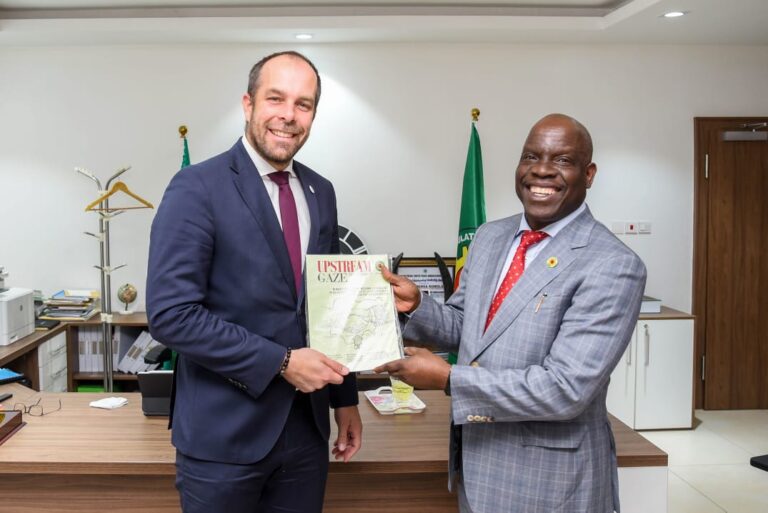
The Nigerian Upstream Petroleum Regulatory Commission (NUPRC) has urged the Bank of America to prioritise Nigeria’s upstream oil and gas sector in its investment portfolio to attract funding and boost oil production.

The Commission Chief Executive, Mr Gbenga Komolafe, made the call during a meeting with Mr Chuba Ezenwa, Managing Director and Head of Investment Banking, Sub-Saharan Africa, Bank of America in Abuja.

Mr Eniola Akinkuotu, Head of Media and Strategic Communications, NUPRC, communicated this in a statement on Tuesday.

Komolafe said the engagement was in line with Section 6(h) of the Petroleum Industry Act (PIA) 2021.

According to Komolafe, it mandates the commission to promote an enabling environment for investments in upstream petroleum operations and the development of Nigerian content.

He said that although Nigeria’s oil production had increased in the past year, funding remained a major challenge for companies seeking to expand production capacity.

“Nigeria is richly endowed with hydrocarbons and we seek to optimise production; but funding is critical to our success.

“So, we are looking for areas of alignment with the Bank of America,” Komolafe said.

In his response, Ezenwa commended Komolafe’s leadership, describing the recent rise in production as a reflection of the commission’s reforms and strategic focus.

“I am encouraged by the results under the leadership of the CCE, particularly in the area of production, which has sparked renewed interest in Nigeria’s upstream sector.

“We will continue to provide support,” he said.

Peter Obi, Others Advocate National Policy Shift Towards Apprenticeships, Entrepreneurship

0

A Former Anambra State Governor, Mr. Peter Obi, has advocated for a shift in national focus toward celebrating practical on-the-ground knowledge apprenticeship and successful non-formally educated entrepreneurs.

He made the call in Lagos at the launch of a book titled, “Just Go Further: Become the Total Entrepreneur”, a debut edition authored by Mrs Ebele Obi, a renowned Entrepreneur, Mentor, and Business Leader

Obi, a 2023 Labour Party Presidential Aspirant, said that the publication was a call to action for innovators, dreamers and builders who refuse to stop at the starting line.

He noted that lack of support for practical successes such as apprenticeships was hindering the nation’s economic growth.

The former governor said that the reason the country was not thriving was because of the limited support for apprenticeships and informal form of entrepreneurship.

Obi underscored the need for national policies that formally recognised, encouraged and leveraged the wisdom of successful, non-formally educated business figures to drive mentorship and economic expansion.

The Author, Mrs Ebele Obi, said that the book was not just another business manual but an urgent call to action for innovators who are ready to move beyond the start-up phase and build lasting legacies.

Ebele said that the book would empower readers to embrace the courage, creativity, and consistency needed to navigate and thrive in an ever changing economic landscape.

She said that the journey of building a business required deep personal commitment, adding that entrepreneurship was about mindset, courage, and consistency.

“This book encourages people not just to start, but to go further, to become total entrepreneurs who can thrive anywhere and build enduring businesses.

“Apprenticeship gives aspiring entrepreneurs a solid foundation, it is through guided experience and mentorship that we gain the confidence, wisdom, and grit to truly go further,’’ she said.

The author stressed that the core theme of the book was the power of guided experience and mentorship, reminding readers that foundational growth often began with learning from those who had successfully paved the way.

She urged the Education Sector to inculcate money matters in school curriculum and to encourage apprenticeships, which helped to grow economies, adding that, unfortunately, the practice was dying in Nigeria.

The author noted that apprenticeships had helped countries like the UK and Germany to thrive and had also empowered people.

According to her, apprenticeship is a win-win case.

The Book Reviewer, Mr Oseloka Obaze, former UN Senior diplomat, said that the book was a motivational book to motivate others to be successful.

Obaze said that the book was written by an entrepreneur for budding entrepreneurs.

According to him, the book is not the first on entrepreneurship, neither will it be the last in Nigeria.

He stressed that what made the book unique was the knowledge being disseminated by someone who grew up in the commercial city of Onitsha.

Obaze said that the co-mingling of the author’s experience in business and apprenticeship were brought to bear in the book.

He noted that the book was a fit-for-all-purpose book with three vital strands – why, how to and the gateways to entrepreneurship.

“This book targets dreamers, those who think they can become viable and trailblazing entrepreneurs but are hobbled by self doubt as well as aspiring entrepreneurs.

“Seasoned professionals and entrepreneurs who have long transcended the rudiments of what it means to start a company, will also benefit from the book,” he said.

Obaze said that Part Two of the book was about sustaining the growth of entrepreneurs, while Part Three emphasised succession planning (transcending generations).

He said the book also spoke to entrepreneurs on the pivotal role they must play in the economy.

According to him, the book speaks to the utility of free enterprise, how to do it yourself, think progressively, especially in a stifling environment.

Obaze said that it prompted young people not to think of themselves as prospective employees but as prospective employers, adding that this was the era of startups which are fiercely driven by innovation and destructive technology.

Also the Chief launcher, Chief Emmanuel Okonkwo, lauded the author’s feat while encouraging women to go further and challenging men to be up and about.

BudgIT Carpets 29 States Over Poor Implementation Of Health Budgets

0

BudgIT, a civic tech non-profit organisation, says only seven states implemented more than 80 per cent of their health budgets in 2024.

This was highlighted at the BudgIT 2025 State of States Report launch, with theme “A Decade of Subnational Fiscal Analysis:” released on Tuesday in Abuja.

BudgIT named the states as Yobe, Gombe, Ekiti, Lagos, Edo, Delta, and Bauchi.

The organisation said that in 2024, Nigerian states collectively budgeted N1.32 trillion for health.

However, actual spending fell significantly short, reaching only N816.64 billion, representing a 61.9 per cent budget performance.

It said that Yobe led with a 98.2 per cent implementation rate, though its total expenditure was N13.24 billion, ranking 24th among all states.

On a per capita basis, the report the figures were concerning.

The report states that states spent an average of N3,483 per person on health, with no state exceeding N10,000 per person.

It stated that only Lagos, Bayelsa, Edo, Abia, Kwara, Niger, and Delta spent more than N5,000 per capita.

Responding to the report, Mr Oluseun Onigbinde, Global Director of BudgIT. warned that while states have seen increased revenue inflows from federation allocations, much of this additional income has not been channelled effectively into critical social services like healthcare.

Onigbinde, said there is an urgent need for states to prioritise health funding and ensure allocations translate into tangible improvements for citizens.

He highlighted the broader implications of subnational fiscal management.

He said the report serves as “a mirror reflecting the choices our state governments make, the paths they follow, and the opportunities they seize or leave behind.”

He noted that while transparency has improved over the past decade, many states still struggle to mobilise resources and manage them efficiently, leaving a gap between potential and actual service delivery.

“The State of States is not BudgIT’s report alone, it is a call to action, a roadmap for reform,” he said.

He urged states to prioritise fiscal accountability, innovation, and investment in sectors that directly impact citizens.

Also speaking, Dr Uche Amaonwu, Nigeria Country Director of the Gates Foundation, congratulated BudgIT for ten years of promoting fiscal transparency and accountability, highlighting how the report tracks Nigeria’s 36 states’ fiscal performance and encourages better governance.

Amaonwu said that fiscal transparency is not an end in itself but a tool to ensure public resources reach citizens effectively.

He noted that sound fiscal systems and governance improve service delivery, empower citizens, and enable states to invest strategically for shared prosperity.

He highlighted the role of data tools, like BudgIT’s Primary Health Care Accountability Tracker, in improving budget execution and accountability.

He called on state governments to take ownership of performance, adopt strong financial management practices, and ensure that every naira allocated to sectors like health, education, and human capital delivers real impact.

Amaonwu reaffirmed the Gates Foundation’s commitment to supporting BudgIT and reform-minded states to strengthen governance, noting that “fiscal health is human health, and governance, when transparent and accountable, is the bridge that connects both.”

Also speaking, Mr Taiwo Oyedele, highlighted a decade of subnational fiscal analysis in Nigeria, showing both progress and persistent challenges.

Oyedele noted that while FAAC allocations and state revenues have increased, doubling from ₦5.4 trillion in 2023 to ₦11.4 trillion in 2024, many states still rely heavily on federal allocations, with 21 states depending on FAAC for at least 70 per cent of revenue.

He pointed out disparities in budget execution, with only two-thirds of education budgets and 62 per cent of health budgets implemented, and emphasised the need to shift from recurrent expenditure to capital and human development spending.

He praised states like Anambra, Lagos, and Enugu for good fiscal management, while urging others to improve, stressing that governance is reflected in prioritising infrastructure, productivity, and human development.

Looking forward, he called for deeper fiscal reforms, responsible debt management, harmonised taxation, and greater investment in education and health.

He urged states to rise above mere survival, convert fiscal gains into tangible prosperity, and ensure inclusive development, categorising them into growth, middling, or declining states.

The 2025 BudgIT State of States Report ranks Anambra as the top-performing state in fiscal management, with Lagos, Kwara, Abia, and Edo completing the top five.

Cross River, previously a top performer, dropped significantly, while Yobe replaced Jigawa at the bottom.

The report evaluates 35 states across revenue generation, expenditure patterns, debt sustainability, and sectoral investments in education and health.

Key findings include strong growth in total state revenue, particularly from FAAC transfers and internally generated revenue (IGR), though 28 states remain heavily reliant on federal allocations.

Capital expenditure is rising, with 24 states spending at least half their budgets on development projects, while recurrent costs and personnel spending continue to dominate in others.

Debt management shows progress, with 31 states reducing domestic debt, though some states remain highly leveraged.

Over the decade, Lagos, Ogun, Delta, Kaduna, and Enugu consistently led in IGR, while states like Borno and Ogun achieved the highest IGR growth rates.

BudgIT said that fiscal sustainability requires improved revenue systems, reduced waste, and prioritisation of infrastructure and human development, calling on states to turn revenue gains into tangible benefits for citizens.


Masters Sports Int’l Hails SWAN @60

0

Masters Sports International, a frontline sports management company has congratulated the Sports Writers Association of Nigeria (SWAN) on the occasion of its 60 years anniversary.

Ejiro Omonode, Co-founder of Masters Sports International made the commendation at the just concluded Tiger 5-Aside Football Championship in Awka on Tuesday.

Omonode said SWAN has come a long way with 60 years of promoting sports in Nigeria, adding that the association has executed its duty to sports and the society creditably.

Omonode commended those who were nominated for various awards, saying that their selection was an indication that they had done well for sports development in Nigeria.

He paid tribute to the heroes of SWAN, including the dead for their positive impacts to SWAN, sports journalism and sports promotion.

According to him, SWAN has a statutory responsibility and mandate of the society to project and promote sports development in Nigeria.

“Just as you cannot have a party without music, you cannot have a successful sports sector without SWAN, we take sports to the people.

“On behalf of Masters Sports International, I want to congratulate SWAN for the responsible and indispensable role they have been playing in the country.

“It is good that SWAN has moved from Lagos and Abuja to the states, I like the vibrancy at that level which means that sports promotion is going on across the country,” he said.

The SWAN Diamond Jubilee and Award Ceremony is scheduled for Abuja between Oct. 29 and 31.

Super Falcons qualifies for 2026 WAFCON in Morocco

0

The Super Falcons of Nigeria on Tuesday qualified for the Women African Cup Of Nations (WAFCON) coming up in Morocco next year.

The Super Falcons played 1:1 draw with their Benin Republic counterpart in the second leg of the qualifier at the MKO Abiola Sports Complex, Abeokuta
Nigerian defender Ashleigh Plumptre scored in the 11th minute, heading the ball home from a corner kick.

The goal compounded the woes for the Amazon, who had previously lost the first leg by two goals to nil in Lome.

During the second half, the Beninoise came out more impressive and were rewarded in the 61st minutes through a direct free kick from Yasminath Djibril , beating Nigeria’s goalkeeper, Chiamaka Nnadozie.
The duo of Deborah Abiodun and Esther Okoronkwo sustained injuries and were substituted during the match.

Speaking at the post match press conference, Super Falcon’s Coach , Justine Madugu, said that though the team played below expectations, he was, however, happy for the qualification.

“In terms of results, sometimes there can be off days, there can be bad days and we want to consider today’s match from this perspective.
“The performance is not what we need, but we expected it.

“It didn’t come so much as a surprise because even, at the press conference yesterday, we knew it was going to be a tough game,” he said.

The 10th time African champion will be hoping to make it 11th time at the 2026 tournament in Morocco.

Blue Economy: Ngo-Atlantic- Oyorokoto Road Will Unlock Rivers Coastal Prosperity -Fubara

0

Rivers State Governor, Sir Siminalayi Fubara, has described the ongoing construction of the brand new 13.52-kilometre Ngo-Atlantic-Oyorokoto Road as a bold and visionary effort by his administration to open up the coastal region for economic growth and harness the full potential of the state’s blue economy.

The Governor made this remark on Tuesday during an inspection visit to the project site in Andoni Local Government Area. The road, being constructed by Monier Construction Company (MCC), cuts through challenging coastal terrain and leads to a newly identified beachfront facing the Atlantic Ocean.

Governor Fubara explained that while the original plan was to construct a road leading to Oyorokoto Town and its popular beach, his administration decided to expand the project to create an entirely new route that would open access to another pristine beachfront.

“We are doing another inspection today. This particular one is a virgin road, 13.52 kilometres of a new pathway to the blue economy,” Governor Fubara stated.

“Initially, we were constructing a road to Oyorokoto Beach, one of the finest tourist centres in this area. But as we progressed, we discovered another beach directly facing the Atlantic Ocean. It became clear that we shouldn’t limit development to just one site. We want to harness this new beach front as part of our broader plan to develop the blue economy.”

The Governor emphasised that the project, once completed, will not only improve access to coastal communities but also stimulate tourism and economic activities, boosting revenue for Rivers State.

Describing the area’s difficult terrain as challenging, he commended the contractor for its dedication, and expressed confidence that the road would be completed and commissioned by March next year.

“You can see for yourself, it’s a brand-new road in a very difficult terrain, just like the one we saw yesterday. But I strongly believe we will overcome it. From what we’ve seen today, the contractor, MCC, is doing their best, and by next year, hopefully by March, we’ll have the cause to commission this project and give God all the glory,” the Governor affirmed.

Governor Fubara also visited Opobo/Nkoro Local Government Area to assess the progress of work on the Epellema axis of the ongoing 5.2km Kalaibiama-Epellema road project featuring a 450-meter bridge.

From Transaction To Transformation: NDDC Trains, Empowers 100 Fashion Designers

0

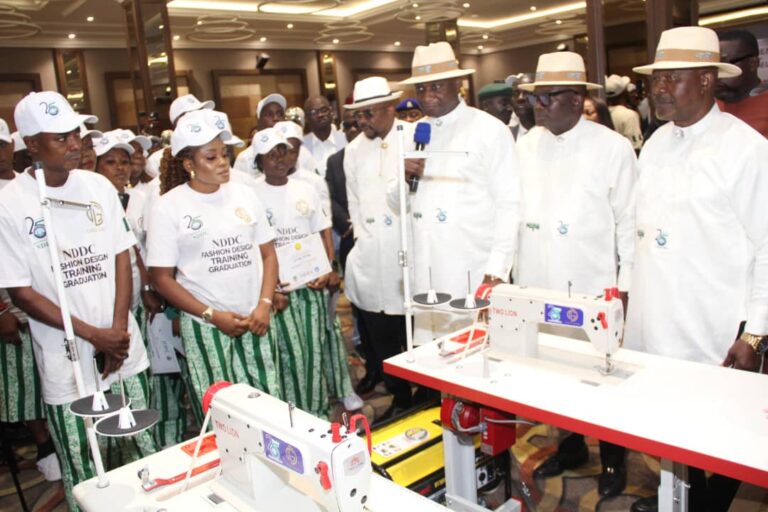
The Niger Delta Development Commission, NDDC, has empowered 100 youths from across the Niger Delta region after a six-month intensive training in fashion and design.

Speaking during the graduation ceremony, the NDDC Managing Director, Dr Samuel Ogbuku, expressed joy at the milestone, stating that it would equip youths with creative skills and prepare them for a productive future.

In a statement signed by
Seledi Thompson-Wakama,
Director, Corporate Affairs, NDDC, Ogbuku noted that the programme represented NDDC’s shift “from transaction to transformation,” focusing on sustainable empowerment rather than short-term interventions.

“We don’t believe in quantity; we believe in quality. In the past, we trained thousands for a few days and gave out starter packs. This time, we camped participants for six months to ensure real transformation,” Ogbuku said.

He urged the beneficiaries to remain innovative, confident, and to serve as ambassadors of the NDDC by using their craft to promote growth and development within the Niger Delta and beyond

The NDDC boss explained that the trainees were selected from the Commission’s digitised database based on competence and interest, adding that NDDC would continue to monitor their progress to assess the programme’s impact.

“With the skills you have acquired, you have been empowered. Go out there, make your families proud, make Nigeria proud, and make the Niger Delta proud,” he charged.

Ogbuku remarked that the next phase of the Commission’s youth empowerment initiative would focus on Compressed Natural Gas (CNG) to prepare youths for opportunities in Nigeria’s energy transition.

Also speaking, the NDDC Executive Director, Projects, Dr Victor Antai, said the programme aligns with the Commission’s commitment to human capital development, wealth creation, and reduction of social vices in the Niger Delta.

He highlighted other recent empowerment initiatives, including training in welding and fabrication, as well as industrial skills such as scaffolding and pipefitting.

“We are not only training youths for self-reliance, we are also equipping them with industrial sewing machines, generators, and logistics support to help them start their businesses,” Antai said.

Speaking in the same vein, the NDDC Executive Director, Finance and Administration, Alabo Boma Iyaye, described the fashion industry as a growing global market and urged the beneficiaries to remain innovative and committed to excellence.

In his remarks, the Executive Director, Corporate Services, Hon. Ifedayo Abegunde, encouraged the graduates to apply their skills productively, saying, “You have not been given fish to eat, but you have been taught how to fish.”

The training consultant, Mr. Greg Daniel, commended NDDC for the initiative, noting that most participants began the programme with no prior experience but now possess the skills to operate industrial machines and the knowledge to establish a thriving fashion business.

One of the beneficiaries, Miss Grace Nwaechefom, expressed appreciation to the NDDC and its partners for empowering them to become self-reliant, describing the initiative as a life-changing opportunity.

PenCom, ICPC, MoU To Recover Unremitted Pension, Enforce Compliance

0

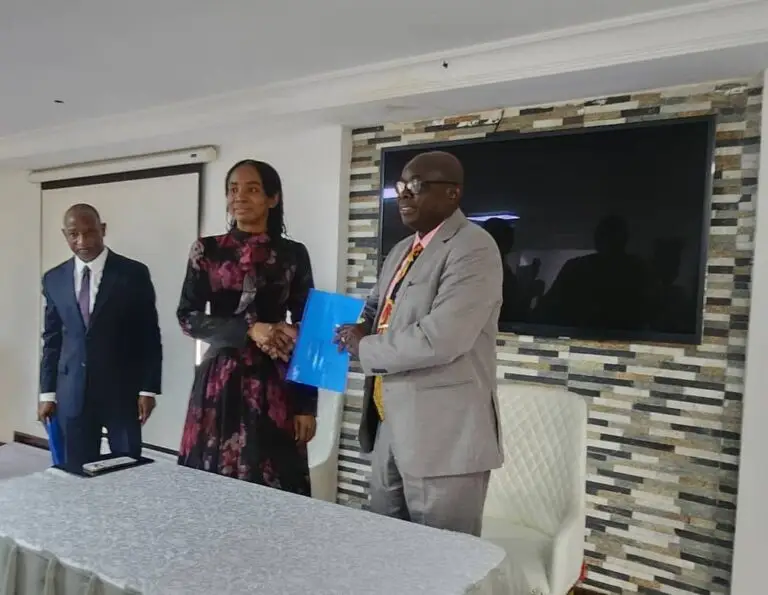
The Director-General (D-G) of National Pension Commission (PenCom), Mrs Omolola Oloworaran, said the Memorandum of Understanding (MoU) it entered with ICPC would help recover unremitted pension contributions and enforce pension compliance.

Oloworaran said this during the signing of the MoU between the PenCom and Independent Corrupt Practices and other Related Offences Commission (ICPC), in Abuja on Tuesday.

She said that the MoU is to ensure prompt disbursement of recovered funds into Retirement Savings Accounts (RSA) and hold defaulting employers accountable under the law.

“To ensure efficiency, both institutions have designated focal officers, the Director of Operations for ICPC and the Director of Surveillance for PenCom to drive information sharing, investigation and enforcement with speed and precision.”

The D-G said that the partnership marked a new era in the protection of workers’ retirement savings and the integrity of pension fund management in the country.

“This ceremony goes far beyond the signing of a document.

“It signifies a shared moral and institutional commitment, a partnership rooted in our collective resolve to strengthen integrity, transparency and judicious management of pension fund assets,” Oloworaran said.

She said that the pension system was built on trust as millions of Nigerian workers rely on the pension scheme to secure their dignity in old age.

“Our duty, both as regulators and as anti-corruption enforcers, is to ensure that this trust is never broken.

“Every naira deducted by employers must be remitted and every contribution must be properly accounted for,” Oloworaran said.

The D-G said that some persistent challenges, including unapplied contributions under the Integrated Payroll and Personnel Information System (IPPIS) and unremitted pension liabilities by some employers.

“These lapses are not mere administrative oversights, they threaten the livelihood and security of Nigerian workers.

“This is why today’s MoU matters. It provides a clear and coordinated framework to address these challenges,” she said.

Oloworaran, commended the leadership of the ICPC for their support and shared vision, their collaboration reflects a joint moral duty to uphold integrity in public service.

“Together, we are demonstrating that public institutions can and must work in concert for the good of the Nigerian people.

“This partnership is not the end, but a new beginning one that will deepen transparency, rebuild trust and safeguard the future of millions of Nigerian workers,” she said.

The Chairman of ICPC, Dr Musa Aliyu, said that the commission would ensure that those responsible are held accountable and that every worker gets what they deserve upon retirement.

Aliyu whom was represented by the Secretary of ICPC, Mr Clifford Oparaodu, said that the commission would combine enlightenment with enforcement to ensure employers understand their obligations and face consequences if they fail to comply.

“We will not disappoint you, we will work with PenCom to recover unremitted funds and ensure that every Nigerian worker enjoys the fruit of their labour,” the chairman said.

He commended PenCom for initiating the partnership, reiterated the commission’s full cooperation in enforcing compliance, particularly in the private sector where violations are often rampant.

Senate To Confirm Service Chiefs, Wednesday

0

The Senate, will on Wednesday, confirm the newly appointed Service Chiefs the President of the Senate, Godswill Akpabio has said.

Akpabio made this known during Tuesday’s plenary after reading President Bola Tinubu’s letter seeking for the confirmation of the Service Chiefs.

The President of the senate said that it was important to screen and confirm the Chief of Defence Staff and other Service Chiefs so that they can start work immediately.

Tinubu had said in the letter: “I am pleased to present for confirmation by the Senate the four nominees listed as service chiefs of the Armed Forces of the Federal Republic of Nigeria.

‎”Chief of Army Staff, Maj.-Gen. Waheedi Shaibu; Chief of Air Staff, AVM Kennedy Aneke; and Chief of Naval Staff, Rear Adm. Idi Abbas and Chief of Defence Staff, Gen. Olufemi Oluyede.

“While I hope that you will consider and confirm the nominees, please accept, Mr President, the assurance of my consideration and best regards”.

Tinubu had last Friday made changes in the hierarchy of the Service Chiefs.

This, he said was in furtherance of the efforts of the Federal Government of Nigeria to strengthen the national security architecture.

UNICEF, FG Emphasize Ethics, Accuracy In Reporting Children’s Stories

0

The United Nations Children’s Fund (UNICEF) and the Federal Ministry of Information and National Orientation have called on journalists to uphold ethics and sensitivity when reporting issues relating to children and their rights.

Speaking at a two-day training programme organised by the Child Rights Information Bureau (CRIB) of the ministry, in collaboration with UNICEF, in Ibadan, the Chief of UNICEF Lagos Field Office, Celine Lafoucriere, urged media practitioners to ensure that reports about children are presented with dignity and respect.

Delivering a speech titled “Why Ethical Reporting of Children Matters in Nigeria”, Lafoucriere said journalists have a duty to protect the most vulnerable by ensuring that stories about children are told responsibly and without harm.

“Ethical journalism builds trust. In a world where misinformation spreads rapidly, your commitment to truth, fairness, and balance is what sets you apart. When you report responsibly, you become a trusted source of information. You help communities understand, heal, and grow,” she said.

She explained that children affected by violence, conflict, and abuse must be reported with utmost care, adding that responsible coverage helps shape how society perceives children—and how children see themselves.
“Choosing to report ethically,” she added, “helps build a nation where every child is valued, protected, and given the opportunity to thrive.”

UNICEF Communication Specialist, Susan Akila, described the workshop as both a refresher and a call to action to ensure every story about a child in Nigeria reflects truth, respect, and a firm commitment to their rights.

Also speaking, Geoffrey Njoku, a communication consultant, traced the evolution of children’s rights from international declarations to Nigeria’s domestication of the UN Convention on the Rights of the Child (CRC) through the Child’s Rights Act (CRA) of 2003.

He urged journalists to always prioritise the interests of children and respect their views, commending Lagos State for its progress in promoting child rights.

“Do not harm any child. Avoid questions, attitudes, or comments that are judgmental or insensitive, that place a child in danger or expose them to humiliation, or that reawaken pain from traumatic experiences,” he cautioned.

Representing the Permanent Secretary of the Federal Ministry of Information and National Orientation, Toye Falayi of CRIB said the training was aimed at helping journalists reflect on their ethical obligations and embrace best practices in child-focused reporting.

“When it comes to stories involving children, that responsibility becomes even greater. Every image, every word, and every frame we publish can have lasting consequences on a child’s life, safety, and future,” he stated.

A researcher, Jude Johnson, highlighted the challenges facing many Nigerian children, including early marriage, female genital cutting, rape, child trafficking, child labour, sexual exploitation, war, discrimination, disability, neglect, and displacement.

In her remarks, UNICEF Communication Officer, Blessing Ejiofor, urged all stakeholders to use their platforms to promote positive change that improves the lives of children and their families.

“As champions of human rights, we all have a responsibility to prioritise and promote the change that will improve the lives of children and their families through our channels and networks,” she said.

By Miracle Chidinma Amaechi