

Home Blog Page 122

Climate Change: Nigeria Seeks Increased Global Financing To Restore, Protect Nature

0

The federal government has implored the international community to significantly increase global financing to protect and restore nature’s economic value through predictable, equitable, and accessible funding mechanisms.
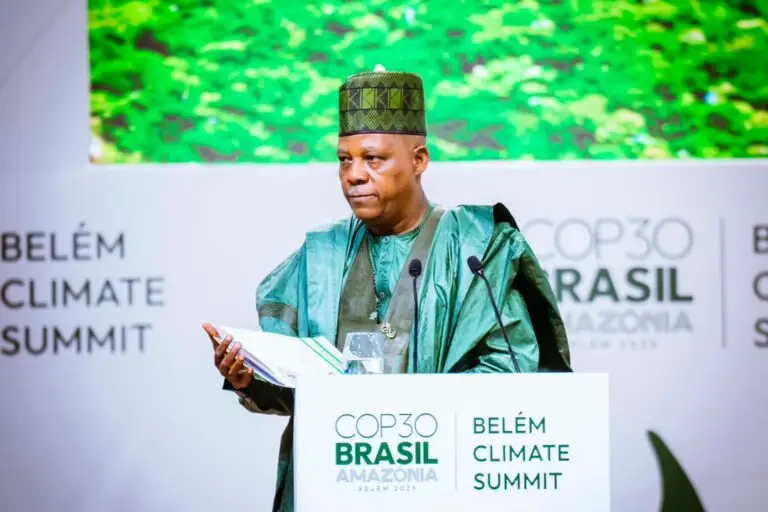
The Vice President, Sen. Kashim Shettima made the demand in Belem, Brazil,
at a high-level thematic session titled “Climate and Nature: Forests and Oceans.”

The event was held on the margins of the ongoing United Nations Climate Change Conference (COP 30).

According to him, since forests, landscapes, and oceans are shared resources that are outside the jurisdiction of any single nation, their protection requires global solidarity.

Shettima regretted that while nature is probably the most critical infrastructure in the world, it has long been treated as a commodity to exploit rather than an asset to invest in.
The vice president said “Nigeria is solidly driven by this knowledge to integrate nature-positive investments into its climate finance architecture.

“Through our National Carbon Market Framework and Climate Change Fund, we aim to mobilise up to three billion U.S. dollars annually in climate finance.

“These resources will be reinvested in community-led reforestation, blue carbon projects, and sustainable agriculture.

“We call on our global partners to recognise the economic value of nature and to channel significant finance towards protecting and restoring it through predictable, equitable, and accessible funding mechanisms.”

Shettima contended that the Global South countries that contributed least to this crisis are today paying its highest price.

He insisted that for climate justice to be seen as well served, nations that benefited more from centuries of extraction must now lead in restoration.

He, therefore, urged the global community to increase grant-based finance, operationalise Blue Carbon Markets, and implement debt-for-nature swaps to enable developing countries to invest in conservation.

“We urge the international community to scale up grant-based finance for nature-based solutions and implement debt-for-nature swaps that free developing countries to invest in conservation, operationalise Blue Carbon Markets under Article six of the Paris Agreement and strengthen community-led governance.”

He noted that such investment would enable indigenous people, farmers, and fisherfolk to get reward for their stewardship rather than displaced by it.
The vice president said countries that took their forests and oceans for granted had always paid dearly for it.

He explained that “it is the reason why Nigeria will boldly sit in the front row of any global forum where these twin determinants of ecological order are being discussed.

“We, too, are under siege. We see the signs of danger in deforestation, desertification, illegal mining, coastal erosion, and rising sea levels within our borders.
“The Sahara advances by nearly one kilometre each year, displacing communities and eroding livelihoods. Each piece of land these threats overcome invites conflict into human lives, compounding our development challenges.”
Shettima told the world leaders and other participants at the high-level session that Nigeria’s Climate Change Act 2021 enshrines nature-based solutions as legal obligations of the state.

He, however, said “the nation is taking bold, coordinated steps to restore balance between climate, nature and development.

“Our National Council on Climate Change provides the institutional backbone for integrating climate actions into all sectors of governance.

“We are implementing the Great Green Wall Initiative, reforesting degraded lands across 11 frontline states, planting over ten million trees and creating thousands of green jobs for our youths and women.

“Through our National Afforestation Programme and Forest Landscape Restoration Plan, we aim to restore more than two million hectares of degraded land by 2030.

“We have also launched our Marine and Blue Economy Policy to harness the vast potential of our seas sustainably — promoting climate-smart fisheries, coastal protection, and marine biodiversity conservation.”
Shettima reaffirmed Nigeria’s commitment to working with partners across the globe to advance global agenda where climate action becomes synonymous with nature restoration and human prosperity.
MEMAN Warns 15% Fuel Import Tariff May Increase Price Beyond N1,000

0

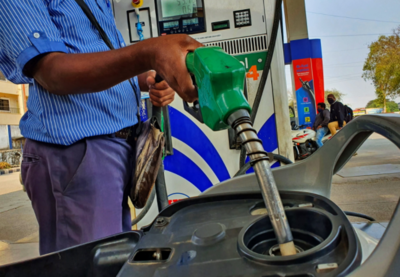
Major Energy Marketers Association of Nigeria (MEMAN) has warned that the proposed 15 per cent import tariff on petrol and diesel could raise pump prices above N1,000 per litre.

Executive Secretary, MEMAN, Mr Clement Isong, said the tariff, if implemented, would have far-reaching effects on consumers, transporters and small businesses already battling inflation.

“We are deeply concerned that such a tariff could push petrol to nearly N1,000 per litre in Lagos and over N1,020 in inland cities,” he said.

He spoke during a joint webinar organised by MEMAN and S&P Global Commodity Insights on Friday in Lagos.

The webinar examined the policy’s implications on the downstream petroleum market.

According to him, diesel could rise to between N1,164 and N1,194 per litre depending on marketing margins, which would drive up logistics costs and eventually reflect in food prices.

Isong described the proposed policy as “potentially regressive,” warning that it could deepen hardship if not matched with measures to protect the poor.

“Low-income earners and small business operators will feel the immediate impact,” he said.

He urged the Federal Government to ensure transparency and accountability in fuel pricing.

“Government should publish open-market price computations and end-user prices regularly so that Nigerians can see what drives pump costs,” he said.

Explaining the economics behind the policy, Isong noted that while the tariff was designed to help local refiners recover costs and compete globally, it would also increase the landed cost of imported fuel.

“Ultimately, importers will pass these additional costs to consumers,” he said.

He warned that such cost transfer could destabilise the market.

“If prices rise sharply, smaller importers may be squeezed out, leaving only a few dominant players,” he said.

Isong, therefore, called for strong regulatory oversight.

“The Nigerian Midstream and Downstream Petroleum Regulatory Authority must be vigilant to ensure fair competition and nationwide product availability,” he said.

He proposed alternatives that could achieve the same policy goals without hurting consumers.

“Government can adopt a phased or conditional tariff tied to verified increases in domestic refining capacity,” he said.

Isong also recommended tariff caps to cushion impact.

“A fixed cap of N50 per litre or $20 per metric tonne could limit the burden on ordinary Nigerians,” he said.

He emphasised the need for market transparency.

“A competitive framework with standardised pricing and regular publication of international and local refining benchmarks will promote fairness,” he said.

The MEMAN boss further urged reforms in border and customs operations.

“Enhanced anti-smuggling measures and tighter customs checks will prevent tariff evasion and protect local investments,” he said.

Isong added that proactive exchange rate management could serve as natural protection for local refiners.

“An undervalued Naira can make imports more expensive and domestic production more attractive,” he explained.

Also, S&P Global analysts, Mr Dumdisi Awanen and Ms Tanya Stepanova, said that “Nigeria must balance refinery protection with competition to ensure stable fuel prices and a sustainable energy market.”

Meanwhile, S&P Global Commodity Insights analysts, Mr Dumdisi Awanen and Tanya Stepanova, presented a paper titled “Navigating Transformation: Lessons from Global Markets for Nigeria’s Energy Future”.

Their analysis showed that Nigeria remains a pioneer in fuel market liberalisation in Africa but still requires strong regulatory oversight to ensure fair competition and prevent monopolies.

Using case studies from Ghana, Zambia, Morocco, and South Africa, the report highlighted how excessive protectionist policies can distort markets, while transparent regulation and open-access systems promote competition and price stability.

In Ghana, for instance, the National Petroleum Authority (NPA) sets indicative maximum and minimum pump prices to protect consumers while allowing fair margins for marketers.

“Zambia’s open-access TAZAMA pipeline system, introduced in 2025, has also helped lower diesel prices by encouraging competition among transporters.

The S&P Global team emphasised that striking the right balance between supporting Nigeria’s emerging refining sector, led by the Dangote Refinery and others, and maintaining market competition would be crucial for sustainable energy development.

According to them, while Dangote’s ex-refinery prices are currently lower than import parity prices when logistics are considered, continued transparency and fair regulation are needed to prevent market dominance and ensure that liberalisation benefits all stakeholders.

Anambra Guber: Observers Hail INEC, Urge EFCC To Curb Vote Buying

0

A coalition of accredited election observers has commended the Independent National Electoral Commission (INEC) for its preparedness ahead of Saturday’s governorship election in Anambra

The coalition gave the commendation at a press conference on Friday, in Awka.

It also urged the Economic and Financial Crimes Commission (EFCC) to arrest individuals involved in vote buying during the election.

Mr Augustine Okafor, Coordinator, Grassroot Development Centre for Peace and Social Justice, who spoke on behalf of the coalition, said that over 350 observers had been deployed across the state.

Okafor said they have been assessing INEC’s preparedness and the readiness of key stakeholders.

He expressed satisfaction with the distribution of non-sensitive materials by INEC.

According to him, the exercise was conducted transparently and reflected the Commission’s commitment to conducting a free, fair and credible election.

Okafor lauded the efforts of security agencies and the state government in restoring security in areas previously under criminal control.

He commended the Inspector-General of Police (I-G P), Mr Kayode Egbetokun and members of the Inter-Agency Consultative Committee on Election Security for deploying more than 60,000 security personnel to ensure a peaceful exercise.

“Political actors should respect the peace accord and maintain issue-based engagement.

“They must demonstrate maturity, tolerance and discipline throughout the process.

“We also urge security agencies to enforce movement restrictions on election day and intensify clearance operations in identified flashpoints to prevent any security breaches.

“The political atmosphere in the state remains largely peaceful, with no major incidents of thuggery or violence reported during campaigns,”he said.

Also speaking, Mr Sarki Danjuma, Chairman, Initiative for Promotion and Civic Obligation for Sustainable Peace, cautioned against vote buying.

Danjuma urged the EFCC to take decisive action against perpetrators.

“The EFCC and security agencies should fight against vote-buying, which undermines democracy and erodes public confidence in the process,”he said.

The coalition reaffirmed its commitment to credible polls and the principle of ‘one man, one vote’ as enshrined in Section 53(1) of the Electoral Act, 2022.

Alleged terrorism: Court Fixes November 20 For Ruling On Nnamdi Kanu’s Case

0

The Federal High Court in Abuja, on Friday, fixed Nov. 20 for judgment in the trial of Nnamdi Kanu, leader of the proscribed Indigenous People of Biafra (IOPB) on alleged terrorism offences.

Justice James Omotosho fixed the date after Kanu’s defence was foreclosed following his insistence that he would not enter his defence under a repealed law.

“This court has given opportunity to the defendant under Section 36 as requires by the constitution and I will not allow this to continue,” Justice Omotosho said.

“It is based on this, without hesitation, that I say that the defendant has waived his right,” Justice Omotosho said.

Kanu is standing trial on alleged terrorism offences.

The Atlantic Bell reports that Justice Omotosho has during the hearings advised Nnamdi Kanu on the consequences of not entering a defence.
At the last sitting of the court, the judge had threatened to foreclose the matter if Kanu continued to stand on not entering his defence, having sacked his entire defence team in the course of the trial

War Against Terrorists: Prepare For Decisive Battle Ahead, Army Chief Tasks Soldiers

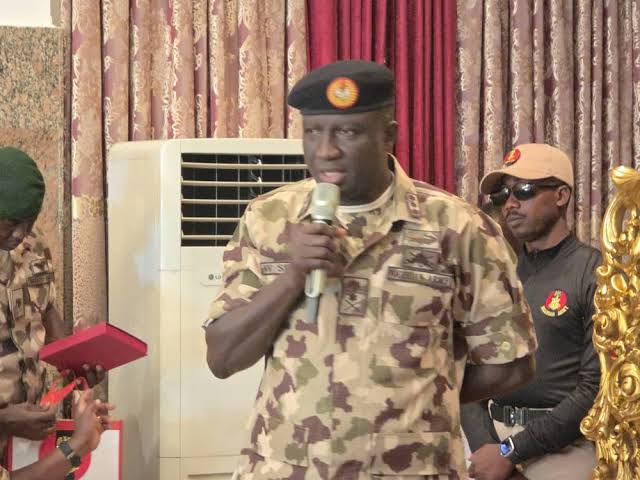
The Chief of Army Staff (COAS), Lt.-Gen. Waidi Shaibu, on Friday charged troops to be ready that the Nigerian Army is entering a decisive stage of the war, where failure is not an option.

Speaking while addressing troops of Operation HADIN KAI in Maiduguri, Shaibu told the troops that it signalled urgency over the critical phase of counter-insurgency operations in the North-East.

According to him, the next deployment will determine the success of ongoing efforts to end Boko Haram and ISWAP activities in the region.

“You have been training to defeat the terrorists that have been disturbing the North-East. This time, you are going to do it differently,” he said.

The COAS disclosed that the Army had deployed battle-tested senior officers to the theatre, alongside new platforms, weapons, and logistics.

“All combat enablers have been provided. New platforms have been introduced, all with a view to achieving success.

“This phase of the operation belongs to the new generation of soldiers, you must surpass previous achievements of troops who fought in earlier national and international missions.

“Those before you have done it. Now, the challenge is yours. This is your own time,” he said.

The Army Chief warned the troops to remain focused and follow the command’s structure, assuring them that doubts and operational concerns should be channeled through their officers.

To further bolster troop morale, Shaibu announced improvements in welfare packages, including feeding allowances, prompt payment of entitlements, medical care and accommodation.

“Your welfare has been taken care of from improved ration cost allowance to prompt payment of all your allowances and improved medical health care,” he said.

He also disclosed that the Army was upgrading schools under its command to ensure better education for soldiers’ children.

“We will ensure that your children go to the best schools, our command schools and Army children’s schools,” Shaibu affirmed.

The troops responded with a loud affirmation, assuring the Army Chief of their readiness to deliver on the mission.

The new mobilisation signals a major push into insurgent-held enclaves, where the coming weeks are expected to witness intense engagements.

Israel, Nigeria To Deepen Dialogue On Peace, Economic Cooperation -Envoy

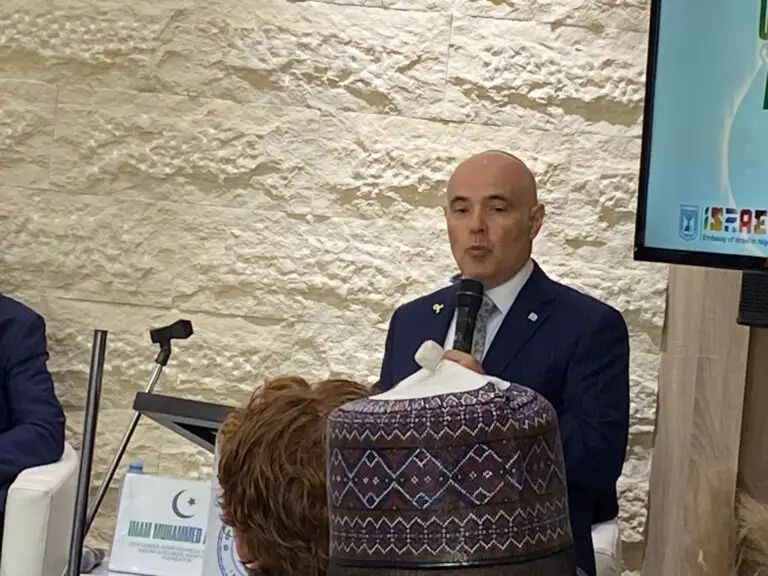
The Israeli Ambassador to Nigeria, Mr Michael Freeman, has underscored the need to deepen Israel-Nigeria dialogue on peace building and economic cooperation to strengthen sustainable growth between both countries.
Freeman made this known at a programme titled “Co-existence and Dialogue among Abrahamic Faiths,” held on Thursday in Abuja.

The event was organised by the Embassy of Israel in Nigeria, the Halleluyah Society for the Promotion of Israeli Culture in Nigeria, ChabadAid Humanitarian Aid for Nigeria, and the Pentecostal Fellowship of Nigeria (PFN).

Freeman emphasised the importance of embracing co-existence and unity as pathways to sustainable peace and progress, noting that such values can only thrive in an environment built on dialogue, empathy and mutual respect.

“This event is timely, coming at a time when so many parts of the world are struggling with division and misunderstanding.

“Co-existence cannot be mistaken for the mere absence of conflict; it represents the presence of respect, empathy and shared purpose.

“It is about choosing dialogue over hate, building bridges rather than walls, and recognising that diversity can be a source of strength.

“Co-existence is practiced in Israel as a lived reality rather than a distant ideal. Every day, Jews, Muslims and Christians live, work and study side-by-side.

“In our hospitals, doctors treat all patients equally; in our universities, students from every background learn together; and in our parliament, voices from every community help shape the nation’s future.

“Israel’s co-existence is not perfect, but it is real and cherished. It is not limited by borders, and we continue to hope and work for the expansion of the Abraham Accords, so that more nations join the circle of peace and prosperity,” he said.

Freeman described Nigeria as a country that had equally faced painful challenges, including attacks on both Christian and Muslim communities, noting that each tragedy created wounds that must be healed.

According to him, sustainable peace must begin at the grassroots level, not only within political or diplomatic circles.

“Peace does not begin in government halls or international conferences; it begins in neighbourhoods, in schools, in places of worship, and in our hearts,” he said.

The envoy reaffirmed Israel’s commitment to deepening cooperation with Nigeria through innovation, agriculture, education and security, adding that such collaboration would be founded on mutual respect and shared values.

The event also featured discussions by Islamic, Christian and Jewish leaders, including Rabbi Israel Uzan, Archbishop Peter Ogunmuyiwa, Imam Kabir Muhammad, Rabbi Menachem Chitrik, Dr Duke Akamisoko and Imam Muhammed Ashafa.

They collectively called for grassroots leadership, youth engagement and a shared vision for the future.

FG Okays PH Airport Concessioning, N400bn For Road Projects

0

The Federal Executive Council (FEC) has approved a series of key aviation projects, including the concession of Port Harcourt International Airport and the introduction of biometric verification systems across Nigerian airports.

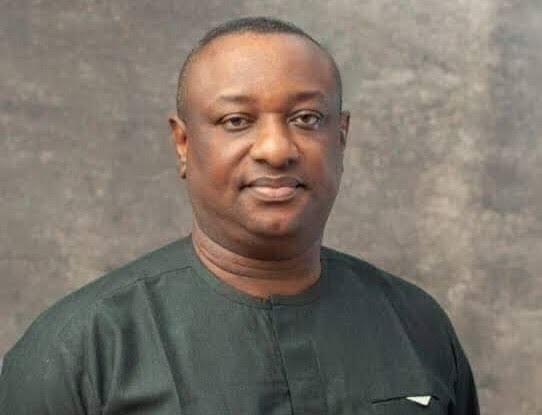
‎Minister of Aviation and Aerospace Development, Festus Keyamo, disclosed this while briefing State House correspondents after the FEC meeting presided over by President Bola Tinubu at the Presidential Villa, Abuja.

‎Keyamo said eight members from his ministry were considered and approved, covering airport management, infrastructure, safety, and modernisation initiatives.

‎He said one of the approvals was for contracts to provide maintenance and support services for airport management solutions at Nigeria’s five international airports — Abuja, Lagos, Kano, Port Harcourt, and Enugu.

‎“These are firms that have been maintaining our airport management systems effectively over the years, and the Council approved their continued engagement,” he said.

‎The minister also announced the procurement and installation of advanced tertiary power systems and 14 VHF remote stations by the Nigerian Airspace Management Agency (NAMA) to improve navigational safety.

‎“We also got approval to purchase 15 airport rescue and firefighting vehicles to meet International Civil Aviation Organisation (ICAO) standards at our international airports,” Keyamo said.

He further disclosed that the Council approved the exclusion of all Federal Airports Authority of Nigeria (FAAN) residential and operational properties within and around airport premises from sale to private individuals.

‎“Properties within airport security and safety zones are now officially excluded from disposal. Those who claimed to have bought such properties should take note, we will not concede them,” the minister stated.

On infrastructure, Keyamo said approval was granted for the construction of a permanent headquarters for NAMA in Abuja, following the agency’s relocation from Lagos.

‎“NAMA currently operates from rented facilities, which poses security risks. We will now have a permanent and purpose-built headquarters in Abuja,” he said.

He added that FEC approved the full business case for the concession of Port Harcourt International Airport to private investors, noting increased investor interest since the Tinubu administration took office.

‎“In the past, no major investor showed interest in Port Harcourt Airport. Now, over six credible firms are competing for it. This shows growing confidence in the Nigerian economy,” Keyamo said.

‎He assured aviation workers that no jobs would be lost under the new concession arrangement.

‎“We will engage the unions fully. No worker will lose their job as a result of the concession process. The goal is efficiency, not retrenchment,” he emphasised.

‎Keyamo also said the Council approved the concession of biometric verification systems at all airports to enhance passenger identification and security.

‎“The system will link passengers’ National Identification Numbers (NIN) to airport databases to verify their identities during travel. It’s part of our ICAO-aligned safety reforms,” he said.

‎He further disclosed plans to upgrade airport lighting systems to extend night operations and boost airline productivity.

‎“Some airports close by 6.00 p.m. due to poor lighting. We’re installing new airfield lighting systems to enable night flights and improve revenue for local carriers,” the minister said.

‎Keyamo reaffirmed the administration’s commitment to modernising Nigeria’s aviation infrastructure and making the sector globally competitive.

The Federal Executive Council (FEC) also on Thursday approved major road contracts and project reviews valued at over N400 billion to enhance road infrastructure across the country.

‎Minister of Works, Dave Umahi, disclosed this while briefing State House correspondents after the FEC meeting presided over by President Bola Tinubu at the Presidential Villa, Abuja.

‎Umahi said he presented 11 memos, nine of which were for review of inherited projects, while two were for new contract awards.

‎He said the council approved the award of Lagos–Ibadan Expressway Phase Two, Section Two, at the cost of N43 billion, to address failed portions and complete underpasses and ramps.

‎“We also got approval for the dualisation of Mushin–NNPC Junction–Papa Oshodi Expressway, which was reviewed from N11 billion to N19 billion due to cost differentials,” he said.

‎The minister added that the council approved the construction of Section Three of the Sokoto–Badagry Superhighway, covering 162.97 kilometres from Badagry through Ogun to Oyo State border, at a cost of N3.39 billion per kilometre.

‎He said several ongoing projects inherited from previous administrations were reviewed for funding and design adjustments, including the Ilorin–Omu Aran–Egba road and the old Enugu–Onitsha road.

‎According to him, the 216-kilometre Ilorin–Omu Aran–Egba road has been phased, with 31 kilometres to be executed under Phase One at a cost of N43 billion, while the remaining 184 kilometres will follow when funding improves.

‎He explained that the East–West Road project was redesigned to improve traffic flow and pavement strength, with Phase One maintained at N156 billion for dual carriageways and bridges.

‎Umahi said several state governments had also taken over federal road projects within their jurisdictions to ease funding pressure and speed up delivery.

‎He announced the review of the Ota–Idi-Iroko road project in Ogun State, which now features rigid concrete pavement and an additional bridge, bringing its cost from N38 billion to N52 billion.

‎The minister further said FEC approved the rehabilitation of Jos–Turunkun–Maraban–Jama’a road in Kaduna State for N30 billion, as well as the reconstruction of Ijebu–Ibu Ete–Egba–Owena road in Ogun and Ondo States for N53 billion.

‎He reiterated the Tinubu administration’s commitment to concrete-based road construction for durability and cost efficiency.

‎“Our focus remains delivering durable road infrastructure to support economic growth and ease of movement across the federation,”.

RSG Commits To Creating Enabling Environment For Women To Thrive

0

The Rivers State Government says it remains committed to creating an enabling environment where women can thrive in medicine, governance, business, and across all sectors.

Rivers State Deputy Governor, Prof. Ngozi Nma Odu, disclosed this during the opening ceremony of the Medical Women’s Association Week 2025 at the Nigerian Medical Association House in Port Harcourt on Tuesday, 5th November 2025.

Prof. Odu said the Governor Siminalayi Fubara-led Administration will continue to support initiatives that strengthen capacity, promote mentorship, and ensure that no woman is left behind in the pursuit of excellence. She stressed that, as women in medicine, they stand at the intersection of science and service.

The Deputy Governor noted that the Medical Women’s Association of Nigeria (MWAN) has, over the years, remained a shining example of professional excellence, compassion, and commitment to national development.

“Let me commend the Medical Women’s Association of Nigeria, Rivers State Branch, for your continuous advocacy, mentorship programmes, and community outreach. You are not only saving lives; you are shaping the future of healthcare in our dear state and nation,” the Deputy Governor further stated.

According to Prof. Odu, the theme, “Empowering Women in Medicine and Building Capacity for Impact,” is very timely in a world that is constantly evolving. She emphasized that empowerment is not just about giving women opportunities but equipping them with the knowledge, confidence, and tools to lead, innovate, and inspire others.

In her keynote address, the State Commissioner for Health, Dr. Adaeze Oreh, noted that although women represent 67–70% of the health workforce, this representation is concentrated in low-status, informal, and low-paid peer groups, with underrepresentation in leadership positions.

According to her, the World Health Organization estimates that the essential healthcare services women provide for around 5 billion people globally have a financial value exceeding 3 trillion US dollars annually.

Also speaking, the President of MWAN, Rivers State Branch, Dr. Cecilia Leloonu Nwibubasa, said that during the MWAN Week, the association aims to harness the unique skills and passions that female medics bring to improve the health of the population they serve. She added that they do this selflessly, passionately, and intentionally, integrating their mission into every aspect of their work.

Equities Market Records 4th Consecutive Loss, Investors Lose N348bn

0

The Nigerian equities market recorded its fourth consecutive negative performance on Thursday as investors lost N348 billion.

Selloffs in Legend Internet, Champion Breweries, Tantalizer, Sovereign Trust Insurance, Linkage Assurance, and 34 other declining stocks dragged the market performance down.

Specifically, the market capitalisation, which opened at N95.664 trillion, closed at N95.316 trillion, representing a 0.36 per cent loss.

The All-Share Index also declined by 0.36 per cent or 547.32 points to close at 150,573.87, compared with 150,026.55 posted on Wednesday.

Similarly, the year-to-date return declined by 45.76 per cent. The market breadth closed negative, with 39 losers and 15 gainers recorded.

Legend Internet led the losers’ chart by 9.93 per cent to close at N5.26. Champion Breweries followed with a 9.72 per cent loss to finish at N14.40.

Tantalizer fell by 8.12 per cent to close at N2.15 per share. Sovereign Trust Insurance dipped by 7.51 per cent to end at N3.08, while Linkage Assurance declined by 7.50 per cent to close at N1.85.

Conversely, UPDC topped the gainers’ chart by 9.83 per cent to close at N6.59. FCMB gained 8 per cent to finish at N10.80, while Omatek Ventures rose by 7.44 per cent to close at N1.30 per share.

AIICO Insurance appreciated by 5.35 per cent to close at N3.74, and AXA Mansard Insurance increased by 5.26 per cent to finish at N14 per share.

Market activity showed an overall decline in volume, value, and number of deals as 619.63 million shares worth N16.5 billion were traded across 24,865 transactions.

This contrasts with 1.11 billion shares valued at N29.8 billion exchanged in 27,303 deals on Wednesday.

FCMB Group led in traded volume with 149.9 million shares worth N1.6 billion, followed by Consolidated Hallmark Holdings with 79.1 million shares valued at N319.7 million.

Zenith Bank recorded the highest stock value, trading 41.9 million shares worth N2.51 billion, while Sterling Nigeria sold 38.5 million shares valued at N314.9 million.

Access Holdings transacted 32.3 million shares worth N731.4 million.

Navy rescues 11 Passengers From Sinking Boat, Shuts Illegal Refineries In Delta, Rivers

The Nigerian Navy has rescued 11 passengers from a sinking speedboat and deactivated several illegal refining sites in Rivers and Delta, in renewed efforts to ensure safety and curb crude oil theft in the nation’s waterways.

This is contained in a statement by the Director of Naval Information, Commodore Ayiwuyor Adams-Aliu, on Thursday in Abuja.

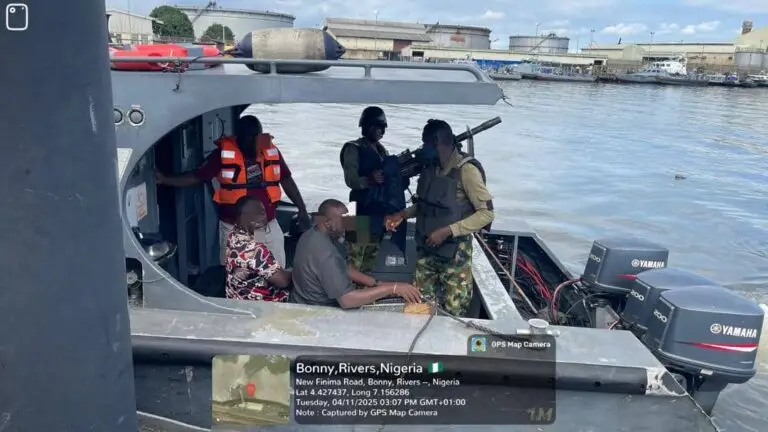
Adams-Aliu said the rescue operation was carried out on Tuesday by personnel of the Nigerian Navy Forward Operating Base (FOB), Bonny, along the Bonny River.

According to him, the boat, which departed Nembe Waterside Jetty in Port Harcourt for Coal Beach Jetty in Bonny Island, developed engine failure midstream and began taking in water near the Federal Ocean Terminal, Onne, Rivers State.

He said the swift response of the naval patrol team under heavy rainfall prevented a major tragedy as all 11 passengers comprising six males and five females, were safely evacuated and taken to the Nigeria Liquefied Natural Gas Jetty for medical checks.

“The rescued passengers were later handed over to the Marine Police for onward reunification with their families,” he said.

The naval spokesman said the navy, in another Operation on Wednesday, intensified crackdown on crude oil theft with the deactivation of multiple illegal refining sites in the Niger Delta.

He said personnel of FOB Escravos dismantled two sites at Obodo Omadino Community in Warri South-West Local Government Area of Delta.

“Similarly, the Nigerian Navy Ship (NNS) PATHFINDER patrol team uncovered and deactivated another site with cooking ovens, reservoirs, sacks, jerrycans, and dugout pits filled with stolen crude and illegally refined Automotive Gas Oil around Bakana and Isaka areas of Rivers.

“Also, personnel of FOB Bonny dismantled a refining site at Eyamba Community in Bonny Local Government Area, while NNS DELTA patrol team deactivated another at Opumani Creek in Warri South Local Government Area of Delta,” he added.

Adams-Aliu said the operations reflect the navy’s renewed commitment under the Chief of the Naval Staff, Vice Adm. Idi Abbas, to ensure maritime safety, protect national assets, and promote lawful economic activities.

He reaffirmed that the Nigerian Navy would sustain the momentum in its fight against crude oil theft and all forms of illegality within the nation’s maritime domain.