Home Blog Page 12

Police Can’t Search Phones Without Court Warrant, Says Police Commissioner

0

The Commissioner of Police in Plateau State, Bassey Ewah, has warned officers and men of the state command against stopping citizens to search the contents of their mobile phones without a valid court warrant, declaring the practice unlawful.

Ewah, in a statement issued on Thursday by the Police Public Relations Officer, Alabo Alfred, said no police officer has the legal authority to compel any citizen to surrender a mobile phone for inspection during routine road checks without judicial authorisation.

The police commissioner stressed that the directive was part of the command’s commitment to professionalism, discipline and the protection of citizens’ fundamental rights.

He urged residents of the state to firmly but politely refuse any unlawful demand for access to their phones and promptly report erring officers through the command’s established complaint channels.

Reaffirming the command’s resolve to uphold the rule of law, Ewah said the Plateau State Police Command would not tolerate acts of misconduct or abuse of office by its personnel.

“The Plateau State Police Command remains committed to protecting the lives, property and constitutional rights of all residents. We will continue to ensure effective policing in accordance with the law and global best practices,” he said.

The commissioner reiterated that officers must discharge their duties within the confines of the law, warning that violations of citizens’ rights would attract appropriate disciplinary measures.

2,361 NYSC Members Pass Out In Rivers As Nine Ordered to Repeat Service Year

0

No fewer than 2,361 members of the 2025 Batch B Stream I of the National Youth Service Corps (NYSC) have successfully completed their mandatory one-year national service in Rivers State, while nine corps members have been directed to repeat the entire service year for various infractions.

The Rivers State Coordinator of the NYSC, Mr. Moses Oleghe, disclosed this on Thursday during the low-key passing-out ceremony held at Isaac Boro Park in Port Harcourt.

Oleghe said the nine affected corps members comprise seven males and two females, while 35 others — 21 males and 14 females — were sanctioned with extension of service for misconduct committed during the service year.

He urged the outgoing corps members to remain worthy ambassadors of the Scheme by upholding its core values as they advance in their careers and personal endeavours.

Rivers State NYSC Director, Moses Oleghe flanked by the Award winners.

According to him, “Continue to uphold the ideals of the NYSC as you climb the ladder of life. Let patriotism, discipline, honesty, integrity, commitment and dedication to duty remain your guiding principles in all your pursuits.”

A breakdown of those who completed the service year showed that 941 are males and 1,420 are females, bringing the total number of those passing out to 2,361.

The State Coordinator also announced that two corps members — one male and one female — received the State Honours Award in recognition of their outstanding service and contributions to their host communities.

He expressed appreciation to Rivers State Governor, Sir Siminalayi Fubara, and the people of the state for providing a peaceful and enabling environment that allowed corps members to complete their service successfully.

Oleghe appealed for the continued support of the state government and residents towards the NYSC scheme.

He also noted that the 2025 Batch B Stream I service year ended without any recorded death, describing the feat as a remarkable milestone and giving glory to God for the successful completion of the exercise.

Ex-PAP Boss Ndiomu: A Career of Service Confronts Unverified Allegations

Public service often comes with intense scrutiny, particularly for individuals who have occupied strategic national positions. For retired Major-General Barry Tariye Ndiomu, former Interim Administrator of the Presidential Amnesty Programme (PAP), recent bribery allegations circulating on social media have again raised the question of whether public reputations should be judged by evidence or speculation.

An anonymous X (formerly Twitter) account, identified as Third Eye, alleged that Ndiomu paid ₦4 billion in bribes to retain his appointment as PAP Interim Administrator, including alleged monthly payments of ₦500 million over eight months to the Chief of Staff to the President, Femi Gbajabiamila.

However, the allegation has not been accompanied by documentary evidence, bank records, witness testimony or findings from any law enforcement or anti-corruption agency. As such, it remains an unverified claim.

In a constitutional democracy governed by the rule of law, allegations of criminal conduct require credible evidence before they can be regarded as facts. Without such proof, they remain matters of speculation rather than established wrongdoing.
For many observers familiar with Ndiomu’s career, the allegations appear inconsistent with the profile of a man whose public life has largely been defined by military discipline, legal training and institutional service.

A lawyer and career soldier, Ndiomu served in the Nigerian Army for about 35 years, from 1983 until his retirement in 2017, rising through the ranks to become a Major-General. His elevation placed him among the country’s senior military officers after decades of operational, command and administrative responsibilities.

His achievement also carried historical significance, as his father, the late Major-General Charles Bebeye Ndiomu, attained the same rank, making them one of the few father-and-son pairs in Nigeria’s military history to both reach the rank of Major-General.

Following his retirement, Ndiomu remained largely outside public office until September 2022, when the Federal Government appointed him Interim Administrator of the Presidential Amnesty Programme at a period marked by administrative and operational challenges within the intervention agency.

During his tenure, he embarked on extensive consultations with traditional rulers, community leaders and critical stakeholders across the Niger Delta, with the aim of rebuilding confidence in the programme and strengthening peace-building efforts in the region.

His administration also pursued initiatives designed to create sustainable opportunities for beneficiaries. Working with institutions including the Office of the Head of the Civil Service of the Federation, the National Information Technology Development Agency (NITDA), the Ministry of Foreign Affairs and the Nigeria Customs Service, efforts were initiated to facilitate employment opportunities for about 350 graduates of the Amnesty Programme who earned first and second-class university degrees.

The administration also sought to create pathways for trained beneficiaries into the security services and the oil and gas sector, while encouraging the formation of cooperatives to promote entrepreneurship and long-term economic empowerment.

Supporters of the former PAP administrator also point to his handling of inherited financial liabilities. According to available records, his administration cleared outstanding commitments estimated at about ₦17 billion owed to consultants, contractors and vendors within six months of assuming office.

Beyond the Amnesty Programme, the Presidency appointed Ndiomu Chairman of the Special Investigative Panel on Crude Oil Theft, a sensitive assignment aimed at tackling one of Nigeria’s most persistent economic and security challenges.

Observers credited his tenure with strengthening stakeholder engagement, improving confidence in the Amnesty Programme and contributing to relative peace across the Niger Delta through dialogue and prompt responses to community concerns.

Supporters further argue that the governance structure of the Presidential Amnesty Programme, which operates under established government oversight mechanisms, makes claims of unofficial arrangements to secure tenure difficult to reconcile with institutional procedures.

Throughout his military and public service career, Ndiomu earned a reputation for adherence to due process, discipline and institutional accountability. As both a lawyer and retired senior military officer, associates describe him as meticulous and committed to established procedures.

While public officials should remain subject to scrutiny and accountability, democratic accountability, they argue, must be anchored on verifiable facts rather than anonymous accusations.

Ultimately, Ndiomu’s public record spans more than three decades of military service, leadership of the Presidential Amnesty Programme during a critical period, efforts to expand opportunities for Niger Delta beneficiaries and his role in the Federal Government’s campaign against crude oil theft.

Whether history remembers him favourably, many contend, should depend on those verifiable contributions rather than allegations that remain unsupported by credible evidence. Until proven otherwise through lawful investigation, they maintain, his legacy continues to rest on a career built on service, discipline and public duty.

By Max Ekeke

Reps Member Condemns ‘False Security Narrative’ Against Khana, Backs Bariere’s Administration In Rivers

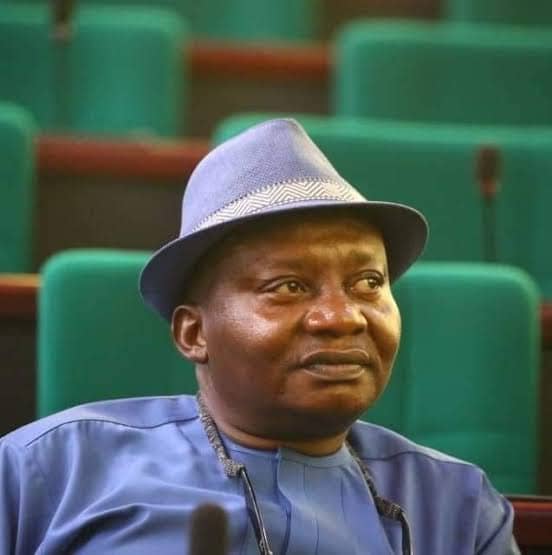
The member representing Khana/Gokana Federal Constituency in the House of Representatives, Rt. Hon. Dumnamene Robinson Dekor, has condemned what he described as a coordinated campaign of misinformation aimed at discrediting the administration of the Executive Chairman of Khana Local Government Area of Rivers State, Chief Thomas Bariere, insisting that peace and security have significantly improved in the area.

In a statement issued on Wednesday by his media team, Hon. Dekor alleged that certain individuals were circulating fabricated reports of insecurity in Khana to tarnish the image of the council chairman and undermine the progress recorded under his administration.

He described the alleged campaign as a deliberate attempt to distort public perception and destabilise the local government, maintaining that the security situation in Khana had improved considerably through collaboration between the council, security agencies and community stakeholders.

Bariere

According to the federal lawmaker, the local government inherited serious security challenges before the current administration assumed office, but strategic interventions have restored public confidence and enhanced peace across communities.

He argued that those behind the alleged misinformation were individuals whose interests had been threatened by the council’s efforts to tackle cultism, gangsterism, kidnapping and other forms of criminality.

“The resolve of the Chairman to confront criminality and restore law and order has earned him the confidence of law-abiding residents but unsettled those who benefitted from violence and insecurity,” the statement said.

Dekor maintained that no responsible government should tolerate criminality, stressing that decisive measures to protect lives and property should not be politicised.

The lawmaker warned those allegedly sponsoring false publications to desist, noting that while freedom of expression is guaranteed under the law, it does not extend to defamation, malicious falsehood or actions capable of disrupting public peace.

He disclosed that individuals found to have sponsored, financed or deliberately circulated false information intended to incite the public or damage reputations would be reported to the appropriate security and law enforcement agencies.

According to him, where investigations establish criminal liability, relevant provisions of Nigerian law, including those relating to cyberstalking, cyberbullying, defamation, malicious publication of false information, incitement and conspiracy, would be invoked through due legal process.

Dekor urged residents to disregard what he described as fabricated reports intended to create fear and division, while encouraging continued support for the Bariere administration as it consolidates achievements in security, governance and grassroots development.

He insisted that no amount of propaganda or sponsored blackmail could diminish what he called the visible progress being recorded in Khana, adding that history would ultimately distinguish genuine service from political propaganda.

The statement was signed by the Rt. Hon. Dum Dekor Media Team and dated July 8, 2026.

CAC Gives Companies August 1 Deadline To Comply with Business Letter Rules, Warns Of Sanctions

0

The Corporate Affairs Commission (CAC) has announced that it will begin full enforcement of statutory requirements governing the contents of company business letters from August 1, 2026, warning that companies that fail to comply will face sanctions.

The commission disclosed this in a public notice issued by its management and published on its official X handle on Wednesday.

Under the provisions of the Companies and Allied Matters Act (CAMA) 2020, all registered companies are required to display specific corporate information on their business letters and official documents.

The mandatory information includes the company’s registered name, registration number, the present forenames or initials and surnames of its directors, any former forenames and surnames, as well as the nationality of every non-Nigerian director.

The requirement applies to all business correspondence, including invoices, quotations, official letters and other corporate documents.

According to the commission, the enforcement exercise will ensure full compliance with Sections 304(1), 304(2) and 304(1)(c) of the Companies and Allied Matters Act, 2020.

“Commencing from August 1, 2026, the Commission shall enforce the full application of the requirements of Sections 304(1) and (2), and 304(1)(c) of the Act with respect to company business letters, with attendant sanctions for non-compliance,” the notice stated.

The CAC reminded companies registered under the Act that they are required to state, in legible characters, the present forename or initials and surname of every director, any former forename and surname, the nationality of every non-Nigerian director, in addition to the company’s registered name and registration number.

The commission urged all affected companies to review their business stationery and official documents ahead of the August 1 enforcement date to avoid regulatory sanctions.

Reaffirming its commitment to improving corporate governance, the CAC said the move is part of ongoing efforts to promote transparency, accountability and a more responsive corporate regulatory environment.

“The Commission remains committed to transparency, accountability and customer satisfaction as it strives to build a more resilient and responsive corporate regulatory environment,” it added.

Reps Move To Expand SSDC Funding with VAT, Ecological Fund, Industry Levies

The House of Representatives has commenced legislative consideration of a bill seeking to significantly strengthen the funding base of the South-South Development Commission (SSDC) by introducing new statutory revenue sources, including allocations from Value Added Tax (VAT), the Ecological Fund, and mandatory contributions from extractive and agricultural processing companies.

The proposal came under scrutiny on Wednesday during a public hearing organised by the House Committee on the South-South Development Commission on a bill to amend the South-South Development Commission (Establishment) Act, 2025.

Declaring the hearing open, Speaker of the House, Tajudeen Abbas, said the amendment is aimed at placing the SSDC on a financial footing comparable to other regional development commissions to enable it tackle the persistent developmental challenges confronting the South-South.

According to Abbas, the bill seeks to broaden the commission’s statutory funding sources to enhance its capacity to deliver on its mandate.

He noted that despite serving as the nation’s economic backbone through decades of oil and gas production, the South-South continues to grapple with severe environmental degradation, poor infrastructure, ecological challenges, youth unemployment and widespread socio-economic deprivation.

“The region has, for decades, remained the backbone of Nigeria’s oil and gas industry, contributing immensely to national revenue and economic growth. Yet, it continues to grapple with significant environmental degradation, infrastructure deficits, ecological challenges, youth unemployment and other socio-economic concerns that demand coordinated and sustained intervention,” he said.

The Speaker, however, stressed that while expanding the commission’s revenue streams is desirable, any proposal that introduces new statutory financial obligations must undergo rigorous legislative scrutiny to ensure fiscal responsibility, transparency, sustainability and fairness.

He urged stakeholders to make evidence-based submissions that would assist lawmakers in producing balanced legislation capable of driving meaningful development across the region.

Abbas also reaffirmed the commitment of the 10th House to inclusive lawmaking, describing public hearings as critical instruments of participatory democracy rather than mere constitutional formalities. He disclosed that the House would soon hold an Open Week to deepen public engagement and strengthen citizens’ confidence in the legislature.

Earlier, Chairman of the House Committee on the South-South Development Commission, Julius Pondi, said the proposed amendment seeks to place the SSDC on a stronger and more sustainable financial foundation through additional statutory funding sources.

He explained that the bill proposes contributions from extractive industries, agricultural processing companies, allocations from the Ecological Fund and a share of VAT revenues, among other funding mechanisms.

Pondi argued that although the South-South generates a substantial proportion of the nation’s wealth through oil and gas production, the region still bears the burden of environmental pollution, inadequate infrastructure, poverty and unemployment resulting from decades of intensive resource exploitation.

He maintained that the review of the commission’s funding framework would align the SSDC with other regional development commissions established by the Federal Government, which currently enjoy broader statutory funding arrangements.

The lawmaker, however, assured stakeholders that the committee had reached no predetermined conclusion on the bill, inviting constructive contributions and alternative proposals to strengthen the legislation.

“The committee is particularly interested in receiving informed perspectives on the necessity of the proposed amendment, the sustainability of the proposed funding framework, and recommendations that will further strengthen the objectives of the bill,” he said.

Established by an Act of the National Assembly in 2025, the South-South Development Commission was created to coordinate intervention programmes across the six states of the South-South geopolitical zone, with a mandate to address decades of environmental degradation, infrastructure deficits, unemployment and poverty arising largely from oil exploration activities.

The Atlantic Bell reports that If passed, the amendment will significantly expand the commission’s revenue base and place it on a funding structure similar to those of other regional development commissions, boosting its capacity to drive development in Nigeria’s oil-producing region.

NDDC Reinvigorates Anti-Corruption Unit To Deepen Transparency, Accountability

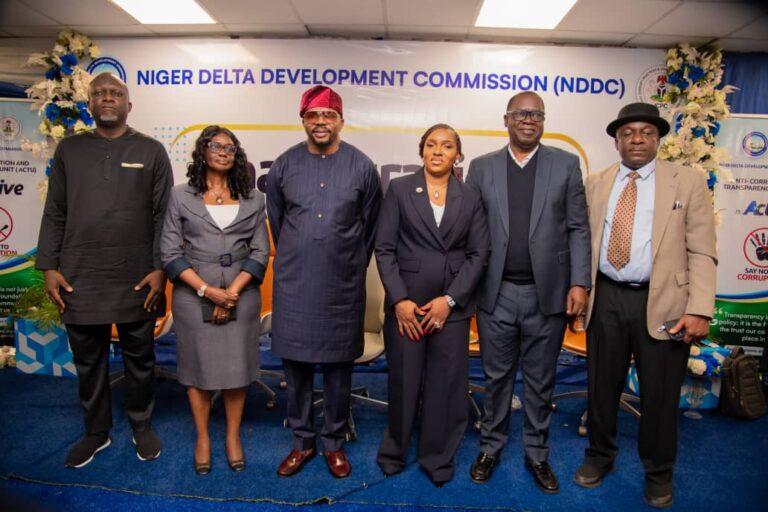
The Niger Delta Development Commission (NDDC) has reconstituted and inaugurated its Anti-Corruption and Transparency Unit (ACTU) as part of efforts to strengthen institutional integrity, entrench accountability and reinforce transparency in its operations.

Speaking during the inauguration of the new ACTU at the Commission’s headquarters in Port Harcourt, the NDDC Managing Director, Dr Samuel Ogbuku, described the unit as a vital instrument for promoting ethical conduct, preventing corruption and sustaining public confidence in the Commission.

Represented by the Executive Director, Finance and Administration, Alabo Boma Iyaye, Ogbuku charged members of the committee to discharge their responsibilities with integrity and impartiality, stressing that corruption had no place in the Commission.

He noted that although corruption remained a global challenge, the ACTU, as the in-house anti-corruption mechanism of the Independent Corrupt Practices and Other Related Offences Commission (ICPC), must strengthen internal systems that promote transparency, accountability and good governance.

The Managing Director also urged the Commission’s Internal Audit Department to work closely with the unit to reinforce accountability across all departments and preserve the agency’s growing reputation.

“As members of ACTU, your integrity must remain unquestionable. If those entrusted with fighting corruption become compromised, everything is at stake. You must lead by example and uphold the values of transparency and accountability,” he said.

Ogbuku commended the ICPC for its continued partnership with the NDDC and noted that members of the newly inaugurated committee were selected based on proven competence and integrity.

He reaffirmed the commitment of the Commission’s Board and Management to advancing the Renewed Hope Agenda of President Bola Tinubu through transparent governance and effective service delivery across the Niger Delta.

Chairman of the ICPC, Dr Musa Adamu Aliyu, lauded the NDDC for strengthening its internal anti-corruption framework, describing the inauguration of the ACTU as a significant step towards enhancing institutional accountability in the public sector.

Represented by the Resident Anti-Corruption Commissioner for the Rivers and Bayelsa Zonal Office, Mrs Ekere Usiere, Aliyu explained that the ACTU initiative was introduced in 2001 through a collaboration between the ICPC and the Office of the Head of the Civil Service of the Federation to identify and eliminate systemic weaknesses that encourage corruption in Ministries, Departments and Agencies (MDAs).

He urged members of the committee to carry out their assignment with professionalism, fairness and integrity, warning against victimisation or abuse of the trust placed in them.

In her acceptance speech, the Chairperson of the NDDC ACTU, Mrs Deinma Ebong, pledged to align the Commission’s operations with the anti-corruption ideals of the ICPC by strengthening institutional systems rather than policing employees.

She said the unit would prioritise ethics education, continuous staff sensitisation, open communication and collaboration with departments, directorates, units and state offices to prevent corrupt practices before they occur.

Ebong thanked the NDDC management for the confidence reposed in the committee and appealed to members of staff to support the unit in advancing transparency, accountability and ethical governance across the Commission.

Tinubu Orders ICPC Probe Into Fake Presidential Council, Gives 30-Day Deadline

0

President Bola Tinubu has ordered the Independent Corrupt Practices and Other Related Offences Commission (ICPC) to investigate the activities of the purported Presidential Foreign Intervention Promotion Council (PFIPC), describing the body as fictitious and unknown to the Federal Government.

The President directed the anti-graft agency to conclude its investigation and submit a comprehensive report within 30 days.
The directive was conveyed in a statement issued on Tuesday by the Special Adviser to the President on Information and Strategy, Bayo Onanuga.

According to the statement, the so-called PFIPC was never established by the Federal Government and has no legal backing, presidential approval, executive instrument or any lawful basis for existence.
The Presidency alleged that one Adeniyi Adeyemi Matthew falsely presented himself as the Director-General of the organisation and claimed to be a presidential appointee.

Tinubu directed the ICPC to investigate the alleged forgery of appointment letters and other official government documents, the use of a false presidential appointment to secure official recognition and diplomatic support, including visa facilitation, as well as the opening of multiple bank accounts in the names of purported government agencies using allegedly forged documents.

The President also ordered a broader investigation into the circumstances that enabled the fictitious council to gain an appearance of legitimacy.

According to the Presidency, the probe will examine the origin and use of forged official documents, attempts to obtain government recognition or diplomatic support, the establishment and operation of related bank accounts, the source and movement of funds, and the possible involvement of public officials, private individuals, financial institutions or other intermediaries in facilitating the alleged scheme.

Tinubu further tasked the ICPC with identifying institutional and procedural loopholes that may have been exploited and recommending measures to prevent similar incidents in the future.

To facilitate the investigation, all Ministries, Departments and Agencies (MDAs) have been directed to provide the Commission with all relevant records, information and assistance required for the timely completion of the probe.

Reaffirming his administration’s commitment to accountability, the President stressed that the integrity of the Presidency and federal institutions must be safeguarded against impersonation, forgery, abuse of official identity and other fraudulent activities.
He also directed that anyone found culpable at the conclusion of the investigation should face the full weight of the law.

Rivers Budget Delay Threatens Development, Scares Investors, Says Rivers Equity Group

0

The prolonged delay in the passage of the 2026 Appropriation Bill in Rivers State has come under fresh criticism, with the Rivers Equity Group (REG) warning that the stalemate is inflicting severe damage on the state’s economy, undermining governance and eroding investor confidence.

Leader of the group, Mr. Clapton Ogolo, described the continued non-passage of the budget as “an act of sabotage” deliberately designed to cripple development and deny the people the dividends of democracy.

In a statement made available to journalists, Ogolo accused members of the Rivers State House of Assembly of placing political interests above the welfare of the people by allegedly refusing to consider the appropriation bill, despite its strategic importance to the state’s economic growth.

According to him, the budget remains the constitutional instrument through which government executes projects, provides essential services and stimulates economic activities, warning that any prolonged delay inevitably stalls development.

“The non-passage of the 2026 Appropriation Law of Rivers State is an act of sabotage targeted at depriving the state of development and discouraging investors,” he said.

Ogolo lamented that while Rivers State continues to grapple with the absence of a legally approved budget, political actors allegedly responsible for the impasse are preoccupied with activities outside the state.

“It is unfortunate that those championing this decline in development have their families comfortably living in Lagos and Abuja, while Rivers people bear the consequences of their actions,” he stated.

He further questioned the propriety of politcians from Rivers state who are happily participating in project commissioning ceremonies outside Rivers yet, have failed to perform their legitimate functions to get Rivers State running, as according to him, there is no constitutional authorisation for the execution of capital projects without an approved appropriation law.

“The most disheartening experience is seeing Rivers State people attending commissioning ceremonies in Abuja and other states while there is no constitutional authorisation for the Governor to execute projects because the budget has not been passed,” he added.

The REG leader also expressed concern over allegations that some lawmakers were demanding financial inducements from the executive before considering the appropriation bill, insisting that if such claims were true, they represented a grave assault on democratic governance and public accountability.

“It is painful and disheartening that those who have benefited immensely from successive governments are still supporting actions that are inimical to the progress of Rivers State. I can never be impressed by any commissioning ceremony outside the state while our budget, which should drive development, is still being held back,” he said.

Ogolo maintained that the continued delay was sending negative signals to both local and foreign investors, many of whom depend on the state’s annual fiscal plan as an indication of government priorities and policy direction.

He warned that without an operational budget, critical infrastructure projects, job creation initiatives, healthcare delivery, education programmes and other public services would remain stalled, with far-reaching consequences for economic growth and the welfare of citizens.

According to him, the unfolding situation has left many Rivers people disillusioned, stressing that those behind the political impasse should reflect on the implications of their actions.

“Looking at their faces, you can see that their hearts are troubled because some of them cannot sleep well at night. God is just; whatever a man sows, he will also reap,” he declared.

Ogolo called on all political actors to rise above personal interests and immediately facilitate the passage of the 2026 Appropriation Bill in the overriding interest of peace, good governance and sustainable development.

He urged members of the Rivers State House of Assembly to discharge their constitutional responsibilities without external influence, insisting that the welfare of Rivers people must take precedence over political calculations.

According to him, every additional day the budget remains unpassed translates into lost economic opportunities, delayed infrastructure, rising hardship and diminished confidence in the state’s investment climate.

ADC Unveils Okumgba As Rivers Deputy Governorship Candidate

The African Democratic Congress (ADC) in Rivers State has named Mr. David Amapakaye Okumgba as its deputy governorship candidate for the forthcoming governorship election, pairing him with the party’s governorship flag bearer, Hon. Gabriel Baritulem Pidomson.

Announcing the nomination in a statement on Tuesday, the State Publicity Secretary of the party, Chizi Enyi, Esq., described Okumgba as an accomplished administrator, businessman and seasoned politician with a distinguished record of public service and leadership.

The party said the deputy governorship nominee brings to the ticket extensive political and administrative experience, having served in key leadership positions, including South-South Zonal Secretary and South-South Zonal Publicity Secretary of a major political party. He also chaired the Appeal Committee for Senatorial Primaries in Edo State and previously contested for a seat in the Rivers State House of Assembly.

According to the ADC, Okumgba’s broad political experience, organisational capacity and understanding of Rivers State’s socio-political dynamics make him well-suited to complement Pidomson in offering purposeful leadership to the state.

The party stated that the Pidomson-Okumgba ticket embodies competence, inclusiveness and integrity, with a commitment to good governance, accountability, economic development, security and equal opportunities for all residents.

It expressed confidence that the ticket reflects the aspirations of Rivers people and possesses the leadership qualities required to reposition the state for sustainable growth and development.

The ADC called on its members, supporters and the electorate across the state to rally behind the Pidomson-Okumgba ticket, expressing optimism that the partnership would unite the people and provide a credible alternative ahead of the governorship election.
The statement was signed by the State Publicity Secretary of the party, Chizi Enyi, Esq.