Home Blog Page 11

FG Suspends Controversial 82% Hike In WAEC, NECO Registration Fees After Public Outcry

The Federal Government has suspended the proposed increase in registration fees for the 2027 West African Senior School Certificate Examination (WASSCE) and the National Examinations Council (NECO) Senior School Certificate Examination (SSCE), following widespread public criticism and calls for a review.

The Federal Ministry of Education announced on Monday that it had withdrawn its June 18, 2026 circular conveying the proposed fee adjustment to pave the way for broader consultations with key stakeholders before any final decision is reached.

In a statement signed by the ministry’s Director of Press and Public Relations, Boriowo Folasade, the government said the decision was informed by concerns and feedback from the public over the proposed increase.

“The letter conveying the proposed fee adjustment, dated June 18, 2026, has been withdrawn to allow for a comprehensive review and broader consultations with all relevant stakeholders before a final decision is taken,” the ministry stated.

It explained that the proposed review was necessitated by the rising cost of conducting national examinations, noting that registration fees had remained largely unchanged for several years despite increasing operational expenses.

According to the ministry, the cost of logistics, security, printing of examination materials, technology deployment, quality assurance and other critical services required to sustain the credibility of public examinations has risen significantly.

The Minister of Education, Dr. Maruf Tunji Alausa, was said to have directed that the proposal be put on hold in keeping with the Federal Government’s commitment to transparent, inclusive and evidence-based policymaking.

“The Honourable Minister of Education, Dr. Maruf Tunji Alausa, has directed that the proposal be placed on hold in line with the Federal Government’s commitment to inclusive, transparent and evidence-based policymaking,” the statement added.

The ministry assured Nigerians that the review process would involve extensive consultations with examination bodies, state ministries of education, school proprietors and administrators, parents’ associations, organised labour and other education stakeholders before any new fee structure is approved.

It stressed that the proposed increase would not take effect until the consultation process is concluded.

Reaffirming the government’s commitment to students’ welfare and equitable access to quality education, the ministry pledged to keep the public informed throughout the engagement process.
The suspension comes barely weeks after the Federal Government approved a new registration fee of N50,000 for both WAEC and NECO examinations beginning from 2027, representing an 82 per cent increase from the current N27,500.

The approval, announced in a June 18, 2026 statement signed by the Director of Senior Secondary Education, Adeniji Ibrahim, followed a request by WAEC for an upward review of examination fees.

The proposed hike, however, triggered widespread criticism from parents, education stakeholders and opposition figures, including former Vice President Atiku Abubakar and the National Association of Nigerian Students (NANS), who described the increase as excessive and capable of worsening access to secondary education for many Nigerian families.
2026 W/Cup: England, Argentina Renew Iconic Rivalry As Ghost Of ‘Hand Of God’ Looms Large

0

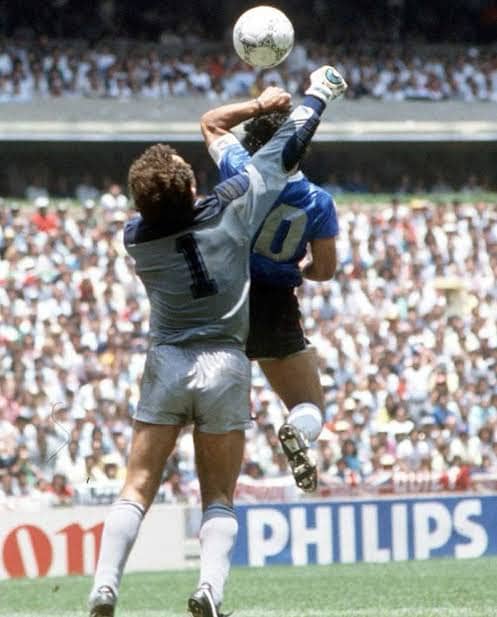
England and Argentina will renew one of football’s fiercest rivalries on Wednesday when they clash in a blockbuster World Cup semi-final, 40 years after Diego Maradona’s unforgettable “Hand of God” performance rewrote football history and left England heartbroken.

The heavyweight showdown in Atlanta revives memories of the 1986 World Cup quarter-final in Mexico City, where Maradona inspired Argentina to a controversial 2-1 victory with two of the most iconic goals ever witnessed at a World Cup.

His first, punched into the net and later immortalised as the “Hand of God”, remains one of football’s most debated moments, while his breathtaking solo run moments later is widely regarded as one of the greatest goals in the history of the tournament.

This time, Argentina will once again look to their talisman, Lionel Messi, as the defending champions chase history by becoming the first nation since Brazil in 1962 to retain the World Cup.

Standing in their way is an England side desperate to end six decades of major tournament heartbreak.

Inspired by Jude Bellingham and captain Harry Kane, the Three Lions know victory would move them within touching distance of a first World Cup triumph since 1966.
The winners will face either France or Spain, who meet in the other semi-final in Texas on Tuesday, in Sunday’s final on July 19.

Argentina booked their place in the last four after overcoming a stubborn Switzerland 3-1 in Kansas City. Extra-time strikes from Julian Alvarez and Lautaro Martinez finally broke Swiss resistance after the teams had been locked together at the end of normal time.

With political tensions surrounding the Falkland Islands, known in Argentina as the Malvinas, likely to resurface ahead of the encounter, Argentina coach Lionel Scaloni sought to keep the focus firmly on football.

“This is a football game,” Scaloni said after the victory over Switzerland.
“We’re playing against a very strong opponent with an excellent coach. That’s all it is.”

England, meanwhile, advanced after surviving a stern examination from Norway in the searing heat of Miami.

Thomas Tuchel’s men required extra time to secure a tense 2-1 victory, with Bellingham scoring twice to send England into only their fourth World Cup semi-final.

Norway had stunned England when Andreas Schjelderup fired them ahead before half-time, but Bellingham restored parity in stoppage time after a controversial build-up in which Norway claimed goalkeeper Ørjan Nyland’s goal kick had struck an overhead camera cable.

The Norwegians’ protests were waved away, and after also seeing another goal ruled out, they were ultimately punished when Bellingham struck again in extra time to seal England’s passage.
Despite the victory, Tuchel admitted his side must raise their level significantly if they are to overcome the reigning champions.

Now, four decades after Maradona’s “Hand of God” altered the course of football history, England have another opportunity to settle old scores against Argentina, this time with a place in the World Cup final at stake.

SERAP Sues INEC, Demands Investigation Into Alleged N800bn FAAC Diversion For Tinubu Campaign

0

The Socio-Economic Rights and Accountability Project (SERAP) has sued the Independent National Electoral Commission (INEC), seeking a court order compelling the electoral umpire to investigate allegations that governors elected on the platform of the All Progressives Congress (APC) diverted about ₦800 billion from Federation Account Allocation Committee (FAAC) allocations to finance political and campaign activities.

In the suit, filed last week before the Federal High Court in Abuja and marked FHC/ABJ/CS/1426/2026, SERAP is asking the court to issue an order of mandamus directing INEC to investigate the allegations and determine whether the reported contributions breached provisions of the Electoral Act governing campaign financing.

The organisation also wants the court to compel INEC to demand full disclosure from the APC and the affected governors on the alleged campaign fund, including the identities of contributors and the lawful sources of the funds.

SERAP further urged the court to direct the electoral commission to commence a comprehensive review of compliance with Section 91 of the Electoral Act, particularly regarding political donations, campaign financing and disclosure requirements by political parties and candidates in the current electoral cycle.

According to the rights group, the allegations raise fundamental concerns over transparency in political financing, electoral fairness and the constitutional right of Nigerians to participate freely in the democratic process.

It argued that opaque campaign financing remains a major conduit for corruption and undermines public confidence in democratic institutions.

In the suit filed by its lawyers, Kolawole Oluwadare and Kehinde Oyewumi, SERAP contended that the alleged diversion of public funds for political purposes poses “a grave threat” to the credibility of the 2027 general elections.

The organisation maintained that large public financial flows, combined with weak transparency and oversight mechanisms, provide sufficient grounds for INEC to activate its constitutional and statutory powers to investigate and monitor political financing.

SERAP argued that Section 91 of the Electoral Act empowers INEC to regulate political donations, require disclosure of contributors and sources of campaign funds, and sanction individuals or political parties that exceed legally prescribed donation limits.

It noted that political parties found guilty of violating the donation ceiling risk fines of up to ₦10 million and forfeiture of excess funds, while individuals may be liable to penalties amounting to five times the value of contributions made beyond the legal limit.

According to SERAP, the Constitution, the Electoral Act and Nigeria’s obligations under international anti-corruption and human rights treaties impose clear responsibilities on INEC to prevent the misuse of state resources for electoral advantage and to guarantee transparency in political financing.

The organisation further argued that where allegations suggest that public resources may have been channelled into political campaigns outside lawful procedures, INEC has a legal duty to investigate and enforce the relevant provisions of the law.

SERAP also cited Sections 13, 14 and 15 of the 1999 Constitution (as amended), as well as Nigeria’s obligations under the African Charter on Human and Peoples’ Rights, the International Covenant on Civil and Political Rights and the United Nations Convention Against Corruption, insisting that electoral integrity cannot be guaranteed without accountability in campaign financing.

It warned that any diversion of public funds for partisan political purposes would amount to a serious abuse of public trust, distort electoral competition and undermine the principle of a level playing field.

No date has been fixed for the hearing of the suit.

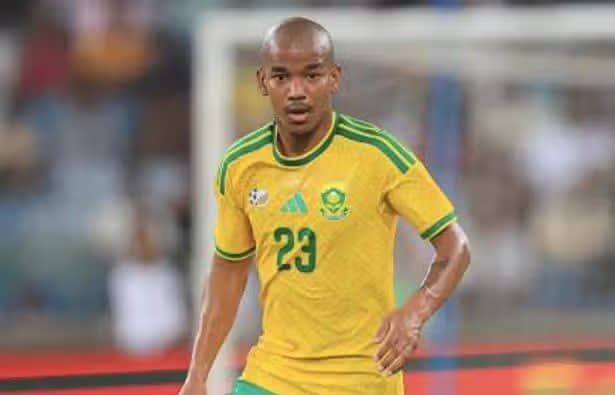
South African Football Mourns As World Cup Midfielder Jayden Adams Dies At 25

South African football has been plunged into mourning following the death of midfielder Jayden Adams, who passed away at the age of 25, just days after representing his country at the 2026 FIFA World Cup. The tragic development has sparked an outpouring of grief across the football community.

Adams, who played for Mamelodi Sundowns, featured in all three of South Africa’s group-stage matches at the World Cup, helping Bafana Bafana reach the knockout stage. He was, however, an unused substitute in the team’s 1-0 Round of 32 defeat to Canada, which brought their historic campaign to an end.

The gifted midfielder’s death comes barely weeks after he returned from football’s biggest stage, where he carried the hopes of his nation with distinction.

Earlier in the tournament, Adams endured personal tragedy after losing his grandmother, Marianna Adams, a day before South Africa’s Group A clash against the Czech Republic. Despite the heartbreaking loss, he honoured his national team commitment by taking to the field.

At the time, the South African Football Association (SAFA) expressed sympathy with the player and his family, confirming that his 72-year-old grandmother had died in a Stellenbosch hospital before being laid to rest in June.

A product of the Stellenbosch FC academy, Adams signed his first professional contract in 2020 and quickly established himself as one of the club’s brightest talents. He made 139 appearances for Stellenbosch—ranking among the club’s most-capped players—before securing a move to Mamelodi Sundowns in 2025.

He earned nine senior international caps for South Africa and was widely regarded as one of the country’s most promising midfielders.
The South African Football Players Union (SAFPU) described his passing as “an immeasurable loss” to his family, teammates, clubs and the nation, paying tribute to his humility, talent and commitment to the game.

The cause of Adams’ death had not been officially disclosed as of Saturday, with tributes continuing to pour in from across the football world.

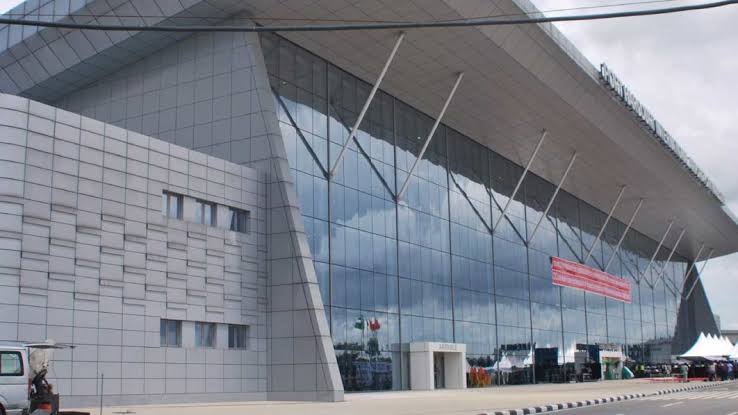
Port Harcourt Airport Secures Global Safety Certification After 40 Years, FAAN Commends Fubara

The Port Harcourt International Airport has, for the first time in its over 40-year history, secured full aerodrome certification and operational licence after meeting stringent safety and security requirements set by the Nigerian Civil Aviation Authority (NCAA) and the International Civil Aviation Organisation (ICAO).

The landmark certification follows the extensive upgrade, expansion and modernisation of the airport’s infrastructure, alongside the provision of critical safety equipment, a development the Federal Airports Authority of Nigeria (FAAN) attributed to the support of the Rivers State Government under Governor Siminalayi Fubara.

Regional General Manager, South-South Airports and Manager of Port Harcourt International Airport, Mrs Lynda Ezike, disclosed this on Friday during a courtesy visit by a FAAN delegation to Government House, Port Harcourt, where she formally presented the certification to Governor Fubara.

Speaking with journalists after the presentation, Ezike described the certification as a historic milestone that positions the airport for increased international operations while reaffirming its compliance with globally accepted aviation safety standards.

“We came here on a historic mission to present this certificate to His Excellency, Sir Siminalayi Fubara, because his administration made this achievement possible,” she said.

According to her, the certification signifies that Port Harcourt International Airport, regarded as the gateway to Rivers State and the South-South region, now fully satisfies the operational and safety benchmarks prescribed by both national and international aviation regulators.

“This is no ordinary achievement. The airport is now certified, meaning more international airlines can operate into Port Harcourt with the confidence that it meets globally recognised safety standards,” she stated.
Ezike credited the accomplishment to the governor’s commitment to upgrading airport infrastructure and providing critical operational equipment required to satisfy NCAA and ICAO regulations.
“The issuance of this certificate is a direct reflection of the unwavering support of Governor Siminalayi Fubara in the upgrade of airport infrastructure and the provision of critical equipment needed to meet national and international safety requirements,” she added.

She further noted that the certification enhances Nigeria’s profile in the global aviation industry while strengthening Port Harcourt International Airport’s capacity to attract more international flights and investment into the South-South region.

Fubara Flags Off 11.9MW Solar Mini-Grid In Rivers, Targets Clean Energy, Rural Economic Growth

0

The Rivers State Government has commenced the construction of an 11.9-megawatt peak (MWp) solar mini-grid in Bolo, Ogu/Bolo Local Government Area, in a move aimed at expanding electricity access, stimulating economic activities and accelerating the state’s transition to clean energy.

Speaking at the groundbreaking ceremony on Friday, Governor Siminalayi Fubara said reliable and affordable electricity remains fundamental to sustainable development, stressing that no community can achieve meaningful economic growth without stable power.

Represented by the Deputy Governor, Prof. Ngozi Nma Odu, the governor described the project, being executed in partnership with the Rural Electrification Agency (REA), as more than an infrastructure investment.
According to him, the solar mini-grid represents an investment in the future of Bolo, with the capacity to transform businesses, schools, healthcare facilities and the local economy.

Fubara expressed confidence that the project would boost electricity supply, stimulate small and medium-scale enterprises, create employment opportunities, reduce dependence on fossil fuels, promote environmental sustainability and improve the quality of life of residents, particularly women and other vulnerable groups.

He commended the Rural Electrification Agency and its development partners for collaborating with the Rivers State Government to deliver the project, describing the partnership as a demonstration of what can be achieved when governments and institutions work together to improve citizens’ welfare.

The governor reaffirmed his administration’s commitment to ensuring that no community is left behind in the state’s drive towards sustainable electrification and urged residents of Bolo to take ownership of the project by safeguarding the facilities, supporting contractors and cooperating with all stakeholders throughout the construction phase.

He expressed optimism that the community’s support would ensure the successful completion and long-term sustainability of the project.

Managing Director and Chief Executive Officer of the Rural Electrification Agency, Abba Aliyu, said the initiative aligns with President Bola Tinubu’s Renewed Hope Agenda, which prioritises improved electricity access, economic growth and job creation.

Aliyu disclosed that the agency had completed 16 renewable energy projects across Rivers State and has another 17 projects in the pipeline, positioning the state as one of Nigeria’s leading beneficiaries of clean energy investments.
Permanent Secretary, Rivers State Ministry of Power, Engr. Nicholas Iminabo Wokoma, explained that the solar mini-grid would complement the existing 33kV distribution network, providing Bolo community with a more reliable and efficient electricity supply.

He described the project as a scalable model that could be replicated in other unserved and underserved communities across the state, while commending the REA for partnering with the Rivers State Government to strengthen the state’s energy infrastructure.

Earlier, Chairman of Ogu/Bolo Local Government Area, Vincent Nemieboka, praised the state government for selecting Bolo as the host community, describing the project as a sustainable energy solution that would guarantee affordable and clean electricity for residents.

Also speaking, Chairman of the Bolo Se Council of Chiefs, Chief Augustus Daddie Oforibokaka, expressed appreciation to the Federal and Rivers State governments for bringing the project to the kingdom.

He said the solar mini-grid would not only address the community’s longstanding electricity challenges but also improve access to potable water, stimulate economic activities and accelerate development.

The traditional leader, on behalf of the monarch, the Council of Chiefs and the people of Bolo Kingdom, thanked Governor Fubara and the Ogu/Bolo council chairman for facilitating the project, describing it as a landmark intervention for the community.

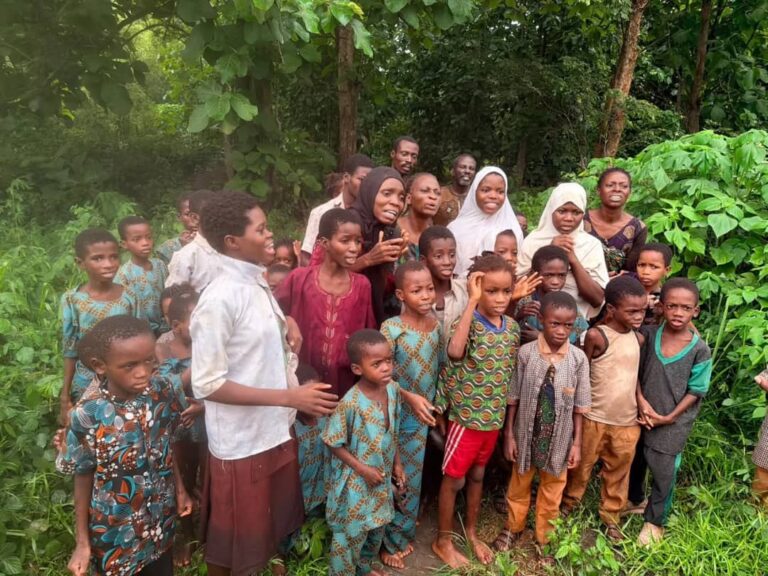
Relief As Kidnapped Oyo Pupils, Teachers Regain Freedom

The pupils and teachers abducted in Orire Local Government Area of Oyo State have regained their freedom, bringing an end to days of anxiety over their fate.

The development was disclosed on Friday by the Special Adviser to the President on Information and Strategy, Bayo Onanuga, in a post on his verified X account.

“Finally, the kidnapped pupils and teachers in Orire, Oyo have been freed by their abductors,” Onanuga wrote.

However, authorities have yet to provide details on the circumstances surrounding their release, including whether a ransom was paid or if security operatives facilitated their freedom.
Further details are expected as officials provide more information.

Fubara Targets Retirees’ Welfare With N107bn Pension, Gratuities Package In N1.854tr Budget … Raises Hope For Fresh Employments

0

Retirees Get Major Boost as Fubara Sets Aside Over N107bn for Pensions, Gratuities, Death Benefits
Governor Siminalayi Fubara has signalled a major commitment to the welfare of retired civil servants in Rivers State, earmarking more than N107 billion in his proposed N1.854 trillion 2026 Budget to settle pension obligations, clear outstanding gratuities and pay death benefits.

Presenting the 2026 Appropriation Bill, christened “Budget of Resilience for Growth and Development,” before the Rivers State House of Assembly on Friday, the governor said his administration had made adequate provisions to address the long-standing plight of retirees, particularly those owed benefits accumulated over the years.

A breakdown of the budget shows that N20 billion has been allocated for gratuities, another N20 billion for legacy pension gratuities, N55.1 billion for monthly pension payments and N7 billion for death benefits.

The government also proposed N5 billion for Group Life Insurance and N4 billion for obligations under the Employee Compensation Act, bringing the total social protection package for serving and retired workers to well over N111 billion.
Fubara declared that the allocations reflect his administration’s determination to restore dignity to retired public servants by settling longstanding entitlements.

“We have also made sufficient arrangements to clear the backlog of gratuities and death benefits owed to retired civil servants, which had accumulated under previous administrations,” the governor said.

Beyond retirees, the governor proposed N15.22 billion for the recruitment of new workers into the public service, a move expected to strengthen manpower across ministries, departments and agencies while creating employment opportunities for qualified residents.

Fubara said the people-centred budget was deliberately structured to improve the quality of life of Rivers people through sustained investment in human capital and social development.

According to him, the N1.854 trillion budget, representing a 24.49 per cent increase over the adjusted 2025 estimates, was designed through extensive public consultation and reflects the aspirations of residents for a more prosperous and resilient state.

He noted that the budget aligns with his administration’s broader vision of building “a secure, prosperous and resilient State characterised by inclusive economic growth, sustainable development and improved standards of living for all.”

The governor identified economic growth, human capital development, socio-economic infrastructure and social investment as the four major pillars of the 2026 fiscal plan, stressing that every allocation was aimed at improving service delivery and expanding opportunities for citizens.

Describing the appropriation proposal as a budget that would touch every part of the state, Fubara told lawmakers that it was crafted to respond to the needs of Rivers people.

“We present to this Honourable House a budget that reflects the needs and aspirations of our people—a budget that will deliver for all residents of Rivers State,” he said.

The governor urged the House of Assembly to give the budget speedy consideration and approval to enable the government commence implementation of programmes aimed at accelerating development while improving the welfare of workers, retirees and other residents of the state.

Fubara Unveils N1.854tr 2026 Budget, Prioritises Infrastructure, Education, Economic Growth

After Delay, Fubara Presents N1.854tr ‘Budget of Resilience’ to Rivers Assembly
Governor Siminalayi Fubara on Friday presented a proposed N1.854 trillion Appropriation Bill for the 2026 fiscal year to the Rivers State House of Assembly, with a strong emphasis on infrastructure renewal, education, healthcare, economic expansion and human capital development.

Presenting the budget, christened “Budget of Resilience for Growth and Development,” before lawmakers, Fubara said the proposal was designed to build a more resilient, prosperous and inclusive economy while sustaining ongoing investments in critical sectors.

The governor said the projected expenditure of N1,854,248,734,475.76 represents a 24.49 per cent increase over the adjusted 2025 budget, driven by anticipated improvements in statutory allocations from the Federation Account Allocation Committee (FAAC), derivation revenue and internally generated revenue.

Despite political and economic challenges, Fubara said his administration had maintained fiscal stability through prudent management of public resources.

“Our State has remained fiscally stable, thanks to our commitment to fiscal responsibility, prudence and accountability in managing public funds.

We do not tolerate mismanagement at any level and have wisely utilised public funds to provide services, attract investment, create jobs and expand socio-economic opportunities for our people,” he said.

According to the governor, the projected revenue profile comprises N487.61 billion from internally generated revenue, N936.05 billion from FAAC allocations, including derivation funds, Value Added Tax and exchange gains, N48.11 billion in opening and closing balances, and N382.48 billion from capital receipts, including domestic loans, grants and asset sales.

Fubara proposed N413.11 billion for recurrent expenditure and N1.405 trillion for capital projects, underscoring his administration’s commitment to development-oriented spending.

He disclosed that personnel costs would gulp N154.77 billion, while N15.22 billion was earmarked for new recruitment into the public service. Other recurrent allocations include N55.10 billion for pensions, N20 billion each for gratuities and legacy pension liabilities, N7 billion for death benefits and N36.71 billion for overhead costs.

The governor announced a 50 per cent increase in overhead allocations to ministries, departments and agencies to enhance operational efficiency immediately the budget is passed into law.

He also pledged to clear the backlog of gratuities and death benefits owed retired civil servants, saying the liabilities accumulated under previous administrations would receive priority attention.

On capital spending, infrastructure retained the largest share, with N533.32 billion allocated to works and infrastructure. Education follows with N315 billion, while N105.43 billion was earmarked for healthcare delivery.

The Rivers State House of Assembly is expected to receive N41.44 billion, while the judiciary was allocated N30 billion. Other sectoral allocations include N19.26 billion for agriculture, N15 billion for power, N8.5 billion for chieftaincy and community development, N7.98 billion for sports, N7 billion for youth development, N6.5 billion for women affairs and N6.61 billion for environmental sustainability.

Fubara described the appropriation bill as a people-centred budget designed to accelerate development, stimulate economic growth and improve living standards across the state.

He identified economic growth, human capital development, socio-economic infrastructure and social investment as the administration’s core priorities for the 2026 fiscal year.

The governor said the budget would fund new infrastructure projects, complete ongoing road construction and ensure the maintenance of existing roads and bridges, while significantly expanding investment in education to reposition the sector for better outcomes.

Acknowledging the delay in presenting the budget, Fubara assured lawmakers that implementation would be robust and anchored on transparency, accountability and responsible financial management.

He urged members of the House of Assembly to rise above political differences and approve the proposal in the overriding interest of Rivers people.

“The collective interests of our State and people are more important than any other consideration. As leaders, it is our collective duty to ensure every kobo is spent where it is most needed and to deliver on our mandates to the people,” the governor said.

He thereafter formally laid the 2026 Appropriation Bill before the House for consideration and passage into law.

Tinubu Seeks Senate’s Swift Approval Of Senior Secondary Education Commission Amendment Bill

0

President Bola Tinubu has transmitted the National Senior Secondary Education Commission (Amendment) Bill, 2026, to the Senate, seeking accelerated legislative approval for reforms aimed at strengthening the administration and regulation of public senior secondary education in Nigeria.

The President’s request was conveyed in a letter read during Thursday’s plenary by Senate President Godswill Akpabio.

Tinubu said the proposed amendment was designed to enhance the management, institutional framework and oversight of public senior secondary education nationwide as part of his administration’s broader agenda to revitalise the education sector.

According to the President, the Federal Executive Council (FEC) approved the bill at its meeting of April 30, 2026, following which the Federal Ministry of Justice vetted and finalised the draft in line with constitutional provisions and legislative drafting standards.

“In furtherance of this administration’s commitment to strengthening educational institutions in the national interest, the National Senior Secondary Education Commission (Amendment) Bill, 2026, is hereby forwarded for legislative action by the National Assembly,” Tinubu stated in the letter.
He urged the Senate to accord the bill expeditious consideration, expressing confidence that its passage would support ongoing efforts to improve the country’s education system.

Responding, Akpabio referred the proposed legislation to the Senate Committee on Rules and Business, directing it to report back to the chamber within one week.
The bill comes amid the Federal Government’s renewed push to reform secondary education.

Minister of Education, Tunji Alausa, recently announced plans to end the policy separating junior secondary schools (JSS) from senior secondary schools (SSS), arguing that the arrangement has failed to achieve its intended objectives.

According to the minister, the policy has created disparities in student enrolment, with overcrowding in many junior secondary schools while several senior secondary schools remain underutilised.

He also disclosed that the disarticulation policy had weakened the transition from primary to senior secondary education, revealing that more than 20 million pupils who enrolled in primary schools did not progress to senior secondary level.