


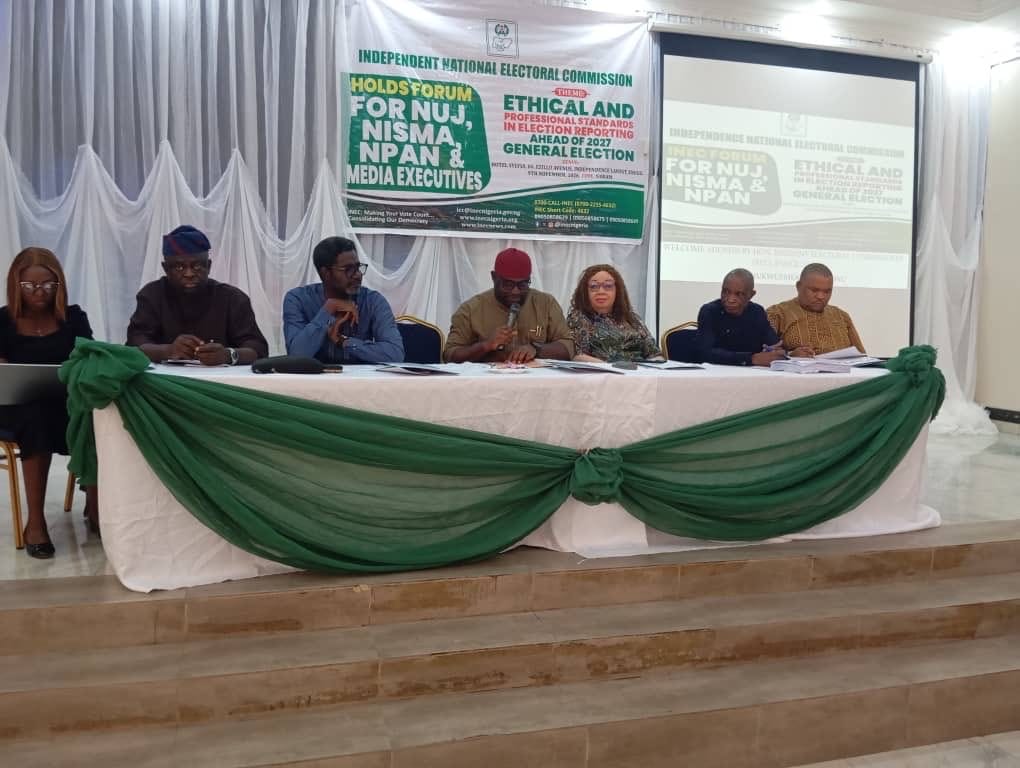
The Independent National Electoral Commission (INEC) has called on media organisations, journalists and social media analysts to strengthen their professional and ethical standards in election reporting ahead of the 2027 general elections, warning that misinformation and inflammatory political narratives could undermine public confidence and threaten peaceful polls.
The commission made the call at a media engagement forum organised for the Nigeria Union of Journalists (NUJ), Nigerian Institute of Social Media Analysts (NISMA), Newspaper Proprietors Association of Nigeria (NPAN) and media executives in Enugu State.
The forum, held at Hotel Sylvia, had as its theme, “Ethical and Professional Standards in Election Reporting Ahead of the 2027 General Elections.”
Speaking at the event, the Enugu State Resident Electoral Commissioner (REC), Dr Chukwuemeka J. Chukwu, who represented the National Commissioner and Chairman of INEC’s Information and Voter Education Committee, Mohammed Kudu Haruna, described the media as a critical partner in ensuring credible elections and sustaining public confidence in the democratic process.
He said the media played a strategic role in the electoral process by serving as a link between the commission and the electorate through information dissemination, voter education, public enlightenment and accountability.
Chukwu urged journalists to exercise caution in their reportage, particularly on election results, incidents at polling units, electoral materials and technological processes, warning against publishing unverified information or presenting speculation as established facts.
He stressed that inaccurate reports and the spread of disinformation could erode public trust in the electoral process and create tensions capable of threatening peaceful elections.
The REC also urged media organisations to intensify voter education, particularly on the collection of Permanent Voter Cards (PVCs), voter accreditation, voting procedures, the Bimodal Voter Accreditation System (BVAS), electronic transmission of results and the need for peaceful participation.
He further called for inclusive election coverage, urging journalists to ensure that women, young people and persons with disabilities received adequate representation in electoral discussions and reportage.
In his opening remarks, Haruna, represented by the REC, underscored the media’s influence in shaping public understanding of the electoral process.
He noted that public confidence in elections depended largely on the accuracy, credibility and reliability of information available to citizens.
The commission’s engagement with media stakeholders is part of efforts to promote responsible election reporting, counter the spread of fake news and strengthen public confidence as Nigeria prepares for the 2027 general elections.
