


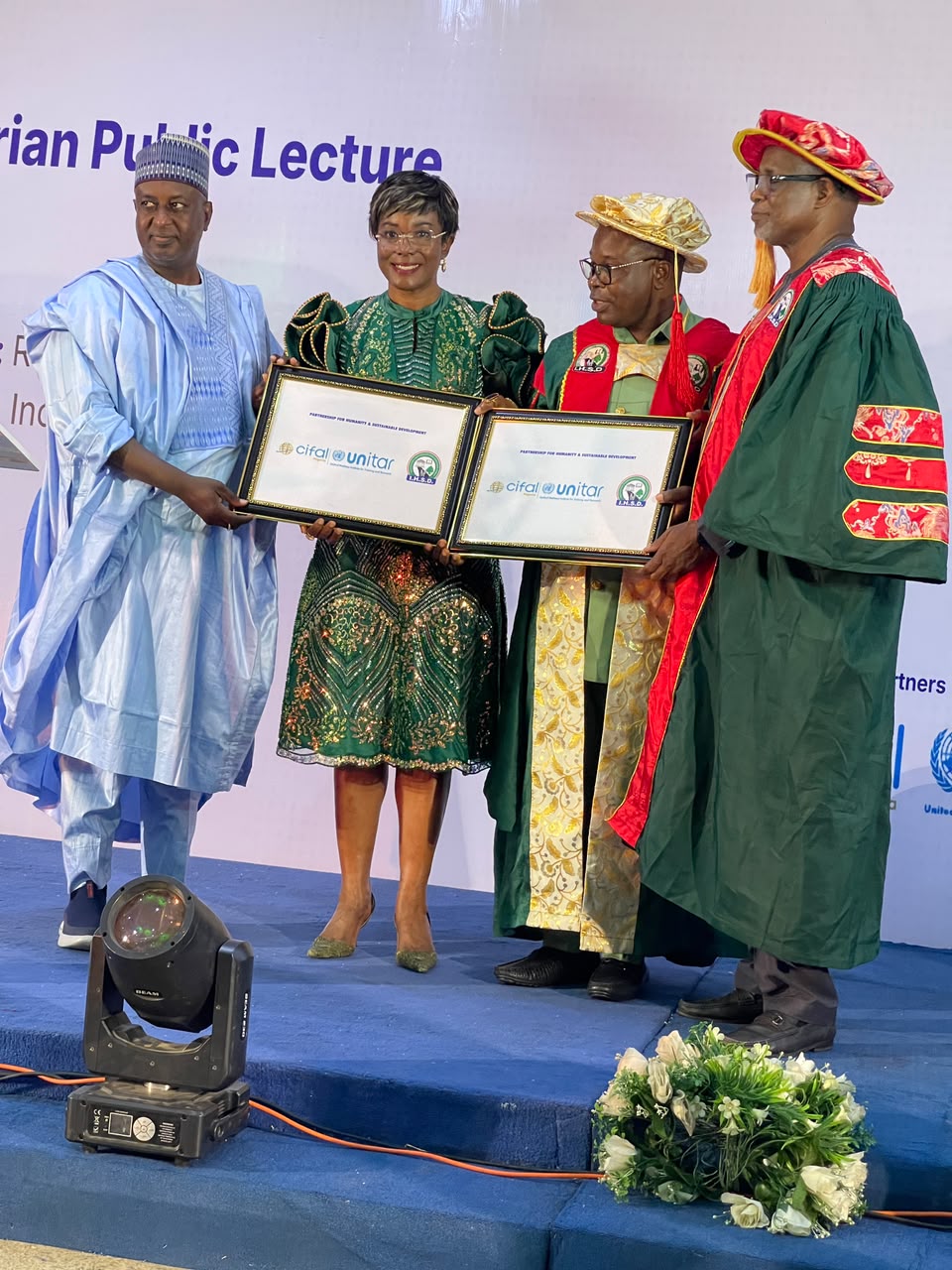

From L-R: Dr Mukhtar Ramalan Yero,(Dallatun Zazzau) former Governor of Kaduna State, Mrs Ihuoma Njemanze, Director, CIFAL Nigeria, Ambassador Francis Origa, Registrar/CEO, IHSSD, and Amb. Adamu Babangida Ibrahim Chairman, Governing Council IHSSD.
The United Nations Institute for Training and Research (UNITAR) CIFAL Nigeria has called for stronger humanitarian response mechanisms, greater accountability and increased investment in capacity building, research and innovation to improve disaster preparedness and humanitarian action in Nigeria.
The Director of UNITAR CIFAL Nigeria, Mrs Ihuoma Njemanze, made the call in Abuja during the 16th Annual Humanitarian Public Lecture and Induction Ceremony organised by the Institute for Humanitarian Studies and Social Development (IHSD) to commemorate 2026 World Humanitarian Day.
The event, themed, “Resilience in Action: Strengthening Ethical Leadership, Inclusivity and Humanitarian Values in Nigeria,” brought together experts, academics and stakeholders to examine emerging challenges and the future of humanitarian action in the country.
Njemanze stressed the need to protect humanitarian workers and strengthen accountability mechanisms to ensure that perpetrators of attacks against those providing assistance during crises are held to account.
She also advocated increased investment in humanitarian capacity building, research and innovation, saying these were critical to building effective responses to disasters and other emergencies.
According to her, the evolving partnership between IHSD and UNITAR CIFAL Nigeria is entering a new phase of what she described as “Humanitarianism 4.0”, driven by technology, innovation, sustainability and strategic partnerships.
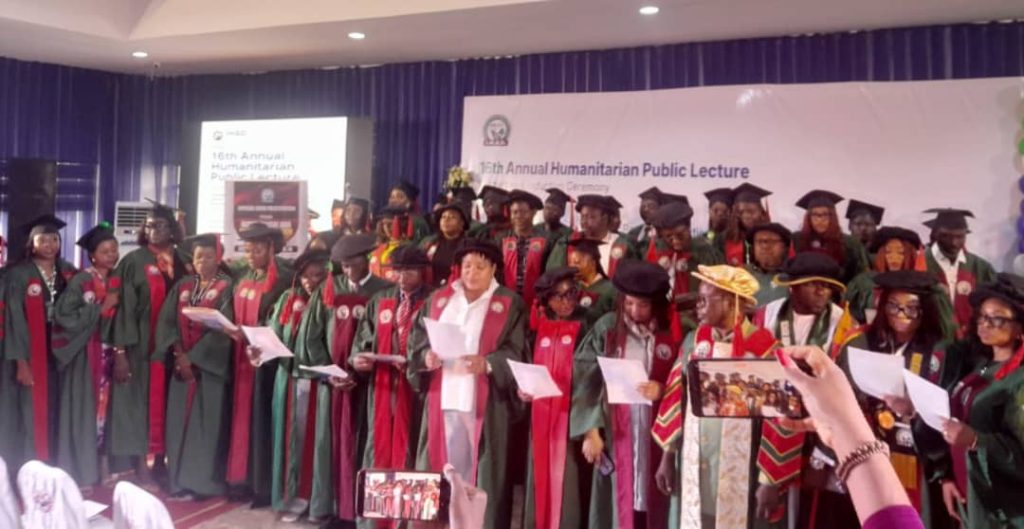
Induction of Fellows and new members by the Institute.
Other speakers, including Professor Uwaoma Uche of Gregory University, Uturu, Abia State and former Kaduna State Governor, Mukhtar Ramalan Yero, underscored the importance of humanitarian ethics, community resilience, education, social protection and transparency in strengthening responses to humanitarian crises.
They also called for stronger partnerships at the grassroots, noting that sustainable humanitarian action must involve communities and empower them to withstand and recover from crises.
The discussions emphasised that effective humanitarian response requires ethical leadership, accountable institutions, empowered communities and sustained collaboration among government, civil society, humanitarian organisations and other stakeholders.
The ceremony also featured the induction of new members and fellows of the institute.
A book, Humanitarian and Materism, authored by Prince Origa, was also launched at the event.