Home Blog

2027: Amaechi Urges Nigerians To Shun Ethnic Politics, Vote On Performance

0

The Vice-Presidential candidate of the African Democratic Congress (ADC), Rotimi Amaechi, has urged Nigerians to look beyond ethnic considerations and vote for candidates based on performance, competence and acceptability in the 2027 general elections.

Amaechi made the call on Monday during a panel session at the ongoing Nigerian Bar Association (NBA) 2026 Annual General Conference in Port Harcourt, Rivers State.

The former Rivers State governor and Minister of Transportation said voters should resist the temptation to support political candidates merely because they share the same ethnic or geographical background.

He argued that the country’s political future would be better served if Nigerians assessed candidates based on their records and capacity to deliver good governance.

“A coalition should be based on performance. Assess us by our last performance and choose; don’t just vote because you are from Ikwerre or Omoku and choose your candidate,” Amaechi said.

He also expressed concern over the inability of opposition parties to agree on a single presidential candidate ahead of the 2027 elections, attributing the challenge largely to the personal ambitions of political leaders.

According to him, the coalition project remains difficult because many politicians are unwilling to sacrifice their individual ambitions for a broader national interest.

“Coalition as it is today is difficult to achieve. If it is possible, I am sure that Vice President Atiku Abubakar would be willing to participate.

“But the difficulty in it is that everybody has ambition. Nobody wants to give up. There are very few politicians who are in love with Nigeria. What the politicians are doing is to just come in and milk the country dry,” he said.

Amaechi, who described the ADC as a fresh political alternative, urged Nigerians to give the party an opportunity to demonstrate its capacity to provide a different style of leadership.

“ADC provides a different kind of leadership completely. If we can’t perform, don’t vote for us,” he said.

NDDC: Why Niger Delta Must Break Oil Dependence, Invest In Agriculture, Digital Economy- Ogbuku

NDDC Managing Director, Dr Samuel Ogbuku (standing), speaking at the 2026 Nigerian Bar Association, NBA, Conference in Port Harcourt, Rivers State. First left is the Chairman of the NDDC Governing Board, Mr. Chiedu Ebie, while the NDDC Director, Legal Services, Mr. Victor Arenyeka is on the right.

The Niger Delta Development Commission (NDDC) has called for increased investment in agriculture and other sustainable sectors as part of efforts to diversify the economy of the oil-producing region and secure its future beyond crude oil.

The NDDC Managing Director, Dr Samuel Ogbuku, made the call while speaking on resource control at the Nigeria Bar Association’s 66th Annual General Conference in Port Harcourt, Rivers State.
Ogbuku said although oil had contributed significantly to Nigeria’s development, the Niger Delta could not continue to depend on petroleum resources indefinitely.

In a press statement signed by Seledi Thomspon-Wakama
Director, Corporate Affairs of the NDDC, Ogbuku challenged stakeholders to begin addressing fundamental questions about the region’s future, particularly by identifying areas where Niger Deltans could exercise greater control over their resources and economic destiny.

“Data remains a critical component of resource control. Without accurate information on what the Niger Delta produces, it would be difficult to determine what it is entitled to receive.

“If we do not control the data, we do not know what we produce; we do not know what is to come to us. We need to put the future into our own hands,” he said.

The NDDC managing director identified agriculture as one of the sectors within the region’s control, saying greater investment in the sector would strengthen food security, create jobs and provide sustainable livelihoods for women and young people.

The session also examined environmental remediation in the Niger Delta, with panellists raising questions about the criteria for determining areas and communities to be remediated, as well as mechanisms for independently verifying the effectiveness of remediation projects.

Speaking on the Commission’s institutional reforms, a member of the NDDC legal team, Paul Emerhana, said the agency had begun a deliberate transition from “transaction to transformation”, anchored on institutional reforms, digitalisation and sustainable development.

Emerhana cited the Commission’s solar street-lighting projects as an example of interventions designed to deliver environmental, social and developmental benefits.

According to him, the projects have reduced dependence on conventional energy sources while improving security in beneficiary communities.

He also highlighted the Commission’s digital transformation, particularly the automation of its contract management processes, describing the NDDC as the first agency to fully automate its contract processes.

He said the digitalisation drive had extended to youth development, with the Commission providing training in artificial intelligence and other digital skills for young people across the Niger Delta.

“The Commission is investing in youths because they represent the region’s future; equipping them with relevant digital skills would improve their ability to participate in the emerging digital economy,” he said.

Emerhana also disclosed that the NDDC had established a Corporate Governance Department to strengthen governance, accountability and the sustainability of its operations.

He stressed the importance of adopting Environmental, Social and Governance principles to ensure that NDDC projects delivered lasting value to host communities beyond the completion of construction works.

The conference featured awards to the NDDC Board Chairman, Mr Chiedu Ebie, and Ogbuku in recognition of the Commission’s contributions to the development of the Niger Delta region.

APC Reopens E-Registration Ahead Of 2027 Polls, Dismisses Campaign Council Review Report

0

The All Progressives Congress (APC) has announced the reopening of its electronic membership registration exercise nationwide from August 31, 2026, as the party begins preparations for the 2027 general elections.

The exercise, which will be conducted across all wards in the country, will enable existing members to validate their records while new and intending members will be given the opportunity to register.

The APC National Publicity Secretary, Felix Morka, disclosed this in a statement issued on Tuesday in Abuja, urging party members, stakeholders and supporters to participate actively in the exercise.

Morka said the e-registration was aimed at digitising the party’s membership register, strengthening the integrity of its records and providing efficient access to membership data for planning and management decisions.

According to him, the exercise would also promote internal democracy and reinforce the party’s commitment to democratic innovation.

“The E-Registration Exercise is designed to digitise the Party’s membership register, ensure the integrity of membership records, enhance efficient access to membership data for planning and management decisions, promote internal democracy, and strengthen the Party’s commitment to democratic innovation in Nigeria,” he said.

The party said applicants must be at least 18 years old and possess a valid National Identification Number to register.

Meanwhile, the APC has dismissed reports that it withdrew the list of members of its 2027 presidential campaign council for review.

Morka described the reports as rumours, insisting that any decision to amend the list would be formally communicated by the party.

He spoke on Tuesday morning against the backdrop of reports that the list had been withdrawn following concerns over the inclusion or omission of some names.

“Rumours are not news. When people are carrying rumours, that is not news. There is fake news, and there is real news.
“Nobody will give any list at the moment. But if there is any reason to update it, it would be announced properly,” Morka said.

The APC had unveiled its presidential campaign council on Saturday, with President Bola Tinubu as chairman, while Vice-President Kashim Shettima and the party’s National Chairman, Nentawe Yilwatda, were named vice-chairmen.

Former Zamfara State Governor, Abdulaziz Yari, was appointed Director-General, while Imo State Governor and Chairman of the Progressive Governors Forum, Hope Uzodimma, was named secretary.

The development comes as the ruling party intensifies its organisational preparations ahead of the 2027 elections, with the membership registration exercise expected to provide an updated digital database of its nationwide membership.

Fubara Defends LG Payroll Clean-up, Says No Politics In Ghost Workers’ Probe

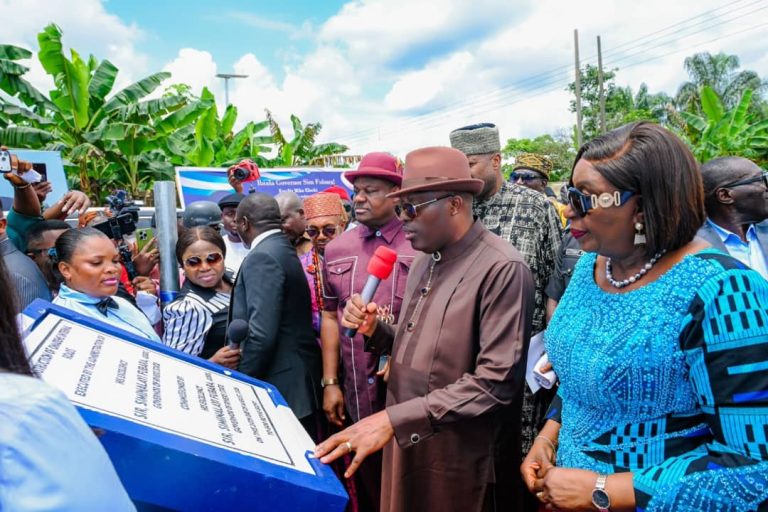
Governor of Rivers State, Sir Siminalayi Fubara (middle), Deputy Governor of Rivers State, Prof Ngozi Odu and former Deputy Governor of Rivers State, Engr Tele Ikuru, at the unveiling of the plaque to commemorate the commissioning of the internal roads in Omademe Community on Monday.

Rivers State Governor, Siminalayi Fubara, has defended his administration’s decision to implement a comprehensive payroll verification exercise across the state’s 23 local government areas, insisting that the exercise is aimed at eliminating ghost workers and enforcing fiscal discipline.

Fubara spoke on Monday while commissioning the Omademe Internal Roads Project in Ikwerre Local Government Area, where he said the clean-up was necessary to address longstanding irregularities in local government payrolls.

The governor said the problem of bloated salary records predated his administration, noting that the former Local Government Service Commission had begun working on it before the state’s emergency administration.

He said he remained committed to resolving the issue after his return from what he described as a “sabbatical leave” and the constitution of a new Local Government Service Commission.
Fubara, a former Treasury officer, said his experience in public finance informed his decision to deploy information and communication technology personnel to support the verification committee.

He stressed that the exercise was conducted to ensure objectivity and transparency, insisting that political considerations would not influence its outcome.

“It doesn’t matter whether the people are my supporters. It doesn’t matter whether they are people from the other side. Now there is no other side. We are all Rivers people,” the governor said.

He added: “I want to ensure that the right thing is done. I’m not against you being employed. But the issue is that if you have to be employed, you have to be employed through the proper channel.”

Fubara also warned against politicising the payroll exercise, saying his administration would not allow every government decision to be interpreted through the prism of political rivalry.

He said he had approved the implementation of the committee’s recommendations and remained firmly behind the decision.

The governor also described the Omademe road project as part of his administration’s efforts to open up rural communities, improve connectivity and stimulate economic activities.

He said his administration would continue to deliver projects that add value to the lives of residents until the end of its tenure.

“We want to say it publicly here that it’s not about the number of days, but what matters in the life of every administration is the value that is added,” he said.

Fubara also urged Rivers political leaders to sustain the prevailing peace in the state and abandon the political crisis of the past.

“Just think of where we are coming from. Think of what has happened before. For me, I am not interested in going down that road anymore. What is behind me is behind me. What I am looking at is what is ahead of me,” he said.

Earlier, Commissioner for Works, Prof. Temple Nwofor, said the Omademe internal roads contract was awarded to Setraco Construction Limited in February 2024, while construction commenced in November of the same year.

Nwofor said the project comprises 10 internal roads covering about 8.6 kilometres, with side drains and outfall discharge systems.
According to him, the project includes a 100mm asphaltic layer, 8.7 kilometres of concrete side drains and a three-kilometre outfall drainage system designed to reduce the risk of flooding.

The Chairman of Ikwerre Local Government Area, Charles Wobodo, thanked the governor for the project but called for additional road projects to further expand the council’s road network.

CIFAL Nigeria Seeks Stronger Humanitarian Response, Accountability In Nigeria

0

From L-R: Dr Mukhtar Ramalan Yero,(Dallatun Zazzau) former Governor of Kaduna State, Mrs Ihuoma Njemanze, Director, CIFAL Nigeria, Ambassador Francis Origa, Registrar/CEO, IHSSD, and Amb. Adamu Babangida Ibrahim Chairman, Governing Council IHSSD.

The United Nations Institute for Training and Research (UNITAR) CIFAL Nigeria has called for stronger humanitarian response mechanisms, greater accountability and increased investment in capacity building, research and innovation to improve disaster preparedness and humanitarian action in Nigeria.

The Director of UNITAR CIFAL Nigeria, Mrs Ihuoma Njemanze, made the call in Abuja during the 16th Annual Humanitarian Public Lecture and Induction Ceremony organised by the Institute for Humanitarian Studies and Social Development (IHSD) to commemorate 2026 World Humanitarian Day.

The event, themed, “Resilience in Action: Strengthening Ethical Leadership, Inclusivity and Humanitarian Values in Nigeria,” brought together experts, academics and stakeholders to examine emerging challenges and the future of humanitarian action in the country.

Njemanze stressed the need to protect humanitarian workers and strengthen accountability mechanisms to ensure that perpetrators of attacks against those providing assistance during crises are held to account.

She also advocated increased investment in humanitarian capacity building, research and innovation, saying these were critical to building effective responses to disasters and other emergencies.

According to her, the evolving partnership between IHSD and UNITAR CIFAL Nigeria is entering a new phase of what she described as “Humanitarianism 4.0”, driven by technology, innovation, sustainability and strategic partnerships.

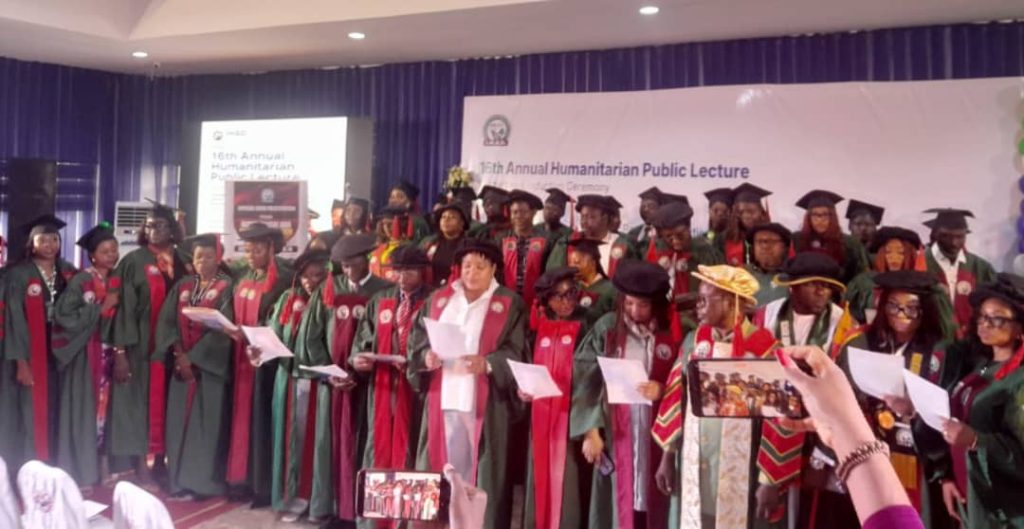
Induction of Fellows and new members by the Institute.

Other speakers, including Professor Uwaoma Uche of Gregory University, Uturu, Abia State and former Kaduna State Governor, Mukhtar Ramalan Yero, underscored the importance of humanitarian ethics, community resilience, education, social protection and transparency in strengthening responses to humanitarian crises.

They also called for stronger partnerships at the grassroots, noting that sustainable humanitarian action must involve communities and empower them to withstand and recover from crises.

The discussions emphasised that effective humanitarian response requires ethical leadership, accountable institutions, empowered communities and sustained collaboration among government, civil society, humanitarian organisations and other stakeholders.

The ceremony also featured the induction of new members and fellows of the institute.
A book, Humanitarian and Materism, authored by Prince Origa, was also launched at the event.

Police Probe Finima Attack On Traditional Ruler, One Suspect Arrested

0

The Rivers State Police Command has launched an investigation into the violent attack on the Amadabo of Finima Community in Bonny Local Government Area, HRH Dagogo Brown, following a clash over traditional rites and masquerade displays.

The monarch reportedly narrowly escaped death on Saturday when gunmen invaded a cultural masquerade display and opened fire around his palace.

Several residents were allegedly injured by gunshots and machete cuts, while property was destroyed during the violence, which erupted in the early hours of the day.

Confirming the incident on Monday, the Police Public Relations Officer in Rivers State, ASP Blessing Agabe, said normalcy had been restored to the community.

Agabe disclosed that one suspected member of the gang had been arrested, while investigators were working to apprehend other suspects still at large.

“Investigation is ongoing into the matter, while one of the gang members has been arrested,” she said.

According to her, the arrested suspect was providing useful information that could assist the police in unravelling the circumstances surrounding the attack and identifying other members of the gang.

The violence reportedly followed disagreements over cultural identity, traditional rites, masquerade displays and the rights of families to perform certain traditional activities.
No death was recorded in the incident, but several residents reportedly sustained injuries before police operatives were deployed to restore order.

Meanwhile, Chairman of Bonny Local Government Council, Mr Abinye Pepple, condemned the attack and destruction of property, calling for an impartial investigation to prevent further escalation.

Pepple assured residents that anyone found culpable would face justice, regardless of status or position.

“The council assures that anyone involved in this dastardly act will face justice, no matter their position or status,” he said.

He urged residents who fled the community to return home, remain calm and law-abiding, while assuring them that security personnel had been deployed to protect lives and property.

Finima, on Bonny Island, hosts critical national energy infrastructure, including the Nigeria LNG gas-liquefaction plant, comprising Trains 1 to 7, and Renaissance Africa Energy’s Bonny crude oil export terminal.

2027 Elections: Nigerian Editors to Tackle AI Disinformation, Electoral Justice at Enugu Conference

0

The Nigerian Guild of Editors (NGE) has announced plans to convene more than 500 editors and other stakeholders in Enugu for its 2026 All Nigeria Editors Conference (ANEC), with the media’s role in safeguarding Nigeria’s democracy ahead of the 2027 general elections taking centre stage.

The annual conference, the flagship gathering of the Guild, is scheduled for September 23 to 27 at the International Conference Centre (ICC), Enugu.

The conference will focus on critical national and global issues with implications for Nigeria’s political, economic and social development.

In a statement jointly signed by the NGE President and General Secretary, Eze Anaba and Onuoha Ukeh, respectively, the Guild said this year’s conference was particularly significant because it would hold ahead of the 2027 general election.

The theme of the conference is “The Ballot, the Media and the Task of Keeping Democracy Alive,” while the sub-theme is “When Lies Look Real: Detecting and Debunking AI Disinformation Before, During and After Election.”

His Majesty, Igwe Nnaemeka Alfred Achebe, the Obi of Onitsha, will chair the conference.

The former Catholic Archbishop of Abuja, Cardinal John Onaiyekan, is expected to deliver the keynote address at the opening ceremony on September 24 at 2pm.

Also scheduled to speak on the opening day is Prof. Auwal Yadudu of the Faculty of Law, Bayero University, Kano, who will examine “Public Trust, Electoral Justice and Democratic Stability.”

Governor of Enugu State, Dr Peter Mbah, will also address participants, while Ombudsman and Public Protector of ThisDay Newspapers, Kayode Komolafe, and veteran journalist and civil rights campaigner, Owei Lakemfa, will deliver a joint presentation titled “Reporting Terrorism Without Becoming a Tool for Terrorists.”

The second day will begin with a presentation by the immediate past President of the Nigerian Bar Association, Mazi Afam Osigwe, who will speak on “Election Petitions in the Digital Age: Independence, Evidence, BVAS and the Courts.” His session is scheduled for 9am.
Prof. Chinyere Okunna, Deputy Vice-Chancellor of Paul University, Awka, will address the issue of “Neutrality, Professionalism and Election Security in Democratic Governance.”

The conference will also examine the welfare and mental health challenges facing journalists, with the Founder and Chief Medical Director of Save A Life Hospital, Port Harcourt, Dr Richard Okoye, speaking on “The Human Side of Journalism: Managing Stress, Deadlines and Personal Wellbeing.”

Prof. Farooq A. Kperogi, Professor of Journalism and Emerging Media at Kennesaw State University, Georgia, United States, will lead discussions on the conference sub-theme, focusing on the growing threat posed by artificial intelligence-generated disinformation to electoral integrity and democratic governance.

The programme will also feature an Executive Session at 12:30pm on September 25, during which editors are expected to engage governors, political party leaders and heads of government agencies and parastatals on issues of national importance.

The Guild said the conference would provide a platform for media leaders and other stakeholders to interrogate the challenges confronting democracy and explore ways of strengthening credible elections, public trust and democratic values through responsible journalism.

It added that the gathering would also examine how the media could contribute to democratic governance, national development and nation-building at a time of increasing disinformation, technological disruption and political uncertainty.

With the 2027 elections approaching, the NGE said the conference would offer an opportunity for editors to reassess the responsibilities of the media in protecting the integrity of the electoral process and keeping democracy alive.

Nigerian Army Reaffirms Rule Of Law, Seeks Stronger Partnership With Judiciary On Security

0

The Nigerian Army has reaffirmed its commitment to the rule of law, constitutional order and the protection of fundamental human rights as part of efforts to strengthen national security and confront emerging threats.

The Chief of Army Staff (COAS), Lt. Gen. Waidi Shaibu, made the commitment at the 2026 Annual General Conference of the Nigerian Bar Association (NBA) in Port Harcourt, Rivers State, where he called for deeper collaboration between the military, legal profession, judiciary and other institutions of state.

The conference, themed “Beyond Limits,” provided, according to Shaibu, an appropriate platform to reflect on the resilience, innovation and collective determination required to build a safer, more secure and just Nigeria.

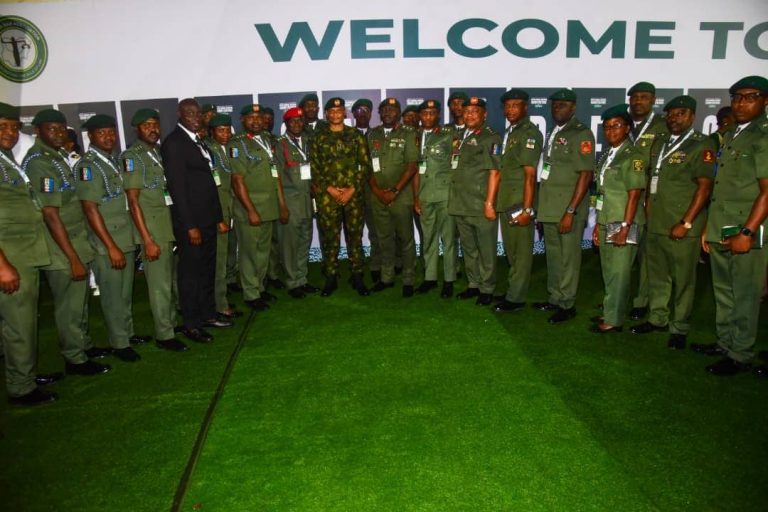
Represented by the General Officer Commanding 6 Division, Nigerian Army, and Land Component Commander, Joint Task Force (South South), Operation DELTA SAFE, Maj. Gen. Everest Okoro, the COAS said the complexity of contemporary security challenges had made a whole-of-nation approach imperative.

He said military responses alone could no longer adequately address the country’s evolving security threats, stressing the need for credible intelligence, technological innovation, inter-agency cooperation and stronger institutional partnerships.

Shaibu maintained that effective national security must be anchored on strong institutions, justice and respect for the rights of citizens.

He described the NBA as a critical partner in strengthening democratic institutions and ensuring that security operations remained professional, accountable and firmly rooted in applicable laws.

The Army chief therefore urged the legal profession, judiciary, security agencies and other stakeholders to deepen cooperation in tackling emerging threats, protecting vulnerable communities and consolidating peace and stability across the country.

He said such partnerships were essential to ensuring that security operations were conducted within the ambit of the law while strengthening public confidence in the institutions responsible for protecting lives and property.

Shaibu commended the leadership of the NBA, as well as the Rivers State Government and people, for hosting the conference.

He urged participants to use the platform to move beyond existing institutional limitations and harness partnerships that would advance national security, justice and sustainable development.

The COAS’s position underscores the Army’s determination to balance its constitutional responsibility to defend the nation with the imperative of upholding democratic values, the rule of law and fundamental rights.

Fubara, Weah Demand Courageous Judiciary To Safeguard Nigeria’s Democracy

0

Governor of Rivers State, Sir Siminalayi Fubara(left) and George Weah, former President of Liberia at the 2026 Annual General Conference of the Nigerian Bar Association (NBA) in Port Harcourt on Sunday.

Rivers State Governor, Siminalayi Fubara, has urged judges to consider the wider implications of their judgments on the nation’s political stability, peace and development, insisting that justice must prevail irrespective of the status or affiliations of litigants.

Fubara spoke yesterday in Port Harcourt while declaring open the 66th Annual General Conference of the Nigerian Bar Association (NBA), themed “Beyond Limits.”

The governor said the quality of justice delivered by the courts was inseparably linked to law and order, democratic stability and national development.

He urged judges to resist political manipulation, corruption, undue delays, technicalities and rigid adherence to outdated precedents, which he said had continued to undermine public confidence in the judiciary.

“We cannot continue to insulate our laws from today’s reality; neither should justice remain shackled by unjust precedents, technicalities, inadequate access, undue delays, slavish adherence to rigid processes, political manipulation, or brazen corruption,” he said.

Fubara said the judiciary remained indispensable to the sustenance of democracy, good governance and economic development, stressing that courts should remain the ultimate refuge for every citizen seeking justice, accountability and protection of constitutional rights.

According to him, the law must protect the security and wellbeing of citizens, guarantee equality before the law and safeguard fundamental human rights.

He added that judges, as “ultimate guardians” of democracy and the rule of law, should not become “mere apologists or conformists,” but must demonstrate courage, integrity, sound knowledge of the law and strong legal reasoning in holding both government and citizens accountable.

President of the Nigerian Bar Association, Mazi Afam Osigwe ( left), welcoming Governor Siminalayi Fubara of Rivers State (right) to the 2026 Annual General Conference of the NBA in Port Harcourt on Sunday.

The governor also called on members of the legal profession to rise above real and perceived constraints in defending the Constitution and advancing the rights of Nigerians.

He recalled Rivers State’s experience in navigating political challenges, saying the state had “walked through the furnace of power” and emerged more determined to protect its unity, peace and development.

In his keynote address, former Liberian President, George Weah, similarly called for an independent and fearless judiciary as a bulwark against threats to democracy.

Weah warned that attacks on democracy were not limited to military coups, violence or defeated political leaders refusing to relinquish power, but could also emerge when judicial institutions were weakened and prevented from performing their constitutional responsibilities.

He said democracy should not be judged only by what happens on election day, stressing that it must be defended and strengthened every day through strong institutions.

“Democracy cannot survive on strong men but on strong institutions,” he said.

The former Liberian leader also condemned governments that profess democracy while undermining the judiciary through corruption and political manipulation.
He charged lawyers and judges to remain impartial and courageous in the discharge of their responsibilities, stressing that an independent judiciary protected by a fearless legal profession was essential to safeguarding citizens’ rights and freedoms.

The conference brought together lawyers, judges, policymakers and other stakeholders in the justice sector to deliberate on the challenges confronting Nigeria’s legal and democratic institutions.
— Onwuka Nzeshi, Chief Press Secretary to the Governor of Rivers State, August 23, 2026.

2027: SERAP Demands INEC Disclosure Of Political Donation Limits, Party Finances

0

The Socio-Economic Rights and Accountability Project (SERAP) has urged the Independent National Electoral Commission (INEC) to disclose and publish the limits it has prescribed for political donations ahead of the 2027 general elections.

In a Freedom of Information request dated August 22, 2026, and signed by its Deputy Director, Kolawole Oluwadare, SERAP urged the INEC Chairman, Prof. Joash Amupitan, to disclose whether the commission had exercised its statutory powers under Section 91 of the Electoral Act, 2026, to limit the amount individuals may contribute to political parties or candidates.

The organisation also asked INEC to publish the applicable limits and communicate them widely to political parties, candidates, donors and the Nigerian public.

SERAP said transparency in political financing was critical to ensuring a level playing field in the 2027 elections and enabling voters to make free and informed political choices.

It urged the commission to disclose the systems, personnel and procedures it had established to monitor, investigate and enforce compliance with political contribution and campaign expenditure limits during the electoral process.

The organisation also demanded details of INEC’s methodology for monitoring political financing, including how it planned to track cash and in-kind contributions, digital and social media financing, third-party expenditure and donations channelled through intermediaries to circumvent statutory limits.

According to SERAP, INEC’s constitutional responsibility extends beyond receiving financial statements from political parties.

“The Constitution requires the Commission to examine political-party finances, conduct necessary investigations and report to the National Assembly,” the organisation said, urging the commission to publish the relevant reports so Nigerians could assess whether it had discharged its constitutional and statutory obligations.

SERAP warned that the increasing monetisation of elections, coupled with the potential misuse of state institutions, posed serious threats to democratic integrity and fair electoral competition.

“Voters, journalists and civil-society organisations cannot effectively scrutinise political financing if the applicable limits are not easily accessible or if there is no publicly known mechanism for monitoring compliance,” it said.

The organisation argued that disclosure of political financing would enable citizens to identify excessive, undisclosed or potentially illicit funding before such resources could distort electoral competition.

SERAP further raised concerns over Nigeria’s longstanding challenges in regulating political finance, including excessive campaign spending, opaque funding sources, weak disclosure mechanisms and limited enforcement of statutory contribution and expenditure rules.

It said previous assessments of Nigerian elections had highlighted gaps between the legal framework and its implementation, particularly the circumvention of spending limits and the failure to identify and sanction violations effectively.

“Citizens cannot meaningfully exercise their political rights if undisclosed or excessive financial resources are allowed to distort the political process,” SERAP said.

The organisation specifically cited Section 91(1) of the Electoral Act, 2026, which empowers INEC to limit the amount of money or other assets an individual may contribute to a political party or candidate and to demand information on the amount donated and source of funds.

It urged INEC to explain whether it had exercised the power and, if so, the methodology and criteria used in determining the limits.

SERAP also invoked Sections 225 and 226 of the 1999 Constitution, as amended, which provide for the examination of political parties’ accounts, investigations and submission of reports to the National Assembly.

Among other demands, SERAP asked INEC to publish the latest detailed statements of political parties’ assets, liabilities, sources of funds and expenditure; annual statements, audited accounts and election expenditure returns for 2023 to 2025; and its political-finance examination and audit reports submitted to the National Assembly during the period.

It also demanded disclosure of enforcement actions taken over political-finance violations and INEC’s 2027 political-finance monitoring plan, including arrangements for real-time or near-real-time monitoring and cooperation with anti-corruption, financial-intelligence, regulatory and law-enforcement agencies.

The organisation further asked INEC to disclose the political parties that submitted reports of contributions received after the 2023 general elections, the dates of submission and actions taken against parties that failed to comply with the statutory deadline.

SERAP gave INEC seven days to provide the requested information, warning that it would take “all appropriate legal actions” to compel compliance if the commission failed to respond.

The organisation said effective regulation of political finance remained an important safeguard for constitutional democracy, equality of political participation, freedom of expression and association, electoral integrity and citizens’ meaningful participation in public affairs.