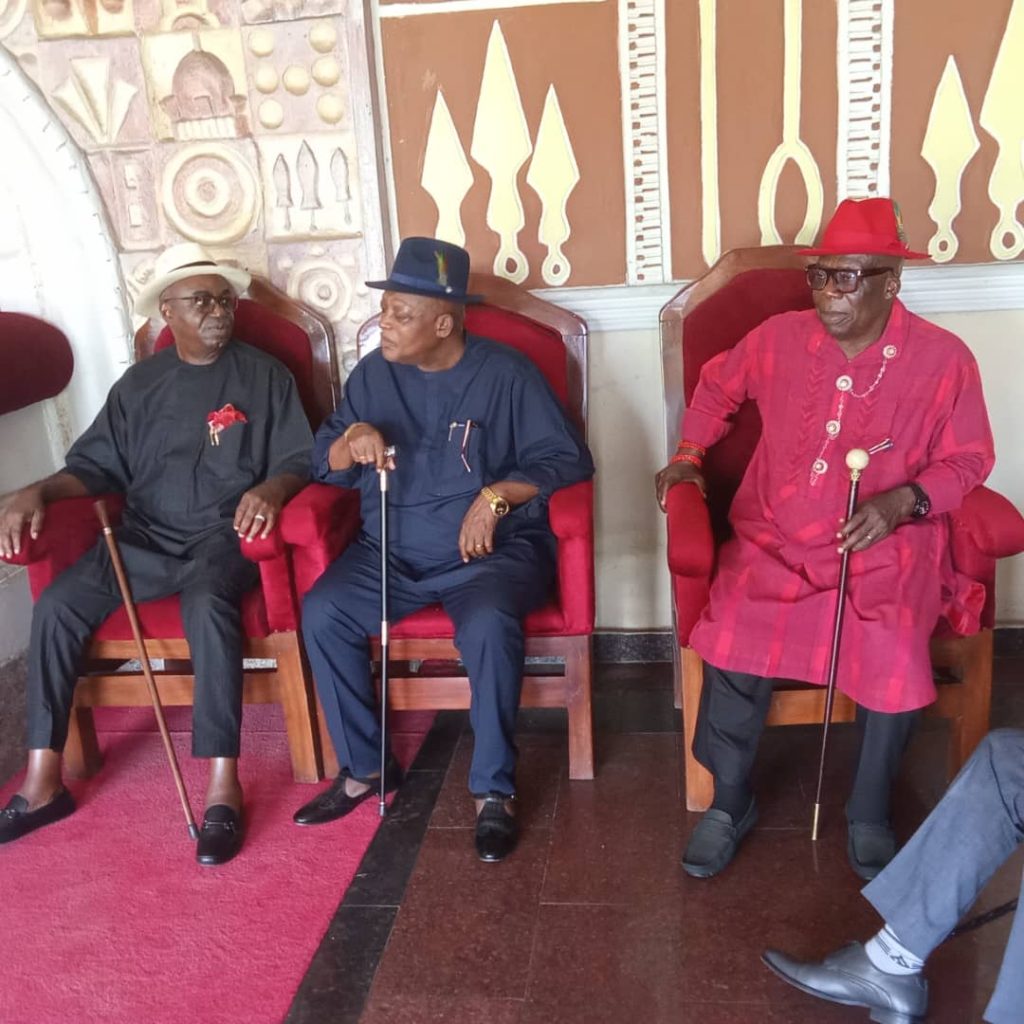
The Rivers International Film Festival (RIFF) 2026 has unveiled its official award categories, with filmmakers from Africa and across the world competing for honours in documentary, feature film, animation, acting, technical craftsmanship, international cinema and film tourism.
The festival, scheduled to hold from October 29 to November 1, 2026, on Bonny Island, Rivers State, said the awards were designed to recognise excellence in filmmaking while promoting cultural storytelling and the use of cinema as a tool for tourism and economic development.
According to the festival organisers, RIFF 2026 received 3,021 film submissions, from which 356 films were selected, while 136 films earned nominations. The submissions represented filmmakers from 182 countries, underscoring what the organisers described as the festival’s growing international reach. The theme of this year’s festival is “Film Tourism: A Pathway to Economic Development.”
Among the major awards are Best African Film, Best International Film, Best Film for Tourism Promotion, Overall Best Film – Feature Length, Overall Best Documentary and Overall Best Animation.
The festival will also honour outstanding performances with awards for Best Actor, Best Actress, Best Supporting Actor and Best Supporting Actress.
In the technical and creative categories, awards will be presented for Best Props, Best Make-up/Special Effects, Best Film Location, Best Costume, Best Cinematography, Best Editing and Best Sound Design, among others.
The documentary section features awards for Best Documentary Title, Best Documentary Story, Best Sound Design – Documentary, Best Cinematography – Documentary, Best Editing – Documentary, Best Director – Documentary and Overall Best Documentary.
For feature films, the categories include Best Story – Feature Length, Best Sound Design – Feature Length, Best Cinematography – Feature Length, Best Editing – Feature Length, Best Director – Feature Film, Best Short Film and Overall Best Film – Feature Length.
Animation filmmakers will compete in categories including Best Animator Director, Best Animated Short Film, Best Animated Feature Length Film, Best Animated Story/Screenplay, Best Voice Performance in Animation, Best Character Design and Overall Best Animation. The international cinema section includes Best International Film and Best Narrative Film.
The organisers said the wide range of categories reflects RIFF’s determination to recognise not only filmmakers and performers but also the creative, technical and cultural elements that contribute to successful cinema.
“From powerful documentaries and compelling feature films to innovative animation, exceptional performances, technical craftsmanship and films that inspire people to discover new destinations, RIFF 2026 celebrates the many dimensions of filmmaking,” the festival said.
The organisers added that the awards were intended to recognise filmmakers “not only for the stories they tell, but also for the creativity, technical excellence, cultural identity and vision behind those stories.”
They described film tourism as an important component of the festival’s vision, stressing the potential of cinema to showcase destinations, stimulate tourism, create economic opportunities and connect cultures.
“From Africa to the world. From stories to destinations. From film to economic opportunity,” the festival declared.
RIFF urged members of the public and film enthusiasts to visit its RIFF Festivals Facebook page and TikTok handle @riffestivals for details of nominated films and the various award categories.
The festival director, Osunwa Kenneth Chigozie, congratulated the selected filmmakers and nominees and commended the jury for its work throughout the selection process.
Rivers International Film Festival (RIFF) 2026 Theme: Film Tourism: A Pathway to Economic Development Date: October 29 – November 1, 2026 Venue: Bonny Island, Rivers State, Nigeria RIFF 2026 — Celebrating Cinema. Connecting Cultures. Promoting Destinations.
The North Peace and Stability Forum (NPSF) has commended the Nigerian Armed Forces for what it described as significant gains in the ongoing battle against terrorism, banditry, kidnapping and other criminal activities across the country.
The forum said the recent successes had strengthened national security and renewed public confidence in the capacity of the military to confront criminal groups, particularly in the North-West.
In a statement issued on Tuesday and signed by its Chairman, Aminu Daura, the NPSF specifically praised the military for eliminating a notorious bandit kingpin in Katsina State and rescuing hundreds of kidnapped victims during coordinated operations conducted in August.
The group described the neutralisation of the bandit leader as a major blow to criminal networks operating across the North-West, where communities have suffered years of attacks, abductions and destruction of livelihoods.
According to the forum, the operation underscores the growing effectiveness of intelligence-led military offensives targeted at dismantling criminal enclaves and restoring stability to affected communities.
The NPSF also hailed the rescue of 610 kidnapped victims, describing the operation as a significant humanitarian achievement that had reunited hundreds of families with their loved ones.
It singled out the rescue of 15 members of the National Youth Service Corps (NYSC) abducted by criminal elements, saying their safe return had brought considerable relief to their families, colleagues and the wider public.
Daura said the successful operations demonstrated the commitment, courage and professionalism of Nigerian troops who continue to risk their lives in defence of the country despite challenging operational conditions. The forum also commended the Chief of Defence Staff, General Olufemi Oluyede, and the service chiefs for sustaining military pressure on criminal groups and strengthening joint operations across various theatres.
While welcoming the latest successes, the NPSF urged the security agencies to sustain the momentum and intensify efforts to track down fleeing terrorists, bandits and kidnappers until they no longer constitute a threat to communities.
It further called on citizens to support security agencies by providing credible and timely information capable of assisting ongoing operations, stressing that the fight against insecurity requires sustained cooperation between security forces and local communities.
The forum expressed optimism that the recent military gains would encourage displaced residents to return to their communities, revive economic activities and deepen public confidence in government’s efforts to protect lives and property.
“On behalf of the North Peace and Stability Forum, we congratulate the Nigerian Armed Forces on these outstanding accomplishments. The elimination of dangerous criminal elements and the rescue of hundreds of innocent citizens, including NYSC members, are clear indications that the fight against insecurity is yielding positive results.
“We encourage our gallant troops to remain steadfast as Nigerians continue to support and appreciate their sacrifices,” Daura said.
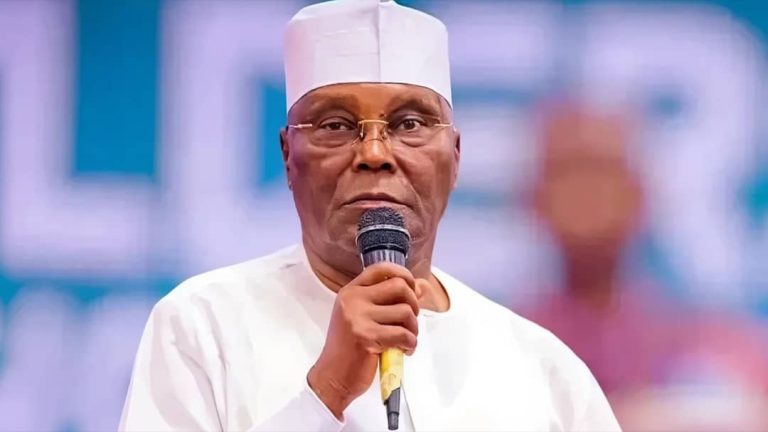
The presidential candidate of the African Democratic Congress (ADC), Atiku Abubakar, has pledged to ensure the direct payment of funds allocated to Nigeria’s 774 local government councils if elected president in 2027. Atiku, a former vice president, made the pledge in a statement issued by his official spokesperson, Kenneth Okonkwo, and posted on X on Tuesday. He said an ADC-led administration would uphold the rule of law, respect court judgments and guarantee the constitutional independence of the three tiers of government, including local councils. Atiku also accused the administration of President Bola Tinubu of failing to implement the Supreme Court’s July 2024 judgment affirming the financial autonomy of local governments. The former vice president alleged that the Federal Government’s failure to enforce the judgment was politically motivated, arguing that the administration was reluctant to confront state governors who had historically exercised control over local government funds. “My administration will respect court judgments, protect local government autonomy, ensure that public funds reach the people for whom they are meant, and restore true federalism,” Atiku said. He argued that direct access to their statutory allocations would strengthen local councils and accelerate development at the grassroots. According to him, financial independence would enable local governments to address poverty, improve basic services and strengthen their capacity to tackle insecurity, including crime and terrorism, within their jurisdictions. “This move will ensure that development is brought to the grassroots, reduce poverty at the level of government nearest to the people, and guarantee financial independence to the local governments which will increase their capacity to fight crimes and terrorism at that level,” he said. Atiku further alleged that the Tinubu administration’s position on local government autonomy was being shaped by political calculations ahead of the 2027 presidential election. He claimed that state governors were being allowed to retain control over local government funds as an incentive to secure their support for President Tinubu’s re-election. “This is not the Nigeria we should accept,” the ADC presidential candidate declared. The Supreme Court had, in July 2024, ordered the Federal Government to pay allocations meant for local governments directly to democratically elected local government councils, in a landmark ruling aimed at strengthening the financial independence of the third tier of government. However, implementation of the judgment has remained contentious. PUNCHONLINE reported in July that, two years after the Supreme Court ruling, implementation of the financial autonomy judgment remained stalled, despite N10.48 trillion reportedly having been allocated to local governments within the period.
The Independent National Electoral Commission (INEC) has warned Nigerians against a fraudulent online recruitment notice claiming that the commission has commenced the recruitment and training of ad-hoc staff for the 2027 general elections.
INEC, in a statement, said its attention had been drawn to a message circulating online inviting members of the public to apply for ad-hoc positions through a website being promoted on social media.
The commission described the information as false, stressing that the recruitment portal being circulated is not owned or authorised by INEC.
It urged members of the public not to click on the link, provide personal information, upload documents or make payments through the platform, warning that doing so could expose unsuspecting applicants to fraud and identity theft.
According to the commission, all legitimate recruitment exercises and election-related announcements will be communicated through its verified channels and official website.
INEC therefore advised Nigerians seeking information about its activities to rely only on official communication channels and to verify recruitment notices before responding to them.
The commission also recalled that it had previously warned the public about fraudulent websites and fake recruitment advertisements purporting to originate from INEC.
It urged members of the public to disregard the latest notice and refrain from further circulating it. “Stay informed. Stay safe. Always verify before you click,” the commission advised.
The University of Port Harcourt (UNIPORT) has dissociated itself from alleged partisan political activities linked to the institution and rejected claims made against its Vice-Chancellor, Prof. Princewill Chike.
The university, in a statement signed by its Head of Information, Publications and Public Relations (IPPR), Dr Sam Kpenu, said it remained a federal and non-partisan institution that belonged to all Nigerians.
The statement followed the circulation of a video in which Chizy Enyi, identified as the State Publicity Secretary of the African Democratic Congress (ADC), allegedly made claims concerning the Vice-Chancellor and political activities within the university.
Management described the allegations as unfounded and warned political actors against dragging the name, offices or leadership of the university into partisan narratives.
“The University does not belong to any political party, coalition or political interest group, and its name, offices and structures should not be used in partisan political narratives,” the statement said.
UNIPORT specifically denied the claim that Prof. Chike was the leader of a political coalition, including an alleged “Rainbow Coalition”, describing the assertion as false and without basis.
According to the university, Chike is the duly appointed Vice-Chancellor and “has not assumed, claimed or acted in any capacity as the leader of any political coalition.”
It also denied allegations that the Vice-Chancellor had directed, compelled, induced or encouraged members of the university community to join any political party, coalition or political organisation.
On claims concerning the recruitment of ad hoc personnel for the 2027 general elections, Management said there was no directive, policy or arrangement by the Vice-Chancellor to restrict the selection of Independent National Electoral Commission (INEC) ad hoc staff to members of any political coalition.
“The allegation should therefore be disregarded, as it does not represent the position or practice of the University,” it said.
The university also rejected claims that Prof. Chike was “imposed” as Vice-Chancellor, explaining that he applied for the position and participated in the prescribed screening and interview processes before emerging as the successful candidate.
His appointment, Management said, was the outcome of a formal and competitive process conducted in accordance with the university’s laws and regulations.
UNIPORT further clarified that a billboard allegedly cited as evidence of political activity involving the university was privately owned and had no institutional connection with the university or the office of the current Vice-Chancellor.
Management said the billboard predated Chike’s tenure and was installed during the administration of the immediate past Vice-Chancellor, Prof. Owunari A. Georgewill.
It consequently described attempts to link the billboard to the current Vice-Chancellor or the university as “inaccurate and misleading.”
The university said Prof. Chike, a Professor of Medicine, had remained focused on his statutory responsibilities, including advancing teaching, learning, research, innovation and community service.
“The University must remain non-partisan,” Management declared, stressing that the institution was committed to maintaining its independence, integrity and institutional neutrality.
While acknowledging the constitutional rights of individuals to freedom of expression, association and political participation, the university urged such rights to be exercised responsibly.
It warned that individual political activities should not be used to attribute unverified political affiliations, directives or activities to the university or its officers.
48-hour ultimatum UNIPORT has demanded that Enyi and any other persons responsible for publishing or disseminating the allegations retract the statements and issue a public apology within 48 hours.
The university further demanded that the retraction and apology receive publicity comparable to that given to the original allegations.
Management warned that failure to comply would leave it with “no option” but to pursue all appropriate legal and lawful remedies to protect the reputation and integrity of the university and its officers.
It also expressed concern over the possibility that the allegations could expose the Vice-Chancellor, his family, university officials, staff or students to threats, harassment or intimidation.
The university said any credible threat or unlawful conduct arising from the circulation of the allegations would be documented and referred to the appropriate security and law-enforcement authorities.
“Management will not permit the institution or its leadership to be unnecessarily drawn into partisan political disputes,” the statement said.
It urged political actors, members of the public and media practitioners to verify information before making or circulating allegations concerning the university and its officers.
“The University of Port Harcourt remains above partisan politics,” Management said.
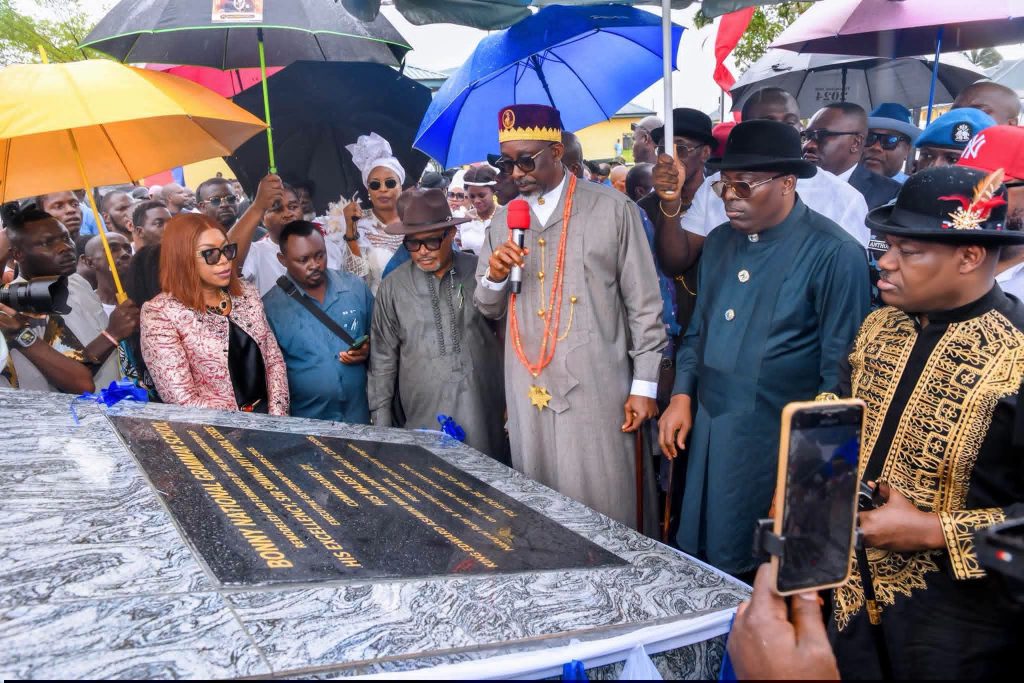
Rivers State Governor, Siminalayi Fubara, on Friday inaugurated the reconstructed Bonny National Grammar School, declaring that the project marked the first state government-commissioned project in the Bonny Local Government Area in more than two decades.
Fubara, who spoke at the inauguration ceremony in Bonny, said the project represented a deliberate shift from the culture of election promises to the delivery of tangible development projects.
“I need to say this, maybe I stand to be corrected, but this is the first time in over 20 years that government is coming to Bonny to commission a project. We’ve been coming here to campaign. We’ve come here to make promises. But now we have gone a step further to ensure that we break that jinx,” he said.
The governor said the reconstruction of the school was not merely an infrastructure project but an investment in the future of Bonny and Rivers State, stressing that education remained the most critical investment his administration could make in the people.
He said the decision to undertake the project was also intended to reaffirm the place of Bonny in the state, assuring residents that the government had not forgotten the island community.
“So, what we have come here to do today is to demonstrate the significance of this wonderful institution and to tell the good people of Bonny that government still remembers you and that you’re part of Rivers State,” Fubara said.
The governor traced the history of the school to 1965, when it was established as a community initiative under the name Government Secondary School, Ogwugwumaka, Bonny. It was subsequently renamed Bonny Grammar School.
He said the institution had produced many prominent sons and daughters of Bonny Kingdom, adding that its restoration was therefore a renewal of an important part of the kingdom’s educational heritage.
Fubara said his administration deliberately chose to invest in Bonny to demonstrate that government could deliver on its promises.
“So, the success we are sharing today is to water the ground so that when we are coming here to campaign, we don’t need to make promises again because you have already seen action. When I’m coming with our party to campaign, you’ll be confident that your brother did something,” he said.
The governor also linked the investment in education to Bonny’s strategic position in Nigeria’s oil and gas industry, noting that the presence of Nigeria LNG Limited (NLNG) and other multinational companies in the area had created opportunities for educated indigenes.
“Today, we have the Nigeria Liquified Natural Gas (NLNG) and other multinationals that are operating in Bonny. Some of our people are working with them and they are working with them because of education. We intend to better the lot of Bonny through education, knowing the importance of Bonny in the hydrocarbon and energy development of Nigeria,” he said.
The ceremony also witnessed a major education intervention as Fubara announced full scholarships for members of Team Rivers who emerged winners of the Presidential Inter-Schools Debate Championship.
The governor said the students had demonstrated exceptional intellectual ability by emerging champions despite difficult conditions.
“Today is not just about the hardware development because we just celebrated a software – our children who participated in the Presidential Debate and performed excellently even in the most difficult conditions. They came out first in the championship,” he said.
Fubara directed the Commissioner for Education and the Permanent Secretary in the ministry to immediately work out the modalities for the scholarship.
“For every one of them that participated, we must make sure that we take full responsibility for their education starting from this minute,” he declared.
He said the scholarship initiative underscored his administration’s commitment to supporting not only educational infrastructure but also the development of young talents across the state.
The state Commissioner for Education, Dr Peter Nwagor in his speech at the occasion, said the reconstruction had transformed the school into a modern educational institution equipped to meet contemporary learning needs.
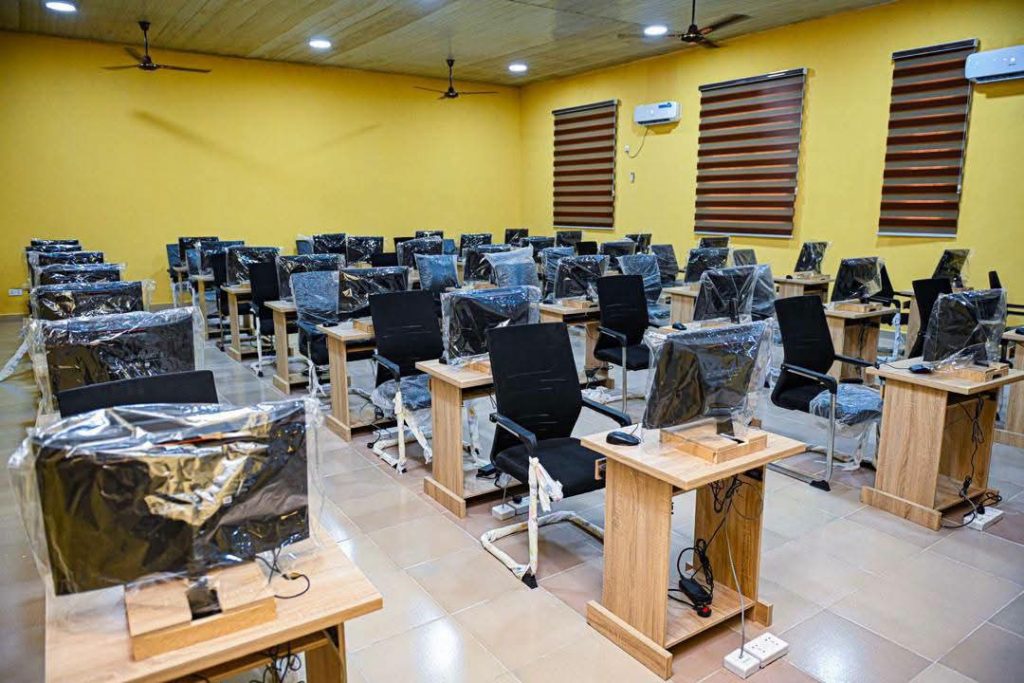
According to him, the project includes renovated classrooms, fully equipped Chemistry, Biology and Physics laboratories, a technical workshop and a new information and communication technology (ICT) centre.
The school also has modern hostel facilities, staff quarters, an assembly hall, a dedicated sick bay and a fully furnished library equipped with books, digital tools and research materials.
The project further includes a sports arena with volleyball and basketball courts, internal roads and drainage systems, solar-powered street lighting, an upgraded low-voltage electricity distribution network, perimeter fencing and a security gatehouse.
Other facilities include interlocking stone pavements and a car park.
In his speech, the Amanyanabo of Grand Bonny Kingdom, King Edward William Asimini Dappa Pepple III, Perekule XI, who was the special guest of honour, described the project as more than the renovation of a school.
The monarch said the intervention represented the restoration of a legacy and an investment in the future of Bonny.
“Today, we are witnessing the renewal of an institution that has formed an important part of the educational history of our dear Kingdom. For generations, Bonny National Grammar School has served as a centre of learning, discipline, and character formation,” he said.
According to him, the institution had contributed significantly to the intellectual development of Bonny youths who had distinguished themselves in various professions and areas of public service.
The monarch expressed appreciation to Fubara and his administration for rehabilitating and furnishing the school, describing the intervention as evidence of the government’s recognition of the importance of education to the development of Bonny and Rivers State.
Fubara also commended the Bonny monarch for his leadership and efforts to attract development to the kingdom.
He acknowledged the Federal Government’s contribution to the Bonny-Bodo Road project, saying the road had significantly eased movement to Bonny Island.
“What the Amanyanabo has done today has placed Bonny on the map of Africa and the world,” the governor said.
Fubara, who thanked the people of Bonny for their support, pledged that his administration would continue to execute and commission more development projects in the area.
“I’m really happy because it’s happening in our own time. I’m a happy person today because we have done something that looked impossible. I believe that going forward, it will be progress, development, improvement and commissioning of more projects for the Bonny people,” he said.
L-R: Permanent Secretary, Rivers State Ministry of Health, Dr Vincent Wachukwu; Governor of Rivers State, Sir Siminalayi Fubara; outgoing President, Nigeria Bar Association (NBA), Mazi Afam Osigwe and Deputy Governor of Rivers State, Prof Ngozi Odu, during the commissioning of the Neuropsychiatric Hospital and General Hospital Complex in Port Harcourt on Thursday.
Neuropsychiatric Hospital and 100-bed rehabilitation centre unveiled in Rumuigbo
For years, residents of Obio/Akpor Local Government Area of Rivers State had to look beyond their immediate communities for more advanced medical care.
Primary healthcare centres provided basic services, but when the need arose for more specialised treatment, patients and their relatives were often compelled to make the journey to facilities such as the University of Port Harcourt Teaching Hospital (UPTH) or Braithwaite Memorial Hospital (BMH).
That reality changed on Tuesday when Governor Siminalayi Fubara commissioned two major health facilities in Rumuigbo, a new General Hospital and a substantially upgraded Neuropsychiatric Hospital.
The twin projects represent perhaps more than an addition to the state’s healthcare infrastructure. They reflect an attempt by the administration to confront two different but increasingly intertwined challenges: access to conventional healthcare and the growing burden of mental health problems and substance abuse.
At the heart of the intervention is a 100-bed rehabilitation centre designed to provide treatment and rehabilitation for people dealing with substance abuse and mental health challenges.
New General Hospital, Rumuigbo, Obio/Akpor LGA, Rivers State.
For Fubara, the project was born out of an encounter with a problem that could no longer be ignored.
He recalled that his administration’s intervention began after the Hospital Management Board invited him to inspect an old rehabilitation facility that was being constructed with limited funds.
What he saw, he said, convinced him that piecemeal intervention would not be enough.
“It was there and then that I said: Look, we have this very big compound, we need to rebuild, modernise and upgrade the standard of this Neuropsychiatric Hospital and that day, we started this journey,” the governor said.
The history of the facility makes the intervention significant. Conceived in 1970 and commissioned in 1977 with a 50-bed capacity, the Neuropsychiatric Hospital had, over the decades, become a reminder of the difficulties confronting mental healthcare infrastructure in the state.
Fubara said the condition of the premises had also created an unlikely and dangerous environment in which drug trafficking allegedly flourished.
“This premises was a drug trafficking centre,” he said, explaining that people could gain access to the compound under the guise of visiting or playing football while others allegedly used the opportunity to supply drugs to inmates.
Inside view of part of the new General Hospital, Rumuigbo, Port Harcourt.
The reconstructed facility, he said, has now been secured with fencing and controlled access.
But the governor’s broader concern extends beyond the physical infrastructure.
He described mental health and substance abuse as challenges of contemporary society, pointing to unemployment, depression and other psychological pressures as factors that can contribute to mental health problems.
The new rehabilitation centre, therefore, is intended not merely as a place where people with addiction problems can be confined, but as part of a structured effort to help patients regain stability and return to society.
“Even in developed countries, they send people to Rehabilitation Centres and they help bring you back to normalcy. So, what we have done here is to prepare for the current challenges of our time,” Fubara said. The intervention also carries an important message about stigma.
The immediate past President of the Nigerian Bar Association, Mazi Afam Osigwe, who was Special Guest of Honour at the commissioning, urged Nigerians to change the way they perceive people seeking mental healthcare.
Osigwe argued that mental healthcare should not be associated exclusively with severe psychiatric disorders, noting that stress, depression and personal crises can also require professional attention.
His appeal goes to the heart of one of the most persistent barriers to mental healthcare in Nigeria: stigma.
A modern facility can provide beds, laboratories, consulting rooms and treatment equipment, but its effectiveness ultimately depends on whether people are willing to seek help without fear of discrimination or social rejection.
The Rivers State Government’s intervention in Rumuigbo, however, goes beyond mental healthcare.
The new General Hospital is designed to bring secondary healthcare closer to the people of Obio/Akpor, one of the state’s largest local government areas.
According to Fubara, the absence of a general hospital meant that residents who needed care beyond what primary healthcare centres could provide had to travel to UPTH or BMH.
“We felt that Obio/Akpor deserves a General Hospital,” he said.
The facility is equipped with Accident and Emergency services, consulting rooms, pharmacy, laboratory and X-ray units, as well as delivery, maternity, antenatal and postnatal facilities.
It also has an operating theatre, surgical recovery room, Central Sterilising Services Department, Intensive Care Unit, Newborn Intensive Care Unit, paediatric wards and male and female general wards with 50 beds each.
Private wards and administrative offices complete the medical infrastructure.
The Neuropsychiatric Hospital, meanwhile, includes consulting rooms, pharmacy, laboratory, male and female 50-bed wards, a substance and drug-abuse rehabilitation centre and private wards.
The facility also has an electroconvulsive therapy centre, ICT centre, recreational spaces, meeting hall, canteen and mortuary.
Beyond the clinical facilities are supporting infrastructure including internal roads, landscaping, a 216-bed students’ hostel and staff quarters comprising 12 two-bedroom apartments.
Both hospitals have been equipped with modern diagnostic and treatment equipment and supplied with new ambulances.
A 500KVA transformer, 350KVA generating set and solar panels supported by inverter batteries capable of providing 120KVA are also part of the infrastructure.
For Governor Fubara, the projects fit into a broader philosophy of governance built around three essentials — education, healthcare and housing.
“By the special grace of God, we are trying our best in these three most important areas,” he said. But the sustainability of the facilities may prove just as important as their commissioning.
Fubara appealed to the Obio/Akpor Local Government Council and the host community to regard the hospitals as their own and protect them against vandalism and theft.
“You’re the direct beneficiaries of it. Don’t say it is a government thing. It is in your place,” he charged.
The appeal is significant in a country where public infrastructure often deteriorates rapidly when communities feel little ownership of government projects.
The Chairman of Obio/Akpor Local Government Area, Dr Gift Worlu, welcomed the projects, commending the governor for prioritising healthcare and acknowledging the need for a modern neuropsychiatric facility in the locality.
Yet, beyond the ceremonies, speeches and newly installed equipment, the real test of the Rumuigbo projects will be measured in lives.
It will be measured in the mother who no longer has to travel across the city for maternity care; the accident victim who receives emergency attention closer to home; the child requiring specialised treatment; and, perhaps most importantly, the young person struggling with substance abuse who finds a pathway to recovery rather than a lifetime of stigma and neglect.
In that sense, Fubara’s “double” in Rumuigbo is not simply about commissioning two hospitals.
It is an investment in bringing healthcare closer to the people, while acknowledging that a functioning health system must also respond to the less visible wounds of depression, addiction, psychological distress and mental illness.
The buildings are new. The greater challenge now is ensuring that the promise they represent remains alive long after the commissioning ceremonies have ended.
.L-R: Chairman of Obio/Akpor LGA, Dr Gift Worlu; Governor of Rivers State, Sir Siminalayi Fubara; Chief of Air Staff, Air Marshal Sunday Aneke and Deputy Governor of Rivers State, Prof Ngozi Odu at the commissioning of the newly reconstructed runway at NAF Base, Port Harcourt on Thursday.
The Chief of Air Staff (CAS), Air Marshal Sunday Aneke, has said the newly rehabilitated runway at the Nigerian Air Force Base, Port Harcourt, will strengthen the military’s capacity to protect critical national infrastructure and assets in Rivers State and the wider Niger Delta.
Aneke spoke on Thursday at the commissioning of the rehabilitated runway, describing the project as a product of the robust collaboration between the Nigerian Air Force (NAF) and the Rivers State Government in the area of security.
He said the improved facility would enhance the operational effectiveness of the Air Force, particularly in safeguarding strategic infrastructure vital to the nation’s economy.
According to him, the rehabilitated runway is timely and critical to ongoing air operations, military training and disaster-response missions across the South-South region.
The Air Chief commended the Rivers State Government for completing and unveiling the project, stressing that the facility would provide greater operational support to the NAF in its efforts to secure critical national assets and infrastructure in the state.
Governor Siminalayi Fubara, who spoke at the ceremony, said the rehabilitation of the runway demonstrated the strength of the partnership between the state government and the Nigerian Air Force in confronting national security challenges.
Fubara described the project as a “statement of intent” that Rivers State stood firmly with the Armed Forces in their responsibility to protect Nigeria.
“It is a great pleasure and a distinct honour to be here today at the Nigerian Air Force Base, Port Harcourt, for the commissioning of this rehabilitated runway.
What we commission this day is more than concrete and asphalt. It is a statement of intent — a declaration that Rivers State stands firmly with those who stand guard over Nigeria,” he said.
The governor said the state was proud to be associated with the intervention, noting that the Nigerian Air Force remained one of the institutions upon which Nigeria’s unity and territorial integrity rested.
He said the military’s role in protecting critical national assets was particularly significant to Rivers because of the state’s strategic position in Nigeria’s oil and gas industry.
“Rivers State occupies a strategic position in the economic life of this nation. As the heart of Nigeria’s oil and gas industry, our communities, our waterways, our industries and our infrastructure carry a burden of national significance. The security of Rivers State is therefore inseparable from the security of Nigeria itself,” Fubara said.
According to him, the security of the state’s waterways, industries and infrastructure has direct implications for the stability of the national economy.
Fubara said the rehabilitation of the runway was therefore part of his administration’s commitment to supporting institutions saddled with the responsibility of protecting national assets.
He said the project would enhance the operational capability and safety of the Port Harcourt Air Force Base while improving the military’s rapid-response capacity.
“The benefits of this facility are practical and immediate. It will enhance the operational capability of the Nigerian Air Force Base, Port Harcourt. It will improve the efficiency and the safety of aerial operations. It will strengthen rapid-response capacity in those moments when time itself is the difference between order and disorder,” he said.
The governor also linked the facility to the Federal Government’s efforts to curb economic sabotage in the Niger Delta, saying improved military air operations would support the fight against crude oil theft, illegal refining, pipeline vandalism and other criminal activities undermining the national economy.
He said the runway project was evidence that meaningful progress could be achieved through effective cooperation between the Federal Government and sub-national governments.
“Security is a collective responsibility,” Fubara stated.
The governor further disclosed that the state’s partnership with the Nigerian Air Force extended beyond infrastructure to support for operational effectiveness and the welfare of officers and personnel serving in the state.
He commended Aneke and the personnel of the Nigerian Air Force for their sacrifices in securing the country, while pledging continued partnership with the Armed Forces.
The commissioning marked another phase in the collaboration between the Rivers State Government and the Nigerian Air Force, with the rehabilitated facility expected to provide improved operational capacity for military activities in the South-South.
Obi of Onitsha Receives King Jeki VI in Historic Royal Visit as Opobo Prepares for Coronation
There are visits, and there are encounters between thrones. In Onitsha, two ancient royal traditions met in an atmosphere rich with history, dignity and symbolism as His Majesty, King Charles Douglas MacPepple Jaja, Jeki VI, Amanyanabo of Opobo, led a high-powered delegation of the Alapu Council of Opobo Kingdom to the palace of His Majesty, Nnaemeka Alfred Achebe, the Obi of Onitsha.
The visit was history and royal diplomacy in its most enduring African form. One monarch received by another and two revered institutions acknowledging bonds forged long before the boundaries and political arrangements of modern Nigeria. Behind the Royal visit and the invitation to the Coronation of Jeki VI of Opobo Kingdom on September 26, 2026, stood the weight of a throne whose history occupies a remarkable place in the story of the Niger Delta and of Africa’s encounter with European imperial power.
The throne of Opobo is no ordinary stool. It carries the legacy of King Jaja, the extraordinary 19th-century statesman, merchant prince and founder of Opobo who, following the events of 1869, established a new political and commercial state at the strategic gateway to the Imo River.
Opobo rapidly emerged as a formidable trading power. From his new capital, King Jaja exercised authority over important palm-oil trading routes into the hinterland and built a prosperous kingdom whose commercial influence fundamentally altered the balance of power in the eastern Niger Delta.
So substantial was that authority that Britain dealt directly with Jaja as King. A treaty concluded in 1873 acknowledged his royal status, while subsequent dealings between Opobo and the British were conducted in the language and practice of relations between recognised political authorities.
Jaja fiercely guarded that independence. When expanding British commercial and imperial interests eventually collided with Opobo’s insistence on controlling its own markets and waterways, the confrontation became one of the defining episodes of the colonial encounter in the Niger Delta. His removal and exile in 1887 did not erase the throne he had established. If anything, the story of his resistance transformed it into an enduring symbol of courage, political intelligence, enterprise and the determination of an African people to govern their own affairs.
More than a century later, it was to that historic throne that King Charles Douglas MacPepple Jaja had been called. And it was as custodian of that inheritance that Jeki VI entered the palace of the Obi of Onitsha. The moment carried its own quiet grandeur. Before him sat the Obi of Onitsha, His Majesty Nnaemeka Achebe, himself custodian of one of Nigeria’s most respected traditional institutions. Around them were chiefs and traditional rulers, men representing institutions whose histories have survived colonialism, independence, constitutional change and the passage of generations.
The exchange therefore spoke a language older than contemporary politics: the language of kingdoms. Receiving the Opobo monarch and his delegation, the Obi of Onitsha warmly welcomed his royal guest and reflected on the longstanding ties between Onitsha and Opobo — two historic riverine kingdoms whose peoples were connected through commerce, movement and interaction during the great era of trade along the Niger and its adjoining waterways.
He also paid moving tribute to the late Amanyanabo of Opobo, His Majesty King Dandeson Douglas Jaja, Jeki V. For the Obi, the departed monarch had been more than a fellow traditional ruler. He remembered him as a friend, a brother and a colleague. That remembrance gave the visit a deeper poignancy.
King Dandeson had occupied the throne of Jaja with distinction. His passing closed an important chapter in Opobo’s history. The emergence of a successor, and the orderly transition that followed, therefore represented more than the selection of a new monarch; it demonstrated the resilience of an institution and the unity of a kingdom determined to preserve the sanctity and continuity of its throne. The Obi commended the people of Opobo for the peaceful transition and congratulated King Jeki VI on his emergence as Amanyanabo.
Then came a gesture of particular significance. The Obi of Onitsha indicated his intention to be present in Opobo for the coronation. For Opobo, the promise carried meaning beyond attendance at a ceremony. It was an affirmation from one throne to another at a defining moment of succession: a respected monarch acknowledging the heir to one of the Niger Delta’s most storied royal institutions and standing with the kingdom as another chapter of its history begins.
King Jeki VI, in turn, formally informed the Obi of the forthcoming coronation and extended the invitation of the throne and people of Opobo to His Majesty and his Council. He expressed the appreciation of Opobo Kingdom for the warmth of the reception and for the friendship, affection and respect that have continued to exist between the two royal institutions.
Then, as African diplomacy has done for generations, ceremony spoke where words alone could not. Kola was presented and shared. Drinks followed. Gifts passed between the two royal delegations.
Pleasantries were exchanged between chiefs and traditional rulers. Yet beneath the warmth lay profound symbolism. These were not merely social courtesies. In the traditional diplomatic grammar of Africa’s kingdoms, the breaking of kola, the exchange of gifts and the receiving of one monarch in the court of another are gestures of honour, friendship, goodwill and mutual recognition.
For a kingdom now approaching one of the most solemn moments in its history, the Onitsha visit also offered a glimpse of what the coronation of Jeki VI represents. On September 26, the crown will rest upon a new head, but the throne remains the throne of Jaja. It is the throne of the man who built a powerful trading state on the waterways of the Niger Delta; who negotiated with foreign powers; who defended his kingdom’s economic interests against some of the most formidable commercial and imperial forces of his age; and whose name still commands recognition far beyond the shores of Opobo.
Kings have occupied that throne since him. Generations have come and gone. Nigeria itself was created, colonised and became independent. The institution endured.
Now, as King Charles Douglas MacPepple Jaja, Jeki VI, prepares for his coronation as the sixth Amanyanabo of Opobo, the kingdom is not simply preparing for a colourful ceremony. It is preparing for the renewal of a covenant between a people and their throne.
The journey to Onitsha was therefore fitting. A king went forth from the an ancient Kingdom received by a brother king equal status. Across the palace courtyard, amid kola, gifts, memories and the measured courtesies of royalty, two thrones spoke to each other and History was listening.
King Charles Douglas MacPepple Jaja (left), former president Goodluck Jonathan, during the visit.
Former President Goodluck Ebele Jonathan has accepted an invitation to attend the coronation of the Amanyanabo of Opobo Kingdom, King Charles Douglas MacPepple Jaja, Jeki VI, scheduled for September 26, 2026.
Jonathan disclosed his acceptance when he received the Amanyanabo and members of the Opobo Council of Alapu at his residence in Yenagoa, Bayelsa State, on Wednesday, during engagements ahead of the historic coronation.
Describing Opobo Kingdom as a place of profound historical significance, the former president said the monarchy had played an important role in the history of Nigeria and the Niger Delta.
“Opobo Kingdom is a place with history, and this visit is a big honour,” Jonathan said, adding, “We will come to honour you back.”
The former president congratulated King Charles and acknowledged the significance of the Opobo throne to the history and development of the Niger Delta.
Speaking during the visit, King Charles said the delegation was at Jonathan’s residence to exchange views on issues of common interest to the region and formally invite him to the coronation.
“We cannot coronate an Opobo monarch without coming to see you,” the monarch told the former president, whom he described as a foremost Ijaw son and Nigerian leader.
Amanyanabo of Opobo, King Charles Douglas MacPepple Jaja (5th left), Former President Goodluck Jonathan (4th right) and other dignitaries during the visit, recently.
The coronation ceremony will hold on Saturday, September 26, as the centrepiece of a 10-day programme of activities scheduled for September 18 to 27.
The Opobo monarchy traces its origins to King Jaja of Opobo, who emerged as a formidable political and commercial authority in the 19th-century Niger Delta.
Following the Bonny civil conflict of the late 1860s, Jaja established Opobo as an independent political and commercial centre, building an extensive trading network and wielding considerable influence over the palm-oil trade between the Niger Delta hinterland and the Atlantic coast.
Britain subsequently entered into a commercial treaty with Jaja in 1873, formally recognising him as King of Opobo. However, his growing opposition to British commercial and imperial interests eventually brought him into conflict with the colonial authorities.
Jaja was arrested and exiled in 1887, an episode that has remained a defining chapter in the history of colonial relations and resistance in the Niger Delta.
King Charles Douglas MacPepple Jaja became Amanyanabo-Elect following the death of King Dandeson Douglas Jaja and is scheduled to be formally crowned Amanyanabo of Opobo Kingdom on September 26.
The coronation is expected to attract traditional rulers, political leaders, members of the diplomatic community, business leaders and Opobo indigenes from across Nigeria and the diaspora.