
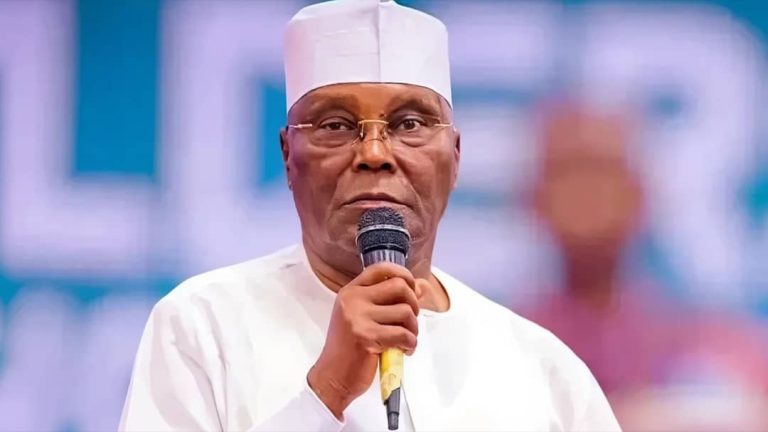
Former Vice President and presidential candidate of the African Democratic Congress (ADC), Atiku Abubakar, has pledged to restore petrol subsidy if elected president in 2027, accusing the Bola Tinubu administration of failing to account for the trillions of naira saved from the policy’s removal.
Atiku made the declaration during an interview on Wednesday, insisting that Nigerians had yet to see commensurate benefits from the subsidy reform introduced by President Bola Tinubu in May 2023.
Speaking in Hausa, the former vice president questioned the whereabouts of the funds generated following the removal of the subsidy.
“I did not oppose the removal of the oil subsidy, but where is the money? Where did it go? It was intended to reduce poverty and help children attend school. Where is the money now? It seems they are just stealing it,” he said.
Atiku added: “If elected, I will bring back the oil subsidy, and whoever stole the money must refund it.”
His position came on the same day the Federal Government disclosed that the subsidy removal had generated an estimated N15.8 trillion in additional resources for the federation between June 2023 and December 2025.
The Minister of Finance and Coordinating Minister of the Economy, Taiwo Oyedele, said the figure reflected increased revenue mobilisation, including gains associated with the naira value of dollar-denominated transactions following the government’s exchange-rate reforms.
But Atiku has rejected the government’s account of the gains from the reforms, with his camp demanding a transparent reconciliation of approximately N30 trillion in federation revenues, deductions, savings and transfers.
The ADC presidential candidate argued that the resources freed by the subsidy removal should have translated into tangible improvements in the lives of Nigerians, particularly in security, education, infrastructure and employment.
According to him, the government had successfully removed the subsidy but failed to demonstrate how the resulting savings had been deployed to address the country’s pressing challenges.
“The government successfully removed the subsidy, but we do not know where the money went. If they had used the money for development, to solve security problems, for education, and to create opportunities for the youth, it would be different,” he said.
“If elected, I can remove the subsidy and use the money to do all these properly.”
The subsidy removal has remained one of the most controversial economic reforms of the Tinubu administration, triggering a sharp increase in petrol prices and contributing to higher transportation costs, food prices and the overall cost of living.
The policy, however, has also resulted in increased monthly allocations to the three tiers of government through the Federation Account, with several state governors acknowledging higher Federation Account Allocation Committee (FAAC) receipts.
Atiku’s pledge to restore the subsidy marks a major departure from his position during the 2023 presidential election.
In December 2022, while contesting the presidency on the platform of the Peoples Democratic Party (PDP), Atiku had promised to remove the fuel subsidy within his first 100 days in office.
His latest position is therefore expected to intensify the debate over the future of the country’s fuel subsidy regime as political parties and candidates begin to shape their economic agendas ahead of the 2027 elections.
Atiku is not alone in advocating a return to subsidy. African Action Congress (AAC) presidential candidate, Omoyele Sowore, has also pledged to restore petrol subsidy if elected, arguing that the government continues to subsidise petrol and the naira despite its declaration that the subsidy regime had ended.
With the 2027 contest gradually taking shape, the competing claims over subsidy savings, government revenues and the impact of economic reforms are expected to become major campaign issues, particularly as Nigerians continue to grapple with the high cost of living.