The Socio-Economic Rights and Accountability Project (SERAP) has called on the Independent National Electoral Commission (INEC), Economic and Financial Crimes Commission (EFCC) and Independent Corrupt Practices and Other Related Offences Commission (ICPC) to jointly investigate alleged vote-buying, violence, intimidation, illegal campaign financing and other electoral offences during the 2026 Osun State governorship election.
SERAP also urged the agencies to facilitate independent regional and international scrutiny of the election by relevant bodies, including the African Union (AU), ECOWAS, African Commission on Human and Peoples’ Rights and United Nations human rights mechanisms.
In a petition dated August 15, 2026, and signed by its Deputy Director, Kolawole Oluwadare, the organisation said the credibility of the election outcome depended on whether voters were able to freely exercise their political rights without inducement, intimidation or coercion.
It urged INEC, EFCC and ICPC to trace the sources and movement of funds allegedly used for vote-buying and other unlawful electoral activities, and identify individuals or organisations that provided, authorised, distributed or facilitated such funds.
SERAP also called for the preservation and examination of banking and mobile-money records, telecommunications data, CCTV footage, polling-unit records and other documentary or digital evidence that could assist investigations.
The organisation further urged the agencies to investigate and prosecute, where appropriate, persons suspected of electoral, corruption or other criminal offences, including those who financed or facilitated the alleged violations.
“A joint investigation by the agencies would ensure coordinated examination of the electoral, financial and criminal dimensions of the reported electoral offences and violations,” SERAP said.
It added that inviting regional and international mechanisms would provide “complementary independent scrutiny”, strengthen transparency and accountability, and help assess the implications of alleged violations for Nigeria’s democratic and human rights obligations.
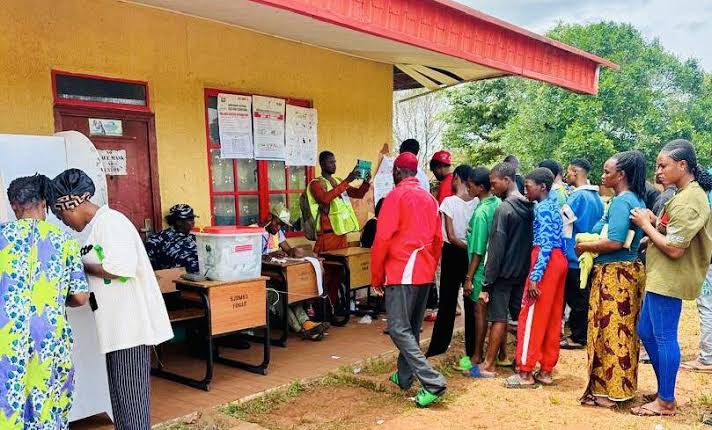
SERAP said preliminary reports by the EU Support to Democratic Governance in Nigeria Election Observation Hub (EU-SDGN EOH) indicated that civil society observers recorded 323 electoral offences and irregularities across 726 polling units monitored as of midday on election day.
According to the organisation, the reported infractions included 103 cases of vote trading, 28 cases involving inducement of polling and security officials, 31 cases of voter obstruction, 38 cases of campaigning at polling units, 14 cases of voter impersonation and 12 cases of multiple voting.
The observers also reportedly recorded seven cases of election-official misconduct and 85 incidents involving exposure of ballot papers.
SERAP said 38 security incidents were also recorded, including alleged thuggery, attacks on electoral officials and voter intimidation.
It further cited the Nigeria Civil Society Situation Room as reporting cases of vote-buying and other inducements, including the alleged distribution of Jollof rice and drinks at a polling unit in Isokan Local Government Area, which reportedly resulted in disorder.
The Situation Room also reportedly recorded the harassment of an election observer and alleged disruption by suspected thugs.
SERAP said the reported incidents raised questions about compliance with the Electoral Act 2026, the 1999 Constitution and Nigeria’s obligations under international human rights treaties.
It noted that Sections 125, 131 and 132 of the Electoral Act criminalise bribery, undue influence and the use or threat of violence to influence voting, while Sections 91 to 94 provide safeguards relating to political financing, including contribution and expenditure limits and post-election disclosure requirements.
The organisation also cited Section 138(1) of the Electoral Act, which allows an election to be challenged where it was invalidated by corrupt practices or non-compliance with the law, as well as Section 139, which addresses non-compliance that may substantially affect an election result.
SERAP argued that allegations of electoral corruption and violence also raised concerns under relevant provisions of the Nigerian Constitution, particularly those underpinning democratic participation and free and fair elections.
It further invoked Article 25 of the International Covenant on Civil and Political Rights, which protects citizens’ right to participate in public affairs and vote, as well as Article 13 of the African Charter on Human and Peoples’ Rights on citizens’ right to participate freely in government.
The organisation urged the three agencies to immediately commence a joint investigation, trace alleged illicit financial flows, preserve relevant evidence and examine compliance with the Electoral Act’s political-finance provisions.
It also called for the publication of investigation findings and appropriate legal action where credible evidence establishes that corruption, inducement, coercion or violence materially affected voters or the election outcome.
SERAP said the measures were necessary not only to ensure accountability over the Osun election but also to deter electoral corruption and violence, strengthen public confidence in democratic institutions and safeguard the integrity of the 2027 general elections.
The organisation urged the agencies to make relevant evidence available to competent electoral tribunals and judicial bodies where lawful and appropriate, particularly where such evidence could establish that corrupt practices or substantial non-compliance affected the election.
“We would be grateful for information on the steps being taken in response to this petition,” SERAP said.