


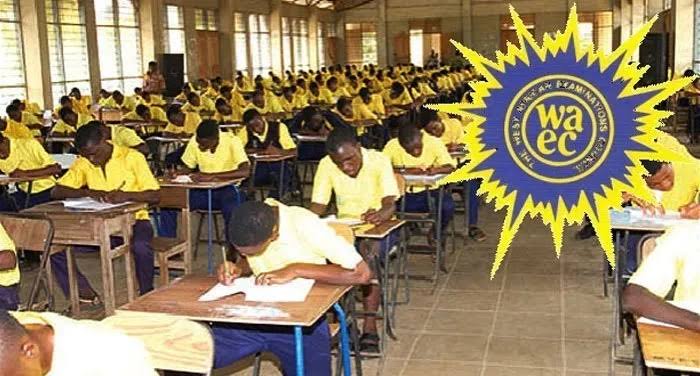
The West African Examinations Council (WAEC) has released the results of the 2026 Computer-Based West African Senior School Certificate Examination (WASSCE) for school candidates, revealing that 1,200,514 candidates obtained the minimum requirement of five credits, including English Language and Mathematics, for admission into tertiary institutions.
The figure represents 61.54 per cent of the 1,950,726 candidates who sat the examination and reflects a marginal decline of 1.42 percentage points compared to the 2025 performance.
Announcing the results in Lagos on Wednesday, the Head of the Nigeria National Office of WAEC, Dr. Amos Josiah Dangut, disclosed that 1,959,668 candidates from 24,207 schools registered for the examination conducted across Nigeria, Benin Republic, Côte d’Ivoire and Equatorial Guinea.
According to him, 1,687,378 candidates, representing 86.50 per cent, obtained credits and above in at least five subjects, irrespective of whether they passed English Language and Mathematics.
Of the candidates who met the benchmark of five credits, including English and Mathematics, 558,883 (28.65 per cent) were male, while 641,631 (32.89 per cent) were female. Overall, 953,459 males and 997,267 females sat the examination.
Dangut said 1,834,695 candidates, representing 94.05 per cent of those who sat the examination, have had their results fully processed and released, while the results of 116,031 candidates (5.95 per cent) are still being processed.
He also disclosed that 1,213 candidates with special needs registered for the examination, including 137 visually impaired candidates, 491 with hearing impairment, 55 who were spastic or mentally challenged, and 41 physically challenged candidates.
On examination malpractice, the WAEC boss said the results of 167,486 candidates, representing 8.59 per cent, had been withheld over alleged involvement in examination malpractice. He noted that the figure represents an improvement over the 9.7 per cent recorded in 2025.
Dangut attributed persistent malpractice to the increasing use of mobile phones in examination halls despite existing restrictions, as well as organised cheating in some schools. He added that supervisors and invigilators found to have aided malpractice had been apprehended and would be sanctioned through the respective State Ministries of Education.
Highlighting improvements introduced by the Council, Dangut said the 2026 examination marked the second edition of the Computer-Based WASSCE for school candidates. He listed innovations such as the Digital Examiner Marking System (DEMS), the serialisation of question papers to curb malpractice, and a new online portal that enables candidates to generate electronic PINs for result checking.
The examination was conducted between April 24 and June 19, 2026, with 102,708 examiners engaged across 88 marking centres nationwide.
He, however, warned that results of candidates sponsored by state governments indebted to WAEC would remain withheld until the outstanding financial obligations are settled.
Candidates can access their results within 12 hours through the WAEC result-checking portal, while certificates will be available for collection within 90 days.
I want to check my results