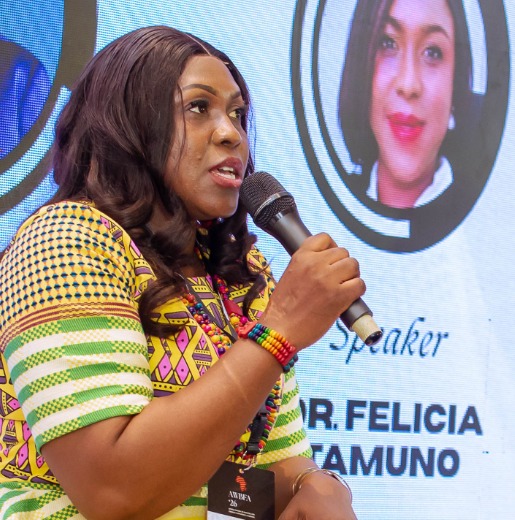
Lagos — Dr Felicia Tamuno, Institutional Banking Lead at The Alternative Bank, Nigeria’s leading non-interest financial institution, has called for a major shift in Africa’s banking system, urging greater adoption of non-interest and ethical finance models to bridge the massive financing gap facing women entrepreneurs.
Speaking at the African Women in Banking and Finance Conference & Awards 2026, Tamuno said traditional interest-based lending models, which rely heavily on fixed asset collateral, property titles, and long credit histories, continue to exclude millions of women operating in the informal and semi-formal sectors.
“Many women-led businesses remain locked out of formal finance despite their enormous contribution to African economies,” she said.
Citing data from the World Bank and the African Development Bank’s Affirmative Finance Action for Women in Africa (AFAWA) initiative, Tamuno noted that women in Sub-Saharan Africa account for over 80 percent of the self-employed population, yet still face a $42 billion financing gap.
Drawing from her experience at The Alternative Bank, she advocated for alternative credit assessment tools such as cash-flow-based lending, movable asset financing, and partnership-based non-interest banking products.
“Non-interest and ethical finance models provide stronger opportunities for collaboration and shared risk, rather than the rigid, collateral-driven approach that currently dominates conventional banking,” she argued.
Tamuno also highlighted the leadership gender gap in African financial institutions, noting that while women are well represented at entry and middle management levels, their presence drops significantly at executive and board positions.
“Leadership diversity is not a concession. It is a competitive advantage,” she said.
Tamuno called on senior women in the industry to support one another through mentorship and sisterhood, saying: “We are not our enemies. We are a community. We are stronger together.”
She urged policymakers, regulators, and financial institutions to treat the economic empowerment of women not merely as a social goal, but as a serious economic strategy for broader continental prosperity. She pushed for supportive policies, digital innovation, and inclusive financial products specifically designed for the realities of African women entrepreneurs.
Her role at The Alternative Bank adds significant weight to her call. The institution continues to demonstrate that ethical and non-interest banking can work effectively even in Africa’s challenging economic environment.
By Samuel Chukwuka