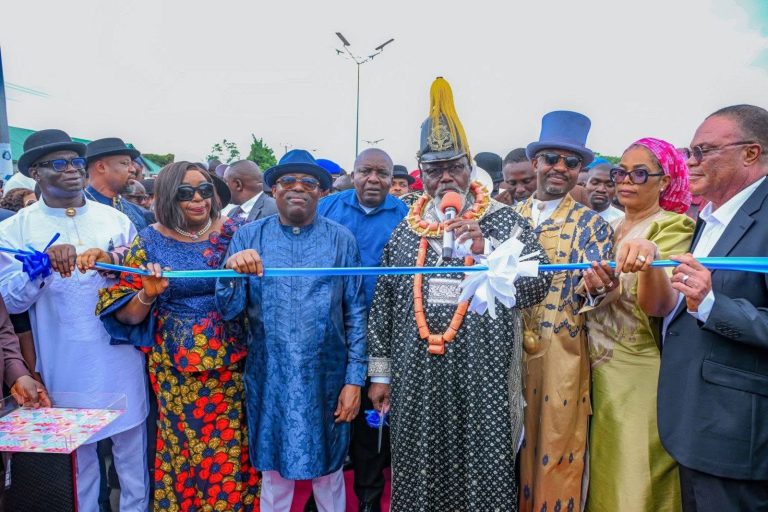
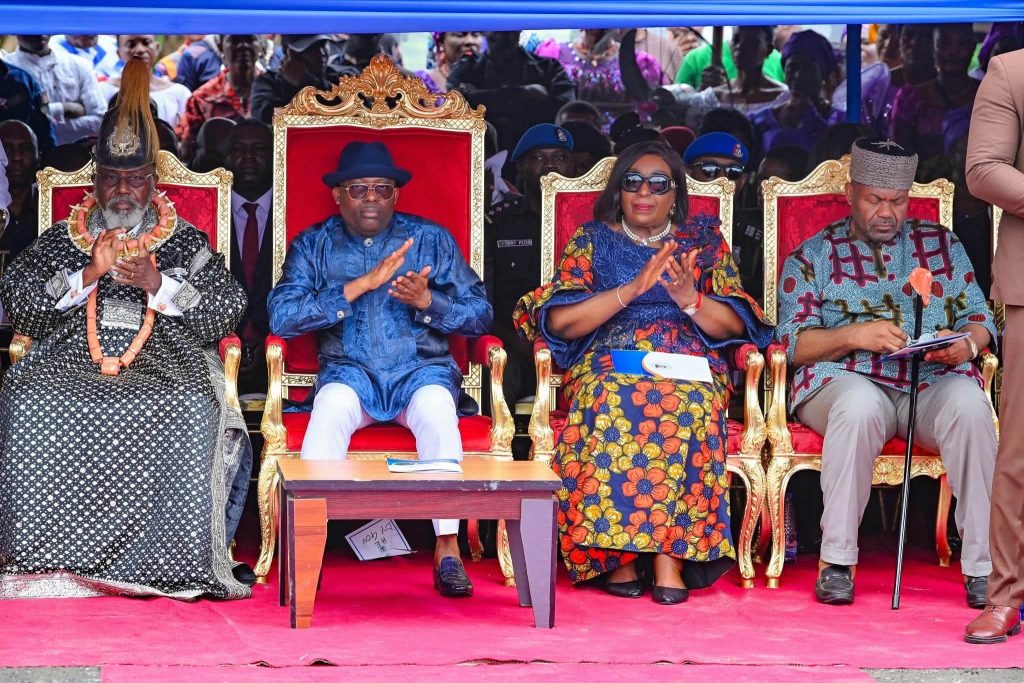
Rivers State Governor, Sir Siminalayi Fubara, has unveiled the reconstructed 19.79-kilometre Buguma-Degema-Abonnema Road, describing the project as a major intervention that will transform movement, security and economic activities across three coastal local government areas of the state.
The road, executed by Julius Berger Nigeria Plc, links communities in Asari-Toru, Degema and Akuku-Toru Local Government Areas, providing a critical transportation corridor to Abonnema and adjoining communities that had endured years of poor access and deteriorating infrastructure.
Before its reconstruction, the road had become notorious for its deplorable condition, resulting in prolonged travel time, increased transportation difficulties and heightened security concerns for residents and other road users.
Fubara, who spoke during the unveiling ceremony, said the completion of the project fulfilled a personal commitment he made after witnessing first-hand the severe condition of the road during an earlier visit to the area.
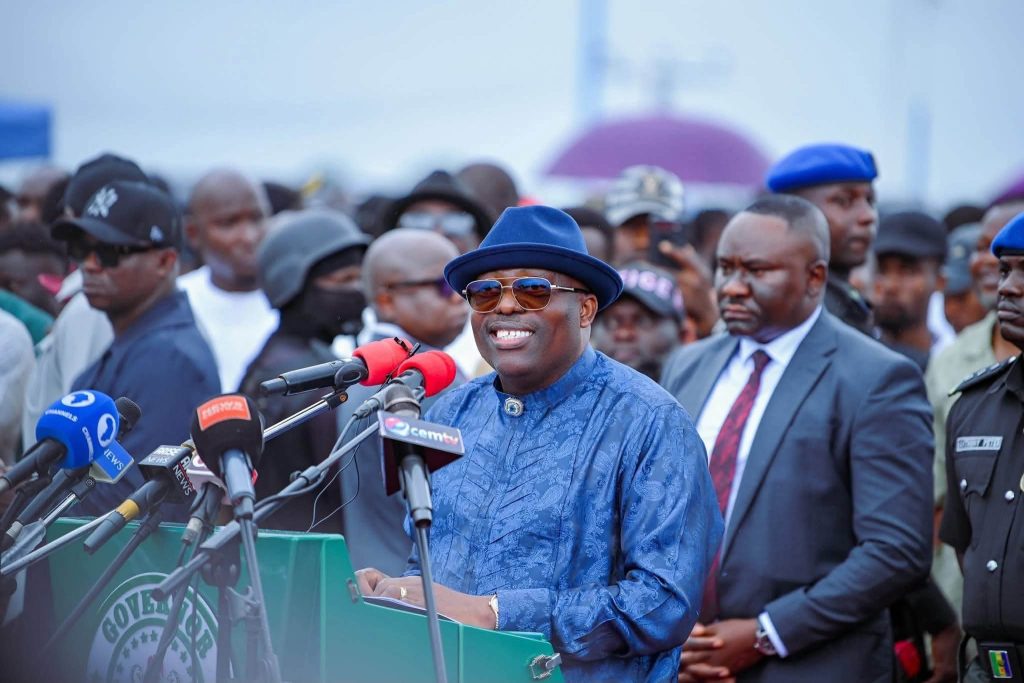
According to him, the state of the road had not only imposed hardship on residents but also created an environment that encouraged criminal activities along the corridor.
“It is a road that you must pass if you’re going to Abonnema. It is a road that, because of its state, a lot of evil activities were taking place there.
But to the glory of God today, I don’t think those negative acts can even be imagined or be carried out along that corridor again.”
The governor said he had resolved to ensure the road was reconstructed, irrespective of the time available to his administration.
“I made a promise to myself that day that even if it is remaining one week, we must make sure that we fix this road. Today, to the glory of God, the road has been fixed.”
Fubara stressed that the administration’s development agenda was not merely about commissioning projects, but about delivering infrastructure capable of improving the quality of life and economic prospects of residents.
He also reaffirmed his commitment to completing the Trans-Kalabari Highway, another strategic road project designed to connect several coastal communities and deepen economic integration across the state.
The governor thanked residents of the affected communities for their cooperation, particularly for creating an enabling environment for contractors to execute the project without disruption.
“You have shown me so much love. Nobody can take that away. One particular project that cannot be denied is the Trans-Kalabari Road that we are doing,” he said.
Fubara appealed to the people to remain supportive of ongoing development efforts, assuring them that projects initiated by his administration would continue beyond his tenure.
“I want to beg you that if I cannot meet all your requests today, don’t worry, my successor will continue from where I will stop,” he added.
Commissioner for Works, Prof. Temple Nwofor, said the reconstructed road was delivered in accordance with required state standards and designed to withstand the demands of the coastal terrain.
Nwofor disclosed that the road has a 50mm asphaltic binder course and a 50mm asphaltic wearing course, while seven existing bridges across Ido, Abalama and neighbouring communities were completely rehabilitated.
He added that the project also included streetlights, concrete walkways, culverts and reinforced concrete drainage channels measuring between 0.5 metres and 2.2 metres in width.
With its completion, the Buguma-Degema-Abonnema corridor is expected to significantly reduce travel difficulties, improve security and strengthen the movement of people, goods and services across the riverine communities.
For residents of the coastal axis, the project represents more than a new stretch of asphalt: it restores a vital link to communities that have long faced the disadvantages of poor road infrastructure and reinforces the wider push to integrate Rivers State’s riverine communities into the state’s economic network.