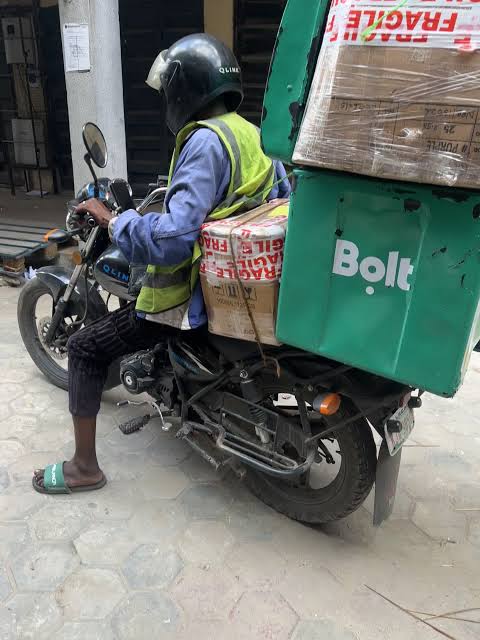
The rapid growth of e-commerce, courier services and home delivery businesses has created new economic opportunities across Nigeria. At the centre of this expanding industry are dispatch riders, whose services have become indispensable to businesses and households alike. However, alongside their usefulness has emerged a troubling reality: the increasing menace posed by some dispatch riders on Nigerian roads.
In many cities, particularly Port Harcourt and other urban centres in Rivers State, complaints against dispatch riders have become commonplace. Road users, pedestrians and motorists increasingly accuse some riders of reckless driving, disregard for traffic regulations and dangerous conduct that puts lives and property at risk.
What was once seen as a convenient means of delivery is gradually becoming a major road safety concern. From speeding through congested roads and driving against traffic to weaving dangerously between vehicles and ignoring traffic signals, some dispatch riders operate with a level of recklessness that has become unacceptable.
Many motorists recount experiences of near-fatal encounters with dispatch riders who appear to be in a constant hurry to beat delivery deadlines. Their aggressive riding habits often create tension on the roads and increase the likelihood of accidents.
Speaking with The Atlantic Bell, a motorist, Cyril Atunkwa, described some dispatch riders as excessively aggressive and impatient.
According to him, many of them show little regard for other road users and frequently engage in dangerous manoeuvres that endanger lives.
“Some of these riders behave as though they own the road. They overtake from impossible angles, jump traffic and sometimes disappear after causing accidents. There have also been reports linking some riders to substance abuse, which raises further concerns about public safety,” he said.
Another road user, Markson Ebifaye, shared similar concerns. He observed that dispatch riders often engage in confrontational behaviour during traffic disputes and, in some cases, flee after causing minor collisions or damaging vehicles.
The increasing number of complaints points to a deeper problem that authorities can no longer afford to ignore. While many dispatch riders operate responsibly and earn a living honestly, the actions of a reckless minority are tarnishing the reputation of the entire industry and exposing the public to unnecessary danger.
The challenge is compounded by weak enforcement of existing regulations. In many cases, it is difficult to identify offending riders because they operate without visible identification or use motorcycles with poorly displayed or concealed registration numbers.
This situation creates an environment where offenders can easily evade accountability after committing traffic violations or causing accidents.
The Rivers State Government and transport authorities across Nigeria must therefore treat the issue as a matter of urgency. Curbing the menace of reckless dispatch riders should become a key component of road safety policy.
One immediate step is the strict enforcement of mandatory rider identification. Every dispatch rider should be required to wear a reflective vest bearing a unique registration number that is boldly displayed and easily visible from a distance. Such identification would make it easier for law enforcement agencies and members of the public to report erring riders.
Similarly, all motorcycles used for dispatch services must be properly registered and display valid plate numbers at all times. Authorities should conduct periodic inspections to ensure compliance and remove unregistered motorcycles from the roads.
Courier companies also have a major role to play. Businesses that employ dispatch riders should be held accountable for the conduct of their personnel. Companies must invest in regular safety training, enforce strict operational standards and monitor riders through tracking systems that discourage dangerous behaviour.
Furthermore, riders should undergo compulsory road safety certification before being licensed to operate commercially. Such training should cover traffic regulations, defensive riding techniques, customer relations and the legal consequences of traffic offences.
The police, Federal Road Safety Corps and state transport authorities must also intensify enforcement operations. Consistent monitoring, sanctions for violations and swift prosecution of offenders will serve as deterrents and help restore discipline on the roads.
Public awareness campaigns are equally important. Riders need to understand that delivery speed should never take precedence over human life and public safety. Customers and courier companies must also avoid placing unrealistic delivery demands that encourage dangerous riding practices.
Nigeria has previously witnessed the consequences of unchecked motorcycle operations, leading to restrictions and outright bans in several major cities. Allowing dispatch riders to continue operating without adequate regulation risks creating similar challenges and could eventually undermine the valuable services they provide.
The time for action is now. Responsible dispatch riders deserve an environment where professionalism is rewarded, while reckless operators must be identified and sanctioned.
Through effective regulation, strict enforcement and industry collaboration, authorities can protect lives, improve road safety and ensure that dispatch services remain a benefit rather than a threat to society.
The roads belong to everyone. No business convenience or delivery deadline should be allowed to jeopardise the safety of motorists, pedestrians and commuters.