



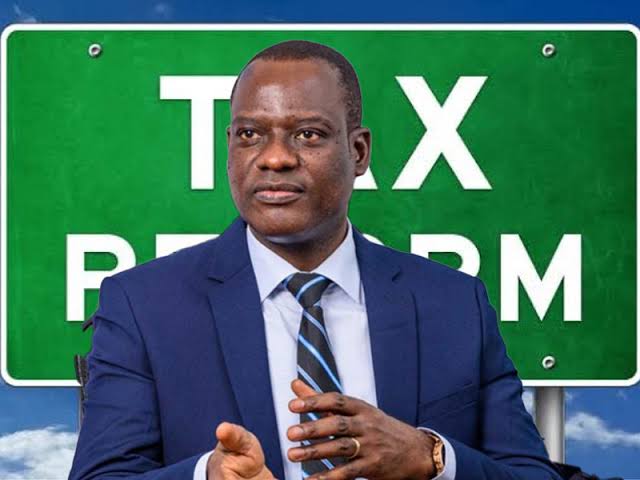
Chairman of the Presidential Fiscal Policy and Tax Reforms Committee, Taiwo Oyedele, has acknowledged that aspects of Nigeria’s newly enacted tax reform laws may have been altered and could require amendments, amid growing calls for the suspension of their implementation.
Oyedele spoke as former Vice President Atiku Abubakar, Labour Party’s 2023 presidential candidate Peter Obi, and several civil society organisations demanded a halt to the rollout of the laws over alleged discrepancies between what the National Assembly passed and what was eventually gazetted.
In an interview on Monday, Oyedele conceded that parts of the versions passed by lawmakers may need to be revisited, stressing however that implementation should proceed based on what the National Assembly approved.
“Even if it is established that there have been substantial alterations to what the National Assembly passed, my view is to identify those provisions which are not part of the law and proceed to implement the law as passed by NASS, while addressing how those issues arose and what to do about them,” he said.
He added that his committee had already identified areas in the passed version requiring technical amendments, particularly around referencing and definitions, which would be forwarded to the President.
Oyedele also addressed the controversy over alleged differences between the bills debated and approved by lawmakers and the versions later gazetted and made public.
A member of the House of Representatives, Abdulsamad Dasuki, had earlier raised the alarm, claiming that the gazetted laws did not reflect what legislators voted on, arguing that this amounted to a breach of legislative privilege.
“Before you can claim there is a difference between what was gazetted and what was passed, we must have access to the version that was passed,” Dasuki said, noting that only lawmakers could authoritatively confirm the harmonised bills certified by the National Assembly and transmitted to the President.
Clarifying concerns over Section 41(8), which mandates a 20 per cent deposit, Oyedele said the provision appeared only in a draft gazette and was not included in the final version of the law.
“Some people circulated a report of the committee before the committee had even met. What is out there in the media did not come from the House committee. We should allow the committee to conduct its investigation,” he said.
President Bola Tinubu recently signed the four tax reform bills into law, describing them as the most sweeping overhaul of Nigeria’s tax system in decades. The laws — the Nigeria Tax Act, Nigeria Tax Administration Act, Nigeria Revenue Service (Establishment) Act, and Joint Revenue Board (Establishment) Act — are scheduled to take effect on January 1, 2026, under a unified authority, the Nigeria Revenue Service.
The reforms have, however, faced stiff resistance, particularly from some northern lawmakers, who have questioned both their substance and the process leading to their enactment.