Home Blog Page 8

Rivers Assembly Moves To Review Sports Institute Law As Petition Seeks Return of Sea School, Isaka

0

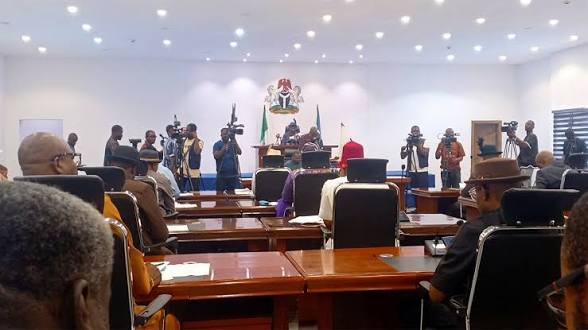
The Rivers State House of Assembly has received a petition seeking the repeal of the law establishing the Rivers State Sports Institute in Isaka, Okrika Local Government Area, and the restoration of the defunct Government Sea School.

The petition, submitted by the Sea School Isaka Alumni Foundation, was presented during Monday’s plenary by the Deputy Majority Leader and member representing Okrika Constituency, Linda Somiari-Stewart.

The petition urged the Assembly to repeal the Rivers State Sports Institute Law (Cap. 123, Vol. 6, Laws of Rivers State of Nigeria) and enact fresh legislation to re-establish the Government Sea School, which previously occupied the site before it was converted into a sports institute.

It also called on the lawmakers to advise the executive arm of government to rehabilitate and equip the proposed sea school with modern facilities to position it as a centre of excellence for manpower development in the state’s emerging blue economy.

According to a statement issued by the Speaker’s media aide, Martins Wachukwu, the petition argues that reviving the institution would help produce the skilled workforce required to drive maritime and marine-related sectors in Rivers State.

Speaker of the House, Martin Amaewhule, referred the petition to the House Committee on Public Complaints and Petitions for legislative consideration, in line with the Assembly’s Standing Orders.

The committee is expected to examine the requests contained in the petition and make appropriate recommendations to the House.

From 5% to 61%: NCDMB Hails Nigerian Content Revolution, Targets 70% By 2027

0

The Nigerian Content Development and Monitoring Board (NCDMB) has highlighted the remarkable growth of local content in Nigeria’s oil and gas industry, revealing that indigenous participation has risen from less than five per cent in 2010 to 61 per cent, with a target of achieving 70 per cent by 2027.

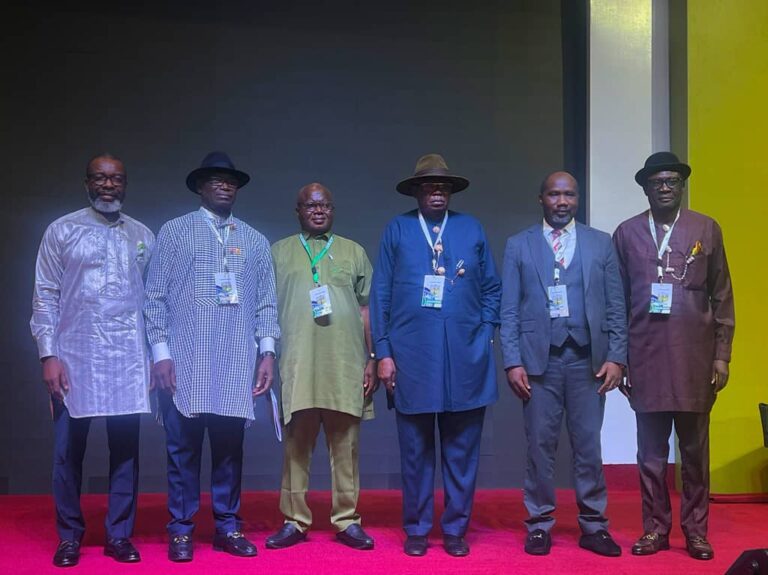
The Board made the disclosure on Monday at the maiden edition of the SweetCrude Dialogue 2026, themed “Through the Python’s Eye: 70 Years of Oil and Gas Production in Nigeria,” held at the Nigerian Content Towers in Yenagoa, Bayelsa State.

Representing the Executive Secretary of the NCDMB, Engr. Felix Omatsola Ogbe, the Director of Monitoring and Evaluation, Barr. Esueme Dan Kikile, said the impressive growth in Nigerian content was driven by deliberate investments in human capital development, infrastructure and strategic partnerships aimed at deepening indigenous participation across the oil and gas value chain.

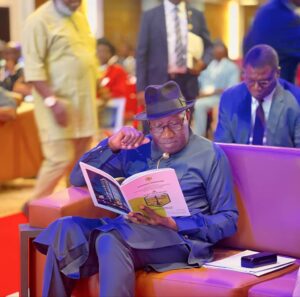
Dr. Goodluck Ebele Jonathan.

Kikile said the Board remained committed to consolidating the gains through flagship initiatives, including the Nigerian Content Tower, the Oloibiri Museum and Research Centre, the Nigerian Oil and Gas Parks Scheme, as well as gas-based industrialisation projects designed to stimulate economic diversification and create jobs.

According to him, the Board’s long-term vision is to build the skills, technology and industrial capacity required for Nigerians to lead the next phase of growth in the nation’s oil and gas industry and its linkage sectors.

The inaugural dialogue brought together government officials, industry leaders, policymakers and key stakeholders to reflect on Nigeria’s 70-year oil and gas journey and explore pathways to a more sustainable and inclusive future for the sector.

Former President Goodluck Jonathan, who chaired the event, described the dialogue as timely and significant.

He recalled that the enactment of the Nigerian Oil and Gas Industry Content Development (NOGICD) Act during his administration laid the foundation for the rapid expansion of indigenous participation in the petroleum industry, describing the legislation as a game changer for Nigeria’s energy sector.

Goodwill messages were also delivered by representatives of the Bayelsa and Delta State governments, as well as the Niger Delta Development Commission (NDDC), all of whom commended the initiative and reaffirmed their commitment to sustainable development and value creation in the oil and gas industry.

Kikile was accompanied to the event by the NCDMB General Manager, Corporate Communications, Dr. Obinna Ezeobi; Manager, Government Relations, Mr. Teddy Bai; and other officials of the Board.

NANS Faults UNIPORT Over Students’ Union Dissolution, Demands Immediate Reversal

0

The National Association of Nigerian Students (NANS) has condemned the dissolution of the University of Port Harcourt (UNIPORT) Students’ Union Government (SUG), describing the action as a breach of students’ democratic rights and insisting that due process must be followed in addressing allegations against elected student leaders.

In a statement issued at the weekend and signed by its National President, Akinteye Babatunde Afeez, the student body criticised a memorandum from the university’s Office of the Dean of Student Affairs announcing the immediate dissolution of the Students’ Union Government, Hall Representatives and all other students’ union activities.

While acknowledging the university management’s authority to investigate allegations of misconduct against student leaders, NANS argued that dissolving a democratically elected union without due process, transparency and fair hearing amounted to an abuse of administrative powers.

According to the association, the Students’ Union exists as the legitimate representative of the student population and cannot be dissolved through an administrative directive without clearly stating the allegations, conducting a credible investigation and allowing the affected officials the opportunity to defend themselves.

NANS also expressed reservations over aspects of the university’s directive, particularly the instruction compelling union officials to hand over union properties, documents and financial records immediately while simultaneously directing them to appear before an investigative panel whenever invited.

The association said the sequence of events cast doubt on the transparency, fairness and independence of the investigative process.

It called on the university management to suspend implementation of the dissolution order, respect the mandate of the elected student leaders and publicly disclose the reasons behind its decision.

The students’ body further demanded the constitution of an impartial investigative panel and urged the university to guarantee the affected officials their right to a fair hearing.

“We urge the university to refrain from any form of intimidation, victimisation or disciplinary action against student leaders for carrying out their representative responsibilities,” the statement said.

NANS stressed that it was not opposed to accountability, maintaining that any student leader found culpable of financial misconduct or any other offence should face appropriate sanctions in line with established procedures.

However, it warned that the pursuit of accountability should not be used as a pretext to weaken democratic institutions on campus or suppress legitimate student representation.

Describing the University of Port Harcourt as a respected citadel of learning and democratic values, NANS urged the institution to resolve disagreements with the Students’ Union through dialogue, transparent investigation and strict adherence to due process rather than the unilateral dissolution of elected student bodies.

The association disclosed that it had begun consultations with relevant stakeholders and would pursue all lawful means to safeguard the rights, welfare and democratic institutions of students at the university.

It reiterated its demand for the immediate reversal of the dissolution order pending the outcome of what it described as a transparent, impartial and credible investigation.

Efforts by The Atlantic Bell to obtain the reaction of the University of Port Harcourt management were unsuccessful, as the institution’s Public Relations Officer did not respond to repeated telephone calls at the time of filing this report.

Rule of Law Foundation For Good Governance, Democratic Progress, Says Rivers Deputy Governor

0

Rivers State Deputy Governor, Prof. Ngozi Nma Odu, has reaffirmed the state government’s commitment to upholding the rule of law, protecting human rights and promoting inclusive governance, describing respect for the law as the cornerstone of peace, sustainable development and democratic progress.

Odu made the assertion at the 2026 Law Week of the Nigerian Bar Association (NBA), Omoku (Legacy) Branch, held on Friday in Omoku, where she was represented by her Director of Administration, Dr. Matthew Ogwuokwa.
Speaking on the theme, “Law, Order and Equality in Society,” the Deputy Governor said the subject reflected the urgent need to strengthen democratic institutions and ensure justice for all citizens, regardless of social status, gender, ethnicity, religion or political affiliation.

She stressed that no society can achieve enduring peace, economic prosperity or social stability without strict adherence to the rule of law.

“The law protects the rights of citizens, preserves public order, guarantees fairness and creates an enabling environment for economic growth and social harmony,” she said.

Odu reiterated that the administration of Governor Siminalayi Fubara remained committed to deepening democratic values, strengthening the justice system and building an inclusive society where equal opportunities are guaranteed for every citizen.

She commended the NBA Omoku Branch for sustaining its annual Law Week, describing the event as a vital platform for legal practitioners, academics and policymakers to examine contemporary challenges confronting the justice sector and national development.

The Deputy Governor also lauded the conference’s focus on “Strengthening Women’s Rights in Nigeria: ONELGA in Focus,” describing the protection and empowerment of women as a strategic imperative for national development rather than a mere social responsibility.
She further urged members of the NBA Omoku Branch to uphold the ideals associated with their identity as the “Legacy Branch.”

Also speaking, the Chief Judge of Rivers State, Justice Simeon Chibuzor Amadi, represented by the Presiding Judge of the Omoku Judicial Division, Justice Mark Onyema Chukwu, praised the NBA Omoku Branch for its commitment to professional excellence and the promotion of the rule of law.

He said the Rivers State Judiciary was proud of the branch’s achievements and encouraged its members to sustain their contributions to the legal profession and the administration of justice.

Delivering the keynote address titled “Strengthening Women’s Rights in Nigeria: ONELGA in Focus,” the Dean of the Faculty of Law, Rivers State University, Prof. Grace Akolokwu, called for the elimination of discriminatory traditional and customary practices that continue to deny women equal rights and opportunities despite constitutional guarantees.

She observed that such entrenched customs had continued to limit women’s access to leadership positions and other opportunities capable of enhancing their capacity and contributions to society.

Earlier, Chairman of the NBA Omoku (Legacy) Branch, Barrister Eze Ahiakwo, described the annual Law Week as one of the association’s flagship programmes aimed at advancing the legal profession and reinforcing the rule of law in society.

NBA To Inaugurate Badejo-Okusanya, New National Executive In Port Harcourt

0

The Nigerian Bar Association (NBA) will inaugurate its newly elected national executive, led by President-elect Oyinkansola Badejo-Okusanya, during its 2026 Annual General Conference scheduled to hold in Port Harcourt, Rivers State, between August 21 and 28.

Badejo-Okusanya emerged winner of the association’s presidential election conducted through electronic voting, polling 12,317 votes to defeat her two male challengers and become the 33rd President of the NBA.

According to the final results released by the Electoral Committee of the Nigerian Bar Association (ECNBA), the Senior Advocate of Nigeria (SAN) secured 47.18 per cent of the 26,106 valid votes cast in the election.

Her closest rival, Lateef Omoyemi Akangbe (SAN), garnered 7,934 votes, representing 30.39 per cent, while Olumuyiwa Akinboro (SAN) polled 5,855 votes, or 22.43 per cent.

Her election is historic, as she becomes only the second woman to lead the NBA in its 66-year history, following Priscilla Kuye, who served as the association’s first female president between 1991 and 1992.

The inauguration of Badejo-Okusanya and other newly elected national officers will be one of the major highlights of this year’s Annual General Conference in Port Harcourt, which is expected to attract thousands of lawyers, judges, legal scholars and policymakers from across Nigeria and beyond.

Called to the Nigerian Bar in 2002, Badejo-Okusanya studied Law at the University of Lagos after earning a Bachelor of Arts (Honours) degree in English from the same institution.

She began her legal career at Olaniwun Ajayi LP and, in recognition of her outstanding contributions to legal practice, was elevated to the rank of Senior Advocate of Nigeria on September 29, 2025.

Her career has combined legal practice with public service. In 2007, she was appointed Senior Special Assistant on Justice Sector Reform to the then Governor of Lagos State, Babatunde Fashola, working in the office of the then Attorney-General and Commissioner for Justice, Olasupo Shasore.

She is a respected arbitration and dispute resolution expert and belongs to several prestigious professional bodies, including the London Court of International Arbitration (LCIA), International Council for Commercial Arbitration (ICCA), African Arbitration Association, ArbitralWomen, International Bar Association (IBA), Commonwealth Lawyers Association (CLA), International Federation of Women Lawyers (FIDA), and the African Women Lawyers Association (AWLA). She also serves on the Board of the Lagos Court of Arbitration.

Within the NBA, Badejo-Okusanya has held several strategic leadership positions, including Assistant Secretary of the NBA Lagos Branch, member of the Future of the Legal Profession Committee, Conference Investigation Committee, and the NBA Lagos Branch Building Committee.

She also served as Alternate Chair of the 2023 NBA Annual General Conference Planning Committee before chairing the committee for the 2024 conference. In 2022, she was co-opted into the NBA National Executive Council and, in August 2024, received the NBA Presidential Medal of Service in recognition of her contributions to the association.

A founding partner of Africa Law Practice NG & Company since 2017, Badejo-Okusanya currently co-heads the firm’s Litigation and Dispute Resolution Practice. The firm is regarded as one of Nigeria’s leading commercial law firms, with affiliations across Africa.

Her emergence has raised expectations that her administration will prioritise lawyers’ welfare, institutional reforms and a more inclusive Bar, in line with her campaign promise to build “a bolder Bar that works for everyone” where lawyers can earn better, live better and practise better.

Badejo-Okusanya Emerges NBA President, Vows Better Welfare, Stronger Future For Lawyers

0

Newly elected President of the Nigerian Bar Association (NBA), Oyinkansola Badejo-Okusanya, has pledged to build an association where lawyers “earn better, live better and practise better,” following her victory in the 2026 national officers’ election.
Badejo-Okusanya, who was declared winner of the poll on Sunday, becomes the 33rd President of the NBA and only the second woman to lead Nigeria’s foremost professional body for lawyers.

In a message posted on her X account shortly after the announcement of the results, the Senior Advocate of Nigeria (SAN) expressed gratitude to members of the association for entrusting her with the leadership of the Bar, describing her victory as a collective triumph for lawyers who believe in a more inclusive, responsive and progressive NBA.

“Today, I stand before you with a heart filled with profound gratitude and a deep sense of responsibility. I am truly humbled by the confidence that members of the Nigerian Bar Association have reposed in me by electing me to serve as your President.

“Thank you for believing in our shared vision of A Bolder Bar That Works for Everyone. This victory is not mine alone; it belongs to every member who believed that our Association can be stronger, more inclusive, more responsive, and better positioned to serve the interests of all lawyers,” she said.

Badejo-Okusanya said her campaign was shaped by extensive consultations with lawyers across the country, noting that the concerns, aspirations and ideas shared during those engagements would form the foundation of her administration.

According to her, months of travelling across the 36 states and the Federal Capital Territory provided invaluable insights into the challenges confronting legal practitioners and reinforced the need for a Bar that delivers tangible value to its members.

She pledged to pursue reforms that would improve the welfare and professional opportunities of lawyers, promising an NBA where every member has the opportunity to thrive professionally and economically.

The new NBA president also appealed for unity among members, urging them to put the contest behind them and work together in advancing the legal profession and strengthening the rule of law.

“I extend my sincere appreciation to every member who participated in this election, regardless of the candidate you supported. The election is over. We are one Bar, united by a common commitment to the advancement of our profession and the defence of justice and the rule of law,” she said.

She congratulated her fellow contestants for contributing to a credible democratic process and expressed readiness to work with them in building a stronger association.

Badejo-Okusanya also acknowledged the efforts of members of her campaign council, volunteers, supporters, family and friends, thanking them for their unwavering commitment throughout the electioneering process.

Her emergence is widely seen as a significant milestone for the NBA, raising expectations that her administration will focus on improving lawyers’ welfare, strengthening institutional reforms and enhancing the association’s role in promoting justice, the rule of law and good governance in Nigeria.

SERAP Threatens Suit, Urges NASS to Withdraw ‘Backdoor Social Media Shutdown’ Bill

0

The Socio-Economic Rights and Accountability Project (SERAP) has asked the National Assembly to immediately withdraw the proposed Nigeria Data Protection (Amendment) Bill, 2026, warning that it amounts to a “backdoor” attempt to regulate social media and could pave the way for the shutdown of digital platforms in Nigeria.

In a letter dated July 18, 2026, addressed to Senate President Godswill Akpabio and Speaker of the House of Representatives Tajudeen Abbas, SERAP warned that it would institute legal action if the controversial legislation is passed in its current form.

The bill, sponsored by Senator Ned Nwoko (APC, Delta North), seeks to compel social media platforms, data controllers and data processors operating in Nigeria to establish physical offices in the country. It also empowers the Nigeria Data Protection Commission (NDPC) to prohibit or shut down the operations of any entity that fails to comply within 30 days.

Signed by SERAP Deputy Director, Kolawole Oluwadare, the letter argued that the proposed amendment would hand regulators sweeping powers capable of excluding digital platforms from the Nigerian market, thereby exposing millions of Nigerians to violations of their constitutional rights to freedom of expression and access to information.

According to SERAP, compelling technology companies to maintain physical offices in Nigeria would significantly increase government leverage over digital platforms, making political pressure, censorship demands and retaliation against local employees easier.

“The bill constitutes a backdoor attempt to regulate social media and increase governmental control over online expression through corporate localisation requirements rather than through transparent and constitutionally permissible regulation,” the organisation stated.
SERAP noted that the proposed legislation mirrors earlier attempts to regulate social media, which attracted widespread public criticism and raised serious concerns over human rights.

It argued that although the amendment is presented as a data protection measure, its practical effect would be to create a legal mechanism capable of excluding social media platforms from operating in Nigeria.

The organisation warned that such powers would effectively recreate the consequences of the Federal Government’s suspension of Twitter in 2021, which was later declared unlawful by the ECOWAS Court of Justice in SERAP and Others v. Federal Republic of Nigeria.

“The National Assembly should not achieve indirectly through regulatory localisation requirements what it cannot constitutionally achieve directly through restrictions on social media,” SERAP said.

The rights group further contended that the bill grants the NDPC excessive powers without adequate procedural safeguards, including judicial oversight, sufficient compliance timelines or consideration of less restrictive alternatives before shutting down digital platforms.

According to SERAP, the proposed amendment cannot withstand constitutional scrutiny under Section 45 of the 1999 Constitution, which permits restrictions on fundamental rights only where they are lawful, necessary and reasonably justifiable in a democratic society.
It maintained that there is no evidence that the existing Nigeria Data Protection Act is inadequate or that current enforcement mechanisms have failed to justify the sweeping new powers contained in the bill.

SERAP also argued that the legislation would undermine Nigeria’s digital economy by increasing compliance costs for startups, educational institutions, AI developers, research organisations and smaller technology companies, while discouraging innovation and foreign investment.

The organisation further noted that no major democratic country imposes a blanket requirement compelling every social media platform to establish a physical office as a condition for operating.

Citing Section 39 of the Nigerian Constitution, Article 19 of the International Covenant on Civil and Political Rights and Article 9 of the African Charter on Human and Peoples’ Rights, SERAP insisted that the bill threatens the rights of millions of Nigerians who rely on digital platforms for communication, business, education, civic engagement and political participation.

It also referenced warnings by the United Nations Special Rapporteur on Freedom of Expression against localisation requirements that could facilitate censorship or increase governmental influence over online platforms.

SERAP urged the National Assembly to reject the bill, describing it as incompatible with Nigeria’s constitutional and international human rights obligations.

The organisation warned that should the legislation be enacted in its current or substantially similar form, it would “promptly take all appropriate legal actions” to challenge its legality in the public interest and protect Nigerians’ digital rights.

NCDMB, Renaissance Launch 12-Month Field Readiness Training For 300 Young Nigerians

0

The Nigerian Content Development and Monitoring Board (NCDMB), in partnership with Renaissance Africa Energy Company Limited, has commenced a specialised 12-month Oil and Gas Field Readiness Training Programme for 300 young Nigerian graduates as part of efforts to deepen local capacity and strengthen indigenous participation in the nation’s energy sector.

The initiative, which focuses on mechanical, electrical and instrumentation engineering, is designed to equip participants with industry-relevant technical and professional skills required for successful careers in the oil and gas industry.

The programme comprises three months of intensive classroom instruction followed by nine months of structured on-the-job training with partner service companies. Of the 300 beneficiaries selected through a competitive process, 240 will undergo training in Lagos, while 60 are based in Port Harcourt.

Speaking at the programme’s inauguration, the Executive Secretary of NCDMB, Engr. Felix Omatsola Ogbe, described the initiative as a strategic investment in Nigeria’s future workforce and a demonstration of the Board’s commitment to building local capacity in line with its statutory mandate.
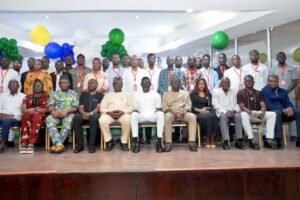
Represented by the Assistant Manager, Human Capacity Development, Mr. Tari Bufazi, Ogbe said the training would expose participants to practical industry operations and prepare them for globally recognised professional certifications.

“This is more than the commencement of a training programme. It marks the beginning of a journey that will equip young Nigerians with world-class competencies in mechanical, electrical and instrumentation disciplines,” he said.

According to him, specialised expertise in automation, instrumentation and engineering operations has become increasingly critical as Nigeria positions itself to maximise emerging investments in the petroleum industry.

“Instrumentation, electrical and mechanical engineering remain fundamental to the safety, efficiency and profitability of the Nigerian oil and gas industry. This programme is deliberately structured to bridge existing skills gaps and prepare participants for the evolving demands of the sector,” he added.
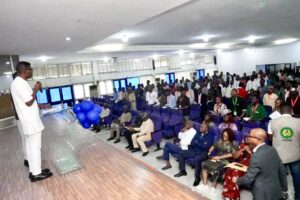
Ogbe urged the trainees to approach the programme with dedication, noting that it offers a unique opportunity to become innovators, problem-solvers and future leaders in the industry.

Also speaking, the General Manager, Nigerian Content Development at Renaissance Africa Energy Company Limited, Engr. Olarenwaju Lanre Olawuyi, reaffirmed the company’s commitment to developing indigenous expertise through sustained investment in human capital.

Represented by Engr. Funso Alabi, Olawuyi said the programme combines theoretical instruction with practical workplace experience, exposing participants to critical areas including mechanical systems, electrical operations, instrumentation and control, software development, networking and cybersecurity.
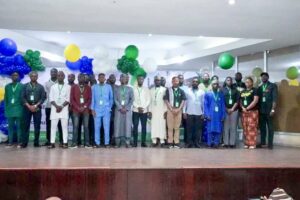
He noted that the practical training component was specifically designed to bridge the gap between academic knowledge and workplace expectations.

“At Renaissance, we believe local content development should go beyond policy to create genuine capability, strengthen indigenous expertise and empower Nigerians to lead the future of the energy industry,” he said.

He also stressed that success in the industry requires not only technical competence but also professionalism, integrity, teamwork and a strong commitment to safety.

Chief Executive Officer of Radial Circle, the lead training provider, Ranti Omole, described the initiative as a significant opportunity for young Nigerians aspiring to build careers in the global energy sector.

He disclosed that the 300 participants emerged from a rigorous selection process involving thousands of applicants drawn from the NCDMB database.

Omole explained that the programme’s objective extends beyond awarding certificates, saying its ultimate goal is to produce competent, industry-ready professionals capable of making immediate contributions in operational environments.

“We are building competence, not just issuing certificates. By the end of this programme, every participant should be field-ready and able to integrate seamlessly into industry operations,” he said.

He encouraged the trainees to remain disciplined, embrace continuous learning and collaborate effectively with colleagues throughout the programme.

Stakeholders noted that the initiative aligns with the objectives of the Nigerian Oil and Gas Industry Content Development Act and the Nigerian Content 10-Year Strategic Roadmap by strengthening the pool of skilled Nigerian professionals required to sustain growth and competitiveness in the country’s oil and gas industry.
Sweet Crude Dialogue 2026 To Examine Nigeria’s 70 Years of Oil At Pan-Niger Delta Summit

An environmental advocacy group, De Mangrove Conversations, has announced plans to convene the Sweet Crude Dialogue 2026, a high-level pan-Niger Delta summit aimed at examining the impact of seven decades of oil production on the region and charting a sustainable future.

In a statement issued by its Convener and Chief of Policy, Biobele Da-Wariboko, the group said the two-day event will hold from Monday, July 20, to Tuesday, July 21, 2026, at the Nigerian Content Development and Monitoring Board (NCDMB) Conference Hall, Content Towers, Swali, Yenagoa, Bayelsa State.

According to the statement, former President Dr Goodluck Jonathan will chair the event, which is themed “Through the Python’s Eye: 70 Years of Oil Production in Nigeria.”

The organisers said the dialogue is being hosted in collaboration with the Bayelsa State Government, the Nigerian Content Development and Monitoring Board (NCDMB), the Niger Delta Development Commission (NDDC), Renaissance Africa Energy Company, and the Goodluck Jonathan Foundation.

The statement disclosed that President Bola Ahmed Tinubu, who is expected to inaugurate the summit, will lead a line-up of distinguished personalities, while the President of the Senate, the Speaker of the House of Representatives, and representatives of leading corporate organisations are expected to deliver goodwill messages.

It added that the programme will also feature keynote lectures, policy discussions, and other activities designed to stimulate dialogue on environmental sustainability, economic transformation, and the future of oil-producing communities in the Niger Delta.

The organisers called on stakeholders, policymakers, development partners, traditional institutions, civil society groups, and the general public to participate in what they described as a landmark conversation on the region’s future.

De Mangrove Conversations described itself as a collective of eminent Niger Deltans committed to promoting development-driven dialogue, environmental conservation, and sustainable economic growth across the Niger Delta.

RSU Don Unveils Nanotechnology Breakthroughs For Oil Spill Cleanup, Clean Energy

1

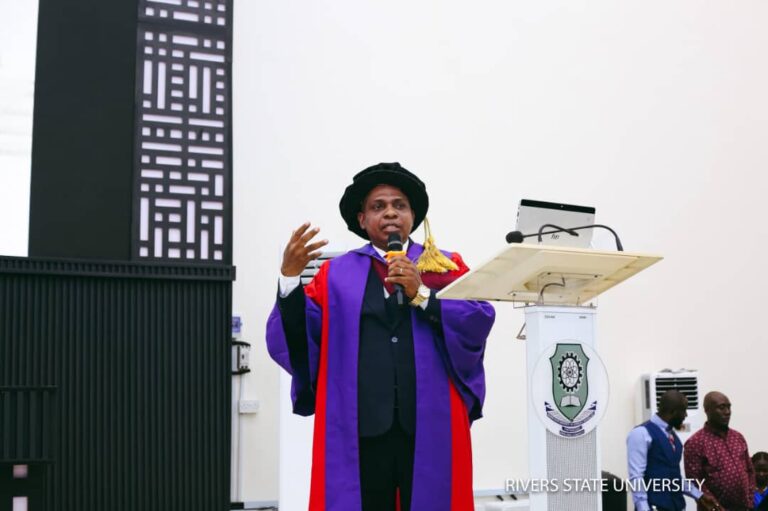
A Professor of Materials Chemistry at Rivers State University (RSU), Port Harcourt, Joshua Lelesi Konne, has unveiled a series of pioneering nanotechnology innovations with the potential to transform crude oil remediation, clean energy production and environmental sustainability in Nigeria.

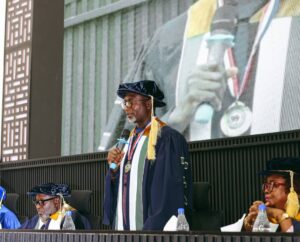
Presenting the university’s 135th Inaugural Lecture, titled “Naked Coated Nanoseeds: Paradoxical Pathways to Innovations in Catalysis, Energy and Environment,” Prof. Konne highlighted years of interdisciplinary research that has produced novel nanomaterials capable of addressing some of the country’s most pressing environmental and industrial challenges.

The lecture, delivered on Wednesday at the university campus, focused on how nanoparticles described as “naked coated nanoseeds” have been harnessed to develop innovative catalysts and environmentally friendly technologies spanning chemistry, engineering and environmental science.

According to the scholar, one of the most significant outcomes of the research was the development of Starch Stabilised Magnetic Nanoparticles (SSMNPs) from cassava wastewater, a breakthrough achieved in 2014. The technology proved more effective than previously reported methods in removing nickel porphyrin ions from crude oil obtained from the Bomu Oilfield in Gokana Local Government Area of Rivers State.

He disclosed that the research further broke new ground in 2016 when Magnetic Nanoparticles (MNPs) and Starch Stabilised Magnetic Nanoparticles were successfully deployed as Fenton-like catalysts for the remediation of crude oil spill sites, recording superior performance to the conventional Fenton oxidation process widely used for environmental cleanup.

Konne said the findings demonstrate how locally developed nanotechnology can provide cost-effective and sustainable solutions to pollution associated with Nigeria’s oil and gas industry while also advancing clean energy research.

The professor explained that nanomaterials exist in several forms, including nanoparticles, nanorods, nanotubes, nanowires and thin films, all measuring up to one-billionth of a metre.

Despite their microscopic size, he said they possess exceptional chemical and physical properties that make them valuable in catalysis, energy conversion and environmental applications.

Beyond oil spill remediation, the researcher listed several pioneering achievements, including the characterisation and application of Kono Boue clay as a catalyst in biodiesel production, precursor for Zeolite-X production, water filtration composites with activated carbon, enhanced crude oil degradation and improved oil recovery techniques.

He also disclosed breakthroughs in producing starch-coated hydrogenated zinc oxide, hydrogenated copper oxide and hydrogenated nickel oxide, all of which demonstrated enhanced catalytic properties in hydrogenation reactions.

In another innovation, he said his team was the first to utilise plantain peel ash as an alkali source in synthesising binary metal oxides such as zinc oxide, copper oxide and nickel oxide, opening new opportunities for converting agricultural waste into valuable industrial materials.

Despite the scientific advances, Konne lamented the absence of a standard nanotechnology laboratory in Rivers State and the South-South region, noting that students spend millions of naira annually conducting specialised analyses at Umaru Musa Yar’Adua University in Katsina State.

He called for the establishment of a Central University Laboratory and a Centre for Nanotechnology at Rivers State University to strengthen advanced research.

The professor also urged greater investment in the development of local solid minerals, particularly clay deposits in Kono Boue, Chokocho and Omoku, while calling on the Hydrocarbon Pollution Remediation Project (HYPREP) to urgently establish soil treatment facilities for cleaning heavily oil-polluted sites.

He further appealed to the Rivers State Government to prioritise industrial development by engaging young technocrats capable of driving innovation and increasing funding for interdisciplinary research to boost the university’s global ranking and national competitiveness.

Representing the Vice-Chancellor, Prof. Isaac Zeb-Obipi, the Deputy Vice-Chancellor (Administration), Prof. Blessing Jaja, commended the inaugural lecturer for presenting complex scientific concepts with clarity and elegance.

Jaja said the research aligns with the university’s vision of promoting environmentally sustainable innovations, particularly in the remediation of contaminated soils and the application of nanotechnology in the biosciences.

He disclosed that the university management is committed to establishing a central research laboratory, adding that Prof. Konne would play a key role in its development.

He described the lecture as a demonstration of how cutting-edge research can provide practical solutions to environmental degradation, industrial development and sustainable energy challenges confronting Nigeria.