


Home Blog Page 77

Security Situation To Determine Deployment Of NYSC Members — DG

0

The Director-General of the National Youth Service Corps, Brig.-Gen. Olakunle Nafiu, has said the deployment of corps members must be strictly guided by prevailing security conditions and relevant government policies to safeguard their lives and dignity.

Nafiu stated this on Wednesday in Abuja while delivering a keynote address at the 2026 Batch A Pre-Mobilisation Workshop, themed “Enhancing Service Delivery Across the NYSC Mobilisation Value Chain.”

He stressed that the safety, welfare and dignity of corps members remained non-negotiable, warning that any mobilisation process that compromised those values undermined the very essence of national service.

“Deployment decisions should be guided by current security conditions, existing government policies, and the principles of equity, fairness and transparency,” he said.

According to him, any mobilisation exercise that endangered corps members struck at the heart of the NYSC mandate, adding that management was committed to handling the process with patriotism, integrity and professionalism.

Describing mobilisation as the heartbeat of the scheme, Nafiu noted that when conducted with precision and integrity, the entire service year ran smoothly. He explained that the process involved multiple stakeholders, including Corps Producing Institutions, regulatory bodies, technology and data platforms, as well as security and welfare coordination mechanisms.

However, he observed that weaknesses persisted across several points of the mobilisation chain, leading to outcomes that fell short of expectations. He said these shortcomings must be addressed decisively ahead of the 2026 Batch A exercise.

The NYSC boss identified recurring challenges linked to some CPIs, such as violations of mobilisation guidelines, uploading of unqualified graduates, inconsistent academic records, data discrepancies, record manipulation and weak internal verification systems.

He said such practices eroded the credibility of the mobilisation process and exposed the scheme to operational and reputational risks, urging heads of institutions to strengthen oversight and ensure continuous training for desk officers.

Nafiu also acknowledged internal operational gaps within the NYSC, including inconsistent application of guidelines, weak inter-departmental coordination, delays in resolving issues and undue human interference in automated processes.

“These gaps diminish institutional efficiency and gradually undermine public trust,” he said.

He assured that management was committed to stricter adherence to standard operating procedures, improved collaboration, stronger monitoring, and enhanced professionalism and ethical conduct at all levels.

On technology and data management, Nafiu said that despite progress in digital mobilisation, challenges such as poor data quality, limited technical skills, resistance to automation and weak feedback mechanisms persisted.

“Technology should serve as an enabler of service delivery, not a source of frustration,” he said, calling for sustained capacity building, regular system audits and minimal human intervention in automated processes.

He further identified gaps in stakeholder coordination and communication as sources of avoidable bottlenecks, stressing the need for stronger inter-agency collaboration, regular review meetings and data-driven decision-making anchored on clear timelines and responsibilities.

Looking ahead, Nafiu said the mobilisation process must be repositioned to become more efficient, transparent, accountable and people-centred.

“This involves delivering timely and accurate outcomes, free from undue influence, with clear accountability for actions and inactions, while remaining responsive to the needs of prospective corps members and stakeholders,” he said.

He urged participants to see the workshop as an avenue for honest engagement, practical solutions and measurable reforms, noting that the credibility of the NYSC depended largely on the integrity of its mobilisation process.

“The credibility of the NYSC Scheme depends on the integrity of its mobilisation process. It is the first promise we make to every young Nigerian who answers the call to serve, and it must never be broken,” he added.

In her remarks, the Director of the Corps Mobilisation Department, Mrs Racheal Idaewor, described the pre-mobilisation workshop as a critical platform for strengthening collaboration between the NYSC, CPIs and other stakeholders.

She said the workshop reflected the scheme’s commitment to improving mobilisation processes and sustaining stakeholder trust and confidence.

Idaewor noted that Information and Communication Technology remained one of the scheme’s greatest assets, despite associated challenges, adding that effective use of advanced data management systems and digital tools would further streamline mobilisation.

She urged Student Affairs Officers to carry out their duties with diligence and integrity, ensuring that data submitted accurately reflected the profiles of prospective corps members.
“His Wings Will Be Cut”: APC Draws Red Line for Wike

0

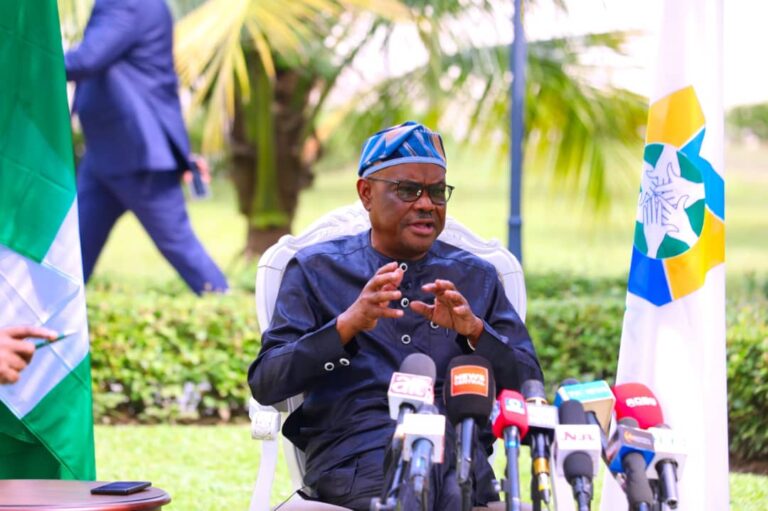
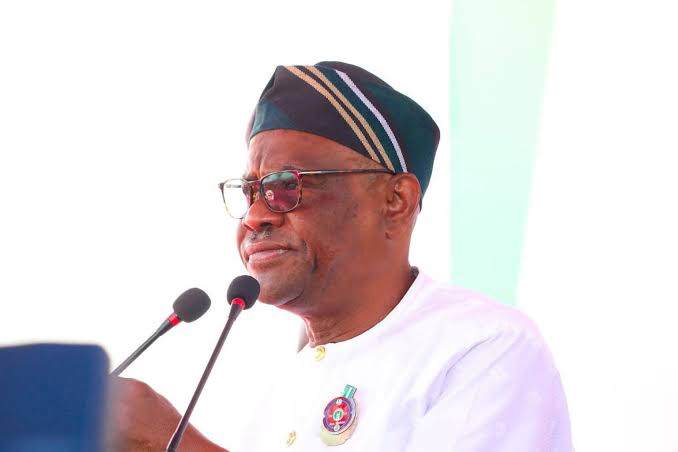
The All Progressives Congress (APC) has issued a stern warning to the Minister of the Federal Capital Territory, Nyesom Wike, over what it described as persistent attempts to meddle in the internal affairs of the ruling party.

Speaking on Trust TV News on Wednesday, January 7, 2026, the APC Director of Publicity, Bala Ibrahim, accused the former Rivers State governor of overstepping political boundaries and seeking to exert undue influence within the party’s structures.

Ibrahim said recent political moves and public interventions attributed to Wike amounted to interference in the APC’s internal processes, stressing that the party’s leadership would no longer tolerate such conduct.

“Wike has attempted to interfere in the affairs of the APC, and his wings will be cut,” Ibrahim declared, signalling what he described as a firmer stance by the party hierarchy.

While acknowledging that political alliances and engagements are part of Nigeria’s democratic culture, the APC spokesman warned that no individual—regardless of status, office or past influence—would be allowed to undermine party discipline or established decision-making mechanisms.

He said the ruling party remained focused on internal cohesion and preparations for future electoral contests, adding that any action capable of destabilising the APC would be decisively addressed.

Ibrahim’s comments come amid growing tensions surrounding Wike’s political role and his relationship with both the APC leadership and key actors within the ruling party, further fuelling debate over the limits of cross-party influence in Nigeria’s evolving political landscape.

APC Not Under Governors’ Control, Says Yilwatda

0

National Chairman of the All Progressives Congress (APC), Prof. Nentawe Yilwatda, has insisted that no governor, individual or political office holder exercises control over the ruling party, stressing that APC decisions are driven by national structures rather than state-level influence.

Speaking on the Sunset programme aired on Jay FM in Jos, Plateau State, Yilwatda said the party operates strictly within an established national framework that prevents the hijack of its structures by powerful interests.

“Across the country, nobody can take over any section of the party. Whatever is done at the state level is planned at the national level. It is not planned at the state level. This is the APC structure and that is how we work,” he said.

The APC chairman emphasised that the party prioritises institutional order over personal authority, noting that no single office holder has overriding control.

“We work with structure; we don’t work with sentiments or emotions. Nobody has control over the party — not even myself. No local government chairman, no governor, no senator or individual controls the APC,” Yilwatda stated.

He further explained that the party deliberately avoided establishing a Board of Trustees to prevent internal crises and power struggles common in other political parties.

“That is why APC does not have a Board of Trustees. APC is owned by the people; the people are the trustees of the party,” he said.

“Unlike other parties where a few individuals control the structures, as national chairman, there is no Board of Trustees supervising me. I supervise myself.”

Yilwatda’s remarks come amid persistent debates over the influence of governors within political parties, particularly in the context of candidate selection and internal decision-making, with the APC leadership keen to project the party as institution-driven rather than personality-led.

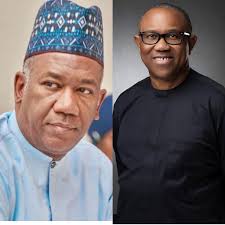
Why I Won’t Follow Obi to ADC, Datti Baba-Ahmed Reveals …Reaffirms Loyalty To Labour Party

0

Senator Yusuf Datti Baba-Ahmed has dismissed speculation about a possible defection from the Labour Party, declaring that he will not follow his former running mate, Mr Peter Obi, to any new political platform ahead of the 2027 general election.

Speaking in Abuja on Wednesday, Baba-Ahmed said his political allegiance remains firmly with the Labour Party, the platform on which he emerged as vice-presidential candidate in the 2023 election. He stressed that his future political aspirations are anchored on party loyalty and personal conviction, not shifting alliances.

The former senator representing Kaduna North stated that although he shared a joint ticket with Obi in the last presidential race, he has no intention of joining him following Obi’s recent alignment with the African Democratic Congress (ADC), a party now being positioned by an opposition coalition to challenge the ruling All Progressives Congress (APC).

Addressing journalists at the Labour Party’s national headquarters, Baba-Ahmed made it clear that he would not take the same political path, insisting that his decision was informed by long-term goals and a clear sense of purpose.

He expressed scepticism about the ADC-led coalition, describing its promoters as “disgruntled politicians” and arguing that the platform does not offer the kind of political vision Nigeria urgently requires.

Baba-Ahmed also reaffirmed his commitment to national service, noting that he remains willing to contribute meaningfully to efforts aimed at fixing the country and would make himself available for service as the 2027 elections approach.

While acknowledging his past partnership with Obi, he emphasised that political choices must be guided by principles rather than personal relationships. According to him, his priority is to strengthen the Labour Party and position it as a credible and enduring alternative for Nigerians.

It would be recalled that Obi recently exited the Labour Party and embraced the ADC as part of a broader opposition coalition seeking to unseat the APC in the next general election.

Atedo Peterside Cautions Against Social Explosion As 140 Million Nigerians Sink into Poverty

0

Business leader and founder of Stanbic IBTC Bank, Atedo Peterside, has warned Nigerian leaders against underestimating the grave dangers posed by deepening poverty, rising political tension and eroding public trust in key state institutions.

In a statement shared on his official X account following an interview on ARISE TV with Charles Aniagolu, Peterside said extreme poverty now affects an estimated 140 million Nigerians, creating conditions that could threaten national stability if left unaddressed.

“Our leaders should not underestimate the rising toll that extreme poverty is taking on approximately 140 million Nigerians,” he wrote.

“If all the oppressors gather in a single ruling party then the battle lines will be crystal clear. Security of life and property is already under threat.”
Peterside drew attention to the widening inequality in the country, noting that while a vast majority of Nigerians struggle to survive, a small segment of the population controls a disproportionate share of national wealth. He warned that this growing imbalance is fuelling social pressure and resentment across the country.

According to him, extreme poverty goes beyond economic hardship and has become a major security concern. He explained that widespread deprivation makes citizens, particularly young people, more vulnerable to crime, violence and manipulation by criminal and extremist networks.

“When people are pushed to the brink by daily struggles, they become easier targets for recruitment into criminal and violent activities,” he cautioned, especially in communities with limited economic opportunities.

The ANAP Foundation president also raised concerns about Nigeria’s political climate, warning that the concentration of power within a single political bloc could sharpen divisions and intensify political conflicts.

He argued that such an environment risks turning politics into a zero-sum battle rather than a democratic process, further endangering peace and national cohesion.

Peterside expressed particular concern over declining public confidence in democratic institutions, especially the judiciary and the electoral system. He noted that many Nigerians no longer trust that disputes, including electoral grievances, will be resolved fairly through legal channels.

“People have lost faith in the judiciary and may increasingly resort to self-help to resolve electoral disputes if INEC bungles the next general elections,” he warned.

He stressed that credible elections are critical to national stability, cautioning that flawed polls could inflame existing tensions and trigger unrest, as citizens who feel disenfranchised may conclude that their voices no longer count.

Peterside urged leaders to confront these challenges urgently, warning that failure to do so could have far-reaching consequences for Nigeria’s security and democratic future.

PDP NWC In Crucial Closed-Door Talks With Jonathan Over Party Crisis, National Issues

0

The National Working Committee (NWC) of the Peoples Democratic Party (PDP), under the leadership of its Acting National Chairman, Tanimu Turaki (SAN), on Tuesday evening held a high-level, closed-door meeting with former President Goodluck Jonathan in Abuja, as the party intensifies efforts to resolve its lingering internal crisis and reposition itself ahead of future political contests.

Turaki arrived at Jonathan’s office in Maitama at about 5:45 pm, leading a delegation that included all members of the NWC as well as a select number of state party chairmen. The delegation moved in a convoy of six sport utility vehicles, underscoring the importance attached to the engagement.

Although details of the meeting were not immediately disclosed, reliable party sources said discussions were centred on the deepening leadership and structural challenges confronting the PDP, the need for unity and discipline within the party, and strategic steps required to restore public confidence in Africa’s former ruling party.

The talks are also believed to have extended beyond party affairs to include broader national issues, with Jonathan expected to offer guidance based on his experience as a former president and elder statesman. Party insiders described the meeting as a consultation aimed at tapping into Jonathan’s influence and moral authority to help stabilise the PDP at a critical moment.

The engagement comes at a time when the PDP is grappling with internal divisions, factional disputes, and growing pressure from both the ruling party and emerging opposition forces.

Observers see the visit as part of a wider effort by the party’s leadership to rally senior stakeholders and chart a coherent path forward.

…More details are expected to emerge as the meeting progresses.

ADC: Momodu Warns Against Internal Chaos, Urges Discipline As Obi 2027 Pressure Mounts

0

A chieftain of the African Democratic Congress (ADC), Dele Momodu, has cautioned the party’s leadership against allowing internal indiscipline to derail the emerging opposition coalition ahead of the 2027 general elections.

Momodu’s warning comes amid growing pressure from supporters and allies of former Anambra State governor, Peter Obi, who are demanding that the ADC cede its 2027 presidential ticket to him.

The agitation has been amplified by prominent voices, including Professor Pat Utomi and activist Aisha Yesufu, both of whom have publicly insisted that Obi must not play a secondary role within the coalition.

While Utomi has threatened to withdraw his support should Obi be asked to deputise another candidate, Yesufu has vowed to oppose him if he emerges as a vice-presidential candidate rather than the presidential flagbearer.

Reacting to the developments, Momodu, in an article published on his verified X handle titled “My Candid Advice to ADC: Avoid Another Wike Scenario,” urged the party to assert its authority and prevent any individual or group from destabilising the platform.

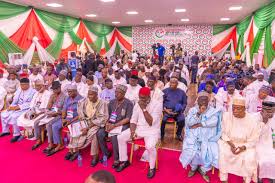
He recalled attending a meeting in Abuja last year where leaders and members of various opposition parties agreed to adopt the ADC as a common vehicle to challenge the ruling All Progressives Congress (APC). According to him, participation in the coalition was entirely voluntary.

“No one was forced to join,” Momodu said, adding that the conveners promised an open and democratic platform where “no group or individual will be allowed to cause chaos.”

He noted that he took comfort in those assurances, particularly with former Senate President David Mark serving as chairman of the coalition, describing him as a leader who “would brook no nonsense.”

However, Momodu expressed concern that the spirit of cooperation was being threatened by what he described as growing aggression and unruliness among some interests within the alliance.

“In recent times, some groups have introduced aggression and unruliness into a fledgling cooperation,” he observed.

“How can a coalition work if some groups insist they must produce the top ticket by donation and coronation, without election or persuasion?”

Warning the ADC against repeating the mistakes that weakened the Peoples Democratic Party (PDP), Momodu said the party must act firmly and early.

“This was how Nyesom Wike held the PDP by the jugular until it became too late,” he warned.

He stressed that for the opposition coalition to succeed, the ADC must remain guided by internal democracy and mutual respect, adding that the party “should be a party of love, not a Fuji house of commotion.”

APC to Tinubu: Choose the Party or Wike As Rivers Crisis Deepens

0

Tensions within the ruling All Progressives Congress (APC) have intensified, with senior party figures warning President Bola Tinubu that the actions of the Minister of the Federal Capital Territory (FCT), Nyesom Wike, are threatening party unity, particularly in Rivers State.

Amid renewed hostilities between Wike and his successor, Governor Siminalayi Fubara, leaders of the APC say the minister’s political manoeuvres risk undermining the party’s cohesion and electoral fortunes ahead of the 2027 general elections.

A member of the APC National Working Committee (NWC), who spoke anonymously, disclosed that the party may soon confront the President directly if Wike continues to act in ways perceived as hostile to APC interests.

“We may ask the President to choose between the party and his FCT minister if Wike continues to behave as if he alone can protect the President’s political interests in Rivers State or elsewhere. He is not even a member of this party,” the source said.

The warning follows Wike’s recent declaration that Governor Fubara would not secure a second term in office in 2027, a statement that has sparked outrage among APC loyalists, particularly in Rivers State.
Party strategists argue that the APC can not afford to allow a minister who is not formally registered with the party to destabilise its structure in the oil-rich state at a critical political moment.

Adding to the debate, former PDP National Vice Chairman (South-West), Eddy Olafeso, described Wike’s current predicament as self-inflicted, arguing that Governor Fubara had outmanoeuvred his former political benefactor.

In an interview, Olafeso said Wike may be “the most unfortunate politician of Nigeria’s Fourth Republic,” noting that Fubara moved swiftly to align with the APC, effectively leaving his former boss politically isolated.

He further revealed that APC leaders in Rivers State have made it clear that Fubara is recognised as the party’s leader APC

Tensions within the ruling All Progressives Congress (APC) have intensified, with senior party figures warning President Bola Tinubu that the actions of the Minister of the Federal Capital Territory (FCT), Nyesom Wike, are threatening party unity, particularly in Rivers State.

Amid renewed hostilities between Wike and his successor, Governor Siminalayi Fubara, leaders of the APC say the minister’s political manoeuvres risk undermining the party’s cohesion and electoral fortunes ahead of the 2027 general elections.

A member of the APC National Working Committee (NWC), who spoke anonymously, disclosed that the party may soon confront the President directly if Wike continues to act in ways perceived as hostile to APC interests.

“We may ask the President to choose between the party and his FCT minister if Wike continues to behave as if he alone can protect the President’s political interests in Rivers State or elsewhere. He is not even a member of this party,” the source said.

The warning follows Wike’s recent declaration that Governor Fubara would not secure a second term in office in 2027, a statement that has sparked outrage among APC loyalists, particularly in Rivers State.
Party strategists argue that the APC cannot afford to allow a minister who is not formally registered with the party to destabilise its structure in the oil-rich state at a critical political moment.

Adding to the debate, former PDP National Vice Chairman (South-West), Eddy Olafeso, described Wike’s current predicament as self-inflicted, arguing that Governor Fubara had outmanoeuvred his former political benefactor.

In an interview, Olafeso said Wike may be “the most unfortunate politician of Nigeria’s Fourth Republic,” noting that Fubara moved swiftly to align with the APC, effectively leaving his former boss politically isolated.

He further revealed that APC leaders in Rivers State have made it clear that Fubara is recognised as the party’s leader in the state, a development he said prompted Wike’s eventual decision to defect.

“Some of them are even calling for his removal as minister,” Olafeso disclosed, underscoring the growing pressure on President Tinubu to rein in his influential ally.ect.

“Some of them are even calling for his removal as minister,” Olafeso disclosed, underscoring the growing pressure on President Tinubu to rein in his influential ally.

Tietie Warns: Political Vacuum In Rivers Empowering Wike, Calls for Firm Counterweights

0

Political analyst Frank Tietie has warned that the undue influence of the Minister of the Federal Capital Territory, Nyesom Wike, particularly in Rivers State, reflects a dangerous vacuum of countervailing political authority that must urgently be addressed.

Speaking in a video shared by ARISE TV, Tietie argued that Wike’s dominance thrives largely because key political actors who should ordinarily serve as restraints have remained conspicuously silent.

Tietie noted that Governor Siminalayi Fubara’s calm, conciliatory, and deferential disposition, while commendable in tone, may have inadvertently ceded excessive political space to Wike.

In a polity as fiercely competitive as Rivers State, he suggested, restraint without strategic firmness risks being interpreted as weakness, allowing an overbearing figure to consolidate control unchecked.

More troubling, according to Tietie, is the withdrawal of other influential political heavyweights from the arena.

He questioned the silence of former governor Rotimi Amaechi and businessman-politician Tonye Cole, both of whom once commanded substantial political followings in the state.

While conceding that former governor Peter Odili may no longer be active due to age, Tietie stressed that Amaechi, in particular, retains the political capital and national stature required to offer a credible counterweight to Wike’s dominance.

The analyst warned that Wike now conducts himself as though he were politically unanswerable, not only in Rivers State but also within the broader national landscape.

He accused the minister of acting as the de facto arbiter of political outcomes across party lines, dictating terms in both the PDP and APC, issuing threats and drawing red lines that others appear reluctant to cross.

For Tietie, taming Wike’s outsized influence will not come from silence or moral appeals alone, but from the deliberate re-engagement of strong political institutions and personalities willing to assert themselves.

Democracy, he argued, suffers when power is concentrated in one individual without resistance.

Rivers State, he concluded, urgently requires a rebalancing of forces through firm leadership, vocal opposition, and institutional courage to restore political equilibrium and safeguard democratic norms.

AFCON 2025: Ruthless Super Eagles Maul Mozambique 4–0, Breeze Into Quarter-Finals

0

Nigeria powered into the quarter-finals of the 2025 Africa Cup of Nations with a commanding 4–0 demolition of Mozambique on Monday night, extending their perfect run at the tournament.

The Super Eagles, who won all four of their Group C matches for the first time in AFCON history, once again underlined their dominance over the Mambas in Fez.

Ademola Lookman set the tone with the opening goal before turning provider, laying on a neat assist for Victor Osimhen to double Nigeria’s advantage before the break.

The Napoli striker struck again almost immediately after the restart, once more benefitting from Lookman’s creativity to complete his brace.

Nigeria’s dominance was capped late on when Akor Adams rifled home a powerful finish from inside the box to seal an emphatic victory.

Eric Chelle’s side will now await the winner of the quarter-final clash between Burkina Faso and DR Congo as their AFCON title charge gathers momentum.