Home Blog Page 62

NDDC Launches CNG Conversion Training For 400 Niger Delta Youths

0

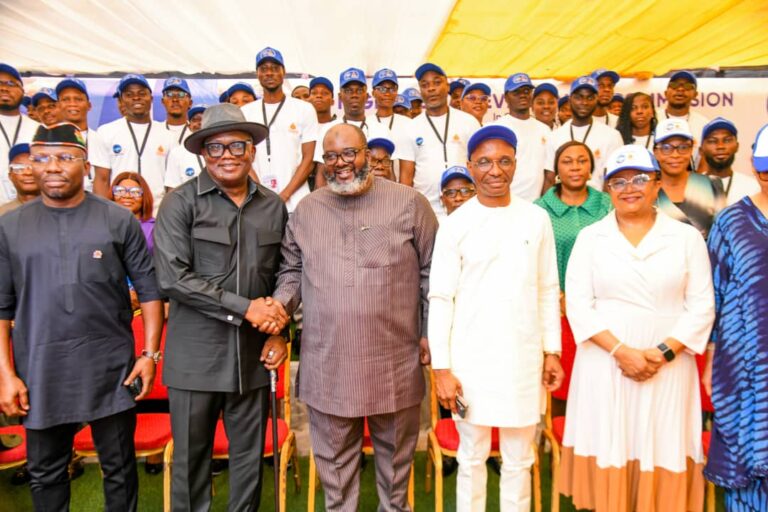
The Niger Delta Development Commission (NDDC) has commenced a six-week capacity-building programme for 400 youths across the Niger Delta region, focusing on Compressed Natural Gas (CNG) autogas conversion as part of efforts to position the region at the forefront of Nigeria’s evolving energy landscape.

Flagging off the initiative at the Dakkada Skills Acquisition Centre, the Managing Director of NDDC, Dr Samuel Ogbuku, described the training as a strategic investment in human capital and a deliberate response to the growing demand for technical expertise in CNG vehicle conversion.

Ogbuku, who was represented by the Commission’s Executive Director, Projects, Dr Victor Antai, said the programme would run in two batches of three weeks each, with participants receiving hands-on training in CNG vehicle conversion, system maintenance and safety standards in line with global best practices.

He noted that CNG presents a cleaner, safer and more cost-effective alternative to conventional fuels, adding that the increasing adoption of CNG-powered vehicles nationwide has created a robust market for skilled technicians.

According to him, beyond deepening technical capacity, the programme is designed to tackle youth unemployment, stimulate entrepreneurship, promote environmental sustainability and unlock fresh economic opportunities within the Niger Delta.

He urged beneficiaries to approach the training with discipline and commitment, warning against the sale of starter packs to be distributed at the end of the programme.

Director of Commercial and Industrial Development at the Commission, Mrs Lyna Okara, confirmed that 400 participants were selected and would undergo training in two batches over the six-week period. She encouraged the trainees to maximise the opportunity and remain focused throughout the programme.

In his remarks, a representative of the Presidential Initiative on Compressed Natural Gas (PI-CNG), Mr Olayinka Rufai, commended the Commission for aligning with the Federal Government’s clean energy agenda. He described the training as forward-looking and pivotal to advancing CNG adoption in the region.

Also speaking, the Akwa Ibom State representative on the NDDC Board, Apostle Abasiandikan Nkono, advised the youths to leverage the skills acquired rather than constantly seeking new training schemes, noting that CNG conversion presents vast and sustainable economic prospects.

Head Trainer at Viedenburg Energy Resources, Mr Saidu Hamdullahi, charged participants to take full advantage of the programme to prepare for emerging opportunities within the energy sector.

The initiative underscores the Commission’s broader commitment to empowering young people with market-relevant skills while supporting Nigeria’s transition to cleaner energy solutions.

Microbiologists Chart New Course As NSM Inaugurates South-South Zonal Executive

0

The Nigerian Society for Microbiology (NSM) has strengthened its regional footprint with the inauguration of the executive members of its South-South Zonal Chapter, tasking them with championing the pivotal role of microbiologists in national development.

At a virtual inaugural meeting held on February 15, the National President of NSM, Prof. S. A. Ado, formally ushered in the new leadership team, describing the chapter’s take-off as both strategic and long overdue for a region of immense ecological and economic importance.

Professor S.A. Ado

The newly appointed executive members are Professor Nedie P. Akani as Zonal Coordinator (Rivers State University), Dr. Anwuli U. Osadebe as Zonal Secretary (University of Port Harcourt), Dr. Tonye Sampson as Treasurer/Financial Secretary (Rivers State University), and Prof. Elijah Ohimain as Public Relations Officer (Niger Delta University, Amassoma, Bayelsa State).

In his welcome remarks, Ado congratulated the team and pledged the full backing of the National Executive Council (NEC), commending the swift coordination that culminated in the chapter’s inauguration.

He urged the executives to prioritise unity and professional mobilisation across the vast South-South region, noting that effective organisation would be critical to achieving impact.

Professor Nedie Akani

Echoing this position, the National Secretary, Prof. Sunday Awe, and the National Business Manager, Prof. C. J. Ogugbue, reaffirmed NEC’s support and underscored the weight of responsibility before the new zonal leadership.

They acknowledged the geographic spread and diversity of the zone but expressed confidence in the capacity of the coordinator to provide purposeful leadership.

Ogugbue, in particular, highlighted the multidisciplinary scope of microbiology and its growing relevance in pollution control, environmental remediation, biodiversity conservation, agricultural productivity, coastal ecosystem protection and the development of a sustainable blue economy.

He stressed that the South-South chapter must serve as a hub of scientific leadership, given the region’s environmental sensitivities and economic assets.

In her inaugural address, the Zonal Coordinator, Prof. Nedie Patience Akani, described the formal launch of the chapter as “a dream come true” for microbiologists in the region who had long anticipated a structured platform for collaboration and professional advancement.

Akani said the new executive was fully aware of its mandate and committed to repositioning microbiology as a driver of innovation and problem-solving in the South-South.

According to her, the chapter will focus on mobilising practitioners to register with the society and participate actively in its programmes, ensuring timely payment of dues, organising annual symposia and workshops, appointing state representatives, and maintaining regular reporting to the NEC.

She emphasised that beyond administrative coordination, the executive would work to amplify the voice of microbiologists in addressing regional challenges, particularly in environmental management and sustainable development.

“We are committed to serving the society and advancing microbiology in the South-South zone,” she said, expressing appreciation to the national leadership for its trust and for enabling the inauguration to hold virtually.

With the new executive now in place, stakeholders say the South-South Zonal Chapter is poised to galvanise professionals across the region and deepen the impact of microbiological research and practice in shaping public health, environmental sustainability and economic resilience.

Historic Rally Lifts NGX Market Cap Above N122trn …Investors Gain N5.1trn In One Day

0

The Nigerian equities market began the week on a resounding bullish note on Monday, as investors recorded a historic gain of N5.103 trillion in a single trading session, pushing total market capitalisation beyond the N122 trillion mark.

At the close of trading, the benchmark All-Share Index (ASI) of the Nigerian Exchange Limited surged by 7,949.36 basis points, representing a 4.36 per cent increase to settle at 190,262.44 points.

Correspondingly, market capitalisation rose by N5.103 trillion to close at N122.130 trillion, underscoring renewed investor appetite for equities.

The rally was largely driven by strong gains in medium and large capitalised stocks, notably Nestle Nigeria, Presco, Aradel Holdings, Dangote Cement and MTN Nigeria Communications.

Imperial Asset Managers Limited attributed the surge to sustained demand for heavyweight stocks, stating that following the 4.36 per cent jump, bullish momentum is expected to persist in the near term, buoyed by strong investor appetite.

Similarly, Coronation Asset Management projected cautious optimism in the sessions ahead, as investors await additional full-year earnings releases and dividend declarations.

The firm noted that market direction would likely hinge on earnings surprises, dividend yields and sector-specific developments, with selective positioning in fundamentally sound counters.

Market breadth closed firmly positive, with 54 gainers against 28 decliners.

Among the top performers were ABC Transport, Beta Glass, Ikeja Hotels, McNichols, Oando, Jaiz Bank, Aradel Holdings and Zichis Agro Allied Industries, which recorded the maximum 10 per cent appreciation to close at N8.25, N453.20, N41.80, N8.47, N44.00, N9.13, N1,096.70 and N111.88 per share, respectively.
MTN Nigeria gained 9.99 per cent to close at N779.70, while AXA Mansard Insurance rose by 9.97 per cent to N16.99 per share.

On the losers’ chart, R.T. Briscoe led with a 9.99 per cent decline to close at N15.68 per share. DEAP Capital Management & Trust shed 9.91 per cent to N7.64, while Caverton Offshore Support Group fell 9.62 per cent to N7.05 per share.

Guinea Insurance dropped 9.27 per cent to N1.37, and Tantalizers declined by 8.11 per cent to close at N5.10 per share.

Trading activity also strengthened, with total volume rising by 13.46 per cent to 1.076 billion units valued at N64.026 billion across 64,821 deals.

Access Holdings led the activity chart with 86.725 million shares worth N2.259 billion. Oando followed with 73.496 million shares valued at N3.186 billion, while Zenith Bank recorded 69.281 million shares traded at N5.934 billion.

Mutual Benefits Assurance transacted 67.101 million shares valued at N289.113 million, while Japaul Gold & Ventures accounted for 49.172 million shares worth N135.594 million.

Buguma Chiefs Drag Ekine Sekiapu Society To Court Over 2026 Owu Aru Suun Festival

0

A fresh leadership crisis has erupted in Buguma City, Asari-Toru Local Government Area of Rivers State, as the Buguma Council of Chiefs has dragged leaders of the Kalabari Ekine Sekiapu Society to court over the planned 2026 Owu Aru Suun Festival.

In a suit filed at the Rivers State High Court, Degema Judicial Division, the claimants—led by the Regent of Kalabari Kingdom and Buguma City, HRH Dr. Alabo Charles I.T. Numbere Princewill Amachree, alongside other chiefs—are seeking declaratory and injunctive reliefs against officials of the Kalabari Ekine Sekiapu Society.

The suit centres on allegations that the defendants fixed dates and commenced preparations for the 2026 Owu Aru Suun Festival without the approval of the Buguma Council of Chiefs, contrary to Kalabari native law and custom.

Dispute over authority, sacred sites
The claimants contend that under Kalabari customary law, the Buguma Council of Chiefs, under the Amanyanabo—currently represented by a Regent—has exclusive authority to approve, regulate and supervise all town-wide traditional festivals, including Owu Aru Suun.

They argue that the defendants unlawfully engaged town criers to announce festival schedules across Buguma and issued directives to Polo (compounds), War Canoe Houses and masquerade owners without first obtaining clearance from the Council.

Particularly contentious is the proposed use of King Amachree Square (Buguma Town Square), King Amachree Road (Buguma Main Road) and King Abbi Jetty for the festival.

According to the statement of claim, King Amachree Square is adorned with tombs and statues of past kings and ancestors of the Kalabari Kingdom, which the claimants described as sacred artefacts of deep spiritual significance. They maintain that the square, annexed to King Amachree Hall—the assembly hall of the Council—can only be used for events with express approval of the Council of Chiefs.

The claimants further argue that after any use of the square for masquerade displays, spiritual cleansing rites must be performed by the Amanyanabo-in-Council, a process they say is “beyond monetary value.”
Customary prescriptions in contention.

At the heart of the dispute is the Owu Aru Suun Festival, described as a decadal masquerade celebration during which all Polo, compounds, chiefdoms and War Canoe Houses feature their traditional masquerades.

The claimants aver that such a festival involves sweeping cultural prescriptions affecting the entire town, including directives on approved attire, menu restrictions—such as bans on certain foods—and movement regulations.

They insist that only the Buguma Council of Chiefs has the customary prerogative to issue such directives and to authorise the use of town criers for public announcements.

According to court filings, the defendants allegedly announced that burials would not hold in Buguma between March 9 and March 14, 2026, and directed masquerade owners to prepare for participation, warning that failure to do so could result in forfeiture of their masquerades to the society.

The claimants describe these actions as “reckless,” alleging that the defendants sidelined the Amanyanabo-in-Council and ignored repeated advice to follow due process.

Reliefs sought
Among other reliefs, the claimants are asking the court for:

A declaration that fixing dates and proclaiming the 2026 Owu Aru Suun Festival without Council approval amounts to gross interference with their customary powers, a declaration that any traditional prescriptions issued without such approval are unlawful, null and void.

The Claimants are also seeking an order nullifying all schedules, advertisements, directives and arrangements made in relation to the festival, and a perpetual injunction restraining the defendants from proceeding with the festival without complying with Kalabari native law and custom.

The claimants warned that unless the court intervenes, the defendants may proceed with the festival, exposing the community to “colossal losses and damages far beyond monetary evaluation” and risking unrest.

No hearing date has yet been publicly announced, but the suit sets the stage for a legal showdown that could redefine the balance of traditional authority in Buguma and the wider Kalabari Kingdom.

NDDC Inaugurates Procurement, Contract Review Panels to Tackle Abandoned Projects

0

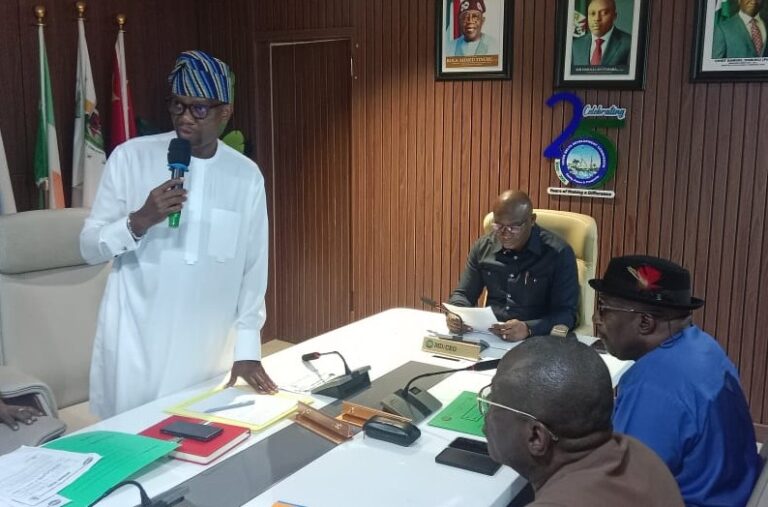
The Managing Director of the Niger Delta Development Commission, Dr. Samuel Ogbuku, has inaugurated a seven-member Procurement Committee in line with the Public Procurement Act, 2007, alongside a Contract Review Committee to address abandoned projects across the Niger Delta.

The inauguration, held at the Commission’s headquarters in Port Harcourt, signals what Ogbuku described as a renewed commitment to transparency, accountability and strict compliance with regulatory standards.

He stressed the need for adherence to the directives of the Bureau of Public Procurement (BPP), noting that the constitution of the Procurement Committee is an annual statutory requirement aimed at strengthening checks and balances in the Commission’s procurement processes.

“It is very important that we comply with the directives of the Bureau of Public Procurement. This committee has been given a specified timeframe to ensure that our 2026 procurement plan is executed without delay.

Every directorate is expected to cooperate fully with the committee to make their work easier and more effective,” Ogbuku said.

He charged members to strictly comply with the provisions of the Procurement Act and ensure that all procurement lists for 2026 are compiled and ready for implementation within the stipulated period.

In his remarks, the Director of Procurement, Dr. Chuks Osuji, commended the Managing Director for setting up the committee and urged members to prioritise the timely upload of the 2026 procurement plan on the National Contractors’ Portal.

“The essence of uploading our procurement plan is to ensure smooth regulatory approval. Let us all work together to capture every detail of the 2026 procurement plan,” Osuji stated, noting that compliance is critical to securing BPP approvals.

Eight-week deadline on abandoned projects
In a related move, Ogbuku also inaugurated the Commission’s Contract Review Committee, tasking it with identifying and reviewing abandoned projects across the nine Niger Delta states.

He directed the committee to embark on field visits to assess the status of previously awarded contracts, determine challenges facing contractors and recommend appropriate actions, including completion, review, termination or re-award where necessary.

According to him, the exercise aligns with the development agenda of President Bola Tinubu’s administration and is aimed at ensuring that all parts of the region feel the Commission’s presence.

“Many communities are complaining about abandoned projects. These projects must be reviewed. We need to determine their status, understand the challenges contractors are facing and take decisive measures to ensure the work is done,” he said.

Ogbuku gave the committee eight weeks to complete its assignment and submit its report.
Responding on behalf of the committee, the NDDC Director of Project Monitoring and Supervision, Engr. Gbenga Omowale, thanked the Managing Director for the confidence reposed in them and pledged that the committee would carry out its mandate diligently within the stipulated timeframe.

The twin inaugurations underscore the Commission’s effort to tighten procurement procedures and accelerate the completion of long-stalled projects in the oil-rich region.

U.S. Sanctions Eight Nigerians Over Alleged Terror Financing, Cybercrime Links

0

The United States has imposed sweeping sanctions on eight Nigerians accused of having ties to terrorist organisations, including Boko Haram and the Islamic State of Iraq and the Levant (ISIL), as well as involvement in cybercrime-related activities.

The measures were announced on February 10 by the United States Department of the Treasury through its Office of Foreign Assets Control (OFAC), as part of a 3,000-page update to the Specially Designated Nationals and Blocked Persons (SDN) List.

OFAC said the publication provides formal notice that the property and interests in property of designated individuals within US jurisdiction are blocked under American law pursuant to counter-terrorism and related sanctions programmes.

“This publication of Treasury’s Office of Foreign Assets Control is designed as a reference tool providing actual notice of actions by OFAC with respect to Specially Designated Nationals and other persons… whose property is blocked, to assist the public in complying with the various sanctions programmes administered by OFAC,” the agency stated.

Those listed
Among the U.S. Sanctions Eight Nigerians Over Alleged Terror Financing, Cybercrime Links
The United States has imposed sweeping sanctions on eight Nigerians accused of having ties to terrorist organisations, including Boko Haram and the Islamic State of Iraq and the Levant (ISIL), as well as involvement in cybercrime-related activities.

The measures were announced on February 10 by the United States Department of the Treasury through its Office of Foreign Assets Control (OFAC), as part of a 3,000-page update to the Specially Designated Nationals and Blocked Persons (SDN) List.

OFAC said the publication provides formal notice that the property and interests in property of designated individuals within US jurisdiction are blocked under American law pursuant to counter-terrorism and related sanctions programmes.

“This publication of Treasury’s Office of Foreign Assets Control is designed as a reference tool providing actual notice of actions by OFAC with respect to Specially Designated Nationals and other persons… whose property is blocked, to assist the public in complying with the various sanctions programmes administered by OFAC,” the agency stated.

Those listed
Among the designated individuals is Salih Yusuf Adamu, also known as Salihu Yusuf, identified as having links to Boko Haram. He was among six Nigerians convicted in the United Arab Emirates in 2022 for establishing a Boko Haram cell to channel funds to insurgents in Nigeria. The group was found guilty of attempting to transfer $782,000 from Dubai to Nigeria.

Babestan Oluwole Ademulero was listed under terrorism-related sanctions and identified under multiple aliases.
Also named was Abu Abdullah ibn Umar Al-Barnawi, reportedly born in Maiduguri, Borno State, and flagged under terrorism-related sanctions.

Abu Musab Al-Barnawi, identified as a Boko Haram leader, was included in the designation.

Khaled (or Khalid) Al-Barnawi, born in Maiduguri, appeared twice in the publication under several aliases.
Ibrahim Ali Alhassan, identified as holding a Nigerian passport and reportedly residing in Abu Dhabi, was also linked to Boko Haram.

Abu Bakr ibn Muhammad ibn Ali Al-Mainuki was designated for alleged ties to ISIL.

Nnamdi Orson Benson was listed under CYBER2 sanctions, targeting individuals accused of significant malicious cyber-enabled activities.
Sanctions implications
Under the sanctions, all property and interests in property of the listed individuals within US jurisdiction are frozen. US persons are generally prohibited from engaging in transactions with them.
The measures were issued pursuant to Executive Order 13224, which authorises action against individuals and entities involved in terrorism and terrorism financing.

The US designated Boko Haram a Foreign Terrorist Organisation in 2013. According to the US State Department, the group has carried out deadly attacks in northern and northeastern Nigeria and across parts of Cameroon, Chad and Niger within the Lake Chad Basin, resulting in thousands of deaths since 2009.

Broader diplomatic context
The latest action follows recommendations by some members of the US Congress calling for visa bans and asset freezes on certain Nigerian individuals and groups over alleged violations of religious freedom.

Among those reportedly recommended were former Kano State governor, Rabiu Kwankwaso, as well as the Miyetti Allah Cattle Breeders Association of Nigeria and Miyetti Allah Kautal Hore. However, their names did not appear on the February 10 OFAC sanctions list.

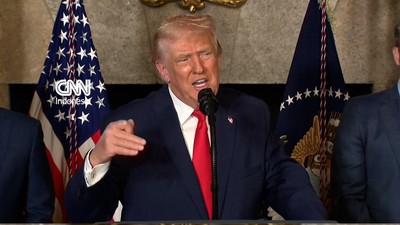
In October 2025, US President Donald Trump announced that Nigeria would be added to the US State Department’s religious freedom watchlist, alleging persecution of Christians.
Nigeria had earlier been designated a “Country of Particular Concern” in 2020 under Trump, a classification later removed by his successor, Joe Biden, shortly after taking office.

The sanctions underscore Washington’s sustained efforts to disrupt terrorism financing networks and curb cyber-enabled threats linked to extremist groups, even as diplomatic tensions over religious freedom and security concerns persist. as Salihu Yusuf, identified as having links to Boko Haram. He was among six Nigerians convicted in the United Arab Emirates in 2022 for establishing a Boko Haram cell to channel funds to insurgents in Nigeria. The group was found guilty of attempting to transfer $782,000 from Dubai to Nigeria.

Babestan Oluwole Ademulero was listed under terrorism-related sanctions and identified under multiple aliases.

Also named was Abu Abdullah ibn Umar Al-Barnawi, reportedly born in Maiduguri, Borno State, and flagged under terrorism-related sanctions.

Abu Musab Al-Barnawi, identified as a Boko Haram leader, was included in the designation.

Khaled (or Khalid) Al-Barnawi, born in Maiduguri, appeared twice in the publication under several aliases.

Ibrahim Ali Alhassan, identified as holding a Nigerian passport and reportedly residing in Abu Dhabi, was also linked to Boko Haram.
Abu Bakr ibn Muhammad ibn Ali Al-Mainuki was designated for alleged ties to ISIL.

Nnamdi Orson Benson was listed under CYBER2 sanctions, targeting individuals accused of significant malicious cyber-enabled activities.

Sanctions implications
Under the sanctions, all property and interests in property of the listed individuals within US jurisdiction are frozen. US persons are generally prohibited from engaging in transactions with them.

The measures were issued pursuant to Executive Order 13224, which authorises action against individuals and entities involved in terrorism and terrorism financing.
The US designated Boko Haram a Foreign Terrorist Organisation in 2013.

According to the US State Department, the group has carried out deadly attacks in northern and northeastern Nigeria and across parts of Cameroon, Chad and Niger within the Lake Chad Basin, resulting in thousands of deaths since 2009.

Broader diplomatic context
The latest action follows recommendations by some members of the US Congress calling for visa bans and asset freezes on certain Nigerian individuals and groups over alleged violations of religious freedom.

Among those reportedly recommended were former Kano State governor, Rabiu Kwankwaso, as well as the Miyetti Allah Cattle Breeders Association of Nigeria and Miyetti Allah Kautal Hore. However, their names did not appear on the February 10 OFAC sanctions list.

In October 2025, US President Donald Trump announced that Nigeria would be added to the US State Department’s religious freedom watchlist, alleging persecution of Christians.
Nigeria had earlier been designated a “Country of Particular Concern” in 2020 under Trump, a classification later removed by his successor, Joe Biden, shortly after taking office.

The sanctions underscore Washington’s sustained efforts to disrupt terrorism financing networks and curb cyber-enabled threats linked to extremist groups, even as diplomatic tensions over religious freedom and security concerns persist.


FG Arraigns El-Rufai Over Alleged Phone Interception As Protests Rock EFCC Headquarters

0

The Federal Government has filed criminal charges against former Kaduna State governor, Nasir El-Rufai, over alleged unlawful interception of the communications of the National Security Adviser, Nuhu Ribadu.

The charges, marked FHC/ABJ/CR/99/2026, were instituted before the Federal High Court, Abuja Judicial Division, with the Federal Republic of Nigeria listed as complainant and El-Rufai as defendant.

According to court documents, the prosecution alleged that on February 13, 2026, while featuring on Arise TV’s Prime Time programme in Abuja, El-Rufai admitted that he and others unlawfully intercepted the telephone communications of Ribadu.

In count one, the Federal Government contends that the alleged admission constitutes an offence contrary to and punishable under Section 12(1) of the Cybercrimes (Prohibition, Prevention, etc.) Amendment Act, 2024.

Count two alleges that during the same interview, El-Rufai acknowledged knowing and associating with individuals involved in the unlawful interception but failed to report them to the appropriate authorities, contrary to Section 27(b) of the Cybercrimes Amendment Act, 2024.

The third count accuses the former governor and others said to be at large of using technical equipment or systems in Abuja in 2026 to unlawfully intercept the National Security Adviser’s communications, an act the prosecution claims compromised public safety and national security. The charge is said to contravene Section 131(2) of the Nigerian Communications Act, 2003.

As of press time, no date had been fixed for his arraignment.

Protests trail EFCC invitation

Meanwhile, tension mounted at the headquarters of the Economic and Financial Crimes Commission in Abuja on Monday as supporters and critics of El-Rufai staged protests over his appearance before the anti-graft agency.

The demonstrators, who gathered at the commission’s Jabi office, were sharply divided. While one group chanted solidarity slogans in support of the former governor, another demanded that the commission subject him to a thorough investigation.
Witnesses described the atmosphere as tense but largely peaceful, with security personnel maintaining a heavy presence around the premises.

There was mild drama when security operatives reportedly barred some members of El-Rufai’s entourage from gaining access to the facility.

El-Rufai was said to have honoured an invitation by the commission days after his legal team confirmed that he would make himself available to investigators, following what aides described as a failed attempt to arrest him at the Nnamdi Azikiwe International Airport last Thursday.

The former governor subsequently entered the EFCC premises as protesters continued their demonstrations outside the gate, underscoring the political and legal storm surrounding the unfolding case.

Court Halts NNPCL-Linked Pipeline Demolitions In Bonny, Adjourns To Feb 24

0

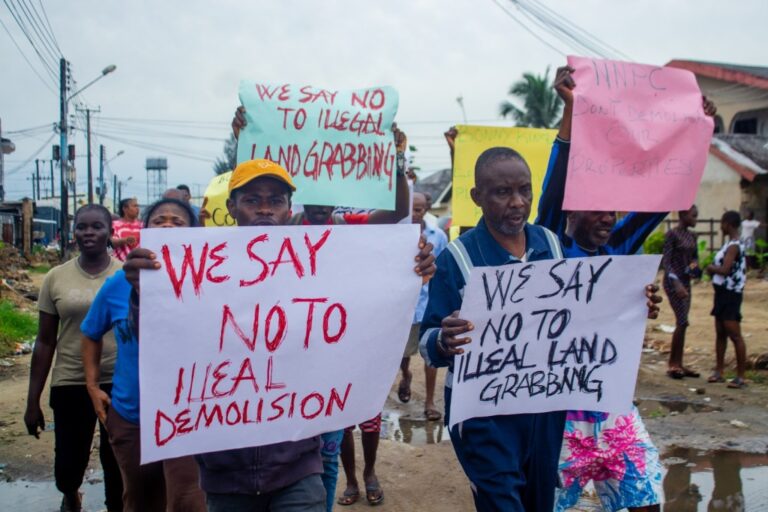
A Rivers State High Court sitting in Port Harcourt has restrained four energy firms from continuing demolition of properties in Ntamoku Ayambo Pipeline Estate, Bonny Local Government Area of Rivers State.

In an ex parte order delivered on Friday, February 13, 2026, Justice Rita Oguguo, presiding over Suit No. BYHC/17/CS/2026, barred Renaissance Africa Energy Company Limited, NNPC Exploration and Production Limited, WAGL Energy Limited and Kristal Polis Limited from taking further steps to demolish structures in the disputed estate pending the hearing and determination of a Motion on Notice.

The 45 claimants in the suit, residents of Ntamoku Ayambo Pipeline Estate, are suing on behalf of themselves, their families and other affected occupants of the community.

After hearing submissions by counsel to the claimants, Chief Eugene Odey, the court granted an interim injunction restraining the defendants and their agents from further demolition of the claimants’ landed properties situated at Shell Pipeline Community in Bonny.

“It is hereby ordered that an interim injunction be issued restraining the Defendants/Respondents or their agents from taking further steps in the demolition of the Claimants’ landed property… pending the hearing and determination of the Motion on Notice,” the court held.

Justice Oguguo subsequently adjourned the matter to Tuesday, February 24, 2026, for hearing of the Motion on Notice.

The court also granted leave for the claimants to serve the writ of summons and other processes outside its jurisdiction, including through substituted means.

Specifically, the order permits service on NEPL in Benin City, Edo State, and on WAGL Energy Limited in Maitama, Abuja, as well as service on relevant respondents through courier delivery to their headquarters.

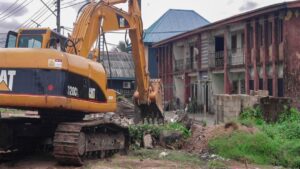
The ruling follows protests that erupted on February 10, 2026, when residents said they woke up to heavy-duty equipment demolishing structures in the estate. Officials of Kristal Polis Limited allegedly directed occupants to vacate their homes on or before February 13.

A survey plan sighted by reporters, registered as Plan No. ESP/3585 with the former Bonny/Degema Province, indicates that the pipeline in contention runs from the rear of Orupiri Community, crosses Admiralty Creek into Ogbokoro Ayambo, extends to Ayambo Main Community and terminates at Ntamoku Ayambo, where the demolitions were underway before the court’s intervention.

Community sources claim that the exercise had already displaced thousands of residents, including an estimated 5,000 children, 3,000 women, 1,000 elderly persons and other vulnerable groups such as persons living with disabilities and the unemployed.

With the interim order now in place, further demolition activities are suspended pending the court’s determination of the substantive issues raised in the suit.

Coalition: Global Security Threats Demand Nigeria–U.S. Strategic Defence Alliance -Group

0

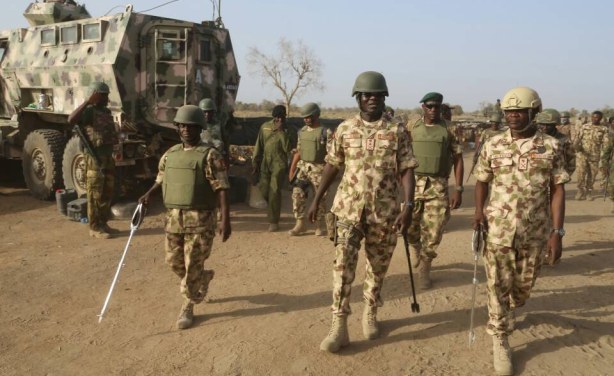
A pro-security advocacy coalition, the Citizens for Strategic Defence Cooperation (CSDC), has thrown its weight behind the Federal Government’s decision to deepen military collaboration with the United States Armed Forces, insisting that Nigeria’s sovereignty remains fully intact.

In a statement issued on Sunday in Abuja, the group described the arrangement as a “measured and strategic partnership” designed to strengthen Nigeria’s fight against terrorism, insurgency and transnational crime.

According to the coalition, public debate surrounding the presence of U.S. military personnel in Nigeria should be guided by facts rather than emotion.

“Our sovereignty is not for sale, and it has not been compromised,” the statement signed by CSDC Secretary, Abdulmajid Danladi read.

“The Armed Forces of Nigeria remain in full operational control of all security activities within our territory. Any cooperation with foreign partners is structured, limited and governed by Nigerian law.”

The group stressed that Nigeria has long maintained defence partnerships with friendly nations, particularly in areas of training, intelligence sharing and capacity building. It argued that the evolving security landscape—marked by terrorism, banditry, piracy and cyber threats—requires collaborative responses.

CSDC said enhanced cooperation with the United States Department of Defense would provide access to advanced training, intelligence technology and operational best practices.

“Modern warfare is technology-driven. Intelligence gathering, surveillance and counter-terror strategies are globalised. Refusing to cooperate with international allies would isolate Nigeria at a time when collaboration is essential,” the group noted.

The coalition commended the leadership of the Nigerian Armed Forces led by the Chief of Defence Staff General Olufemi Oluyede for what it described as a “forward-looking decision,” adding that the partnership aligns with Nigeria’s long-standing diplomatic and security relations with the United States.

It further emphasised that the presence of foreign military personnel—where applicable—does not equate to foreign control.

“There is a clear difference between cooperation and occupation,” the statement added. “Nigeria is not hosting foreign bases that override its authority. What exists is structured engagement designed to improve the capabilities of our own troops.”

CSDC urged Nigerians to view the development through the lens of national interest rather than partisan politics.

“Our troops deserve every legitimate advantage in confronting violent threats. If collaboration with experienced global partners enhances their safety and effectiveness, then it is a responsible step,” the group said.

The coalition also called on the government to maintain transparency and ensure that all defence partnerships remain consistent with constitutional provisions and Nigeria’s foreign policy principles.

NNPCL Right-of-Way: Ayambo Community Demands Fresh Assessment, Fair Compensation

0

The Chairman of Ayambo Community in Bonny Local Government Area of Rivers State, Warisenibo Godswill Jumbo, has called for an immediate re-evaluation of structures affected by the ongoing right-of-way demolition linked to the Nigerian National Petroleum Company Limited, insisting that justice and equity must prevail.

Speaking with reporters on Thursday, February 12, 2026, at his residence in Ayambo, Jumbo expressed concern over what he described as discrepancies between the information initially provided by company officials and the realities on ground.

According to him, representatives of the company had earlier briefed him on specific demolition dimensions along the pipeline corridor, but subsequent findings by a community surveillance team revealed a significantly expanded scope.

“What they told me when they visited is different from what my surveillance team reports they are now doing. You cannot agree on five metres, 10 metres or even three metres, and later return to say it is 25 metres or any other figure,” he said.

Jumbo maintained that he would not condone injustice against members of his community, particularly where livelihoods and homes are concerned.

“Everyone who knows me understands that I do not pander to injustice, especially when it affects my people. I am calling on them to go back, conduct a new assessment and pay the people what they are legitimately entitled to,” he added.

While acknowledging the existence of pipelines and their legally designated right-of-way in the area, the community leader urged affected residents to vacate the corridor in the interest of safety — but only after a transparent reassessment and proper compensation.

“We are aware of the dangers of living along the right of way and I advise those affected to vacate for their own safety. But the right thing must be done,” he said.

He further blamed what he termed “greedy and selfish land speculators” for selling parcels of land within the restricted corridor to unsuspecting buyers, despite longstanding community warnings.

“That place is called pipeline for a reason. It has pipelines, and nobody is supposed to build or live on top of them. We have consistently warned our people to avoid that area,” Jumbo stated, while appealing to those who have erected structures there to relocate.

Tension escalated in the community on Tuesday, February 10, 2026, as residents protested the sudden demolition of properties by Kristal Polis Limited, a contractor to WAGL Energy Limited, which in turn is engaged by NNPC Exploration and Production Limited — a subsidiary of the Nigerian National Petroleum Company Limited.

Several residents alleged that they were misled into signing documents in Port Harcourt under the pretext that payments made to them were to facilitate minor fence adjustments away from the pipeline corridor. They claimed the same payments are now being presented as full compensation for their properties.

The unfolding dispute has heightened concerns over transparency, community engagement and adherence to due process in the execution of pipeline right-of-way enforcement projects in the oil-rich region.