

Home Blog Page 60

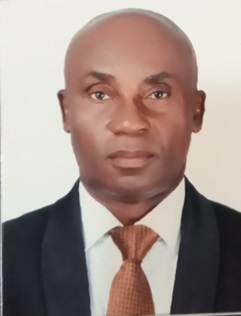
Beyond Corruption: Rivers University Don Exposes Accounting–Finance Roots Of Governance Failure

1

Nigeria must reconstruct its governance architecture by first rebuilding the accounting and financial foundations upon which it stands, Professor ThankGod Chikordi Agwor has declared.

Delivering the 126th Inaugural Lecture of Rivers State University, Port Harcourt, on Wednesday, the Professor of Accounting and Finance argued that the country cannot move from “managing failure” to governing for development, equity and public trust without restoring discipline to its financial systems.

The lecture, themed “Failure of Governance and Governance of Failure in Nigeria: Unveiling the Accounting–Finance Nexus,” examined what the scholar described as the systemic fragility embedded within Nigeria’s governance structure.

Agwor maintained that accounting and finance are not peripheral technical tools but the very infrastructure of governance.

“Where they are strong, governance is resilient. Where they are weak, governance fails — and failure becomes governed,” he said.

According to him, Nigeria’s governance crisis reflects not only institutional weakness but a deeper structural distortion within the accounting–finance nexus. He described the phenomenon as the “governance of failure” — a condition in which institutional arrangements do not merely tolerate dysfunction but actively manage, rationalise and reproduce it.

“Nigeria exhibits a more troubling phenomenon: the governance of failure. This refers to institutional arrangements and practices that do not merely tolerate failure but actively manage, rationalise and produce it,” he stated.

Despite its abundant natural and human resources, Nigeria, he noted, continues to struggle with institutional inefficiencies, entrenched corruption and declining public trust. While leadership failure, corruption and weak political will are frequently cited as explanations, Agwor argued that such narratives often obscure the deeper challenge of informational asymmetry and financial opacity.
“Without credible accounting data and enforceable financial discipline, governance becomes performative rather than substantive,” he said.

The inaugural lecturer pointed to troubling empirical patterns: recurrent fiscal deficits without credible fiscal discipline; repeated banking crises followed by regulatory forbearance; public enterprises sustained despite chronic losses; and audit reports that reveal irregularities without sanctions.

“These patterns suggest that failure itself has become institutionalised — rendered predictable, administratively manageable and politically survivable,” he observed.

He further explained that weak enforcement environments have produced what he described as a governance equilibrium that perpetuates failure. Public and civil servants, he argued, have rationally adapted to these conditions, sustained in part by predictable financial incentives that reward compliance with dysfunction rather than reform. “The result is a governance equilibrium that perpetuates failure.

Breaking this equilibrium requires restoring accounting and finance to their disciplinary roles,” he said.

Agwor warned that the normalisation of weak accounting practices — delayed audits, qualified audit opinions without consequences and routine budget deviations — represents the entrenchment of governance failure.

“This normalisation represents the governance of failure; a condition where governance systems adapt to dysfunction rather than correct it. Breaking this circle requires restoring accounting’s disciplinary role,” he advised.

Over the years, the scholar has advanced research bridging accounting, finance, governance and public policy, producing work that is empirically grounded, theoretically rigorous and socially relevant. His contributions, observers noted, have mentored scholars and practitioners who understand that accounting choices are not neutral technicalities but decisions that shape societal outcomes.

The lecture reinforced the argument that sustainable reform must go beyond rhetoric to institutional recalibration — placing transparency, credible financial reporting and enforceable fiscal discipline at the centre of governance reform.

For Agwor, the pathway forward is clear: rebuild accounting, restore financial integrity and reposition governance from managing failure to delivering development, equity and trust.

By Victoria Michael
Tinubu Approves Link Of Bonny–Bodo Road To East–West Highway, Orders Reconstruction Of Three Niger Roads

0

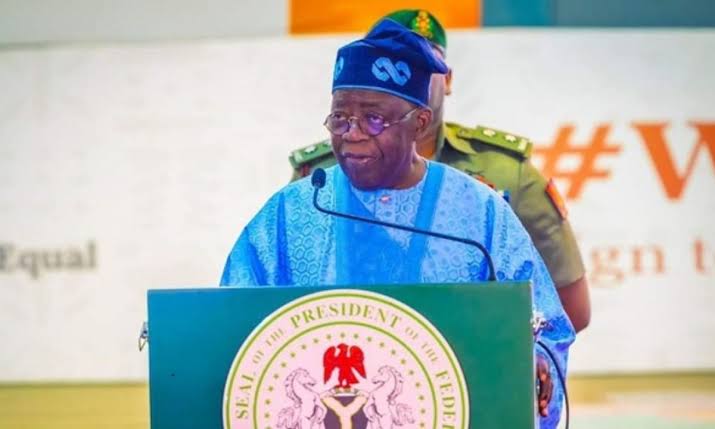
President Bola Tinubu has approved the extension of the Bonny–Bodo Road to link up with the strategic East–West Road, in what officials describe as a major boost to connectivity in the Niger Delta.

The President also sanctioned the immediate reconstruction of three key federal roads in Niger State.

The approvals were granted during a meeting with the Minister of Works, David Umahi.

Under the new directive, the Bonny–Bodo corridor in Rivers State will be extended to connect directly to the East–West Road. The project will be executed as a dual carriageway and constructed with reinforced concrete pavement to enhance durability. Solar-powered street lighting will also be installed along the stretch.

The linkage is expected to significantly ease transportation challenges, improve access to riverine communities, and strengthen economic activities across the oil-rich region.

In Niger State, the President approved the reconstruction of three major road corridors using reinforced concrete pavement to guarantee long-term value and resilience.

The projects include the 120-kilometre Mokwa–Bida Road, the 63-kilometre Mokwa–Makera Road, and the 123.5-kilometre Bida–Lambata Road.

Officials said the adoption of concrete technology reflects the administration’s commitment to building cost-effective and durable infrastructure nationwide.

Police Nab 113 Suspected Kidnappers In Edo Security Sweep

0

The Edo State Police Command has arrested no fewer than 113 suspected kidnappers during a coordinated security operation across strategic locations in the state.

In a statement issued on Thursday, the command’s spokesperson, Eno Ikoedem, said the arrests followed credible intelligence indicating that ransom proceeds from kidnapping operations were being discreetly received and coordinated at Zangos in Agbede and the Iruekpen axis.

The early morning raid was led by the Commissioner of Police, Monday Agbonika, who supervised a joint task force comprising operatives of the Nigeria Police Force, Nigerian Army, Nigeria Security and Civil Defence Corps (NSCDC), as well as local vigilantes and hunters.

“The precision raids yielded the arrest of a total of one hundred and thirteen (113) suspects. All suspects are currently undergoing thorough profiling to ascertain their level of involvement,” the statement said.
“Those found culpable will be made to face the full weight of the law.”

Agbonika described the command’s offensive against kidnapping networks as “relentless and uncompromising,” vowing to dismantle not only armed groups operating in forests but also their financial and logistical support structures.

He urged residents to remain vigilant and provide timely, credible information to security agencies, assuring that all intelligence received would be treated with strict confidentiality.

The commissioner further declared that the command remains proactive and battle-ready to safeguard lives and property, warning that there would be no hiding place for kidnappers or their collaborators in Edo State.

The arrests mark the latest in a series of operations targeting criminal elements in the state. On February 4, the Nigerian Army announced the arrest of 13 suspected kidnappers and drug traffickers in separate operations across Osara community in Etsako West Local Government Area, as well as Auchi and Okpella in Edo North Senatorial District, according to a statement by Kennedy Anyanwu, Assistant Director of Army Public Relations, 4 Brigade.

Fubara Warns New SSG, CoS Against Abuse Of Office, Secret Meetings

0

Governor Siminalayi Fubara has cautioned the newly appointed Secretary to the State Government (SSG), Dr Dagogo Wokoma, and Chief of Staff, Government House, Barrister Sunny Ewule, against abuse of office and participation in unauthorised or nocturnal political meetings.

The warning came on Thursday, February 26, 2026, during the swearing-in of the two officials in Port Harcourt, where the governor declared that he would not hesitate to dismiss any appointee whose actions embarrass his administration.

Fubara stressed that the appointments were neither political patronage nor avenues for personal aggrandisement, but strategic responsibilities aimed at strengthening governance and advancing the administration’s development agenda.

“This appointment is not for political empowerment. It is to help this administration succeed,” he said. “Any action capable of creating problems or embarrassing this government will attract sanctions.”

Addressing the new SSG, the governor said Wokoma’s academic and professional pedigree must reflect in objective, diligent and result-driven service. He urged him to ensure that both ongoing and inherited projects are completed in ways that guarantee sustainable development across Rivers State.

Speaking to the Chief of Staff, Fubara described the office as one that demands utmost loyalty, discipline and discretion, warning against holding meetings or engaging political actors without express approval.

“You work directly under me as my personal aide. If you begin to hold meetings or involve yourself in nocturnal political activities, I will sack you,” the governor warned.

Reaffirming that peace, progress and prosperity remain central to his administration, Fubara declared that acts of indiscipline or misconduct by public officials would no longer be tolerated.

While congratulating the appointees, he expressed confidence in their capacity to deliver, emphasising that loyalty, professionalism and teamwork are non-negotiable.

The governor also directed retired permanent secretaries to submit their handover notes without delay, disclosing that a review panel would be constituted to assess the offices of permanent secretaries as part of reforms to enhance efficiency and institutional growth.

He reiterated his commitment to collective governance, noting that enduring success can only be achieved through unity and shared responsibility.

“Success achieved collectively is unbreakable. Everyone must contribute their quota for us to make a lasting difference in Rivers State,” he said.

Senate Urges Tinubu To Sack CAC Registrar Over Finance Probe Snub

0

The Senate has urged President Bola Tinubu to remove the Registrar-General of the Corporate Affairs Commission (CAC), Hussaini Ishaq Magaji (SAN), over his alleged refusal to appear before lawmakers to account for the agency’s finances.

The resolution followed a session of the Senate Committee on Finance held in Abuja on Thursday, during which members accused the CAC chief of repeatedly ignoring invitations to clarify discrepancies in the commission’s revenue records.

Chairman of the committee, Senator Sani Musa, expressed dissatisfaction with what he described as Magaji’s persistent failure to honour summons issued by the panel.

“We have issues with the reconciliation of the revenue of CAC,” Musa said. “Each time we invite him, he gives us excuses. He has refused on so many occasions to honour our invitation to appear before this committee.”

The committee, citing its oversight responsibility, resolved to formally request presidential intervention, insisting that accountability and transparency in revenue-generating agencies must be upheld.

A member of the committee, Senator Orji Uzor Kalu, first raised the matter during deliberations, urging the committee to recommend Magaji’s removal from office to President Bola Tinubu.

According to Kalu, the alleged pattern of non-compliance amounted to disrespect for the Senate and undermined the oversight responsibilities of the National Assembly.

Another committee member, Senator Adams Oshiomhole, recommended that the Senate withhold approval of any budgetary allocation to the CAC in the 2026 Appropriation Act until the Registrar General personally appears before the committee.

Oshiomhole further suggested that the commission be barred from spending its Internally Generated Revenue (IGR) without obtaining prior approval from the National Assembly.

The committee endorsed the proposal, signalling a possible tightening of legislative scrutiny over the agency’s finances.

Lawmakers indicated that their primary concern revolves around unresolved questions relating to the CAC’s revenue profile and financial reconciliation.

Rivers: Peace Deal Gains Traction As Fubara Appoints New SSG, Chief of Staff

0

In a move widely seen as consolidating the recent peace accord in the state, Governor Siminalayi Fubara has approved the appointment of Dr. Dagogo S.A. Wokoma as Secretary to the State Government (SSG) and Barrister Sunny Ewule as Chief of Staff (CoS).

The appointments, which take immediate effect, are interpreted as part of ongoing efforts to stabilise the political climate and strengthen governance structures following the new peace deal in Rivers State.

The new appointees are scheduled to be sworn in at 2:00 p.m. today at the Executive Council Chamber of Government House, Port Harcourt.

Political observers note that the reconstitution of key positions within the Governor’s inner cabinet signals a deliberate step towards inclusiveness and administrative cohesion, in line with the spirit of reconciliation that has recently reshaped the state’s political landscape.

The announcement was conveyed in a statement signed by the Chief Press Secretary to the Governor, Onwuka Nzeshi, who affirmed that the appointments are aimed at reinforcing effective service delivery and sustaining the momentum of peace and governance in the state.

With the latest development, expectations are high that the new SSG and Chief of Staff will play pivotal roles in translating the gains of the peace accord into tangible dividends for the people.

Kabuowei Traditional Council Congratulates Bayelsa’s New Deputy Governor, Pledges Support

0

The Ebedaowei of Kabuowei Clan in Bayelsa State, King Hope Aserifa Torru, alongside members of the Kabuowei Traditional Council, has congratulated Hon. Dr. Peter Pereotubo Akpe on his inauguration as Deputy Governor of Bayelsa State.

Dr. Akpe was nominated by Governor Douye Diri and subsequently screened and confirmed by the Bayelsa State House of Assembly.

In a statement issued on behalf of the Ebedaowei and the Council, the traditional institution described Dr. Akpe’s emergence as a significant milestone in the Prosperity Government’s quest to deepen good governance and deliver on its mandate to the people.

The statement, signed by High Chief Freston Akpor, the Ozituaowei of Kabuowei Clan, extolled the new Deputy Governor’s record of service, strategic leadership acumen and commitment to transparency in public affairs, noting that these qualities distinguish him as eminently suited for the office.

King Torru and the Council further commended Governor Diri for what they termed a discerning choice, describing Dr. Akpe as disciplined, calm, resourceful and intellectually equipped to function effectively in his new capacity.

The traditional rulers offered prayers for wisdom, divine guidance and patience for the Deputy Governor as he assumes office, while reaffirming the unwavering support of the Kabuowei Clan for the policies and programmes of the Prosperity Government.

“We stand in full support of initiatives aimed at promoting our common good and collective progress,” the statement added.

New Police IG Vows Zero Tolerance For Corruption, Declares End to Impunity In Police Force

0

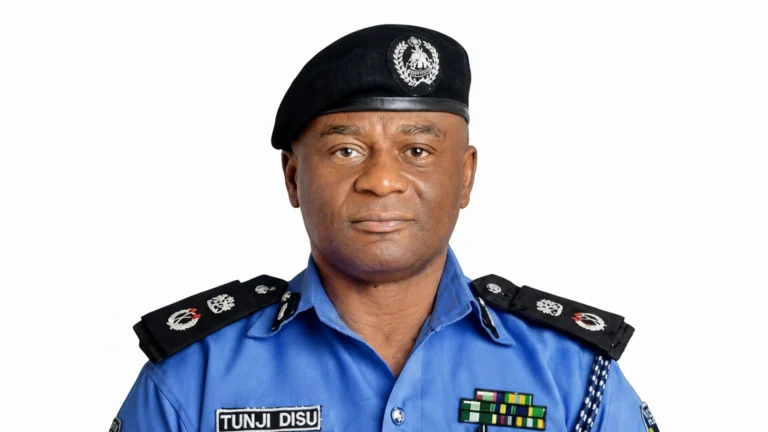
The newly appointed Acting Inspector-General of Police, Olatunji Disu, on Tuesday declared an end to impunity and unprofessional conduct within the Nigeria Police Force, pledging sweeping reforms anchored on discipline, accountability and respect for human rights.

Disu made the declaration shortly after his swearing-in by President Bola Tinubu at the Presidential Villa, Aso Rock, Abuja.

His appointment followed the resignation of his predecessor, Kayode Egbetokun, on Tuesday, February 24.

Addressing State House correspondents after the ceremony, Disu described his appointment as unexpected, revealing that the President’s detailed account of his service record deeply moved him.

“The way the President mentioned several activities about me — areas I have worked and successes I recorded as a policeman — brought emotion to me, almost to tears,” he said.

According to him, the President’s remarks amounted to a direct challenge to justify the confidence reposed in him by restoring peace and strengthening the image of the Force.

The Acting IGP stressed that under his leadership, abuse of office, corruption and misconduct would not be tolerated.

“I will let them know that the era of impunity is over,” he declared. “There will be zero tolerance for corruption. We will intensify training and ensure our officers uphold human rights in the discharge of their duties.”

He emphasised that effective policing cannot thrive without public trust and collaboration, noting that community cooperation would be central to his reform agenda.

“We can never succeed without the cooperation of members of the public,” he said, pledging to entrench professionalism and accountability across all ranks of the Force.

CBN Cuts Interest Rate To 26.50% After MPC Vote

0

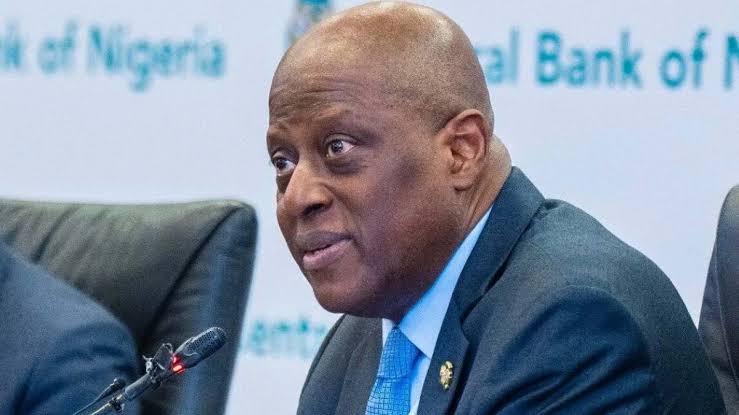
The Central Bank of Nigeria has reduced its benchmark interest rate by 50 basis points to 26.50 per cent, signalling a shift in its monetary stance amid easing inflationary pressures.

Governor Olayemi Cardoso announced the decision on Tuesday at a press briefing following the 304th meeting of the Monetary Policy Committee (MPC), stating that members unanimously agreed to lower the Monetary Policy Rate (MPR) from 27 per cent.

The committee retained the Cash Reserve Ratio (CRR) at 45 per cent for commercial banks and 16 per cent for merchant banks, while the 75 per cent CRR on non-Treasury Single Account (non-TSA) public sector deposits was also maintained.

Similarly, the liquidity ratio was left unchanged at 30 per cent. However, the standing facilities corridor was adjusted to +50/-450 basis points around the MPR.

“The committee decided to reduce the monetary policy rate by 50 basis points to 26.50 per cent,” Cardoso said.

At its November 2025 meeting, the MPC had held the rate at 27 per cent. The latest cut marks the first easing move since last year, reflecting the apex bank’s assessment of moderating price pressures.

Data from the Nigeria Bureau of Statistics show that inflation slowed to 15.10 per cent in January, reinforcing expectations of a gradual monetary recalibration.

Tinubu Removes Egbetokun, Appoints Disu As New IGP

0

President Bola Tinubu has removed the Inspector-General of Police, Kayode Egbetokun, from office and appointed Tunji Disu as his replacement.

Disu, an Assistant Inspector-General of Police (AIG), takes over the leadership of the Nigeria Police Force following a directive by the President ordering Egbetokun to resign.

Presidency sources indicated that the decision was conveyed to Egbetokun during a meeting at the Presidential Villa in Abuja on Monday.

Egbetokun was appointed the 22nd Inspector-General of Police by Tinubu on June 19, 2023, with his substantive appointment later confirmed by the Nigeria Police Council on October 31, 2023.

He assumed office at the age of 58 and was initially scheduled to retire on September 4, 2024, upon attaining the mandatory retirement age of 60. However, his tenure was extended by the President in a move that generated public debate.

Disu’s appointment marks a new leadership phase for the Nigeria Police Force amid ongoing security challenges across the country.