

Home Blog Page 57

Nigeria Ends 15-Year OPL 245 Battle, Eyes Fresh Deepwater Investment

0

President Bola Ahmed Tinubu has brokered a settlement in the long-running dispute over Oil Prospecting Licence (OPL) 245, paving the way for major deepwater investment that could significantly raise Nigeria’s crude oil production.

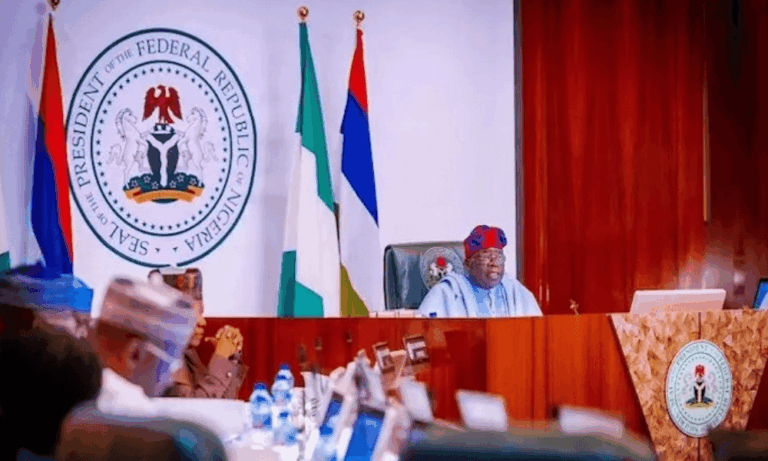
The agreement, reached between the Federal Government, Eni and Nigerian Agip Exploration Limited (NAEL), was concluded during a meeting presided over by the President at the Presidential Villa in Abuja.

At the meeting were the Chief Executive Officer of Eni, Claudio Descalzi; the company’s Chief Operating Officer, Guido Brusco; Head of Sub-Saharan Region, Mario Bello; Managing Director of NAEL, Fabrizio Bolondi; and the President’s Special Adviser on Energy, Olu Arowolo-Verheijen.

In a statement issued by the Special Adviser to the President on Information and Strategy, Bayo Onanuga, the agreement brings to an end a 15-year dispute over the ownership and development rights to the oil block.

The resolution restores clarity to the prized offshore asset, widely regarded as one of Nigeria’s most commercially promising deepwater blocks.

With the dispute resolved, the parties are expected to move towards a Final Investment Decision on the Zabazaba-Etan development project, a major offshore field projected to add about 150,000 barrels per day (bpd) to Nigeria’s production capacity when operational.

Nigeria currently produces between 1.68 million and 1.71 million bpd. The additional output from the project is expected to support the Federal Government’s target of raising production to at least two million bpd.

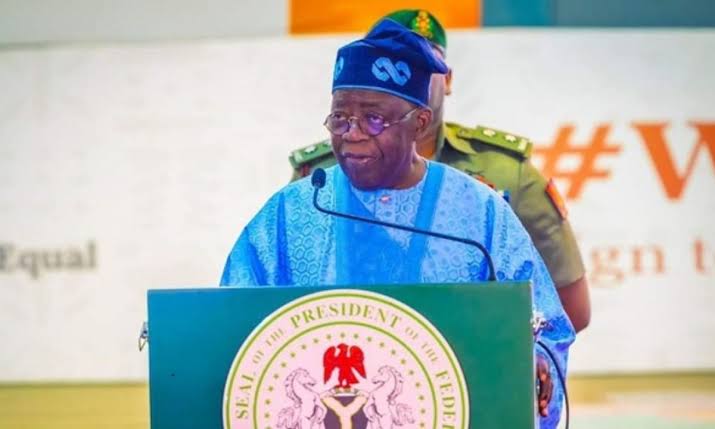
Tinubu described the agreement as a milestone in his administration’s economic reform agenda, noting that it underscores government’s commitment to resolving legacy disputes and strengthening investor confidence in the country’s energy sector.

“This resolution sends a clear signal to global investors that Nigeria is prepared to address legacy issues transparently, uphold the rule of law, and create a stable environment for long-term capital,” the President said.

According to him, the settlement also reinforces the government’s determination to ensure that Nigeria’s natural resources generate sustainable value for the country and its citizens.

Providing further insight, Arowolo-Verheijen said the new arrangement significantly improves on the 2011 resolution framework, aligning it with reforms introduced under the Petroleum Industry Act, which has reshaped governance and fiscal structures in the oil and gas sector.

She explained that the revised agreement balances investor clarity required for large-scale deepwater investments with stronger value accrual and safeguards for the Nigerian Federation.

The resolution, she added, removes one of the most prominent legacy risks that has long weighed on Nigeria’s upstream oil sector.

“By resolving the OPL 245 dispute, the Federal Government has eliminated one of the most prominent legacy risks in Nigeria’s upstream sector and reinforced its commitment to predictable regulation, transparent governance and commercially viable investment frameworks,” she said.

The settlement also forms part of broader reforms initiated by the Tinubu administration since 2023 to reposition Nigeria as a competitive destination for global energy investment.
Industry analysts have long identified the OPL 245 dispute as a major obstacle to unlocking the full potential of the oil block, believed to contain vast deepwater reserves.

The Zabazaba-Etan project is expected to increase crude output, create jobs, stimulate local industry participation and boost government revenues when it comes on stream.

Tinubu commended institutions that played roles in resolving the dispute, including the Office of the Attorney General of the Federation, the Ministry of Petroleum Resources, the Nigerian Upstream Petroleum Regulatory Commission (NUPRC), and NNPC Limited.

He emphasised that responsible investment and transparent governance would remain central pillars of the administration’s strategy for managing Nigeria’s natural resources.

According to him, the agreement represents not only the resolution of a complex legal dispute but also a decisive step towards strengthening Nigeria’s long-term energy outlook and economic growth prospects.
FG Cracks Down On Fake Certificates, Digitises Academic Records Nationwide

0

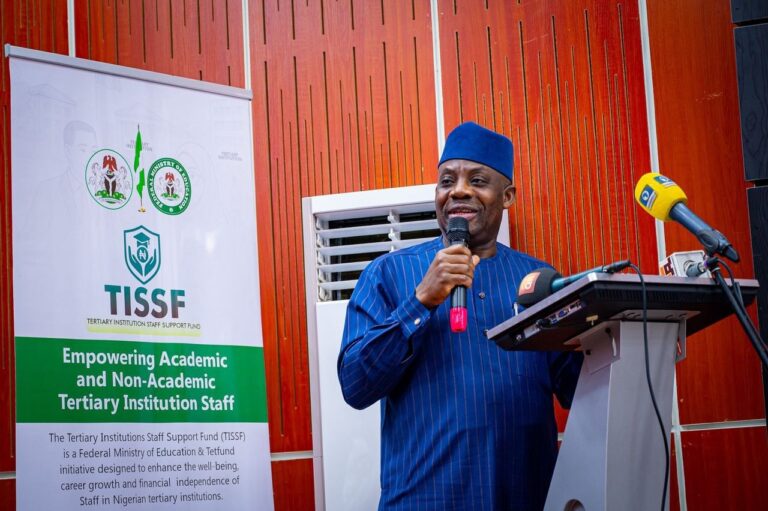
The Federal Government has reiterated its commitment to strengthening the integrity of academic records and improving institutional compliance across the education sector as part of reforms aimed at safeguarding the credibility of Nigeria’s educational system.

Minister of Education, Maruf Tunji Alausa, disclosed this on Thursday during a national capacity-building programme organised to support the implementation of the Nigeria Education Repository and Data Bank (NERD).

The programme, themed “Strengthening Institutional Compliance and Academic Records Integrity,” was organised to reinforce compliance frameworks and ensure the accuracy, security and authenticity of academic records across institutions nationwide.

Alausa said the Federal Government had taken decisive steps to curb certificate fraud following reports that some Nigerians obtained questionable degrees from unaccredited institutions abroad.

According to him, the government launched investigations after whistleblower reports revealed that some individuals were acquiring academic qualifications from dubious institutions, particularly in parts of West Africa.

He said the government acted swiftly on the directive of President Bola Ahmed Tinubu to halt the trend and restore credibility to Nigeria’s education system.

“Education is a covenant between the state and its citizens. When a certificate is issued, it is not merely paper; it is a national guarantee that due process was followed and standards were upheld,” the minister said.

He disclosed that individuals who obtained fraudulent certificates had been removed from the public service following investigations by the government.

Highlighting the importance of reliable data for governance, Alausa described data as the foundation for effective policymaking and monitoring of government reforms.

“Data is the lifeblood of effective governance. It enables us to understand the challenges we face, design effective solutions and monitor our progress. Without data, we are flying blind,” he said.

The minister explained that NERD is a strategic national digital infrastructure designed to digitise, standardise and authenticate academic records across tertiary institutions in Nigeria.

He said the platform would administer national credential numbers, a National Credential Revocation Service, a National Student Clearinghouse, and a federated repository of academic theses and abstracts, alongside a national academic publication and indexing database.

According to him, within four months of enforcement, the platform has preserved nearly 100,000 digital student submissions and onboarded more than 250 universities, polytechnics, monotechnics and colleges of education for real-time credential verification.

Alausa added that over 133,000 students and more than 6,800 lecturers had been enrolled on the platform, supported by over 655 focal persons across the country.

He further disclosed that the initiative had led to the establishment of more than 1,000 digital service centres in partnership with Nigeria Digital Entrepreneurs, creating over 3,000 jobs within four months.

To promote academic excellence, the minister also announced the establishment of the NERD Annual National Laureate Prize and Awards Programme to recognise outstanding academic research.

He said the awards would reward exceptional undergraduate, master’s and doctoral theses with prizes ranging from N5 million to N20 million, with the maiden edition scheduled for November.

Alausa directed ICT directors and institutions nationwide to fully cooperate with the initiative, stressing that compliance with the NERD platform was now compulsory.

He explained that adherence to the system had become a prerequisite for participation in or exemption from the National Youth Service Corps (NYSC), as well as for accessing services from agencies such as the Tertiary Education Trust Fund, National Universities Commission, National Board for Technical Education, National Commission for Colleges of Education and the Industrial Training Fund.

He noted that the platform would maintain a national digital footprint of every academic award obtained in accredited Nigerian institutions and help eliminate disputes over academic credentials.

The minister also encouraged institutions to prioritise locally developed technology platforms in line with the government’s local content policy.

“I challenge myself that the only platform we deploy from the Federal Ministry of Education will be a platform built by Nigerians in this country,” he said.

Alausa commended the Chief Executive Officer of NERD, Tunji Ariyomo, for championing the preservation of educational data in Nigeria.

In his remarks, Ariyomo described the initiative as a crucial step toward preserving Nigeria’s academic knowledge and research history.

He noted that weak documentation systems had historically resulted in the loss of valuable academic records and research outputs in the country.

According to him, nations that preserve and validate knowledge over long periods are better positioned to drive development and lead the global knowledge economy.

Nigeria has faced persistent challenges with certificate fraud and weak academic record systems, raising concerns over the credibility of some qualifications obtained locally and abroad.

In recent years, investigations exposed the proliferation of illegal degree mills in neighbouring countries where some Nigerians were reported to have obtained academic certificates within unusually short periods, prompting renewed government efforts to strengthen oversight and verification mechanisms in the education sector.

Fubara Donates Helicopter To Air Force, Pledges Stronger Security Partnership In Rivers

Governor of Rivers State, Siminalayi Fubara, has reaffirmed the state government’s commitment to strengthening its security partnership with the Nigerian Air Force, highlighting the donation of a helicopter to the service as part of efforts to enhance protection of critical economic infrastructure.

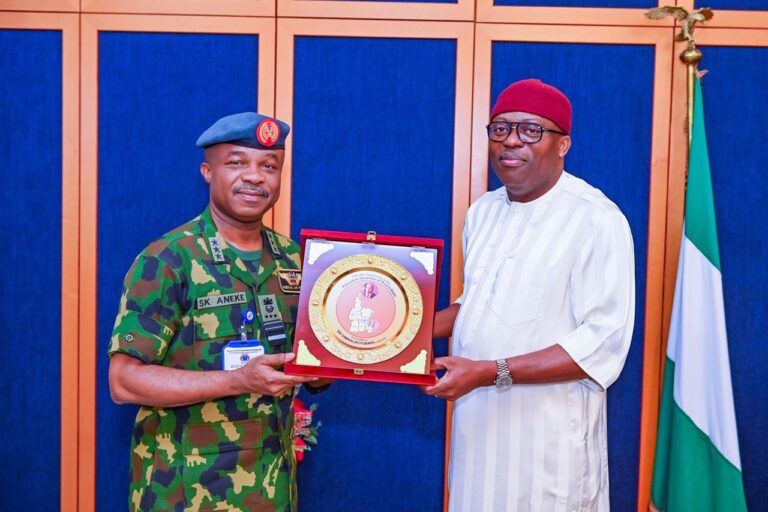
Fubara made the pledge on Thursday when he received the Chief of Air Staff, Sunday Kelvin Aneke, at Government House in Port Harcourt during a courtesy visit.

Aneke, who recently assumed office as the 23rd Chief of Air Staff, was in the state to appreciate the Rivers State Government for donating one of its aircraft, an Agusta 139 helicopter, to the Air Force last year.

Congratulating the Air Force chief on his elevation, Fubara said Rivers State had maintained a long-standing and cordial relationship with the Nigerian Air Force, noting that successive administrations had supported the military in areas of logistics, transportation and security operations.

The governor explained that the decision to hand over the helicopter was taken by the State Executive Council after it was established that the aircraft was no longer being utilised by the state government.

According to him, transferring the aircraft to the Air Force would ensure that it is deployed for active security operations, particularly in tackling pipeline vandalism and other criminal activities threatening the state’s economy.

“We believe that putting that aircraft into active service will help address some of the societal challenges around us. As a responsible government, we must do everything within our power to safeguard lives, property and critical economic facilities,” Fubara said.

He recalled that the partnership between Rivers State and the Nigerian Air Force predates his administration, citing instances where the Air Force provided support to the state.

Fubara noted that when the Port Harcourt International Airport was temporarily closed for rehabilitation, the Air Force Base in Port Harcourt provided alternative air transportation services for the state until the airport was reopened.

Responding, Aneke described the visit as his first official engagement with the Rivers State Government since assuming office and commended the administration for its sustained support to the Air Force.

He said the donation of the Agusta 139 helicopter would significantly enhance the service’s operational capacity in the region once restored to full operational condition.

While noting that the aircraft had not been in use for some time and would require funding for maintenance and reactivation, the Air Force chief expressed confidence that it would ultimately strengthen aerial surveillance and security operations in the state.
Aneke also praised the state government for rehabilitating and resurfacing the runway and apron at the Air Force Base in Port Harcourt, as well as installing runway lighting and perimeter fencing.

According to him, the upgrades have positioned the airfield as a strategic aviation facility located at the heart of the city.

The Air Force chief further thanked the state government for constructing two blocks of 12 two-bedroom apartments for Air Force personnel, noting that the gesture had improved the welfare of airmen and airwomen and boosted operational readiness.

He also appreciated the governor’s promise to support a school for children with special needs managed by the Nigerian Air Force Officers’ Wives Association (NAFOWA), describing it as an important contribution to the welfare of families of service personnel.

Aneke, however, appealed to the state government to facilitate the transfer of the state primary school located within the Air Force Base to the Nigerian Air Force for improved management. He also requested that the Mother and Child Hospital at the base be handed over to the Air Force, noting that military hospitals in many countries serve both service personnel and residents of host communities.

According to him, about 80 per cent of patients treated at the Air Force Hospital within the base are civilians from surrounding communities, a development he said contributes positively to healthcare delivery in the state.

IPAC Threatens 2027 Polls boycott Over ‘Controversial ’ Electoral Act Provisions

0

The Inter-Party Advisory Council (IPAC) has threatened to boycott the 2027 general elections if the National Assembly of Nigeria fails to amend what it described as contentious provisions in the Electoral Act 2026.

The council warned that if the concerns raised by political parties are not addressed, the outcome of the elections would be rejected as illegitimate and would not be recognised by parties under its umbrella.

IPAC issued the warning in a communiqué at the end of its Expanded General Assembly meeting held in Abuja.

The communiqué was signed by the council’s Chairman, Yusuf Dantalle, and National Secretary, Maxwell Mgbudem.

According to the council, several provisions in the newly enacted electoral law could undermine the growth of political parties and weaken Nigeria’s multiparty democratic system if not urgently reviewed.

IPAC listed six key demands that it said must be addressed through amendments by the National Assembly.

Among them is the restoration of indirect primaries, which the council said would allow political parties to determine their preferred method of nominating candidates for elections.

The organisation also called for the removal of the requirement compelling political party members to possess and upload their National Identification Number (NIN), arguing that the provision could disenfranchise many Nigerians who do not have access to the national identification system.
In addition, IPAC demanded the expungement of Sections 77(4), (5), (6) and (7) of the Act, which it claimed infringe on citizens’ constitutional right to freedom of association.

The council further urged lawmakers to restore mandatory electronic transmission of election results after they are announced at polling units.

According to IPAC, the absence of a clear legal requirement for electronic transmission was one of the major controversies surrounding the 2023 presidential election, warning that such issues must not recur in future polls.

The council also called for stronger penalties against vote buying, which it described as one of the most damaging electoral malpractices affecting the credibility of elections in the country.

It also demanded the restoration of forged certificates as valid grounds for election petitions, warning that the removal of the provision could allow individuals with questionable credentials to contest and occupy public offices.

IPAC stressed that credible leadership remains fundamental to democracy and cautioned that weakening safeguards in the electoral law could harm Nigeria’s democratic institutions and international reputation.

The council disclosed that it would also draw the attention of the international community to the matter, including the United Nations, European Union, Economic Community of West African States (ECOWAS), the governments of the United Kingdom and the United States, as well as Nigerians in the diaspora.

It added that it reserves the right to seek judicial intervention to challenge what it described as objectionable provisions in the Electoral Act.

IPAC therefore urged the National Assembly to urgently align the law with constitutional provisions to avoid litigation and ensure that the 2027 elections are credible, free and fair.

Tinubu To Inaugurate NDDC’s 1.2km Kaa–Ataba Bridge In Rivers

0

President Bola Ahmed Tinubu is expected to inaugurate the 1.2-kilometre Kaa–Ataba Bridge linking Khana and Andoni local government areas of Rivers State as part of activities marking his third anniversary in office.

The Niger Delta Development Commission (NDDC) disclosed this during an inspection of the project by members of its Governing Board led by the Chairman, Chiedu Ebie.

The team included the Commission’s Managing Director, Samuel Ogbuku; Executive Director, Projects, Victor Antai; Executive Director, Corporate Services, Ifedayo Abegunde; and other senior officials.

Speaking during the inspection, Ogbuku reaffirmed the Commission’s commitment to the presidential directive to complete all legacy projects across the Niger Delta region.

He noted that the Kaa–Ataba Bridge, which connects Khana Local Government Area and Andoni Local Government Area, is one of the Commission’s most ambitious projects and stands as the longest bridge in the Niger Delta and among the longest in Nigeria.

The NDDC managing director expressed satisfaction with the progress of work, stating that the project forms part of the Federal Government’s development drive under the Renewed Hope Agenda.

“The President gave us a marching order to make a positive impact in the Niger Delta. The board and management are working diligently to meet Mr President’s expectations,” Ogbuku said.

Also speaking, Ebie said the bridge project demonstrates the Federal Government’s commitment to infrastructure development in the region.

He added that the contractor handling the project had assured the Commission that the bridge would be delivered on schedule and ready for inauguration this year.

“We have been briefed by the on-site engineers, and they are as determined as we are to deliver the project on schedule,” Ebie said.

A representative of the contracting firm, Engineer Christian Emeozor, attributed earlier delays to adverse weather conditions but assured the Commission that additional manpower and materials would be deployed to ensure timely completion.

He pledged that the company would maintain both speed and quality in delivering the project.

Meanwhile, traditional rulers from the benefiting communities commended the Commission for undertaking the bridge project, noting that it would significantly boost socio-economic activities in the area.

The Paramount Ruler of Ataba Kingdom in Andoni LGA, Benson Egwenre, praised the NDDC for executing the project, while the traditional ruler of Kaa in Khana LGA, Benjamin Ledor, assured the Commission of the community’s cooperation to ensure the project’s timely completion.

The inspection team also visited the ongoing Niger Delta Regional Hospital project in Port Harcourt, which is expected to house cardiovascular and orthopaedic units.
Ebie emphasised the importance of healthcare infrastructure, noting that the regional hospital would help reduce medical tourism.

“We are happy that the contractors are working closely with suppliers on hospital equipment. Based on the progress of the project, the contractor has promised that the hospital will be ready before the end of the year,” he said.
Ogbuku added that the project reflects the Commission’s broader development focus beyond roads and bridges.

“Our intervention is not only on road construction or solar lights. Health is wealth, and the people of the Niger Delta must have access to quality healthcare,” he said.

According to him, the facility will be equipped with state-of-the-art medical equipment and may be operated through partnerships with organisations experienced in hospital management once completed.

The project coordinator, Douglas Okafor, said the contractors were working to ensure the hospital project meets global best practices in quality and delivery.

Court Acquits Abba Kyari, Brothers In NDLEA Assets Declaration Case

0

The Federal High Court in Abuja on Thursday dismissed a suit filed by the National Drug Law Enforcement Agency (NDLEA) against suspended Deputy Commissioner of Police, Abba Kyari, over alleged non-declaration of assets.
Justice James Omotosho discharged and acquitted Kyari and his younger brothers, Mohammed Kyari and Ali Kyari, after ruling that the prosecution failed to prove its case beyond reasonable doubt.

Delivering judgment, the court held that the burden of proof in criminal matters rests with the prosecution, adding that the anti-narcotics agency did not sufficiently establish the allegations against the defendants.
Justice Omotosho further described the case as “persecution” and consequently dismissed the charges against the trio.

The NDLEA had filed a 23-count charge against Kyari, a former head of the Intelligence Response Team (IRT) of the Nigeria Police Force, and his brothers, accusing them of failing to fully declare their assets.

The agency alleged that investigations uncovered about 14 properties linked to Kyari, including shopping malls, a residential estate, a polo playground, parcels of land and farmland.

According to the prosecution, the properties were located in parts of the Federal Capital Territory and Maiduguri in Borno State.

The NDLEA also alleged that more than N207 million and €17,598 were found in accounts linked to Kyari in Guaranty Trust Bank, United Bank for Africa and Sterling Bank.
In the charge marked FHC/ABJ/CR/408/2022, the agency further accused the defendants of disguising ownership of properties and converting funds.

The offences were said to be punishable under Section 35(3)(a) of the National Drug Law Enforcement Agency Act and Section 15(3)(a) of the Money Laundering (Prohibition) Act.
However, Kyari and his brothers pleaded not guilty to all the counts.

Before the judgment, counsel to the NDLEA, Sunday Joseph, alongside Kyari’s lawyer, Onyechi Ikpeazu (SAN), and counsel to the other defendants, Monjok Agom, had adopted their final written addresses and argued for and against the charges.

MRA Faults Police Summons Over FOI Request, Alleges Intimidation Of Activist

0

Media Rights Agenda (MRA) has condemned the summons issued by the Nigeria Police Force in Delta State to a civil society activist over a request for information under the Freedom of Information Act, describing the action as a misuse of power and an attempt to intimidate citizens exercising their lawful rights.

In a statement issued in Lagos on Wednesday, the organisation criticised the Delta State Police Command for inviting Comrade Victor Ojie, leader of the Young Nigerian Rights Organization (YNRO), to report to the State Intelligence Department (SID) in Asaba following a Freedom of Information request submitted to the Delta State Ministry of Lands and Survey.

The request sought access to petitions and records relating to land disputes in Aniocha South Local Government Area of the state.

MRA described the police invitation as a blatant attempt to harass a citizen for exercising his legal right to request information from a public institution under the FOI Act.

According to the organisation, rather than complying with the law by providing the requested information within the statutory seven-day period or formally declining the request where justified, the ministry allegedly involved the police, resulting in the summons issued to Ojie.

In a letter titled “Letter of Invitation” dated March 3, 2026, Deputy Superintendent of Police, Ojokoh Julius, second-in-command of the State Intelligence Department in Asaba, reportedly directed Ojie to meet with the Assistant Commissioner of Police, SID, on Monday, March 9, 2026, regarding the information request.

The letter referenced Ojie’s correspondence titled “Freedom of Information Request Pursuant to the Freedom of Information Act, 2011, Request for Access to Petitions and Records Relating to Land Disputes in Aniocha South LGA.”

Reacting to the development, MRA’s Deputy Executive Director, Ayode Longe, said the action by the police raises serious concerns about respect for citizens’ rights under the FOI Act.

“It is an alarming trend that the Nigeria Police Force, which is tasked with enforcing the law, has become the instrument for violating the rights of citizens under the law,” Longe said.

He noted that the FOI Act grants every person a legal right to access information held by public institutions and does not require applicants to demonstrate any specific interest in the information requested.
According to him, treating a civil information request as a criminal matter and summoning the requester for questioning represents a troubling disregard for the law.

Longe also pointed out that the FOI Act clearly outlines the circumstances under which public institutions may deny access to requested information and provides procedures for doing so, stressing that police summons is not one of the lawful channels provided by the Act.

Describing the incident as part of a wider pattern of abuse of authority, he said the summons could create a chilling effect by discouraging citizens from seeking accountability from public institutions.
“This incident reflects a culture of impunity within the police and sends a dangerous message that asking questions about public matters could be treated as a crime,” he said.

MRA therefore called on the Delta State Commissioner of Police and the Inspector-General of Police to immediately withdraw the summons and ensure that Ojie and other officials of the Young Nigerian Rights Organization are not subjected to further harassment.

The organisation also urged the Attorney-General of the Federation to intervene in the matter in his capacity as the chief law officer responsible for overseeing the implementation of the FOI Act and ensuring compliance by public institutions.

MRA stressed that the police, as a law enforcement agency, has both a legal and moral responsibility to uphold the provisions of the FOI Act, particularly as wrongful denial of access to information constitutes an offence under the law.

Re-engineering Key To Unlocking Nigeria’s Economic Growth — Peterside

0

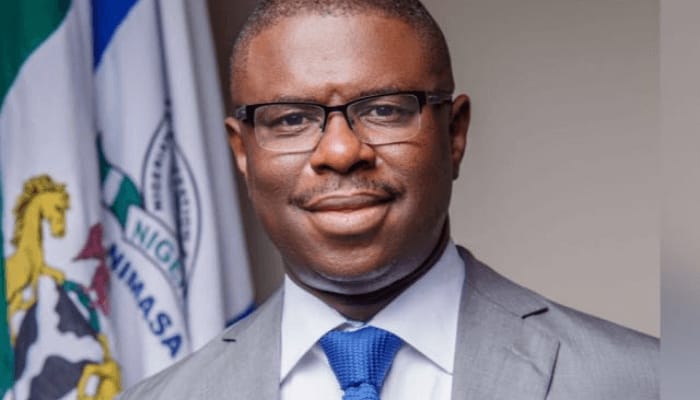
Renowned turnaround expert and former Director-General of the Nigerian Maritime Administration and Safety Agency (NIMASA), Dakuku Peterside, has said Nigeria’s economic transformation will depend largely on its ability to redesign and strengthen institutional systems rather than rely solely on its natural resources.

Peterside made the assertion while delivering the keynote address at the First International Conference of the Department of Business Administration at the Ignatius Ajuru University of Education in Port Harcourt.

Speaking on the theme, “Business Re-engineering as a Catalyst for Economic Development,” Peterside said institutions should not be defined by their physical structures or global rankings, but by the quality of questions they ask and the values they instil in their graduates.

He challenged participants to move beyond the search for easy answers and instead develop the courage to ask the right questions about the systems that drive organisations and economies.

According to him, economic progress is determined not merely by what a country possesses but by how effectively it organises production, makes decisions, delivers value, and scales ideas into jobs.

He argued that Nigeria’s persistent economic underperformance is less about a lack of resources and more about weak systems and inefficient processes.

Peterside described business re-engineering as more than incremental reform, explaining that it involves the radical redesign of organisational processes that are technology-enabled, outcome-driven and continuously evolving.

By interrogating why systems are slow, expensive, unpredictable or susceptible to manipulation, organisations, he said, can rebuild processes that are suited to current realities rather than outdated constraints.

The author of three bestselling books also noted that productivity growth is not achieved through motivation alone but through well-designed systems.

“When processes are simplified, responsibilities clarified, delays reduced and standards enforced, productivity improves naturally,” he said.

Tracing the evolution of business process re-engineering, Peterside noted that from early industrial workflows and quality control movements to the modern era of digital transformation, technology has increasingly become a powerful enabler through automation, data platforms and artificial intelligence.

However, he cautioned that technology alone cannot repair dysfunctional systems.

“Technology cannot fix a broken process unless the process itself is first redesigned,” he said.

Linking re-engineering to national development, Peterside identified low productivity as Nigeria’s core structural constraint.

Improved processes, he noted, would raise productivity, boost competitiveness, lower costs, enhance quality and enable firms to scale.
Such improvements, he added, would ultimately expand employment opportunities, increase wages and strengthen export capacity.

Turning specifically to Nigeria’s business environment, Peterside said the high cost of doing business, inefficient logistics, slow regulatory approvals and limited export diversification were the result of design failures rather than unavoidable circumstances.

He therefore urged policymakers to adopt business re-engineering as a national productivity strategy supported by deliberate policies, institutional restructuring and strong collaboration between the public and private sectors.

Peterside also called on academia, government and industry leaders to embrace re-engineering as a continuous mindset rather than a one-off reform initiative.

According to him, Nigeria can build resilient systems that outlast individuals and deliver sustainable economic growth if institutions commit to measurement, discipline and performance.

“By committing to measurement, discipline and institutional performance, Nigeria can build systems that outlast personalities and deliver sustainable growth, better jobs, stronger firms and a more inclusive economic future,” he said.

Flood Relief In Sight As RSG Clears Ikwerre Road Drainage After 12 Years

0

The Rivers State Government has intensified efforts to tackle persistent flooding along Ikwerre Road in Port Harcourt, with the Ministry of Works inspecting ongoing drainage desilting works in the Mile 1 axis of the busy corridor.

Permanent Secretary, Rivers State Ministry of Works, Dr Austin Ezekiel-Hart, on Tuesday led a team of ministry officials on an assessment visit to the project site, where he expressed satisfaction with the pace and quality of work executed by the contractor.

Ezekiel-Hart, who was conducted round key desilting points, urged the firm to accelerate completion to meet the stipulated timeline, stressing the importance of restoring free water flow to prevent further flooding.

Chief Engineer of the contracting firm, Engr. Friday Ugaba, attributed the recurring flooding along Ikwerre Road to years of accumulated waste dumped into the drainage system by traders and residents.

He revealed that the drains had not been desilted for over 12 years, describing the situation as a major contributor to the perennial overflow experienced in the area.

Ugaba noted that underground drainage systems of that scale should ideally be cleared at least once every three months to ensure efficiency.

He disclosed that, beyond clearing the main drainage channels, the company plans to construct subsidiary drains to channel runoff from adjoining streets into a major outlet that empties into the Ntawoba River.

According to him, the combined intervention — desilting the primary drains and constructing auxiliary channels — is expected to eliminate flooding in the Mile 1 axis within three to four weeks.

“We are also working on other sections of Ikwerre Road, from Echue Junction to Ikoku. Within three weeks to one month, significant progress would have been achieved,” he said.

Leaders of market unions who joined the inspection commended Governor Siminalayi Fubara for initiating the project, describing it as a relief to traders and commuters who have endured years of disruption during heavy rainfall.

President General of Market Unions in Rivers State, Amb. Eddy Bright Chinedu, alongside the Vice Chairman of Mile 1 Market, Jude Chinedu Onuoha, and the Yoruba Women Leader, Alhaja Amirat Gambari, lauded the intervention but raised concerns over indiscriminate waste disposal in the area.

They appealed to the state government to reopen the newly constructed Mile 1 Market complex to accommodate street traders, arguing that relocating them would reduce the practice of dumping refuse into the drains.

The drainage intervention forms part of broader infrastructure efforts by the state government to address urban flooding and improve traffic flow in Port Harcourt’s commercial hubs.

FG Imposes Six-Year Freeze on New Private Universities, Unveils Sweeping Education Reforms

0

The Federal Executive Council (FEC) has approved a six-year moratorium on the establishment of new private universities, polytechnics and colleges of education, in a sweeping reform package aimed at strengthening Nigeria’s tertiary education system.

Minister of Education, Dr Tunji Alausa, disclosed the decision on Wednesday after the Council meeting, saying the pause is designed to consolidate and improve the quality and sustainability of existing institutions, particularly in the private sector.

According to him, while demand for university education remains high, many institutions are grappling with financial and structural challenges that threaten standards.

Nigeria recorded over 2.3 million applications for university admission last year, based on data from the Joint Admissions and Matriculation Board (JAMB), yet public universities were able to offer fewer than 228,000 admission slots. Despite the shortfall, the minister maintained that expansion without consolidation would further strain the system.

He said the moratorium would enable government to focus on raising academic standards, enhancing infrastructure and ensuring long-term viability across tertiary institutions.

The Council also approved the restoration of the National Commission for Mass Literacy, Adult and Non-Formal Education as an independent commission, a move the minister described as critical to addressing the country’s alarming literacy gap.

Alausa said about 56 million Nigerians remain illiterate, underscoring the urgency of intervention. He noted that the Tinubu administration plans to equip over 50 million young adults with basic and digital literacy skills within the next two to three years.

In another major policy shift, FEC approved amendments to the National Postgraduate Medical College Act to recognise medical fellowship qualifications as equivalent to doctoral degrees.

The proposed amendment, which will be transmitted to the National Assembly as an Executive Bill, seeks to remove career limitations faced by medical specialists who undergo prolonged years of training, residency and fellowship but are required to obtain PhDs to qualify for professorial appointments.

“These professionals spend more years in specialised training than the average PhD holder. There is a need to harmonise the system,” the minister said.

Additionally, Council approved comprehensive insurance coverage for 180 Federal Unity Schools across the country.

The reforms, the minister said, align with the administration’s commitment to raising educational standards and expanding access to quality learning nationwide.