

Home Blog Page 44

RSU Unveils African Fleet Management Forum, Pushes Agenda For Safer, Sustainable Transport

0

Rivers State University (RSU), Nkpolu-Port Harcourt, has launched the African Fleet Management Forum, marking a significant step toward advancing safer and more sustainable transport systems across the continent.

The initiative was inaugurated during the 3rd International Conference on Green and Safe Transport, organised by the Institute of Geosciences and Environmental Management (IGEM) in collaboration with United Nations Institute for Training and Research-CIFAL.

Vice-Chancellor of RSU, Prof. Isaac Zeb-Obipi, disclosed that the forum’s secretariat has been established within the university, fulfilling an earlier commitment to UNITAR. He said the move underscores the institution’s ambition to become a continental hub for research and policy development in fleet safety, disaster risk reduction and transport sustainability.
Zeb-Obipi also revealed plans to establish a Blue and Maritime Economy Centre, pending approval by the university senate.

The conference, themed “Green and Safe Transport: Integrated Fleet Disaster Risk and Sustainability Management,” drew participants from academia, government and industry, all stressing the urgency of improving mobility systems, particularly in Nigeria’s riverine communities.
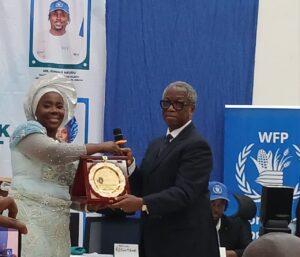
Pro Chancellor of RSU, Okey Wali presenting a souvenir to Representative of Bayelsa State Governor, Dr. Faith Izibenua Zibs-Godwin at the conference.

Chairman of the occasion and former RSU Vice-Chancellor, Prof. Blessing Chimezie Didia, emphasised that universities should be assessed by their intellectual contributions, noting that international conferences enhance institutional relevance and global visibility.

Representing Bayelsa State Governor, Sen. Douye Diri, the Commissioner for Marine and Blue Economy, Dr. Faith Izibenua Zibs-Godwin, highlighted the critical role of water transport in riverine areas. She noted ongoing investments in maritime infrastructure, including seaports, to stimulate economic growth and improve connectivity.

However, she cautioned that infrastructure alone is insufficient, stressing the need for improved safety standards and stronger collaboration with international partners.

RSU Pro-Chancellor, Okey Wali, called for research that delivers practical societal impact, commending UNITAR’s partnership and declaring the conference open.

In his keynote address, Sunday Akuru of the World Food Programme underscored the strategic importance of maritime transport, which accounts for 80 to 90 per cent of global trade. He noted that despite Nigeria’s vast coastal and inland water resources, the sector remains underutilised due to weak infrastructure, poor regulatory enforcement and fragmented institutional coordination.

Akuru advocated a shift toward integrated and technology-driven transport systems, including real-time monitoring and structured risk management frameworks. He also warned against environmental degradation, particularly marine pollution, which threatens long-term economic benefits.

Logistics expert, Dr. Rita Owase, described fleet operations as the backbone of economic activity, stressing that safety must remain paramount. She highlighted the United Nations’ zero-tolerance stance on safety, including vehicle standards, driver training and compliance with operational regulations.
Director of IGEM, Prof. Akuro Gobo, noted that the institute was among the first organisations in Nigeria to host a conference on fleet safety in partnership with UNITAR-CIFAL, targeting operators across air, land and sea transport systems.
Goodwill messages from stakeholders reinforced the need for actionable outcomes. Registrar of the Institute of Humanitarian Studies and Social Development, Dr. Prince Origa, urged participants to translate deliberations into concrete policies, particularly in relation to security and fleet management.

Similarly, the Marine Equipment Owners/Leasing Association of Nigeria described the conference theme as timely, expressing optimism that discussions would yield practical solutions for the maritime sector.

Managing Director of Rivers State Waste Management Agency, Dr. Ibimina Wokoma, highlighted marine pollution—especially plastic waste—as a growing global challenge, urging proper waste disposal to protect aquatic ecosystems and livelihoods.

In her closing remarks, Director of UNITAR-CIFAL Nigeria, Mrs. Ihuoma Njemanze, described fleet safety and sustainability as a largely underexplored but critical sector.

The conference continues with technical sessions focusing on integrated fleet disaster risk management, maritime safety, environmental sustainability and policy innovation, with participants seeking practical frameworks to transform transport systems in Nigeria and across Africa.


By Victoria Michael

NYSC Coordinator Demands Discipline, Zero Tolerance For Abuse Ahead Of Rivers Orientation Camp

0

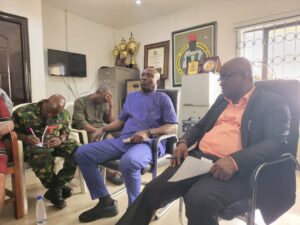
The Rivers State Coordinator of the National Youth Service Corps (NYSC), Mr. Moses Oleghe, has charged heads of collaborating agencies for the 2026 Batch A Stream II orientation exercise to deploy their best personnel and uphold the highest standards of conduct, stressing that “the only thing required of you is your best.”

Oleghe gave the directive during a strategic meeting held in his office with agency heads designated for the orientation camp, scheduled to commence on Wednesday, April 22, 2026.

He underscored the primacy of security, insisting that the safety of corps members and camp officials must be treated as non-negotiable. He specifically warned security agencies against lapses at camp entry points, directing that no unauthorized persons be granted access under any circumstances.

The coordinator also issued a firm warning against corporal punishment and any form of physical contact with corps members or officials, describing such actions as strictly prohibited. He added that the use of abusive language, as well as emotional or psychological intimidation, would attract serious sanctions.

Mr Moses Oleghe (right), speaking at the meeting.

Oleghe further urged all collaborating agencies to adhere strictly to the NYSC code of conduct and operate within the scheme’s established rules throughout the orientation exercise.

In his remarks, the Camp Director-designate, Mr. Barnax Uloneme, called for unity of purpose among stakeholders, encouraging them to see themselves as members of “Team NYSC” rather than representatives of individual organisations. He stressed the importance of synergy in achieving a seamless camp operation.

The meeting featured contributions and feedback from participants, who pledged their commitment and cooperation toward a successful orientation exercise.

INEC Boss Under Fire As Group Demands Resignation Over Partisanship Claims

0

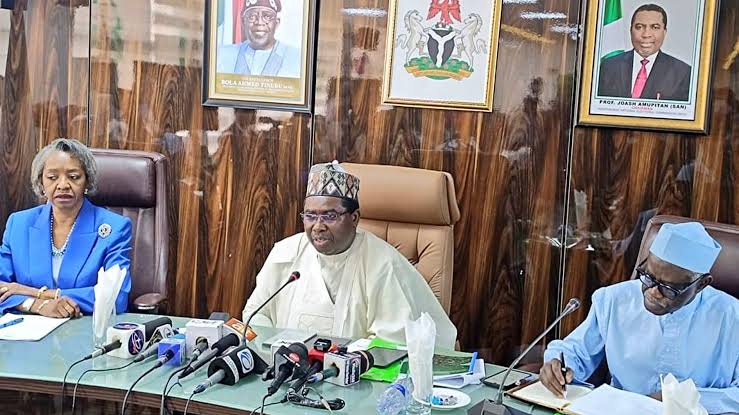
The Movement for Credible Elections (MCE) has called for the immediate resignation of the Chairman of the Independent National Electoral Commission (INEC), Professor Joash Ojo Amupitan, over allegations of partisanship ahead of the 2027 general elections.

In a statement issued on Sunday by its Media Coordinator, Comrade James Ezema, the group said the INEC chairman no longer commands the credibility required to oversee a transparent electoral process. It urged him to step aside to allow for an independent investigation into the claims.

The MCE, whose members include prominent figures such as Usman Bugaje, Femi Falana (SAN), Oby Ezekwesili, Ayuba Wabba, Pat Utomi, Bilikisu Magoro and Nkoyo Toyo, warned that the integrity of the electoral body must not be compromised.

Describing the situation as a threat to Nigeria’s democratic stability, the group called on the Federal Government to constitute an impartial panel comprising judicial officers, digital forensic experts and civil society representatives to verify the allegations.

“The integrity of Nigeria’s electoral process is at stake,” the statement read.

“At this critical juncture in the nation’s democratic evolution, the leadership of INEC must be beyond reproach.”

The group cited alleged digital footprints linking the INEC chairman to partisan expressions in support of the ruling All Progressives Congress (APC) as the basis for its concerns. While noting that Amupitan has denied the allegations, the MCE argued that such denials underscore the need for thorough forensic scrutiny.
“In this digital age, denial is not a defence—it is an invitation to forensic scrutiny,” the statement added.

The MCE further warned that the controversy could escalate into a legal and constitutional crisis, pointing to the traceability of digital identities through systems such as the Bank Verification Number (BVN) and National Identification Number (NIN), as well as platform-level access logs.
It also cautioned against any attempt to intimidate citizens raising concerns, describing such actions as a misuse of state power that could further erode public trust.

Beyond the immediate allegations, the group expressed concern over what it described as a pattern of decisions by INEC that appear to disadvantage opposition participation, including alleged selective enforcement of electoral regulations.

According to the MCE, these developments risk pushing Nigeria towards a de facto one-party state, in violation of democratic principles.

The group also warned of potential international repercussions, noting that aggrieved parties could seek redress at regional bodies such as the ECOWAS Court of Justice, thereby exposing the country to reputational damage.

It maintained that if proven, the allegations raise serious ethical questions about the INEC chairman’s neutrality and fitness for office.

“The only honourable course is for the INEC Chairman to step aside and allow a transparent investigation,” the statement said.

“Nigeria stands at a democratic crossroads. The credibility of its electoral body is central to national stability and the legitimacy of governance.”

Amnesty Slams NBC Over ‘Gag Order’, Says Commission Lacks Powers To Dictate To Journalist

0

Amnesty International has condemned what it termed an “outrageous and desperate attempt” by the National Broadcasting Commission (NBC) to muzzle the media, warning that the regulator has no authority to dictate how journalists perform their professional duties.

In a statement reacting to the NBC’s ‘formal notice to broadcasters’ dated April 17, 2026, the rights organisation criticised the directive as an overreach targeting political broadcasts and presenters of current affairs programmes.

According to Amnesty International, the move imposes “unduly restrictive and invasive controls” on the broadcast space and appears calculated to coerce journalists and media organisations into self-censorship, with far-reaching implications for press freedom and democratic accountability.
Executive Director of Amnesty International Nigeria, Isa Sanusi, said Nigeria’s independent broadcast media remain central to citizens’ ability to freely seek, receive and exchange information and ideas, as guaranteed under international human rights frameworks.

He urged authorities to desist from what he described as the misuse of the National Broadcasting Commission to stifle dissenting voices.

“The Nigerian authorities must stop using the NBC in an unrelenting quest to silence journalists and media organisations that are crucial to ensuring an independent and diverse media space that fulfils people’s right to information,” Sanusi said.

Maintaining that the directive is both authoritarian and unconstitutional, Amnesty International called on broadcasters nationwide to remain resolute, urging journalists to continue their work “fiercely and independently without fear,” despite mounting pressure.

FG Rebuts World Bank Narrative, Insists No Missing Revenue In Nigeria’s Accounts

0

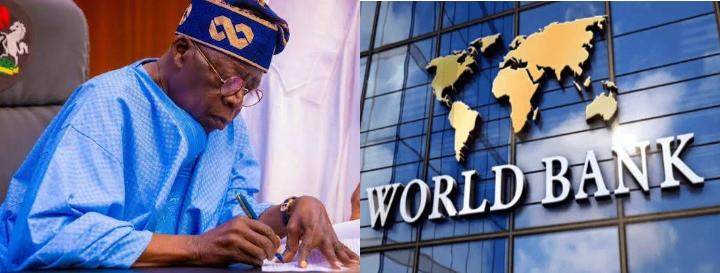
The Federal Government has firmly pushed back against interpretations of a recent World Bank Nigeria Development Update suggesting that large portions of the country’s revenue are unaccounted for, describing such claims as misleading and rooted in a flawed reading of the fiscal framework.

In a statement issued on Sunday, Minister of State for Finance, Taiwo Oyedele, dismissed insinuations of “hidden spending” or diversion of public funds, stressing that the reports mischaracterised legitimate financial processes.

According to the ministry, deductions from the Federation Account Allocation Committee (FAAC) have been wrongly interpreted as leakages, whereas they represent lawful fiscal transactions.

“It is important to emphasise that refunds and transfers to states and other tiers of government are not leakages,” Oyedele stated. “They are legitimate fiscal flows, including repayment of obligations and allocations backed by law.”

The government explained that these deductions cover a range of approved expenditures, including statutory transfers, security outlays, savings and investments, cost-of-collection charges, and refunds to Ministries, Departments and Agencies (MDAs), as well as interventions for subnational governments.
Reaffirming its position, the ministry stressed that allocations and refunds to states are constitutionally grounded and should not be misconstrued as missing funds.

It also criticised what it described as the selective reliance on outdated data in some analyses of the World Bank report, noting that the document itself acknowledged ongoing reforms in Nigeria’s public financial management.

Among recent measures, the government highlighted a 2026 Executive Order designed to strengthen the remittance of petroleum revenues, a move expected to enhance transparency and boost distributable income by approximately 0.4 per cent of GDP annually.

Beyond the controversy, the ministry pointed to more optimistic signals in the report, including increasingly broad-based economic growth, easing inflationary pressures, improving external reserves, and a sustained current account surplus. It added that key debt indicators have also improved, with a declining debt-to-GDP ratio.

The Federal Government maintained that, contrary to alarmist interpretations, the World Bank report does not depict a failing fiscal system but rather underscores progress driven by ongoing reforms, efforts it says must be sustained.

Police Bust Online Kidnap Syndicate In Rivers, Arrest Three, Foil Fresh Abduction

Operatives of the Rivers State Police Command have dismantled a suspected online-based kidnapping syndicate, arresting three persons linked to a string of abductions across the country and foiling another attempted kidnap.

The arrests followed investigations into the abduction of a Lagos resident, Chukwudekwu Emmanuel, who was kidnapped on February 17, 2026, in Etche Local Government Area of the state.

Spokesperson for the Command, ASP Blessing Agabe, disclosed in a statement that operatives of the Emohua Division, acting on intelligence and leveraging technology-driven policing strategies, apprehended the suspects on April 14, 2026, at about 1:00 p.m.
Those arrested include Chinedu Okoro, 38, from Imo State; Okwudiri Njoku, 32, from Ozuzu in Etche LGA; and Onyema Sunday, 25, from Ika in Akwa Ibom State.

Agabe said investigations revealed that the syndicate specialised in luring victims via social media platforms, including WhatsApp, Facebook, X (formerly Twitter) and Tinder, often using images of prominent personalities to gain trust and deceive targets.

The suspects were intercepted while attempting to abduct another victim, Chisom Nwokolo George, who had been lured from Anambra State under the guise of an interior decoration job.

According to the police, the suspects confessed to multiple kidnapping operations during interrogation, including the abduction of Jennifer Nnaji, an Enugu resident, on March 1, 2026, and that of Lakan Ayodele, a Lagos-based resident.
Items recovered from the suspects include an operational motorcycle with registration number AHD 758 VT.

The Command added that efforts were ongoing to track down the fleeing gang leader and other members of the network.

Meanwhile, the Commissioner of Police in the state, Olugbenga Adepoju, reaffirmed the Command’s commitment to safeguarding lives and property.

He urged residents to exercise caution in online interactions, verify identities before accepting job offers, avoid sharing sensitive personal information, and always inform trusted contacts before meeting unfamiliar persons.

Adepoju also called on members of the public to promptly report suspicious activities to the nearest police station.

NDDC, Regional Commissions Move To End Abandoned Projects, Adopt National Development Policy

0

The Ministry of Regional Development, Regional Development Commissions and the Niger Delta Development Commission (NDDC) have resolved to deepen collaboration with stakeholders to close development gaps, curb project abandonment and deliver impactful infrastructure across the country.

This formed the thrust of a communiqué issued at the end of a three-day retreat held in Benin City, Edo State, where top government officials and heads of development commissions converged to chart a new course for regional growth.

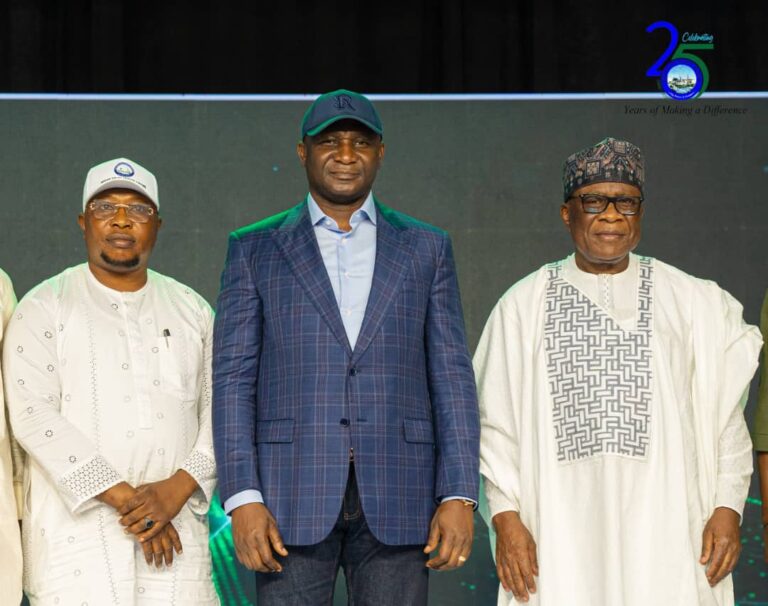
The retreat, chaired by the Minister of Regional Development, Abubakar Momoh, brought together key figures, including Chairman of the NDDC Governing Board, Chiedu Ebie, Managing Director, Samuel Ogbuku, and other board members.

Presenting the communiqué, Director of Planning and Research in the ministry, Victor Ewache, said participants agreed on far-reaching measures aimed at strengthening institutional performance and accelerating development outcomes.

Central to the resolutions is a renewed commitment to synergy among commissions and stakeholders, alongside plans to review existing Establishment Acts to eliminate bottlenecks and enhance operational efficiency.

The communiqué also unveiled a draft National Policy on Regional Development, designed to provide a coordinated framework for addressing infrastructural deficits and unlocking the economic potential of Nigeria’s regions.

Ewache noted that discussions focused on “generating fresh ideas to unlock regional potentials,” with emphasis on attracting international funding through partnerships with organisations such as the United Nations Development Programme (UNDP), while ensuring strict compliance with Treasury Single Account (TSA) regulations.

To boost accountability, leadership of the commissions will sign performance bonds tied to measurable outcomes, with priority placed on strategic infrastructure projects aligned with the Federal Government’s Renewed Hope Agenda and targeted at poverty reduction.

The minister, in his closing remarks, described the deliberations as “robust and forward-looking,” stressing the need for strict adherence to statutory mandates. He added that government would move to amend existing laws governing the commissions to address identified gaps and strengthen delivery capacity.

The retreat ended with honours for Momoh and Ogbuku, who were recognised for “outstanding development and impact” by the Association of Edo Youths for Peace, which described them as transformational leaders.

Bonny Road Project To Last 50 Years, Says Evomec

0

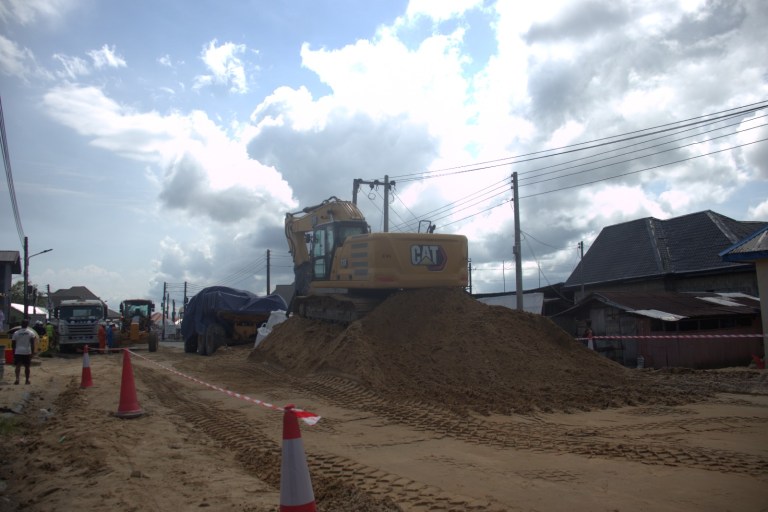
Evomec Global Services Limited has assured that the ongoing reconstruction of the road linking the Bonny Oil and Gas Terminal (BOGT) to Coal Beach in Bonny Local Government Area of Rivers State will have a minimum lifespan of 50 years upon completion.

The company, an engineering, procurement and construction firm, said the project is being executed in line with global best practices, with strict adherence to design specifications provided by the sponsor, Nigeria Liquefied Natural Gas Limited.

Speaking during a media tour of the project site, project engineers, Stanley Nwosu and Cornelius Okparaugo, projected that the road could last between 70 and 80 years. However, they noted that when safety margins are applied, a 50-year lifespan remains the baseline expectation.

They emphasised that the durability of the road depends on faithful implementation of the approved design, adding that the company is committed to delivering quality work within schedule.

Project Engineer, Evomec Global Services Limited, Cornelius Okparaugo.

Also, the General Supervisor, Tamunotonye Jumbo, said the firm is determined to provide Bonny residents with infrastructure that meets international standards.

“Evomec is executing this project with a sense of ownership because it is part of the Bonny community,” he said, urging residents to cooperate with the company to ensure timely delivery.

He warned against the removal of construction materials from the site and advised motorists, particularly commercial motorcycle operators, to avoid unauthorised access to the work area for safety reasons.

Project Engineer, Evomec Global Services Limited, Stanley Nwosu.

Jumbo further disclosed that the project has engaged a significant number of local residents across various skill levels, in line with the vision of the company’s Chief Executive Officer, Peter Esievo, to promote employment within the community.

Since its mobilisation, Evomec has commenced key phases of the project, including earthworks, sand stabilisation and precasting, as construction progresses on the strategic Bonny road corridor.

Oil Slumps To $86 As Strait Of Hormuz Reopens, Nigerians Eye Relief At Petrol Pumps

Global oil prices tumbled sharply on Friday, falling by about 10 per cent to $86 per barrel, after U.S. President Donald Trump confirmed the reopening of the strategic Strait of Hormuz to commercial shipping, easing concerns over prolonged supply disruptions.

The development followed a declaration by Iran’s Foreign Minister, Abbas Araghchi, that the critical waterway — through which nearly one-fifth of global oil supply passes daily — is now “completely open” under the ongoing ceasefire arrangement.

The twin announcements triggered an immediate sell-off in global oil markets, as traders swiftly stripped out the geopolitical risk premium that had driven crude prices above $100 per barrel in recent weeks.
Benchmark crude, which traded at about $96 per barrel just a day earlier amid renewed tensions and threats of military escalation, plunged to $86, marking a significant reversal.

While the drop signals relief for global markets, attention has now shifted to Nigeria, where consumers are anxiously watching for a corresponding decline in pump prices after months of sustained increases.
Since the outbreak of hostilities that disrupted oil flows through the Gulf, petrol prices in Nigeria have surged from about ₦760 per litre to nearly ₦1,300, deepening the cost-of-living crisis and squeezing household incomes.

Despite the easing of global prices, analysts caution that the pass-through effect in Nigeria may not be immediate, given factors such as exchange rate volatility, deregulated pricing, and distribution costs.

Nonetheless, expectations remain high among Nigerians that the reopening of the Strait of Hormuz and the resulting decline in crude prices will translate into lower fuel costs in the coming weeks.
Industry observers note that any sustained drop in international oil prices could provide modest relief, particularly if supported by relative stability in the naira and improved supply logistics.

For millions of Nigerians grappling with rising transport fares and food prices, the latest development offers a glimmer of hope — but one tempered by uncertainty over how quickly, and how significantly, relief will reach the pumps.

NDDC Drives Regional Development Push, Credits Tinubu For Stability And Project Delivery

The Managing Director of the Niger Delta Development Commission (NDDC), Dr Samuel Ogbuku, has attributed the Commission’s recent strides to improved stability under the administration of President Bola Tinubu, stressing that continuity in leadership remains critical to sustaining development outcomes in the Niger Delta.

A statement signed and issued by Seledi Thompson-Wakama
Director, Corporate Affairs, NDDC, stated that Ogbuku spoke at a three-day retreat organised by the Federal Ministry of Regional Development for regional development commissions in Benin City, Edo State, where he underscored the disruptive impact of frequent leadership changes on the Commission’s performance.

According to him, the NDDC had nine managing directors between 2015 and 2023, a situation he said created instability and hindered effective project execution. He, however, commended President Tinubu for assuring that the current board would complete its four-year tenure, a move he described as essential for institutional stability.

He also lauded the Minister of Regional Development, Abubakar Momoh, for providing administrative and technical support to the Commission.

“Mr President has charged us to complete all legacy projects for the benefit of the people of the Niger Delta region,” Ogbuku said.

Highlighting ongoing interventions, the NDDC boss pointed to key projects being executed through Public-Private Partnerships (PPP), including the Kaa-Ataba Bridge in Rivers State, which he said is scheduled for completion in July in collaboration with Nigeria LNG Limited. He added that work is also ongoing on the 29-kilometre Bonny Ring Road, which includes nine bridges.

Ogbuku further disclosed that the Commission is partnering with the Delta State Government and Chevron Nigeria Limited on the 70.75-kilometre Omadino-Okerenkoko-Escravos Road and associated bridges in Warri North Local Government Area.

He recalled that between May 18 and May 28, 2024, the Commission inaugurated five projects across Abia, Akwa Ibom, Bayelsa, Edo and Ondo states, covering road and electricity infrastructure.

These include the Obehie-Oke-Ikpe Road in Abia, the Ogbia-Nembe Road in Bayelsa, a 33/11KV electricity substation in Edo, a 33KV feeder line in Ondo, and the Iko-Atabrikang-Akata-Opulom-Ikot Inwang-Okoroutip-Iwochang Road with the Ibeno Bridge in Akwa Ibom.

He added that in February 2025, the Commission inaugurated the Abraka-Oben Road in Delta State and flagged off the reconstruction of the Abraka-Agbor Road.

Ogbuku said the Commission is preparing for another round of project commissioning, including the completion of a 750-bed Niger Delta University hotel complex in Amassoma, Bayelsa State.

On institutional reforms, he disclosed that the NDDC has introduced a corporate governance framework and begun implementing a Governance Advisory Report aimed at strengthening transparency and accountability.
“We are committed to restoring credibility through transparency,” he said.

The NDDC, he added, has also supported the Niger Delta Chambers of Commerce, Industry, Trade, Mines and Agriculture (NDCCITMA) with a N5 billion counterpart fund to boost youth entrepreneurship.

According to him, about 980,000 youths have been registered in the Commission’s database, with several already benefiting from skills training programmes, including 500 youths recently trained in compressed natural gas (CNG) autogas conversion in Akwa Ibom State.

In a presentation at the retreat, the Director-General of the Infrastructure Concession Regulatory Commission, Jobson Ewalefoh, advocated the use of Special Purpose Vehicles (SPVs) to drive infrastructure delivery, noting that Nigeria’s infrastructure gap necessitates innovative financing models such as PPP.

Also speaking, the Head of the Civil Service of the Federation, Didi Esther Walson-Jack, emphasised that effective public service is defined not by the volume of rules but by their proper application.