

Home Blog Page 44

Oil Slumps To $86 As Strait Of Hormuz Reopens, Nigerians Eye Relief At Petrol Pumps

Global oil prices tumbled sharply on Friday, falling by about 10 per cent to $86 per barrel, after U.S. President Donald Trump confirmed the reopening of the strategic Strait of Hormuz to commercial shipping, easing concerns over prolonged supply disruptions.

The development followed a declaration by Iran’s Foreign Minister, Abbas Araghchi, that the critical waterway — through which nearly one-fifth of global oil supply passes daily — is now “completely open” under the ongoing ceasefire arrangement.

The twin announcements triggered an immediate sell-off in global oil markets, as traders swiftly stripped out the geopolitical risk premium that had driven crude prices above $100 per barrel in recent weeks.
Benchmark crude, which traded at about $96 per barrel just a day earlier amid renewed tensions and threats of military escalation, plunged to $86, marking a significant reversal.

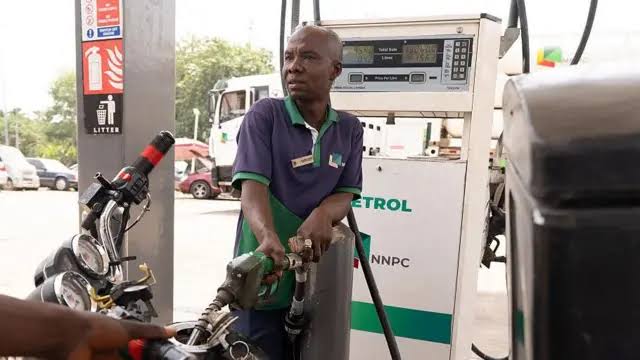
While the drop signals relief for global markets, attention has now shifted to Nigeria, where consumers are anxiously watching for a corresponding decline in pump prices after months of sustained increases.
Since the outbreak of hostilities that disrupted oil flows through the Gulf, petrol prices in Nigeria have surged from about ₦760 per litre to nearly ₦1,300, deepening the cost-of-living crisis and squeezing household incomes.

Despite the easing of global prices, analysts caution that the pass-through effect in Nigeria may not be immediate, given factors such as exchange rate volatility, deregulated pricing, and distribution costs.

Nonetheless, expectations remain high among Nigerians that the reopening of the Strait of Hormuz and the resulting decline in crude prices will translate into lower fuel costs in the coming weeks.
Industry observers note that any sustained drop in international oil prices could provide modest relief, particularly if supported by relative stability in the naira and improved supply logistics.

For millions of Nigerians grappling with rising transport fares and food prices, the latest development offers a glimmer of hope — but one tempered by uncertainty over how quickly, and how significantly, relief will reach the pumps.
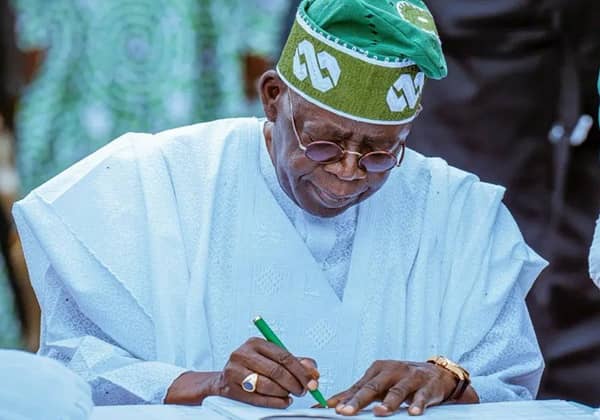
NDDC Drives Regional Development Push, Credits Tinubu For Stability And Project Delivery

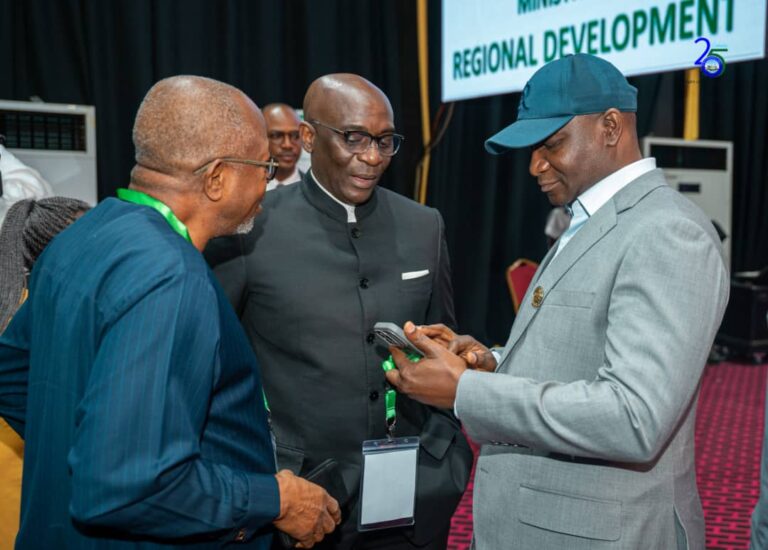
The Managing Director of the Niger Delta Development Commission (NDDC), Dr Samuel Ogbuku, has attributed the Commission’s recent strides to improved stability under the administration of President Bola Tinubu, stressing that continuity in leadership remains critical to sustaining development outcomes in the Niger Delta.

A statement signed and issued by Seledi Thompson-Wakama
Director, Corporate Affairs, NDDC, stated that Ogbuku spoke at a three-day retreat organised by the Federal Ministry of Regional Development for regional development commissions in Benin City, Edo State, where he underscored the disruptive impact of frequent leadership changes on the Commission’s performance.

According to him, the NDDC had nine managing directors between 2015 and 2023, a situation he said created instability and hindered effective project execution. He, however, commended President Tinubu for assuring that the current board would complete its four-year tenure, a move he described as essential for institutional stability.

He also lauded the Minister of Regional Development, Abubakar Momoh, for providing administrative and technical support to the Commission.

“Mr President has charged us to complete all legacy projects for the benefit of the people of the Niger Delta region,” Ogbuku said.

Highlighting ongoing interventions, the NDDC boss pointed to key projects being executed through Public-Private Partnerships (PPP), including the Kaa-Ataba Bridge in Rivers State, which he said is scheduled for completion in July in collaboration with Nigeria LNG Limited. He added that work is also ongoing on the 29-kilometre Bonny Ring Road, which includes nine bridges.

Ogbuku further disclosed that the Commission is partnering with the Delta State Government and Chevron Nigeria Limited on the 70.75-kilometre Omadino-Okerenkoko-Escravos Road and associated bridges in Warri North Local Government Area.

He recalled that between May 18 and May 28, 2024, the Commission inaugurated five projects across Abia, Akwa Ibom, Bayelsa, Edo and Ondo states, covering road and electricity infrastructure.

These include the Obehie-Oke-Ikpe Road in Abia, the Ogbia-Nembe Road in Bayelsa, a 33/11KV electricity substation in Edo, a 33KV feeder line in Ondo, and the Iko-Atabrikang-Akata-Opulom-Ikot Inwang-Okoroutip-Iwochang Road with the Ibeno Bridge in Akwa Ibom.

He added that in February 2025, the Commission inaugurated the Abraka-Oben Road in Delta State and flagged off the reconstruction of the Abraka-Agbor Road.

Ogbuku said the Commission is preparing for another round of project commissioning, including the completion of a 750-bed Niger Delta University hotel complex in Amassoma, Bayelsa State.

On institutional reforms, he disclosed that the NDDC has introduced a corporate governance framework and begun implementing a Governance Advisory Report aimed at strengthening transparency and accountability.
“We are committed to restoring credibility through transparency,” he said.

The NDDC, he added, has also supported the Niger Delta Chambers of Commerce, Industry, Trade, Mines and Agriculture (NDCCITMA) with a N5 billion counterpart fund to boost youth entrepreneurship.

According to him, about 980,000 youths have been registered in the Commission’s database, with several already benefiting from skills training programmes, including 500 youths recently trained in compressed natural gas (CNG) autogas conversion in Akwa Ibom State.

In a presentation at the retreat, the Director-General of the Infrastructure Concession Regulatory Commission, Jobson Ewalefoh, advocated the use of Special Purpose Vehicles (SPVs) to drive infrastructure delivery, noting that Nigeria’s infrastructure gap necessitates innovative financing models such as PPP.

Also speaking, the Head of the Civil Service of the Federation, Didi Esther Walson-Jack, emphasised that effective public service is defined not by the volume of rules but by their proper application.

Tinubu Signs ₦68.32tn 2026 Budget, Extends 2025 Spending Window To June

0

President Bola Ahmed Tinubu has signed into law the 2026 Appropriation Act, approving a record ₦68.32 trillion expenditure for the fiscal year, while also extending the implementation of the 2025 budget to June 30, 2026.

The Presidency disclosed this on Friday in a statement issued by the Special Adviser on Information and Strategy, Bayo Onanuga.

According to the statement, the newly assented budget provides ₦4.799 trillion for statutory transfers, ₦15.8 trillion for debt servicing, ₦15.4 trillion for recurrent expenditure, and ₦32.2 trillion for capital projects under the Development Fund.

Described as “The Budget of Consolidation, Renewed Resilience and Shared Prosperity,” the fiscal plan took effect from April 1, 2026, with full implementation already underway.

The Presidency emphasised that nearly 50 per cent allocation to capital expenditure reflects the administration’s commitment to infrastructure development, economic stability, national security, and inclusive growth.

“The allocations reflect a strategic balance between statutory obligations, debt servicing, recurrent expenditure, and capital investments critical to driving productivity and improving the quality of life for Nigerians,” the statement noted.

In a related development, Tinubu also signed the Appropriation (Repeal and Enactment) (Amendment) Bill, 2026, extending the capital component of the 2025 budget from March 31 to June 30. The move, according to the Presidency, is aimed at ensuring the full utilisation of funds, particularly for ongoing infrastructure projects nearing completion.

The extension is expected to enable Ministries, Departments, and Agencies (MDAs) to consolidate ongoing projects, improve completion rates, and maximise value for public spending.

Tinubu directed MDAs to prioritise transparency, discipline, and efficiency in budget implementation, stressing the need for value for money and timely delivery of projects.

He also commended the National Assembly for its swift consideration and passage of the budget, highlighting the importance of continued collaboration between the executive and legislative arms of government in advancing development goals.

The President further reaffirmed his administration’s commitment to fiscal reforms, improved revenue generation, and investments targeted at economic growth, job creation, and social protection.

Originally presented to the National Assembly on December 19, 2025, at ₦58.47 trillion, the budget was revised upward to ₦68.32 trillion after legislative scrutiny.
Key sectoral allocations include ₦5.41 trillion for defence and security, ₦3.56 trillion for infrastructure, ₦3.52 trillion for education, and ₦2.48 trillion for health.

Tinubu had earlier described the budget as a critical step in Nigeria’s reform journey, acknowledging the challenges faced by citizens while maintaining that ongoing reforms are necessary for long-term stability and shared prosperity.

IAUE Fixes May 8, 9 For 44th Convocation, Elevates 35 To Professors, 41 To Readers

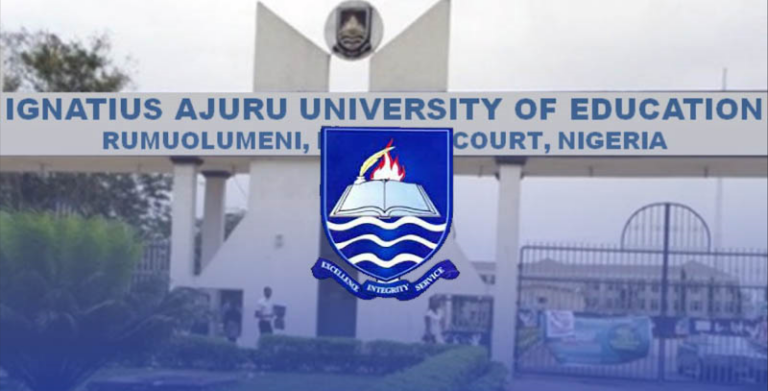
Ignatius Ajuru University of Education (IAUE), Rumuolumeni, Port Harcourt, has rescheduled its 44th convocation ceremony for Friday, May 8 and Saturday, May 9, 2026, with 35 academic staff elevated to the rank of professors and 41 others promoted to associate professors (readers).

The new dates, approved by the Rivers State Governor and Visitor to the university, Siminalayi Fubara, were announced by the Chairman of Senate, Prof. Okechukwu Onuchuku, during an emergency Senate meeting held on Wednesday, April 15, 2026, at the institution’s Postgraduate Hall.

According to the breakdown of events, the first day will feature the award of first degrees and prizes, while the second day will be dedicated to the conferment of postgraduate degrees.
Onuchuku also disclosed that the promotions were ratified by the university’s governing council, describing the development as a significant boost to the institution’s academic capacity and leadership.

A breakdown shows that the newly promoted professors cut across faculties, including Administration and Management Sciences, Agriculture, Education, Humanities, Natural and Applied Sciences, Social Sciences, and Vocational and Technical Education.

Among those elevated are Prof. Ikechi Prince Obinna and Prof. Chukwu Godswill Chinedu in Consumer Behaviour and Sustainability Marketing; Prof. Joy A. Mekuri-Ndimele in Human Resource and Office Information Management; and Prof. Dumo Nkesi Opara in Human Resource Management and Organisational Behaviour.
Others include Prof. Eunice Ngozi Ajie (Agricultural Economics), Prof. Emmanuel Okwu (Library and Information Science), Prof. Grace Hart Lawrence (African Religion and Cultural Heritage), and Prof. Constance Izuchukwu Amanah (Algorithms and Software Engineering).

Also on the list are scholars in Science Education, Mathematics Education, Applied Geophysics, Development Economics, Political Theory, Sociology, and Industrial Technical Education, reflecting a broad spread across disciplines.

Similarly, 41 academics were promoted to the rank of reader, spanning fields such as Financial Accounting, Educational Technology, English Language, Fine and Applied Arts, Public Health, Applied Mathematics, Development Studies, and Technical Education.

The Senate chairman congratulated the beneficiaries and urged them to provide strong academic leadership, mentor younger colleagues, and uphold standards that would enable qualified staff to advance when due.

The convocation and promotions come amid ongoing efforts by the university to strengthen its academic profile, expand postgraduate training, and position itself as a leading institution in teacher education and research in Nigeria.

Bonny Moves Against Kidnapping As Council Boss Launches ‘Operation Protect Okoloama’ Vigilante Force

0

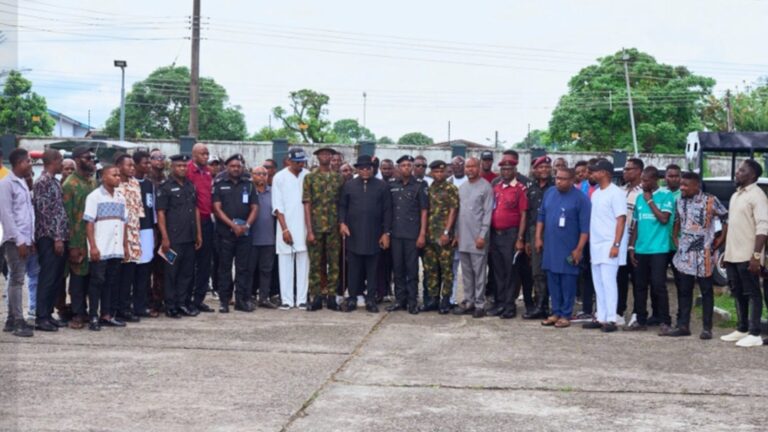
Determined to stem rising insecurity and prevent a recurrence of abductions, Chairman of Bonny Local Government Area in Rivers State, Abinye Pepple, has inaugurated a community-based vigilante outfit, codenamed Operation Protect Okoloama.

Pepple, who performed the inauguration on Tuesday, April 14, 2026, at his office in Bonny, said the initiative forms part of a broader strategy to reinforce security across the island LGA and complement existing security agencies.

He disclosed that each member of the newly formed force would receive a monthly stipend of N100,000, alongside plans to integrate various community vigilante groups under a unified command structure.

According to the council boss, the outfit is designed to strengthen grassroots surveillance and response, particularly in vulnerable riverine communities where difficult terrain and waterways have often been exploited by criminal elements.

Investigations indicate that members of the force underwent screening and profiling by relevant security agencies prior to their inauguration to ensure that only credible and disciplined individuals with strong community ties were enlisted.

Chairman, Bonny LGA, Abinye Pepple

Pepple reiterated his administration’s resolve to rid the area of kidnapping and related crimes, noting that the creation of the vigilante group reflects a commitment to translate assurances into concrete action.

The development follows recent security concerns in Bonny and surrounding areas, where cases of abduction and criminal activity have heightened fears among residents. The waterways and creeks, which serve as major economic routes, have also been identified as escape corridors for kidnappers.

Only recently, a kidnap victim was rescued in the area and presented at the Nigerian Navy Forward Operating Base in Bonny, an incident that drew public attention to the persistent threat of insecurity within the LGA. At the time, Pepple had vowed that such incidents would not be allowed to recur.

Observers say the launch of Operation Protect Okoloama signals a shift towards community-driven security measures, amid growing calls for localised solutions to Nigeria’s security challenges.

Authorities have expressed optimism that closer collaboration between the vigilante force, conventional security agencies, and residents will enhance intelligence gathering and rapid response, ultimately improving safety and restoring public confidence.

Terror Threat Looms Over Abuja As Security Memo Warns Of Planned Attacks On Airport, Prisons

0

A leaked internal security memo has raised fresh alarm over an alleged plot by multiple terrorist groups to launch coordinated attacks on key government installations in Nigeria’s Federal Capital Territory (FCT) and neighbouring Niger State.

The document, dated April 13 and issued by the Nigerian Customs Service (NCS), indicates that suspected fighters linked to the Islamic State West Africa Province (ISWAP), a faction of Boko Haram, Ansaru, and Jama’at Nusrat al-Islam wal-Muslimeen (JNIM) are involved in the plan.

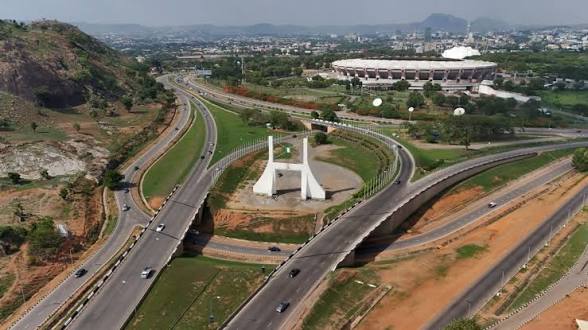
According to the memo, prime targets include the Nnamdi Azikiwe International Airport in Abuja, the Kuje Correctional Centre, and a military detention facility located in Wawa, Niger State. Intelligence cited in the report suggests that some operatives have already infiltrated the FCT, heightening concerns over an imminent attack.

The memo warned that the attackers may attempt to breach detention facilities and target aviation infrastructure, a strategy that could significantly disrupt movement and trigger widespread panic.

Security sources also linked elements of the plot to criminal networks operating around the Kainji Lake National Park axis, an area that has recently witnessed a surge in coordinated attacks and abductions across parts of Niger and Kwara States.

The report recalled that similar networks were behind a string of kidnappings in 2025, including the abduction of students and staff from a Catholic school in Niger State, as well as women and children in surrounding communities.

Further, the memo noted that the planned assault on Abuja’s airport bears resemblance to recent attacks on aviation infrastructure in neighbouring Niger Republic, suggesting an attempt to replicate high-impact operations within Nigeria.

Confirming the authenticity of the document, NCS spokesperson Abdullahi Maiwada described it as a “leaked” communication but declined further comment, citing the sensitive nature of national security matters.

In response, the Customs Service has ordered heightened security measures across its commands, particularly within the FCT. Officers have been directed to intensify patrols, strengthen surveillance systems, and enforce stricter access control at all facilities.

The directive mandates thorough screening of all visitors, with entry denied to individuals without valid reasons. Specialised units, including intelligence and anti-smuggling teams, have also been placed on high alert, while additional reinforcements are being deployed to safeguard strategic locations.

Authorities further emphasised the need for swift response to suspicious activities and enhanced coordination among security agencies to avert any potential breach.

Nigeria’s Debt Hits N159trn As Borrowing Surges By N14trn In One Year

0

Nigeria’s public debt profile rose sharply to N159.27 trillion at the end of 2025, reflecting mounting fiscal pressures and increased borrowing by both federal and subnational governments.

The latest figures released by the Debt Management Office (DMO) show an increase of N14.6 trillion compared to N144.67 trillion recorded in the corresponding period of 2024, and a N5.98 trillion rise from the N153.29 trillion posted at the end of the third quarter of 2025.

According to the DMO, the debt stock comprises both domestic and external obligations of the federal government, the 36 states and the Federal Capital Territory.

A breakdown indicates that domestic debt stood at N84.84 trillion, while external debt was put at N74.42 trillion, underscoring the continued reliance on both local and foreign borrowing to finance budgetary gaps.

The agency noted that domestic debt rose significantly from N74.38 trillion in December 2024, marking a 14.1 per cent increase, while external debt climbed by N4.14 trillion within the same period.

The Federal Government accounted for the bulk of the liabilities, with domestic debt estimated at N80.48 trillion, while states and the FCT recorded a marginal increase to N4.36 trillion.

On the external side, the Federal Government’s debt stood at N66.26 trillion, with subnational governments accounting for N8.15 trillion.

The DMO said the figures were computed using the Central Bank of Nigeria’s official exchange rate of N1,435.25 to the dollar as of December 31, 2025.

The rising debt comes amid fresh borrowing plans by the administration of President Bola Tinubu, who recently sought National Assembly approval for external loans totalling $6 billion.

In a request conveyed to Senate President Godswill Akpabio, the president outlined plans for a structured total return swap financing arrangement of up to $5 billion from First Abu Dhabi Bank in the United Arab Emirates.

Analysts warn that while borrowing remains critical for infrastructure and development financing, the rising debt burden raises concerns over sustainability, debt servicing costs, and fiscal stability in the medium term.

FG Raises Fresh Flood Alarm, Recalls Past Devastation As 33 States Face 2026 Risk

0

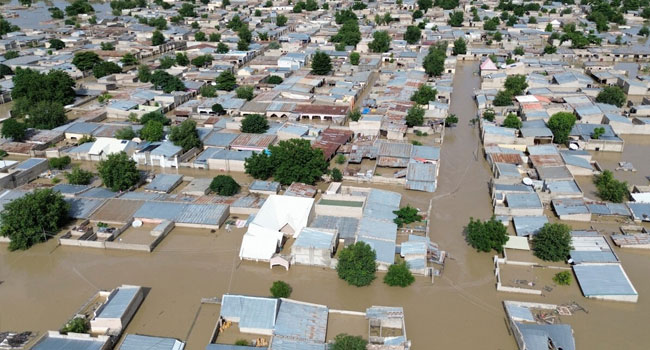
The Federal Government has issued a fresh flood warning across Nigeria, recalling the devastating impacts of previous incidents, as it unveiled the 2026 Annual Flood Outlook (AFO) projecting widespread inundation in 33 states and the Federal Capital Territory.

At the public presentation in Abuja, the Minister of Water Resources and Sanitation, Joseph Utsev, said memories of past flood disasters—marked by loss of lives, displacement of communities, and destruction of farmlands and infrastructure—underscore the urgency of early preparedness.

The outlook, released by the Nigeria Hydrological Services Agency, listed high-risk states to include Bayelsa State, Delta State, Adamawa State and Kebbi State, alongside 29 others, with over 14,000 communities in 266 local government areas projected to experience severe flooding.

Utsev warned that the forecast must not be treated as routine, noting that previous flood seasons left a trail of humanitarian crises and economic setbacks across the country. “Early information saves lives, protects livelihoods and reduces losses,” he said, stressing that forecasts must translate into concrete action at community level.

The minister disclosed ongoing efforts to modernise Nigeria’s hydrological monitoring systems and deepen collaboration with the Nigerian Meteorological Agency to improve the accuracy and timeliness of flood predictions.

Representing President Bola Tinubu, the Minister of Environment, Balarabe Lawal, said the flood outlook aligns with the administration’s broader push for climate resilience and sustainable development.

According to the report, moderate flood risk is expected in 35 states, while flash and urban flooding will hit major cities including Port Harcourt, Lagos, Ibadan and Abuja, largely due to poor drainage systems and increasing rainfall intensity.
Coastal and riverine flooding is also anticipated in states such as Rivers State, Cross River State and Ogun State, driven by rising sea levels and tidal surges, with potential consequences for fishing, transportation and coastal livelihoods.

Director-General of NiHSA, Umar Ibrahim Mohammed, said the 2026 forecast marks a shift toward advanced flood risk intelligence, incorporating hybrid AI-driven modelling to improve accuracy and response time. He added that the agency has upgraded its flood dashboard into a real-time decision-support system, alongside a mobile application to disseminate alerts more effectively.

Also speaking, Director-General of NiMet, Charles Anosike, noted that flooding remains one of the most persistent climate-related threats in Nigeria and across Africa, despite technological progress in forecasting.
The government called on state and local authorities to integrate flood risk into urban planning, strengthen drainage infrastructure, and enforce proper land-use practices, particularly in flood-prone areas.

“Preparedness remains the most effective strategy,” Utsev said. “If we fail to act on these warnings, we risk repeating the painful losses of the past.”

Otu Hails NDDC’s Impact As Lawmakers Inspect Key Niger Delta Road Project

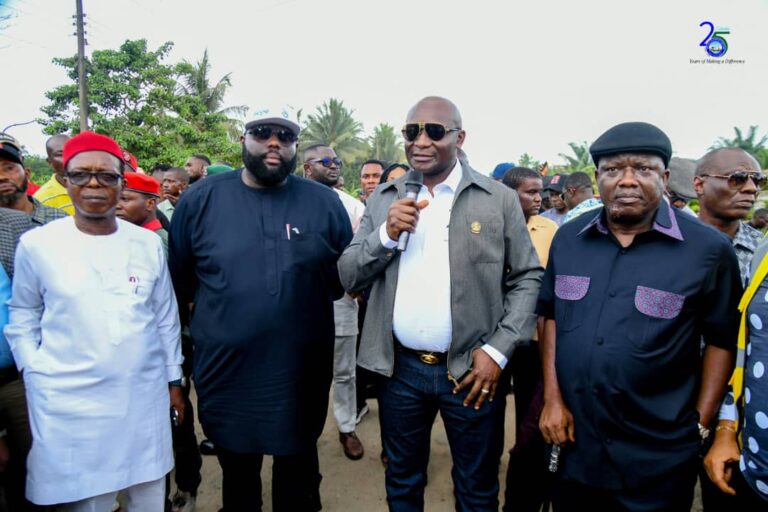
Governor of Cross River State, Bassey Otu, has commended the Niger Delta Development Commission for what he described as significant development strides across the Niger Delta, aligning with the Federal Government’s Renewed Hope Agenda.

Otu gave the commendation while receiving members of the National Assembly Committees on NDDC, who were in the state on oversight inspection of the Calabar–Odukpani–Akamkpa–Ogoja road rehabilitation project.

The delegation, led by Asuquo Ekpenyong, Chairman of the Senate Committee on NDDC, and Erhiatake Ibori-Suenu, Chair of the House Committee on NDDC, also included the Commission’s Managing Director, Samuel Ogbuku.

Addressing the team at Government House, Calabar, the governor said the synergy between the state and the Commission had “changed the face of the Niger Delta,” adding that visible improvements were evident to ordinary citizens across the region.

He attributed the progress to the policy direction of President Bola Tinubu, noting that the administration’s support had strengthened the Commission’s capacity to tackle longstanding infrastructural challenges.

Earlier, Ekpenyong said the joint committees were in the state to carry out their constitutional oversight functions, noting that the road project—long advocated by the state government—had now become a reality. He described the corridor as critical to the movement of petroleum products, agricultural goods and solid minerals within and beyond the state.

In her remarks, Ibori-Suenu commended the governor’s developmental efforts and attention to detail, describing his contributions as impactful at both state and national levels.

At the project site, Ogbuku characterised the Calabar–Odukpani–Akamkpa–Ogoja road as a strategic trans-regional link connecting the South-South, South-East and North-Central zones. He said the intervention followed a directive by President Tinubu to fast-track its rehabilitation.

According to him, phases one and two of the project, covering 27.5 kilometres, have been completed, with other sections progressing steadily. He added that the Commission’s evolving public-private partnership model was delivering results, citing ongoing infrastructure projects across the region.

Ogbuku also emphasised improved collaboration between the Commission and state governments, describing the agency’s shift as one “from transaction to transformation.”

Officials said the project would significantly ease vehicular movement and enhance economic activities across multiple regions, reinforcing the NDDC’s mandate to drive sustainable development in the Niger Delta.

ADC Leadership Crisis: Supreme Court Fixes April 22 For Hearing, Orders Accelerated Process

The Supreme Court of Nigeria has fixed April 22 for hearing in an appeal arising from the protracted leadership dispute within the African Democratic Congress (ADC).

The appeal was filed by a factional National Chairman of the party, Senator David Mark, challenging earlier court decisions that went against his claims to the leadership of the ADC.

A five-member panel of the apex court, led by Justice Mohammed Garba, scheduled the hearing on Tuesday after granting an application for accelerated hearing in the appeal marked SC/CV/180/2026.

The court also issued directives to fast-track the filing of briefs. Counsel to the appellant, Jibril Okutepa (SAN), was ordered to file and serve the appellant’s brief on Wednesday.

Respondents in the case are to file and serve their briefs within three days of receiving the appellant’s submission, while the appellant is permitted to file a reply, where necessary, within one day of being served.

The appeal challenges the March 12 judgment of the Court of Appeal, which dismissed Mark’s earlier appeal against the September 4, 2025 ruling of the Federal High Court, Abuja.

In that ruling, Justice Emeka Nwite declined to grant injunctive reliefs sought in an ex parte application filed by a party chieftain, Nafiu Bala Gombe.

The dispute is part of a lingering leadership crisis that has continued to generate factions within the ADC, with contending groups laying claim to the party’s national leadership structure.

At the centre of the legal tussle are efforts by rival camps to secure judicial backing for control of the party’s affairs, including its structures ahead of future electoral activities.

The conflicting judgments from lower courts have further deepened divisions within the party, prompting recourse to the Supreme Court for a final determination.

The outcome of the April 22 hearing is expected to provide clarity on the leadership question and potentially shape the party’s internal cohesion ahead of upcoming political engagements.