

Home Blog Page 42

APC Shifts Presidential Primary To May 23 As Tinubu Meets Governors Ahead Of 2027 Race

0

The All Progressives Congress (APC) has rescheduled its presidential primary election to May 23, 2026, from the earlier dates of May 15 and 16, as part of adjustments to its timetable for the 2027 general elections.

The party also fixed its governorship primaries for May 21, 2026, alongside revised dates for other nomination processes, following deliberations at the 186th National Working Committee (NWC) meeting held in Abuja.

APC Deputy National Publicity Secretary, Duro Meseko, who briefed journalists after the meeting, said the changes were in line with provisions of the Electoral Act 2026 and the timetable released by the Independent National Electoral Commission (INEC).

He disclosed that the sale of nomination forms would run from April 25 to May 2, while the deadline for submission has been fixed for May 4, 2026. Screening of aspirants across all categories, including presidential hopefuls, has also been rescheduled, with the presidential screening slated for May 9.

According to the revised timetable, primary elections will begin with the House of Representatives on May 15, followed by the Senate on May 18, State Houses of Assembly on May 20, governorship on May 21, and the presidential primary on May 23.

Meseko added that the party would adopt both direct and consensus modes of primaries, noting that while consensus would be encouraged, any disagreement among aspirants would automatically trigger direct primaries.

He also dismissed claims that nomination forms were being reserved for select individuals, insisting that the process remains open to all qualified aspirants.

Meanwhile, the electoral body has scheduled the presidential and National Assembly elections for January 16, 2027, with governorship and State Assembly polls to follow on February 6. It also fixed the window for party primaries and dispute resolution between April 23 and May 30, 2026.

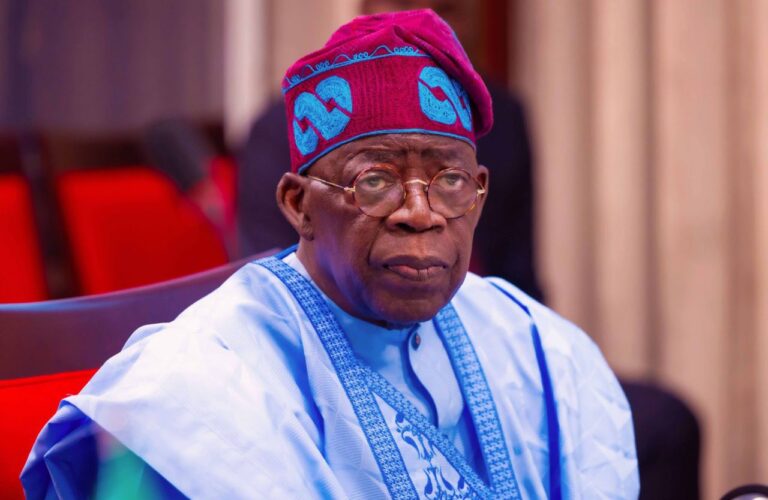
In a related development, President Bola Ahmed Tinubu is currently meeting with APC governors at the Aso Rock Presidential Villa, in what observers see as a strategic consultation ahead of the party’s primaries.

The meeting, holding at the Council Chamber, comes barely three weeks before the commencement of the party’s nomination contests.

Governors in attendance include Babagana Zulum, Hope Uzodimma, Hyacinth Alia, Inuwa Yahaya, Biodun Oyebanji, Peter Mbah,
Rivers Reaffirms Backing for Private Health Providers, Seeks Stronger Partnership At ANPMP Conference

0

The Rivers State Government has reiterated its commitment to deepening collaboration with private medical practitioners as part of efforts to improve healthcare delivery across the state and the country.
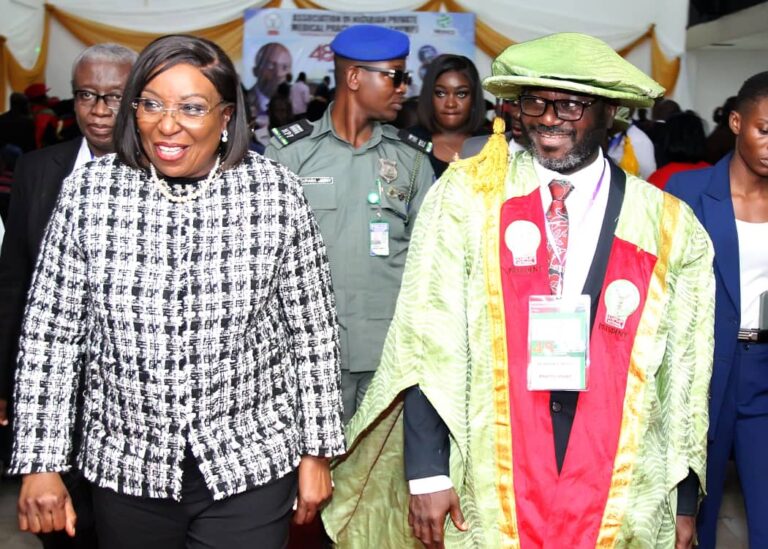
Deputy Governor Ngozi Nma Odu restated the position on Thursday at the 48th Annual General Meeting and International Scientific Conference of the Association of Nigerian Private Medical Practitioners, held at the Dr. Obi Wali International Conference Centre.

Odu commended members of the association for their resilience and vital contributions to healthcare delivery, noting that private practitioners cater to between 60 and 70 per cent of Nigeria’s population. She described the conference theme, “Enhancing Healthcare Delivery in Nigeria: The Role of Private Medical Practitioners,” as both apt and timely.

Highlighting the growing role of the private sector in addressing emerging health challenges, the deputy governor also drew attention to the risks faced by practitioners, including kidnapping and violent attacks, describing their sacrifices as critical to sustaining healthcare services nationwide.

She reaffirmed the commitment of the administration of Governor Siminalayi Fubara to policies that promote quality healthcare, attract investment, and create an enabling environment for medical professionals to thrive. According to her, sustained synergy between public and private actors remains essential to building a resilient and inclusive health system.

Odu further spotlighted the state’s health insurance scheme, the Rivers State Contributory Health Protection Programme, which partners with private health facilities to expand access to care. She disclosed that the initiative has funded several medical procedures, including surgeries, through such collaborations.

She urged participants to utilise the conference as a platform for meaningful engagement, knowledge exchange, and the development of practical solutions to challenges confronting the healthcare sector, expressing optimism that deliberations would yield actionable outcomes.

In his remarks, National President of the association, Adesola Adekunle Kayode, said the body had, over the past four years, achieved key reforms, including a new tariff structure and strengthened institutional frameworks to enhance the dignity of private practitioners.

Also speaking, Chairman of the occasion, Innocent Ekwem, decried the state of the nation’s health system and challenged participants to generate ideas capable of revitalising healthcare institutions.

The conference attracted stakeholders from across the health sector, underscoring renewed calls for collaboration to reposition Nigeria’s healthcare delivery system.

Atiku Faults Tinubu’s $516m Loan Plan, Warns Against ‘Opaque, Debt-Driven’ Highway Project

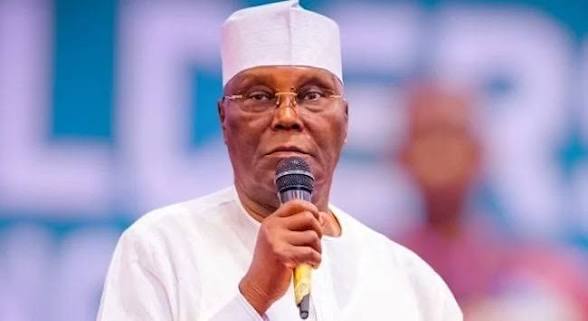
Former Vice President Atiku Abubakar has criticised President Bola Ahmed Tinubu over his request for Senate approval of a fresh $516 million external loan to fund segments of the Sokoto–Badagry Superhighway, raising concerns about transparency and fiscal sustainability.

In a statement issued by his Senior Special Assistant on Public Communication, Phrank Shaibu, Atiku questioned the rationale behind seeking additional foreign borrowing without clear disclosure of terms, cost-benefit analysis, and a credible repayment framework, especially amid Nigeria’s rising debt profile.

While acknowledging the importance of infrastructure in driving national integration and economic expansion, he cautioned that “noble intentions cannot excuse reckless fiscal choices.”

He stressed that development must not be framed along regional lines, insisting that all Nigerians deserve projects that are sustainable and transparent, rather than those that mortgage the country’s future.

“What Nigerians expect is not just ambitious projects, but responsible financing. Development must not become a euphemism for deepening debt traps that generations yet unborn will be forced to repay,” he said.

Atiku further argued that although strategic infrastructure can unlock economic corridors, such initiatives must be guided by fiscal discipline, prioritisation, and openness, warning that borrowing should not substitute for efficiency in governance.

He also expressed concern over reports that the project was awarded to Hitech Construction Company Limited without a transparent and competitive bidding process, describing the development as a continuation of the controversy that trailed the Lagos–Calabar Coastal Highway.

According to him, “Nigerians have not forgotten the controversy surrounding the Lagos–Calabar Coastal Highway, where due process and competitive bidding were widely questioned. It is therefore deeply troubling that a similar opaque approach appears to be playing out again—this time funded by borrowed money.”

The former Vice President questioned the propriety of securing public loans for projects allegedly awarded without due process, warning that such practices erode public trust.

“What manner of leadership takes loans in the name of the Nigerian people, only to channel those resources into contracts awarded without transparency to associates and insiders? This is not governance—it is a betrayal of public trust,” he added.

Atiku called on the National Assembly to subject the loan request to rigorous scrutiny, ensuring that its terms align with national interest and that the project delivers measurable economic value.

“Nigeria must build, but Nigeria must not borrow blindly. Progress anchored on opacity and debt accumulation is neither progress nor leadership—it is postponement of crisis,” he said.

It would be recalled that President Bola Ahmed Tinubu formally approached the Senate for approval to secure a fresh $516.3 million loan as part of efforts to finance ongoing infrastructure development.

In a correspondence addressed to Senate President Godswill Akpabio and read during Thursday’s plenary, the President disclosed that the facility would be sourced from Deutsche Bank. The loan is intended to support the already approved borrowing framework tied to the Sokoto–Badagry 1,000km Super Highway project.

Tinubu urged lawmakers to grant expedited consideration to the request, underscoring the strategic importance of the project to national connectivity and economic growth.

Following the presentation, Akpabio referred the request to the Senate Committee on Local and Foreign Debts for further legislative scrutiny, directing it to report back within one week.

SWAN Rivers Congress Urges Fubara To Appoint Sports Commissioner, Revamp Sector

0

The Sports Writers Association of Nigeria (SWAN), Rivers State Chapter, has called on Governor Siminalayi Fubara to urgently appoint a substantive Commissioner for Sports, as part of measures to reposition the sector for optimal performance and sustainable growth.

This formed part of resolutions reached at the association’s Congress held on April 15, 2026, at the Ernest Ikoli Press Centre of the Nigeria Union of Journalists (NUJ) in Port Harcourt.

In a communiqué issued at the end of the meeting, SWAN commended the governor for sustaining financial support to key state teams—Rivers United FC, Rivers Angels FC, and Rivers Hoopers Basketball Club—as well as backing para-athletes who recorded a successful outing at the National Para Games in Abuja.

Despite the commendation, the body stressed that the absence of a sports commissioner has created a leadership vacuum that must be addressed without delay to ensure proper coordination and policy direction.

The Congress also underscored the need for the immediate constitution and inauguration of governing boards for the state’s major clubs and sporting associations under the Rivers State Sports Council. It further advocated the inclusion of sports writers in these boards to enhance transparency, professionalism, and effective communication.

SWAN congratulated the Permanent Secretary of the Ministry of Sports, Emmanuel Ndah, and the Director of Sports, Rivers State Sports Council, Obia Nyingiyikabo, for the state’s performance at the Abuja Para Games, describing it as a milestone achievement.

To deepen grassroots development, the association urged the state government to organise a sports festival without further delay, noting that such an initiative would serve as a platform for discovering and nurturing young talents.

The Congress also tasked the Rivers State Football Association (RSFA) to expand its grassroots football programmes beyond the annual Federation Cup, highlighting football’s critical role in youth engagement and employment.

In addition, SWAN appealed to multinational corporations and private sector players operating in Rivers State to invest in sports development through sponsorships and partnerships, aligning with practices in other parts of the country.

The body further called for the revival of key training institutions, including the Sports Institute in Isaka and the Sports Academy in Etche, to strengthen athlete and technical personnel development.

While acknowledging ongoing renovation work at the Yakubu Gowon Stadium in Elekahia, SWAN urged the government to extend similar interventions to other dilapidated sports facilities across the state.

The association reaffirmed its commitment to advancing sports development through advocacy, constructive engagement, and responsible journalism.

The communiqué which was made available to The Atlantic Bell at the end of the Congress was signed by Okechukwu Onwugbonu, and Florence Ibisiki, Chairman and Secretary of the Communiqué Committee, Jim Opiki Udede, Technical Adviser, as well as Cyril Dum Wite, Chairman of Rivers State SWAN and Tonye Orabere, Secretary of SWAN.

FG, States, LGs Get N2.036trn As FAAC Records Revenue Boost

0

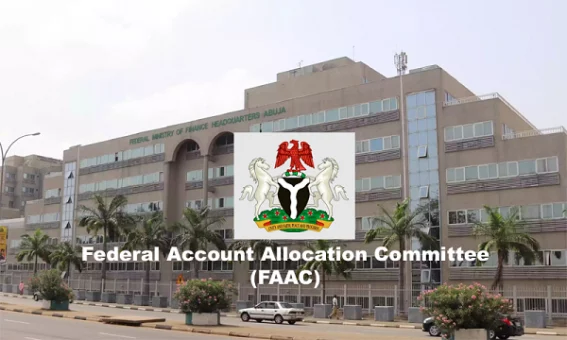
Improved statutory revenue performance boosted distributable funds in March 2026, with the Federation Account Allocation Committee (FAAC) sharing a total of N2.036 trillion among the three tiers of government at its April meeting in Abuja.

Data released by the Office of the Accountant-General of the Federation showed that the allocation comprised N1.320 trillion in statutory revenue, N515.391 billion from Value Added Tax (VAT), and N200 billion as augmentation to cushion disbursements.

A communiqué issued after the meeting stated that “a total sum of N2.036 trillion, being the March 2026 Federation Account Revenue, has been shared among the Federal Government, states, and local governments.”

The statement further indicated that gross revenue available for the month stood at N2.364 trillion before deductions. From this, N81.084 billion was deducted as cost of collection, while N246.872 billion was allocated for transfers, refunds, and savings.

Statutory revenue remained the dominant contributor to the pool, rising to N1.699 trillion in March from N1.561 trillion recorded in February—an increase of N137.914 billion.

In contrast, VAT collections recorded a marginal dip. Gross VAT revenue for March stood at N664.425 billion, slightly lower than the N668.450 billion generated in the preceding month.

From the total distributable revenue, the Federal Government received N789.159 billion, states got N657.596 billion, while local government councils were allocated N468.826 billion. Oil-producing states received N120.759 billion as derivation revenue.

A breakdown of statutory revenue showed the Federal Government received N632.260 billion, states N320.691 billion, and local governments N247.239 billion, alongside the N120.759 billion shared as derivation.

From VAT proceeds, the Federal Government got N51.539 billion, states N283.465 billion, and local governments N180.387 billion, reflecting the growing dependence of subnational governments on consumption-based taxes.

The N200 billion augmentation was also distributed, with the Federal Government receiving N105.360 billion, states N53.440 billion, and local governments N41.200 billion.

On revenue performance, the communiqué noted increases in Companies Income Tax (CIT), Capital Gains Tax (CGT), Stamp Duties (SDT), and excise duty. However, it reported declines in Petroleum Profit Tax (PPT), Hydrocarbon Tax (HT), oil and gas royalty, import duty, and CET, while VAT recorded a slight decrease.

FAAC meets monthly to distribute revenue accrued into the federation account in line with constitutional provisions, with allocations reflecting fluctuations in oil receipts, tax collections, and other revenue streams.

N5.5bn Tax Row: Supreme Court To Decide FIRS, Bayelsa Dispute July 27

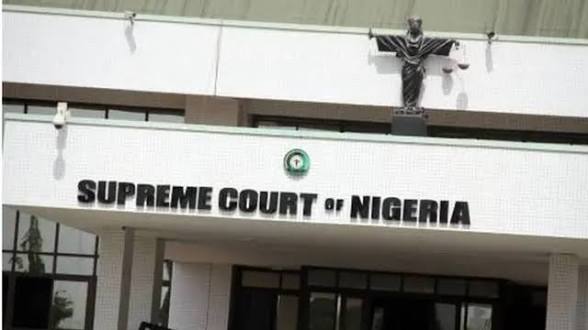
Judgment has been reserved by the Supreme Court of Nigeria in the protracted tax dispute between the Federal Inland Revenue Service (FIRS) and the Bayelsa State Revenue Service, with a verdict now slated for July 27, 2026.

The decision followed arguments from counsel representing both parties before a five-member panel of the apex court presided over by Ibrahim Saulawa, who announced the adjournment after the adoption of final written briefs.

Representing the Federal Government, the Attorney-General of the Federation, Lateef Fagbemi (SAN), pressed the court to overturn the earlier rulings of the lower courts, insisting that due process was not followed by the Bayelsa State Government.

He argued that under the Personal Income Tax Act, disputes of this nature ought to originate before the Tax Appeal Tribunal, rather than the regular courts. He also faulted the reliance on documents introduced by a third party not formally recognised in the suit, describing it as a procedural flaw that undermined the integrity of the judgments.

Fagbemi further urged the court to rule that the disputed funds remain with the Federal Government and sought an order compelling the state to refund N3.6bn.

However, counsel to the Bayelsa State Government maintained that the dispute fundamentally concerns the legal authority to collect personal income tax. He told the court that findings from an audit conducted by the FIRS itself support the state’s claim to N5.5bn out of the N8.8bn in contention.

He noted that both the trial court and the appellate court had already affirmed the state’s entitlement, arguing that there was no basis for the apex court to disturb those concurrent findings.

On the issue of interest, the state’s counsel contended that Bayelsa could not be penalised for funds it never had custody of, while urging the court to dismiss the appeal in its entirety.

The case, marked SC/CV/472/2025, is expected to clarify longstanding questions around tax jurisdiction and revenue entitlements between federal and state authorities.

NDDC Pushes E-Procurement Reform, Highlights Gains For Contractors, Stakeholders

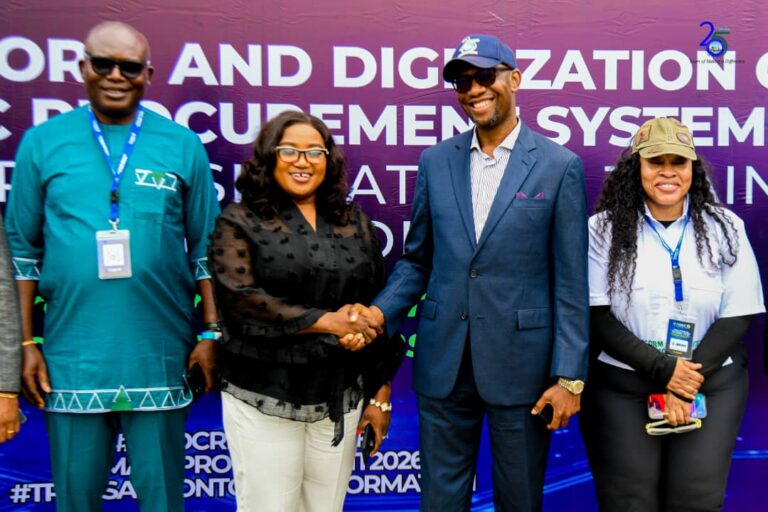
The Niger Delta Development Commission (NDDC) has intensified efforts to deepen transparency and efficiency in its operations, unveiling a digitised procurement framework designed to enhance access and opportunities for contractors and other stakeholders.

At a sensitisation programme held in Yenagoa, the Commission said the reform would simplify bidding processes, eliminate bottlenecks and create a more competitive environment for contractors operating in the Niger Delta region.

Director of Procurement at the Commission, Chuks Osuji, explained that the initiative was aimed at equipping contractors, consultants, vendors and civil society groups with the knowledge required to navigate the new electronic procurement system.

He noted that the transition from manual to digital processes would significantly reduce delays and administrative hurdles, enabling contractors to submit bids remotely and monitor procurement activities in real time.

“This reform is about making the system work better for everyone, particularly contractors, who can now participate from anywhere without the constraints associated with manual processes,” he said, adding that the platform would ensure value for money while promoting fairness and accountability.

Osuji stressed that the digitisation would curb entrenched challenges such as nepotism, bureaucracy and irregularities, thereby opening up the space for qualified contractors to compete on merit.

He commended the Managing Director of the Commission, Samuel Ogbuku, for driving reforms that reposition the agency towards global best practices.

Also speaking, the facilitator and Head of Procurement at Federal University Otuoke, Comfort Taavaan-Ogolo, said the digital transition would enhance transparency and expand access to procurement opportunities.

According to her, contractors stand to benefit from a level playing field, improved access to information and a more predictable procurement cycle, which collectively reduce uncertainty and cost of participation.

She added that features such as online bid submission, real-time tracking and improved data management would not only boost efficiency but also strengthen trust between the Commission and its stakeholders.

Participants at the programme were taken through practical demonstrations of the e-procurement platform, with emphasis on how contractors can leverage the system to improve their chances of securing projects.

The initiative, stakeholders noted, signals a shift towards a more inclusive and technology-driven procurement system that prioritises integrity, competitiveness and ease of doing business.

Stand Out Through Integrity, NYSC Rivers Coordinator Charges Camp Officials

0

The Rivers State Coordinator of the National Youth Service Corps (NYSC), Moses Oleghe, has called on camp officials for the 2026 Batch A Stream II orientation exercise to uphold the highest standards of discipline and moral conduct, urging them to distinguish themselves through integrity.

Oleghe gave the charge during his maiden meeting with officials at the orientation camp in Nonwa-Gbam, Tai Local Government Area of Rivers State. He emphasised the need for officials to go beyond merely being different, and instead embody integrity that sets them apart in all actions and inactions throughout the exercise.

The coordinator stressed the importance of strict adherence to the NYSC Code of Conduct, directing that copies be made available to all officials through heads of committees and collaborating agencies to ensure alignment with management expectations.

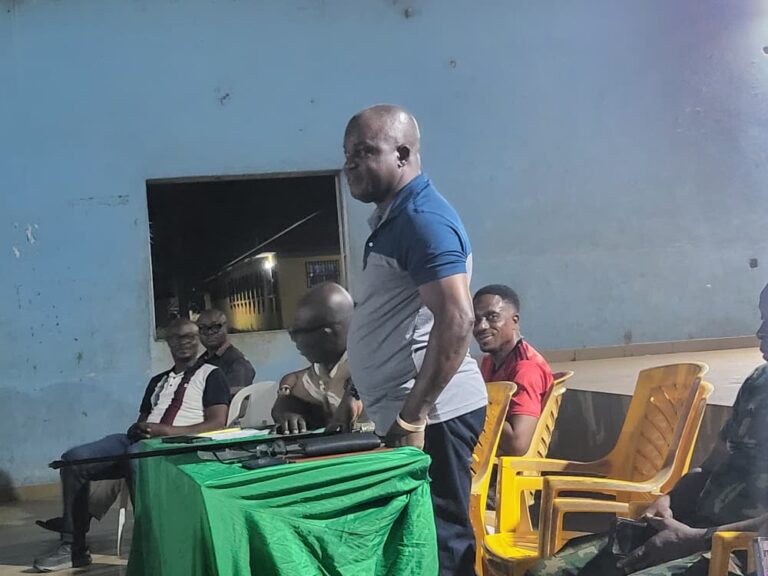
Mr Uloneme.

On security, he urged heightened vigilance, calling on officials to remain on red alert and promptly report any suspicious activity or individuals that could threaten the peace of the camp. He added that access to the camp would be strictly controlled, noting that only individuals with official duties would be allowed entry, except with his express approval.

Oleghe further cautioned officials against the use of corporal punishment, abusive language, or any form of physical contact with corps members or fellow officials, regardless of provocation.

In his remarks, the Camp Director, Barnax Uloneme, appealed to officials to demonstrate dedication and commitment to ensure a successful orientation programme. He also pledged an open-door policy to encourage inclusiveness while seeking the full cooperation of all stakeholders.

The NYSC orientation camp is a critical phase in the service year, designed to instil discipline, leadership, and national unity among corps members.

US Senator Alleges Nigerian Officials’ Complicity In Killings Of Christians, Seeks US Action

0

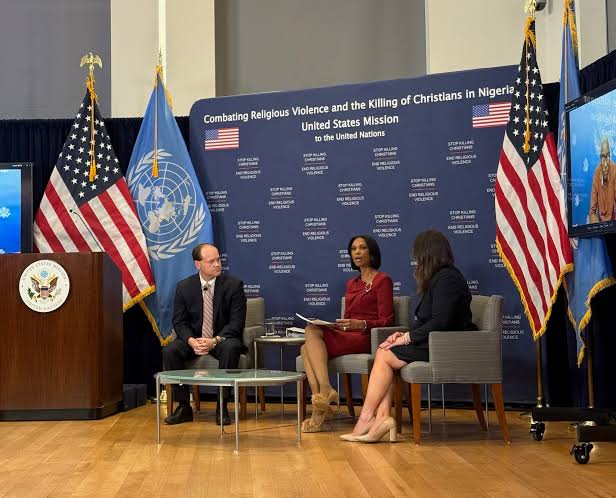
United States Senator Ted Cruz has accused Nigerian government officials of complicity in what he described as the mass killing of Christians, alleging that authorities have failed to decisively address persistent insecurity in the country.

Cruz made the claims on Tuesday during a Senate Foreign Relations subcommittee hearing on “The US approach to counterterrorism in Africa,” where he asserted that Nigeria records the highest number of Christians killed for their faith globally.

According to him, since 2009, over 50,000 Christians have been killed by extremist groups, while more than 20,000 churches, schools and religious institutions have been destroyed.

He further alleged that some Nigerian officials, at both local and federal levels, have enabled the violence, while also criticising what he described as the slow pace of response by authorities to worsening insecurity.

The lawmaker linked part of the crisis to the implementation of Sharia law in several northern states, arguing that it has contributed to religious tensions and violence.
Cruz disclosed that he had previously engaged Nigerian defence and security officials, noting that assurances given during those meetings have yet to translate into tangible outcomes.

In October, the senator introduced the Nigeria Religious Freedom Accountability Act of 2025, a proposed law aimed at holding Nigerian officials accountable for alleged violations of religious freedom.

During the hearing, Cruz queried US State Department officials on whether engagements with Nigeria had yielded results following actions taken by the administration of former President Donald Trump over concerns about religious persecution.

Responding, a senior official at the State Department’s Bureau of African Affairs, Nick Checker, said Nigeria has shown a degree of cooperation with the United States, citing reforms within the country’s security architecture.

Checker noted recent steps including leadership changes in security agencies, the recruitment of 50,000 additional troops, deployment of forest guards to violence-prone regions such as the Middle Belt, and increased prosecution of suspected terrorists.

He also referenced the establishment of a bilateral high-level working group following engagements between a Nigerian delegation led by National Security Adviser Nuhu Ribadu and a US delegation headed by Allison Hooker.

While acknowledging progress, the US official maintained that more efforts are required, adding that Washington would continue to press Nigeria to intensify actions against insecurity and protect vulnerable communities.

Tinubu Drops Edun, Dangiwa in Cabinet Shake-Up to Boost Economic Delivery

0

President Bola Tinubu has removed the Minister of Finance and Coordinating Minister of the Economy, Wale Edun, and the Minister of Housing and Urban Development, Ahmed Dangiwa, in a cabinet reshuffle aimed at strengthening economic coordination and improving policy delivery.

The decision, announced on Tuesday, was conveyed in a memo signed by the Secretary to the Government of the Federation, George Akume, and made public through his media aide, Yomi Odunuga.

According to the government, the removals form part of efforts to reinvigorate the Federal Executive Council and accelerate the implementation of the administration’s Renewed Hope Agenda, particularly in critical sectors tied to economic performance and infrastructure delivery.
In their place, the President appointed Taiwo Oyedele as the new Minister of Finance and Coordinating Minister of the Economy, while Dr. Muttaqha Darma was named Minister-designate for Housing and Urban Development.

Officials said the reshuffle was driven by the need for “stronger cohesion, improved synergy, and more impactful delivery” across government institutions, signalling concerns within the administration over the pace and coordination of economic management and housing sector reforms.

Though described as “minor,” the shake-up affects two strategic portfolios central to Nigeria’s economic stability and