

Home Blog Page 40

2027: Wike Backs Chinda For Governor, Names Obuah, Nwogu, Onyesoh For Senate In Rivers Power Play

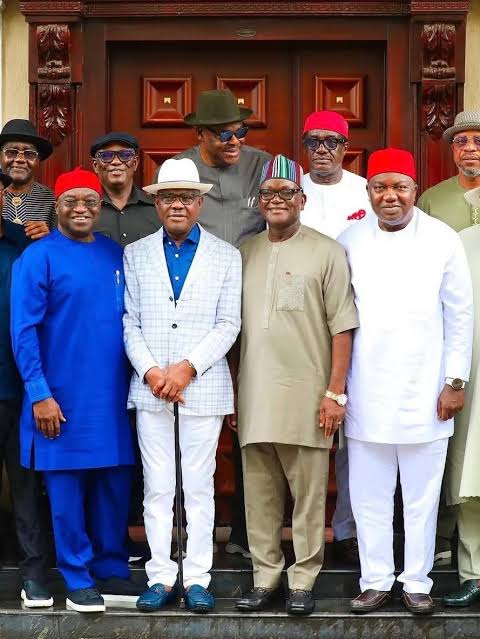
Fresh cracks have widened within the political establishment in Rivers State as the Minister of the Federal Capital Territory (FCT), Nyesom Wike, is said to have endorsed a slate of candidates ahead of the 2027 general elections, in what observers interpret as a decisive move to reassert control over the state’s political structure.

Multiple party sources disclosed that Wike has thrown his weight behind the member representing Obio/Akpor Federal Constituency, Kingsley Chinda, as the preferred governorship candidate on the platform of the Peoples Democratic Party (PDP). Chinda, a ranking lawmaker and prominent voice within the PDP caucus in the House of Representatives, is reportedly set to obtain his nomination form imminently.

The endorsement is particularly significant given Chinda’s stance during the recent wave of defections that hit the PDP, as he remained within the party while several colleagues aligned elsewhere. His positioning, insiders say, reflects both loyalty to the party and alignment with Wike’s political bloc.

In the same vein, the former Rivers governor is also said to have endorsed former PDP state chairman, Felix Obuah, alongside former National Assembly members Olaka Nwogu and Allwell Onyesoh for senatorial contests across the state. Two of the candidates will run under the APC

Sources within the circle also disclosed that a young candidate has been endorsed to replace Hon. Chinda in the House of Representatives.

It is not yet clear if the members of the state House of Assembly who defected to the APC will defect back to the PDP to enhance their chances of returning as lawmakers in 2027.

The development underscores an intensifying rift between Wike and his successor, Governor Siminalayi Fubara, whose administration has in recent months faced mounting political pressure from factions loyal to the FCT minister.

Though both men emerged from the same political structure, their relationship has deteriorated amid disagreements over control of party machinery, governance style, and the broader political direction of Rivers State. The latest endorsements are widely viewed as Wike’s clearest signal yet that he is charting an independent course ahead of 2027.

Sources within the PDP suggest that the move effectively formalises a parallel power structure, with Wike consolidating influence through loyalists positioned for key elective offices. “This is beyond consultation; it is a declaration,” a senior party figure said, noting that the endorsements could trigger a fresh round of alignments and counter-alignments within the state.

Analysts say the choice of Chinda is strategic. As a federal lawmaker with deep roots in Obio/Akpor, Wike’s political stronghold, his candidacy could help retain grassroots support while appealing to the legislative bloc within the PDP. Similarly, the senatorial endorsements reflect a blend of experience and longstanding loyalty to Wike’s camp.

However, the development raises questions about the cohesion of the PDP in Rivers, a state long regarded as one of its strongest bastions. With competing centres of authority emerging, the likelihood of internal contests, parallel congresses, or even defections cannot be ruled out.

While official declarations are yet to be made, the endorsements have already altered the political calculations ahead of the next election cycle. For Governor Fubara, the challenge will be to consolidate his own base and assert control over party structures. For Wike, the move appears aimed at sustaining relevance and influence in Rivers politics despite his current role at the federal level.

As the 2027 race gradually takes shape, Rivers State once again appears set for a high-stakes political contest, with the PDP’s internal dynamics likely to play a decisive role in determining its outcome.
Court Ruling Deepens Crisis In ADC, Bars INEC from Recognising Mark-Led Congresses

Fresh turmoil has engulfed the African Democratic Congress (ADC) following a Federal High Court judgment restraining the Independent National Electoral Commission (INEC) from recognising or participating in state congresses organised by committees set up by the party’s caretaker leadership.

Delivering judgment in Abuja on Wednesday, Justice Joyce Abdulmalik ruled that the authority to conduct state congresses resides exclusively with the party’s state executive committees, not the national leadership.

The court further affirmed that the four-year tenure of the ADC’s State Working Committees and State Executive Committees remains valid and subsisting, pending the conduct of duly constituted congresses and the convening of a national convention.
In a decision that underscores deepening divisions within the party, the court held that neither the Constitution of Nigeria nor the ADC constitution empowers the caretaker/interim National Working Committee, led by David Mark, to appoint committees to conduct state congresses.

The suit (FHC/ABJ/CS/581/2026) was instituted by Don Norman Obinna, Johnny Tovie Derek, Obah C. Ehigiator, Hon. Olona Yinka, Dr. Charles Idowu Omideji, Samuel Pam Gyang, and Obianyo Patrick, on behalf of ADC state chairmen and executive committees nationwide.

Joined as defendants are the ADC, Mark, Patricia Akwashiki, Bolaji Abdullahi, Rauf Aregbesola, Prof. Oserheimen Osunbor, and INEC.

The judge framed the central issue as whether the second to sixth defendants, including Mark, had the constitutional or statutory authority to assume the powers of elected state organs of the ADC, whose tenure is guaranteed under the party’s constitution.

She relied on section 223 of the 1999 Constitution, which mandates political parties to conduct periodic elections based on democratic principles, as well as Article 23 of the ADC Constitution, which provides that national and state officers shall hold office for a maximum of two terms spanning eight years.

According to her, “the question is whether there is any infraction committed by Mr Mark and co-defendants when they convened meetings and appointed a body known as a congress committee to organise state congresses.”

On the defence raised by the defendants that the matter was an internal affair of a political party and therefore outside the jurisdiction of the court, the judge acknowledged the settled legal position but clarified its limits.

She held that while courts are generally reluctant to interfere in internal party matters, they will intervene where there is a clear allegation of violation of constitutional or statutory provisions.

“The law is settled that courts will not interfere. However, where there is an allegation of breach of constitutional or statutory provisions, the court has a duty to intervene,” she ruled.

“Where a party alleges that its constitution has been violated, the court is bound to adjudicate. Any argument that this court lacks jurisdiction on that basis fails,” she added.

Justice Abdulmalik stressed that political parties must operate strictly within the confines of their constitutions, noting that any deviation from prescribed procedures, particularly in leadership matters, cannot be justified under the guise of internal autonomy.

She found that the procedure adopted by the defendants, including the appointment of a “congress committee,” was not recognised by the ADC constitution and therefore invalid.

Consequently, the court held that the tenure of the state executive committees remains valid and must be allowed to run its full course without interference.
The judge further ruled that only those elected structures have the authority to organise state congresses, effectively nullifying any process initiated by the caretaker leadership.

The plaintiffs had challenged the legality of the caretaker committee’s decision to constitute a congress committee for the April 2026 state congresses, arguing that such moves violate the party’s constitution.

Justice Abdulmalik’s ruling effectively halts the planned congresses under the Mark-led leadership, further compounding internal wrangling within the ADC and casting uncertainty over the party’s organisational cohesion ahead of future political activities.

NIWA Backs Move By RSU To Launch African Fleet Management Forum For Safer, Greener Water Transport

The National Inland Waterways Authority (NIWA) has signalled support to partner with Rivers State University (RSU) on the establishment of an African Fleet Management Forum aimed at advancing fleet management, green mobility and safety across Nigeria’s inland waterways.

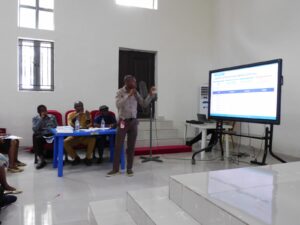
The initiative, which underscores a growing push for sustainable transport within the blue economy, was disclosed during the 3rd International Conference organised by the Institute of Geosciences and Environmental Management, RSU, in collaboration with UNITAR-CIFAL and the World Food Programme (WFP), held in Port Harcourt.

Speaking on the sidelines of the conference, Mrs Anasthasia Tebirawa, Assistant Manager, Human Resources and Administration at NIWA’s Port Harcourt Area Office, described the event as impactful and insightful, noting that it provided practical value to participants and their organisations.

A Scholar presenting a paper on App Design to check transport safety in Nigeria during a Technical Session aimed to generate innovative ideas and practical frameworks at the conference.

Tebirawa, who represented the Area Office Manager, Surveyor Bernard Ekawu, explained that the proposed collaboration aligns with NIWA’s 2025 strategic focus on leveraging private sector partnerships to enhance service delivery, safety standards and environmental sustainability across the waterways.

She said the African Fleet Management Forum would provide a platform for capacity building and certified training programmes for NIWA personnel as well as boat operators, thereby promoting professionalism, reducing operational errors and improving safety outcomes.

According to her, the partnership would also support cleaner transport initiatives in line with the blue economy agenda, including measures to monitor and reduce pollution from water vessels.

“By working with industry experts, NIWA can optimise river port usage and strengthen intermodal transport systems, ensuring efficiency across the logistics value chain,” she added.

Tebirawa further highlighted NIWA’s ongoing regulatory role, noting that the agency conducts hydrographic surveys and installs navigational aids such as buoys to enhance safety on inland waterways.

As a federal agency under the Ministry of Marine and Blue Economy, NIWA is mandated to manage and regulate activities across Nigeria’s inland waterways, including creeks, rivers, lagoons and coastal routes.

She reiterated key safety codes governing water transport, including mandatory safety briefings, compulsory use of life jackets, prohibition of unlicensed operators, bans on overloading and drunk driving, and restriction of movement on waterways to between 6:00 a.m. and 6:00 p.m.

The proposed forum, stakeholders say, could mark a significant step toward modernising inland water transport while addressing safety and environmental concerns in Nigeria and across Africa.

RIVCHPP, Pamo Medical University Seal Pact To Broaden Health Insurance Coverage In Rivers

0

The Rivers State Contributory Health Protection Programme (RIVCHPP) and Pamo University of Medical Sciences (PUMS) have formalised a partnership aimed at expanding access to affordable healthcare for students and staff of the institution.

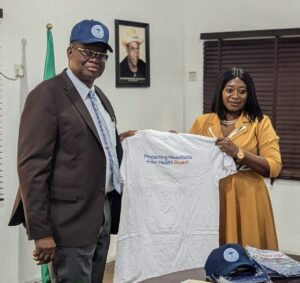
The agreement was reached during a courtesy visit by the Executive Secretary/Chief Executive Officer of RIVCHPP, Vetty Agala, and her management team to the Vice Chancellor and leadership of the university in Iriebe, Rivers State.

Dr. Vetty Agala, Executive Secretary, RIVCHPP, handing some promotional materials to Prof. Spiff Jaja, Vice Chancellor, Pam.o University of Medical Sciencesat the visit.

Agala said the collaboration would extend the programme’s coverage to the university community, adding to its existing enrolment base of over 145,000 beneficiaries spread across the 23 local government areas of the state.

She noted that the already empanelled Pamo University Teaching Hospital and Clinic would provide primary, secondary and tertiary healthcare services to enrollees, particularly within the Obio/Akpor and Oyigbo axis.

Highlighting the benefits of the scheme, Agala disclosed that students would pay an annual premium of N12,000, enabling them to access healthcare services both within and outside the university environment, including when travelling beyond the state.

She emphasised that the partnership aligns with the broader vision of the state government under Siminalayi Fubara to ensure universal access to quality healthcare through subsidised insurance schemes.

According to her, the health insurance programme, which became operational in 2024 following the enactment of its law in 2021, continues to receive government support to make healthcare services affordable and accessible to residents.

Agala commended the university’s management for its commitment to academic excellence and human capital development, describing the institution’s goals as complementary to the state’s drive for socio-economic growth.

In his response, the Vice Chancellor of PUMS, Smith Jaja, endorsed the partnership and expressed appreciation to the state government for institutionalising a framework that promotes access to quality healthcare.

The collaboration is expected to deepen healthcare coverage within the university community while strengthening the delivery of medical services through existing health facilities in the area.

Sports: Nigeria Pulls Out of South Africa Catchball Tourney Over Xenophobic Attacks

0

Nigeria has withdrawn from a forthcoming international catchball tournament in South Africa, citing rising xenophobic violence and growing concerns over the safety of its athletes and officials.

The decision, announced by the Nigeria Catchball Federation (NCF), was contained in a statement issued on Tuesday in Lagos by its Media Coordinator, Naomi Nnaji.
NCF President, Bola Babarinde, said the move was taken in the best interest of players, officials and the entire Nigerian contingent expected to participate in the competition.

He noted that recent waves of violence and intimidation targeting Nigerians and other foreign nationals in South Africa had heightened fears over the security of participants.

“The prevailing tension and uncertainty have inevitably impacted the integrity and feasibility of the competition,” Babarinde said. “In light of these circumstances, the NCF has resolved to withdraw its participation, prioritising the safety and security of its athletes and officials above all else.”

Babarinde described the development as disheartening, particularly against the backdrop of his long-standing ties with South Africa, where he had spent years contributing to sports development and community relations.

He added that the spate of attacks undermines the values of unity, sportsmanship and African brotherhood that international sporting engagements are meant to promote.

While acknowledging efforts by President Cyril Ramaphosa to address the crisis, he maintained that the current environment does not guarantee adequate protection for Nigerian participants.

The withdrawal comes amid escalating tensions in South Africa, where xenophobic attacks have intensified in recent weeks.

The Nigerian Consulate in Johannesburg recently confirmed the deaths of two Nigerians, Amaramiro Emmanuel and Ekpenyong Andrew, in separate incidents linked to the unrest. Authorities said Emmanuel died from injuries allegedly sustained after a beating involving personnel of the South African National Defence Force, while Andrew’s body was later found at a Pretoria mortuary after his arrest by metro police.

Concerns have also deepened following reports of activities by the group Operation Dudula, accused of targeting foreign nationals, as well as incidents of violence affecting migrants, including traders and schoolchildren.

Despite condemnation by security agencies, including the South African Police Service, the attacks have persisted, fuelling fears that the crisis is entering a more dangerous phase.

The NCF said it remains committed to the development of catchball locally and internationally, expressing hope that conditions would improve to allow safe participation in future competitions.

NYSC Urges Corps Members To Leverage SAED For Economic Independence

0

The National Youth Service Corps (NYSC) in Rivers State has called on Corps Members to take full advantage of the Skill Acquisition and Entrepreneurship Development (SAED) programme as a pathway to economic self-reliance and sustainable growth.

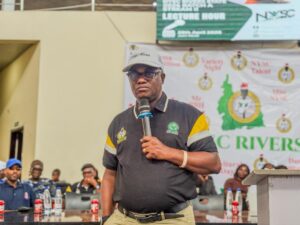
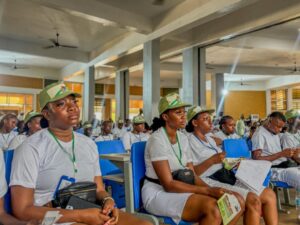
The State Coordinator, Mr. Moses Oleghe, made the call during the flag-off of the SAED in-camp training for the 2026 Batch A Stream II Corps Members at the orientation camp in Nonwa-Gbam, Tai.

Mr Moses Oleghe.

Oleghe described SAED as the “new face of the NYSC,” noting that the initiative is strategically designed to address unemployment, underemployment, and youth dependency in Nigeria. According to him, the programme aligns with the Scheme’s core objective of fostering self-reliance among young graduates.

He urged Corps Members to embrace modern, technology-driven skills that are in high demand both locally and globally.

These include digital marketing, graphic design, web development, data analytics, coding, content creation, e-commerce, and cybersecurity awareness.

“The opportunity provided by SAED is life-changing. It offers you the tools for economic emancipation if you are committed, disciplined, and intentional about adding value to yourselves,” he said.

Oleghe further assured participants of continuous post-camp support, stressing that those who remain dedicated to the programme would benefit from advanced training and mentorship opportunities.

In her remarks, the SAED Officer, Mrs. Carol Chukwu, cautioned Corps Members against neglecting the programme, urging them to seize the opportunity to secure their future.

“You must not fail yourselves and your families. Choose a skill aligned with your passion and pursue it diligently,” she advised.

Chukwu also highlighted the availability of financial support from institutions such as the Bank of Industry, Activate Success International Foundation, Wema Bank, and Unity Bank, noting that these organisations are committed to supporting young entrepreneurs in building sustainable businesses.

The flag-off ceremony was marked by a colourful turnout, with enthusiastic participation from Corps Members and camp officials.

Six In 10 Undergraduates Involved In Cybercrime, EFCC Chair Raises Alarm

The Chairman of the Economic and Financial Crimes Commission (EFCC), Olanipekun Olukoyede, has raised concerns over what he described as the alarming scale of cybercrime among Nigerian university students, revealing that six out of every 10 undergraduates are allegedly involved in internet fraud.

Olukoyede disclosed this at the 8th Biennial Conference of the Committee of Pro-Chancellors of State-Owned Universities in Nigeria, held in Kano, where stakeholders examined the theme, “Unlocking the Potentials of Artificial Intelligence: University Governance, Internationalization and Rankings.”

Describing the trend as disturbing, the EFCC boss said findings from the commission’s investigations and field operations over the past year point to widespread involvement of students in cybercrime, commonly referred to as “Yahoo Yahoo.”

“My research in the last one year has shown that about six out of 10 students in our universities are into cybercrime. It is a very disturbing situation,” he said.

He disclosed that many suspects arrested in recent operations were undergraduates, with some allegedly compromising academic integrity by placing lecturers on their payroll.

According to him, the development reflects deeper systemic challenges, including weak institutional oversight and administrative vulnerabilities within the university system.

Olukoyede cited a major operation in Lagos that led to the arrest of 792 suspects linked to a transnational cybercrime syndicate, noting that a significant number of those apprehended were students. He added that the operation, aided by artificial intelligence tools, exposed the scale and sophistication of cybercrime networks operating within and beyond Nigeria.

The EFCC chairman also expressed concern over the emergence of “Yahoo Plus,” a trend in which internet fraud is combined with fetish practices, further complicating law enforcement efforts.

He urged university authorities and governing councils to take urgent steps to address the menace by strengthening internal controls and collaborating more closely with anti-corruption agencies.

Olukoyede advocated the adoption of artificial intelligence-driven governance systems to enhance transparency, detect fraud and improve accountability in tertiary institutions, noting that many universities still rely on manual processes prone to abuse.

“A university that lacks financial accountability cannot credibly train future professionals. The integrity of our universities is a matter of national security,” he said.

He explained that AI tools could be deployed in areas such as payroll management, procurement monitoring, auditing and academic integrity, enabling real-time detection of irregularities and suspicious transactions.

While highlighting the EFCC’s own use of technology in digital forensics and financial tracking, Olukoyede cautioned that artificial intelligence should complement—not replace—human oversight, and must be deployed in compliance with existing legal frameworks, including data protection and procurement regulations.

He called for increased investment in digital infrastructure, including broadband and cloud systems, as well as capacity building in cybersecurity, machine learning and digital governance.

The EFCC chairman further emphasised the need for stronger collaboration between universities, regulatory bodies and law enforcement agencies to curb cybercrime and safeguard the integrity of Nigeria’s higher education system.

Fubara Sets January Deadline For Completion Of Creek Road Market

Rivers State Governor, Siminalayi Fubara, has assured residents of the state that the ongoing reconstruction of the Creek Road Market in the old Port Harcourt Township will be completed and ready for use by January.

The governor gave the assurance during an inspection of the project site, expressing satisfaction with the pace and quality of work by the contractor.

Fubara explained that the decision to prioritise the market project followed observations that traders at the old Creek Road Market had extended their activities onto adjoining roads due to inadequate space, thereby obstructing ongoing road construction in the area.

He noted that although his administration had earlier pledged to rehabilitate roads across the Town axis, addressing the market challenge became imperative to ensure seamless and sustainable road development.

According to him, the spillover from the old market had posed a major setback to construction efforts, prompting the government to embark on building a larger and more modern facility to accommodate traders and residents.

Aerial view of the new Creek Road Market project under construction in Port Harcourt.

The governor further disclosed that the new market is structured into three sections — A, B and C — with construction already underway in one section, while preparatory work continues in the others.

He revealed that one of the sections was found to be a borrow pit, necessitating evacuation and sand filling before construction could commence fully.

Fubara said the contractor had given assurances that the identified challenges would be addressed within schedule, maintaining that the project would be delivered between now and January.

He described the initiative as a demonstration of his administration’s commitment to people-centred development, noting that the completed market would enhance trading conditions while complementing road infrastructure projects in the area.

The governor added that projects such as the Creek Road Market underscore the government’s focus on sustainable urban renewal and improved quality of life for residents.

NBC ‘Gag Order’: SERAP, Editors Drag Commission To Court Over Threat To Sanction Broadcasters

0

The Socio-Economic Rights and Accountability Project (SERAP) and the Nigerian Guild of Editors (NGE) have filed a suit against the National Broadcasting Commission (NBC), challenging what they described as an “arbitrary, unconstitutional and unlawful” directive threatening sanctions against broadcast stations and presenters.

The suit, marked FHC/L/CS/854/2026 and filed before the Federal High Court in Lagos, seeks judicial interpretation of provisions of the 6th Edition of the Nigeria Broadcasting Code relied upon by the NBC to caution broadcasters over alleged misconduct, including expressing personal opinions as facts, intimidating guests, and failing to maintain neutrality.

The NBC had issued a formal notice citing what it termed a “sustained increase” in breaches of the broadcasting code across news and political programmes, warning that stations and presenters found culpable would face sanctions.

However, SERAP and NGE argued that the provisions invoked by the commission are vague, overly broad and inconsistent with constitutional guarantees of freedom of expression and media independence, as well as Nigeria’s obligations under international human rights law.

The plaintiffs are asking the court to declare that the cited sections of the broadcasting code violate Section 39 of the 1999 Constitution (as amended), which guarantees the right to receive and impart information and ideas without interference.

They are also seeking an interim injunction restraining the NBC and its agents from enforcing or imposing sanctions based on the disputed provisions pending the determination of the substantive suit.
In the originating processes, the groups maintained that journalistic work inherently includes analysis, commentary and value judgments, which are protected forms of expression in a democratic society.

“A blanket prohibition on the expression of personal opinions by anchors and presenters amounts to an impermissible restriction on freedom of expression,” the plaintiffs argued, adding that such limitations fail the legal tests of necessity and proportionality.

The suit further contends that the broadcasting code, being a subsidiary legislation, cannot override constitutional rights or exceed its enabling law, stressing that any provision inconsistent with the Constitution is null and void.

According to the plaintiffs, the NBC’s reliance on undefined standards such as “professionalism,” as well as ambiguous terms like “bullying” or “intimidation,” creates room for arbitrary enforcement and poses a chilling effect on journalists and media houses.

They also warned that the directive could encourage self-censorship, weaken the media’s watchdog role and undermine democratic discourse, particularly ahead of the 2027 general elections.

The plaintiffs argued that while preventing misinformation and ensuring fairness in broadcasting are legitimate aims, regulatory measures must be precise, lawful and proportionate, rather than sweeping restrictions that infringe on fundamental rights.

They are therefore urging the court to nullify the contested provisions of the broadcasting code and grant a perpetual injunction restraining the NBC from enforcing them.

Human rights lawyer, Femi Falana (SAN), is leading a team of senior lawyers representing SERAP and NGE in the matter.
No date has yet been fixed for the hearing of the interim application or the substantive suit.

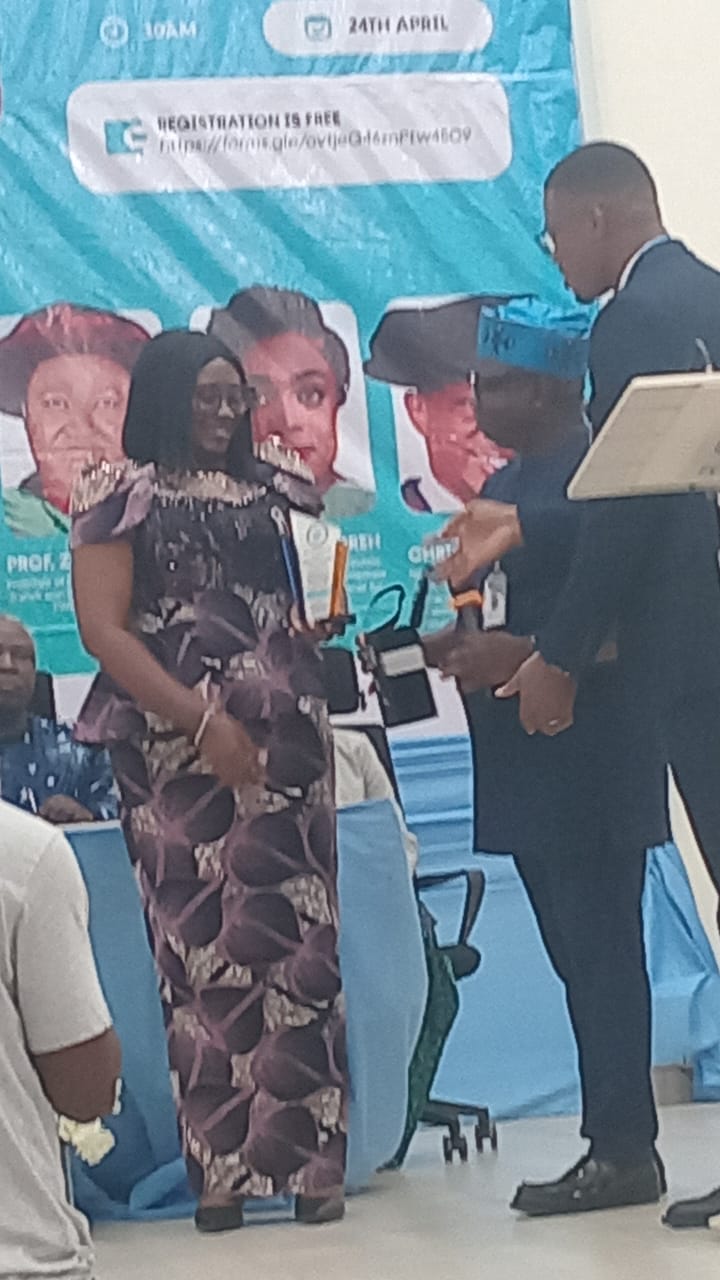
Rivers Pledges Stronger Push To End Malaria, Backs Research-driven Solutions

0

The Rivers State Government has reaffirmed its commitment to intensify efforts toward eliminating malaria, describing the disease as a persistent public health threat requiring coordinated action across sectors.

Speaking at the 5th Malaria Annual Health Colloquium held at Rivers State University on Friday, the Deputy Governor, Ngozi Nma Odu, said the administration is prepared to support initiatives that promote prevention, early diagnosis and effective treatment.

Represented by the Executive Secretary of the Rivers State Contributory Health Protection Programme, Vetty Agala, Odu noted that malaria continues to pose a major challenge despite decades of interventions, stressing that innovation, research and strategic partnerships remain critical to ending the scourge.

She described the theme of the 2026 colloquium — “Accelerating Malaria Elimination Through Academic Innovation: Rivers State University Leads the Way” — as timely, highlighting the role of academia in shaping sustainable solutions and influencing policy direction.

Odu urged stakeholders, including government agencies, development partners, the private sector and communities, to strengthen collaboration and scale up interventions aimed at reducing the burden of the disease.

In her remarks, Agala said malaria remains one of the most enduring health challenges in Nigeria and sub-Saharan Africa, noting that its elimination is central to achieving universal health coverage.
Represented by the Director of Health Services at RIVCHPP, Barinem Dimkpa, she lamented the continued prevalence of malaria, particularly among vulnerable populations, and called for renewed commitment to evidence-based solutions.

According to her, the impact of malaria extends beyond health, affecting economic productivity and social wellbeing, while also exposing systemic gaps in healthcare delivery. She urged participants to advance practical, solution-driven ideas capable of accelerating progress.

Agala further reiterated the mandate of RIVCHPP to provide financial risk protection and ensure access to healthcare without financial hardship, encouraging residents to enrol in the scheme.

Earlier, the President of the Erens Ekprikpo Health Foundation, Ekprikpo Erens Spiff, called for deeper collaboration to reach underserved communities, expressing optimism that sustained partnerships and policy support could significantly reduce malaria incidence.

The Vice-Chancellor of Rivers State University, Isaac Zeb-Obipi, represented by Fortune Amah Tariah, assured participants of the institution’s commitment to advancing research and innovation to tackle societal challenges.

He described universities as engines of innovation but cautioned that knowledge must translate into real-world impact to be meaningful.

The colloquium featured a keynote address by Boma Oboro and panel discussions involving health professionals, including former Commissioner for Health in Rivers State, Chidinma Oreh, who examined pathways to malaria elimination.

Stakeholders at the event agreed that stronger policies, increased funding and sustained collaboration would be key to achieving a malaria-free Rivers State.