


The Rivers State Governor, Sir Siminalayi Fubara, has approved the implementation of the new salary structure for workers in all state-owned tertiary institutions, with effect from 2026.
The Commissioner for Education, Dr Peters Nwagor, disclosed this on Thursday, August 13, 2026, during a familiarisation visit to the Ignatius Ajuru University of Education (IAUE), Rumuolumeni, Port Harcourt.
Nwagor said payment of the revised salaries and the accompanying arrears would commence once the necessary funds were released by the state government.
He explained that the decision was in line with the 2026 FGN-ASUU and FGN-SSANU agreements aimed at improving staff welfare and promoting industrial harmony in the nation’s tertiary institutions.
The new package covers the Consolidated University Academic Staff Salary Structure (CONUASS) and the Consolidated Tertiary Institutions Staff Salary Structure (CONTISS), as well as improved allowances and other benefits contained in the agreements.
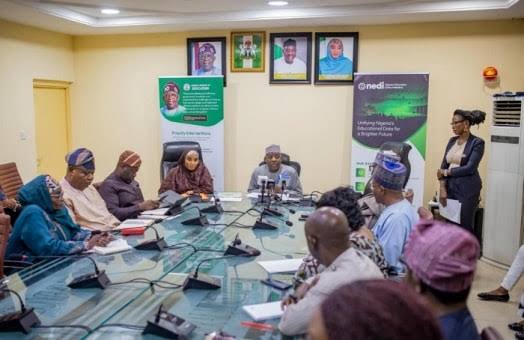
Speaking at the Postgraduate Hall of the university, the commissioner said his visit was aimed at engaging stakeholders, assessing challenges confronting the institution and strengthening collaboration between the state government and the university.
Nwagor commended the Vice-Chancellor, Prof. Okechuku Onuchuku, and the management of IAUE for their contributions to teacher education in the state.
He noted that the university had continued to produce teachers who play important roles in improving learning outcomes across primary and secondary schools in Rivers State.
The commissioner charged the institution to remain committed to quality, accountability and measurable outcomes, stressing that public investment in education must translate into improved learning, stronger research and graduates capable of competing effectively in the labour market.
He urged IAUE to strengthen its position as a centre of excellence in research, particularly in teacher education, science, mathematics, technology and educational management.
According to him, research undertaken by the university should go beyond academic publications to provide practical solutions to societal challenges and inform effective public policy.
Nwagor, a former Associate Dean of the Faculty of Natural and Applied Sciences of the university, also called for the production of teachers who are academically sound, technologically competent, ethically grounded and innovative enough to meet the demands of the 21st-century classroom.
He stressed the need for strict compliance with the National Universities Commission (NUC) Benchmark Minimum Academic Standards, urging the university to continually evaluate its programmes, facilities and performance against established standards.
The commissioner further advocated stronger partnerships between IAUE, industries, professional bodies and the private sector to create opportunities for internships, entrepreneurship and graduate employment.
He also urged the university to revitalise its alumni network and harness the expertise, connections and resources of former students as strategic partners in institutional development.
Nwagor assured the university that the Ministry of Education would continue to promote prudent management of public resources and channel issues requiring government intervention for consideration, subject to available resources and government policy.
He described the visit as the beginning of a deeper partnership between the ministry, the state government and IAUE, expressing optimism that the collaboration would contribute to building the Rivers State envisioned by its founding fathers.
Responding, the Vice-Chancellor, Prof. Okechuku Onuchuku, thanked Governor Fubara for approving the implementation of the new salary structure and other provisions of the agreements reached with the unions.
Onuchuku assured the commissioner that the university would continue to discharge its responsibilities diligently and comply with NUC directives.
The Vice-Chancellor, however, appealed for increased government intervention in critical areas, including hostel accommodation, staff offices, classrooms, science laboratories, perimeter fencing and electricity supply.
He also called for the rehabilitation of the access road leading to the university, describing it as a major infrastructure challenge confronting the institution.
Onuchuku stressed that sustainable development of the university required adequate and consistent funding, urging stakeholders to support the state government in its efforts to strengthen the institution.
The commissioner was accompanied on the visit by the Permanent Secretary, Ministry of Education, Dr Mina Tele-Ikuru, and other directors of the ministry.