Home Blog Page 32

Court Move Threatens Chinda’s Emergence As APC Governorship Candidate in Rivers

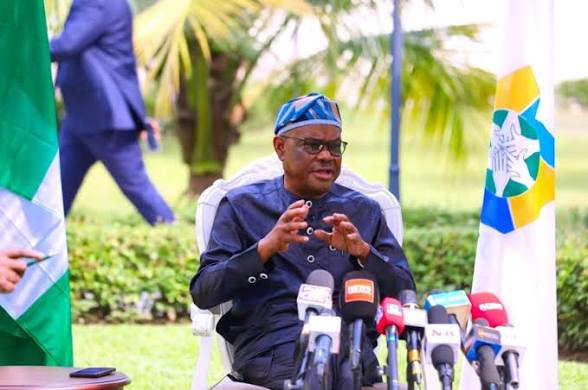
Fresh legal hurdles have emerged against the governorship ambition of Kingsley Chinda after a suit was filed before a Federal High Court in Abuja seeking to stop the Independent National Electoral Commission (INEC) from recognising him as the governorship candidate of the All Progressives Congress (APC) in Rivers State ahead of the 2027 election.

Chinda, an ally of Nyesom Wike, emerged as the APC governorship candidate during the party’s primary held on May 21, 2026, following the withdrawal of other aspirants, including Siminalayi Fubara, Tonye Cole and Alabo Dakorinama George-Kelly.

The lawmaker currently represents Obio/Akpor Federal Constituency in the House of Representatives and serves as Minority Leader on the platform of the Peoples Democratic Party (PDP), despite his emergence as the APC governorship flagbearer.

The suit, filed by the Incorporated Trustees of the Association of Legislative Drafting and Advocacy Practitioners, challenges Chinda’s alleged defection from the PDP to the APC, arguing that it contravenes provisions of the Electoral Act 2026 and Section 68(1)(g) of the 1999 Constitution regarding defection by legislators.

Court documents showed that the suit, instituted on May 12, 2026, also seeks an order declaring Chinda’s seat vacant and compelling the Speaker of the House of Representatives to remove him as Minority Leader over alleged dual party membership.

The plaintiffs further urged the court to direct INEC to conduct a bye-election for the Obio/Akpor Federal Constituency seat, insisting that Chinda forfeited his mandate upon defecting from the PDP.

Also joined in the suit are INEC, the APC, the Department of State Services (DSS), the Attorney-General of the Federation, the Speaker of the House of Representatives and George-Kelly.

The plaintiffs equally asked the court to prevent George-Kelly from participating in the APC governorship process on the grounds that he allegedly failed to resign his appointment as Director-General of the Border Communities Development Agency within the stipulated timeline for political appointees seeking elective office.

Although George-Kelly later withdrew from the race, the suit maintains that Chinda’s candidature remains invalid and should not be recognised by INEC pending the determination of the case.

In an affidavit supporting the suit, the association’s Administrative Secretary, Jesse Amuga, argued that Chinda’s continued occupation of legislative office while participating in APC governorship activities was “unlawful and contrary to democratic ethics and constitutional order.”

The plaintiffs further claimed that Chinda ignored warnings from constituents and legal representatives who had, in October 2025, threatened to initiate a recall process should he defect from the PDP to the APC.

Court Affirms Jonathan’s Eligibility For 2027 Presidential Race

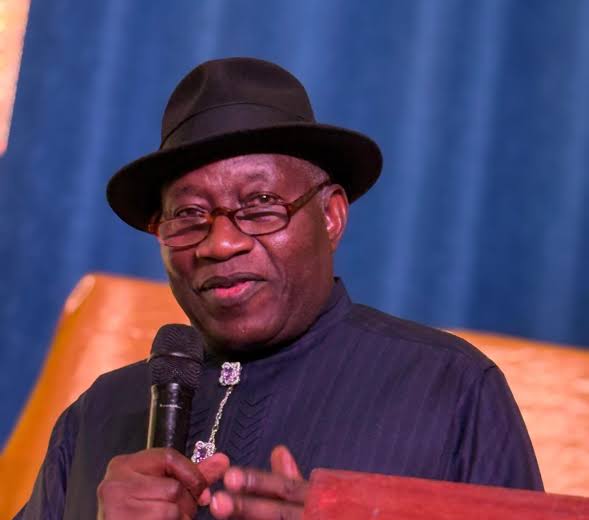
A Federal High Court in Abuja on Tuesday affirmed the eligibility of former President Goodluck Jonathan to contest the 2027 presidential election.
In a judgment delivered by Justice Peter Lifu, the court dismissed a suit filed by lawyer Johnmary Jideobi seeking to stop Jonathan from participating in the race, describing the action as an abuse of court process.

The judge held that both the Federal High Court in Yenagoa and the Court of Appeal had earlier ruled on Jonathan’s eligibility, adding that the appellate court’s decision remained binding.

Justice Lifu further ruled that the plaintiff lacked the legal standing to institute the suit, noting that he failed to demonstrate any personal loss or injury arising from Jonathan’s alleged ambition to contest the election.

The court upheld a N20 million fine earlier imposed on the lawyer and also awarded an additional N1 million cost in favour of the Attorney-General of the Federation.

The legal controversy surrounding former President Goodluck Jonathan stems from the interpretation of Section 137(3) of the 1999 Constitution (as amended), introduced after the Fourth Alteration Act.

The provision states that a person who has been sworn in twice as President shall not be eligible to contest the office again. The debate has centred on whether Jonathan’s assumption of office following the death of former President Umaru Musa Yar’Adua in 2010 should count as a full presidential term.

Jonathan first assumed office as President in May 2010 after serving as Vice President under Yar’Adua.

He subsequently won the 2011 presidential election and completed a full four-year tenure before losing his re-election bid in 2015 to former President Muhammadu Buhari.

Opponents of a possible Jonathan comeback have argued that his completion of Yar’Adua’s tenure and subsequent elected term amount to two terms in office, thereby disqualifying him from future presidential contests.

However, supporters maintain that Jonathan was only elected once as President and that the constitutional amendment was primarily designed to prevent vice presidents or deputy governors who complete substantial parts of a predecessor’s tenure from exceeding constitutional term limits after being elected twice.

The issue has repeatedly surfaced ahead of election cycles, particularly amid recurring calls from political groups urging Jonathan to return to the presidential race. Previous rulings by courts in Yenagoa and the Court of Appeal had already affirmed his constitutional eligibility to contest again — decisions the Abuja Federal High Court relied upon in dismissing the latest suit.

FG Declares Two-Day Public Holiday For Eid-el-Kabir, Tightens Security In North-East

0

The Federal Government has declared Wednesday, May 27, and Thursday, May 28, 2026, as public holidays to mark this year’s Eid al-Adha celebration.

The Minister of Interior, Olubunmi Tunji-Ojo, announced the holidays in a statement issued on Monday in Abuja and signed by the ministry’s Permanent Secretary, Magdalene Ajani.
The government said the declaration underscored its respect for the faith and spiritual heritage of millions of Muslims in Nigeria joining the global Islamic community to observe the sacred festival.

Tunji-Ojo congratulated Muslim faithful at home and in the diaspora, describing Eid-el-Kabir as a celebration rooted in sacrifice, obedience to God and compassion for humanity.

He urged Nigerians to use the period for prayers and reflection, while seeking divine guidance for the country as it strives for peace, security and economic prosperity.

“It is in the spirit of brotherhood, shared humanity and national unity that the Federal Government wishes all Muslims a peaceful, blessed and joyous celebration,” the statement said.

Meanwhile, the Headquarters of Operation Hadin Kai said extensive security measures had been put in place ahead of the festivities to ensure the safety of residents across the North-East region.

In a statement issued by the Media Information Officer of the Joint Task Force, Sani Uba, the command disclosed that intelligence reports indicated that remnants of Boko Haram and Islamic State West Africa Province could attempt isolated attacks during the celebration period.

The task force, however, assured residents that adequate deployments and surveillance operations had been activated to forestall any security breach during the Eid festivities.

Fubara Targets Q1 2027 For Completion Of Rivers Secretariat Reconstruction

Governor Siminalayi Fubara has said the ongoing reconstruction of the Rivers State Secretariat Complex in Port Harcourt will be completed and ready for use by the first quarter of 2027.

Fubara disclosed this on Monday after inspecting the expansive high-rise complex located in the Old GRA area of the state capital.

The governor, who had earlier visited the project site this year, said the latest inspection was to personally assess the level of work completed, particularly within the interior sections of the buildings.

“We just did a tour of the renovation of the Secretariat. I have been seeing the outer part of it wearing a new look, but I wanted to really confirm how much job is going on, most importantly, the inside and that is what I just went to inspect myself,” he said.

According to him, the pace and quality of work on the project indicate that the facility would be delivered to the state government by the first quarter of next year.

“By the grace of God, I believe that by the first quarter of next year, it will be handed over to the government. Like I did promise, every job that we are handling, we will ensure that we put them to completion,” Fubara added.

The Rivers State Secretariat Complex, constructed in the 1970s shortly after the creation of Rivers State in 1967, is one of the state’s most prominent administrative facilities.

The complex comprises several high-rise structures, including the 17-storey Point Block, the 10-storey Podium Block, and three additional seven-storey buildings identified as Blocks A, B and C.

The ongoing reconstruction is expected to deliver a comprehensive upgrade of the facility through structural rehabilitation, redesign of office spaces, installation of modern facilities and improvement of utility systems.

The project is also aimed at creating a more efficient, technology-driven and conducive working environment for civil servants in the state.

BPP Backs NDDC’s Digital Procurement Reforms

0

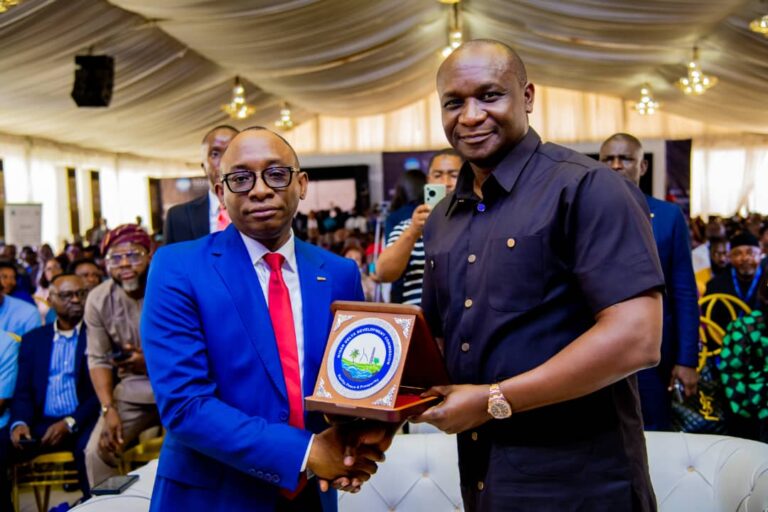
The Bureau of Public Procurement has commended the Niger Delta Development Commission for initiating reforms aimed at digitising its procurement processes to enhance transparency, efficiency and accountability.

Speaking at the NDDC Procurement Policy Reform and Digitisation Stakeholders’ Sensitisation and Training Summit in Port Harcourt, the Director-General of the BPP, Adebowale Adedokun, described the initiative as a significant step towards modernising public sector operations.
Adedokun said the transition to paperless governance had become imperative as government institutions seek to reduce delays, eliminate waste and improve service delivery.

According to him, public procurement remains central to the execution of government policies and must embrace modern technology to boost productivity and strengthen public confidence.

“Procurement lies at the heart of public service delivery. It determines how resources are allocated, how projects are executed, and ultimately, how development reaches our people,” he said.

The BPP boss stressed the importance of inter-agency collaboration in ensuring a seamless transition to digital operations, noting that the reforms align with the broader agenda of President Bola Ahmed Tinubu to build a more responsive and citizen-focused public sector.

In his remarks, the Managing Director of the NDDC, Samuel Ogbuku, said the sensitisation workshop formed part of the Commission’s efforts to strengthen institutional capacity and adopt innovative solutions in line with global best practices in governance and service delivery.

He stated that the Commission was implementing the Renewed Hope Agenda of the Tinubu administration in the Niger Delta region, while commending the BPP for supporting the Commission and facilitating the speedy completion of projects.
Ogbuku noted that the workshop came at a critical period when public institutions across the country were embracing reforms aimed at improving governance systems, eliminating inefficiencies and rebuilding public trust.

He said empowering stakeholders, contractors and service providers with the required knowledge would accelerate development and create sustainable value across the Niger Delta.

“We are not only reforming, but we are also transforming the Niger Delta region,” he stated.
Ogbuku explained that the Commission’s reforms would move procurement processes from manual, paper-based operations to a fully digital platform designed to improve accessibility, reduce delays and minimise opportunities for corruption.

According to him, digitisation of procurement processes goes beyond technological advancement and represents a critical governance reform aimed at promoting transparency, improving service delivery and ensuring responsible management of public resources.

Earlier, the NDDC Director of Procurement, Chuks Osuji, said the policy reform and digitisation initiative would improve workflow, eliminate inefficiencies and strengthen accountability in the Commission’s procurement system.

He added that all contractors engaging with the Commission would henceforth operate through the online procurement platform, which would also provide an effective feedback mechanism for stakeholders.

Speaking on behalf of contractors and consultants, Maraizu Uche lauded the initiative and pledged their cooperation towards ensuring a seamless transition to the digital platform.

He, however, appealed to the Commission to review its payment system to address delays in settling executed contracts.

The workshop, themed “Promoting Best Procurement Practices and Digital System for the NDDC,” was held across the nine states of the Niger Delta region.

Ebola Alert: NCDC Warns Nigeria Faces High Risk Of Virus Importation From Uganda, DRC

The Nigeria Centre for Disease Control and Prevention has raised fresh concerns over the possibility of an Ebola outbreak in Nigeria, warning that the country faces a high risk of importing the deadly virus due to ongoing outbreaks in the Democratic Republic of Congo and Uganda.

In a statement issued on Sunday, the Director-General of the agency, Jide Idris, said although no case of Ebola Virus Disease (EVD) has been recorded in Nigeria, the agency has intensified nationwide surveillance and preparedness measures to prevent a potential outbreak.

According to the NCDC, its latest risk assessment shows that increasing cross-border movement, international travel, and continued transmission of the disease in affected countries significantly heighten Nigeria’s vulnerability.

The agency also noted that uncertainty surrounding the true scale of the outbreaks in Uganda and the Democratic Republic of Congo, coupled with the similarity of Ebola symptoms to malaria and Lassa fever, could lead to delayed detection of imported cases.

The NCDC disclosed that states considered vulnerable because of their proximity to international borders, major transport corridors, and entry points had been placed under heightened surveillance.

It further revealed that response activities were ongoing in affected regions, including contact tracing, laboratory testing, infection prevention measures, and public sensitisation campaigns.

As part of efforts to strengthen emergency preparedness, the agency said Nigeria’s National Emergency Operations Centre had been placed on alert mode, while the incident management system had been activated to improve coordination in the event of an outbreak.

The NCDC added that Nigeria still retains critical capacities developed from previous public health emergencies, including trained rapid response teams, functional emergency operations centres, and laboratories equipped to handle viral haemorrhagic diseases.

The agency also stated that laboratories in states with international entry points had been placed on standby, while public awareness campaigns had been intensified to combat misinformation and false claims surrounding Ebola.

FG Has No Records of Local Contractors In $460m Abuja CCTV Deal -SERAP

0

The Socio-Economic Rights and Accountability Project (SERAP) has intensified pressure on the Federal Government over the controversial $460 million Abuja CCTV project, demanding the immediate disclosure of all local contractors, subcontractors, consultants and vendors linked to the deal.

SERAP’s fresh demand followed revelations by the Federal Ministry of Finance that it had no detailed records identifying local companies that benefited from funds tied to the Chinese-backed security project.

In a letter dated May 15, 2026 and signed by the Permanent Secretary of the Ministry, R.O. Omachi, the government admitted that although local subcontractors “may have been engaged,” there were no records showing specific Nigerian firms that directly received payments from the Chinese loan.

Reacting in a letter dated May 23, 2026, signed by its Deputy Director, Kolawole Oluwadare, SERAP described the disclosure as partial compliance with the judgment of the Federal High Court delivered in May 2023 by Justice Emeka Nwite.

The organisation expressed concern that the Ministry only released limited information after contempt proceedings were initiated and a Notice to Show Cause served in January 2026.

“Nigerians still do not know the identities of local contractors involved in the project. The absence of this information raises serious concerns about transparency, accountability and record keeping,” SERAP stated.

The group warned that failure to fully comply with the court judgment could undermine the rule of law, weaken democratic accountability and deny citizens access to crucial information on public spending.

SERAP also queried the whereabouts of 6,035 project items reportedly undelivered under the contract, insisting that the government must explain whether payments were made for the missing equipment, whether contractors defaulted and whether any effort was made to recover public funds.

According to the Ministry, inventory records showed that 61,970 units of equipment — including GOTA phones, data cards, servers, LED monitors and communication infrastructure — were delivered out of an expected 68,005 units.

The Ministry further disclosed that the Federal Government received $399.5 million from the Export-Import Bank of China for the National Public Security Communication System project, while Nigeria contributed $70.5 million as counterpart funding.

SERAP, however, maintained that key questions remained unanswered, particularly regarding the actual installation and functionality of CCTV cameras across Abuja.

“The Ministry has failed to clarify how many cameras were installed, where they were installed, whether they are operational and whether the project delivered value for money,” the organisation said.

It added that Nigerians deserve full disclosure on how the borrowed funds were spent, especially amid worsening insecurity in the Federal Capital Territory and across the country.

The group urged the Federal Government to immediately publish the names of all Nigerian companies and consultants involved in the project, disclose payments made to each contractor and provide certificates of completion alongside details of the project’s implementation status.

SERAP warned that it would proceed with contempt proceedings against the Ministry of Finance if the requested information was not released within 48 hours.


SERAP Demands Full Disclosure of Beneficiaries in $460m Abuja CCTV Project

The Socio-Economic Rights and Accountability Project (SERAP) has intensified pressure on the Federal Government over the controversial $460 million Abuja CCTV project, demanding the immediate disclosure of all local contractors, subcontractors, consultants and vendors linked to the deal.

SERAP’s fresh demand followed revelations by the Federal Ministry of Finance that it had no detailed records identifying local companies that benefited from funds tied to the Chinese-backed security project.

In a letter dated May 15, 2026 and signed by the Permanent Secretary of the Ministry, R.O. Omachi, the government admitted that although local subcontractors “may have been engaged,” there were no records showing specific Nigerian firms that directly received payments from the Chinese loan.

Reacting in a letter dated May 23, 2026, signed by its Deputy Director, Kolawole Oluwadare, SERAP described the disclosure as partial compliance with the judgment of the Federal High Court delivered in May 2023 by Justice Emeka Nwite.

The organisation expressed concern that the Ministry only released limited information after contempt proceedings were initiated and a Notice to Show Cause served in January 2026.

“Nigerians still do not know the identities of local contractors involved in the project. The absence of this information raises serious concerns about transparency, accountability and record keeping,” SERAP stated.

The group warned that failure to fully comply with the court judgment could undermine the rule of law, weaken democratic accountability and deny citizens access to crucial information on public spending.

SERAP also queried the whereabouts of 6,035 project items reportedly undelivered under the contract, insisting that the government must explain whether payments were made for the missing equipment, whether contractors defaulted and whether any effort was made to recover public funds.

According to the Ministry, inventory records showed that 61,970 units of equipment — including GOTA phones, data cards, servers, LED monitors and communication infrastructure — were delivered out of an expected 68,005 units.

The Ministry further disclosed that the Federal Government received $399.5 million from the Export-Import Bank of China for the National Public Security Communication System project, while Nigeria contributed $70.5 million as counterpart funding.

SERAP, however, maintained that key questions remained unanswered, particularly regarding the actual installation and functionality of CCTV cameras across Abuja.

“The Ministry has failed to clarify how many cameras were installed, where they were installed, whether they are operational and whether the project delivered value for money,” the organisation said.

It added that Nigerians deserve full disclosure on how the borrowed funds were spent, especially amid worsening insecurity in the Federal Capital Territory and across the country.

The group urged the Federal Government to immediately publish the names of all Nigerian companies and consultants involved in the project, disclose payments made to each contractor and provide certificates of completion alongside details of the project’s implementation status.

SERAP warned that it would proceed with contempt proceedings against the Ministry of Finance if the requested information was not released within 48 hours.

Ethnic Domination Fears Trail Rivers’ Emerging Political Coalition

0

Fresh concerns over ethnic domination and political exclusion have surfaced in Rivers State following the emergence of what critics describe as a tightly controlled political structure dominated by leaders from the Ikwerre ethnic nationality.

The debate, which has gained traction across political circles and social media platforms, centres on the concentration of strategic political positions among key figures linked to the evolving alliance between the Peoples Democratic Party and the All Progressives Congress blocs loyal to the Minister of the Federal Capital Territory, Nyesom Wike.

At the heart of the controversy is the claim that the major power centres within both parties are controlled by politicians from Obio-Akpor Local Government Area, a predominantly Ikwerre-speaking axis of the state.

Among those frequently cited are Wike himself; the acting chairman of the APC in Rivers State, Tony Okocha; Speaker of the Rivers State House of Assembly, Martin Amaewhule; and House Minority Leader, Kingsley Chinda, who is reportedly being projected in some quarters as a possible successor to the Brick House, not so long after 16 straight years of Ikwerre sons governance.

Critics also point to the leadership of the PDP in the state under Chukwuemeka Aaron as further evidence of what they describe as an entrenched political dominance by one ethnic bloc.

The development has triggered resentment among other ethnic nationalities in Rivers State, particularly the Ijaw, Ogoni, Ekpeye and Ogba groups, many of whom argue that the state’s political structure no longer reflects the multi-ethnic character upon which Rivers was founded.

Political observers say the complaints reflect growing anxiety over inclusiveness ahead of the 2027 governorship race, especially amid ongoing realignments within the state’s political landscape.

Some stakeholders from minority ethnic groups have accused the major political actors of reducing other communities to mere “foot soldiers” and “praise singers” despite their electoral contributions and demographic significance.

The controversy has also revived long-standing conversations about zoning, equity and fair representation in Rivers politics, with many insisting that no single ethnic nationality should dominate the governorship, party leadership and legislative structure simultaneously.

Analysts warn that unless political parties address the grievances through broader consultations and inclusive power-sharing arrangements, the tensions could deepen ethnic divisions and reshape political alliances ahead of future elections in the oil-rich state.

Amaechi Squares Up Against Atiku, Hayatu-Deen As ADC Presidential Primaries Holds, Monday

The African Democratic Congress(ADC) has cleared former Vice President Atiku Abubakar, former Rivers State Governor Rotimi Amaechi and economist Mohammed Hayatu-Deen to contest in the party’s presidential primary scheduled for Monday, May 25, 2026.

The trio, who were screened earlier this week, will battle for the ADC presidential ticket ahead of the 2027 general election.

National Publicity Secretary of the African Democratic Congress, Mallam Bolaji Abdullahi, confirmed the development on Saturday.
Abdullahi also disclosed that the party cleared 513 aspirants for the House of Representatives, 109 for the Senate and 80 governorship aspirants ahead of the various primaries.

According to him, preparations have been concluded for the conduct of the presidential primary on Monday.

Amaechi, a former Minister of Transportation, is expected to square up against Atiku and Hayatu-Deen in what analysts describe as a keenly contested race for the ADC ticket.

Hull City Seal Dramatic Premier League Return With Play-Off Final Win Over Middlesbrough

Hull City secured promotion to the Premier League on Saturday after a dramatic 1-0 victory over Middlesbrough in the Championship play-off final at Wembley.

The Tigers became the first club since Blackpool to finish sixth in the regular Championship season and still win promotion to the English top flight through the play-offs.

The decisive moment arrived deep into stoppage time when striker Oli McBurnie capitalised on a costly goalkeeping error to snatch victory in the 94th minute.

Boro goalkeeper Sol Brynn failed to deal cleanly with a cross into the penalty area, punching the ball into danger, before McBurnie reacted quickest to prod home the winner and spark wild celebrations among Hull supporters.

Hull City will now join Coventry City and Ipswich Town as the three promoted teams heading into next season’s Premier League campaign.

For Middlesbrough, the defeat means another season in the Championship despite their controversial return to the play-offs following Southampton’s involvement in the “Spygate” scandal.

At the other end of the table, Wolverhampton Wanderers and Burnley have already been relegated from the Premier League, while either Tottenham Hotspur or West Ham United will join them in the Championship after the final round of fixtures on Sunday.