

Home Blog Page 29

Fubara Assures Teachers Of School Safety As NUT Protests Rising Attacks, Abductions

0

Rivers State Governor, Sir Siminalayi Fubara has assured teachers, pupils and parents of the safety of schools across Rivers State, pledging continued collaboration with security agencies to prevent attacks and abductions within educational institutions.

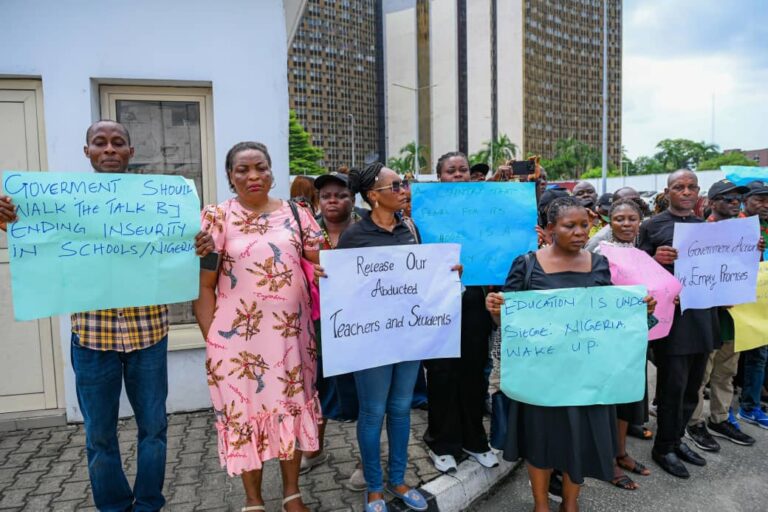
The assurance came on Tuesday as members of the Nigerian Union of Teachers (NUT), Rivers State Wing, staged a peaceful protest at Government House, Port Harcourt, in solidarity with colleagues abducted by gunmen during attacks on schools in Oyo State and other parts of the country.

Carrying placards with various inscriptions, the teachers joined a nationwide action organised by the NUT to draw attention to the worsening insecurity in schools and demand the rescue of teachers and pupils reportedly kidnapped from three schools in Oyo State about two weeks ago.

Addressing the protesters, Governor Fubara said his administration remained committed to ensuring the security of schools and creating a safe environment for teaching and learning across the state.

Represented by the Commissioner for Education, Dr. Peters Nwagor, the governor said the state government had been working closely with security agencies to safeguard teachers, pupils and school facilities from criminal attacks.

He assured the union that the government would continue to take proactive measures to prevent incidents of kidnapping and violence in schools, while urging members to remain patient as efforts were being intensified by the Federal Government and security agencies to secure the release of the abducted teachers and students.

“We will continue to do everything within our powers to ensure that schools in Rivers State remain safe and conducive for learning,” he said.

Earlier, the Secretary of the NUT in Rivers State, Comrade Bassey Asuquo, described the protest as a solemn march in honour of a colleague allegedly killed during the attack and in solidarity with teachers and students still being held captive.

He lamented that teachers across the country now operate under constant fear, noting that many leave their homes daily uncertain of returning safely.

“The school is supposed to be a sanctuary where the future of our nation is nurtured and prepared for greatness. What happened in Oyo State is not only an attack on innocent people but a direct assault on education and our collective future as a nation,” Asuquo said.

He argued that the Oyo incident reflected a broader security challenge confronting schools nationwide, citing similar attacks in parts of the North-East and other regions of the country.

According to him, the repeated targeting of educational institutions has transformed schools from centres of learning into places of fear and uncertainty.

The union called for the immediate and unconditional release of all abducted teachers and students and urged the Federal Government and state governments to take decisive action to halt the recurring attacks on schools.

The NUT also demanded the deployment of adequate security personnel to public schools across the country and the implementation of a comprehensive national school safety policy aimed at protecting students, teachers and educational infrastructure from violence, abduction and other security threats.

The protest ended peacefully with the teachers reiterating their commitment to safeguarding education while urging authorities to prioritise the security of schools and those who work and learn within them.
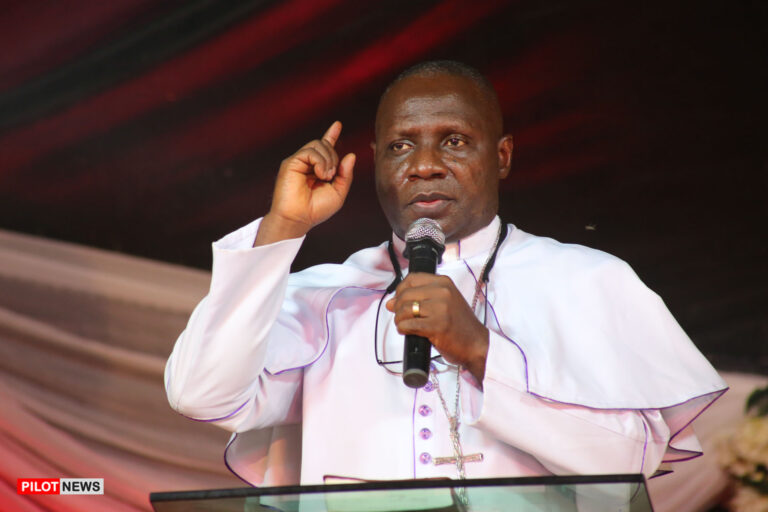

Rising Killings: CAN Demands State Of Emergency On Security, Declares Three Days Mourning, ‘Black Sunday’

0

The Christian Association of Nigeria (CAN) has called on the Federal Government to declare a state of emergency on security, warning that the escalating wave of killings, kidnappings, terrorism and violent attacks across the country has reached alarming proportions and now constitutes a national emergency.

The call formed part of resolutions reached at the National Church Denominational Leaders Summit 2026 held in Abuja under the theme, “The State of the Nation and the Way Forward.”

In a communiqué signed by CAN President, Archbishop Daniel Okoh, church leaders expressed deep concern over what they described as worsening insecurity, economic hardship, declining public confidence in state institutions and growing threats to the lives and dignity of Nigerians.

The summit, attended by leaders of major Christian denominations, church administrators, legal practitioners, security experts and representatives from across the six geopolitical zones, lamented the increasing attacks on communities, churches, schools and farming settlements.

According to the communiqué, participants observed that citizens are being kidnapped from homes, workplaces and highways, while farmers are being driven from their lands and innocent men, women and children killed, displaced or subjected to horrific acts of violence.
“CAN expresses profound alarm over the escalating violence across Nigeria, including killings, kidnappings, abductions, terrorist attacks and the destruction of communities,” the communiqué stated.

The association condemned what it described as “barbaric acts of murder, beheading, torture, rape, abduction and forced displacement” and urged the Federal Government to take urgent and decisive action to halt the bloodshed.

CAN reminded government at all levels that the protection of lives and property remains their foremost constitutional responsibility and demanded measurable steps to restore public confidence in the nation’s security architecture.

The church leaders called for a comprehensive review of existing security arrangements, improved intelligence gathering, stronger inter-agency collaboration and greater accountability in the fight against terrorism, banditry and violent crime.

They also renewed calls for the immediate establishment of state police and other lawful decentralised security structures capable of improving intelligence gathering, rapid response and local accountability.

The summit further demanded the unconditional release of all abducted schoolchildren, teachers and other citizens currently in captivity, urging security agencies to intensify rescue efforts until every victim regains freedom.

Expressing concern over the plight of victims, CAN called for the establishment of a comprehensive compensation, rehabilitation and resettlement programme for families affected by terrorism, kidnapping and violent attacks.

The association also advocated the safe return and protection of internally displaced persons, insisting that displaced communities must be resettled in their ancestral homes under adequate security guarantees.

As part of efforts to draw national attention to the security crisis, CAN declared June 12 to June 14, 2026, as a three-day period of national mourning and designated Sunday, June 14, as “Black Sunday” across churches in Nigeria in honour of victims of violence and in solidarity with bereaved families.

The Christian body urged churches nationwide to strengthen humanitarian support, trauma care, youth engagement and peacebuilding initiatives for victims and affected communities.

CAN also expressed concern that political defections, power struggles and premature electioneering activities were dominating public discourse while many communities remained under attack.

The association therefore called on political leaders and parties to suspend divisive political distractions and concentrate on restoring security and rebuilding public confidence.

In addition, CAN appealed to organised labour, professional bodies, civil society organisations, student groups and traditional institutions to join efforts aimed at holding government accountable for the protection of lives and property.

The summit noted what it described as the inadequacy of intelligence gathering and coordination mechanisms and criticised the recurring reliance on conciliatory rhetoric in response to grave security threats, urging a more proactive and results-oriented national security strategy.

Reaffirming its commitment to Christian unity, justice and the defence of human dignity, CAN called on Nigerians, irrespective of religion, ethnicity or political affiliation, to unite against insecurity and work collectively towards national renewal.

The church leaders concluded by pledging continued prayer, advocacy and constructive engagement with government and relevant stakeholders, while expressing hope that Nigeria would overcome its current challenges and attain lasting peace, security and prosperity.

Chinda Ends Political Suspense, Dumps PDP For APC, Quits Minority Leader Role

Months of political suspense surrounding the future of House of Representatives Minority Leader, Kingsley Chinda, came to an end on Tuesday as the lawmaker formally resigned his leadership position and defected from the Peoples Democratic Party (PDP) to the All Progressives Congress (APC).

Chinda’s decision, announced on the floor of the House during plenary, finally resolved the uncertainty he had generated within political circles, particularly in Rivers State, where questions had persisted over his political allegiance following his emergence as the APC’s governorship candidate for the 2027 election.

The lawmaker, who represents Obio/Akpor Federal Constituency of Rivers State, tendered his resignation as Minority Leader, bringing to a close his tenure as the opposition’s chief spokesman in the Green Chamber.

Speaker of the House, Abbas Tajudeen, read Chinda’s resignation letter and formally informed lawmakers of his defection as the House resumed legislative activities after a four-week recess.

In his farewell remarks, Chinda thanked members of the opposition caucus for the confidence reposed in him and the opportunity to serve as Minority Leader since 2023.

His resignation further weakens the opposition leadership in the House, coming after the earlier exits of Deputy Minority Leader Aliyu Sani Madaki, who moved from the New Nigeria Peoples Party (NNPP) to the APC, and Minority Whip Ali Isa, who also left the PDP for the ruling party. At present, Deputy Minority Whip George Ozodinobi of the Nigeria Democratic Congress (NDC) remains the only member of the minority leadership yet to defect.

Chinda’s political move was part of a broader wave of defections that swept through the House on Tuesday, with 13 lawmakers announcing their departure from their respective parties.

Among them was Alex Egbona of Cross River State, who left the APC for the PDP, citing internal fragmentation within the ruling party. Esosa Iyawe of Edo State defected from the APC to the Nigeria Democratic Congress (NDC), blaming unresolved grievances and alleged disregard for his concerns by party leaders.

Jonathan Gaza Gbewfi moved from the Social Democratic Party (SDP) to the Labour Party (LP), while Shehu Dalhat Tafoki of Katsina State dumped the APC for the PDP. Another Katsina lawmaker, Sani Lawal, resigned from the APC but did not immediately disclose his next political destination.

A significant bloc of PDP lawmakers from Oyo State, including Adebayo Adepoju, Stanley Olajide, Ojo Sunday Makanjuola, Najeem Oyedeji, Folajimi Oyekunle and Abbas Adigun, alongside Auwalu Gwalabe from Bauchi State, defected to the Allied Peoples Movement (APM), citing the lingering leadership crisis, legal disputes and internal divisions within the PDP.
Also, Benedict Etenabene left the Labour Party for the PDP, attributing his decision to the dissolution of elected party executives in Delta State by the national leadership of the LP.

The lawmakers, in separate letters read by the Speaker, largely blamed internal crises, leadership disputes and what they described as undemocratic practices within their former parties for their decisions to switch political camps.

For Chinda, however, Tuesday’s announcement ended months of intense speculation over a political future many observers believed had already shifted away from the PDP.

His formal exit is expected to further reshape the political landscape in Rivers State ahead of the 2027 governorship contest, where he is now positioned as one of the key contenders under the APC platform.

Non-Interest Banking Key to Closing $42bn Women Financing Gap in Africa — Alternative Bank Regional Head

0

Lagos — Dr Felicia Tamuno, Institutional Banking Lead at The Alternative Bank, Nigeria’s leading non-interest financial institution, has called for a major shift in Africa’s banking system, urging greater adoption of non-interest and ethical finance models to bridge the massive financing gap facing women entrepreneurs.

Speaking at the African Women in Banking and Finance Conference & Awards 2026, Tamuno said traditional interest-based lending models, which rely heavily on fixed asset collateral, property titles, and long credit histories, continue to exclude millions of women operating in the informal and semi-formal sectors.
“Many women-led businesses remain locked out of formal finance despite their enormous contribution to African economies,” she said.

Citing data from the World Bank and the African Development Bank’s Affirmative Finance Action for Women in Africa (AFAWA) initiative, Tamuno noted that women in Sub-Saharan Africa account for over 80 percent of the self-employed population, yet still face a $42 billion financing gap.
Drawing from her experience at The Alternative Bank, she advocated for alternative credit assessment tools such as cash-flow-based lending, movable asset financing, and partnership-based non-interest banking products.

“Non-interest and ethical finance models provide stronger opportunities for collaboration and shared risk, rather than the rigid, collateral-driven approach that currently dominates conventional banking,” she argued.

Tamuno also highlighted the leadership gender gap in African financial institutions, noting that while women are well represented at entry and middle management levels, their presence drops significantly at executive and board positions.

“Leadership diversity is not a concession. It is a competitive advantage,” she said.

Tamuno called on senior women in the industry to support one another through mentorship and sisterhood, saying: “We are not our enemies. We are a community. We are stronger together.”

She urged policymakers, regulators, and financial institutions to treat the economic empowerment of women not merely as a social goal, but as a serious economic strategy for broader continental prosperity. She pushed for supportive policies, digital innovation, and inclusive financial products specifically designed for the realities of African women entrepreneurs.

Her role at The Alternative Bank adds significant weight to her call. The institution continues to demonstrate that ethical and non-interest banking can work effectively even in Africa’s challenging economic environment.

By Samuel Chukwuka

Oil Firm Sparks Economic Revival For Women Entrepreneurs In Rivers, A’Ibom

0

Hundreds of women entrepreneurs in communities across Rivers and Akwa Ibom states are receiving a new lease of life through a financial literacy and empowerment programme designed to strengthen small businesses, improve household incomes and promote financial independence.

The initiative, sponsored by Sterling Oil Exploration and Energy Production Company Limited (SEEPCO) and implemented through the Village Community Development Foundation (VCDF), forms part of the company’s corporate social responsibility efforts aimed at supporting sustainable economic development in its host communities.

The programme, which commenced last year, targeted about 1,000 women drawn from various host communities. Participants were trained in basic financial management and provided with start-up capital to establish micro-enterprises and improve their economic prospects.

According to the organisers, while many beneficiaries successfully utilised the funds and demonstrated measurable growth in their businesses, others failed to make productive use of the support. This informed the decision to focus the second phase of the programme on participants who had shown commitment and progress in their chosen ventures.

As part of the ongoing second phase, SEEPCO and VCDF selected an initial batch of 100 women for advanced training and additional support. Beyond financial education, participants received working tools, equipment, consumables and other essential materials needed to strengthen and expand their businesses.

The latest training, which began on May 22 and is expected to run for two weeks, covers key aspects of entrepreneurship, including business planning, budgeting, savings culture, pricing strategies, customer relations and financial record keeping. Participants are also being educated on responsible spending habits and access to financial services.

Speaking during the programme, the Village Head of Iwofe community, Chief Goodfellow Julius, commended SEEPCO and VCDF for what he described as a transformative intervention capable of improving livelihoods across the host communities.

He noted that the initiative distinguishes itself from conventional empowerment schemes by combining skills development with practical business support and financial knowledge, thereby giving beneficiaries the tools and confidence required to build sustainable enterprises.

“This programme goes beyond skills acquisition. It equips women with the knowledge, resources and confidence needed to establish and sustain businesses. The impact will be felt not only by the beneficiaries but also by their families and the wider community,” he said.

Some of the beneficiaries also expressed appreciation to SEEPCO and VCDF, describing the intervention as timely and life-changing.

One of the participants, Peace Emem, said the training had given her a fresh sense of purpose and the confidence to start her own business.

According to her, the knowledge acquired and the starter-pack support would enable her contribute more meaningfully to her family’s welfare while pursuing financial independence.

Observers say the programme reflects a growing recognition of the role women-owned micro and small enterprises play in driving grassroots economic growth, particularly in oil-producing communities where sustainable livelihood opportunities remain a critical development priority.

‘Digital’ VC’ Bags Royal Honour As Ogoloma Kingdom Rolls Out Red Carpet For Zeb-Obipi

The ancient Ogoloma Kingdom in Okrika Local Government Area of Rivers State came to a standstill at the weekend as residents, traditional rulers, academics and political leaders gathered to honour the Vice-Chancellor of Rivers State University, Professor Isaac Zeb-Obipi, following his appointment as the institution’s 12th substantive Vice-Chancellor.

The grand civic reception, organised by the Amanyanabo of Ancient Ogoloma Kingdom, His Royal Majesty King Emmanuel T.I. Obudibo, the Ogoloma Divisional Council of Chiefs and the people of the kingdom, was held at the Government Girls Secondary School field, Okumgba, Ogoloma.

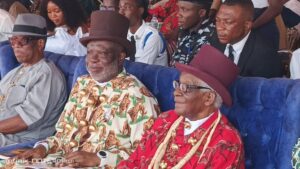
Vice-Chancellor of Rivers State University, Professor Isaac Zeb-Obipi (middle), Amanyanabo of Ancient Ogoloma Kingdom, His Royal Majesty King Emmanuel T.I. Obudibo (right), and another dignitaries at the occasion.

Speaking during the event, Chairman of the Ogoloma Divisional Council of Chiefs, Chief Martins J. Ateli Kunumgbe, described Zeb-Obipi’s elevation as a moment of pride for the kingdom and a reward for decades of dedication, academic excellence and service to society. He noted that the Vice-Chancellor’s achievements have continued to inspire younger generations while reflecting the values of discipline, hard work and perseverance.

Kunumgbe also praised the university administrator for his longstanding contributions to community development and his commitment to preserving the cultural heritage of the Ogoloma people through active participation in the traditional institution.


The Pro-Chancellor and Chairman of Council of Rivers State University, Hon. Okey Wali (SAN), commended the Vice-Chancellor’s leadership qualities and expressed confidence in his capacity to advance the vision of the Governing Council. According to him, Zeb-Obipi possesses the experience and competence required to sustain the university’s drive for academic excellence, innovation and institutional growth.

Similarly, the member representing Okrika State Constituency in the Rivers State House of Assembly, Hon. Linda Somiari-Stewart, congratulated the Vice-Chancellor on his appointment, describing him as a role model whose accomplishments demonstrate the transformative power of education, resilience and determination.

Delivering a goodwill message on behalf of Ogoloma academics, Professor Telema Adolphus said the appointment of Zeb-Obipi was a collective achievement for the kingdom. He highlighted the Vice-Chancellor’s distinguished record in teaching, research, administration and mentorship, noting that his success had brought honour to the community and inspired many young people to pursue excellence.

Responding, Zeb-Obipi expressed gratitude to God, Rivers State Governor and Visitor to the University, Sir Siminalayi Fubara, for entrusting him with the leadership of the institution. He also appreciated the Governing Council, management, staff, students, family members, friends and the people of Ogoloma Kingdom for their support throughout his academic and professional journey.

The Vice-Chancellor described the reception as a reflection of the unity, solidarity and communal spirit that define the Ogoloma people. He reaffirmed his commitment to community development and recalled previous interventions that provided accommodation and support facilities for National Youth Service Corps (NYSC) members serving in the area.

As part of efforts to improve the welfare of corps members, Zeb-Obipi donated a generator set and a lawn mower to the NYSC lodge in the community to address electricity challenges and support environmental maintenance.

The colourful event featured cultural performances, tributes, presentations of gifts and goodwill messages from various groups and organisations. It attracted dignitaries from across the academic, political and traditional spheres, further underscoring the widespread goodwill enjoyed by the Vice-Chancellor, popularly known as the “Digital VC.”

Appeal Court Judgment Deepens Rivers APC Crisis As Rival Faction Voids Chinda, Other Candidates’ Nominations …Reactions follow

The political crisis within the Rivers State chapter of the All Progressives Congress (APC) has taken a dramatic turn following the release of the Certified True Copy (CTC) of the Court of Appeal judgment affirming the nullification of the congresses that produced the Tony Okocha-led executive.

The development has triggered fresh controversy over the status of candidates who emerged from the party’s recently concluded direct primaries, with the reinstated Emeka Beke-led executive declaring all nominations and decisions made under the Okocha leadership null and void.

The Court of Appeal, Port Harcourt Division, had upheld an earlier judgment of the Rivers State High Court which nullified the congresses that produced Chief Tony Okocha as chairman of the party in the state.

Riding on the appellate court’s decision, the Beke faction on Monday announced that all actions, communications, nominations and representations carried out by the Okocha-led executive between December 20, 2024 and May 29, 2026 lacked legal foundation.

In a statement issued by its spokesman, Darlington Nwauju, the faction argued that the Okocha-led executive had no lawful authority to act on behalf of the APC in Rivers State during the period under review.

The declaration directly affects the party’s recent primaries, which produced House of Representatives member Kingsley Chinda, widely regarded as a political ally of Federal Capital Territory Minister Nyesom Wike, as the APC governorship candidate after Governor Siminalayi Fubara withdrew from the race. Several other politicians believed to be aligned with Wike also emerged as candidates for National Assembly and State Assembly positions.
Nwauju maintained that all nominations, communications, documentation and decisions undertaken under the Okocha-led executive were “illegal, null, void and of no effect.”

The faction further called on the National Working Committee (NWC) of the APC to urgently review the outcome of the primaries and expunge all records associated with the disputed leadership, warning that failure to act could expose the party to a crisis similar to the one that cost the APC electoral victories in Zamfara State following legal disputes over its primaries.

It also urged the Rivers State Independent Electoral Commission (RSIEC) to withdraw certificates of return issued to local government chairmen and councillors elected under the platform of the Okocha-led faction during the August 2025 local government elections and replace them with candidates submitted by the Beke executive.

However, the position of the Beke faction has been strongly contested by supporters of the Okocha-led leadership, who insist that the Court of Appeal judgment has no effect on candidates produced through the party’s direct primary system.

A member of the House of Representatives, Hon. Cyril Hart, argued that APC nomination forms do not require endorsement by state party executives and are instead validated by party members who meet prescribed requirements, including evidence of dues payment.

According to him, no member of the Okocha-led executive issued, endorsed or validated nomination forms used for the primaries, making it impossible for the judgment to invalidate candidates who emerged through the process.

“As you are aware, the APC adopted direct primaries for the election of its candidates for the 2027 general elections. The APC nomination form has no provision for party executive endorsement or signing. Therefore, the judgment and any interpretation of it, howsoever, have no effect on any APC candidate for any election,” Hart stated.

The argument has, however, generated intense debate within political circles and on social media.

Some commentators contend that while nomination forms may not require executive signatures, questions remain over whether a leadership structure subsequently declared invalid could lawfully organise, supervise, communicate or submit the outcomes of party primaries.

One commentator, Victor Okuny, questioned the legal basis upon which party processes conducted under the disputed executive could remain completely insulated from the judgment.

Others believe the ruling could embolden aggrieved aspirants who lost in the primaries to challenge the legitimacy of the exercise in court.

Political analysts say the controversy is far from over and may eventually be resolved only through further judicial interpretation or intervention by the national leadership of the APC.

For now, the appellate court ruling has opened a new front in the Rivers APC’s long-running leadership battle, leaving the party grappling with competing claims over authority, candidate legitimacy and control of its political structure ahead of the 2027 general elections.

Curbing The Growing Menace Of Dispatch Riders And Threat on Our Roads

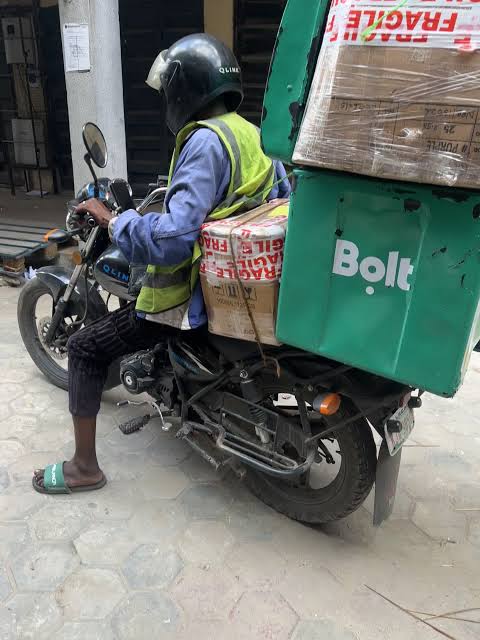
The rapid growth of e-commerce, courier services and home delivery businesses has created new economic opportunities across Nigeria. At the centre of this expanding industry are dispatch riders, whose services have become indispensable to businesses and households alike. However, alongside their usefulness has emerged a troubling reality: the increasing menace posed by some dispatch riders on Nigerian roads.

In many cities, particularly Port Harcourt and other urban centres in Rivers State, complaints against dispatch riders have become commonplace. Road users, pedestrians and motorists increasingly accuse some riders of reckless driving, disregard for traffic regulations and dangerous conduct that puts lives and property at risk.

What was once seen as a convenient means of delivery is gradually becoming a major road safety concern. From speeding through congested roads and driving against traffic to weaving dangerously between vehicles and ignoring traffic signals, some dispatch riders operate with a level of recklessness that has become unacceptable.

Many motorists recount experiences of near-fatal encounters with dispatch riders who appear to be in a constant hurry to beat delivery deadlines. Their aggressive riding habits often create tension on the roads and increase the likelihood of accidents.

Speaking with The Atlantic Bell, a motorist, Cyril Atunkwa, described some dispatch riders as excessively aggressive and impatient.

According to him, many of them show little regard for other road users and frequently engage in dangerous manoeuvres that endanger lives.

“Some of these riders behave as though they own the road. They overtake from impossible angles, jump traffic and sometimes disappear after causing accidents. There have also been reports linking some riders to substance abuse, which raises further concerns about public safety,” he said.

Another road user, Markson Ebifaye, shared similar concerns. He observed that dispatch riders often engage in confrontational behaviour during traffic disputes and, in some cases, flee after causing minor collisions or damaging vehicles.

The increasing number of complaints points to a deeper problem that authorities can no longer afford to ignore. While many dispatch riders operate responsibly and earn a living honestly, the actions of a reckless minority are tarnishing the reputation of the entire industry and exposing the public to unnecessary danger.

The challenge is compounded by weak enforcement of existing regulations. In many cases, it is difficult to identify offending riders because they operate without visible identification or use motorcycles with poorly displayed or concealed registration numbers.

This situation creates an environment where offenders can easily evade accountability after committing traffic violations or causing accidents.

The Rivers State Government and transport authorities across Nigeria must therefore treat the issue as a matter of urgency. Curbing the menace of reckless dispatch riders should become a key component of road safety policy.

One immediate step is the strict enforcement of mandatory rider identification. Every dispatch rider should be required to wear a reflective vest bearing a unique registration number that is boldly displayed and easily visible from a distance. Such identification would make it easier for law enforcement agencies and members of the public to report erring riders.

Similarly, all motorcycles used for dispatch services must be properly registered and display valid plate numbers at all times. Authorities should conduct periodic inspections to ensure compliance and remove unregistered motorcycles from the roads.

Courier companies also have a major role to play. Businesses that employ dispatch riders should be held accountable for the conduct of their personnel. Companies must invest in regular safety training, enforce strict operational standards and monitor riders through tracking systems that discourage dangerous behaviour.

Furthermore, riders should undergo compulsory road safety certification before being licensed to operate commercially. Such training should cover traffic regulations, defensive riding techniques, customer relations and the legal consequences of traffic offences.

The police, Federal Road Safety Corps and state transport authorities must also intensify enforcement operations. Consistent monitoring, sanctions for violations and swift prosecution of offenders will serve as deterrents and help restore discipline on the roads.

Public awareness campaigns are equally important. Riders need to understand that delivery speed should never take precedence over human life and public safety. Customers and courier companies must also avoid placing unrealistic delivery demands that encourage dangerous riding practices.

Nigeria has previously witnessed the consequences of unchecked motorcycle operations, leading to restrictions and outright bans in several major cities. Allowing dispatch riders to continue operating without adequate regulation risks creating similar challenges and could eventually undermine the valuable services they provide.

The time for action is now. Responsible dispatch riders deserve an environment where professionalism is rewarded, while reckless operators must be identified and sanctioned.

Through effective regulation, strict enforcement and industry collaboration, authorities can protect lives, improve road safety and ensure that dispatch services remain a benefit rather than a threat to society.

The roads belong to everyone. No business convenience or delivery deadline should be allowed to jeopardise the safety of motorists, pedestrians and commuters.

Abductions, Killings: SERAP Asks UN Security Council To Invoke Article 99 On Nigeria

0

The Socio-Economic Rights and Accountability Project (SERAP) has called on United Nations Secretary-General, António Guterres, to invoke Article 99 of the UN Charter and formally bring Nigeria’s escalating insecurity before the UN Security Council.

In an open letter dated May 30, 2026, and signed by its Deputy Director, Kolawole Oluwadare, SERAP argued that the scale of abductions, killings, attacks on civilians and mass displacement across several parts of Nigeria now poses a threat to international peace and security.

The organisation cited recurring violence in Oyo, Benue, Borno, Plateau, Kaduna, Zamfara and other states, warning that the persistent attacks by armed groups and criminal networks have created widespread human suffering, destruction and collective trauma.

According to SERAP, Article 99 empowers the UN Secretary-General to draw the Security Council’s attention to situations that may threaten global peace and security, stressing that Nigeria’s security crisis has outgrown the limits of a domestic law-enforcement challenge.

“The crisis in Nigeria is not merely a domestic law-enforcement issue. Its effects increasingly implicate regional peace and security through cross-border movement of armed groups and weapons, large-scale displacement, growing instability beyond Nigeria’s borders, and weakening human rights and rule-of-law institutions,” the group stated.

SERAP pointed to the recent abduction of pupils and teachers from schools in Oriire Local Government Area of Oyo State, where at least 25 pupils and seven teachers were reportedly kidnapped, while two education workers lost their lives during and after the attack.

The rights group also referenced reports of students travelling to sit university entrance examinations being abducted in Benue State, as well as deadly attacks in Borno, Katsina and Adamawa states that left scores of civilians dead and many others displaced.

It noted that recent bomb explosions in Maiduguri reportedly killed at least 23 persons and injured more than 100, while attacks on military formations, internally displaced persons’ camps and rural communities have continued unabated.

SERAP recalled that the UN and its agencies have repeatedly expressed concern over Nigeria’s worsening security situation. It cited Guterres’ condemnation of killings in Benue State in 2025, his reaction to a terrorist attack in Kwara State earlier this year, and warnings by the Office of the UN High Commissioner for Human Rights over rising cases of mass abductions.

The organisation argued that the humanitarian and regional implications of the crisis warrant urgent international attention, noting that insecurity has displaced millions, disrupted livelihoods and worsened food insecurity across affected communities.

SERAP urged the UN chief to place Nigeria’s security situation on the Security Council’s agenda, encourage regular briefings on insecurity and its humanitarian consequences, and support stronger international monitoring of attacks, displacement and human rights violations.

The Atlantic Bell reports that the organisation also called on Nigerian authorities to intensify efforts to protect civilians, secure the release of abducted persons, investigate attacks independently and effectively, and ensure accountability for perpetrators and their sponsors.

According to SERAP, sustained international scrutiny and coordinated action are necessary to prevent further deterioration of the security situation and safeguard peace and stability in Nigeria and the wider West African region.

2027: Why Jonathan’s Silence Is Unsettling Nigeria’s Political Class

0

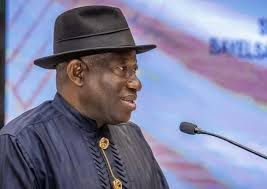
As Nigeria’s political class gradually shifts attention to the 2027 presidential election, no single figure has generated as much intrigue, uncertainty and quiet anxiety across party lines as former President Goodluck Jonathan.

Unlike many politicians already openly positioning themselves for the next contest, Jonathan has neither declared interest nor publicly ruled himself out.

Yet his name continues to dominate conversations within the opposition Peoples Democratic Party (PDP), particularly among factions determined to present him as a consensus candidate capable of challenging President Bola Tinubu.

The latest development came when the Kabiru Turaki-led faction of the PDP reportedly moved to adopt Jonathan as its presidential candidate, despite the former president neither attending the congress nor issuing any statement acknowledging the decision.

That silence has become the most powerful statement in Nigeria’s evolving political equation.

Only days ago, a Federal High Court in Abuja dismissed a suit seeking to bar Jonathan from participating in the 2027 presidential race and effectively affirmed that he remains constitutionally eligible to contest.

Ordinarily, such a judgment would have prompted a clear political response from the man at the centre of the controversy.

Instead, Jonathan has maintained the same studied silence that has characterised his public posture for months.
Political observers say that silence is precisely what has kept speculation alive.
Across Abuja, party offices and political gatherings, three dominant interpretations have emerged.

The first is that Jonathan may genuinely be considering a return but is carefully weighing the political terrain before making any commitment. Supporters of this view point to reports that consultations have intensified around him and that influential figures within the PDP and other political blocs see him as a unifying figure capable of attracting support across regional and religious divides.

The second interpretation is that Jonathan is deliberately allowing various groups to test public sentiment on his behalf. In Nigerian politics, prospective candidates often prefer to appear “drafted” into contests rather than openly ambitious.

By remaining silent while supporters campaign for him, Jonathan avoids the risks associated with an early declaration while benefiting from constant media attention and political momentum.

A third school of thought argues that the former president may ultimately have no intention of running at all.

According to this view, his reputation as an elder statesman, election observer and international diplomat may make a return to partisan politics less attractive than many assume. Such analysts note that Jonathan has repeatedly cultivated an image above everyday political battles since leaving office in 2015.

Yet even among sceptics, one question persists: if he has no interest whatsoever, why has he not publicly shut down the speculation?

That question continues to unsettle both allies and opponents.

Within sections of the PDP, Jonathan is increasingly viewed as one of the few personalities capable of helping the party overcome its lingering internal divisions. Having previously occupied the presidency and retained a relatively moderate national image after conceding defeat in 2015, he remains one of the party’s most recognisable political assets.

His supporters also argue that nostalgia may work in his favour. At a time of economic hardship, insecurity and growing public frustration, some Nigerians look back at the Jonathan years with greater sympathy than they did while he was in office. Political groups in several parts of the country have openly urged him to return, insisting that his experience and perceived temperament could help stabilise the country.

However, a Jonathan comeback would not be without obstacles.

Questions about zoning and power rotation remain potent in Nigerian politics. Although Jonathan comes from the South-South, critics may argue that another southern candidacy immediately after Tinubu would complicate demands from northern political interests seeking a return of power to their region.

There is also the challenge of political organisation. Winning a presidential election in contemporary Nigeria requires far more than name recognition. It demands a nationwide political structure, substantial resources, strategic alliances and a united party platform. The PDP itself remains divided, and Jonathan would have to navigate multiple competing interests before emerging as a broadly accepted candidate.

Furthermore, his opponents would likely revisit unresolved debates from his previous administration, including issues of security, corruption perceptions and governance challenges that contributed to his defeat in 2015.

Yet despite those hurdles, few analysts dismiss his electoral viability.

Unlike many aspirants whose popularity remains confined to particular regions, Jonathan retains a level of national familiarity that could prove valuable in a highly competitive race. His status as the first Nigerian president to concede defeat peacefully continues to earn him goodwill both locally and internationally.

For now, however, the greatest source of Jonathan’s political strength may be uncertainty itself. Everyday he refuses to speak, speculation grows.

Every endorsement issued in his name generates fresh debate. Every court ruling, party declaration or political consultation deepens the mystery surrounding his intentions.

Whether the former president is genuinely preparing for a return to Aso Rock or merely watching events unfold from a distance, one reality is becoming increasingly evident.

In the battle for 2027, Goodluck Jonathan is already shaping the conversation without officially entering the race.

And until he finally speaks, Nigeria’s political establishment will continue reading meaning into his silence.