Home Blog Page 174

Nigeria’s N149.3 Trillion debt, Alarming- Reps Speaker

0

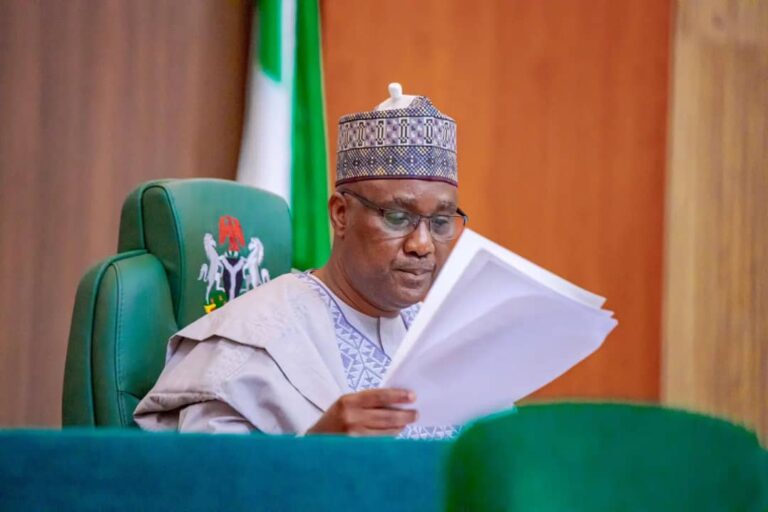
The Speaker of the House of Representatives, Hon. Tajudeen Abbas has described Nigeria’s N149.39 trillion ($97 million) debt as not only alarming but one that has exceeded the country’s legal threshold, which now poses a major threat to fiscal sustainability.
Wale Edun

Abbas who spoke on Monday at the opening of the 11th Annual Conference and General Assembly of the West Africa Association of Public Accounts Committees (WAAPAC), organised by the House of Representatives Public Accounts Committee in Abuja, with the theme: “Strengthening Parliamentary Oversight of Public Debt.”

He said Nigeria’s total public debt rose to N149.39 trillion (about US$97 billion) in the first quarter of 2025, up from N121.7 trillion the previous year.

“As of the first quarter of 2025, Nigeria’s total public debt stood at N149.39 trillion, equivalent to about US$97 billion. This represents a sharp rise from N121.7 trillion the previous year, underscoring how quickly the burden has grown. Even more concerning is the debt-to-GDP ratio, which now stands at roughly 52 per cent, well above the statutory ceiling of 40 per cent set by our own laws”, Abbas said.

Abbas, who was represented by the House Leader, Prof Julius Ihonvbhere, said this has breached the nation’s debt limit and signals the strain on fiscal sustainability.

According to the speaker, the development highlights the urgent need for stronger oversight, transparent borrowing practices, and a collective resolve to ensure that tangible economic and social returns match every naira borrowed.
The speaker warned that across Africa, debt has become a structural crisis, with several countries spending more on servicing loans than on healthcare and other essential services.

He cautioned that many African countries are already spending more on debt servicing than on healthcare and other essential services, adding that Nigeria must avoid a similar situation.

To address fiscal risks, the Speaker announced plans to establish a West African Parliamentary Debt Oversight Framework under WAAPAC.

The initiative will harmonise debt reporting across the sub-region, set transparency standards, and equip parliaments with data to scrutinise borrowing.

The speaker cautioned that borrowing should be targeted at infrastructure, health, education, and job-creating industries, warning that reckless debt that fuels consumption or corruption must be exposed and rejected.

“Our oversight must also be people-driven. Major borrowing proposals should be subject to public hearings, and simplified debt reports must be made available to the public. Citizens have the right to know, and we have the duty to inform,” he stated.

In his contribution, Senate President Godswill Akpabio urged West African countries to strengthen the constitutional backing for public accounts and finance committees, ensuring transparency, accountability, and sustainability in public debt management.

Akpabio stated that unchecked debt can jeopardise the future of citizens and undermine democracy across the sub-region.

Akpabio who was represented by Senator Osita Izunaso, described parliamentary oversight as indispensable to fiscal stability, noting that when debt is well managed, it serves as a strategic instrument for financing infrastructure, growth, and sustainable development.

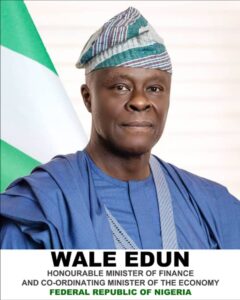
However, Nigeria’s Minister of Finance, Wale Edun, projected optimism and insisted that Nigeria’s debt profile was manageable.

Edun painted a more reassuring picture, declaring that Nigeria was turning the corner under President Bola Tinubu’s reforms.

“Nigeria is turning the corner. The reforms are delivering measurable impact in terms of investor confidence, reduced spending on fuel imports, greater energy self-sufficiency, and value addition in our economy,” Edun said.

He said the country’s debt service-to-revenue ratio dropped to about 60 per cent in 2024, while the debt-to-GDP ratio stood at 38.8 per cent, a level he described as comfortable compared to global benchmarks.

Revenues, he added, rose by 34.7 per cent in the first half of 2025.

The minister acknowledged that Nigeria, like many countries in West Africa, faces significant fiscal challenges, including elevated debt service costs, constrained revenues, and rising demands for public spending.

He said Nigeria achieved the gains through tough but necessary policy choices such as the removal of fuel subsidies, liberalisation of the exchange rate, and the roll-out of a comprehensive tax reform programme aimed at boosting efficiency, simplifying compliance, and raising Nigeria’s tax-to-GDP ratio over time.

The alarm raised by the National Assembly comes barely weeks after it approved President Bola Tinubu’s external borrowing plan of over $21 billion for the 2025–2026 fiscal cycle, including $21.19 billion in foreign loans, €4 billion, ¥15 billion, a $65 million grant and domestic borrowing of about N757 billion.

The approval, recommended by both the House and Senate Committee on Local and Foreign Debt, also included provisions to raise $2 billion through a foreign-currency-denominated instrument in the domestic market.

He highlighted the structure of Africa’s debt, noting that 35 per cent is owed to Western private lenders, 39 per cent to multilateral institutions such as the IMF and the World Bank, 13 per cent to bilateral creditors, and 12 per cent to China
According to him, these reforms are essential for creating a predictable macroeconomic environment that encourages private investment, which accounts for about 90 per cent of economic activity.

“Government’s role is to act as a catalyst, not to crowd out the private sector. With the right fiscal discipline, we can unlock opportunities and ensure inclusive growth that lifts millions out of poverty,” he said.

On Nigeria’s fiscal direction, the minister outlined priorities, including debt transparency, growth-enhancing borrowing, domestic revenue mobilisation, and prudent budgeting within the limits set by the Fiscal Responsibility Act.

He said the government is committed to project-linked borrowing that yields direct returns and avoids reliance on money-printing or unsustainable financing.

Edun also drew attention to global headwinds, such as shrinking development aid, reduced world trade, and rising international interest rates, that have made fiscal management more difficult for developing economies.

He said these challenges underscore the need for African countries to be more self-reliant by embracing reforms, technology, and digitisation to strengthen revenue generation.

The minister emphasised that parliamentary oversight is central to maintaining fiscal discipline.
He urged lawmakers to hold governments accountable for borrowing and spending decisions, insisting that transparency and accountability must underpin every fiscal framework.

“A sound fiscal framework is not just the responsibility of the executive; it demands partnership, leadership, and rigorous oversight from parliamentarians such as you, especially public accounts and finance committees,” Edun said.
The Minister described Nigeria’s fiscal trajectory as a turning point, with reforms providing the foundation for stability, competitiveness, and inclusive growth.

Chairman of the House of Representatives Committee on Public Accounts, Rep. Bamidele Salam disclosed that the committee recovered over N200 billion in lost revenues for the federal government within the last year.

Salam said the recoveries were part of a series of reforms aimed at strengthening fiscal accountability in Nigeria.
He described the gathering, which Nigeria is hosting for the first time since WAAPAC’s creation in 2009, as timely, given the rising debt burden across Africa.
Shettima: Borno Attack, National Tragedy, Assures Citizens of Safety and Justice

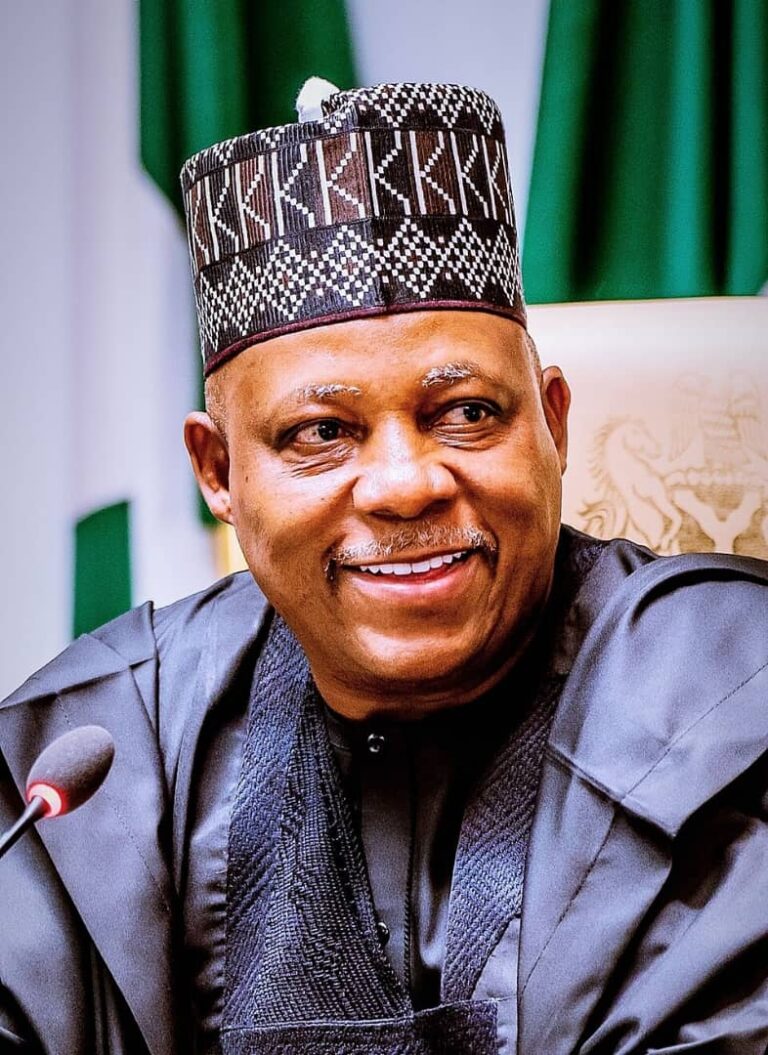
The Vice President of Nigeria, Kashim Shettima, expresses his deep condolences to the people of Dara Jamal community, Borno.

In respect to the brutal attack in Dara Jamal community by Boko Haram, which took place on Friday, 5th September 2025, Shettima expressed his deep concern via a statement by his spokesman, Stanley Nkwocha, on Monday. He described the incident as a national tragedy, sharing in the grief of the bereaved families and assuring that those responsible would be brought to justice.

“I extend my heartfelt condolences to Governor Babagana Umara Zulum, the people of Borno State and the Nigerian military over the tragic loss of our compatriots,” Shettima said.

Over 63 people were confirmed dead, including 58 civilians and 5 soldiers. Reports indicate that the terrorists raided the community around 10:00 PM on motorcycles, opening fire on residents and setting houses, shops, and vehicles ablaze. The operation lasted for several hours before the military intervened.

Shettima stated that President Bola Tinubu has given an immediate order to the Armed Forces to review security operations across the nation, including the deployment of surveillance equipment and advanced military hardware.

He further explained that the government is considering the establishment of state police, emphasizing the president’s position on security challenges in Nigerian states. These well-trained units would understand local terrains and cultures, enabling them to operate effectively at the grassroots level.

Having assured the people of continuous federal support, he offered prayers for those affected and promised that justice will be served.

Strike, Not Necessary, Minister Tells ASUU, ASUP …FG addressing all issues

0

The Minister of State for Education, Dr. Maruf Tunji Alausa, on Monday, September 8, 2025, in Abuja, urged the Academic Staff Union of Universities (ASUU) and the Academic Staff Union of Polytechnics (ASUP) to shelve plans of industrial action. He said there was no need for a strike since the Federal Government is already addressing their concerns through ongoing negotiations.

Alausa insisted that government is committed to meeting the unions’ needs through constructive dialogue rather than disruption of academic activities. He described his engagements with the unions as “holistic” and “constructive.”

“We are engaging with the unions holistically and constructively. Dialogue is the way forward, not strikes. Our students must remain in school while we continue to resolve all issues on the table,” the minister said.

He explained that government would not rush into any new agreement without proper negotiation but assured the unions that their outstanding demands would be met.

Before now, ASUU, ASUP, and the Senior Staff Association of Nigerian Polytechnics (SSANIP) had threatened to go on strike over unmet expectations. On August 26, 2025, the unions staged a one-day nationwide strike to express displeasure and to draw government’s attention.

At its National Executive Committee meeting on August 14, ASUP President, Shammah Kpanja, warned that the association would embark on a strike after 21 days if demands were not addressed. He later confirmed that five meetings had been scheduled with government officials, which would determine if the strike would proceed.

ASUU President, Prof. Christopher Piwuna, also disclosed that the outcome of recent talks would be communicated to members through branch chairmen before being made public, which will determine their next line of action.

On the matter of agreements, Alausa clarified that the 2009 ASUU–FG agreement remains valid and enforceable, while the 2021 draft led by Prof. Nimi Briggs, which was never signed, will only serve as a reference point in current negotiations.

He noted that past negotiations with unions were fragmented, even though their demands were similar — NEEDS assessment, improved conditions of service, and the 2025 wage review. He assured that government is now coordinating talks to address these issues collectively.

Alausa further explained that while the government is aware of the unions’ financial needs and is willing to provide support, it must also balance competing national priorities.

“Everybody knows President Bola Tinubu — when he makes promises, he fulfills them. We are not a government that, just for the sake of averting strike, signs bogus agreements with unions. Mr. President has given me a clear mandate, and I will carry it out truthfully until we resolve these issues once and for all,” he said.

The appeal comes amid fresh agitation in the academic sector. ASUU’s last major strike in 2022 lasted eight months, disrupting university education nationwide. Parents and education stakeholders have since urged both government and unions to avoid another shutdown.

Alausa assured that the Tinubu administration is determined to maintain stability in the higher education sector and keep students in school.

Miracle Chidinma Amaechi with agency reports.

‘Blood Moon’: Over 7 billion To Witness Stunning Lunar Event … Why this year’s lunar eclipse is special

0

Over 7 billion people across Africa, Australia, Asia, and Eastern Europe will be able to witness the lunar eclipse (Blood moon) between September 7-8, 2025. It could be one of the most stunning lunar events seen in years.

Scientists state that the eclipse will be observable across most of Africa, with some regions able to view the entire event.

Some of the countries to experience the eclipse including Nigeria, Ghana, Cameroon, Gabon, Equatorial Guinea, Benin, Togo, Niger, Chad. In Nigeria, it would last for about 83 minutes, starting at about 8.00pm.

A total lunar eclipse occurs when Earth passes between the moon and sun, temporarily bathing the entire lunar disk in its shadow. This in turn causes our natural satellite to glow a deep red, as the scattered light from every sunrise and sunset on Earth is bent onto the lunar disk.

Several distinct phases will be on display during the September 7-8 total lunar eclipse, which will be visible in its entirety across swathes of Asia, western Australia and eastern Europe, while other countries like Spain and Norway will witness only a partial eclipse.

What makes this eclipse special isn’t any myths or mysteries, but just its natural beauty. With a long total phase and great visibility across the world.

A striking red Moon – The ‘Blood Moon’ effect
During the eclipse, the Earth will pass directly between the Sun and the Moon, casting its darkest shadow (the umbra) over the Moon. Rather than disappearing into darkness, the Moon will take on a deep red hue, earning it the nickname “Blood Moon.” This glowing red effect isn’t mystical—it’s pure atmospheric science. As sunlight filters through Earth’s atmosphere.

The science behind the red glow – Rayleigh Scattering
So why exactly does the Moon turn red? According to a report by the Times of India, the phenomenon is caused by Rayleigh scattering. As sunlight travels through Earth’s atmosphere, shorter wavelengths like blue and violet scatter in all directions. However, longer wavelengths, such as red and orange, pass through more directly. This filtered light is what illuminates the Moon during the total eclipse, making it appear red, orange, or even copper-coloured.

An exceptionally long total phase
One major feature that sets this eclipse apart is its duration. According to India Today, the total eclipse will last around 82 minutes, making it one of the longest total lunar eclipses in recent years. That’s over an hour of the Moon glowing in rich red shades—plenty of time to take in the full beauty of the event.

A sky show visible to billions
Another factor making this eclipse extraordinary is how many people can witness it. As reported by NASA, the event will be visible across Asia, Australia, Africa, and Europe, offering a rare opportunity for a large portion of the world’s population to catch at least part of the eclipse. This widespread visibility makes it a truly global visual event.

No mysticism- Just beautiful physics

Despite the dramatic look of the Blood Moon, there’s nothing mystical or supernatural about it. The effect is purely due to Earth’s atmosphere filtering sunlight, the same way it creates red and orange hues at sunset. As Time and Date points out, what makes this event special is not hidden meanings, but the sheer natural beauty of the eclipse and its rare visibility conditions.

This Blood Moon eclipse on September 7–8 will be a beautiful sight for people around the world. With its red color and long total phase, it’s a great chance to enjoy a special moment in the night sky. Just check the time for your area, step outside, and take a look!

Whether you’re an astronomy enthusiast or just someone who enjoys looking up at the night sky, this eclipse is worth setting aside time for. Events like these remind us of the beauty of nature’s cycles—no myths, no mysteries, just science creating a spectacle. On September 7–8, all you need to do is step outside, look up, and witness one of the most breathtaking sky shows of the year.

No Ebola case in Nigeria, says NCDC …Issues Public Health Advisory

0

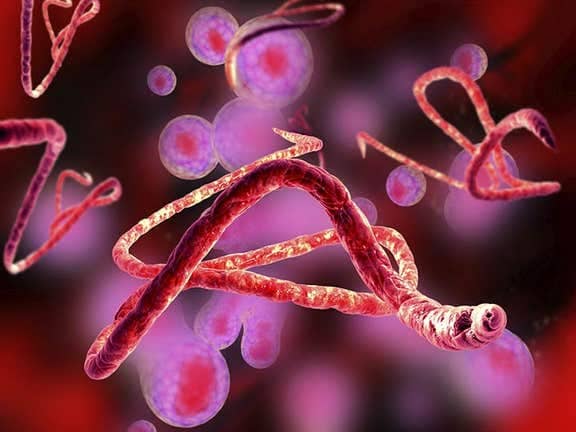
The Nigeria Centre for Disease Control and Prevention, NCDC, on Saturday said there is no case of an outbreak of Ebola Virus Disease in Nigeria.

However, the centre has issued a public health advisory following confirmation of a new outbreak of Ebola Virus Disease, EVD, in the Democratic Republic of Congo, DRC.

The DRC Ministry of Health announced that 28 suspected cases and 15 deaths, including four health workers, have been recorded in Kasai Province as of September 4, 2025. Laboratory tests in Kinshasa confirmed the Ebola Zaire strain as the cause of the outbreak.

In a statement on Saturday, the agency said that although no case has been detected in Nigeria, it is closely monitoring the situation to ensure early detection and preparedness.

The NCDC urged members of the public to adopt preventive measures such as regular handwashing with soap and running water, avoiding contact with individuals showing symptoms of Ebola — including fever, vomiting, diarrhoea, and unexplained bleeding — refraining from bushmeat consumption, and ensuring animal products are properly cooked.

The NCDC said surveillance has been heightened, especially at borders and points of entry, while healthcare facilities across the country are being strengthened to improve infection prevention and control.

“Early recognition, isolation of patients, and supportive treatment reduce the risk of death,” the agency warned, urging Nigerians to maintain strict hand hygiene, avoid contact with persons showing symptoms of fever, diarrhoea or bleeding of unknown cause, and avoid direct contact with wildlife or raw bushmeat.

The NCDC also cautioned health workers to maintain a high index of suspicion, adhere strictly to infection prevention measures, and report suspected cases immediately.

The Ebola Zaire strain responsible for the latest outbreak has an approved vaccine — Ervebo — and response teams supported by the World Health Organisation have been deployed to affected communities in DRC.

Travellers are advised to avoid all but essential trips to countries with confirmed Ebola cases. Those arriving Nigeria from such countries within the last 21 days who experience symptoms like fever, vomiting or unexplained bleeding have been urged to call the NCDC’s toll-free number, 6232, for immediate assessment.

Nigeria continues to battle multiple outbreaks, including Lassa fever, meningitis, diphtheria, measles, and anthrax.

The NCDC assured that it is monitoring regional and global developments closely and will provide periodic updates.

Petrol Tanker Drivers’ Strike: NLC Backs NUPENG

0

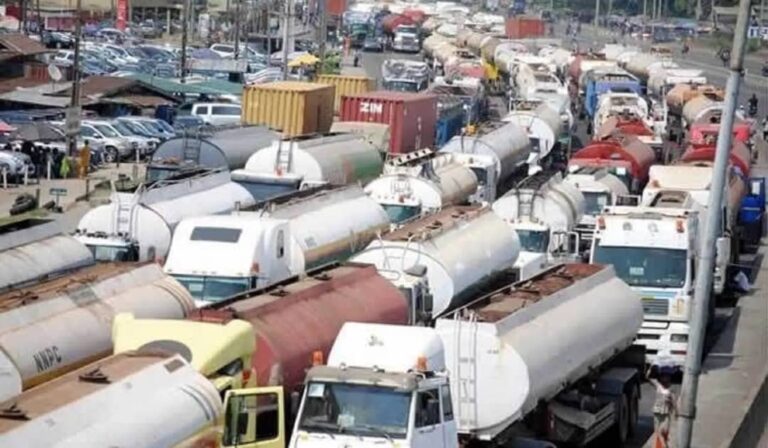
The Nigeria Labour Congress, NLC, has directed workers all over the country to prepare for a solidarity action in support of the nationwide strike declared by the Nigeria Union of Petroleum and Natural Gas Workers, NUPENG, in its face-off with the Dangote Group.

The move comes as NUPENG announced the commencement of a nationwide strike beginning on Monday, over what it described as among others, Dangote’s “anti-union practices, monopolistic agenda, and indecent industrial relations strategies.”

A statement by the President of NLC, Joe Ajaero, called on the Federal Government to immediately call to order and impress on the duo of Aliko Dangote, and Alhaji Sayyu Dantata to respect the laws of the nation and international law.

The statement noted that NLC, in full solidarity with NUPENG, “declares that we will not stand by while one conglomerate seeks to enslave the Nigerian working class and trample on the hard-won rights of unions.”

Part of the statement reads thus; “We have received and carefully studied the petition and alarm raised by our affiliate union, the NUPENG, on the anti-union practices, monopolistic agenda, and indecent industrial relations strategies being pursued by Aliko Dangote and his associates.

“It must be realized that this is not the first complaint we are receiving against Dangote group. We have received several from other unions with jurisdictions over the companies owned by the group. All of them verge on the same acts of impunity and unfair labour practices.

“We state without equivocation that the revelations contained in NUPENG’s statement represent not just an attack on petroleum workers, but a full-blown declaration of war against the Nigerian working class, trade unionism, and the principle of Decent Work.

“It exposes what has long been the questionable hallmark of the Dangote Group; a consistent record of union-busting, exploitative labour practices, and monopolistic capture of markets to the detriment of both workers and the Nigerian people. We have it on good authority that Dangote Refinery pays one of the lowest wages in the oil and gas sector in Nigeria today and treats its staff members beneath acceptable standards.

“Dangote group’s business model clearly enslaves and is not in any way developmental. The Nigerian people were promised that the Dangote Refinery and associated operations would create jobs, deepen industrialization, and promote national self-sufficiency.

“Instead, what we are witnessing is the classic playbook of primitive capitalism as the group resorts to monopolistic Capture. It is using state backing to eliminate competition and dominate entire sectors (cement, sugar, flour, and now petroleum products). It is boasting already of its rooting in the power structure and preparedness to continue using it against the unions.“Dangote group continues in its Union busting strategy has systematically denied workers their constitutional right to freedom of association by preventing them from joining trade unions of their choice, forcing them into ‘company unions’ designed to weaken collective power. “We have had cause in African trade union circles to defend Dangote from complaints by workers of other African nations out of patriotic fervour, but we have reached the point where remedial actions have become necessary.

“The group revels in precarious work. Dangote companies thrive on casualization, poor wages, and unsafe working conditions; all in direct violation of the ILO’s Decent Work agenda to which Nigeria is a signatory and in contradiction to the promise which Dangote holds on Paper. The group believes that Nigerian workers are helpless because there is nothing the government can do against his various violations.

“Dangote believes in employing foreign nationals to the detriment of Nigerian workers. We remember the case of the Asian Welders and Fitters that were recruited from India and others while capable Nigerian welders and Fitters languished in the unemployment queue. Unfortunately, these thousands of workers were not treated fairly, and some of them came to us for remediation. This is definitely not how to be patriotic by a group that received all manners of waivers and concessions from the nation’s coffers.

“Instead of lowering costs for Nigerians, the Dangote monopoly exploits scarcity and control of distribution to raise prices, thereby deepening poverty and hardship. This is not industrialization; it is economic sabotage. It is not nation-building; it is class robbery, where the working masses subsidize the obscene wealth of rich families through exploitation and manipulation in cahoots with cronies in government.

“By seeking to recruit drivers under the condition that they must not belong to NUPENG or any union in the Oil and Gas industry, Dangote and his associates are directly violating Section 40 of the Nigerian Constitution, the Labour Act, and ILO Conventions 98 and 87 on Freedom of Association and the Right to Organise and Collectively Bargain (ratified by Nigeria in 1960).

“If this is allowed to stand, it will set a dangerous precedent where powerful capital can openly defy the laws of Nigeria, enslave workers, and destroy the very foundation of collective bargaining. This is a dangerous road to fascism in industrial relations, where workers are treated as slaves without voice or dignity.

“The NLC, in full solidarity with NUPENG, declares that we will not stand by while one conglomerate seeks to enslave the Nigerian working class and trample on the hard-won rights of unions. The scale of workers’ rights violations is growing alarmingly, and we are poised to ensure that it is contained if nothing is done by the government to sanction the Group and make it act more responsibly.

“We hereby unequivocally condemn the anti-union, anti-worker, and monopolistic practices of the Dangote Group and its affiliates.Call on the Federal Government to immediately call Aliko Dangote and Sayyu Dantata to order. Their operations must comply with all Nigerian labour laws and international conventions.

“We call on Dangote group to cease all anti-union, anti-workers practices. We demand the immediate unionization of not just Dangote Refinery but all the other entities within the group.

“We place entire Nigerian workers, State Councils and industrial unions in Nigeria on red alert and mobilize for a united front of resistance against the Dangote Group’s anti-worker agenda and support the proposed industrial action by NUPENG.

“We demand that the Federal Government and its regulatory institutions; especially the Nigerian Midstream & Downstream Petroleum Authority; that history will hold them complicit if they continue to look the other way while few individuals privatize the nation’s energy future and enslave its workforce.

“We call on the Nigerian people to see through the deception: this is not philanthropy, it is plunder; it is not development, it is dispossession and enslavement.

“The attack on NUPENG is an attack on us all. The NLC without equivocation states that Nigerian workers are not slaves and cannot be serially abused without consequences. Our Constitution and international conventions guarantee our right to organize, collectively bargain, and defend our dignity at work. The NLC will resist every attempt by the Dangote Group to roll back these rights.

“We warn that if Dangote continues on this reckless anti-union path, the NLC and its affiliates will move beyond words to action. We will confront this tyranny head-on until victory is secured for Nigerian workers and the Nigerian people.

“Let it be clearly understood, if the Dangote Group does not immediately halt its anti-union and anti-people agenda, the we will not hesitate to mobilize all workers across the length and breadth of this country for actions and solidarity necessary to protect our dignity and to defend Nigeria from the clutches of monopoly capital.

“Our solidarity is not negotiable. We will fight because we must. The working class must not be sacrificed on the altar of corporate greed.”

2026 World Cup: In spite victory against Rwanda, Nigeria’s hopes hang in the balance

0

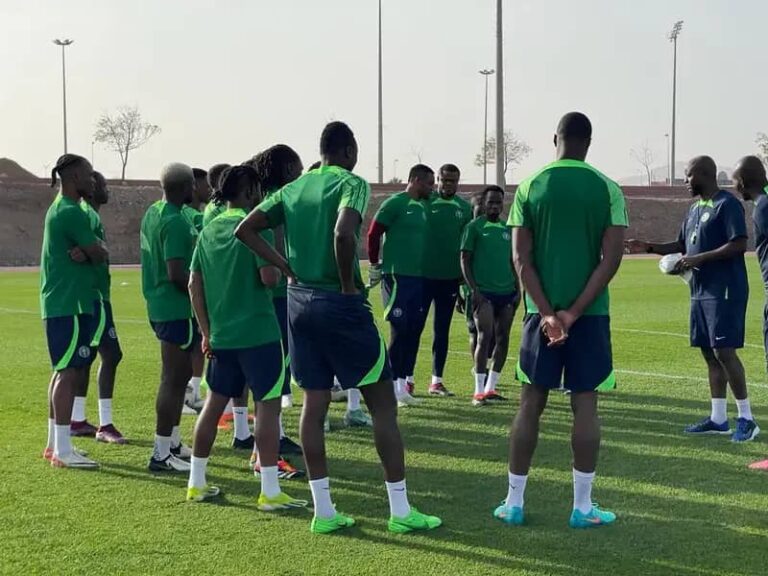
In spite the victory of the Super Eagles of Nigeria over visiting Rwandan senior national team on Saturday at the Godswill Akpabio International Stadium in Uyo, Nigeria’s hopes of qualifying for the 2026World Cup in North America still hangs in the balance.

The Nigerian team must now muster enough fire power to defeat Group C table toppers South Africa in Bloemfontein on Tuesday to have a chance to make it to the tournament next year.

South Africa comfortably despatched Lesotho in their fixture last Friday and will do everything to frustrate Nigeria on Tuesday. For the Nigerian team, the clash on Tuesday is a must win.

But for South Africa, anything, but a defeat will put them comfortably in the driver’s seat, despite having points deduction appeal against them by Lesotho.

The match in Uyo.

The Super Eagles of Nigeria edged past Rwanda with a narrow 1-0 victory in a decisive 2026 FIFA World Cup qualifying clash at the Godswill Akpabio International Stadium, Uyo.

Substitute Tolu Arokodare scored the only goal of the match in the 51st minute, sealing three vital points for Nigeria in Group C of the African qualifiers.

The win comes barely 24 hours after group leaders South Africa extended their advantage with a commanding 3-0 victory over Lesotho, taking their tally to 16 points.

Following the defeat, Rwanda remain fourth in the group with eight points, while Nigeria have now climbed to 10 points from seven matches.

The Super Eagles will next face South Africa in a potentially decisive fixture at the Free State Stadium on Tuesday, before rounding off their campaign against Lesotho and Benin in October

NEMA Confirms 231 deaths, 607 injuries in 2025 floods …114 missing

0

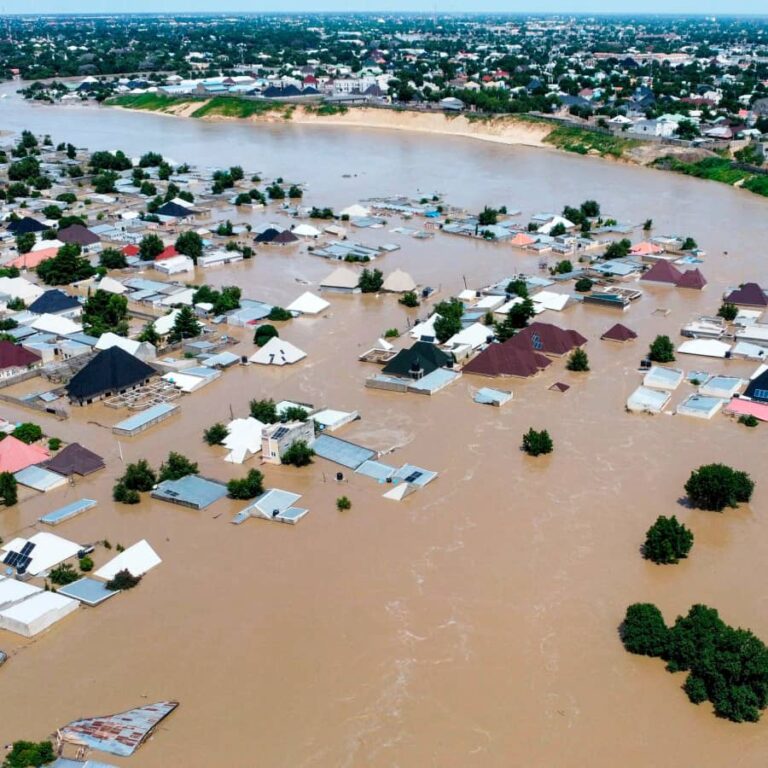
The National Emergency Management Agency (NEMA) has confirmed that 231 persons died, and 607 were injured by floods this year. The agency also confirmed that 315,762 persons were displaced by the floods across Nigeria.

The agency also added that 114 persons are missing as a result of the flood, which has affected 86 Local Government Areas in 25 states.

The information obtained from the updated 2025 flood dashboard of the agency, also indicated that 113,367 persons were also displaced with 40,493 houses and 46,304 farmlands were affected.

According to the dashboard the states mostly impacted by the flood are: Lagos 52,013, Adamawa 51,713, Akwa Ibom 46,233, Imo 29,242, Taraba 26,722, Rivers 22,345, Delta 14,057, Abia 11,907, Borno 8,164 and Kaduna 7,334.

According to the data from the agency, children are the most affected.
The data reads: “143,683 children, 100,079 women, 60,408 men, 11,592 elderly, and 2,265 disabled persons have so far been affected by this year’s flood.

“Some States affected are; Abia, FCT, Adamawa, Akwa Ibom, Anambra, Bayelsa, Borno, Delta, Edo, Gombe, Imo, Jigawa, Kaduna, Kano, Kogi, Kwara, Lagos, Niger, Ondo, Rivers and Sokoto States.

The key challenges identified in the aftermath of the flood incidence are resource shortage, inaccessibility, community resistance, and security risk.

“Resource shortage accounts for 69 per cent of the challenges,16 per cent inaccessibility, 7 per cent community resistance and 6 per cent security risk.”

The priority needs of the affected persons according to NEMA include; food, shelter, WASH, health, livelihood, nutrition, education, protection and security.

US Open: How Carlos Alcaraz can make tennis history in the final

0

The current list involves iconic figures Ken Rosewall, Ilie Nastase, Bjorn Borg, Roger Federer, and Rafael Nadal.

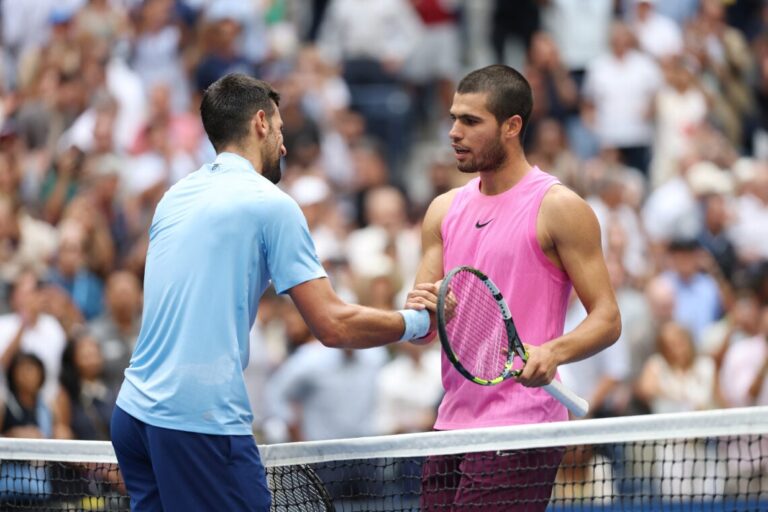
Carlos Alcaraz has reached yet another Grand Slam final after breezing past Novak Djokovic at the US Open.

Alcaraz adopted a physical approach against Djokovic, helping him win their US Open semifinal 6-4, 7-6(7-4), 6-2.

Arthur Ashe Stadium played host to the two-hour, 25-minute clash, in which Alcaraz exacted revenge over the Serbian.

Djokovic entered their latest match with a 5-3 head-to-head lead over the Spaniard, having beaten him at this year’s Australian Open.

He also won their Olympic gold medal match last year, but it was the younger of the ATP duo who emerged victorious this time around.

While Djokovic has again fallen short of a record 25th Grand Slam title, Alcaraz is now into his seventh Grand Slam final.

But he has a chance to make tennis history on this occasion, with Alcaraz aiming to become the first man in the Open Era to win the US Open without dropping a set.

Five men boast such wins at Grand Slams, but the Spaniard would be the first to do it at the New York tournament.

Alcaraz now turns his focus to another final with ATP number one Jannik Sinner, who in contrast has dropped two sets at this year’s hard-court tournament.

Alcaraz has enjoyed a phenomenal run at the US Open so far, despite being handed a relatively tricky draw on paper.

That included seeded players such as Luciano Darderi and Jiri Lehecka, along with four-time US Open champion Djokovic.

But remarkably, the 22-year-old has lost only 58 games from his 18 sets played, for an average of just more than three games per set.

Alcaraz has also only needed two tie-breaks in what has been another formidable run from the 2022 champion.

Flesh Eating, Bone Destroying Disease Hits Nigeria

0

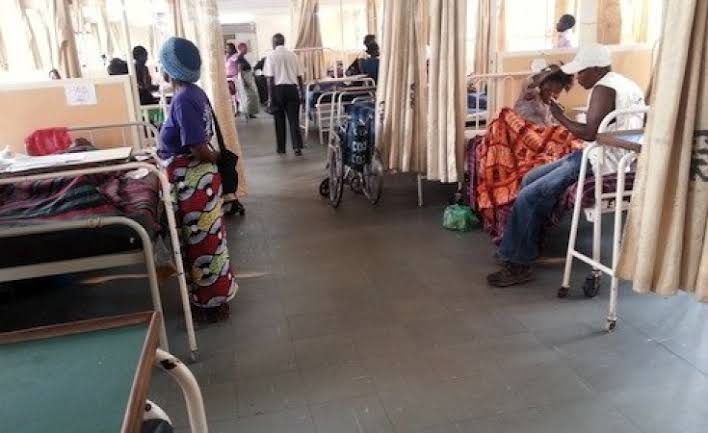
No fewer than 28 people have been infected by a rare disease, which eats up flesh and destroys bones in human, in Adamawa State, Nigeria.

According to reports, Dr. Suleiman Bashir, Chairman of the Adamawa State Primary Healthcare Development Agency, confirmed the outbreak on Saturday, September 6, 2025.

Bashir said specimens from affected patients had been sent to the Nigeria Centre for Disease Control, NCDC, in Abuja for histology and further analysis, with results expected within 10 days.

He disclosed that while 28 cases had been identified, only eight victims accepted medical treatment at the Modibbo Adama University Teaching Hospital, MAUTH, Yola, despite the state government covering the costs.

The medical expert urged residents to seek proper treatment instead of relying on traditional medicine and to report any strange health conditions in their communities promptly.

According to the report, the outbreak is most pronounced in Malabu, a community in Fufore Local Government Area, where residents say the disease begins like a boil, bursts, and gradually eats into flesh, damaging bones.

One of the victims, Mrs. Phibi Sabo, described how the disease started as a boil before bursting and leaving her with an open wound that destroyed her leg bones.

Another patient, Junaidu Adamu, said he had spent over N200,000 on treatment in the last two months without recovery.

The District Head of Malabu, Aliyu Hammawa, said at least 30 persons had been affected, with some receiving care at MAUTH while others remained in local facilities or at home.

The outbreak has raised fresh concerns about Nigeria’s preparedness for emerging diseases and the gap between modern healthcare and traditional practices in rural areas.