Home Blog Page 171

Dangote Cement Shareholders Receive N3 Trillion Dividend In 15 years …As Company Pays N520 Billion In Taxes To FG

0

Dangote Cement Plc says it paid N3.3 trillion in dividends to its shareholders over the last 15 years. At the same time, the company paid the sum of N520 billion to the Federal Government as taxes.

The company made this known on Wednesday during its “Facts Behind the Figures” presentation at the Nigerian Exchange Limited (NGX) in Lagos.

Mr Emmanuel Ikazoboh, the new Chairman of Dangote Cement, who succeeded Alhaji Aliko Dangote, assured shareholders of sustained returns on their investment.

He said the company would continue to pursue its vision of making Africa self-sufficient in cement and clinker production.

“In the last 15 years, we have paid a total dividend of N3.3 trillion to our shareholders and we assure you all of sustained returns on your investments.

“To our investors, you have my unwavering commitment to safeguarding and growing your investment.

“To our regulators and market operators, you have my pledge of continued partnership and adherence to governance standards that lead rather than follow.

“To our employees and partners, you have my gratitude and my assurance that our collective strength will propel us to achievements we haven’t yet imagined,” he said.

Speaking further on the future of the company, Arvind Pathak, Chief Executive Officer of the Group said, “We aim to expand installed capacity to 66.4Mta by 2030, supporting our long-term vision of making Africa self-sufficient in cement and clinker production.

“This growth will be driven by a mix of greenfield and brownfield projects.”

Pathak revealed that the company had commissioned the first phase of 1.5Mta of its 3Mta Côte d’Ivoire plant, while construction of the 6Mta integrated Itori plant continued to advance steadily.

He said the company had announced a 400-million dollar investment to double its production capacity in Ethiopia.

He said, “Over the past 15 years, DCP has committed more than $8.5 billion in capital investments across Africa, underscoring our long-term confidence in the region’s growth prospects.”

Earlier, Dr Umaru Kwairanga, Group Chairman of the NGX, commemded Alhaji Aliko Dangote, President of the Group, for his substantial contributions to the Nigerian capital market and private sector development.

Kwairanga said Dangote who was also his mentor, had clearly demonstrated that wealth could be created but also transferred to the public through the capital market.

Kwairanga described Dangote Cement as one of the prides of the Nigerian capital market.

He noted that it was listed on the Premium Board of the Exchange, reserved for companies with the highest standards of corporate governance and regulatory compliance.

He said the company remained one of the most capitalised on the NGX with a strong record of rewarding shareholders through consistent dividends and capital appreciation.

Also speaking, Mr Jude Chiemeka, Chief Executive Officer of NGX Ltd., described Dangote Cement as one of the most outstanding commercial entities listed on the Exchange.

Chiemeka said that this was based on the fact that the company had recorded huge dividend payments to its shareholders since its listing in the year 2010.

According to him, the company had also paid over 520 billion tax to the Federal Government.

He note that the company currently form nine per cent of the Exchange’s over N88 tillion market capitalisation.

Mr Faruk Umar, President of the Association for the Advancement of Rights of Nigerian Shareholders (AARNS), expressed excitement with the company’s financial performance.

“We are happy with this result. 2024 was very challenging due to the fluctuations in the foreign exchange market and the company’s expansion programme.

“However, all these challenges, the company was still able to pay us a very good dividend and even gave us hope of better returns on our investments in the years to come.

“This is very commendable,” he said.
Nigeria’s Journey Towards Inclusive Health Care

0

For most Nigerians, paying for treatment is a daily struggle.

Available data indicates that out-of-pocket expenses account for more than 70 per cent of health costs, pushing families into poverty and leaving the most vulnerable without care.

National spending on health remains below five per cent of GDP, far short of the 15 per cent target set in the 2001 Abuja Declaration.

Primary healthcare centres often lack basic equipment, teaching hospitals are overstretched; and medical professionals continue to leave the country in search of better opportunities abroad.

In the Federal Capital Territory(FCT), a heavily pregnant woman carrying twins tragically lost her babies after being turned away from multiple hospitals.

Told to pay ₦28,000 and provide a referral letter, she walked several kilometres to secure the documents, only to return too late.

Investigations revealed the twins had died in her womb days earlier, likely due to delays in receiving timely medical care.

Similarly, in Akwa Ibom, a mother and her newborn died following a caesarean section at the General Hospital in Ikot Ekpene.

Relatives alleged that hospital staff left the woman unattended for over three hours, and no blood was available during surgery.

The incident prompted Gov. Umo Eno to establish a commission of inquiry.

These heartbreaking stories highlight the financial, infrastructural, and systemic barriers facing millions of Nigerians, particularly women and children.

At the recent National Health Financing Dialogue in Abuja, policymakers, development partners, and stakeholders grappled with a pressing question:

How can Nigeria re-imagine healthcare funding to ensure access, affordability, and quality for all?

Over the past two years, the government has implemented reforms aimed at saving lives, reducing financial hardship, and improving healthcare access.

These reforms include revitalising primary healthcare facilities, equipping them with essential commodities, and retraining more 67,000 frontline health workers.

More than 8,000 facilities now receive regular federal disbursements to ensure continuity of services.

On the demand side, insurance coverage has been expanded to vulnerable populations.

The urgency of the conversation extends far beyond policy documents; it is a conversation about healthcare as a fundamental human right.

Through the Vulnerable Groups Fund and the National Health Insurance Authority (NHIA), pregnant women, children, people with disabilities, Al-Majiri children, and out-of-school children can access essential services without facing catastrophic costs.

Emergency care support has also been strengthened; more than 5,000 women have had caesarean sections reimbursed, and programmes have been established to provide treatment for obstetric fistula at no cost.

As the Coordinating Minister of Health and Social Welfare, Prof. Muhammad Pate, emphasised, health reforms were not just abstract policies; they are tangible and measurable with clear human impact.

“Historically, the Nigerian elite have benefited more from public resources than the poorest.

“We are changing that,” Pate said.

In his submission, Prof. John Ele-Ojo Ataguba, Executive Director of the African Health Economics and Policy Association (AfHEA), said that universal health coverage (UHC) was a journey, not a destination.

Successful countries combine contributory and non-contributory schemes, and Nigeria is now pursuing both.

“The contributory component consists of national and state health insurance schemes, while the non-contributory element is represented by the Basic Health Care Provision Fund, which subsidises care for those unable to pay, particularly in the informal sector.

“Despite these efforts, out-of-pocket spending remains a major challenge.

“Illnesses are unpredictable; families should not have to sell assets to survive a medical emergency,” Ataguba said.

Dr Gafar Alawode, the Chief Executive Officer, DGI Consult, highlighted the importance of optimising resources and coordination.

“Before now, multiple actors, government tiers, the private sector, and donors spent in uncoordinated ways.

“With a sector-wide approach, two plus two can become five or six instead of one or zero,” Alawode explained.

Yet, while politicians and technocrats debate financing models, youth and grassroots women leaders say they remain excluded from decision-making.

Mr Seniye Michael, a youth activist, lamented that leaders often attend high-level meetings briefly, make remarks, and leave, leaving young people dialoguing with themselves.

Michael proposed a Youth Health Access Fund to directly finance medical needs for young people.

Mrs Hauwa Adamu, leader of the Wives of Traditional Rulers Network, echoed this call.

“Policies are often written for us without us; women’s lived experiences must shape advocacy and project design,” Adamu said.

The dialogue highlighted a key principle: health is a unifying force. Universal health coverage strengthens human capital, builds social cohesion, and protects society from preventable diseases.

As Pate explained, ensuring that even rural populations have access to care is in everyone’s enlightened self-interest.

Participants at the dialogue agreed that, private sector partnerships, tax reforms, and public engagement are crucial to sustaining these gains.

Governments at all levels, alongside citizens, must commit to funding, transparency, and accountability.

The road to universal health coverage remains long, but the trajectory is clear.

Stakeholders say Nigeria is building an inclusive health system that prioritises the vulnerable, reduces preventable deaths, and protects citizens from financial catastrophe.

This transformation is about more than policies; it is about saving lives, empowering communities, and ensuring that no one is left behind.

The tragic stories from the FCT and Akwa Ibom remind us why this work matters; behind every statistic is a human life, and policies must protect those lives.

Ensuring healthcare access, affordability, and quality is not a political gesture; it is a moral imperative.

As Nigeria continues its journey towards inclusive healthcare, these reforms and initiatives must be sustained, monitored, and adapted to local realities.

Experts say when healthcare systems function effectively, the impact is profound: maternal and child deaths decline, families are protected from financial ruin, and social trust in institutions strengthens.

Ultimately, the story of Nigeria’s healthcare reform is one of hope and resilience; it reflects the determination of policymakers, healthcare workers, activists, and ordinary citizens to transform a fragmented system into one that is inclusive, equitable, and people-centred.

While challenges remain, including limited funding, workforce shortages, and systemic inefficiencies, the commitment is evident.

With sustained focus and participation from all sectors, Nigeria can achieve a healthcare system where policy meets people, and where access to quality care is not a privilege but a right for every citizen.

Observers say for every Nigerian mother walking miles for a referral letter, for every child denied life-saving care due to financial constraints, the ongoing reforms represent a future where health policies translate into real, tangible benefits for all.

(NAN Features)

Tinubu’s Reforms, Bold, Fruitful – D-G SEC

0

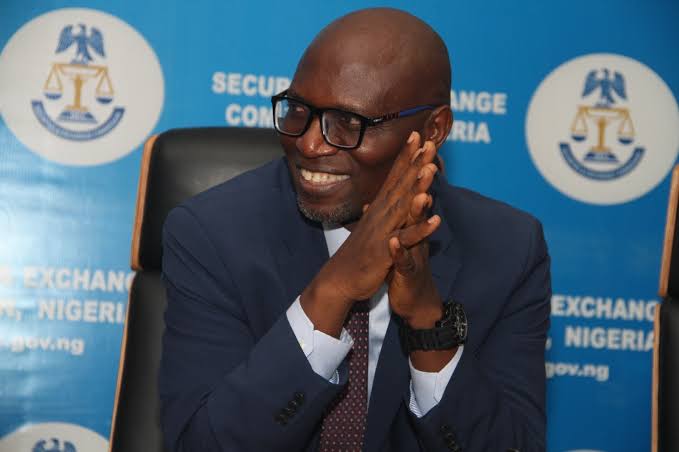
The Director-General General (D-G) of the Securities and Exchange Commission (SEC), Dr Emomotimi Agama, says the economic reforms introduced by President Bola Tinubu will significantly stabilise and develop the Nigerian economy.
He stated this on Wednesday in Kaduna at the Nigerian Defence Academy’s (NDA) 23rd Convocation Lecture titled ‘Pathway to Economic Prosperity for a Public Server in a Deregulated Economy’.

The lecture was part of the activities lined up for the graduating Cadets of 72 Regular Course and Post-Graduate students of the military academy.
Agama said Tinubu had initiated bold and transformative reforms across key sectors in order to lay a solid foundation for inclusive growth and long-term sustainable development of the country.

Agama said, ” The government had undertaken several significant macro-fiscal reforms, including the removal of fuel subsidies, the unification of exchange rates, and the tightening of monetary policy.”

According to him, through these measures, the country has made notable progress in deregulating key sectors of the economy.
“The bold decision to eliminate Nigeria’s long-standing fuel subsidy programme on May 29, 2023, was more than a fiscal adjustment.

“It marked a pivotal shift toward a deregulated economy, aimed at reducing fiscal burdens and redirecting public funds to more productive sectors.
“The move signalled the Tinubu administration’s commitment to market liberalization, allowing fuel prices to be determined by supply and demand rather than government control,” he postulated.
Agama also said the government has begun scaling back electricity subsidies by adjusting tariffs, a strategy designed to enhance efficiency and attract private investment into Nigeria’s power sector.
The director-general said that to address rising inflation and support the Naira, the Central Bank of Nigeria (CBN) had adopted a tighter monetary policy stance, notably through interest rate hikes.

“These measures are part of a broader strategy to stabilise prices, restore investor confidence, and lay the foundation for a more market-oriented and resilient Nigerian economy.
“Another significant step taken by the CBN was the unification of the country’s multiple exchange rate systems, aimed at simplifying foreign exchange transactions and enhancing transparency in the currency market,” he added.

The SEC boss also spoke on the investments opportunities in the capital market and the need for the cadets to invest in order to secure their future.
Agama appreciated the Commandant of NDA, Maj.-Gen. Abdul Ibrahim, for inviting him to deliver the convocation lecture, saying it was a great opportunity to make the cadets financially literate.
The director-general advised that while officers and men of the military battle to make the nation secure, “it is important they have a scheme behind them to sustain their families.

“I’m grateful to the commandant that we have this ability and this opportunity to make sure that retiring officers do not retire in penury.
“The reason why some retire in penury is because there is some lack of financial education and lack of financial support that could be generated from adequate knowledge of financial products in the capital market.”
Agama explained that the capital market was providing support and condition for the people to live well after retirement.

Earlier, the Commandant, NDA Maj.-Gen. Abdul Ibrahim, appreciated the SEC official for the incisive lecture.

Ibrahim said the NDA has been providing trainings for the Nigerian Armed Forces since 1964, with a focus on producing well-rounded commissioned officers.
According to him, the academy has adopted the National Universities Commission (NUC) Core Curriculum and Minimum Academic Standard (CCMAS) requirements to ensure quality and competitiveness in its programmes.
He added that NDA provides intensive professional training, including physical fitness, weapons handling, and tactical manoeuvres, to prepare cadets for the national defence and security challenges.
Ibrahim said the Post-Graduate students undergo programmes in military science, defence and strategic studies, psychology, technology, and national development, aiming to develop students’ critical thinking and research skills.

He said the NDA had bilateral partnerships with foreign military academies, providing opportunities for cadets to complete the final year of their training abroad and enhancing regional defence cooperation.

Benue Assembly Dissolves Leadership, Appoints New Officers

0

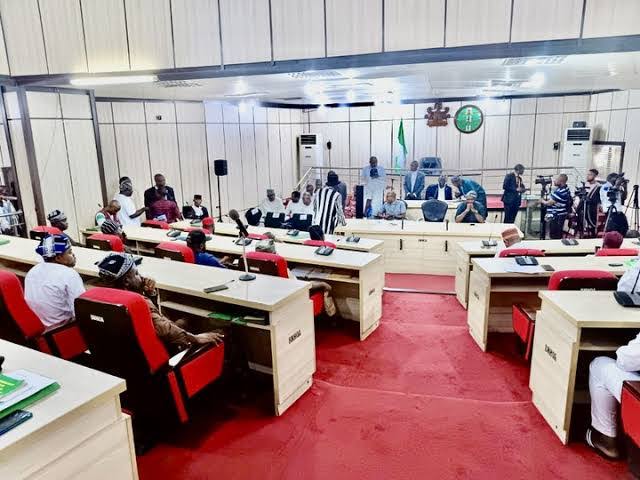
The Benue State House of Assembly has dissolved its leadership and only retained the Speaker, Mr Alfred Emberga, and the Deputy Speaker, Lamin Danladi.

The dissolution of the leadership followed a motion moved by the former Deputy Majority Leader, Mr Douglas Akya (APC/Makurdi South), during plenary on Thursday in Makurdi.

Akya said that since he was from the same local government area as the speaker, it would be morally wrong for him to continue to function as the deputy majority leader.

The former deputy majority leader said that it was morally right for him to step aside and allow the house to appoint another colleague as the deputy majority leader.

He further said that apart from the speaker and the deputy speaker that were elected, every other officer that was appointed should be dissolved.

The motion was seconded by Mr Cyril Ikong (APC/Oju), stating that the motion was apt and timely.

Ruling, the speaker put the matter to vote, and members unanimously agreed that the officers that were appointed into various offices ranging from the majority leader to deputy minority whip be dissolved and new persons appointed.

The speaker then announced Mr Thomas Dugeri (APC/Kwande West) as the Majority Leader, Dr Abraham Jabi (APC/Buruku) as the Deputy Majority Leader, Mr Cyril Ikong (APC/Oju) as the Majority Chief Whip and Mr Simon Gabo (APC/Mata) as the Deputy Chief Whip.

Others were Mr Abu Umoru (PDP/Apa) as the Minority Leader and Mr Cephas Dyako (LP/Konshisha) as the Deputy Minority Leader.

Also appointed were Mr Samuel Jiji (PDP/Logo) as the Minority Chief Whip and Mr Moses Egbodo (PDP/Obi) as Deputy Minority Whip.

FG Inaugurate Councils, Officers Of Four Universities

0

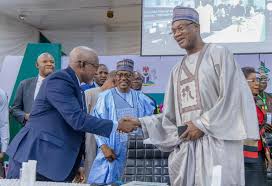
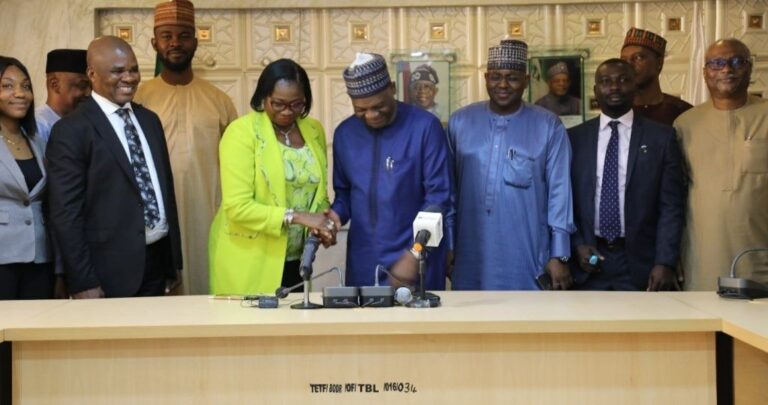
The Federal Government on Thursday formally inaugurated the Governing Councils and Principal Officers of four newly established federal universities,FG Inaugurate Councils, Officers Of Four Universities reaffirming its commitment to expanding access to quality higher education in Nigeria.

The universities include: Federal University of Agriculture and Technology, Okeho, Oyo State, and Federal University of Health Sciences and Technology, Tsafe, Zamfara State.

Others are Yusuf Maitama Sule Federal University of Education, Kano, and Federal University of Education, Zaria, Kaduna State.

Speaking at the inauguration ceremony in Abuja, Minister of Education, Dr. Tunji Alausa, described the establishment of the universities as a strategic intervention by the Tinubu administration, aimed at addressing pressing national challenges such as food security, public health, climate change, renewable energy, and technological innovation.

“This is not just an expansion of Nigeria’s tertiary education landscape. It is a deliberate, strategic response to the urgent and interconnected challenges confronting our nation and the world,” Alausa said.

He noted the deliberate siting of the universities: Okeho, located in Nigeria’s agriculturally rich South-West, was chosen for its vast agricultural potential.

“Tsafe, in the North-West, lies in a region with abundant natural and human resources but in need of strengthened health and educational infrastructure to unlock its full potential.”

The minister urged the newly inaugurated councils and principal officers to provide visionary leadership, uphold merit and accountability, and protect university autonomy.

He charged Vice-Chancellors to lay strong institutional foundations that would define their universities’ identities and excellence for generations to come.

Alausa also reaffirmed the Federal Government’s commitment, in partnership with TETFund and development agencies, to provide infrastructure, support research, and strengthen institutional capacity through reforms in quality assurance, autonomy, and performance-based funding.

“We want universities that are not just established but empowered to lead,” he said.

He called on staff, students, regulators, and host communities to embrace a shared vision of excellence and work together to build institutions that reflected national pride.

In his remarks, Sen. Yakubu Oseni, Pro-Chancellor and Chairman of the Governing Council of the Federal University of Agriculture and Technology, Okeho, pledged to work with all stakeholders to transform the institution.

He said the goal was to make it a hub for agricultural innovation, research, and technological advancement.

He thanked President Tinubu for the appointment and assured that the Council’s work would align with the administration’s vision to strengthen Nigeria’s education system.

North-East Stakeholders Urge FG To Increase TETFund Allocation

0

Stakeholders in the education sector across North-East Nigeria have called on President Bola Tinubu to increase the allocation of the Tertiary Education Trust Fund (TETFund) to enable it to do more for tertiary institutions.

The stakeholders spoke at a three-day town hall meeting in Jalingo, Today.

They commended the Tinubu administration’s Renewed Hope Agenda and its reforms in the education sector.

Alhaji Sani Abubakar, former Taraba acting governor and member of the TETFund Board, highlighted recent interventions of the fund, ranging from academic staff training to infrastructural development.

Abubakar noted that thousands of lecturers have benefitted from PhD and master’s scholarships locally and abroad, while TETFund has continued to provide support for teaching practice, conferences, and professional development.

According to him, the fund’s interventions have also transformed campuses with modern lecture theatres, laboratories, Information and Communication Technology (ICT) centres, and student hostels.

The former acting governor further listed projects such as zonal research laboratories, centres of excellence, medical simulation facilities, agricultural demonstration farms, and innovation hubs established across universities and polytechnics.

He disclosed that under the 2025 intervention cycle, N70 billion has been earmarked for mini-grid power projects to provide stable and renewable electricity in 18 institutions.

The North-East Zone, he added, has benefited significantly from these interventions, with projects spread across the University of Maiduguri, Abubakar Tafawa Balewa University Bauchi, Gombe State University, Taraba State University, and several polytechnics and colleges of education.

He urged participants to develop a blueprint that would consolidate the gains and further strengthen the country’s education system.

He stressed that progress in the sector required collaboration between government, institutions, industries and host communities.

In his paper presentation on the challenges of tertiary institutions in Nigeria, Dr Isa Muhammed of Taraba State University said TETFund needed more funding to make Nigeria’s tertiary institutions meet global standards.

Muhammed noted that the major challenge of Nigerian institutions has been inadequate funding by the owners.

The paper presenter stated that the contributions of the TETFund to the infrastructural development in the tertiary institutions could not be overemphasised.

“If you remove TETFund from Nigeria’s tertiary institutions today, what you will have left will be shocking,” he said.

Prof. Umar Pate, the Vice Chancellor of the Federal University, Kashere, Gombe State, said TETFund has funded numerous projects in the institution and others to improve the standard of education in the country.

Pate noted that though the Tinubu administration has increased funding to TETFund, an upward review would take tertiary institutions to the promised land.

Lagos Intensifies Drive To Cut Malaria To Pre-elimination Level Says Sanwo-Olu

0

Gov. Babajide Sanwo-Olu of Lagos State, today reaffirmed his administration’s commitment to reducing malaria prevalence to below one per cent.

Sanwo-Olu gave the assurance at the mid-term review meeting of the IMPACT Project and the Pathway to Malaria Pre-Elimination and Digitisation Programme held at Eko Hotels and Suites, Victoria Island.

According to him, the state is on course to shift from a high-burden to a pre-elimination stage.

He said the initiative, launched on March 4, was designed to turn hope into tangible results by deploying evidence, technology and collaboration to combat malaria.

According to the governor, funding from the World Bank, Islamic Development Bank and other partners has enabled Lagos to expand targeted activities at key points of care and strengthen its monitoring capacity.

A major plank of the strategy, he noted, “is digitisation including real-time reporting systems and digital platforms in public and private facilities to close information gaps that slow diagnosis, reporting and response.

“Through partnerships with innovative companies and the roll out of digital pharmacy and facility software.

“We are enhancing diagnostic accuracy, standardising case management and integrating private providers into the state surveillance system,” he said.

Sanwo-Olu said malaria continued to impose huge social and economic costs on Lagos residents through lost school days, diminished wages and pressure on the health system.

Hence the drive to cut prevalence to pre-elimination levels by improving diagnostics, ensuring consistent treatment and engaging communities.

He identified accountability, scale and quality, and community ownership as the three key focused areas of the review.

On accountability, the governor called for strict adherence to rapid diagnostic testing and timely reporting by private pharmacies and patent medicine vendors.

On scale and quality, he stressed the need to extend interventions to hard-to-reach areas without compromising standards, through training, supervision and integration with the Ilera Eko health-financing platform to guarantee affordable access to care.

” I urge households and communities to play their part by eliminating mosquito breeding sites, testing promptly and trusting the health system.

” Supported by effective communication, community health workers and collaboration with traditional leaders, market groups and schools,” he said.

Sanwo-Olu commended development partners including the World Bank, Islamic Development Bank, WHO, and the Bill & Melinda Gates Foundation.

Others are, National Malaria Elimination Programme, Maisha Meds, Society for Family Health, private hospitals, pharmacies and community providers for their support.

He also applauded the Ministry of Health, Lagos State Health Management Agency (LASHMA) and the Institute of Human Virology Nigeria (IHV) for progress made so far.

The  governor, however, urged them to sustain the momentum by drawing up a solid operational plan for the next quarter.

The governor appealed to residents to contribute to the fight by using treated nets, getting rid of stagnant water and testing before taking anti-malarials.

According to him, such individual actions will help achieve a malaria-free Lagos.

“Let us commit to being transparent with our data, ensuring quality care in both public and private sectors and empowering our communities.

“Together with government, partners, health workers, private sector and community leaders, we can make Lagos a shining example of effective malaria control,”he said.

Nigeria Targets 25% Industrial Growth By 2035 – Minister

0
The Federal Government says Nigeria has projected a significant rise in industrial contribution to GDP, targeting 25 per cent growth between 2025 and 2035 under a newly validated strategic framework.
Sen. John Owan, Minister of State for Industry, made the remark during a panel session at the ongoing Gastech Exhibition and Conference in Milan, Italy.
The session was themed “Powering Growth and Prosperity in High Potential Economies Through Widened Access to Affordable, Reliable and Flexible Energy.”
Owan said the framework marked a turning point in Nigeria’s industrial policy, describing it as one of the most profound achievements of the President Bola Tinubu administration.
“For the first time in decades, Nigeria has a strategic industrial framework. We are determined to grow our economy,” he said.
He explained that the country’s current industrial contribution to GDP stood at about 10 per cent, with plans to raise it to 25 per cent by 2035.
The policy, he added, signaled Nigeria’s shift from a resource-based economy to a productive, competitive and innovative one.
Owan noted that President Bola Tinubu had been a strong advocate of Compressed Natural Gas (CNG) as a tool for powering industries and driving economic growth.
He said that Nigeria’s large population and vibrant youth base positioned it as a key player in Africa’s industrial future.
“Nigeria is ready. Africa is the new frontier, and we are reforming to meet global expectations,” he said.
The minister praised President Tinubu’s reform-minded leadership, citing decisive actions taken on his first day in office, including the removal of petrol subsidy and harmonisation of exchange rates.
He said those bold steps had helped stabilise the economy, with businesses able to access foreign exchange through official channels.
According to him, Tinubu has also been promoting Nigeria as an investment destination during his global engagements.
“There is no better time in our history than now. Nigeria is open and ready for business.
“The global community should engage with Nigeria and Africa due to the continent’s readiness for transformation,” Owan said.
He further described Nigeria as ‘more of a gas-based country than an oil country,’ stressing that energy policy is grounded in available resources and long-term development goals.
He noted, however, that infrastructure gaps had led to significant gas flaring, urging international partnerships to help the country achieve energy sufficiency.
On his part, Mr Olalekan Ogunleye, Executive Vice President, Gas, Power and New Energy at NNPC Limited, emphasised that gas was central to Nigeria’s economic strategy.
He said that the Tinubu administration had been leveraging gas to deliver improved outcomes for Nigerians.
“Nigeria has over 210.5 trillion cubic feet of gas. We must optimise its development,” he said.
Ogunleye said NNPC was revising the gas master plan to position Nigeria as a sustainable global supplier, noting that projects such as the Train 7 LNG expansion would boost output by 30 per cent.
He added that clarity was being provided on gas sources for potential Train 8 and Train 9 expansions.
The NNPCL executive further highlighted the African Atlantic Gas Pipeline project which, he said, was being developed in partnership with Morocco to connect 16 African economies and strengthen Nigeria’s role as a dependable gas supplier.
Domestically, Ogunleye said NNPC had begun supporting gas-based industries to generate jobs and meet investor needs, citing renewed interest from global firms in deep-water gas developments.
“Companies like Petrol Brass, returning as fiscal incentives, have created a competitive landscape.
“This is the best time to invest in Nigeria because the opportunities are vast and the environment is ready,” he said.
The Gastech conference is one of the world’s largest gatherings, drawing global leaders and investors to discuss sustainable solutions and strategic partnerships.

Tinubu To Address World Leaders At UN General Assembly Sept. 24

0
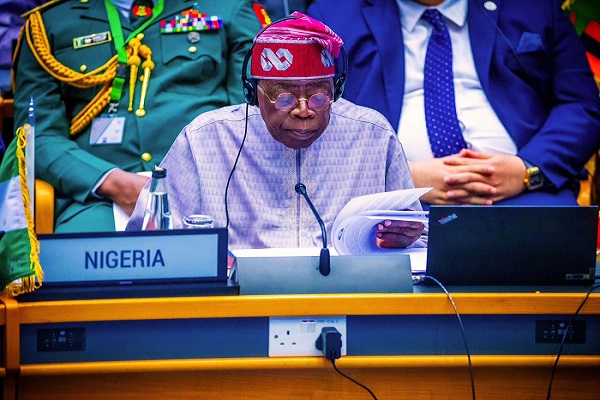
Nigeria’s President Bola Tinubu will address the 80th Session of the high-level General Debate of the United Nations General Assembly (UNGA) at the UN headquarters in New York on Wednesday, September 24.
A revised provisional list of speakers obtained by the Correspondent of the News Agency of Nigeria (NAN) from the UN headquarters in New York showed that Tinubu would be speaking on the second day of the event.
The Nigerian leader is scheduled to deliver his address to other world leaders during the afternoon session around 8:30 pm local time (around 2:30 pm Nigerian time).
Tinubu would be the 17th world leader to speak on day two of the general debate, according to the provisional list.
He will be joining the gathering of 195 world leaders made up of 98 heads of state, five vice-presidents, 44 heads of government, and four deputy prime ministers.
The others are 37 ministers, one crown prince, and four chairs of delegation to speak at the general debate.
The President of Brazil, Luiz da Sliva, would be the first world leader to present his address to the 78th session as it is tradition.
He will be followed by the U.S. President Donald Trump, the traditional second speaker, being the host country.
Sources at the UN said that the list was being updated and the Nigerian leader’s speaking slot might change if he would not be attending the general debate in person.
According to the UN traditions, Heads of State are speakers on the first and second day while vice-presidents speak from the third day.
Vice-president Kashim Shettima represented Tinubu in 2024 and spoke on the first day of the debate, maintaining Tinubu’s slot, which diplomats said was very unusual as per tradition.
The rare feat was credited to the goodwill that Nigeria enjoys from anong the international community and the diplomatic manoeuvring of the Nigerian diplomats at the UN.
Movses Abelian, Under-Secretary-General for General Assembly and Conference Management said the current “revised list reflects changes in the level of representation (upgrades and downgrades) and reflects exchanges among Member States “.
“Please note that this list will continue to be updated until the start of the General Debate as changes are communicated by Member States,” Abelian added.
The theme of the general debate of the 80th session of the General Assembly is “Better together: 80 years and more for peace, development and human rights”.
The 80th session of the UN General Assembly (UNGA 80) opened on Tuesday, September 9, with the inauguration of a new President, Annalena Baerbock of Germany.
Baerbock called on Member States to unite in addressing global crises, from war and poverty to climate change, taking her oath on the original 1945 Charter and pledging to lead with courage and inclusiveness.
A former Foreign Minister of Germany, Baerbock, becomes only the fifth woman in history to preside over the General Assembly. She accepted the Assembly’s ornate gavel from her predecessor, Philémon Yang of Cameroon.
The high-level General Debate will be held from September 23 and to September 29.
The theme for the 80th Session of the United Nations General Assembly is “Better Together: 80 years and more for peace, development and human rights”.
The high-level week will kick off on September 22 and run through September 30, during which world leaders will gather to attend the general debate and a series of conferences.
These include the high-level meeting to commemorate the 80th anniversary of the UN, the SDG moment, and the high-level meeting on the 30th anniversary of the Fourth World Conference on Women.
The others are the Conference on Palestine and Two-State Solution, the Climate Summit, and the High-level Meeting to Launch the Global Dialogue on AI Governance, among others.

Tinubu Orders FEC Committee To Crash Food Prices

0

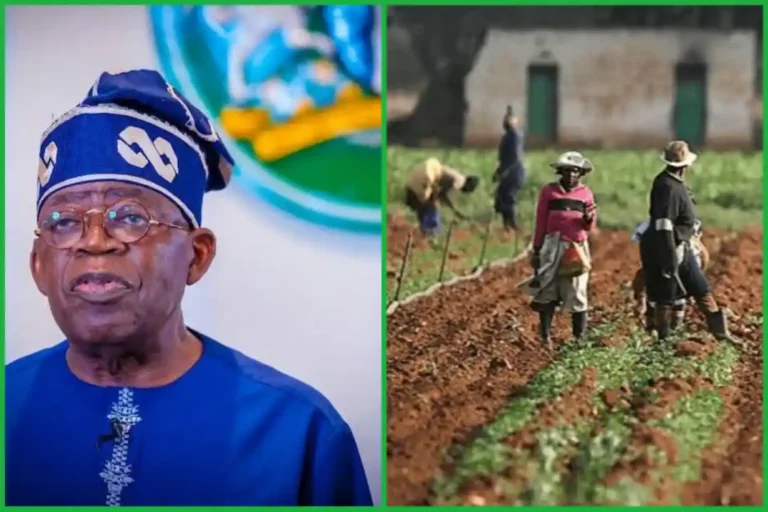
President Bola Tinubu has ordered a Federal Executive Council committee to further crash prices of food items across the country.

The Minister of State for Agriculture and Food Security, Sen. Sabi Abdullahi stated this in Abuja, while presenting a paper at a one- day capacity building workshop for journalists covering the Senate.

Abdullahi said the president’s order would be enforced to further crash prices of food items by ensuring the safe passage of products through various routes across the country.

He emphasised that the committee’s action was aimed at realising Tinubu’s vision on food sovereignty.

According to Abdullahi, the Federal Government was fully committed to addressing the high prices of transportation of farm produce in the country.

He said, “I can say it on good authority to you that the president has given a matching order with a federal executive council committee already handling it.

” On how we are going to promote safe passage of agricultural foods and commodities across our various routes in the country.

“We are aware, and I’m sure as media, you are also aware, there are routes through which commodities are taken before they are delivered.

“If you know the amount of money that is being spent, you can now understand why those commodities have to be expensive at the point of delivery.

” So, we are working very hard,we are doing quite a lot. But I’ve just given you a snippet because I’m here, and I felt we should look at that.”

Abdullahi explained that the vision for food sovereignty was within the ambit of food security and food sufficiency which encompassed availability of food, accessibility as well as affordability, and in right nutritional content on a sustainable basis.

According to him, other programmes such as the ‘Farmer Soil Health Scheme and Cooperative Reform’ were also awaiting implementation .

” We are having what you call the Farmer Soil Health Scheme. And that is ready for launch,we are just waiting for the date.

“Mr President has shown tremendous interest in the cooperative sector as a veritable tool for resource mobilisation, for economic activity generation and to improve the livelihood of members.

“And you know the principle of cooperative is clear, is democratic, yet it is also very productive. And so we are reforming this.

” There is a number of things we are doing there and I will urge you, as a press corps, to consider forming a cooperative,” he said .

The workshop, with the theme: “Parliamentary Reporting : Issues , Challenges and Responsibilities also had as resource person the Chairman, Senate Committee on Media and Public Affairs Sen. Yemi Adaramodu.

Other resource persons included Sen. Ita Enang and Director-General of the National Institute for Legislative and Democratic Studies (NILDS), Prof. Abubakar Sulaiman