Home Blog Page 164

PenCom Releases Guidelines On Foreign Currency Pension Contributions

0

The National Pension Commission (PenCom) has released guidelines on Foreign Currency (FCY) pension contributions as part of the pension revolution 2.0 for stronger pension and stronger Nigeria.

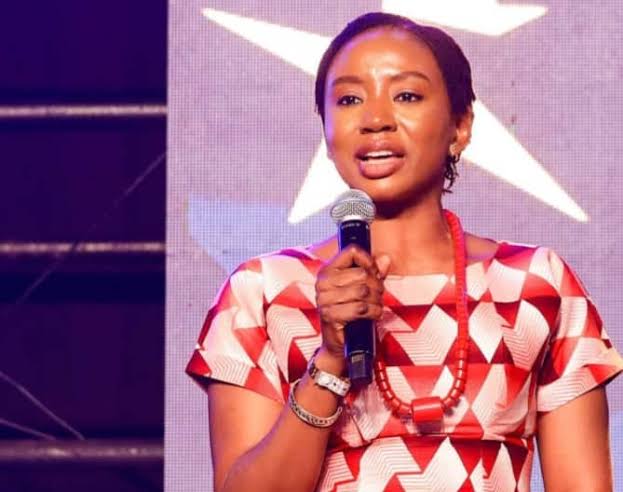
The announcement was made by the Director General (D-G) of PenCom, Omolola Oloworaran, on her X (Twitter) handle in Abuja on Wednesday.

She said that PenCom was embarking on a wave of rolling out new initiatives daily to enable setting higher standards across critical pillars of the pension endeavour.

Oloworaran said that the FYC guidelines provide a pension arrangement under the Contributory Pension Scheme (CPS) for Nigerian living and working abroad.

Also, Nigerian/ foreign workers working in Nigeria, but earning all or part of their remuneration in foreign currencies and other eligible persons are to make their payment in dollars.

Oloworaran said that the contributors would also access their benefits in dollars, except they elect to do otherwise.

She said that the FCY pension contribution guidelines, which are being issued for the first time, mark a watershed moment for the CPS coverage expansion and financial inclusion drive.

The D-G said that the initiative is a bold reform that shows that PenCom cares about the retirement security of all working Nigerians irrespective of geographical borders.

Lawmaker Seeks FG’s Urgent Activation Of Emergency Medical Treatment Funds Nationwide

0

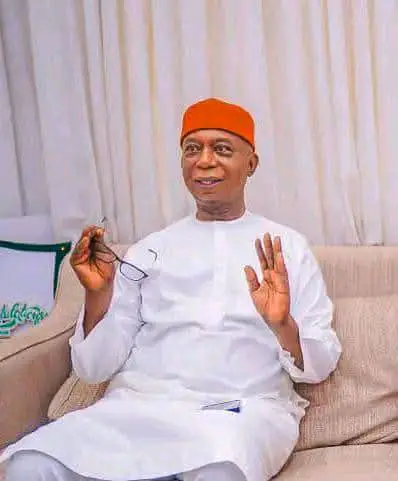
A lawmaker representing Delta North Senatorial District, Senator Ned Nwoko (APC-Delta), has called for the urgent activation and implementation of the Emergency Medical Treatment (EMT) funds as provided for under Section A150 of the National Health Act 2014.

The funds, which are derived from a five per cent allocation of the Basic Health Care Provision Fund (BHCPF), he said, are intended to finance the National Emergency Medical Service and Ambulance System (NEMSAS).

Nwoko who made the call in Abuja while speaking with newsmen noted that emergencies occur daily across Nigeria not only in the form of blood, broken bones, and fading pulses, but also in heartbreaking situations where help should come but does not, due to hospitals demanding upfront payment before treatment.

He said this leaves many Nigerians to die from preventable conditions.

He also noted that more than 75 per cent of Nigerians finance their healthcare expenses out-of-pocket — one of the highest proportions globally, describing the development as an unstable situation that pushes millions into poverty, and exposes citizens to poor health outcomes.

According to him, the National Health Act signed into law on Oct. 31, 2014, was designed to provide a comprehensive legal framework for the regulation, development, and management of the country’s health system.

“This is with the aim of raising national healthcare standards, improving accessibility, and ensuring equitable service delivery for all Nigerians;

“Section A150 of the Act establishes the Basic Health Care Provision Fund (BHCPF), financed through one per cent of the Federal Government’s consolidated revenue alongside grants from international donors and other approved sources.

“The Act specifies clear allocations for the fund, including 50 per cent for the provision of a basic minimum package of health services through the National Health Insurance Scheme.

”Others are 20 per cent for procurement of essential drugs, vaccines, and consumables and 15 per cent for maintenance of healthcare facilities, equipment, and transport across eligible centres.

“Also 10 per cent is allocated for the development of human resources for primary healthcare delivery and five per cent specifically earmarked for emergency medical treatment, to be managed by a committee appointed by the National Council on Health.”

The lawmaker said that in spite of the clarity of this statutory framework, there was no public evidence that the five per cent emergency medical treatment allocation had been implemented or made accessible to Nigerians in urgent need, thereby defeating the essence of its creation.

He recalled the death of Sen. Ibrahim Kontagora, after a hospital declined to conduct a critical surgery due to non-payment of a 15,000 dollars deposit.

“Also was the case of Mrs Akinbobola Folajimi, a pregnant woman who was denied emergency treatment because of the husband’s inability to immediately pay N500,000 deposit.

“The cases have brought renewed national attention to the failures in Nigeria’s emergency healthcare delivery system,” he said.

Nwoko noted that these were not isolated cases as every day, countless Nigerians lose their lives due to the inability to access emergency care in critical moments, as hospitals insist on deposits before treatment.

“This is in total disregard of Section A150 (2)(c) of the National Health Act, which mandates the provision of emergency medical treatment without demand for initial payment,” he stressed.

He added that the non-implementation of this provision undermined public confidence in the health sector, violates the spirit of the law, and negates Nigeria’s obligation to protect the right to life as guaranteed under the 1999 Constitution (as amended).

He therefore called for the immediate activation and operationalisation of the Emergency Medical Treatment Fund by the Federal Ministry of Health and Social Welfare, in collaboration with the National Council on Health, as stipulated under Section A150 of the National Health Act 2014.

The senator also called on the Federal Government to mandate the National Primary Health Care Development Agency (NPHCDA), the National Health Insurance Authority (NHIA), and other relevant stakeholders to publish and implement a transparent framework on how Nigerians can access the emergency fund.

“The Senate should also direct the committees on Health (Secondary and Tertiary), and Legislative Compliance to invite the Minister of Health and Social Welfare, the Executive Secretary of the NHIA, and the Director-General of the NPHCDA to brief it on the current status of the BHCPF.

“This is with specific focus on the utilisation of the five per cent allocation for emergency medical treatment.

“I also call on the Federal Government to establish a dedicated Emergency Medical Response System linked to the Fund, with a toll-free national emergency number, ambulance services, and designated hospitals with mandate to provide first-response treatment without delay.

“The committee on Health in the Senate should also ensure strict oversight on the full implementation of BHCPF,” Nwoko said.


Biosafety Agency Warns Against Ebola, Other Biological Risks

0

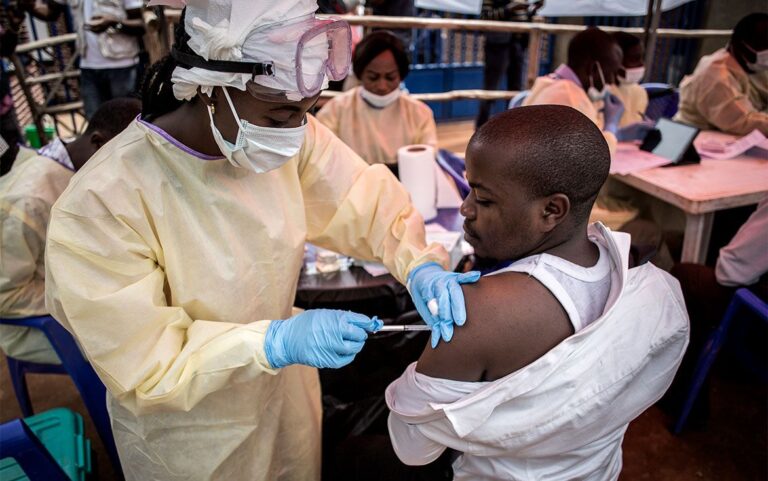
The National Biosafety Management Agency (NBMA) has warned Nigerians about Ebola and other Biosecurity Threats.
Dr Agnes Asagbra, Director-General (D-G), NBMA, gave the warning in a statement made available in Abuja on Tuesday.
Asagbra explained that Ebola Virus Disease (EVD) was one of the most dangerous infectious diseases, with a fatality rate of between 25 to 90 per cent.
She noted that recent reports of suspected viral haemorrhagic fevers in Nigeria and neighbouring countries were a reminder that biosecurity was a shared responsibility.
She said that other biosecurity threats in the country include Lassa fever, avian influenza, anthrax, and antimicrobial resistance all of which required vigilance and preparedness.
“For more information on Ebola virus and recent control activities in Nigeria, the public is advised to read the recent Nigeria Centre for Disease Control (NCDC) Public Health Advisory on Suspected Viral Haemorrhagic Fever Events in Abuja.
“Nigerians are strongly advised to
report immediately to a hospital if feeling unwell, especially after travel outside the country, and clearly explain travel history to healthcare workers,” Asagbra advised.
The d-g also urged Nigerians to practice proper hand hygiene, wash hands frequently with soap and running water or use alcohol-based sanitisers.
“Avoid contact with anyone showing symptoms such as fever, bleeding, vomiting, or diarrhea.
“Avoid contact with wild animals such as bats, monkeys, or apes; ensure all animal products are well-cooked before eating.
“Report suspected cases immediately to health authorities via NCDC Connect Centre (6232) or NBMA hotline. Rely only on verified information from NCDC, NBMA, and authorised sources and avoid spreading rumours or misinformation.
“Biosecurity is everyone’s responsibility. NBMA, in collaboration with all relevant stakeholders, will continue to strengthen Nigeria’s defences against biological risks,” she added.
Asagbra further urged Nigerians to remain safe, healthy, and resilient against Ebola and all other biosecurity threats.
She added that religious and traditional rulers, as well as community leaders were powerful allies in safeguarding public health.
She therefore urged them to use their influence to promote trust in health authorities and discourage harmful rumours or misinformation.
“Encourage safe burial practices and discourage contact with corpses of suspected infectious disease victims.
“Mobilise communities to adopt hygiene practices, report unusual illnesses, and support surveillance efforts,” the NBMA boss further advised.

Nigerian Experts Call For Swift Implementation Of Amended Global Health Regulations

0

Nigerian experts have urged the government to swiftly implement the newly amended International Health Regulations (IHR) to strengthen pandemic preparedness, equity and cross-border health security.

The revised IHR was adopted by consensus at the 77th World Health Assembly in Geneva in 2024.

It introduced a new alert system, the “pandemic emergency”, to mobilise stronger international collaboration when health risks escalate beyond a Public Health Emergency of International Concern (PHEIC).

The reforms also require the creation of National IHR Authorities in every country, including Nigeria, to coordinate implementation and ensure faster, more equitable access to vaccines, medicines, and financing during outbreaks.

For Nigeria, Dr Gabriel Adakole, a Public Health expert, said that the amendments were especially significant, given the country’s recent experiences with COVID-19, cholera, Lassa fever and mpox outbreaks.

Adakole said that the changes were expected to boost Nigeria’s ability to rapidly detect, report, and respond to health threats while ensuring better coordination with the global community.

WHO Director-General, Dr Tedros Adhanom Ghebreyesus, described the reforms as a historic commitment to protect future generations from the devastating impact of epidemics and pandemics.

Dr Ishaku Akyala, an Associate Professor of Infectious Diseases at Nasarawa State University, said the amendments provided Nigeria with a clearer framework for coordination and accountability, both within government and with global partners.

Akyala said that the country had already begun aligning its outbreak response systems with the new global standards.

He said that the revised IHR would strengthen Nigeria’s emergency preparedness architecture, especially in building a resilient workforce, surveillance system and financing mechanism to respond to future pandemics.

Dr Solomon Chollom, a Virlogist, said that the pandemic emergency alert was a game-changer.

“For a country like Nigeria, where outbreaks are recurrent, an early and globally coordinated alert system means more timely support and fewer delays in mobilising critical resources,” he said.

Chollom said that COVID-19 exposed the injustice in access to vaccines and treatments.

“The new IHR provisions on equity and solidarity, if implemented well, will give African countries like Nigeria a stronger voice and better leverage in global health negotiations,” he said.

The IHR, which dates back to the mid-20th century, has been revised several times to reflect evolving global health risks.

The last major overhaul was in 2005, following the SARS outbreak. The 2024 amendments marked the most substantial changes in nearly two decades.

While 11 out of the 196 IHR States Parties rejected the new reforms, Nigeria is among the vast majority supporting the changes.

The Ministry of Health and Social Welfare, in collaboration with the NCDC and other agencies, is expected to align national frameworks with the new obligations.

The adoption of the amendments comes alongside the endorsement of the WHO Pandemic Agreement, which Nigeria also backed.

Negotiations are ongoing on its annexe concerning Pathogen Access and Benefit Sharing (PABS), a system to ensure fairness in the use of disease samples and related benefits.

Editorial: Ibas And Imperative Of Account Of Stewardship In Rivers

0

A storm is brewing in Rivers State as discontent and agitation rise over the perceived refusal of Vice Admiral Ibok-Ete Ibas (Rtd), the former Sole Administrator appointed during the period of emergency rule, to render account of his six months stewardship to the people.

This is coming on the heels of stories and facts of humongous amount of money running into several billions of Naira that he inherited and the ones that accrued to the state during the period of emergency rule.

A day into their resumption, after six months of emergency rule, the Rivers State House of Assembly presided over by the Speaker, Rt. Hon. Martins Amaewhule, during its first plenary, indicated that it would investigate how monies were expended during the period of emergency rule.

According to the resolutions of the House, the move was, “to explore the process of knowing what transpired during the emergency rule with regards to spending from the Consolidated Revenue Fund for the award of contracts and other expenditure.”

While this resolution ordinarily should excite any public officer, being an opportunity to clear doubts and restore public confidence in governance, the reaction of the former Sole Administrator was rather inflammatory and unconscionable.

Ibas, speaking through his media aide, described the lawmakers as lacking the power to investigate him, pointing out that they did not appoint him as the sole administrator of the state.

He went further to describe the lawmakers’ resolve as “commentary,” adding that the attempt to probe the former Administrator was tantamount to probing the president, who appointed him, as well as the National Assembly which supervised the activities of Ibas.

As if not done with these insensibilties, Ibas said that continuing on the part of the resolution to probe his administration would amount to “a fools errand.”

The reaction by Ibas, the former Sole Administrator to the resolution has fueled calls by civil society groups, opposition political parties for Ibas who under the emergency rule wielded unchecked authority, controlled state finances, and made far-reaching decisions that affected millions of citizens, to without further delay render his account of stewardship.

The people of Rivers State have endured a tense chapter in their history, especially these last six months, and they deserve to know how over N254.37 billion of their commonwealth was spent. With allegations making the rounds that spurious contracts, including a 1.6 kilometer road awarded for N5.7 billion, another 5 kilometer road awarded for N10 billion and a whooping N130 billion awarded for the renovation of the state secretariat complex, without due regard to laid down financial regulations, there is the urgent need for the former Sole Administrator to clarify these issues.

Rivers State is not a personal estate to be run without transparency. Public resources belong to the people, and they have an inalienable right to know how those resources were spent.

The former Sole Administrator must know that accountability is not optional. Rather, it is a duty. He must present a clear, verifiable record of his tenure. Anything short of that will continue to fuel suspicion of mismanagement and corruption and that the emergency rule was exploited for personal gain. We hope he does not want to live with such smear at this stage of his life.

The Atlantic Bell believes that it is in the interest of the former Administrator to publicly account for his stewardship and redeem his image, having promised to run an administration based on transparency and accountability on his assumption of office on the 18th of March 2025.

“My administration will not tolerate any form of recklessness, abuse of office, or misuse of public funds. Henceforth, there must be accountability and value for money.

“I have just six months, but we must ensure that the people of Rivers State deserve to see how their money is used, and it is our duty to ensure that every kobo is accounted for.

“We will ensure that every decision we make, every policy we implement, and every action we take is guided by the principles of transparency, accountability, and service to the people.” These were your words, and the people of Rivers State are wondering why you can not keep to your promises.

It is indeed disingenuous to hide behind Mr. President to deprive Rivers people their right to know how their money was spent. There is no government without accountability. Calling for a probe is not a passage of guilt. But we must remind the former Sole Administrator that refusing to heed the call for accountability is nothing short of arrogance and contempt for the people. After all, he disclosed to the people of the state how much was saved from his inconclusive verification exercise, without prompting from the president. He should likewise do the same with the account of stewardship.

We wish to reiterate that the call for transparency and accountability in this regard is not an act of witch-hunt but a necessary pillar of democracy and good governance. At a time when transparency and accountability are the minimum expectations from those entrusted with power, silence from the administrator has only deepened suspicion. The refusal to account is not just a matter of governance; it strikes at the very heart of democracy and public trust.

The Atlantic Bell calls on President Bola Tinubu to ensure that the people of Rivers State and indeed Nigerians are reassured that his administration is one anchored on transparency and accountability by opening the books for all to see what transpired in the state during the six months period.

Now that normalcy has returned, it is important that the people are reassured that the emergency powers granted the sole administrator was not meant to undermine the state of its resources. If such is left unchecked, it will set a dangerous precedence of impunity and abuse of office.

NUSA Seeks Voting Right For Nigerians In Diaspora

0

The President of Nigerian Union South Africa (NUSA), Smart Nwobi, has called on the federal government to initiate steps to facilitate diaspora voting.

Nwobi made the call in London at a summit organised by the National Association of Nigerian Students in Diaspora (NANS-D).

He said that in spite of millions of Nigerians abroad whose remittances remain a lifeline to the nation’s economy, many continue to be excluded from electoral participation.

Nwobi, according to a press release made available to newsmen in Abuja, said remittances had been stabilising households.

He cited a World Bank report that put diaspora remittances to Nigeria in 2023 at over 20.1 billion dollars.

Nwobi said that beyond financial contributions, Nigerians abroad hold expertise in critical sectors that could be harnessed for national development.

” Democracy cannot be complete if millions of its citizens are locked out of participation simply because they live beyond the nation’s borders,” Nwobi said.

He added that granting voting rights to Nigerians outside the country would help deepen democracy in the country.

Nwobi also decried the persistent harassment of Nigerian migrants in South Africa by groups such as Operation Dudula.

He called on the Nigerian government to work with its South African counterpart to tackle the scourge of xenophobia.

” South Africa and Nigeria must rise above the destructive politics of division.

“ We can not afford to watch Africans turn against each other when the rest of the world sees us as one,” he said.

PenCom Unveils Pension Revolution For Growth, Resilience

0

The National Pension Commission (PenCom) has launched the Pension Revolution 2.0 for stronger pension and stronger Nigeria.

The announcement was made by the Director General (D-G) of PenCom, Omolola Oloworaran, on her X (Twitter) handle in Abuja.

“A transformative programme of reforms that builds on two decades of progress to guide the country’s pension industry into its next phase of growth and resilience is here.

“The first great turning point came in 2004 with the enactment of the Pension Reform Act, which introduced the Contributory Pension Scheme (CPS) and revolutionised retirement savings in the country.

“That reform laid the foundation for confidence, discipline, and sustainability in our pension system,” Oloworaran said.

She said that the commission would release the new regulations daily, and each guideline sets higher standards across critical pillars from investment and risk management to governance and compliance to service delivery and financial inclusion.

The D-G said that the Pension Revolution 2.0 was more than regulatory reform, adding that it was a renewal of trust, an evolution of our system, and a bold national strategy.

“Two revised guidelines have already been released and uploaded on the PenCom website today.

“The revised guidelines on appointment to board and senior management and the revised guideline on corporate governance,” Oloworaran said.

Quoting President Bola Tinubu directive, she said that the commission would also, within the next three months, pilot health insurance coverage for retirees.

Also, we will activate the minimum pension guarantee with the aim of safeguarding retirees’ dignity and supporting a decent standard of living.

“Collectively, these reforms represent a bold step forward: Enabling dignity for retirees through health insurance and a minimum pension floor. Optimising investment’s performance and safeguarding contributors’ funds to deliver sustainable long-term returns.

“Expanding pensions to reach every Nigerian, especially those in the informal economy as well as harnessing technology and innovation to democratise access and improve service delivery.

“Also, unlocking pension assets as a dependable source of financing for national development,” Oloworaran said.

Mali, Burkina Faso, Niger Withdraw From ICC … Describe Body As “Instrument of Neo-Colonialist Repression.”

0

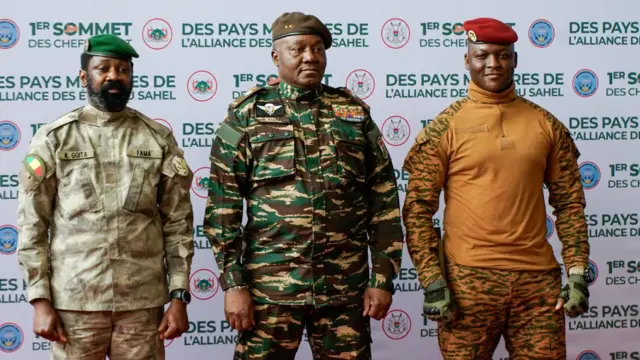
The West African States of Mali, Burkina Faso, and Niger have announced their withdrawal from the International Criminal Court (ICC), saying they no longer recognise its jurisdiction.
The three military-led countries accused the court of arbitrarily prosecuting war crimes and serving as an “instrument of neo-colonialist repression.”
They underlined their aim to uphold the protection of human rights in line with their values.
The same argument had earlier been used by the three countries to justify their withdrawal from the Economic Community of West African States (ECOWAS).
Human rights groups and UN experts have accused Mali’s and Burkina Faso’s armed forces and allied militias of committing war crimes in operations against Islamist militias – alongside atrocities carried out by the militant groups themselves.
National authorities say investigations are under way, but none have so far led to public conclusions.
The ICC, based in The Hague, has been prosecuting the most serious crimes such as genocide, war crimes, and crimes against humanity since 2002.
All EU countries are members.
However, the U.S., Israel, and Russia are not signatories.
In spite of abundant resources such as gold and uranium – largely extracted by European and North American companies , Mali, Burkina Faso, and Niger remain among the world’s least developed countries.
Located in the Sahel region on the southern edge of the Sahara, they sit along key smuggling and migration routes towards Europe.
Between 2020 and 2023, military leaders seized power in all three former French colonies after elected governments, backed by Western states, failed to quell Islamist insurgencies.
The juntas have turned increasingly away from Western partners and towards Russia for military cooperation.

Nigeria Commits To Polio Eradication At UN General Assembly

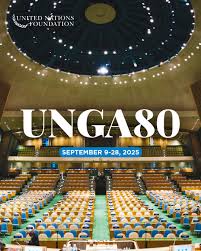
Nigeria has renewed its commitment to ending Polio and strengthening routine immunisation as global leaders gather for the 80th United Nations General Assembly (UNGA).

Dr Muyi Aina, Executive Director and Chief Executive Officer of the National Primary Health Care Development Agency (NPHCDA), gave the assurance on Tuesday morning during a panel session on ‘Eradication & Beyond – Polio Infrastructure and Resilience’, at UNGA.

Nigeria was certified free of wild poliovirus in August 2020 by the World Health Organisation (WHO), marking a historic milestone after decades of effort.

The country had once been regarded as the toughest place on earth to eradicate the virus, with insecurity, weak health systems, and community resistance posing major obstacles.

However, years of collaboration between government, international partners, traditional leaders, and frontline health workers paid off.

Millions of children were reached through mass immunisation campaigns, while surveillance and community engagement strategies were strengthened.

In spite of this achievement, Nigeria continues to battle outbreaks of cVPV2, a rare strain that emerges in under-immunised populations.

According to health experts, low routine immunisation coverage remains the greatest threat to sustaining Nigeria’s polio-free status.

Aina reaffirmed the Federal Government’s resolve to intensify efforts to interrupt the transmission of circulating Vaccine-Derived Poliovirus type 2 (cVPV2) and rapidly scale up routine immunisation coverage.

“The Federal Government remains committed to ensuring that every Nigerian child is protected from vaccine-preventable diseases.

“Our polio infrastructure, built through years of collective effort, will continue to be leveraged not only for polio eradication but also to strengthen our health system and build resilience against future public health threats,” he said.

Aina said that the country’s participation in the UNGA high-level sessions was an opportunity to strengthen partnerships, mobilise resources, and showcase the country’s commitment to global health security.

Meanwhile, Global health leaders at the UNGA meeting said that the fight against polio was not only about eradication but also about resilience.

They said the systems built to track, respond, and vaccinate during polio campaigns were now being repurposed to combat other public health challenges, including measles, cholera, and even pandemic preparedness.

It would be recalled that public health experts said Nigeria’s renewed pledge was critical to closing existing gaps.

Dr Faisal Shuaib, former NPHCDA boss, who led the final push against wild polio, once remarked that “the greatest threat to polio eradication is complacency.”

Similarly, a frontline vaccinator, Mrs Mariam Kabiru, from Kano State, who had spent over a decade administering vaccines in hard-to-reach communities, said the renewed global spotlight was encouraging.

“We have seen the damage polio can do to children. With government support and community trust, we can finish this fight,” Kabiru said.

As the UNGA continues, more updates are expected on Nigeria’s participation in health-related side events, including discussions on immunisation, pandemic preparedness, and health financing.

For now, Nigeria’s message to the world is clear: the country is determined not only to eradicate cVPV2 but also to ensure that no child is left behind in the journey toward stronger, more resilient health systems.

2025 Ballon d’ Or: Dembele, Bonmati Named World Best Footballers

0

Paris Saint-Germain’s Ousmane Dembele and Barcelona’s Aitana Bonmati have won the top prizes at the 2025 Ballon d’Or awards ceremony in Paris, France.

Dembele, who helped PSG become the first French side to win a continental treble last season, beat Barcelona’s Lamine Yamal to the men’s award.

Spain international Bonmati won the Ballon d’Or Féminin for the third year in a row, edging out Mariona Caldentey.

Ousmane Dembele is the first player to win the Ballon d’Or while representing a club from his own country at the time of the ceremony since Englishman Michael Owen in 2001 (Liverpool).

Barcelona Femení superstar Aitana Bonmatí became the first player to ever win the Ballon d’Or Féminin three times with her latest triumph.

The Spanish midfielder had lifted the previous two individual titles following collective dominance with Barcelona and Spain before completing her hat-trick at Monday’s ceremony. Lionel Messi was the last player to ever win three Ballon d’Or crowns on the spin, picking up four from 2009–12. Former French midfielder Michel Platini is the only other individual to win the prestigious honor in three successive seasons (1983–85).

As the defending champion, Bonmatí’s triumph is hardly a shock, but the fleet-footed schemer did not enjoy quite the same universal acclaim as in years gone by. Barcelona’s domestic dominance was underscored by a trio of trophies on home soil. However, the Catalans did lose two league games—as many as they recorded across the previous five seasons combined.

After two years as the undisputed centerpiece of Barcelona and the Spain national team while Alexia Putellas—a two-time Ballon d’Or winner herself—recovered from an ACL tear, Bonmatí had to readjust to a new role back in tandem with his compatriot.

This champagne problem still saw both players hit double digits for goals and assists as Barcelona returned to the Champions League final for the fifth season running. However, after two successive titles, Bonmatí and her teammates were stunned by a disciplined Arsenal side, which battled out a 1–0 win in Lisbon.

Bonmatí would suffer heartbreak at the hands of English opposition two months later, watching on in disbelief as her spot kick was saved in Spain’s penalty shootout defeat to England in the Euro 2025 final.

Yet, the fact that Bonmatí was on the pitch at all is a testament to her tenacious character. The 27-year-old prepared for the tournament in the hospital while being treated for viral meningitis. In typically defiant fashion, Bonmatí was fit enough to come off the bench in the first match of group stage and had already won her place back by the knockouts.

It was Bonmatí’s devilish thump from an impossible which skipped past Germany’s Ann-Katrin Berger for the only goal of the semifinal. UEFA’s technical committee were not alone in hailing her as the Player of the Tournament

In the immediate aftermath of the Euro 2025 final, Bonmatí fronted up to the media. “I’m in shock,” she said. “We gave everything. I must apologize forb my missing my penalty and congratulate England.” Yet, as everyone in Spain was all too quick to point out, Bonmatí need not apologize for anything.