Home Blog Page 15

SEEPCO, Delta Govt, Vcare Champion Voluntary Blood Donation Campaign

0

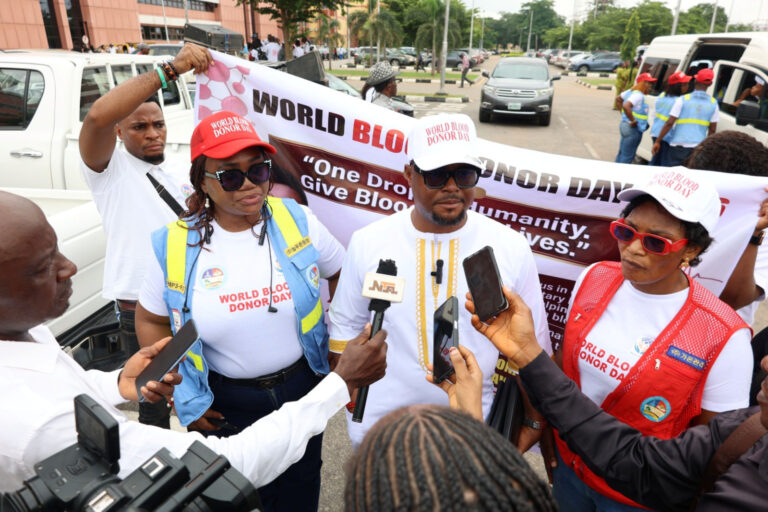
Sterling Oil Exploration and Energy Production Company Limited (SEEPCO) has partnered the Delta State Government, Vcare for Development Foundation (VCDF) and the Nigerian Red Cross Society to promote voluntary blood donation as part of efforts to strengthen the state’s blood supply and save lives.

The initiative, which forms part of SEEPCO’s Corporate Social Responsibility (CSR) programme for its host communities, aligns with activities marking the 2026 World Blood Donor Day with the theme, “One Drop of Humanity: Give Blood, Save Lives.”

The campaign was conducted across Delta State’s three senatorial districts—Asaba, Ughelli and Warri—where stakeholders sensitised residents on the importance of voluntary, regular and unpaid blood donation as the most sustainable means of ensuring adequate blood supply for healthcare facilities.

The exercise followed a similar campaign in Lagos State, where SEEPCO, in partnership with the Lagos State Blood Transfusion Service (LSBTS) and the Nigerian Red Cross Society, mobilised about 550 pints of blood within two days.
VCDF also highlighted the steady growth of its annual blood donation drive, with the number of donors increasing from 98 in 2022 to 147 in 2023, 268 in 2024 and 341 in 2025.

Before the Delta campaign, the foundation had recorded a cumulative total of 1,404 voluntary donors, a feat that earned it the Blood Donation Champion Award from the Lagos State Blood Transfusion Service.

At the Central Hospital, Ughelli, the hospital’s management and Blood Transfusion Committee commended SEEPCO, VCDF, the Delta State Ministry of Health and other partners for supporting initiatives aimed at improving access to safe blood for patients.

Speaking during the campaign, Delta State Commissioner for Health, Dr. Joseph Onojaeme, described voluntary blood donation as critical to responding to public health emergencies and saving lives during accidents, childbirth and other medical emergencies.

He said: “Voluntary blood donation is important for public health emergencies and to save lives during accidents and childbirth. We are deeply grateful to VCDF and its partners for their commitment to promoting voluntary blood donation and supporting life-saving healthcare initiatives.”

Participants said the awareness campaign had increased public understanding of the importance of blood donation, with many first-time donors expressing willingness to become regular donors after learning about the safety, benefits and life-saving impact of donating blood.

Stakeholders also stressed the need for sustained public enlightenment, noting that a single blood donation could save multiple lives, as the campaign recorded impressive community participation across the three senatorial districts.
Fubara to Corps Members: Nigerians’ Confidence in You, Not Misplaced

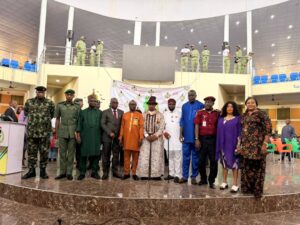
Rivers State Governor, Sir Siminalayi Fubara, has commended members of the National Youth Service Corps (NYSC) for their contributions to nation-building, saying their conduct has justified the confidence Nigerians repose in them.

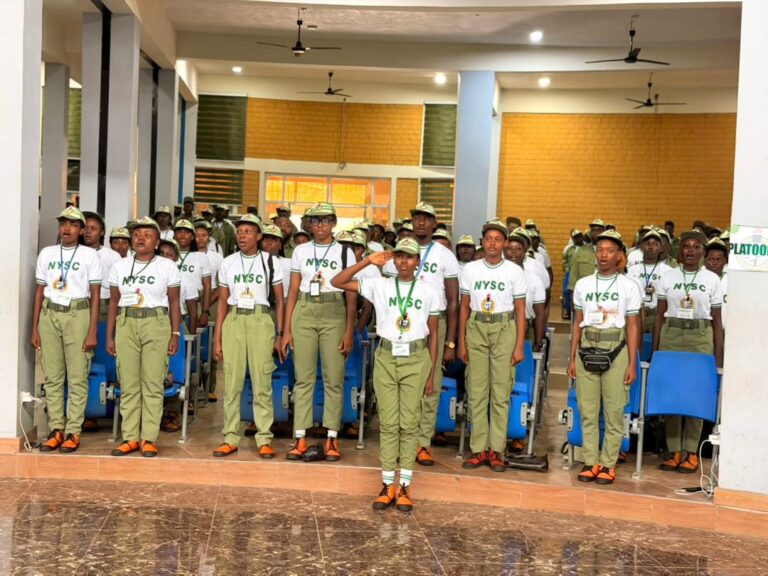
The governor gave the commendation on Tuesday during the closing ceremony of the 2026 Batch B Stream I orientation course at the NYSC Permanent Orientation Camp, Nonwa-Gbam, in Tai Local Government Area of Rivers State.

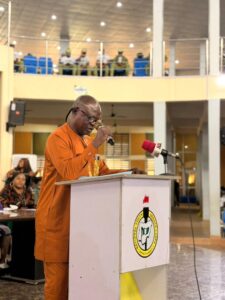
Represented by the Permanent Secretary, Special Services Bureau, Office of the Secretary to the State Government, Mr Samson Dede, Fubara said his administration was pleased with the corps members’ commitment and sense of responsibility throughout the three-week orientation exercise.

Mr Sam Dede.

“Our administration is happy that the hope Nigerians have placed in you is not misplaced,” the governor said.

He urged the corps members to remain patriotic and exemplary during their service year by making meaningful contributions to the development of their host communities.

Fubara also encouraged them to maximise the opportunities provided under the NYSC Skill Acquisition and Entrepreneurship Development (SAED) programme to acquire practical and entrepreneurial skills that would enhance their competitiveness in the labour market and promote self-reliance.

The governor further advised the corps members to regard Rivers State as their second home and take advantage of the hospitality and warmth of its people throughout their service year.

Earlier, the NYSC State Coordinator, Mr Moses Oleghe, commended the corps members for their discipline, commitment and active participation in all camp activities.

He disclosed that several distinguished visitors to the orientation camp, including the Chairman of the House of Representatives Committee on Youth Development, Hon. Martins Etim Esin, and the NYSC Director of Media, Chief Emeka Mgbemena, expressed satisfaction with the conduct of the corps members and their readiness to contribute positively to national development.

Oleghe also appreciated security agencies for ensuring a peaceful and secure environment throughout the orientation exercise. He equally thanked the executive chairmen of Tai and Ahoada East Local Government Areas for their sustained support towards the successful operation of the NYSC scheme in the state.

A total of 3,517 corps members, comprising 1,574 males and 1,943 females, successfully completed the three-week orientation programme in Rivers State.

Tinubu Okays N3.9tr Road Projects Across 15 States, Leaves Out Oil Producing States

0

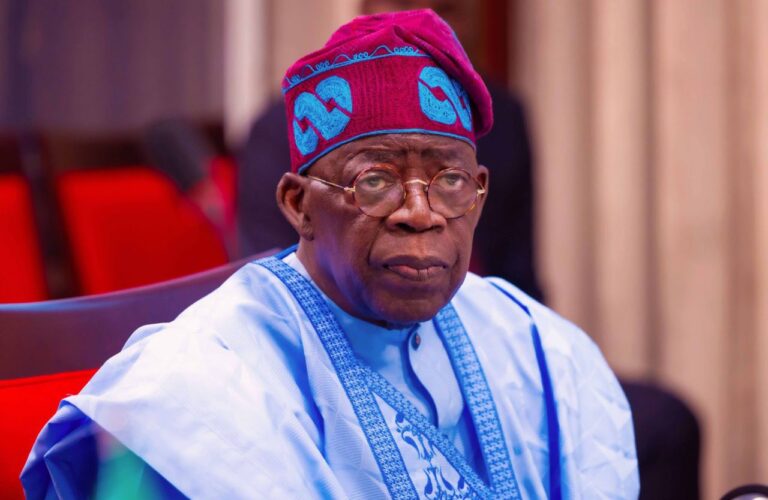
President Bola Tinubu has approved 27 road projects valued at over N3.9 trillion across 15 states, with most states in the oil-rich Niger Delta excluded from the massive infrastructure package, except for a road project traversing Cross River State.

The approvals were announced on Monday by the Minister of Works, David Umahi, after the Federal Executive Council (FEC) meeting at the Presidential Villa, Abuja.

The projects, which form part of the Federal Government’s road infrastructure expansion programme, are spread across Adamawa, Benue, Cross River, Ebonyi, Ekiti, Kogi, Kwara, Lagos, Niger, Ondo, Osun, Oyo, Plateau, Taraba and Yobe states.

Notably absent from the list are Akwa Ibom, Bayelsa, Delta, Edo and Rivers states, despite the region’s strategic contribution to the nation’s economy through oil and gas production. Cross River was the only Niger Delta state to feature, through the reconstruction of the Adikpo-Ajayi-Tese-Akpa-Otukpo Road, which traverses Benue and Cross River states.

Among the largest approvals is the re-award of the 409-kilometre dual carriageway project in Niger State under the tax credit scheme to businessman Aliko Dangote at a cost of N1.8 trillion.

Other major projects approved include the N276 billion dualisation of the Ilorin-Ogbomoso Road; the N265 billion reconstruction of the Iseyin-Eruwa-Agbesi Road linking Oyo and Kwara states; the N217 billion dualisation of the old alignment from Ijaye through the Federal Government College to Ilorin Road, with a spur to Akinmorin; and the N116 billion Abakaliki-Afikpo Road in Ebonyi State.

The council also approved N110 billion for the Ogbomoso-Oko-Illupu Road in Oyo and Osun states; N104 billion for the rehabilitation of Sections One and Two of the Ilorin-Omorin-Egbe-Kabba-Obajana Road linking Kwara and Kogi states; N98 billion for the construction of the 30-kilometre Idi-Araba-Ayede-Olodo Road in Oyo State; and N92 billion for the rehabilitation of the Baban-Lamba-Sharan Phase Two Road in Plateau State.

Other approvals include N86 billion each for the reconstruction of the Enugu-Abakaliki Road with a flyover and the Adikpo-Ajayi-Tese-Akpa-Otukpo Road linking Benue and Cross River states; N83 billion for the Jimeta-Mayo Belwa Road in Adamawa State; N82 billion for the rehabilitation of Igbeti Road in Oyo State; N74 billion for the Igbeti-Soro-Kishi Road; N71 billion for the 52-kilometre Dabban-Makina Road in Niger State; and N62.99 billion for the Tungo-Karamti Road, with five bridges connecting Adamawa and Taraba states.

The FEC further approved N58 billion for the rehabilitation of the Yola-Hong-Mubi Road (Phase II); N46 billion for the Amasiri-Okporojo Road; N34 billion for the Ikere-Ekiti-Ijare Road linking Ekiti and Ondo states; N26 billion for a new flyover on the Trans-Sahara Road; N24.7 billion for the rehabilitation of the Kabba-Ifaki-Ado Ekiti Road connecting Kogi and Ekiti states; and N21 billion for the construction of a flyover at Oko-Olowo Junction in Kwara State.

Additional approvals include N15.7 billion for the Pacific Road linking Igbe Laara to Ikorodu in Lagos State; N15.5 billion for the Badeku-Jaiye Road in Oyo State; N15.246 billion for Phase II of the Yola-Fufore-Gurin Road project in Adamawa State; and N15 billion as augmentation for the 32.2-kilometre Gashua Road project in Yobe State.

Umahi also disclosed that the council approved the full business case for the operation and maintenance concession of the Lagos-Ibadan Expressway and directed the immediate reconstruction of failed sections of the highway along the Ibadan axis using concrete pavement.

He further announced the completion of the first 118-kilometre section of the Abuja-Kaduna-Kano Highway, valued at N137 billion.

The omission of most Niger Delta states from the latest round of road approvals is expected to fuel concerns over infrastructure distribution in a region that remains the economic backbone of Nigeria through its vast oil and gas resources.

World Cup 2026: Germany, Netherlands Crash Out As D.R. Congo Await England In Eye-Catching Last-32 Clash

0

Four-time champions Germany and European heavyweights the Netherlands suffered dramatic exits from the 2026 FIFA World Cup after both were beaten on penalties in thrilling Round of 32 encounters, paving the way for underdogs Paraguay and Morocco to reach the last 16.

Germany’s hopes of ending a 12-year wait for another World Cup title came to a heartbreaking end in Foxborough, where Paraguay held Julian Nagelsmann’s side to a 1-1 draw before prevailing 4-3 in a tense penalty shootout.

Julio Enciso had given Paraguay a surprise first-half lead, but Kai Havertz restored parity shortly after the restart. Germany thought they had snatched victory in extra time when Jonathan Tah headed home from a corner, only for the effort to be ruled out after a VAR review for a foul in the build-up.

The Germans paid dearly for missed spot-kicks, with Havertz, Nick Woltemade and Tah all failing from the spot as José Canale converted the decisive penalty to send Paraguay into the Round of 16 for a date with either France or Sweden. The defeat marked Germany’s first-ever World Cup penalty shootout loss.

In Monterrey, Morocco produced another memorable World Cup performance by edging the Netherlands 3-2 on penalties after a gripping 1-1 draw.

The Dutch appeared destined for victory after Cody Gakpo broke the deadlock in the 72nd minute, but Issa Diop’s dramatic stoppage-time equaliser forced extra time. With neither side able to find a winner, Morocco held their nerve in the shootout as goalkeeper Yassine Bounou made the decisive save before Ismael Saibari fired home the winning penalty. Morocco will now face co-hosts Canada in the last 16.

Attention now shifts to Wednesday’s Round of 32 fixtures, where England will face tournament surprise package Democratic Republic of Congo in what promises to be one of the competition’s most intriguing contests.

England topped Group L to reach the knockout phase, while DR Congo impressed by progressing from a difficult Group K to set up a historic meeting with the Three Lions. Victory for either side will secure a place in the Round of 16, where Mexico or Ecuador await.

Elsewhere, the knockout stage continues with France taking on Sweden, Ivory Coast meeting Norway, Belgium facing Senegal, while Spain, Portugal and Argentina are all scheduled to begin their quest for a place in the last 16 later this week.

Bayelsa Community Revives Heritage, Strengthens Unity At ‘Ogbolo ’26’ New Yam Festival

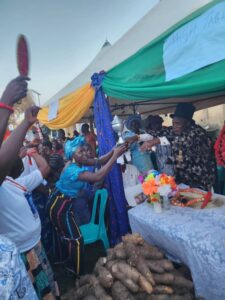
The Ogu Community in Otubo-Atissa, Yenagoa Local Government Area of Bayelsa State, last Thursday reaffirmed its commitment to cultural preservation, peace and community development as it celebrated the annual “Uge Adiafa” New Yam Festival, tagged “Ogbolo ’26.”

Held at St. John’s Primary School Field, Ogu, the colourful festival served not only as the traditional commencement of the yam harvest season but also as a tribute to the community’s illustrious son and founder of the Uge Adiafa Festival, His Majesty, Late King Fedrick Aduku Simangi Ogbotom-Edede IV.

Head of Ogu Community presenting the trophy to one of the winners of the inter-compound competition at the event.

The celebration brought together sons and daughters of the community, traditional rulers, academics, youths and other guests in a display of thanksgiving, cultural performances and renewed communal solidarity.

Addressing the gathering, the traditional head of the community, HRH Bishop (Dr.) Akuegbe Paul, expressed delight at the massive turnout, describing the festival as a symbol of thanksgiving to God, cultural identity and unity among the people.

He noted that beyond celebrating a successful farming season, the festival honours the enduring legacy of the late monarch, whose vision established the Uge Adiafa Festival as a platform for preserving the community’s rich cultural heritage and promoting peaceful coexistence.

Guest of Honour, Professor Nedie Patience Akani of Rivers State University, Port Harcourt, commended the community for embracing reconciliation and unity.

HRH, Dr. Bishop Akuegbe Paul, Head of Ogu Community (middle), HH, Dare Tiebiri, Female Chief, Ogu Community (right), Guest of Honour, Professor Nedie Akani (left) followed by an entourage enroute the venue of the new yam harvest.

Professor Akani who is of the Department of Microbiology, Faculty of Science, of the university and a daughter of the soil had this to say.

“This is my first time attending this New Yam Festival. I came because of the good things happening in this community,” she said.

“Before now, there were quarrels in the community, with court cases here and there, brother fighting against brother. But today, God has united us. It is a wonderful thing to be united because where there is no unity, there can be no progress in the home, family or community.

“I thank the head of Ogu Community, HRH, Bishop (Dr.) Akuege Paul for making today’s celebration a reality,” she added.

The event also featured inter-compound cultural competitions, with Yenikabu II Compound emerging overall winner. Bongata Compound came second, while Abrima Compound finished third.
Eleven Compound Chiefs alongside their respective Head Compound Women Chiefs were coronated. The Woman Chief of Ogu Community, HH, Mrs Dare Tiebiri and her deputy, Chief Mrs Stella Jordan Mark were also coronated.

Dignitaries that graced the occasion include HRM King J. Olotu Erepamo,The Ebenanawei of Akamabubu Kingdom,Southern Ijaw LGA, Yenagoa, Bayelsa State, HRH, Barrister Morris Lagos, Paramount Ruler, Ikibiri Community, Yenagoa LGA, Bayelsa State, HRH, God’swill Arab Simeon, Ebeni- Isisibo of Atissa Kingdom, HRH, Sir Anderson J. Olumo, Ebeni -Otubo,Atissa Kingdom and his wife, Mrs Tarila Anderson Olumo, HH, Mission Obugu, The Deputy Head of Ogu Community and the wife of The Ebeni- Ibe of Atissa Kingdom, Mrs Diemeze Victor Awala.

For the people of Ogu, the festival was more than a celebration of the first harvest. It underscored the importance of preserving cultural traditions, strengthening communal bonds, promoting reconciliation and passing cherished values from one generation to another, ensuring that the legacy of their forebears continues to inspire future generations.

Bille Residents Demand Immediate Relocation Over Gas Pollution, Fubara Promises Action

0

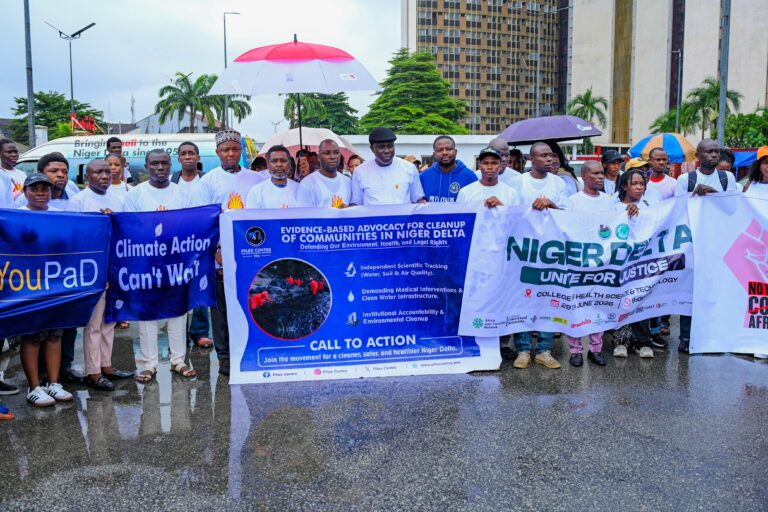
Residents of Bille Community in Degema Local Government Area of Rivers State on Monday demanded their immediate relocation from their ancestral homes following a prolonged gas leakage they say has triggered an environmental and public health crisis.

The demand was presented to the Rivers State Government during a peaceful protest at Government House, Port Harcourt, by members of the Pilex Centre for Civic Education Initiative (PCCEI) and the Lekeh Development Foundation (LDF).

The protesters, who also called for transparency in the management of remediation funds under the Petroleum Industry Act (PIA), said the persistent pollution had contaminated water sources, destroyed fishing livelihoods and exposed residents to serious health risks.

Responding on behalf of Governor Siminalayi Fubara, the Permanent Secretary, Rivers State Ministry of Information and Communications, Dr Honour Sirawoo, assured the delegation that government would act swiftly to address the situation.

Sirawoo said the state government would not ignore the plight of affected communities, stressing that protecting lives, livelihoods and the environment remained a priority.

He commended the protesters for embracing dialogue despite the hardship caused by the pollution.

“From what you have listed, it was enough to provoke a violent demonstration because people can no longer drink clean water, fish or carry out legitimate economic activities due to pollution. But you chose the path of peace.

“Be assured that the Rivers State Government has a responsibility to protect the lives and property of our people, and this issue will not be swept under the carpet,” he said.

According to him, preserving the environment is essential to sustaining farming and fishing, the main sources of livelihood in the state’s coastal communities.

Earlier, the Coordinator of the Pilex Centre for Civic Education Initiative, Mr Courage Nsirimovu, said the gas leakage had created an ecological emergency in Bille and warned that other communities, including Rukpokwu, Ebubu and Elelenwo, were facing similar environmental challenges.

He urged the government to immediately relocate residents of Bille to safer locations and ensure accountability in the utilisation of funds earmarked for environmental remediation under the PIA.

At 16, Osasere Okundaye Breaks National Record, Emerges Nigeria’s Youngest Chartered Accountant

0

Sixteen-year-old Osasere Okundaye has etched her name in Nigeria’s history books after becoming the country’s youngest chartered accountant, breaking the existing national record by qualifying through the Institute of Chartered Accountants of Nigeria (ICAN) at the age of 16.

Her achievement surpasses the previous record set in 2022 by Jonathan Adewale, who earned the prestigious professional qualification at the age of 17, making Okundaye the youngest person ever to attain the feat in Nigeria.

The milestone has attracted commendation from the Federal Government, with the Minister of Youth Development, Ayodele Olawande, describing her accomplishment as a testament to hard work, discipline, resilience and excellence.

“I heartily congratulate Miss Osasere Okundaye on her outstanding achievement of becoming Nigeria’s youngest Chartered Accountant at just 16 years of age,” the minister said in a statement on Monday.

According to Olawande, the teenager’s success reflects the immense potential of Nigerian youths and should inspire young people across the country to pursue their dreams with determination.

“Osasere has distinguished herself as a shining example of the limitless potential of Nigerian youth. Her accomplishment shows that with determination, dedication and the right support, young Nigerians can break barriers and set new records,” he said.

The minister also acknowledged the contributions of her parents, teachers and mentors, noting that their guidance and encouragement played a crucial role in her remarkable success.

He reaffirmed the Federal Ministry of Youth Development’s commitment to policies and programmes that empower young Nigerians to maximise their potential.

“Osasere’s achievement reinforces our belief that the future of Nigeria is bright in the hands of focused and talented young citizens,” Olawande added.

The ICAN professional qualification is widely regarded as one of Nigeria’s most rigorous professional certifications, requiring candidates to pass a series of demanding examinations and demonstrate high standards of competence in accounting and finance.

The Atlantic Bell reports that by attaining the qualification at just 16, Okundaye has not only rewritten the record books but also set a new benchmark for academic and professional excellence among Nigerian youths.

Only Four South-South Universities Make Nigeria’s Top 24 In 2026 Times Higher Education Rankings

Nigeria has recorded its strongest-ever outing in global university rankings, with 24 institutions earning places in the 2026 Times Higher Education (THE) World University Rankings and Sub-Saharan Africa University Rankings.

However, only four universities from the South-South geopolitical zone made the prestigious list.

The South-South institutions that secured places in the rankings are Delta State University, Abraka (12th), University of Benin (22nd), University of Calabar (23rd), and University of Port Harcourt (24th).

The rankings, which represent Nigeria’s highest-ever participation, reinforce the country’s growing influence in higher education across Sub-Saharan Africa, with 24 universities listed, up from 21 in both the 2024 and 2025 editions.

The University of Ibadan retained its position as Nigeria’s highest-ranked institution, followed by the University of Lagos, while Bayero University Kano emerged as the third-best performing university in the country.

Of the 24 institutions, 17 are federal universities, four are state-owned, and three are private universities, reflecting broad improvements in teaching, research, and institutional performance across the country’s tertiary education sector.

The rankings also underscore the growing global recognition of Nigeria’s specialised universities of technology and agriculture, while state-owned institutions continue to improve their academic profiles through enhanced research output and governance reforms.

The full list of Nigeria’s universities in the 2026 THE rankings is as follows:
University of Ibadan
University of Lagos
Bayero University Kano
Covenant University
Landmark University
Ahmadu Bello University
Federal University of Technology, Minna
University of Ilorin
University of Jos
University of Nigeria
Babcock University
Delta State University, Abraka
Ekiti State University
Federal University of Agriculture, Abeokuta
Federal University of Technology, Akure
Federal University of Technology, Owerri
Federal University Oye-Ekiti
Ladoke Akintola University of Technology
Lagos State University
Nnamdi Azikiwe University
Obafemi Awolowo University
University of Benin
University of Calabar
University of Port Harcourt.

The rankings highlight both Nigeria’s expanding presence on the global academic stage and the need for greater investment in higher education across regions, particularly in the South-South, where only four universities made the country’s top 24 list.

Atiku Raises Alarm Over Alleged Plot To Bar ADC From 2027 Ballot

0

Former Vice-President and presidential candidate of the African Democratic Congress (ADC), Atiku Abubakar, has raised the alarm over what he described as an alleged coordinated plot by elements within the ruling establishment to prevent the ADC from participating in the 2027 general election.

In a statement issued on Monday by his Senior Special Assistant on Public Communication, Phrank Shaibu, Atiku claimed he had received credible intelligence suggesting that political and legal manoeuvres were being orchestrated to keep the ADC off the ballot ahead of the next presidential poll.

According to him, the alleged moves are aimed at weakening the opposition by targeting what he described as Nigeria’s “most credible alternative” political platform.

“We are fully aware of their plots. While they seek to sow confusion within the opposition, we know their real target is the ADC because it represents the most credible alternative,” he said.

The former vice-president called on Nigerians to remain vigilant and resist any attempt to undermine the country’s democratic process by determining which political parties should be allowed to contest elections.

He also challenged the ruling All Progressives Congress (APC) to allow a level playing field if it was confident of its electoral strength.

“If the APC is truly confident in its popularity, why is it so terrified of the ADC?” Atiku asked.

Although he expressed hope that the alleged plot would not materialise, Atiku argued that recent political developments had made it difficult to dismiss such concerns.

He alleged that institutions expected to be neutral were increasingly being drawn into partisan contests through litigation, administrative actions and other forms of political pressure.

According to him, opposition parties have in recent months faced attempts to manufacture internal crises, judicial challenges, administrative harassment and campaigns aimed at undermining their credibility.

Atiku further accused the Federal Government of prioritising political calculations over governance at a time Nigerians were grappling with inflation, hunger, unemployment, insecurity and declining purchasing power.

He maintained that the growing popularity of the ADC should be challenged through the ballot box rather than through what he termed institutional intimidation.

“The proper response to a popular political movement is not suppression. It is to present superior ideas before the electorate. Democracies are won at the ballot box, not in back rooms, not through manipulated court processes, and certainly not through the abuse of state institutions,” he said.
The former vice-president warned that any attempt to prevent the ADC from participating fully in the electoral process would constitute a serious threat to Nigeria’s constitutional democracy.

He also urged the judiciary to remain independent and resist external influence, while calling on the Independent National Electoral Commission (INEC), security agencies, civil society organisations and the international community to remain vigilant against actions capable of undermining the credibility of the 2027 general election.

“We are placing Nigerians on notice because democracy flourishes only when citizens refuse to be indifferent. Eternal vigilance remains the price of liberty. Every Nigerian who believes in constitutional rule must pay close attention to unfolding events,” he added.

SERAP Demands Probe Of Alleged N6.3bn NASS Constituency Funds Diversion

0

The Socio-Economic Rights and Accountability Project (SERAP) has called on the President of the Senate, Godswill Akpabio, and the Speaker of the House of Representatives, Tajudeen Abbas, to immediately refer allegations surrounding the alleged diversion, misapplication and disappearance of over ₦6.3 billion in constituency project funds to relevant anti-corruption agencies for investigation and possible prosecution.

The organisation also urged the leadership of the National Assembly to ensure that anyone found culpable is prosecuted where sufficient evidence exists, while all diverted or unaccounted public funds are recovered and returned to the national treasury.

SERAP further demanded the disclosure of the identities of contractors and companies, including their shareholders and beneficial owners, that received constituency project funds but allegedly failed to execute the projects.

The allegations are contained in the 2022 Annual Report of the Auditor-General for the Federation, published on September 9, 2025.

In a letter dated June 27, 2026, and signed by its Deputy Director, Kolawole Oluwadare, SERAP described the alleged diversion of the funds as a “grave violation of public trust, the Nigerian Constitution and international anti-corruption standards.”

According to the organisation, persistent corruption in constituency projects continues to undermine economic development, erode public confidence in democratic institutions and deprive citizens of essential public services.

SERAP stressed that the National Assembly must demonstrate leadership in tackling corruption by ensuring a transparent investigation into the allegations involving constituency projects approved by lawmakers.

It gave the Senate President and the Speaker seven days to act, warning that it would institute legal proceedings should they fail to respond.

The Auditor-General’s report cited several ministries, departments and agencies (MDAs), including the Environmental Health Registration Council of Nigeria (EHORECON), the Federal College of Animal Health and Production Technology, Vom, the Federal Polytechnic, Ukana, the National Agency for the Prohibition of Trafficking in Persons (NAPTIP), and the National Institute of Legislative and Democratic Studies (NILDS).

Among the findings were alleged payments into private bank accounts, contracts awarded without due process, payments for abandoned or non-existent projects, undocumented expenditures, inflated contracts and widespread procurement violations.

The report alleged that EHORECON paid over ₦22.9 million from constituency project funds into private accounts of staff without evidence of how the money was utilised. It also cited consultancy contracts worth more than ₦12 million for projects whose deliverables could not be traced, as well as contracts exceeding ₦404 million allegedly awarded to companies with questionable registration records.

Other allegations against the council include over ₦103 million paid for undocumented capacity-building programmes, ₦656 million reportedly spent on constituency projects without authorisation, and ₦389 million paid for abattoir projects in Kebbi State that were allegedly never executed.

The Federal College of Animal Health and Production Technology, Vom, was accused of making several undocumented payments running into hundreds of millions of naira for youth empowerment, vocational training, medical outreach and agricultural programmes, with no evidence of procurement compliance or project execution.

Similarly, the Federal Polytechnic, Ukana, was alleged to have made questionable payments for mobilisation fees, inflated solar power contracts by over ₦192 million, paid contractors for unexecuted projects and awarded contracts without proper documentation.

The report also accused NAPTIP of awarding contracts to related companies, making undocumented payments for logistics and consultancy services, and fully paying contractors for solar lighting and classroom renovation projects that were allegedly never executed.

In the case of NILDS, the Auditor-General reported that the institute failed to submit audited financial statements for a decade, from 2012 to 2022, failed to remit more than ₦15 million in stamp duties and spent public funds without the required authorisation.

SERAP maintained that the allegations represent serious breaches of the Constitution, the Fiscal Responsibility Act 2007 and the Public Procurement Act 2007, which require transparency, accountability and competitive procurement in the management of public resources.

The organisation argued that corruption in constituency projects disproportionately affects poor and vulnerable Nigerians by limiting access to quality healthcare, education and other essential public services.

It insisted that the National Assembly, as the institution responsible for oversight of government agencies, must lead efforts to ensure accountability and restore public confidence in the management of constituency project funds.