

Home Blog Page 147

ROGBA’83 Leads the Change: Empowering the Girl Child For A Brighter Future

0

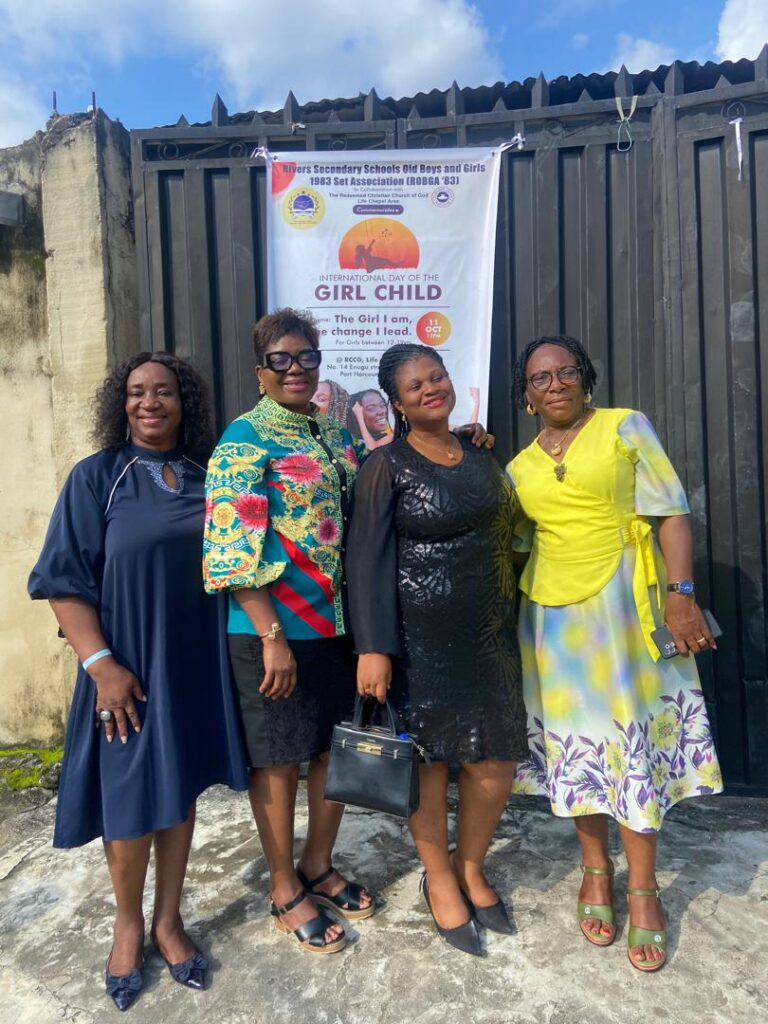
In commemoration of the International Day of the Girl Child 2025, themed “The Girl I Am; The Change I Lead,” the Rivers Secondary School Old Boys and Girls Association, Class of 1983 (ROGBA’83), in collaboration with the Redeemed Christian Church of God (RCCG), hosted an inspiring conference for girls aged 12 to 19 on Saturday at the RCCG Life Chapel Area, Rumubiakani, Rivers State.
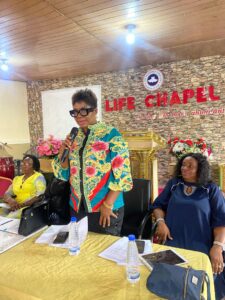
Dr. (Mrs) Ibinabo Ogolo

According to Dr. (Mrs.) Ibinabo Ogolo, Secretary General of ROGBA’83, the event was part of the association’s commitment to give back to society and make a lasting impact on young girls. She explained that the goal was to help them find their voice, embrace purpose, and think proactively about shaping a better future for themselves and their communities.

“Our aim is to support and give back to society by helping young females speak up, brace up, and think about what they can do to impact the future,” she said.

The conference featured interactive sessions and mentorship talks led by seasoned speakers who inspired the girls to think big, stay focused, and stand out.

Barrister Ibiwari Waribo emphasized that the future belongs to girls with vision and determination.
“Better futures are created by a girl child who has vision and is driven by greatness,” she said.
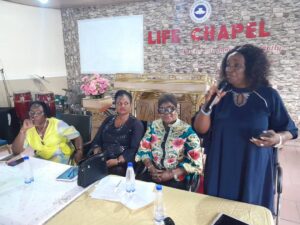
Pastor (Mrs) Ngozi Ajayi

She noted that empowering girls means empowering the world, creating room for females to reach their fullest potential.
“Empowering a girl child automatically means empowering the world,” she added.

Waribo also cautioned against drug abuse among youths, urging the girls to embrace integrity and self-discipline rather than following the crowd.
“Timing is everything. Do not procrastinate,” she stressed, highlighting the importance of hard work and focus.

She further called on parents and guardians to remain vigilant and protect the girl child’s rights to education, equality, and safety from abuse.
“Training a girl child is training a nation,” she stated, condemning discriminatory practices against women in inheritance and encouraging girls to value their dignity and reject all forms of abuse or discrimination.
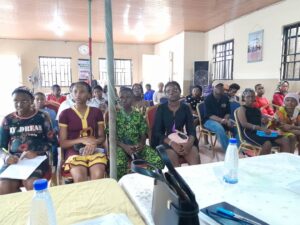
Dame Agnes Tuboalabo, Secretary of the International Day of the Girl Child 2025 Planning Committee, drew lessons from the Bible, reminding the girls that they hold the power to make choices that shape their lives and influence generations to come.
“The girl child carries society upon her shoulders and must make decisions that shape the future of a generation,” she said.

Barrister Ngozi Ajayi, Chairman of the Planning Committee, encouraged participants to visualize the kind of women they want to become. Through an engaging exercise, the girls shared dreams of becoming university graduates, footballers, dermatologists, and business owners.
“Always envision the woman you want to become,” she advised.

Ajayi also emphasized discipline, prayer, and focus, urging the girls not to be pressured into early marriage.
“Though marriage is good, do not be pressured into it. Times and seasons have changed,” she said.

She further highlighted the importance of digital inclusion, noting that while the digital era offers opportunities for innovation and growth, it also comes with risks such as cyberbullying and distractions.
“The digital world opens doors for girls, but wisdom and discipline are key to using it right,” she cautioned.

In her closing remarks, Dr. (Mrs.) Ogolo encouraged parents to be role models and strengthen their children through love, guidance, and example.

The conference ended on a powerful note, leaving the girls inspired to lead change, embrace education, and walk confidently into a brighter, self-defined future.

By Miracle Chidinma Amaechi
Rivers Monarch Urges Strategic Communication, Community Empowerment to Drive Niger Delta Growth

0

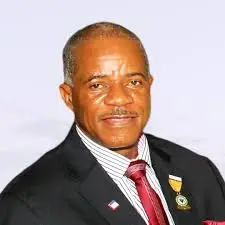
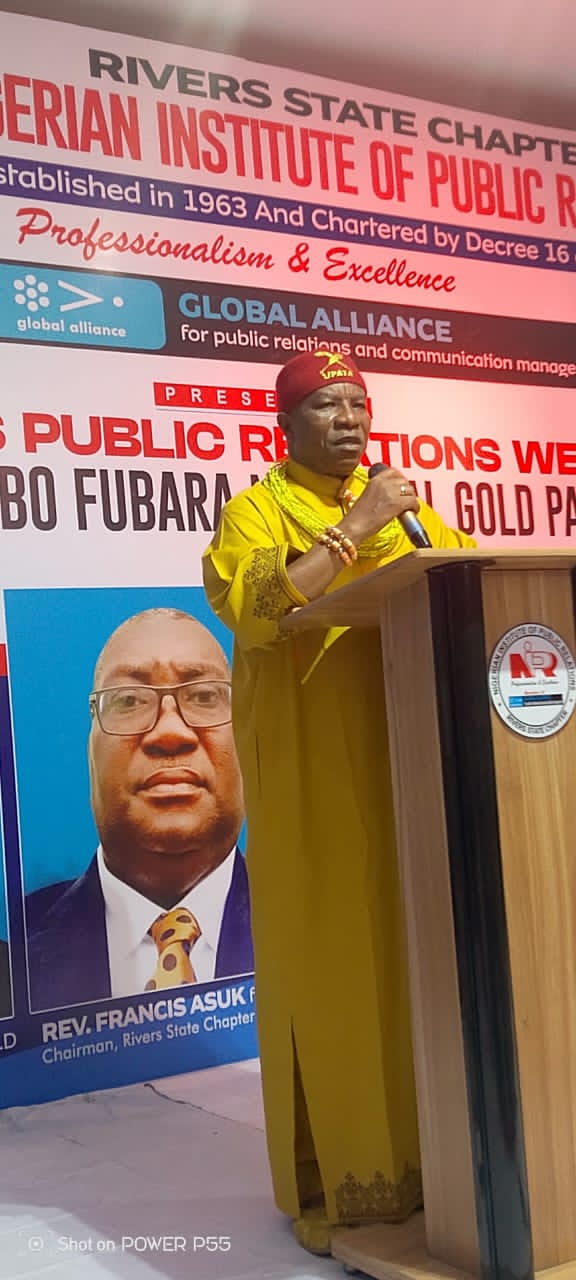
A traditional ruler in Rivers State, Dr. Felix E. Otuwarikpo, Eze Igbu Upata III of Upata Kingdom, in Ahoada Local Government Area, has called for a complete rethinking of community development in the Niger Delta, urging stakeholders to use public relations as a strategic tool for sustainable growth and social transformation.

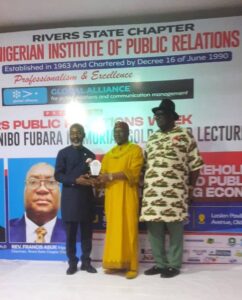
Speaking at the 2025 Alabo O.B. Fubara Memorial Gold Paper Lecture organized by the Nigerian Institute of Public Relations (NIPR), Rivers State Chapter, as part of activities marking its maiden Public Relations Week, Eze Otuwarikpo said that the enduring underdevelopment of the Niger Delta stems not only from poor governance and environmental degradation but also from the lack of meaningful engagement with the very people development is meant to serve.

Eze Dr. Otuwarikpo (middle) receiving an award at the ceremony.

Presenting a paper titled “Empowering Community Development in the Niger Delta: Harnessing Public Relations for Sustaining Growth,” the traditional ruler argued that for genuine progress to occur, the people must be treated as partners, not mere recipients of government benevolence.

He expressed the opinion that government must partner with communities to tackle poverty, rebuild trust, and ensure sustainable development in oil-rich region.

“We cannot continue to design policies for our communities without involving them in the conversation.

“Public relations provides that bridge of understanding, participation, and trust that can turn lofty development ideas into living realities,” he said.

Tracing the history of Nigeria’s development trajectory, Dr. Otuwarikpo lamented that since independence in 1960, most government efforts have focused disproportionately on urban areas, leaving the rural majority, especially in the Niger Delta, in a cycle of poverty and neglect.

According to him, the colonial masters set the stage for this inequity through an exploitative model that viewed rural Nigeria as a reservoir of raw materials and food for the cities, noting that “the British colonial interest in rural Nigeria was characterised by two-pronged exploitation—resource extraction and food production for urban comfort.”

“Unfortunately, that pattern has continued long after independence,” Dr. Otuwarikpo said, adding that despite decades of intervention programmes such as the Directorate of Food, Roads and Rural Infrastructure (DFRRI), National Directorate of Employment (NDE), Oil Mineral Producing Areas Development Commission (OMPADEC), and the Niger Delta Development Commission (NDDC), rural life in the region has remained poor.

“We have had too many programmes and too little participation,” he lamented. “Policies without communication, and projects without local ownership, are doomed to fail.”

“Sadly, the Niger Delta’s oil-rich landscape remains mired in poverty, underfunded community projects, and rural-urban migration. Development initiatives are often disrupted by political interference and lack of continuity. Many communities still face poor health care, limited education, low income, and insecurity, which are symptoms of decades of neglect,” he stated

The monarch, who is also a Fellow of the NIPR, emphasized that public relations offers a framework for dialogue and inclusion, which can help rebuild trust between governments, corporations, and the people. He described communication as the missing link in most rural development efforts.

Empowerment in the Niger Delta, he stated, is not just about government intervention but about partnerships—where communities take initiative, and governments provide enabling support.

According to him, development can only thrive when communities and governments jointly pursue shared goals. He said for such a collaboration to succeed, government must deploy persuasive, transparent communication to unite its efforts with the aspirations of the people

“Development is not just about roads, schools, or electricity,” he said. “It is about human connection, about people believing they matter and having a say in shaping their future. That is the essence of effective public relations,” the royal father noted.

Eze Otuwarikpo called for a paradigm shift that integrates traditional leadership, community groups, and the media into development planning and execution. He said the Niger Delta’s narrative should change from one of agitation and neglect to a story of partnership, innovation, and sustainable progress.

“The Niger Delta must begin to tell its own story,” he declared. “We must communicate our aspirations with clarity, responsibility, and unity of purpose. Only then can we take ownership of our development journey.”

The lecture which took place at the La Sien Pavilion in Port Harcourt, also celebrated the enduring legacy of Alabo O.B. Fubara, one of the founding fathers of the NIPR in Rivers State, remembered for his courage, professionalism, and commitment to ethical communication.

“Alabo Fubara believed in truth, dialogue, and the transformative power of communication,” Dr. Otuwarikpo said. “As we honour his memory, we must rededicate ourselves to using public relations as a tool to rebuild trust, empower our people, and sustain development in the Niger Delta,” he declared.

The event drew leading figures from the media, academia, and traditional institutions, all of whom agreed that the time had come to redefine community development through inclusive communication and reportage.

Missed Flight: Sisters Fight, Faint At Abuja Airport

0

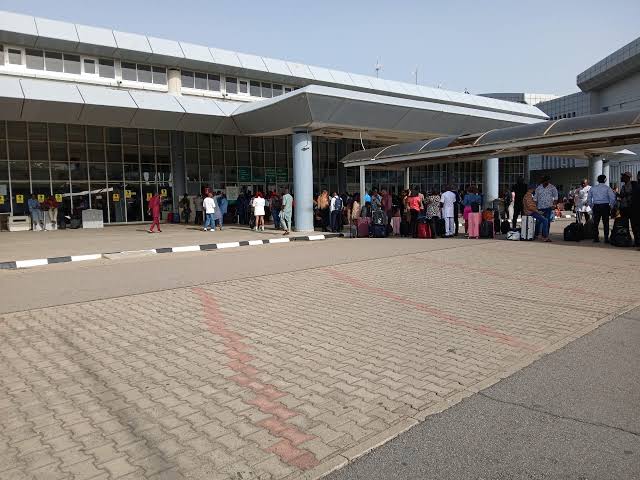
A dispute between two adult sisters who missed their flight at the Nnamdi Azikiwe International Airport, Abuja caused a stir and disrupted operations on Sunday when one of them fainted following a fight between them.

The two sisters, reportedly booked to travel via a NG Eagle flight but they missed the flight after arriving the airport late.

The incident was said to have occurred as the women argued over the missed departure, with the disagreement escalating into a fight.

Luggage and personal items were scattered as airport security intervened, eventually escorting the sisters to the interrogation office.

Spokesperson of the NCAA, Mr. Michael Achinmugu, confirmed the development in a post on his X handle.

The strangest thing just happened at the Abuja airport. Two sisters, both adults, booked to travel via a NG EAGLE flight. They missed the flight because they were late,” Achimugu said.

Perhaps one of them blamed her sibling for their missing flight (not sure), but these two siblings began to fight each other. They scattered luggage and other items before being dragged to the interrogation office by airport security.”

He said when the two sisters got inside, they began to fight again until one of them fainted. Calls were made for an ambulance to take her to the hospital, but her sister said that the problem is more spiritual than medical and, therefore, did not need a hospital.

Standard procedure is that passengers travelling on a domestic flight are expected to arrive at the airport one hour before departure to complete the pre-departure formalities while for the international passengers, they are to arrive two hours before the flight.

NIPR Must Move Beyond Assumptions to Predict What Works Among Stakeholders — Ex Nat. President

0

Members of the Nigerian Institute of Public Relations (NIPR) must move beyond assumptions and normative hopes if the profession is to thrive in today’s complex business environment, so says its former national president, Amaopusenibo Bobo Sofiri Brown.

Brown made the call in his goodwill message at the Rivers State Chapter’s maiden Public Relations Week. He described the theme of the event, “Refocusing Stakeholder Engagment And Public Trust In A Challenging Economy”, as both “challenging and timely,” noting that PR practice must now be guided by systematic understanding rather than guesswork.

He said the frequent use of the term “stakeholders” without clear definition or research-backed analysis has created a gap in professional practice.

“Too often, we use ‘stakeholders’ as a catchword without a proper understanding of who they are or how they behave. This weakens strategic planning and communication outcomes,” Brown said.

Amaopusenibo Brown, who is also a former Managing Director of defunct Garden City Sunray Newspapers, urged practitioners to rethink the concept of stakeholders and how they differ across sectors.

“Are stakeholders in oil and gas the same as those in aviation or education? Does the business environment shape stakeholders, or do stakeholders shape the environment?” he asked.

He said the Institute must develop frameworks that help members identify and categorize stakeholders, study their behavior, and predict what works best among them.

“NIPR must not only use the term ‘stakeholders’ — we must own it through deeper study, analysis, and application,” he added.

Drawing lessons from experience, the former NIPR national president cited recent events in Rivers State as a practical lesson in stakeholder influence. He noted that during the Sole Administratorship period, citizens, particularly women, raised their voices peacefully against injustice and were able to effect change.

“That episode showed how powerful organized, peaceful stakeholders can be when they understand their role and responsibility,” he said.

Brown stressed that predicting stakeholder behavior is now central to effective Public Relations and should form part of practitioners’ strategic planning.

Insisting that professional standards must be consistent, Brown decried the lack of uniform professional standards across NIPR Chapters, comparing the situation unfavorably to medicine and law.

“A PR professional from Jos should be able to deliver the same standard of work in Asaba or Aba. That’s the hallmark of a true profession,” he maintained.

He lamented that many Chapters tolerate substandard work in the name of convenience, adding that such laxity erodes public confidence. “When a media post or publicity material falls short, we often hear, ‘let it go.’ But no serious client would accept that,” he said.

While calling for a new professional mindset, Brown urged Chapters to function as credible resource centres that promote excellence, accountability, and ethical practice. He said Public Relations will only earn respect when practitioners deliver consistent value based on research and professionalism.

“If we achieve clarity in defining our stakeholders, uphold high standards, and embrace accountability, it will mark a new dawn for Public Relations practice in Nigeria,” Brown concluded.

The maiden Rivers Public Relations Week Week And Alabo Olu Benibo Fubara Memorial Gold Paper Lecture took place at the La Sien Pavilion along Forces Avenue in Port Harcourt Rivers State from October 8 to October 10, 2025.

Dollar To Naira Exchange: BCAN Urges CBN To Sustain Reforms On Naira Recovery

0

The Bank Customers Association of Nigeria (BCAN) has urged the Central Bank of Nigeria (CBN) to sustain its ongoing reforms to ensure the steady recovery of the Naira in the foreign exchange market.

BCAN President, Dr Uju Ogubunka, gave the advice in an interview with the News Agency of Nigeria (NAN) on Saturday in Lagos, following the continued appreciation of the Naira at the official foreign exchange market.

NAN reports that the local currency closed bullish on Friday, appreciating to N1,455.17 against the dollar at the official window.

Data from the CBN showed that the Naira gained N11.48, or 0.78 per cent, compared to N1,466.65 to the dollar on Thursday.

The Naira, however, recorded a marginal depreciation of 0.05 per cent on Tuesday, trading at N1,471.08, while it exchanged at N1,470.26 on Monday.

Reacting to the trend, Ogubunka, a financial expert, urged the apex bank to sustain the measures responsible for the recent gains.

“Let the CBN keep doing whatever it has been doing that made the Naira appreciate. Let them do more of it. They should sustain the reforms,” he said.

He attributed the Naira’s improvement to monetary policy controls that regulate money supply, stressing that such measures were helping to stabilise the currency and strengthen economic growth.

The BCAN president, however, called for complementary fiscal measures to boost local manufacturing and productivity for the gains to translate into better living conditions for Nigerians.

“People are still suffering due to low purchasing power. We should increase productivity, tackle insecurity, and attract more investors to bring funds into the system so that more people can be employed.

“Once we can do some of these things, the economy will begin to move up, and as long as the economy grows, the Naira will continue to appreciate.

“However, if there is too much money in circulation, the Naira will not appreciate as expected,” he said.

Weekly Review: Investors Trade N90.28bn Worth Of Shares On NGX

0

Investors in the Nigerian stock market traded a total of 2.286 billion shares worth N90.280 billion in 138,177 deals during the week.

This was lower than the 8.403 billion shares valued at N115.501 billion exchanged in 115,801 deals the previous week, representing a 27.9 per cent decline in transaction value.

The figures are contained in the Nigerian Exchange Ltd. (NGX) weekly in Lagos.

The Financial Services Industry led the activity chart with 1.355 billion shares worth N24.588 billion traded in 59,553 deals, contributing 59.28 per cent and 27.23 per cent to the total equity turnover volume and value, respectively.

It was followed by the ICT Industry with 182.822 million shares valued at N7.807 billion in 12,597 deals, while the Agriculture Industry ranked third with 181.501 million shares worth N3.548 billion traded in 8,924 deals.

Trading in the top three equities, Ellah Lakes Plc, Chams Holding Company Plc, and Fidelity Bank Plc, accounted for 430.968 million shares worth N5.597 billion in 10,254 deals, contributing 18.86 per cent and 6.20 per cent to the total equity turnover volume and value, respectively.

The NGX All-Share Index and Market Capitalisation appreciated by 2.37 per cent to close the week at 146,988.04 points and N93.296 trillion, respectively.

Similarly, all other indices closed higher, except for the NGX Banking, NGX ASeM, and NGX AFR Bank Value Indices, which declined by 0.41 per cent, 9.44 per cent, and one per cent, respectively.

Fifty-one equities appreciated in price during the week, compared with 53 in the previous week, while 41 equities declined, lower than the 43 recorded previously.

Fifty-five equities remained unchanged, up from 51 in the preceding week.

The top five losers were LivingTrust Mortgage Bank, Neimeth International Pharmaceuticals, UH Real Estate Investment, Meyer Plc, and Juli Plc, which shed 89k, 74k, N5.75, N1.65, and 95k, respectively.

Conversely, the top five gainers were Sovereign Trust Insurance, Omatek Ventures, AXA Mansard Insurance, Chams Holding Company, and Eunisell Interlinked, which gained 46k, 15k, N1.70, 45k, and N4.50, respectively.

Nigerian Airforce Acquires 15 New Aircraft, 3000 Sorties …45 More Aircraft expected, As CAS Tasks Future Commanders On Courage

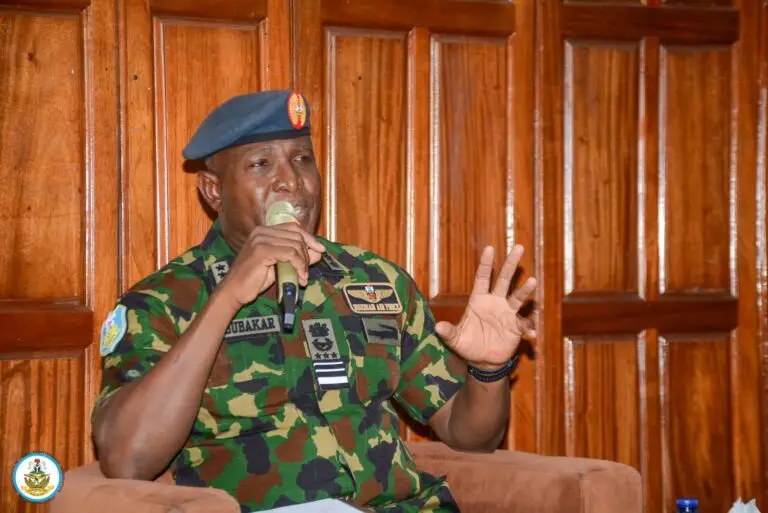
Nigeria’s Chief of Air Staff (CAS), Air Marshal Hasan Abubakar, has tasked military commanders and graduating officers to lead by example and serve the country with courage.

He stated that the Airforce was poised to respond to the security challenges confronting the country as it has recorded major operational gains, including 15 new aircraft acquisitions, over 3,000 sorties as of September, and a serviceability increase from 66 to 70 per cent under his watch.

Abubakar stated this while delivering a lecture titled “From Vision to Reality: Strategic Leadership Insights from the CAS Command Philosophy” at the Armed Forces Command and Staff College (AFCSC), Jaji.

This is contained in a statement by the Director, Public Relations and Information, Nigerian Air Force (NAF), Air Commodore Ehimen Ejodame, on Saturday in Abuja.

The CAS said these values remain the bedrock of effective leadership and institutional transformation in the Armed Forces of Nigeria.

According to him, leadership remains the most decisive factor in determining the success or failure of any military organisation. Everything rises and falls on leadership.

Abubakar explained that the transformation in the NAF under his command is anchored on five key enablers — force optimisation, mission-oriented training, proactive logistics, research and development, and personnel welfare.

He said these enablers, driven by leadership by example, courage and prudence, had strengthened NAF’s agility and responsiveness across all theatres of operation.

Highlighting leadership by example, Abubakar revealed that he had undertaken over 40 operational visits covering 98 of 99 NAF units nationwide within two years.

According to him, leadership is about presence, not proximity, noting that such engagements boost morale and strengthen accountability across the ranks.

He underscored courage as a vital quality of command, citing his response to the 2023 Rukubi incident in Nasarawa State.

The CAS said he took responsibility and implemented reforms that birthed the Civilian Harm Mitigation and Response Action Plan, earning global commendation and contributing to the lifting of US arms sale restrictions.

Abubakar also charged the young officers to lead with conviction and integrity.

“The true leader plants a tree whose shade he may never sit under, but under which others will find rest,” he added.

The lecture ended with an interactive session that allowed open discussions on leadership, command philosophy, and professional growth

2026 W’Cup: Nigerians On Edge As Qualifiers Go Down The Wire … Victory Against Benin May Not Be Enough

0

Nigerians are on edge as the Super Eagles head into their final group match on Tuesday, knowing that only a win — and a failure by South Africa to secure victory — will keep their 2026 FIFA World Cup qualification hopes alive. The tension is palpable across the country, with millions of fans anxiously counting down to what could be a defining night for Nigerian football.

After a campaign marked by missed chances, injuries, and inconsistent displays, the once-dominant Eagles now find themselves in a precarious position.

Despite the tournament’s expanded format offering Africa additional qualification slots, Nigeria’s path to North America hangs by the thinnest of threads.

Last Friday’s away victory and South Africa’s goalless draw against Zimbabwe has boosted their chances. Meanwhile, coach Eric Chelle and captain William Troost-Ekong have praised the Super Eagles’ resilience after a crucial 2-1 win over Lesotho in Polokwane, South Africa on Friday. The victory keeps Nigeria’s hope alive for the 2026 FIFA World Cup qualification.

Chelle acknowledged the pressure on the team since March.

He said the win was vital and congratulated his players for their determination.

“We won the three points today. We are still alive. Journalists can now start doing their mathematics and permutations,” Chelle said.

He said the players have felt immense pressure during camps. In spite of missing chances in the first half, he was proud of their performance.

Chelle urged Nigerian fans to back the team in large numbers ahead of the final qualifier against Benin Republic in Uyo.

“This is the final round. The game starts the moment Benin steps on Nigerian soil. We need to do the job on the pitch,” he added.

Captain Troost-Ekong acknowledged Lesotho’s strong challenge.

“Lesotho played a great game. It wasn’t easy. We understand the frustration because they fought hard,” Ekong said.

He stressed the team’s winning mentality and readiness for the decisive match.

“We want to win convincingly in Uyo. This is the final moment, and we will work hard to get there,” he said.

Nigeria is third in Group C with 14 points. Benin Republic leads with 17 points, followed by South Africa with 15.

To qualify automatically, Nigeria must beat Benin Republic convincingly in Uyo on October 14, and hope that South Africa drops points against Rwanda in Durban.

A 2-0 win over Benin would lift Nigeria to 17 points, matching Benin but giving Nigeria the edge on goal difference.

If Nigeria wins 2-1, tiebreakers will decide the group winner.

NMC, NOUN Partner To Tackle Manpower Shortages In Mathematical Sciences

0

The National Mathematical Centre (NMC), says it plans to collaborate with the Federal University of Technology (FUT), Minna, and the National Open University of Nigeria (NOUN) to strengthen teaching, learning, and research in Mathematical Sciences.

This is contained in a statement issued in Abuja on Friday by the Controller, Information and Public Relations, NMC, Mr Onyekachi Njoku.

Njoku quoted the Director/Chief Executive of the Centre, Prof. Promise Mebine, to have said this during a meeting of its Governing Council.

Mebine said the partnerships aimed at enhancing academic activities leading to the award of postgraduate degrees in various areas, including Mathematics, Mathematics Education, Theoretical Physics, Statistics, and Computer Science.

According to him, the collaboration with FUT Minna will enable the Centre to run Postgraduate Diploma, Masters, and Doctoral programmes in the Mathematical Sciences.

He added that the affiliation with NOUN would further establish the Centre as a Centre of Excellence in the Mathematical Sciences, with support from the Tertiary Education Trust Fund (TETfund).

He explained that these initiatives were part of ongoing efforts to prepare the Centre for conversion into a specialised National University of Mathematical Sciences (NUMS).

“The NOUN Centre of Excellence with TETFund will help address the critical shortage of high-level manpower in Mathematical Sciences across industries and academia,” Mebine said.

He further said that the Centre’s programmes would produce experts in both core and emerging fields such as Algebra, Number Theory, Algebraic Geometry, Theoretical Physics, Artificial Intelligence, and Machine Learning.

These areas, he said, were essential for generating impactful research outputs that would strengthen Nigeria’s technological and industrial advancement.

Mebine also called for the speedy amendment of the Act establishing the Centre to facilitate its conversion to the proposed National University of Mathematical Sciences.

He said doing so would position Nigeria as a regional hub for advanced mathematical education and innovation.

“Cry” of Mother Earth And Collapse Of Infrastructure, Rivers University Don Proffers Solutions

0

Across the world, collapsing bridges, sinking roads, failed dams and crumbling buildings tell a grim story of one that echoes the cry of a wounded planet of “Mother Earth”.

Thus, when “Mother Earth cries,” it symbolizes the weight of human ambition and negligence through reckless construction, deforestation, over excavation, or poor geotechnical design which translates to a distress on the environment.

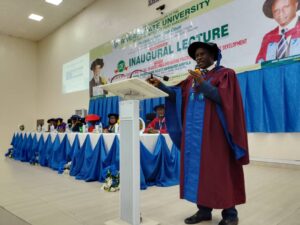
Professor Akpila, delivering the lecture

However, the “cry” of Mother Earth which culminates in incidences of failure and ultimate collapse of engineering infrastructure oftentimes leading to loss of lives, resources, time, space, energy, and matter, can be avoided by consulting Geotechnical Engineering experts, who can moderate the silent cry of Mother Earth.

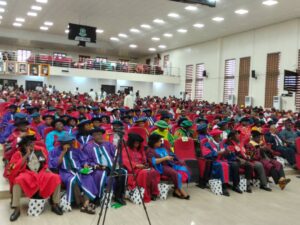
Professor Scott Bernard Akpila, a lecturer in the Department of Civil Engineering, Faculty of Engineering of the Rivers State University (RSU), made the observations and recommendations as he delivered the 120th Inaugural Lecture of the university on Wednesday October 8, 2025 at the Senate Building of the Institution.

Titled, “The Silent Cry of Mother Earth: A Wake Up Call To Geotechnical Engineering Practice In Infrastructure Development,” Professor Akpila who is a specialist in Geotechnical Engineering said government at all levels, should support in infrastructure development programmes in the country, to address issues rated to the silent cry of Mother Earth.

Describing Geotechnical Engineering as that branch of civil engineering that focuses on the engineering properties and behavior of soil, rock and underground water under force application and also on their influence during design, construction and operation in Engineering projects, Prof Akpila said that the level of stress transferred by either natural or man-made structures to Mother Earth is crucial to the stability and deformation of foundations on onshore and offshore environments.

Professor Akpila who is the Fourth to deliver an Inaugural Lecture from the Department of Civil Engineering of the University and the first in Geotechnical Engineering specialization, noted that it is the “sole responsibility of the Geotechnical Engineer, to knowledgeably ensure the overall stability of the soil foundation system”. This according to him, will help in “reducing incidences of failure and ultimate collapse of engineering infrastructure.”

Tracing the history of Geotechnical Engineering through the publication of the book “Erdbahmecanik” by Karl Terzaghi, a German in 1925, who is also credited as the founder of modern Geotechnical Engineering, Professor Akpila with lots of diagrams, illustrations and formulas illustrated the role of Geotechnical Engineers in providing the foundation safety link between the earth and built infrastructure.

The university Don postulated that for a harmonious human progress in infrastructural development, it is important that geotechnical integrity, soil preservation, and sustainable land use must go hand in hand, noting that ignoring such a harmony, is a call to disaster.

Professor Akpila who reeled out an impressive outlay of his contributions to knowledge and development of society urged government at all levels to support the inclusion of Geotechnical Engineers in infrastructure development programs, in the country.

He also advocated a University-Industry based collaboration for the provision of basic Geotechnical Engineering field and laboratory equipment in Civil Engineering Departments, to boost entrepreneurship potential of universities and knowledge visibility.

Furthermore, Professor Akpila called for the training and retraining of staff in laboratory operations and applications that reflect field behaviour of earth materials.

He also urged the university administration to invest adequately in Geotechnical Engineering training at postgraduate level by leveraging on what he termed, “our location, availability of expertise and manpower, against the absence of qualified Geotechnical Engineers to assume this challenging responsibility in many of Nigerian universities.”

Speaking at the end of the thought provoking Inaugural Lecture, the Vice Chancellor of the RSU, Prof Isaac Zeb-Obipi commended Prof Akpila for his well articulated lecture which he believed has added great knowledge to the world.

Represented by the Deputy Vice-Chancellor(Academic), Prof Valentine Omubo-Pepple, the VC said Prof Akpila by his various contributions in learning and service to humanity has “justified why the university elevated him to the rank of a professor.”

He appealed to everyone to carefully note the contributions and suggestions proffered by Prof Akpila to ensure that Mother Earth is saved from crying and humans protected from disasters.